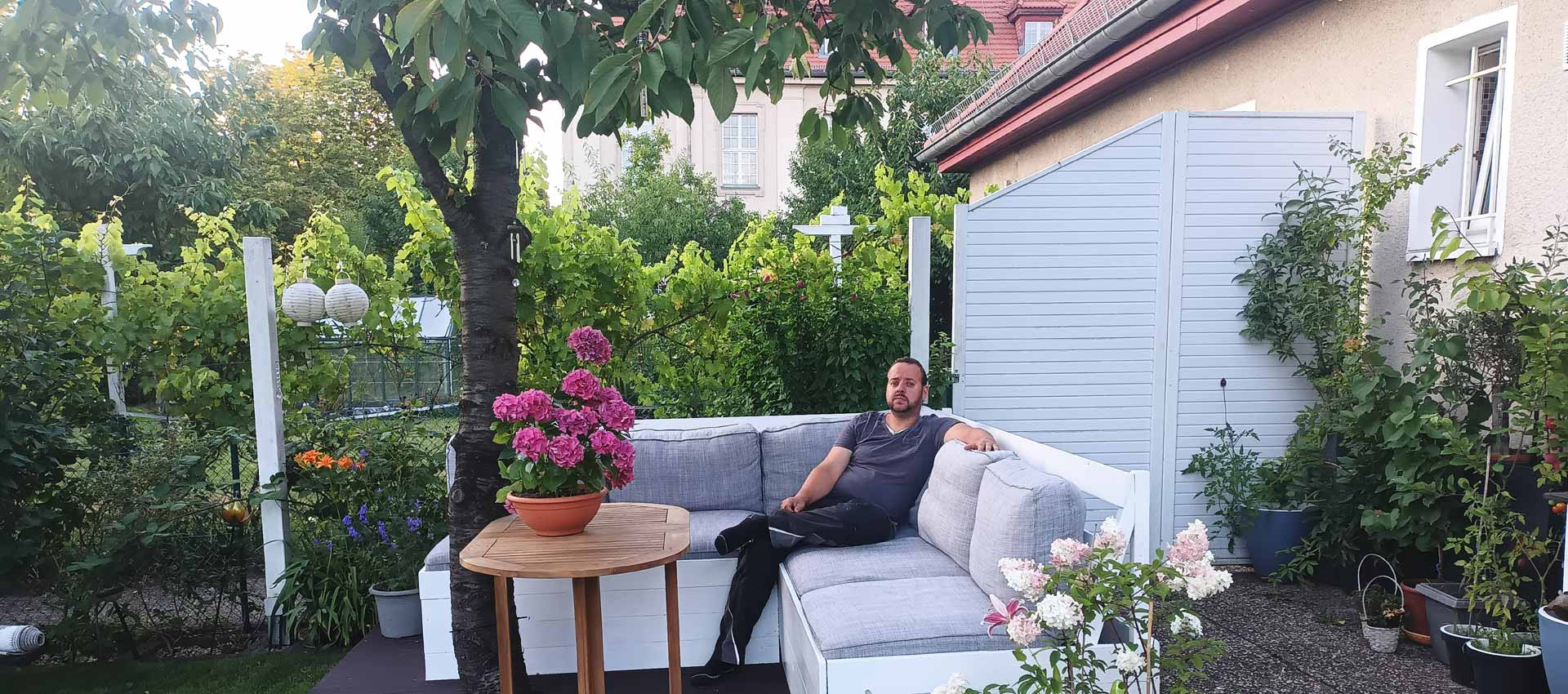
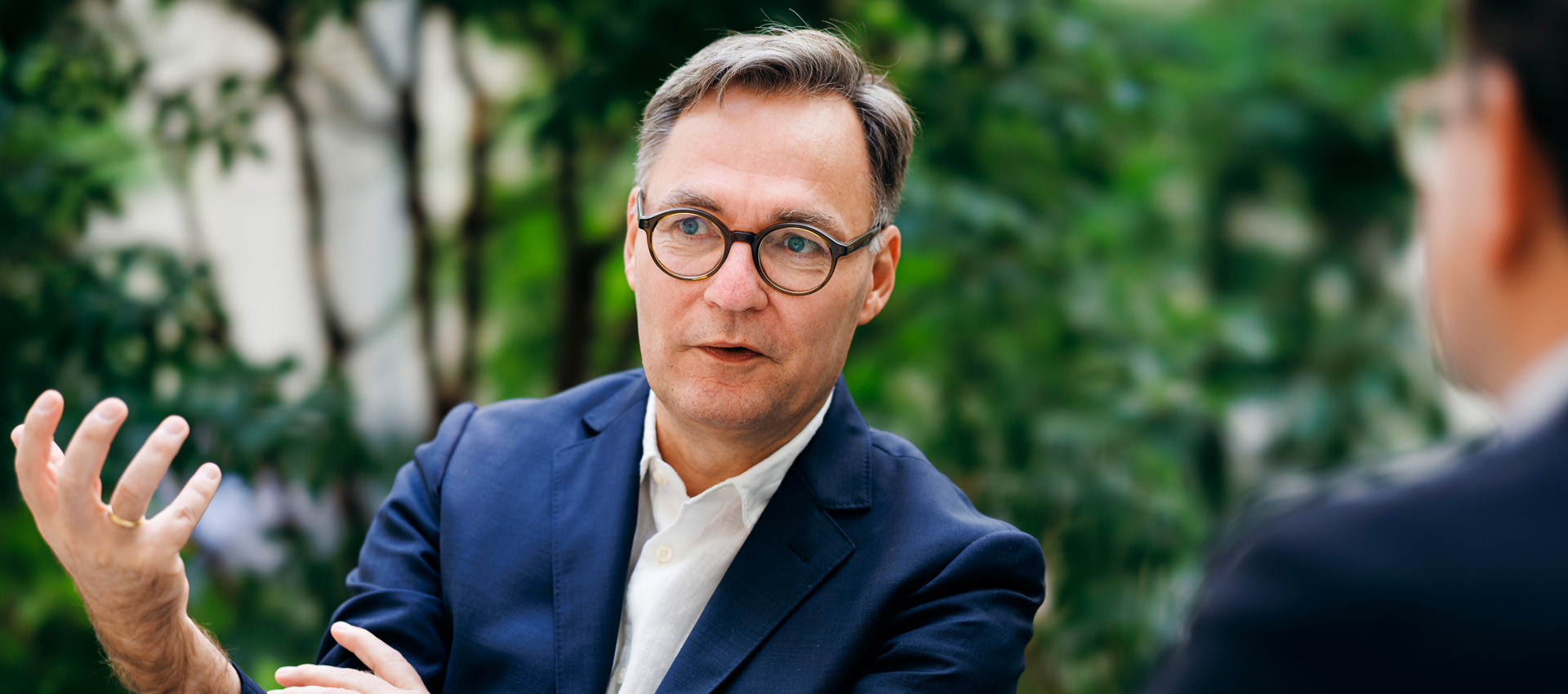
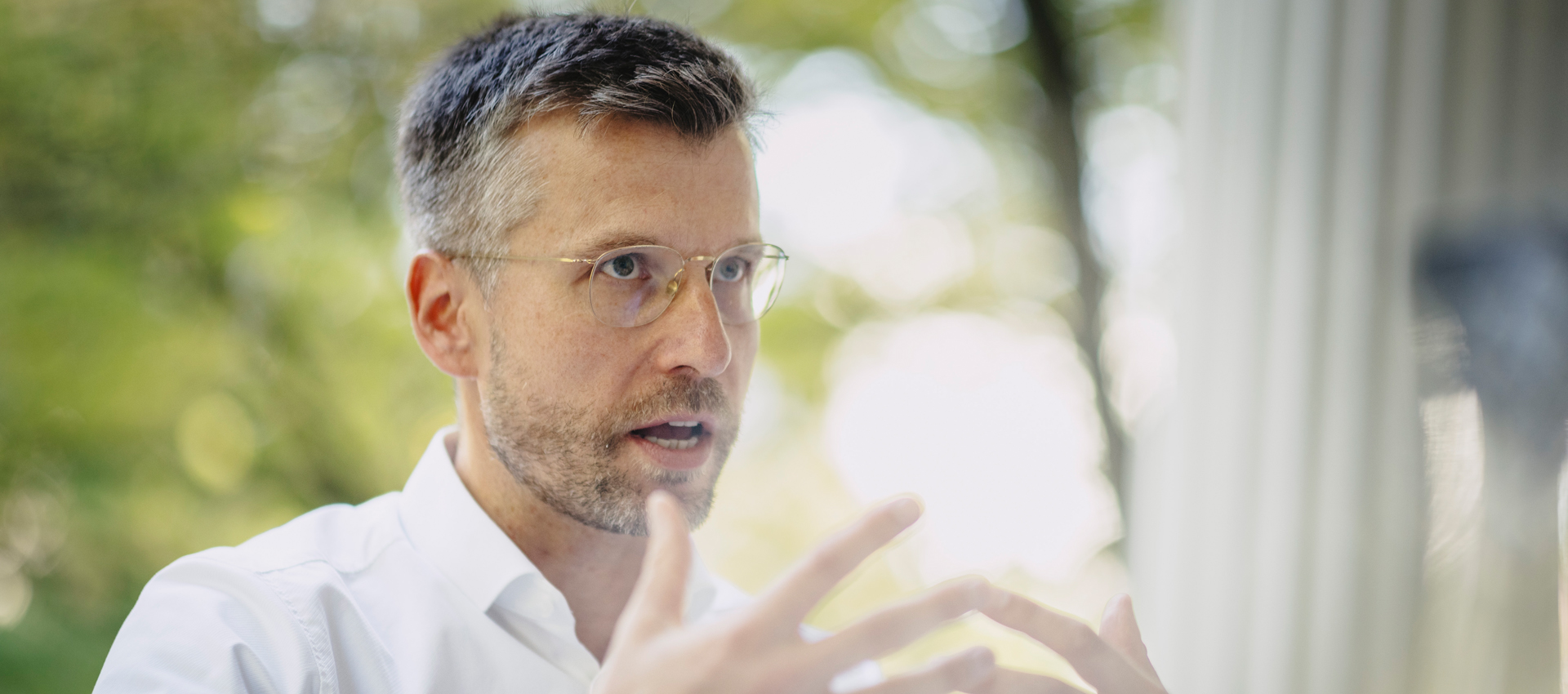
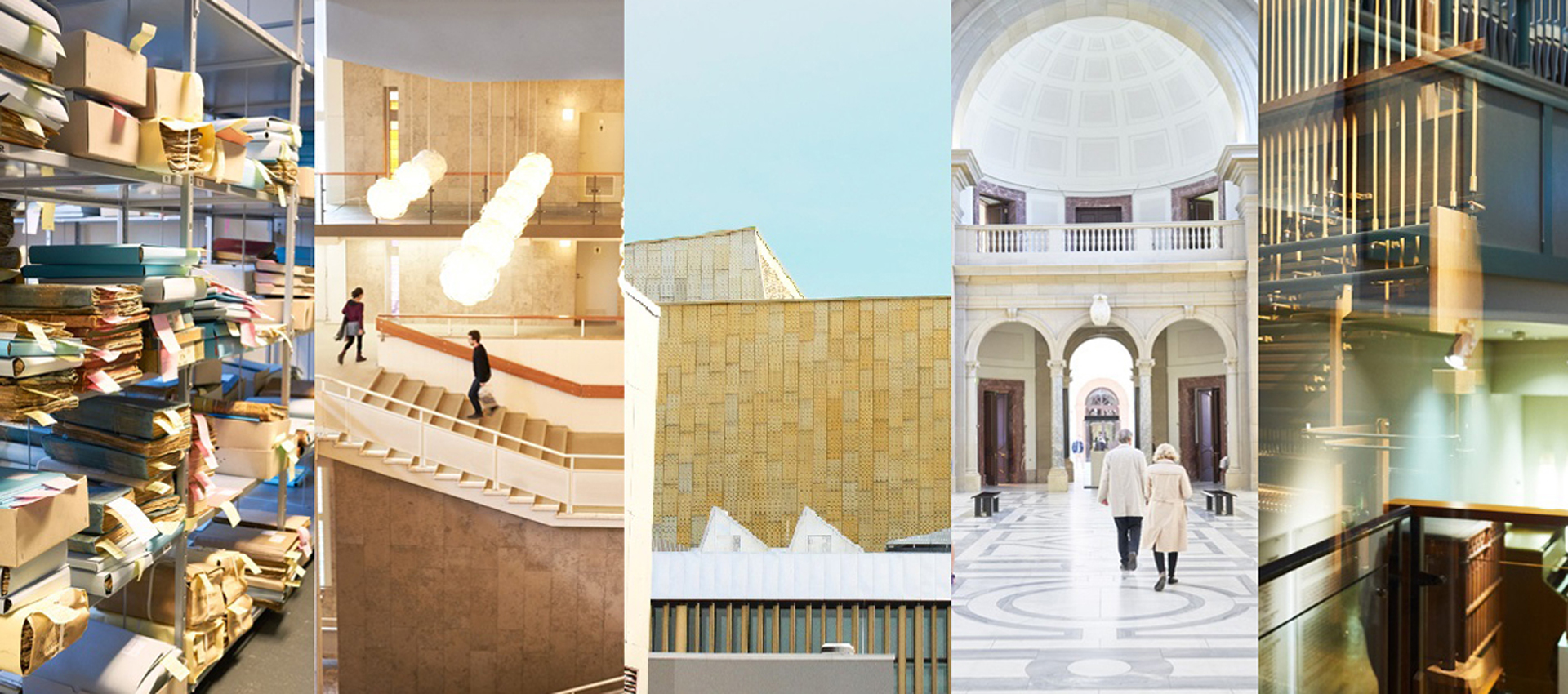
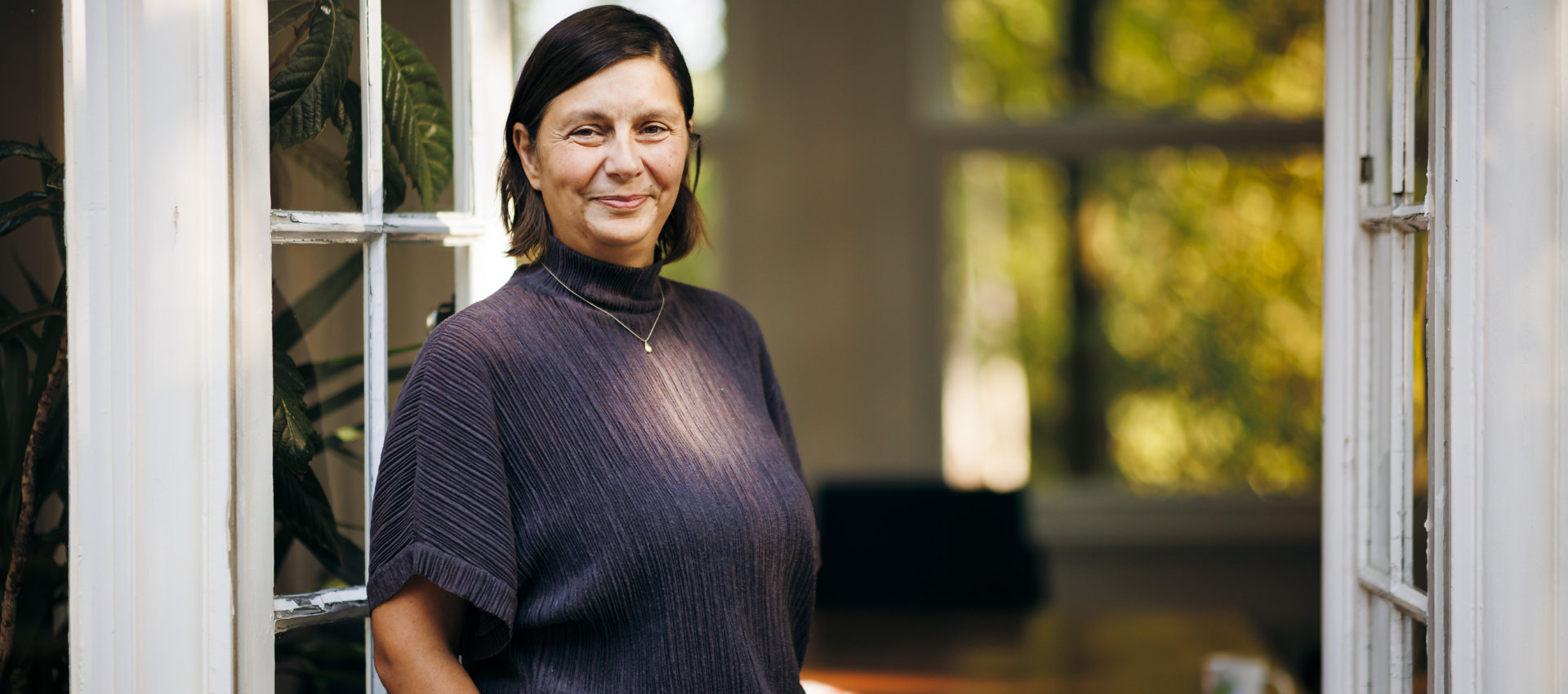
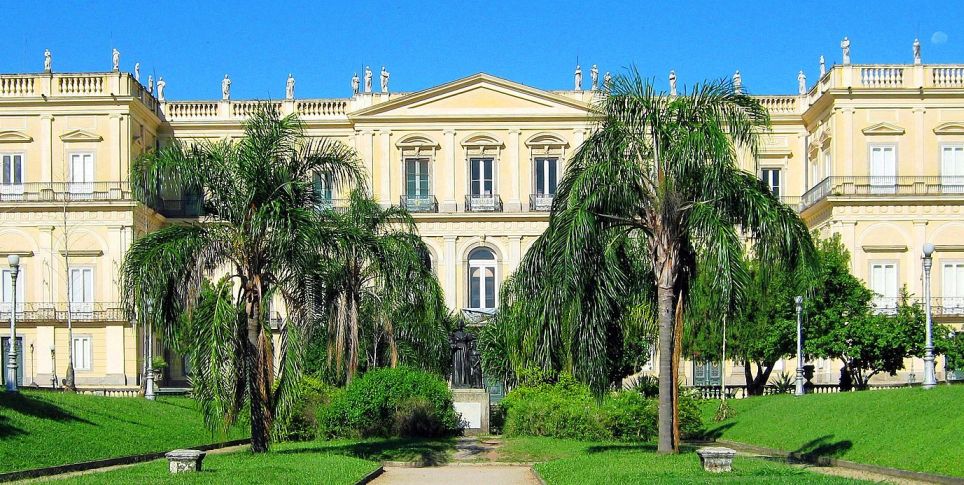
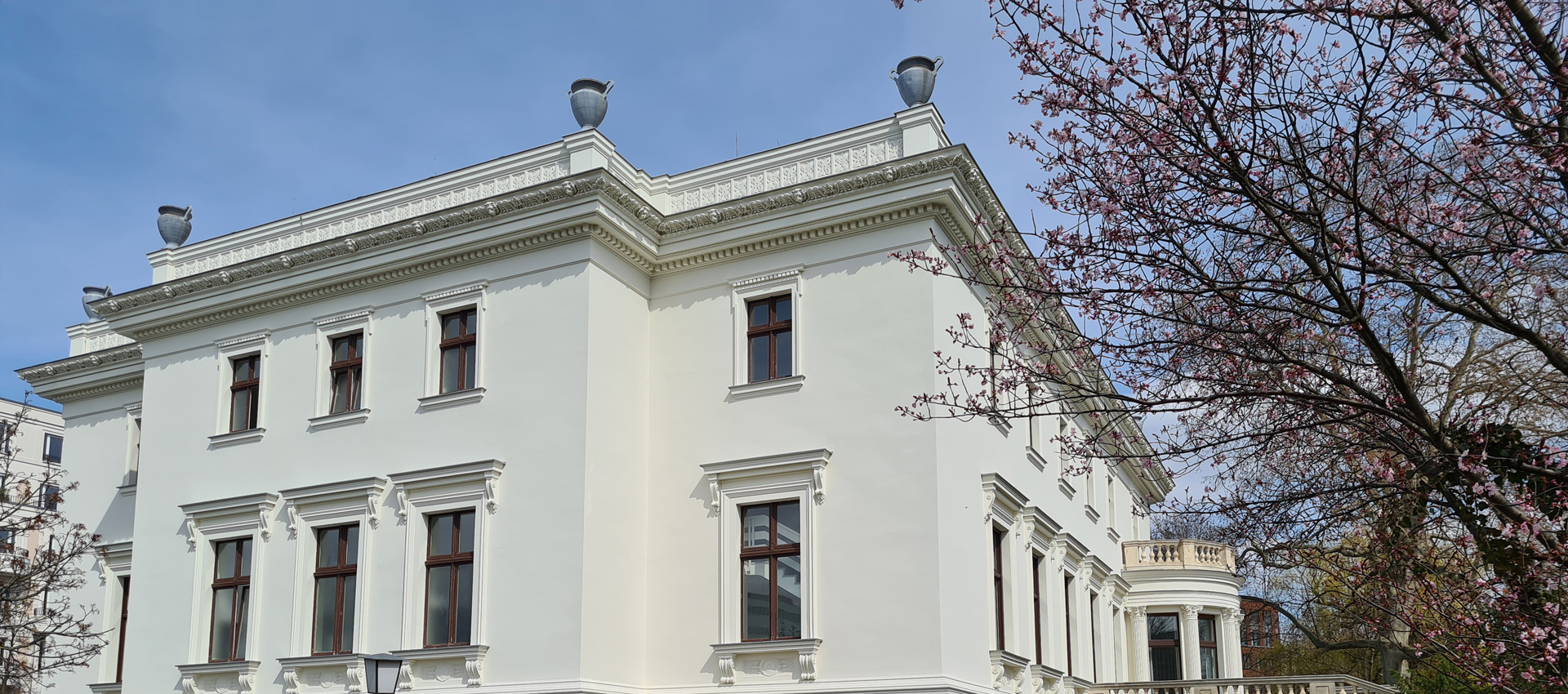
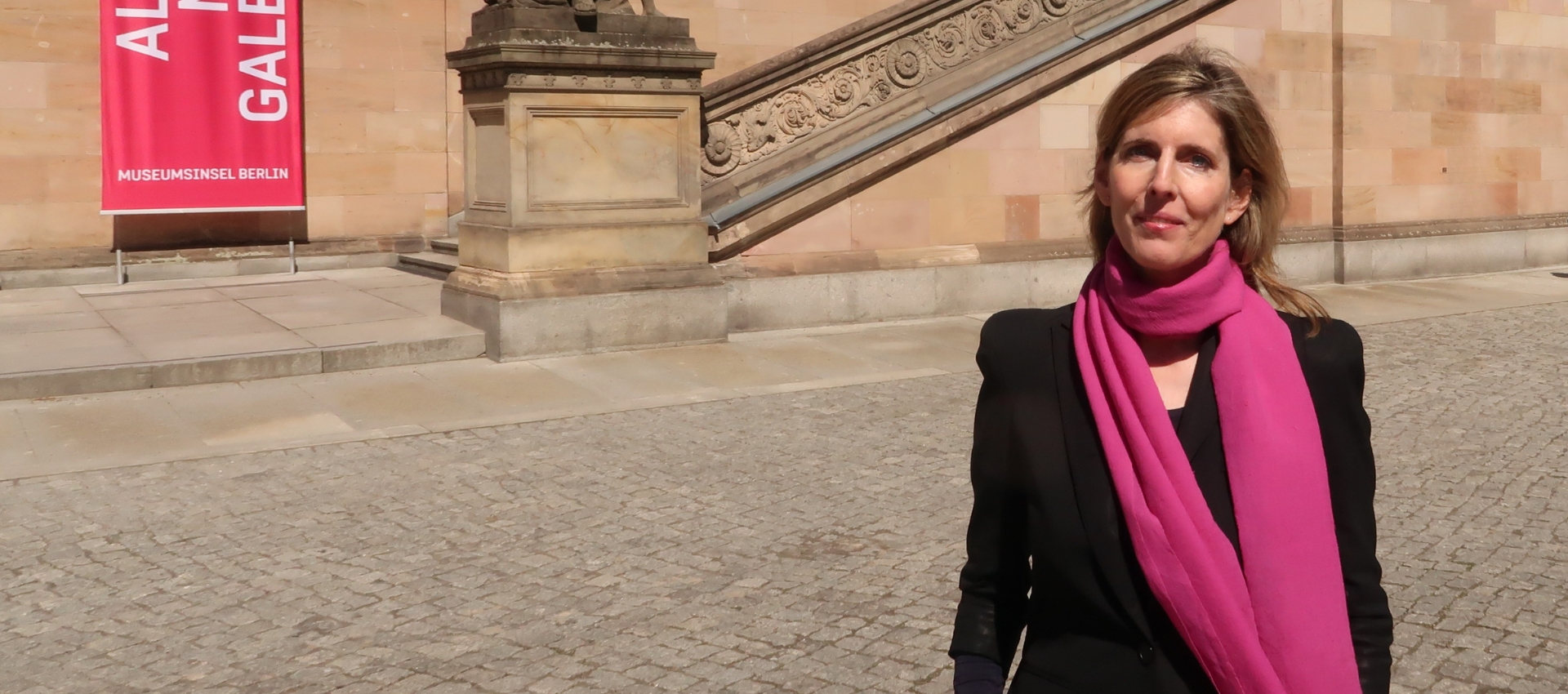
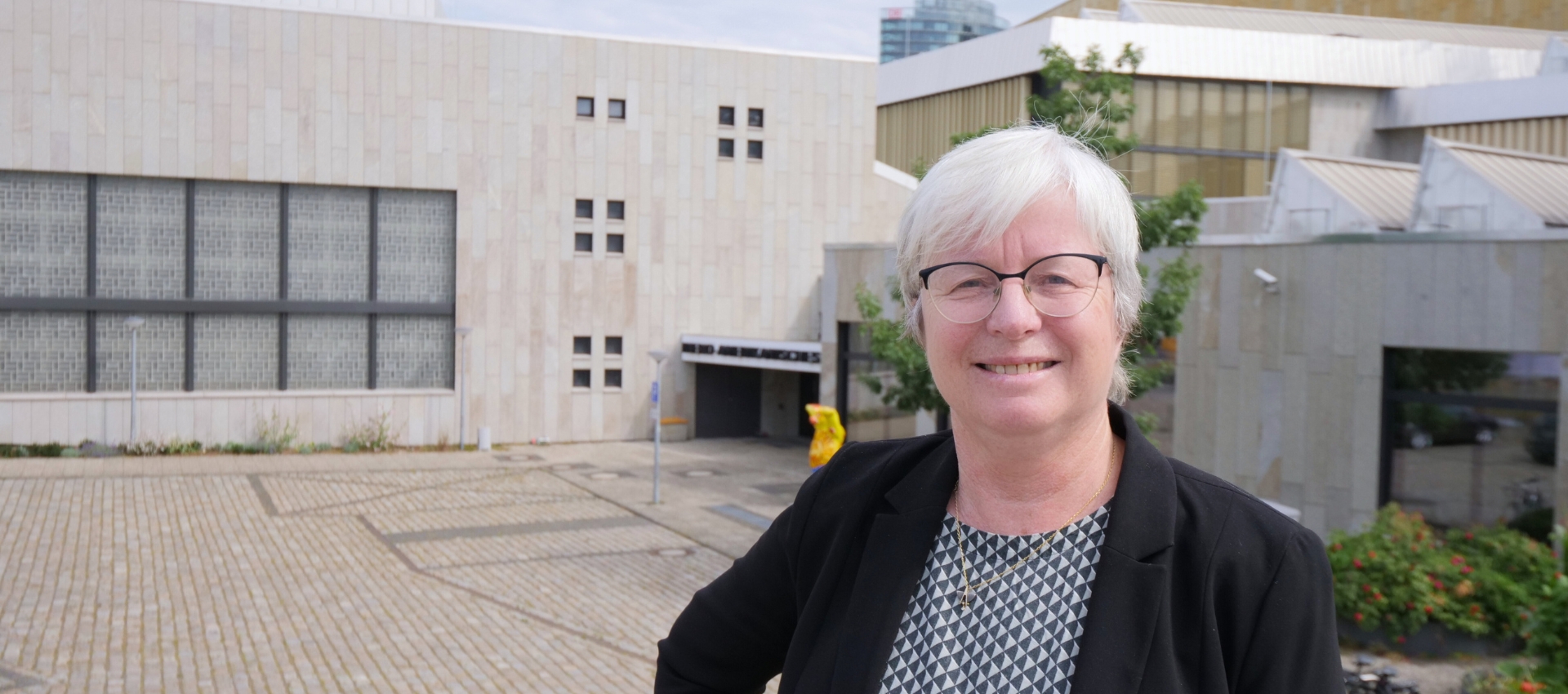
For our fourth and final summer interview, we head to Dahlem to meet Patricia Rahemipour, Director of the Institute for Museum Research, in the garden of a historic villa.
Ms Rahemipour, Dahlem is actually having an incredibly tough time within the SPK’s network of sites. Two museums have moved away, the third might be on the verge of leaving – and the Dahlem Research Campus has yet to prove itself. Not a promising outlook. Where do you find the hope that Dahlem will become a strong, thriving site?
This hope probably stems from my understanding of museums. For me, museums are more than just exhibitions. They are collecting institutions, places of research. During the coronavirus pandemic, I was often asked: ‘What are you doing now that the museums are closed? Are you just staying at home and enjoying life?’ Not at all! It was precisely during this time that it became clear what we do beyond our exhibition work. This is particularly evident at the Dahlem site. At the moment, we have no other location within the SPK where we can offer such a precise and clear glimpse behind the scenes of museum work. That is what the Dahlem Research Campus achieves. Here, the future of museums is being discussed, and indeed beyond the traditional understanding.
Where do you think museums stand today? You recently published a widely acclaimed study on the topic of ‘Trust in Museums’. One might infer from it that museums sharpen judgement and foster maturity. Can it be summed up in those terms?
No, that would be an oversimplification. We wanted to find out to what extent museums can also be places for fostering democracy. We looked at a comparable study from the United States and wanted to know: what is the situation actually like in German society, which is currently undergoing major upheaval and drifting apart, where we see many dangers posed by populist parties and also recognise fears for democracy.
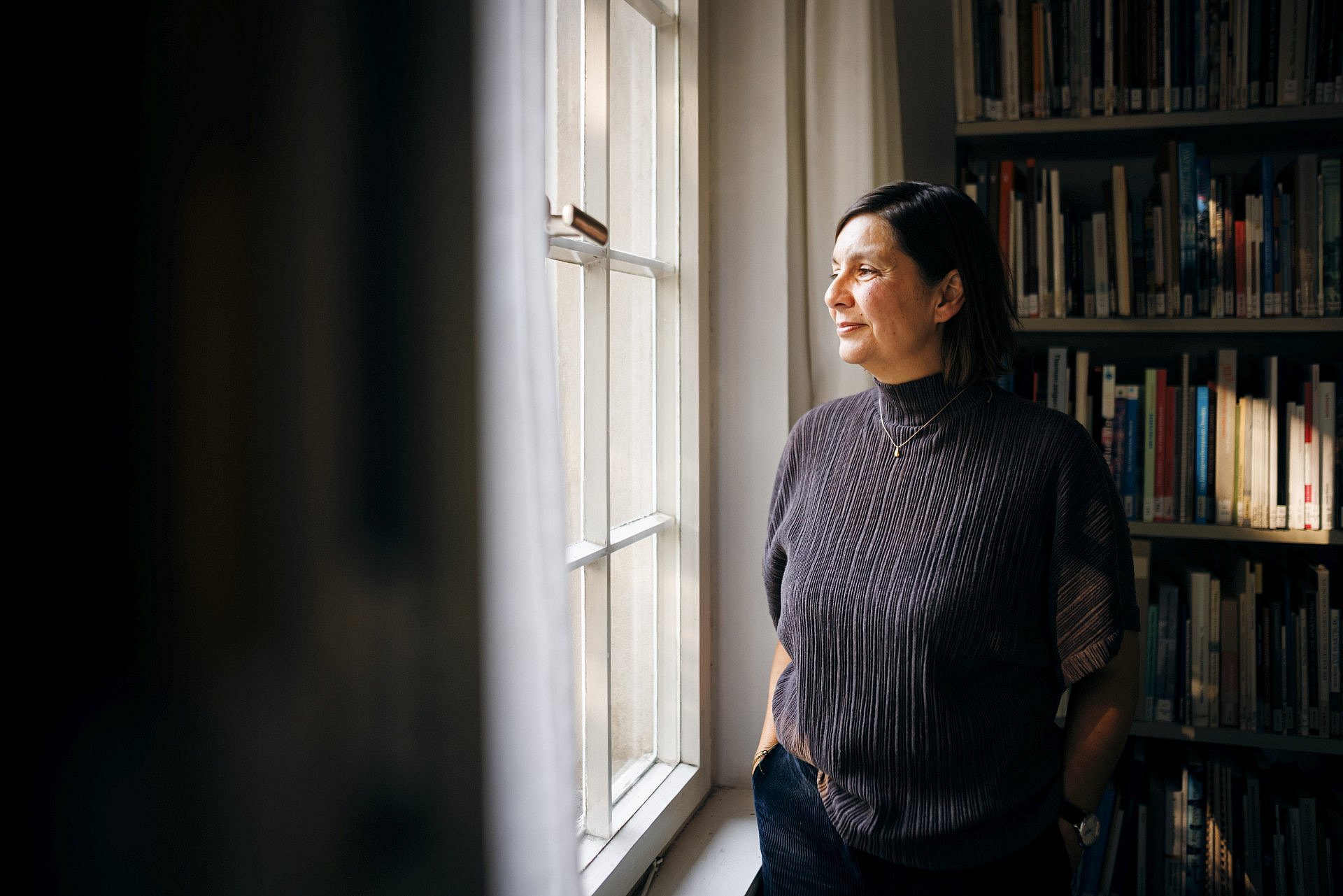
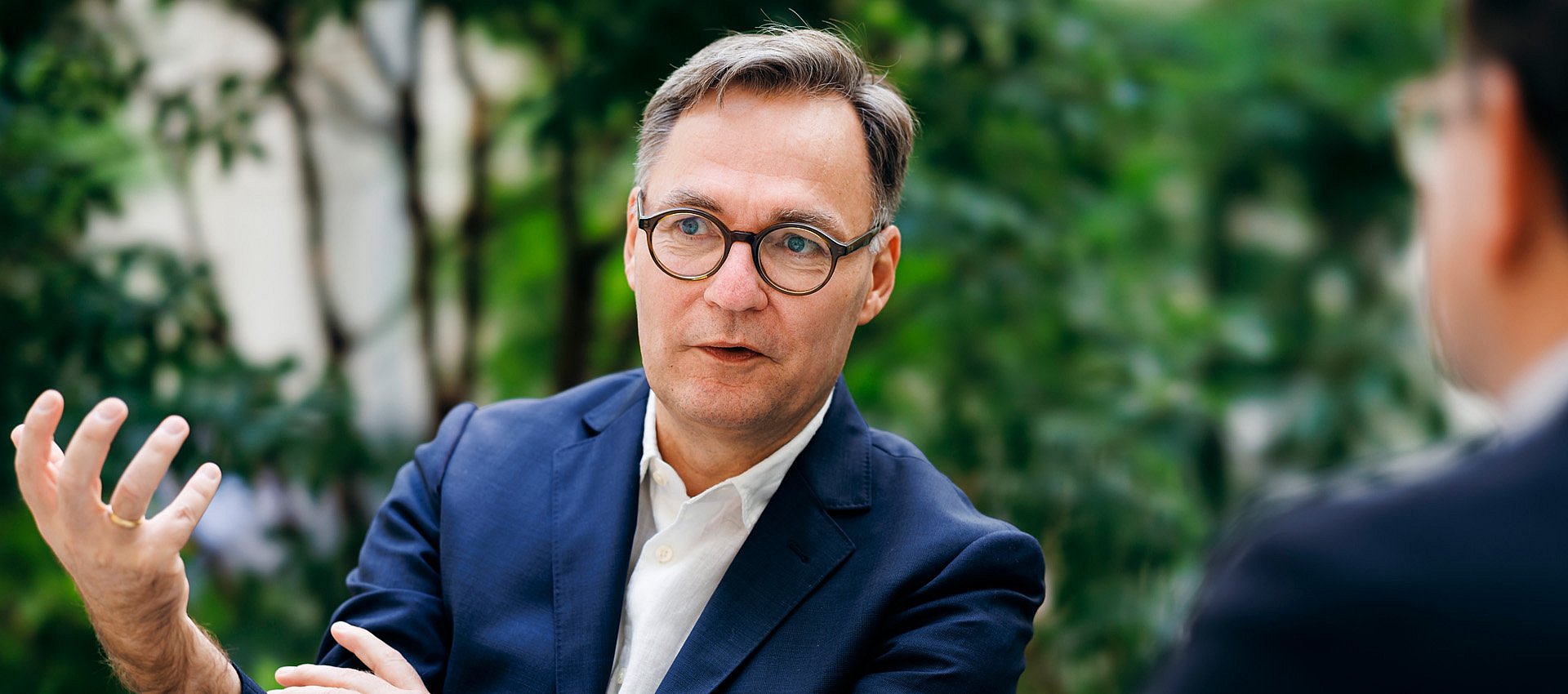
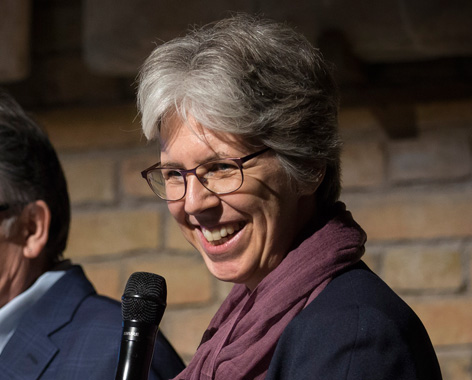
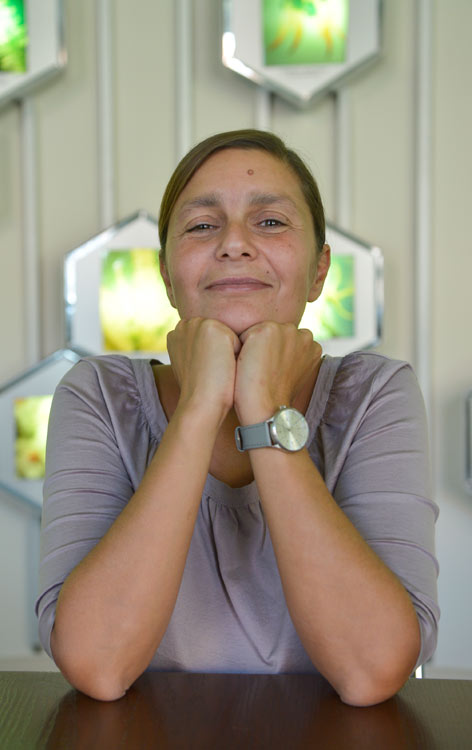
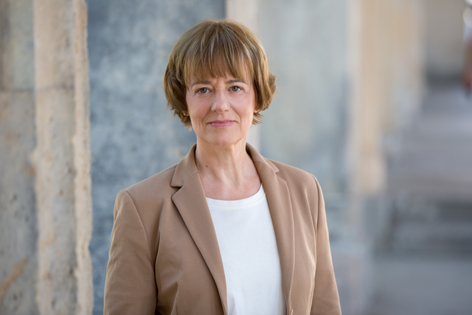
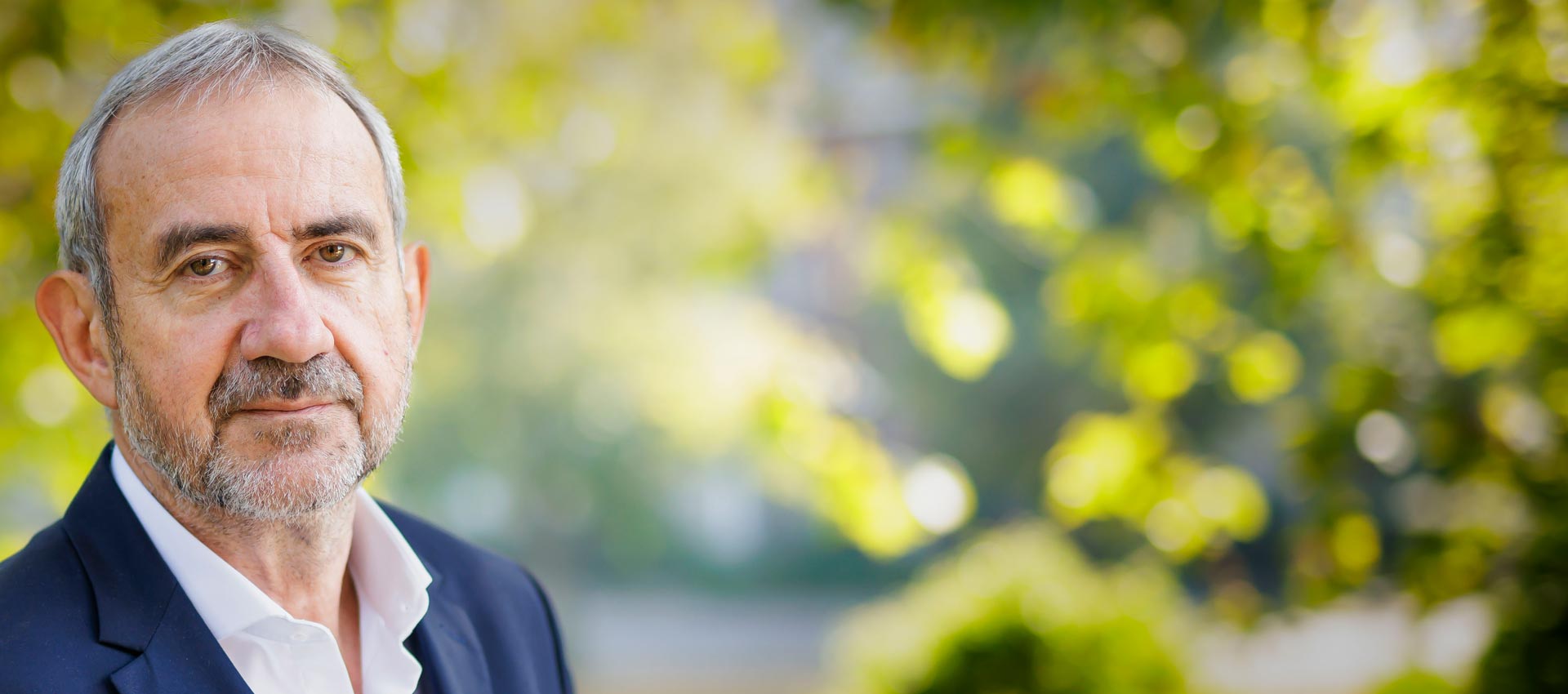
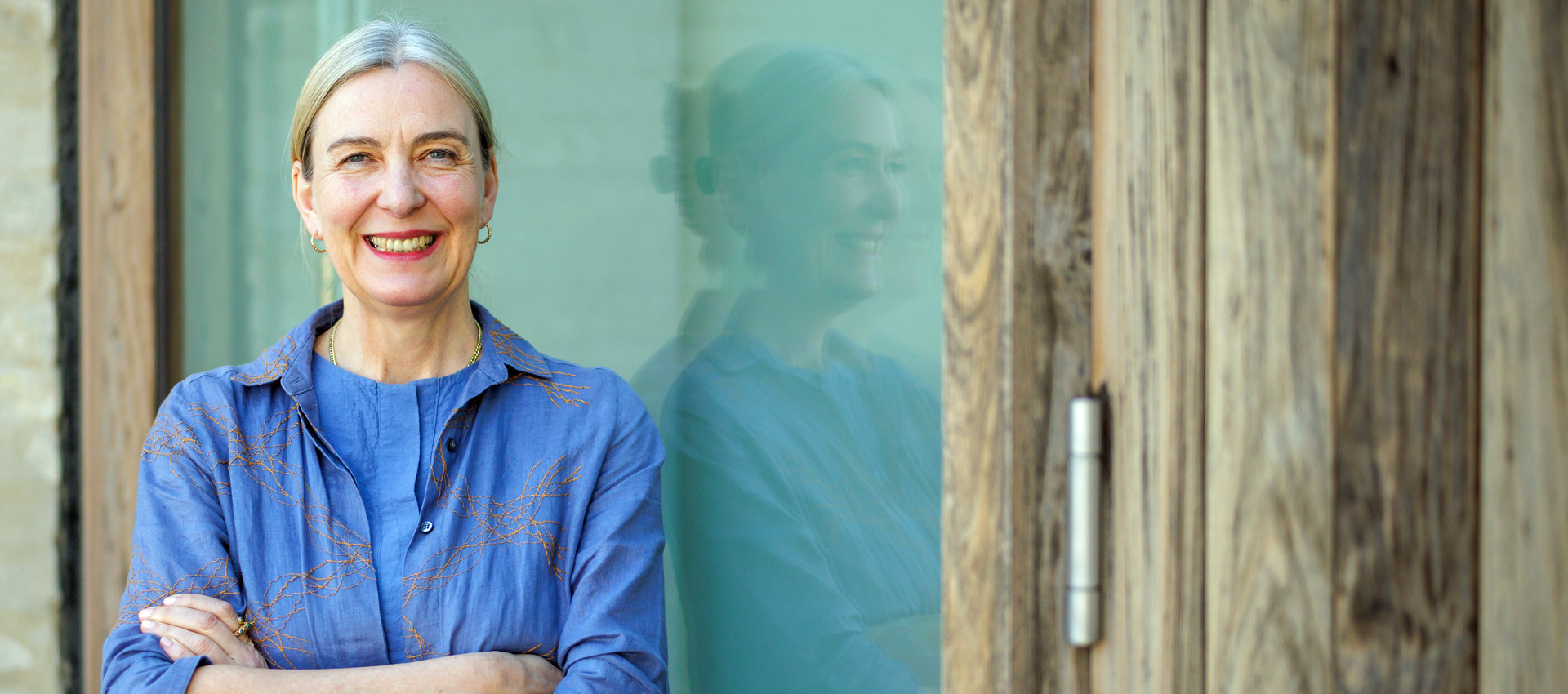
Patricia Rahemipour has been Director of the Institute for Museum Research since 2019.
Photo: SPK / Photothek / Felix Zahn
But what can museums actually achieve in this regard?
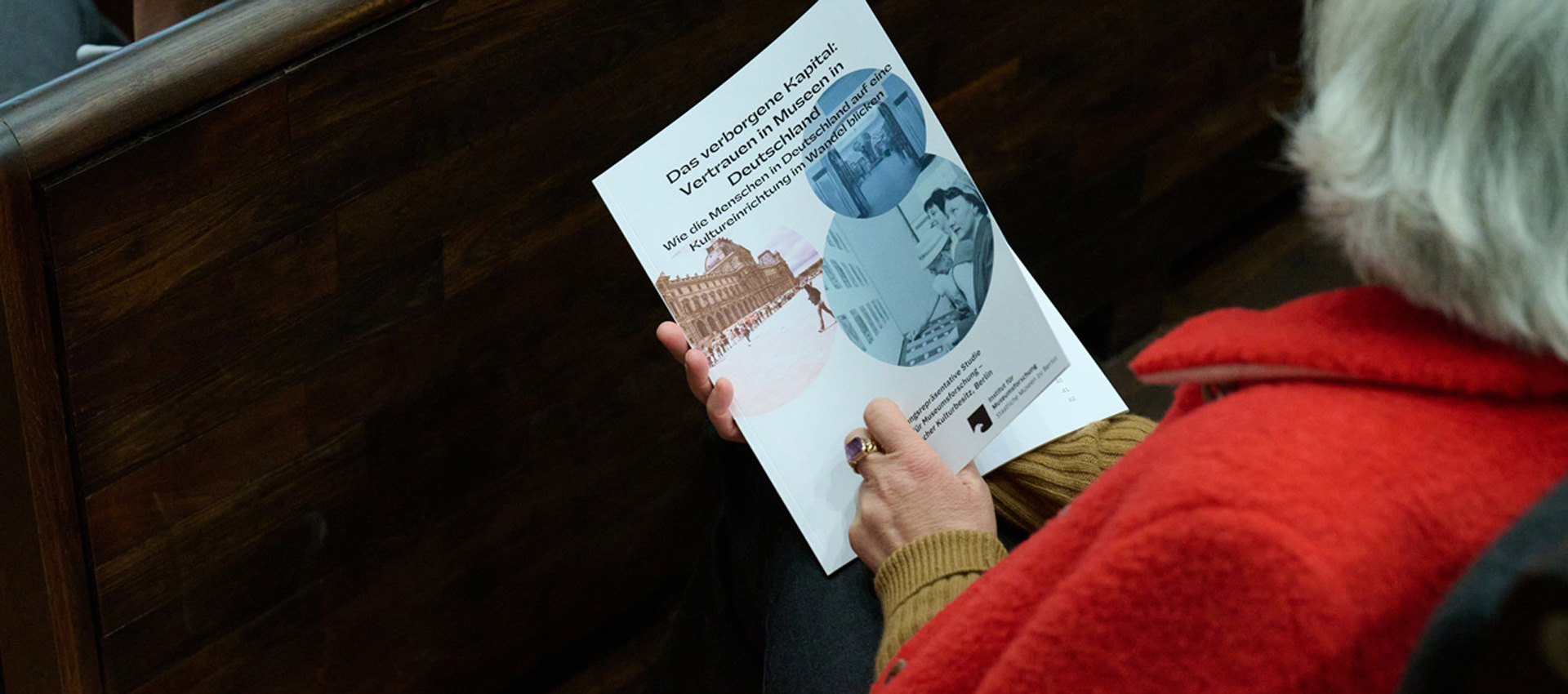
We focused on the topic of trust and compared museums with numerous other institutions – both public and private. We asked people: compared to these institutions, where do you rank museums? And the truly astonishing finding was that, after family and friends, we trust museums the most. They are neutral places. There isn’t a big pharmaceutical company in the background saying: ‘Promote this, or pursue this or that line of research’. Incidentally, the study was a representative survey of the general public covering all museums in Germany, with over 1,000 respondents.
The President of the Klassik Stiftung Weimar, Ulrike Lorenz, recently spoke in SPIEGEL of ‘mediating institutions’ that could help to ensure that ‘the divides do not become even deeper’. The aim, she said, is to strengthen civic virtues and enable a frank exchange of ideas. Do you agree with that?
I fully agree with Ms Lorenz. Museums offer spaces for engagement; they also offer – to put it somewhat grandly – spaces for taking a stand. I’ll cite the Zollern Coal Mine in Dortmund as just one of many examples: there, as part of an exhibition on colonialism, an attempt was made to create a safe space for people with refugee backgrounds, people of colour, and so on. They were invited every Saturday morning to move about the museum within a safe zone. There was an immediate outcry. The AfD, for example, said: ‘No, hang on, you’re discriminating against white Germans.’ However, the museum stood its ground in this situation and said: ‘We’ll discuss this with you.’ So the door wasn’t slammed shut; instead, they said: ‘We’ll open it even wider and bring you in.’ This autumn, a major conference will take place at the Zollern Colliery, where museum representatives will once again engage intensively with the topic. I think this is a good example of how museums are already functioning as spaces today.
I believe what we need to strengthen even further is the role of museums in education. Here we need to conduct even more visitor research and ask: Who is already coming and who isn’t, and how should we address whom?
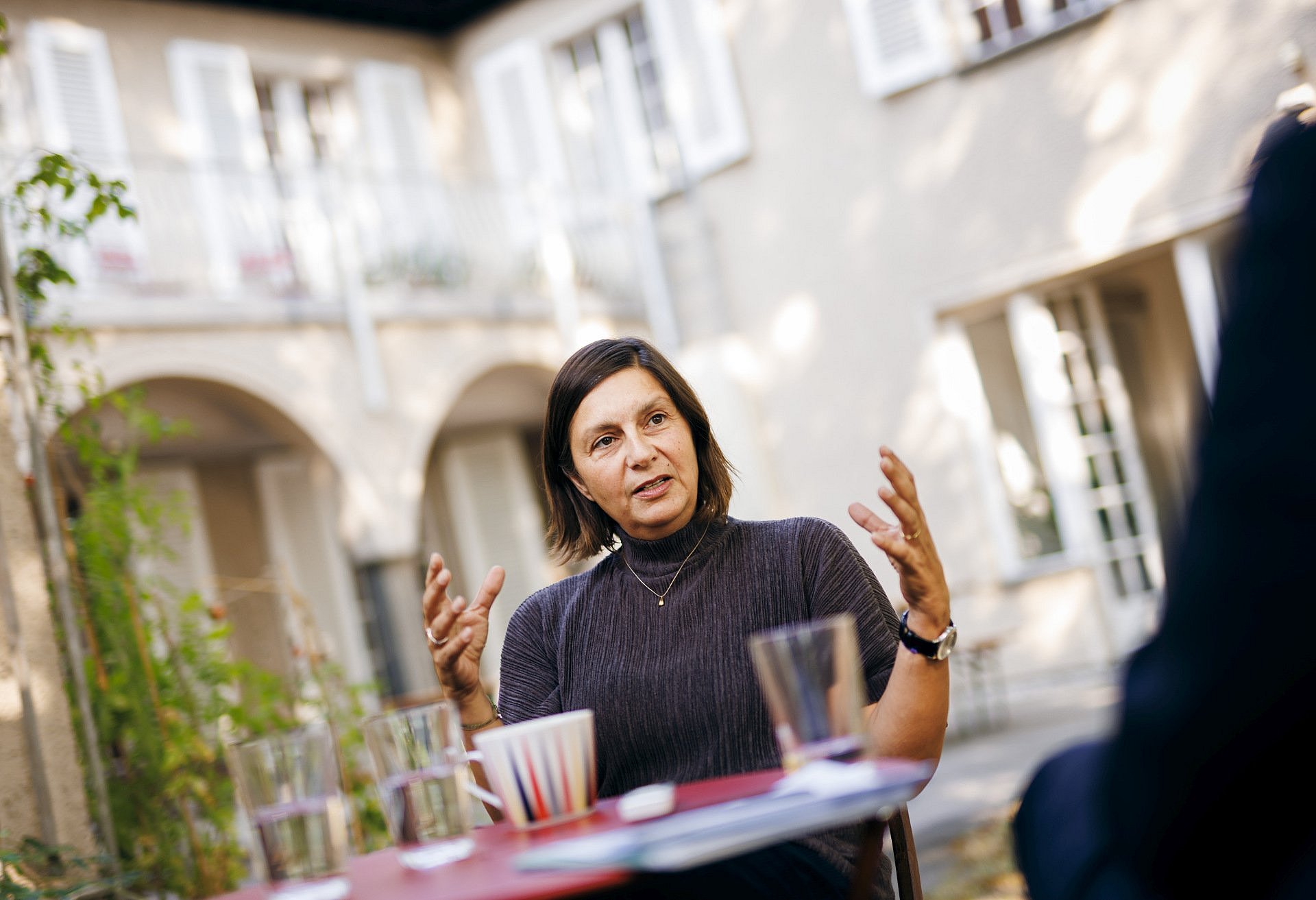
"Don’t be afraid of debate": Patricia Rahemipour on engaging with AfD voters.
Photo: SPK / Photothek / Felix Zahn
And how do you engage with AfD voters? They visit museums too, after all.
I’m not afraid of debate. A museum has to be able to handle that. When most people think of a museum, they picture a specific building or a space that you can visit. But there’s more going on here! There needs to be more going on! For me, it’s very important to keep the dialogue going. Of course there are limits, no question about it. But you can explore those limits through conversation. At least, that’s been my experience.
You don’t measure the success of museums solely by visitor numbers. How does that fit in with the SPK Strategy 2030, which aims precisely to attract more visitors to the museums?
I interpret the strategy somewhat differently. I maintain that visitor numbers alone do not say anything about a museum’s success. Of course, it is an indicator, but not the only one. At the Institute for Museum Research, we are interested in what other indicators there might be. Is it a success if 200,000 people visit in a year, or is it not also a success if you have managed to get a school group to engage with a museum theme over the years, and the pupils of yesteryear then return when they have families of their own? It is becoming clear that there are diverse indicators, and our strategy for the SPK 2030 reflects this with its motto ‘We connect people, times and spaces’. What makes the SPK strong is this diversity of small and large institutions, many of which are unique worldwide.
I still maintain that visitor numbers alone do not say anything about a museum’s success
Patricia Rahemipour
Let’s return once more to the Dahlem Research Campus, which is currently taking shape and is certainly something of a unique feature within the museum landscape. How would you describe it? What does it do, and what is it intended to be?
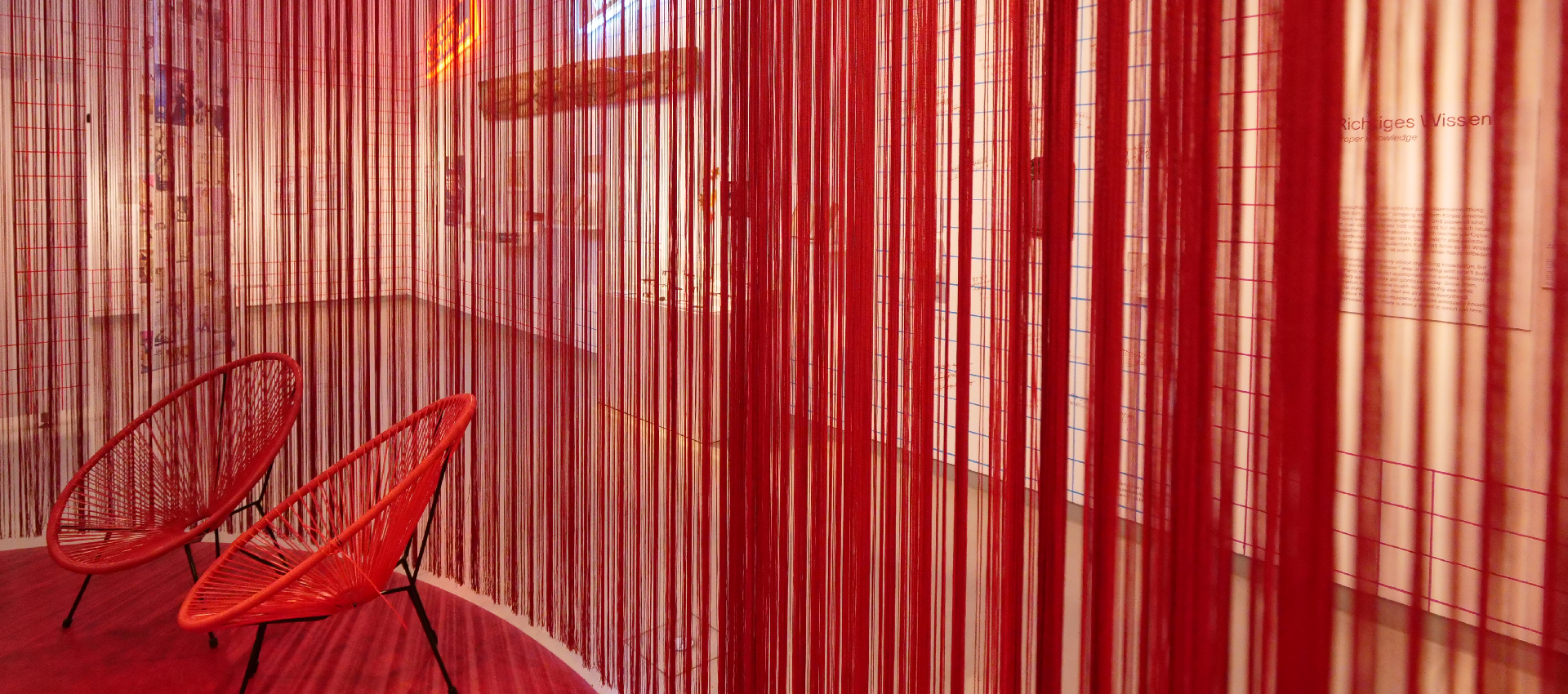
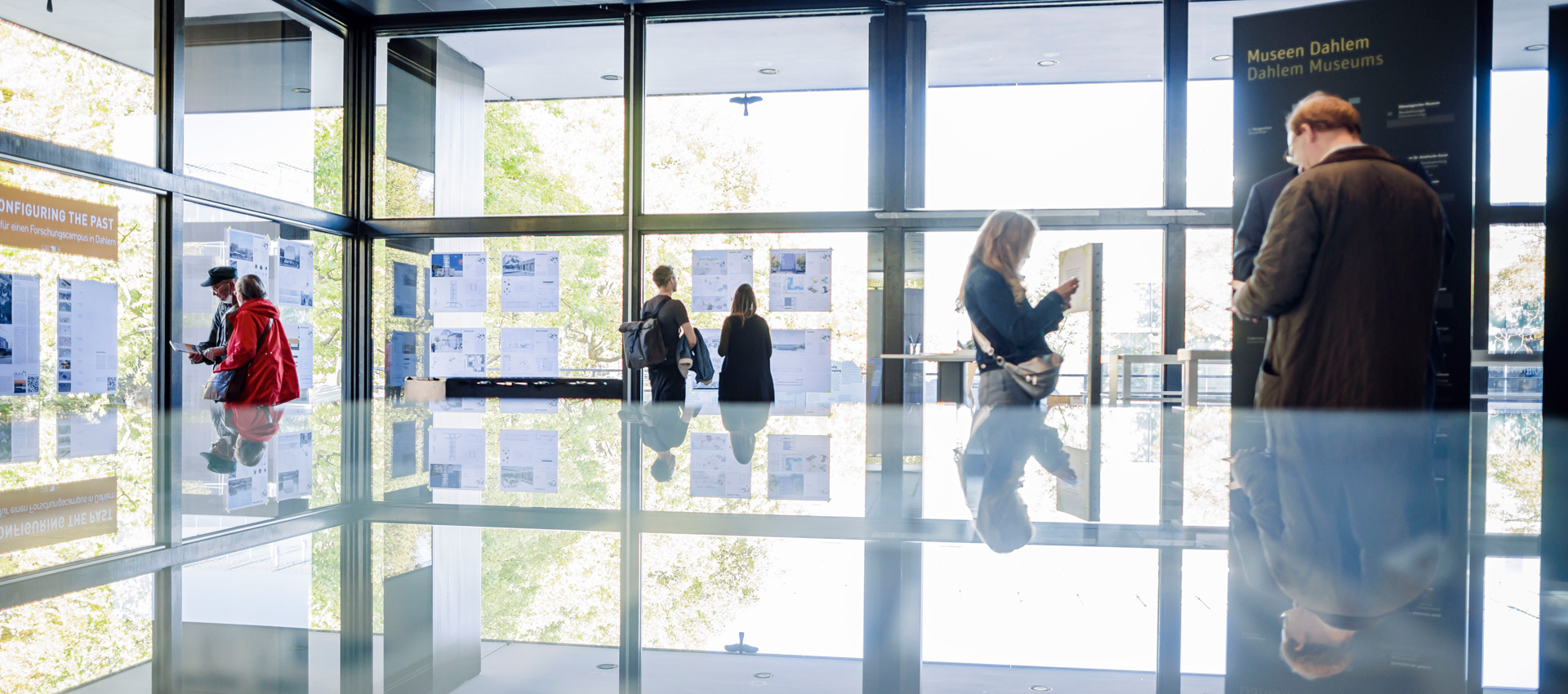
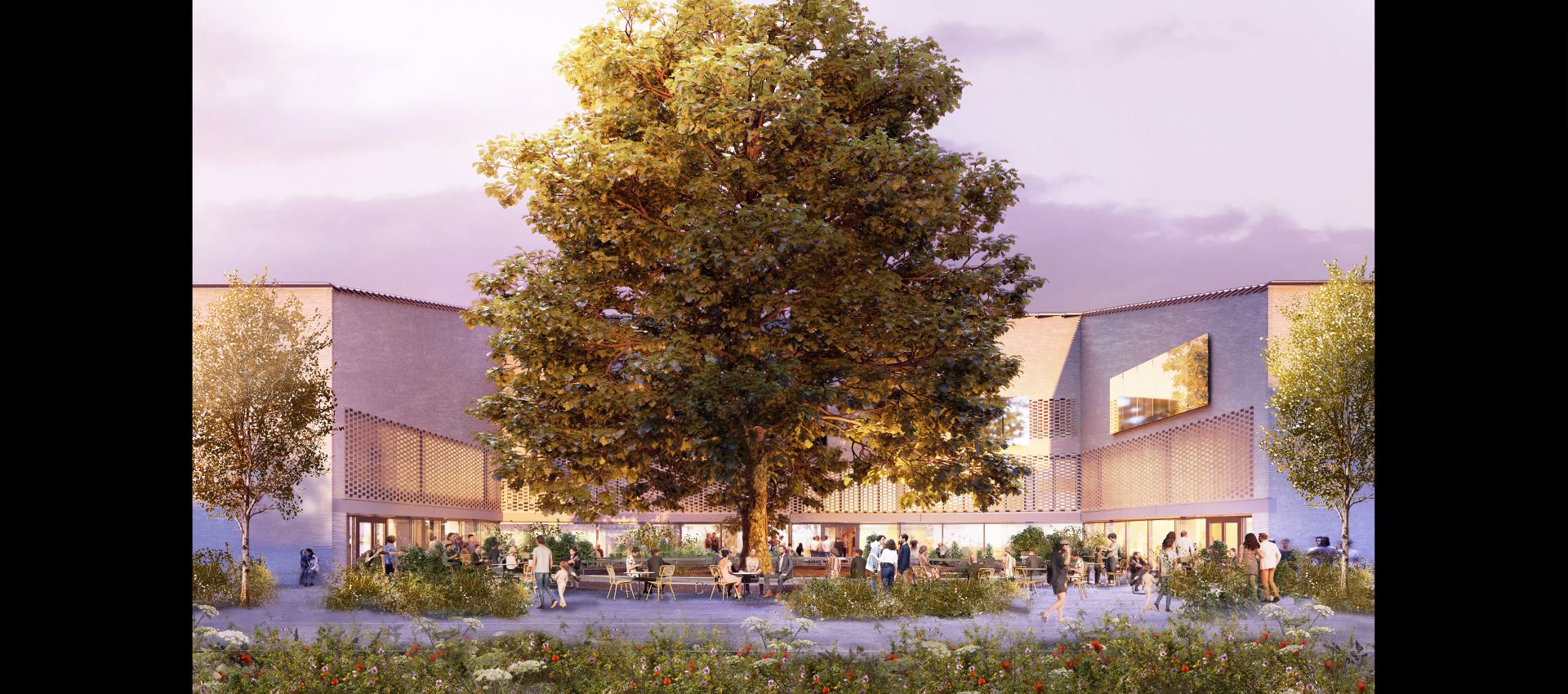
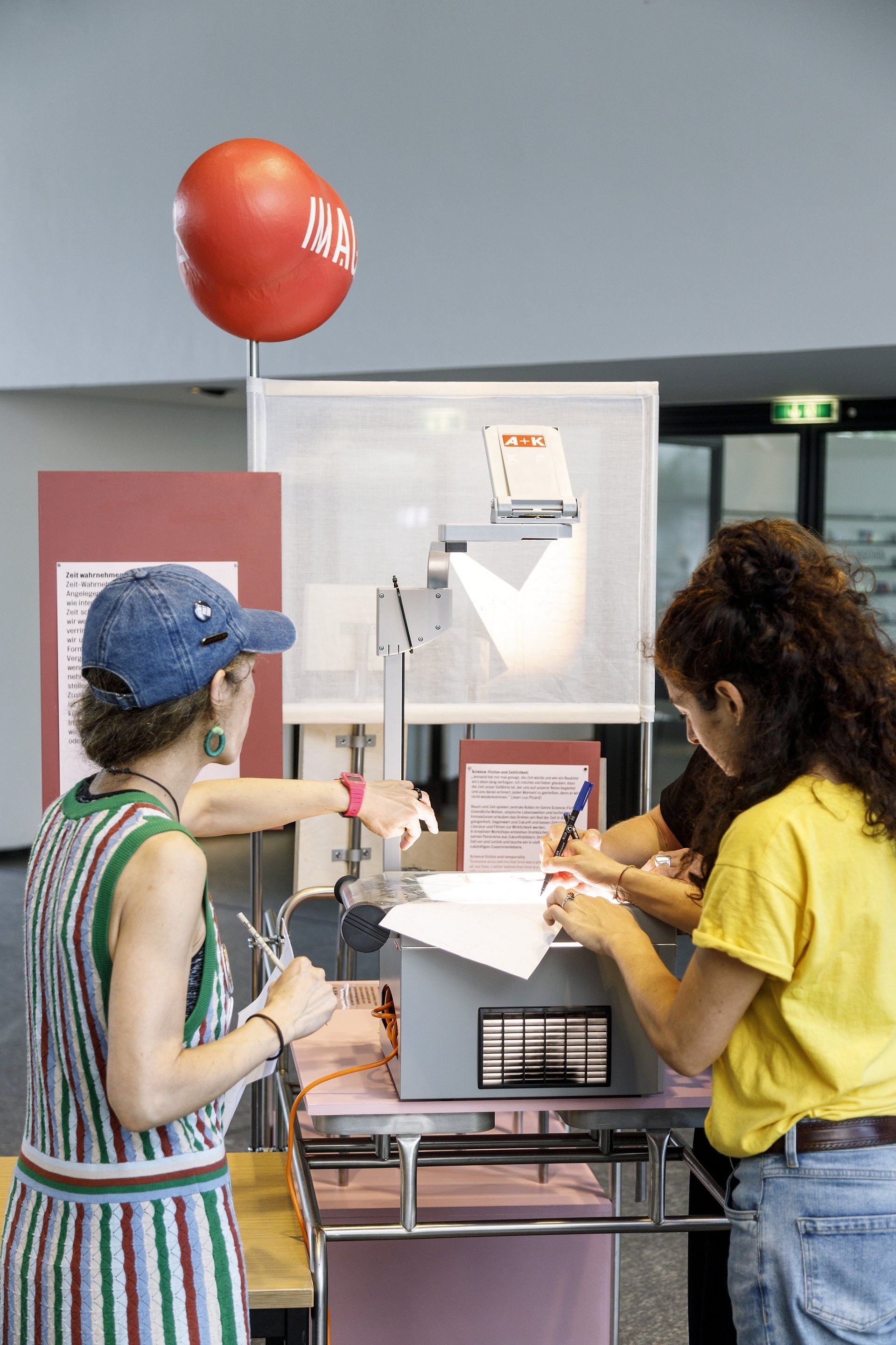
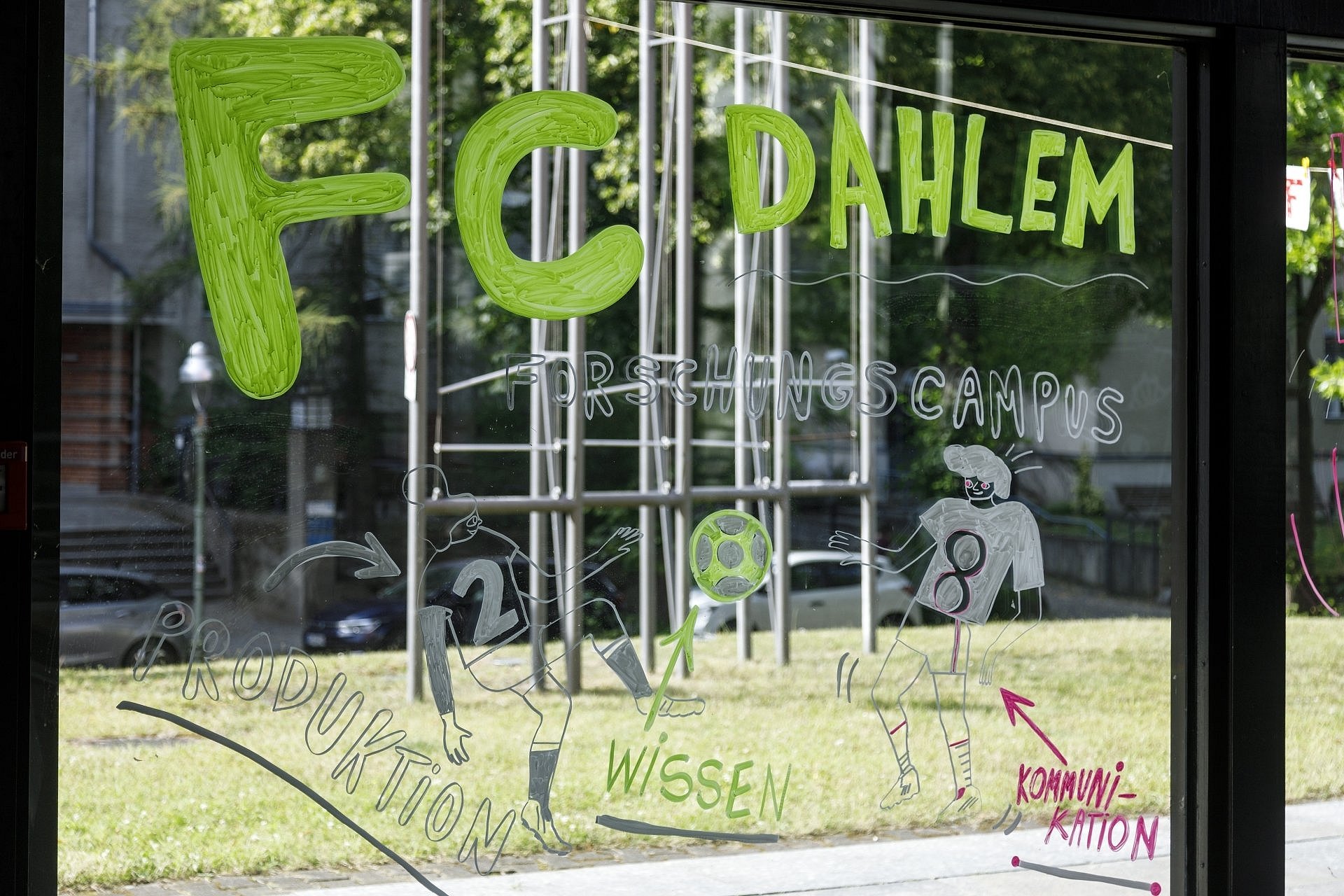
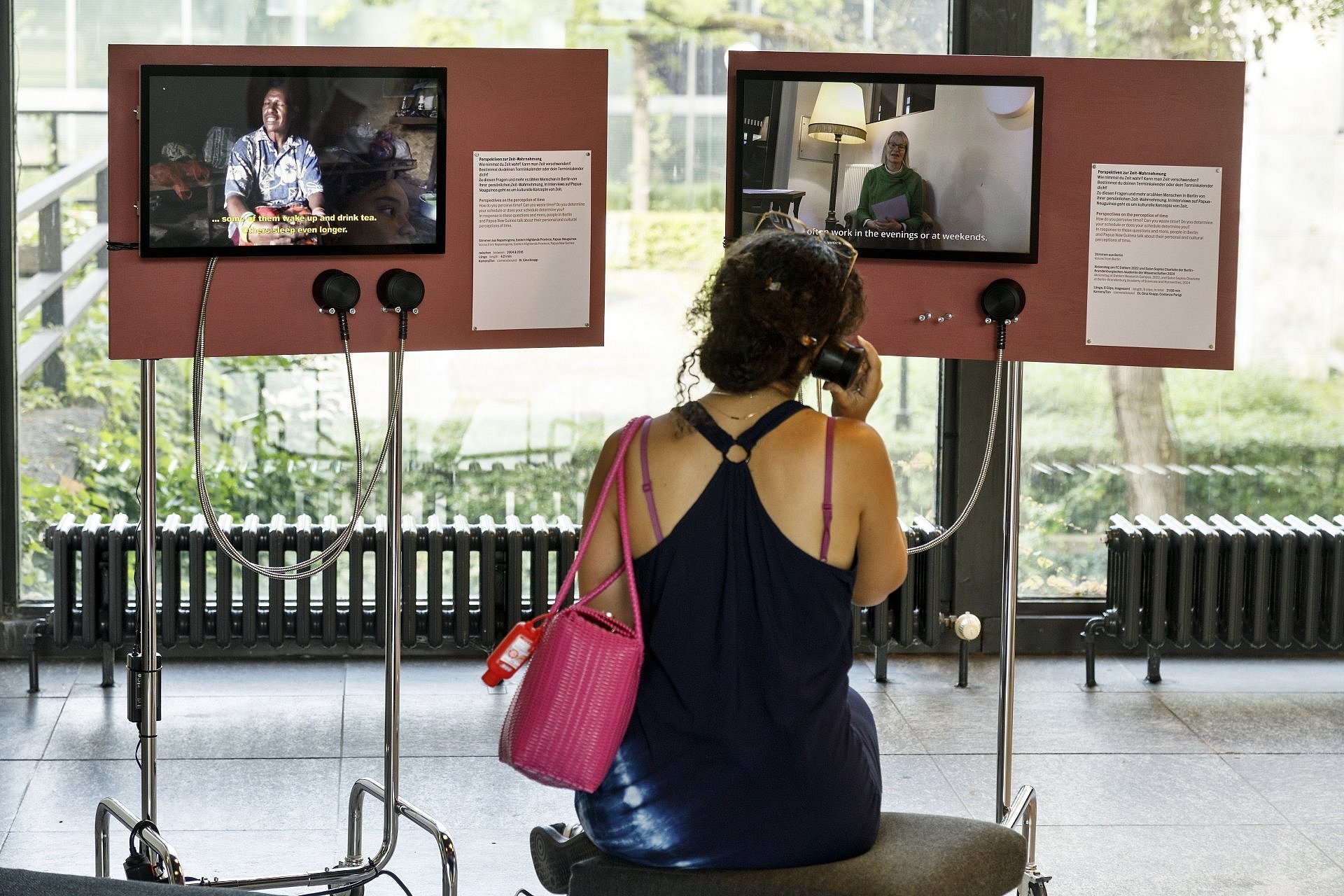
The recently opened DenkRaum is central and vital to the FC Dahlem. What we’re doing there isn’t an exhibition in the conventional sense; we don’t want to create yet another museum. We want to offer a glimpse behind the scenes of museums and showcase the work that’s otherwise invisible.
Furthermore, the Research Campus aims to bring together various disciplines: it is usually not enough to simply look at an object as an archaeologist; it is worth consulting an ethnologist, a natural scientist – depending on the focus I adopt. If we implement this well and consistently at the Research Campus, then ideally it will also have an impact on the SPK as a whole, namely by creating a space where one steps outside one’s discipline, harnesses synergies and actually works across disciplines. And last but not least: at the Dahlem Research Campus, we are also concerned with de-hierarchising knowledge. This is an aspect that I personally find very important – perhaps because I myself come from a traditional working-class background. I’ve gained so much knowledge from my parents, though none of it is academic. Nevertheless, this knowledge is immensely valuable to me, whether it’s practical skills or experiential knowledge. In my view, museums must open themselves up to the knowledge of others. The Research Campus is intended to encourage this knowledge to be passed on.
Can you give an example of this?
Take prehistoric archaeology. S-shaped objects made of bone were regularly found there. They date from the Palaeolithic period, so they are from the Old Stone Age. For many years, archaeologists did not know exactly what these were or what they were used for. People speculated that they might be jewellery, earrings, or some kind of body or head adornment, etc. Then, working together with ethnologists, they took another look at these artefacts and realised that they were spear throwers.
Okay, we understand that. But how can a craftsman’s or craftswoman’s knowledge be useful to you?
Here’s an example from when I was writing my master’s thesis. I was writing about the Late Iron Age. At the time, I was examining an Iron Age craftsman’s hoard containing a great many objects, such as hammers and files. There were also two so-called fire stands in the hoard. I had no idea how to use them. It only became clear to me after talking to craftspeople. That is exactly what I mean when I talk about the de-hierarchisation of knowledge. I have another example from my time at the Berlin Botanical Garden. There, we launched a project called ‘Big Picnic’, which focused on the food of the future. It was designed as an intergenerational project. For instance, older people told their grandchildren and other young people how they used to eat after the war, which plants they picked, and which ones were edible and which weren’t. The botanists, for the most part, couldn’t say that precisely anymore. So we worked very closely with a care home here in Dahlem.
And who should come to the Dahlem Research Campus?
We discussed this at length. Internally, we naturally think of people from the so-called communities of origin of the objects in the collections, who are invited to work with and research these objects. Apart from that, however, it is primarily people from the neighbourhood – the local public – whom we can and wish to reach through FC Dahlem. The people of Dahlem are incredibly active and interested. The Research Campus is also specifically designed to foster links with Dahlem, Zehlendorf and Steglitz. It is worth noting here that small museums in Germany, away from the major cities, have had far fewer problems recovering after the pandemic. The reason for this is that they rely heavily on their local visitor groups rather than on tourists. As a result, people’s connection to ‘their’ museum is, in many cases, much stronger. The Gasometer in Oberhausen is a good example. Although it is not that old, it has become a landmark. Like almost all other cities in the Ruhr region, Oberhausen has found itself in a difficult situation due to structural change. The Gasometer stepped into this vacuum with its programme, resonating strongly with people and satisfying a need for identification. Admittedly, Dahlem is very different from Oberhausen, but I nevertheless believe that the research campus can also fulfil such a function.
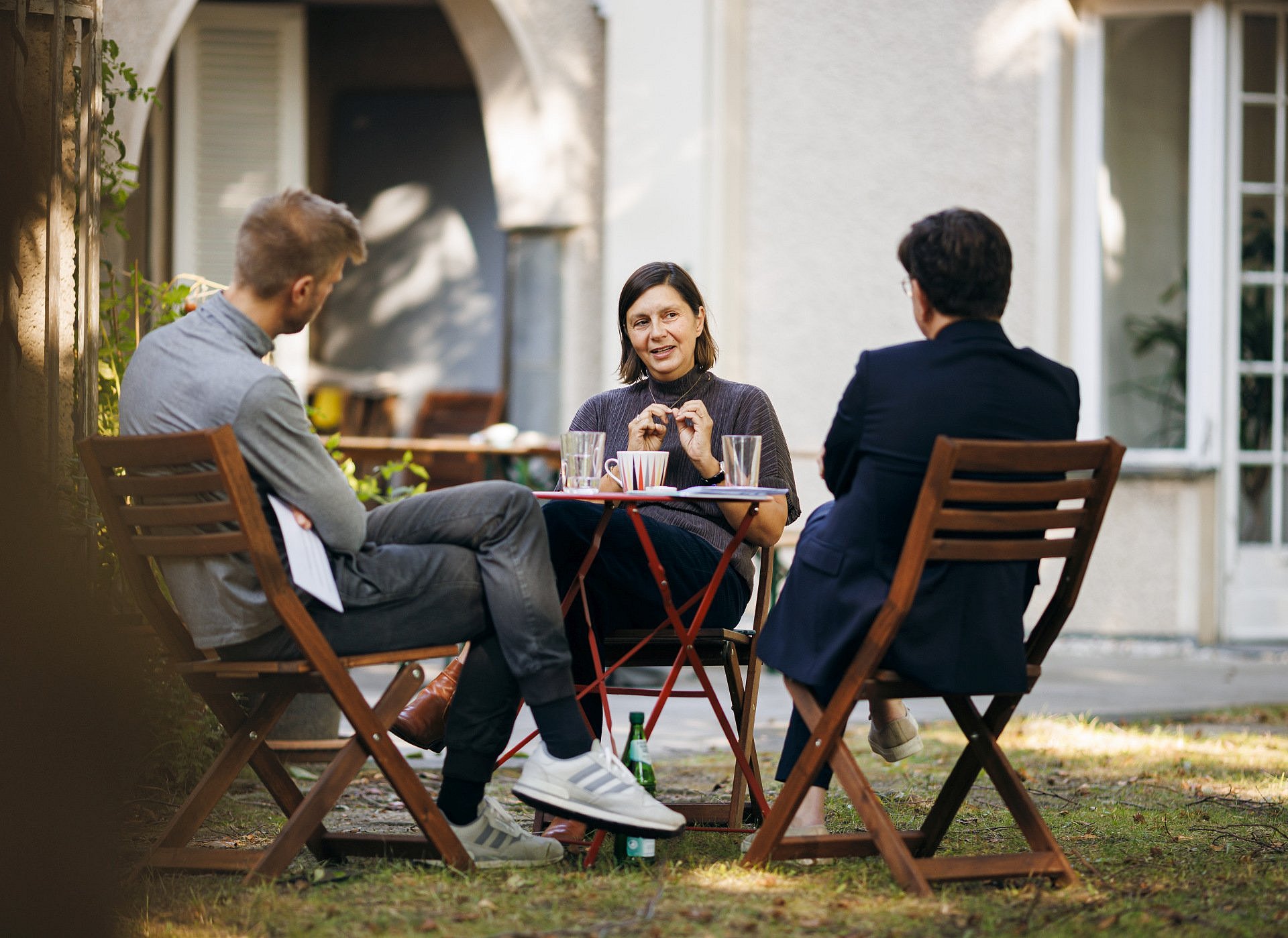
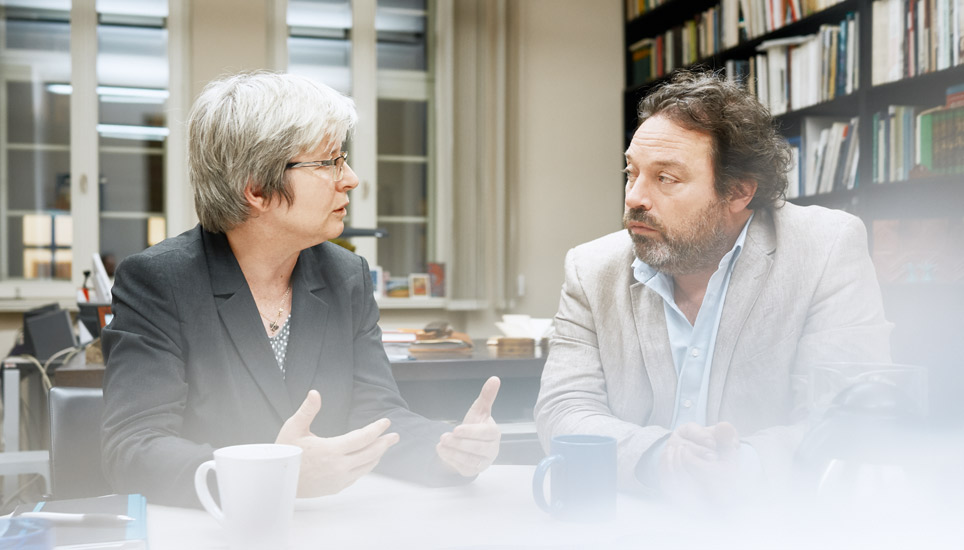
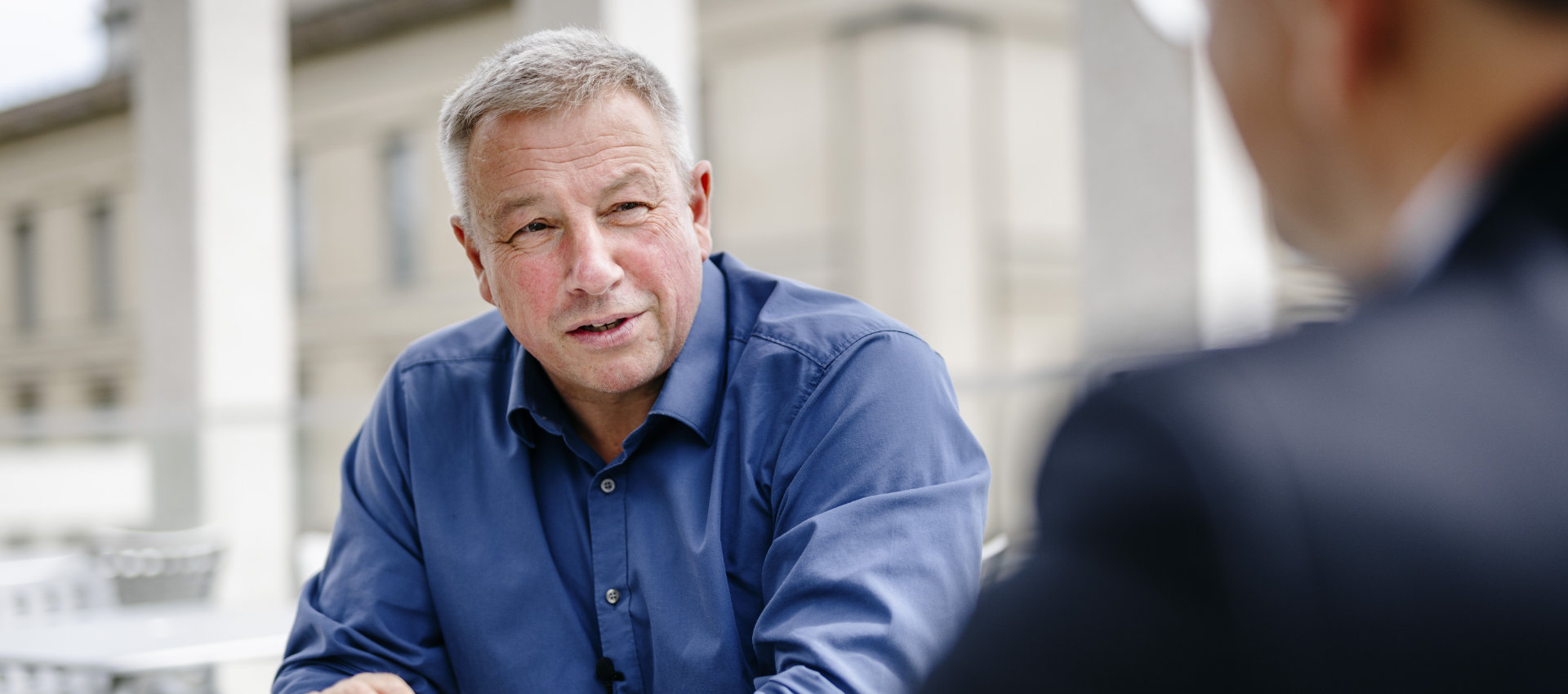
A villa with connections: The editors of SPKmagazin talk to Patricia Rahemipour in the garden of the Institute for Museum Research.
Photo: SPK / Photothek / Felix Zahn
Ms Rahemipour, you are a member of the SPK’s interim board, where the foundation’s major issues are discussed. Are you able to effectively represent the interests of the Dahlem site there?
Metaphorically speaking, it’s a bit like a political party that derives its identity from perpetually being in opposition. Of course, the major players play a significant role here too. And naturally, I sometimes have to campaign very vocally on behalf of Dahlem. The research campus can only go as far as its staffing and financial resources allow. Dahlem doesn’t have it all that easy in that respect. The site isn’t treated with the same matter-of-factness as others. However, I am firmly convinced that, in the long run, the SPK would be well advised not to overlook the Dahlem site. It’s a bit like the district of Prenzlauer Berg, which closed all its schools in 2003 and was then completely taken by surprise when the first children from the baby boom generation started primary school in 2009.
And I believe this effect will also catch up with Berlin in terms of its museum and cultural landscape. At some point, the city centre will be full. And then, at the latest – Visit Berlin is already drawing attention to this – we will have to decentralise and make use of other locations as well. As explained, we can achieve precisely that in Dahlem by adopting a different approach. Thinking further ahead, and with regard to target groups, we can, for example, attract tourists who have been to Berlin frequently and have already seen everything – who, so to speak, have already taken the selfie in front of Nefertiti – to Dahlem, to take a look behind the scenes at the SPK, which we are able to offer in collaboration with FC Dahlem.
Finally: What would be your wish for the future, both for the Institute for Museum Research and for the SPK as a whole? Is there a vision that particularly appeals to you, that is especially important to you?
I’m really one of the fans of the SPK reform. If the Foundation manages to maintain this momentum, this constant realignment – even if perhaps not always at this extremely high pace – then we’ll pull off the transformation. If that succeeds and we continue to look left and right, so to speak, in the future, the Foundation can shine locally, nationally and internationally. And then it’s also a wonderful place to work.