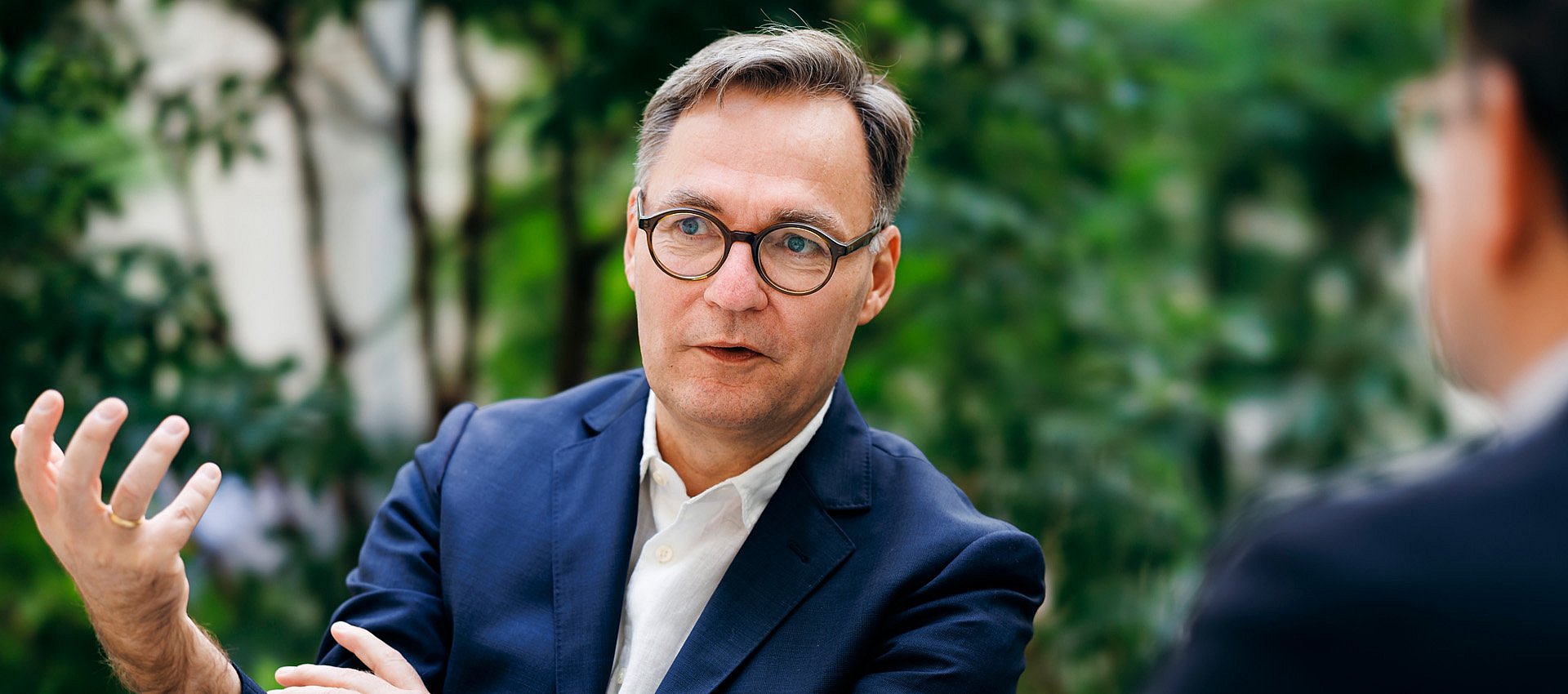
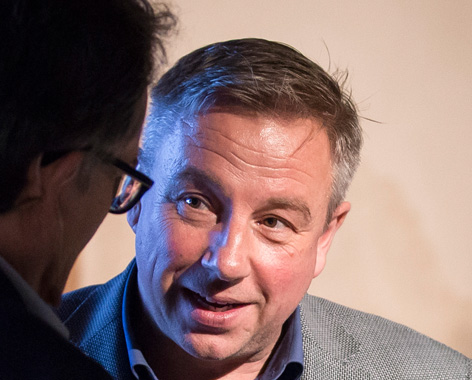
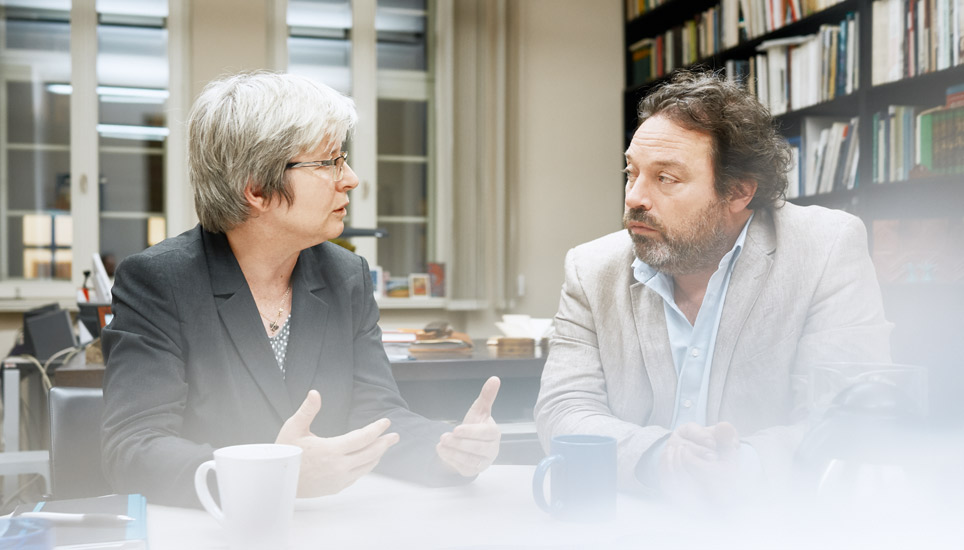
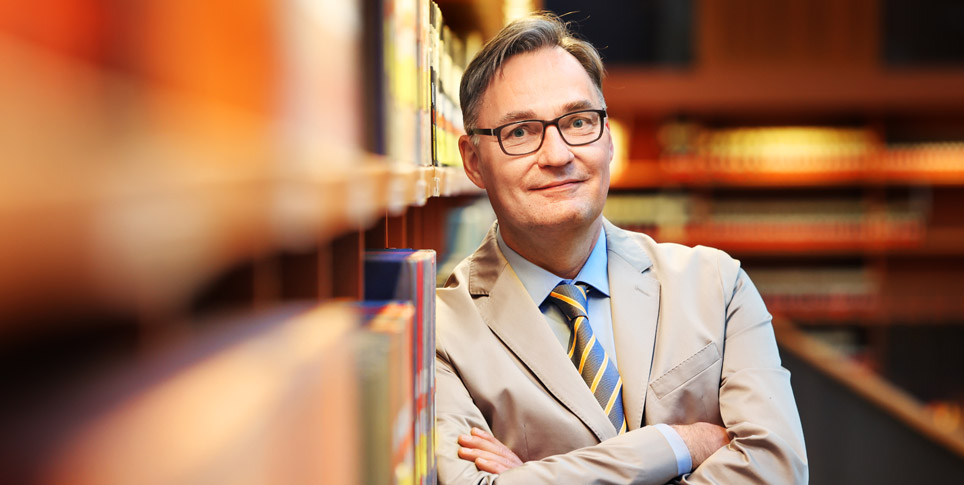
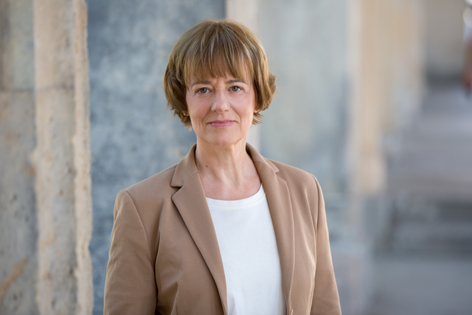
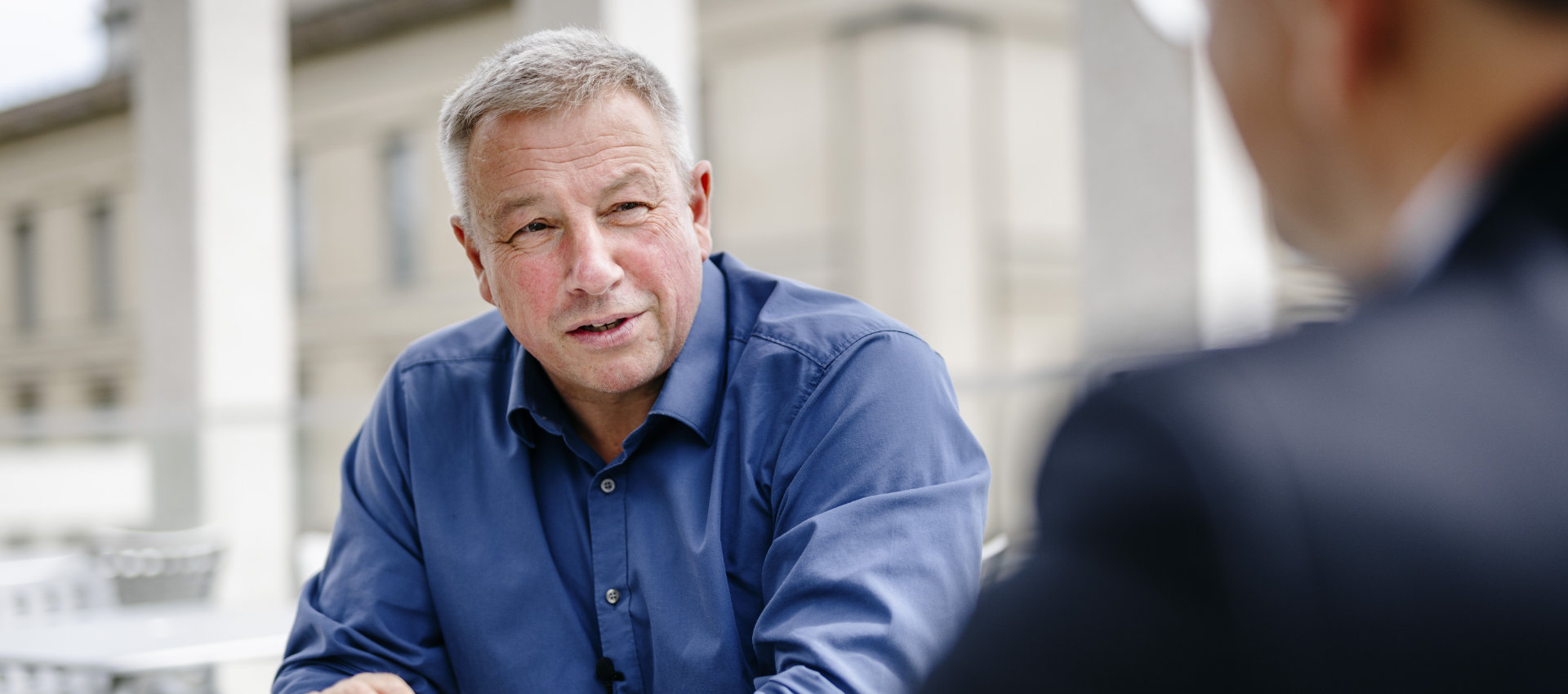
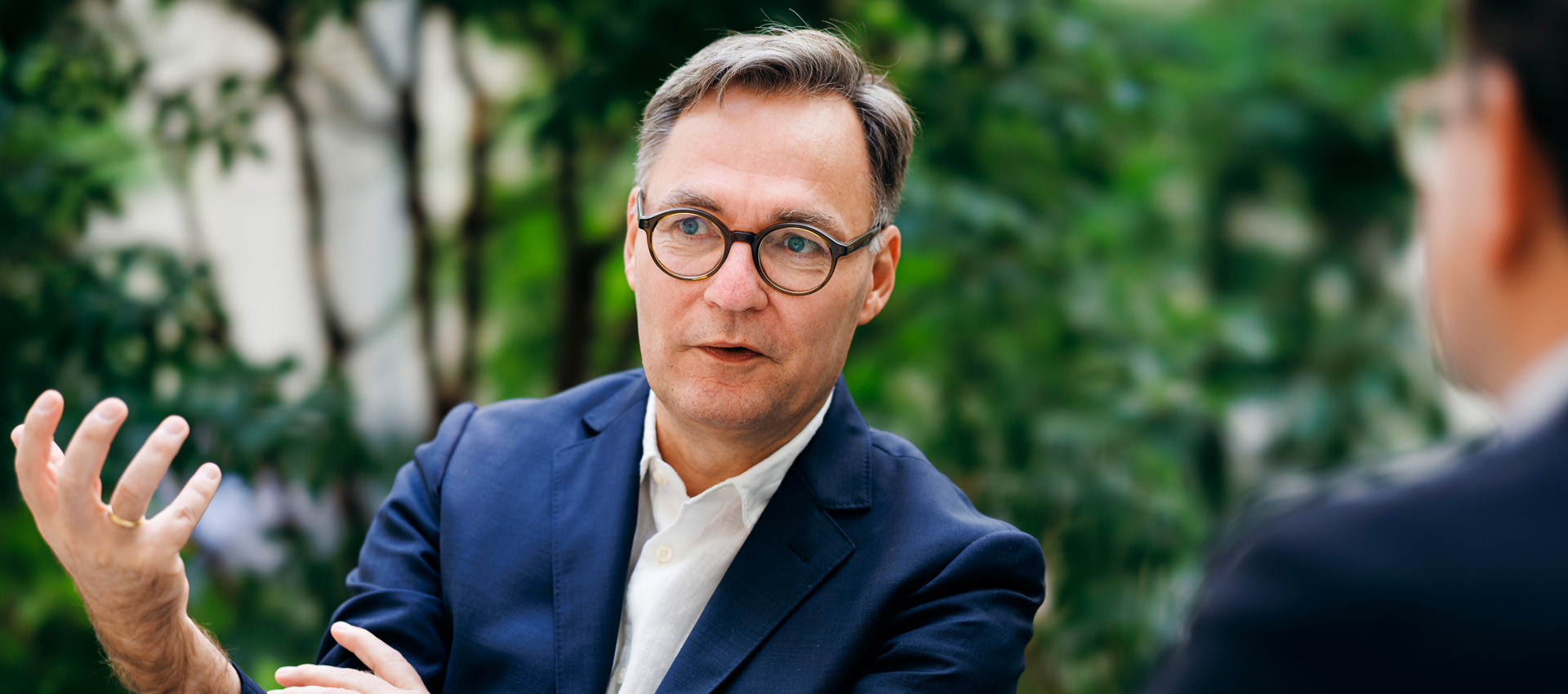
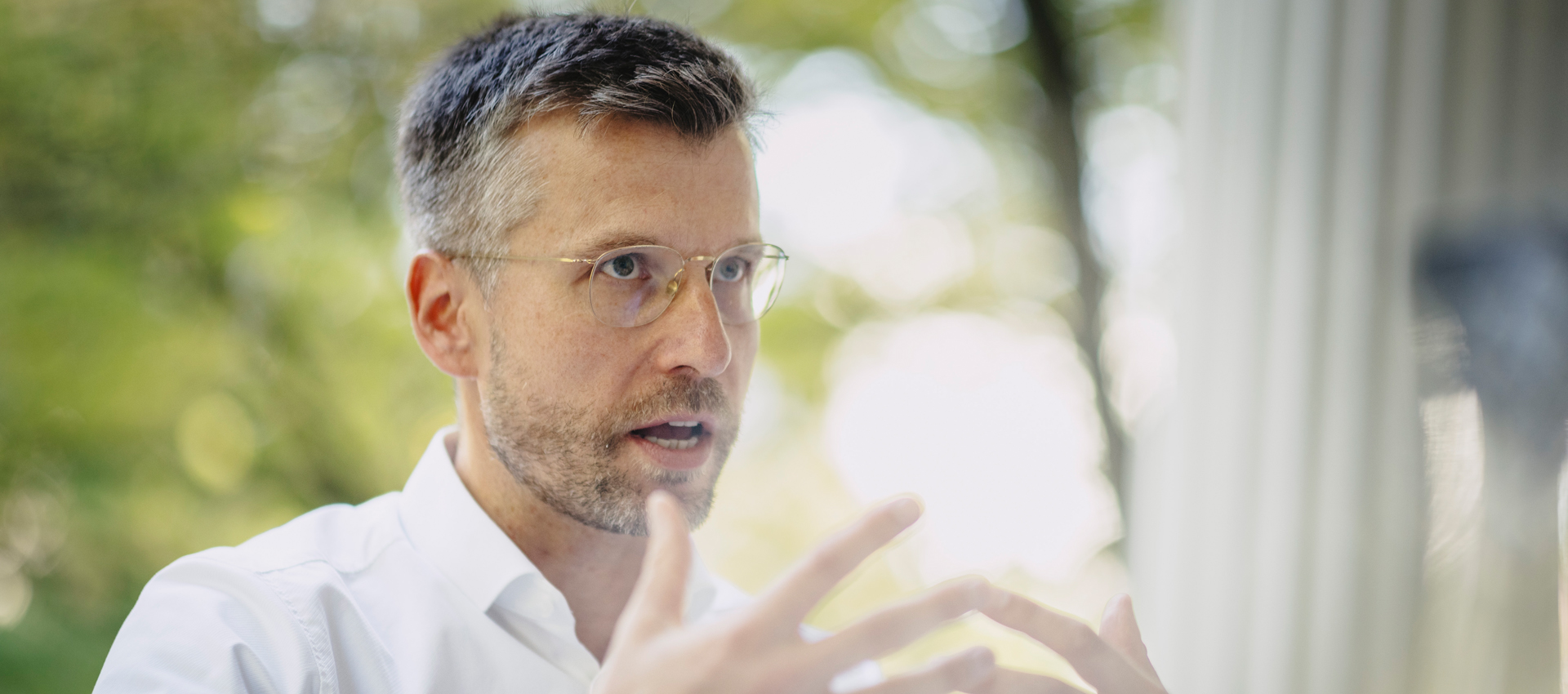
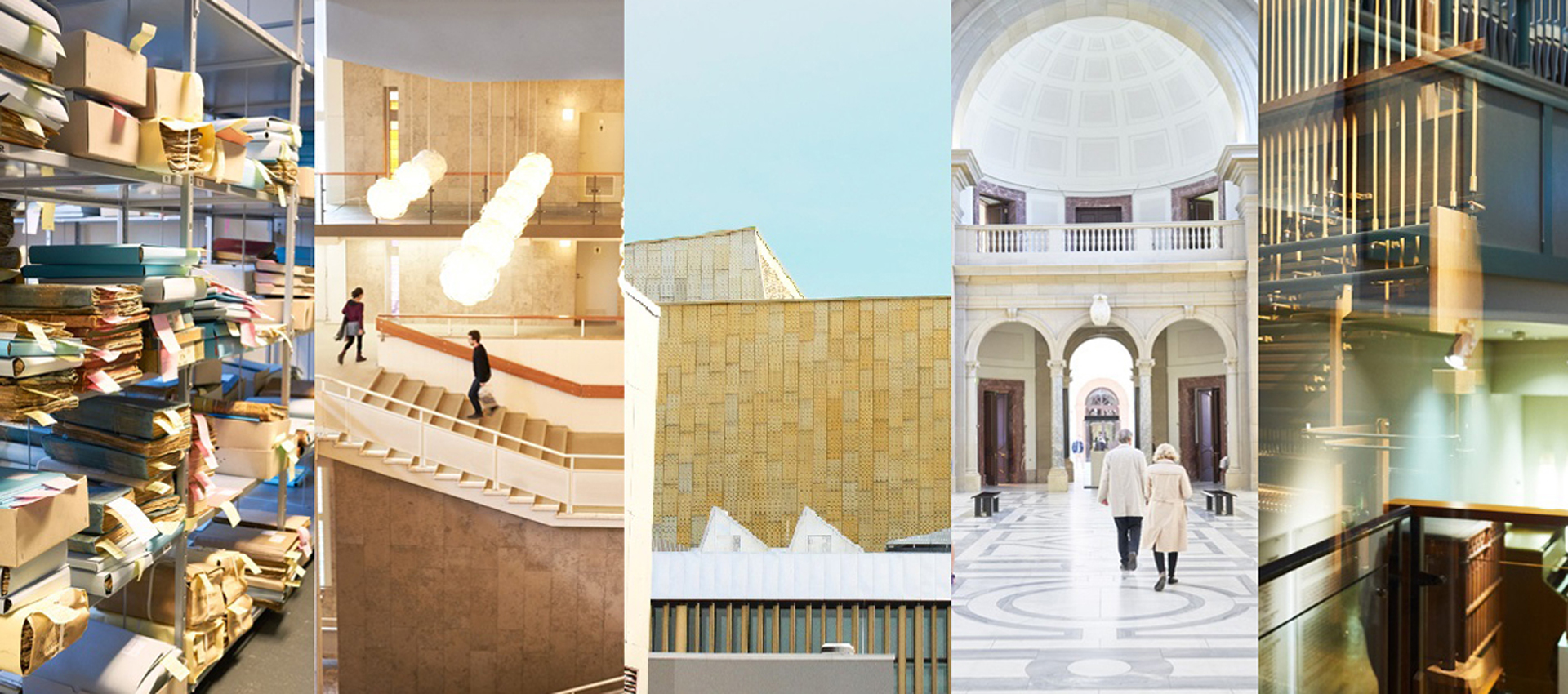
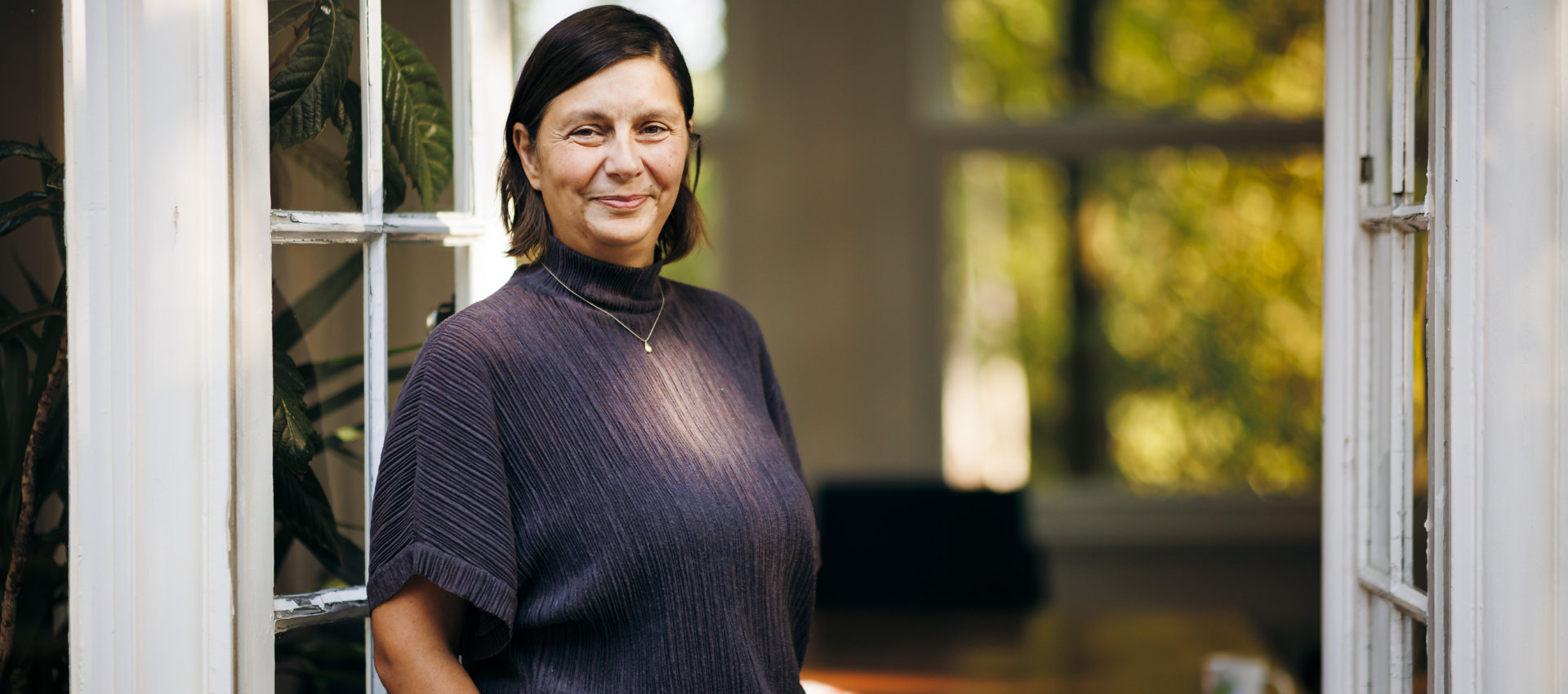
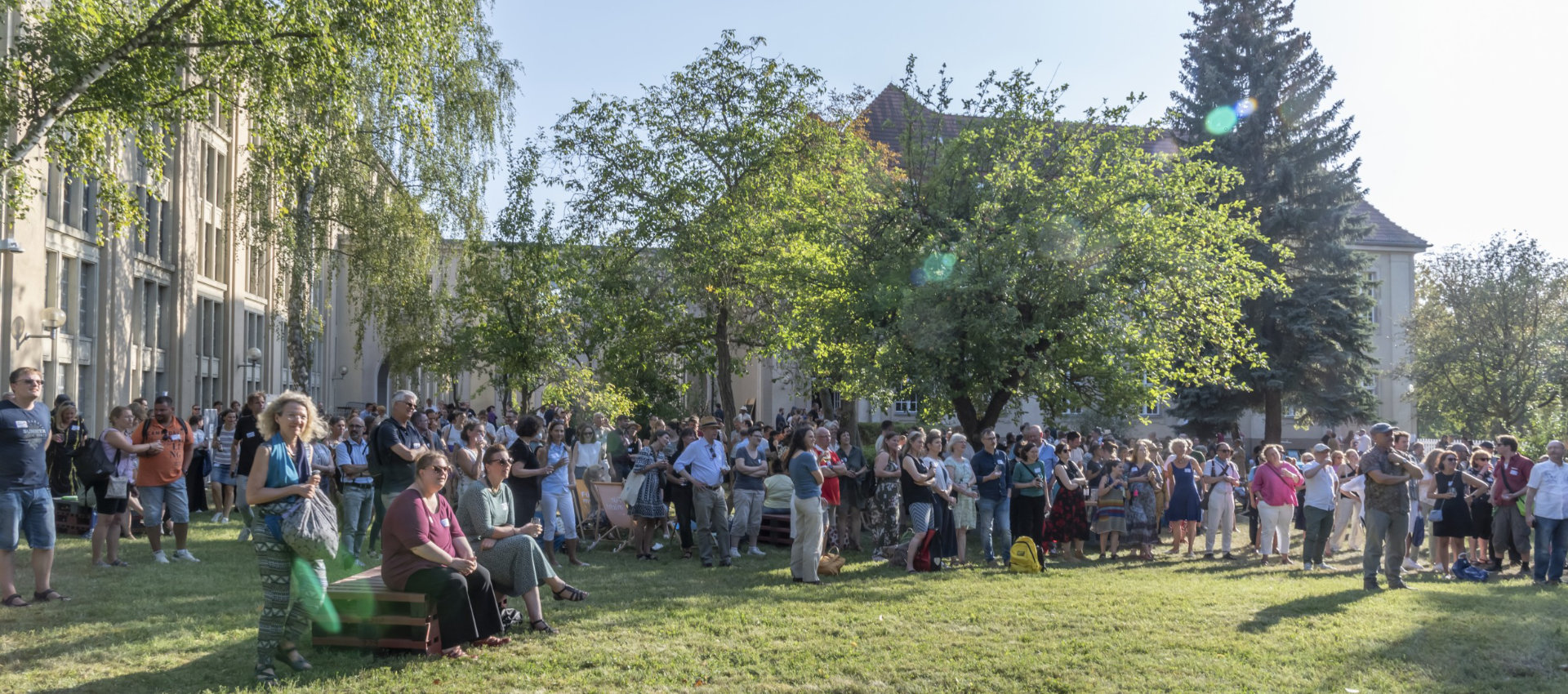
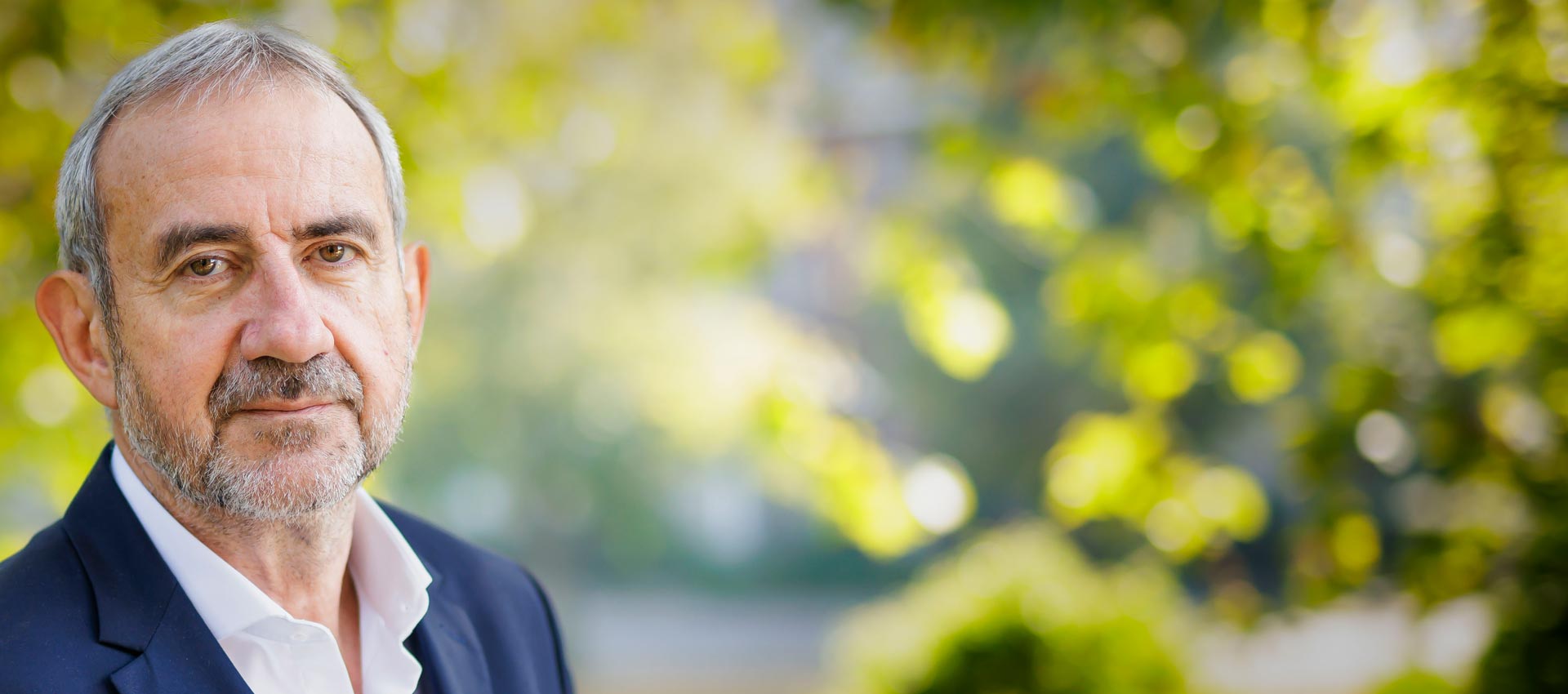
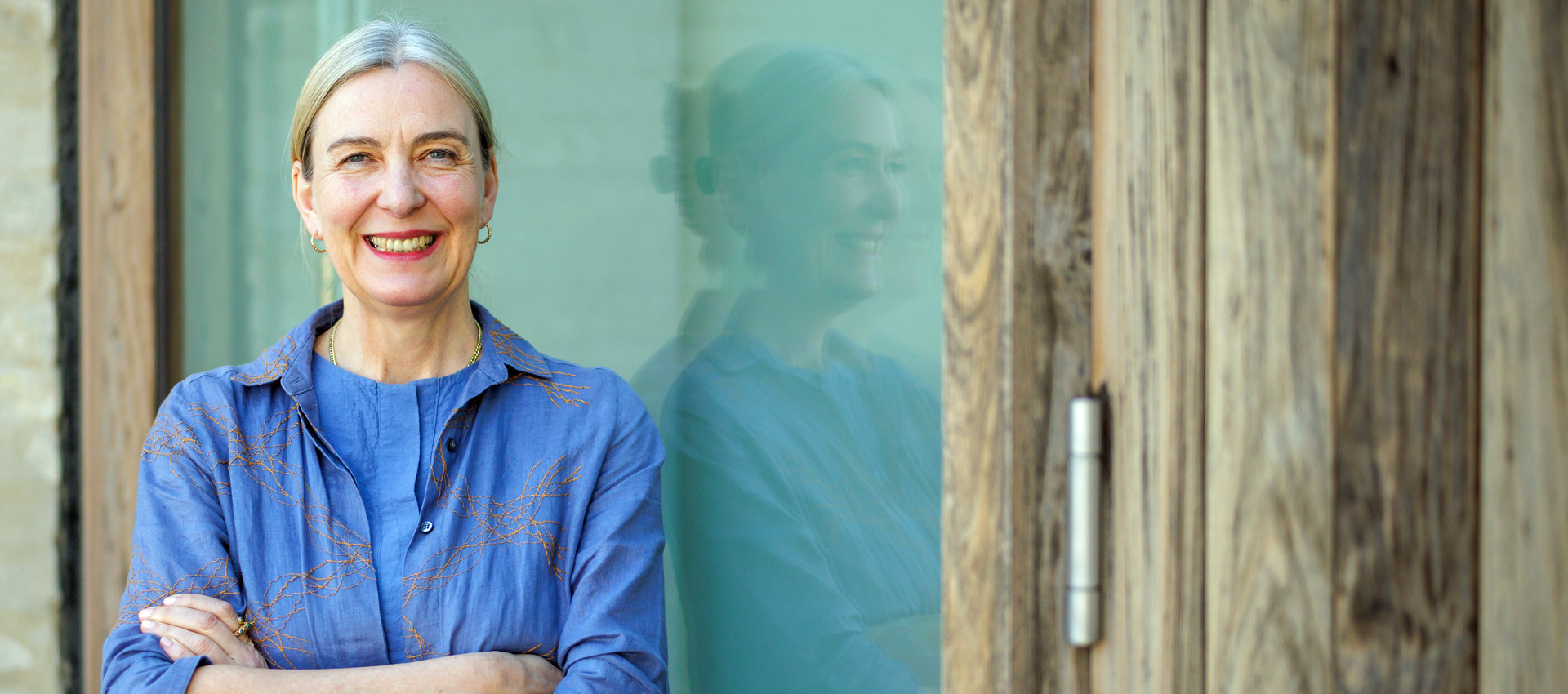
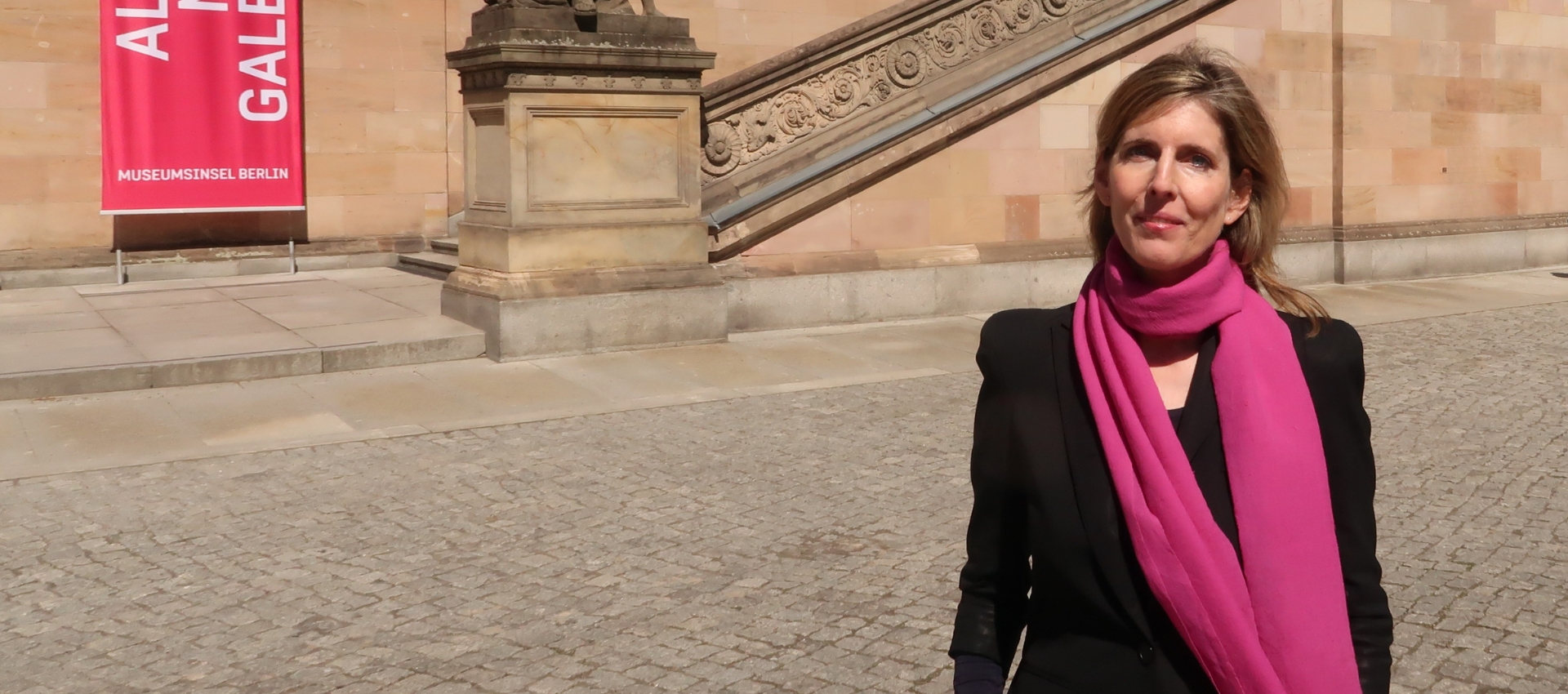
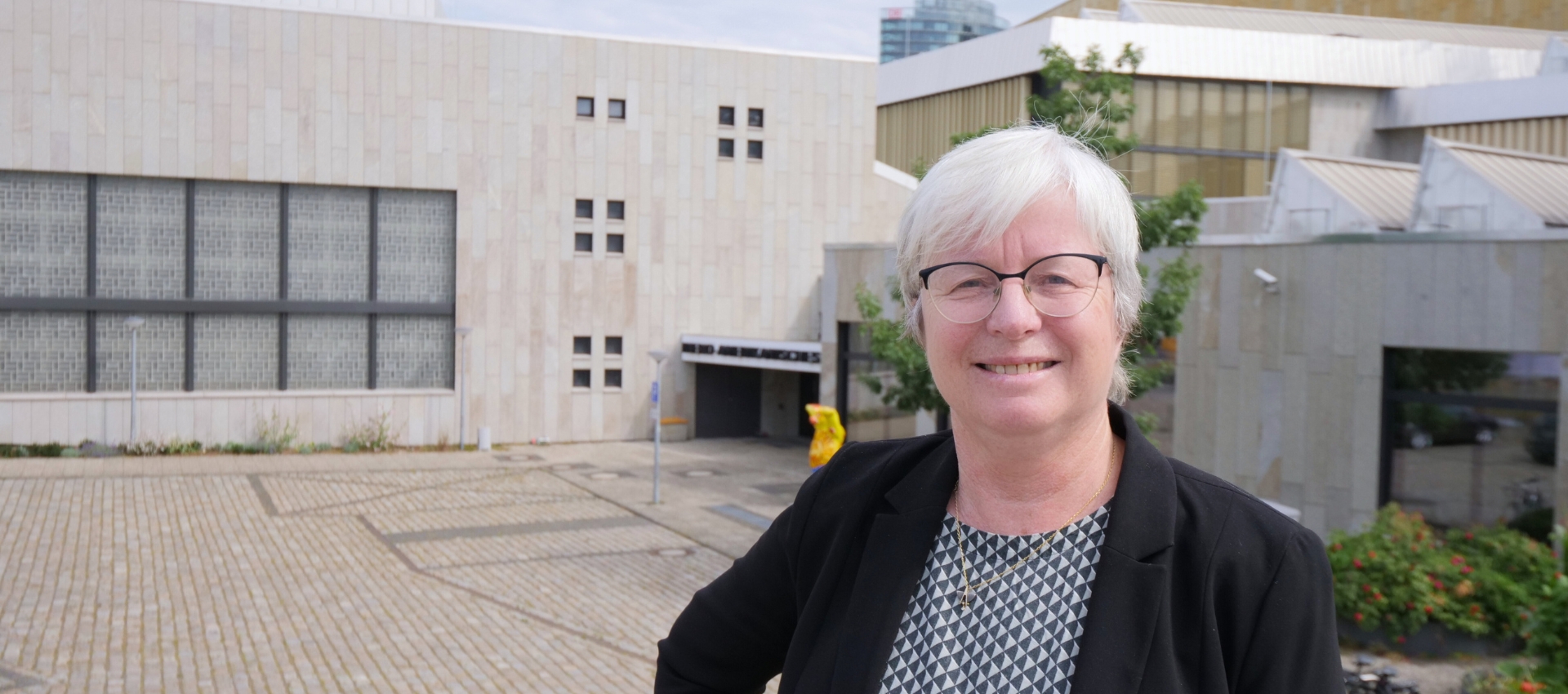
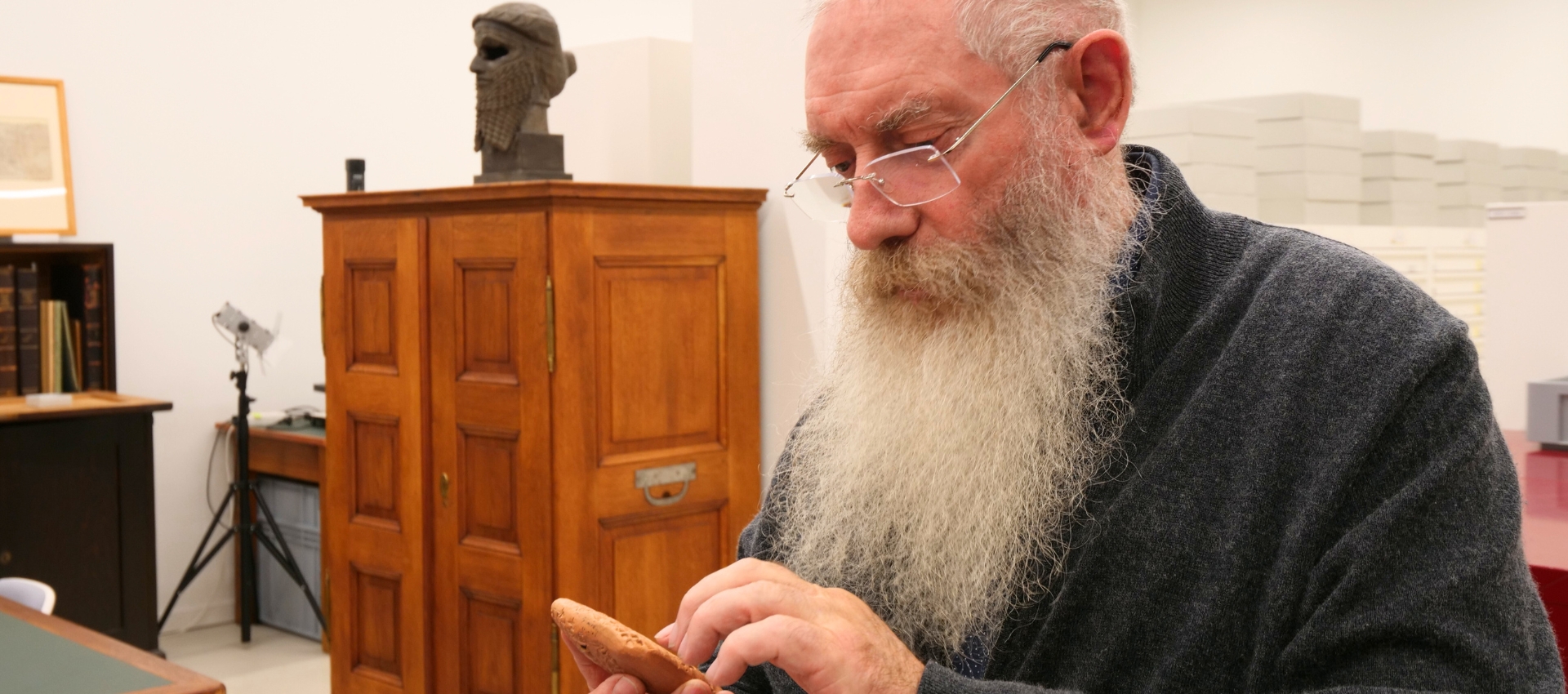
“What the big institutions can do, we’ve been able to do for a long time.” That’s what we thought, and so we’re launching the SPK Summer Interviews. We’ll be meeting the Foundation’s key figures at its most beautiful locations to interview them. We’re kicking things off with Matthias Wemhoff, Director of the Museum of Prehistory and Early History and a member of the SPK Interim Executive Board.
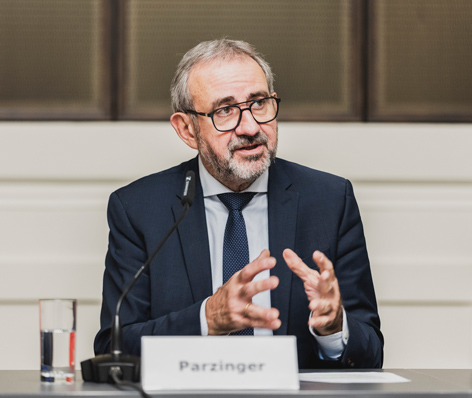
Even before the summer break, it was clear that Marion Ackermann would succeed Hermann Parzinger as the first president of the SPK. A good choice?
Matthias Wemhoff: Yes! There will be continuity, because Marion Ackermann is already familiar with the Foundation’s key issues, as well as with the management of a large network. I also greatly appreciated that, in her first press conference, she emphasised that she is looking forward to a collegial board.
The SPK is in the midst of a major reform phase, but one that is apparently not well known. Why else would the media be talking about the museum network ‘diminishing itself’?
What is happening right now has been developed from within the museums themselves. When the Science Council recommended dissolving the SPK, it was clear to us: we don’t want that! It is precisely the network of all forms of heritage and cultural artefacts that is in keeping with the times and moves us forward. But the complexity of the structure at the time, involving both the General Directorate and the Foundation’s management, urgently needed to be changed. We wanted greater autonomy for the museums, and the foundations for this have now been laid. The scope for individual directors to shape the direction and focus of their institutions has been vastly increased through the allocation of budgets and a high degree of autonomy. By the end of the year, museum teams will also have been established at the various sites to carry out joint tasks.
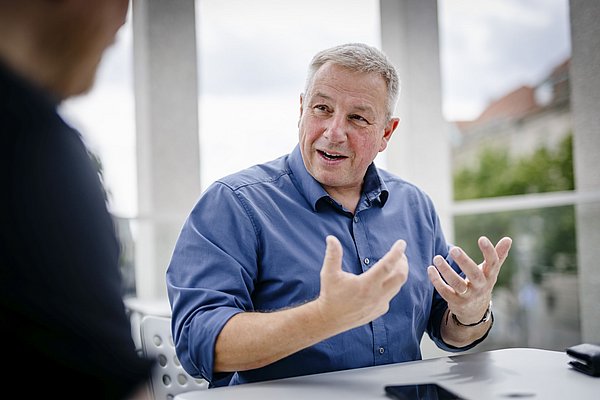
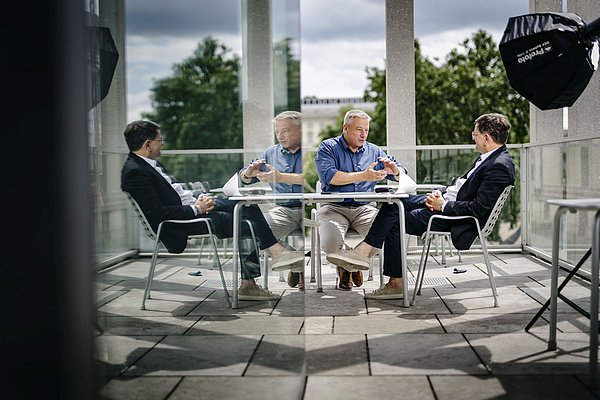
But aren’t the ‘teams’ tasked with managing the museums at their respective locations starting out with half-empty tanks? After all, they’re short of both funds and staff.
That’s true. We need better funding and staffing. The shortcomings, particularly in the areas of public relations and educational work, are now well known to everyone. Discussions are currently underway between the federal and state governments, and I’m very pleased that it has already become clear within the Foundation Board: everyone is pulling in the same direction!
There was also talk in the press of ‘lethargic years’ under President Parzinger. Isn’t that the world turned upside down?
I find that completely inappropriate! Over the past sixteen years, things have moved incredibly fast; there have been massive developments. Let’s see someone else try to match that. The Humboldt Forum, with all the intense debates, the discussion about colonialism and provenance – all of these have been entirely new developments that would have driven many to despair. I think Hermann Parzinger set this in motion and managed it properly, without losing his cool. He was able to represent the Foundation Association in all its diversity and keep an eye on everything. And he made the reform his own cause. On Museum Island, you’ll be able to feel the breath of fresh air very soon. Incidentally, the SPK is not just about contemporary art. As a newspaper reader, one can often get that impression. Parzinger has always represented the SPK in all its diversity and kept it on track overall. That will remain!
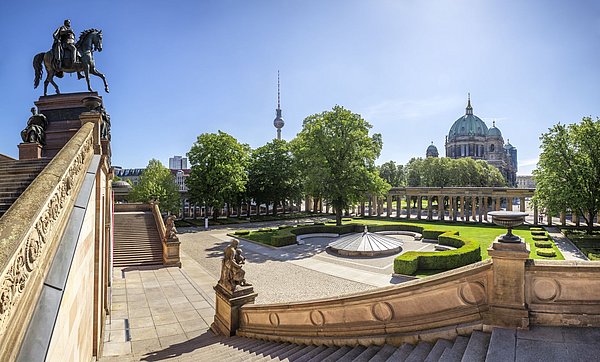
Speaking of a breath of fresh air on the island. Where and how is it blowing?
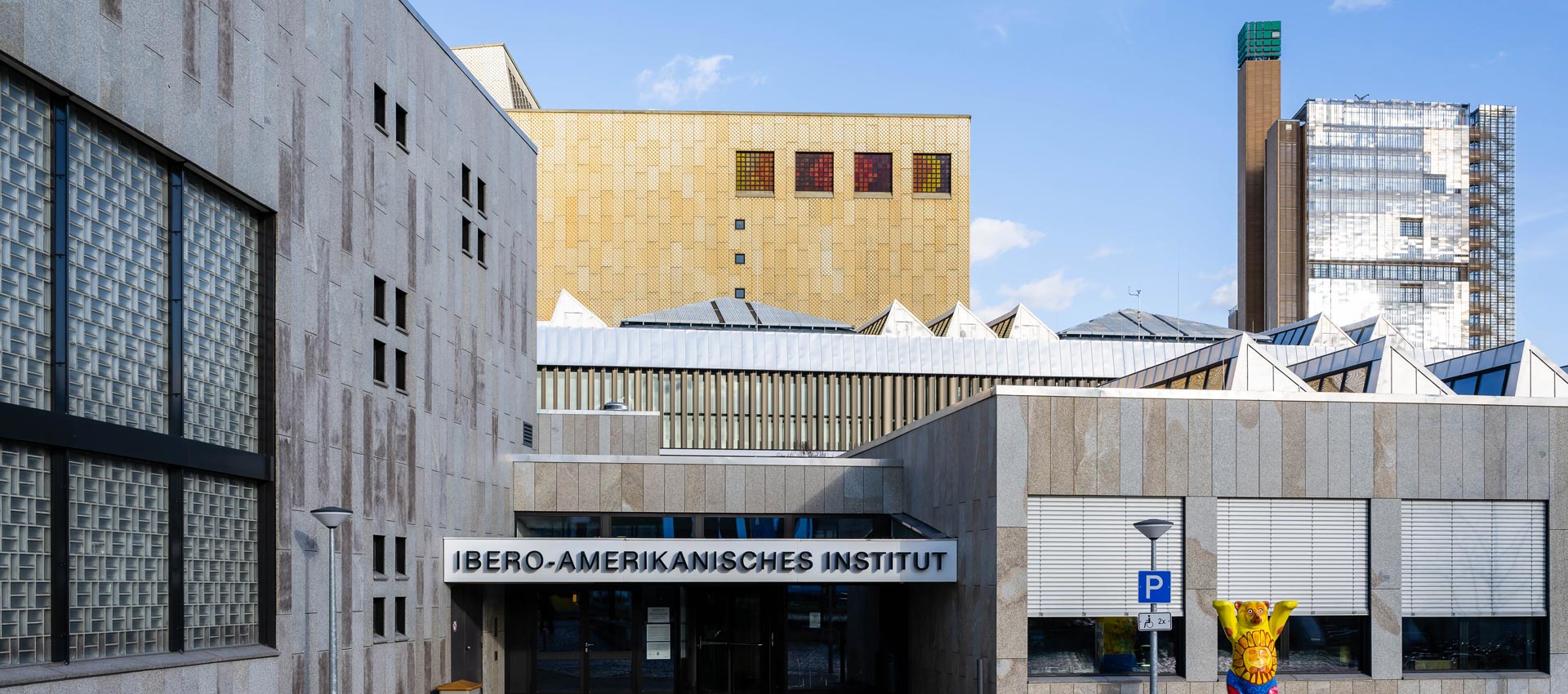
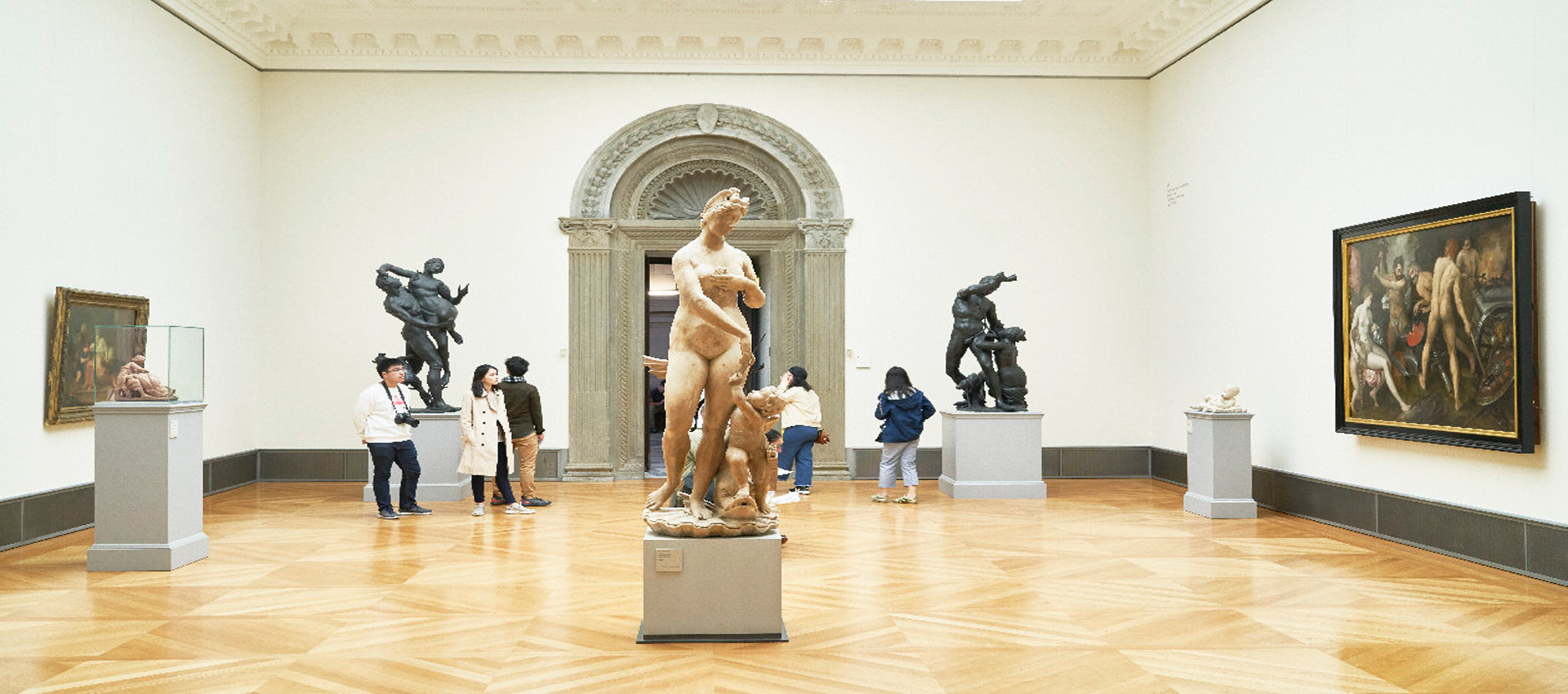
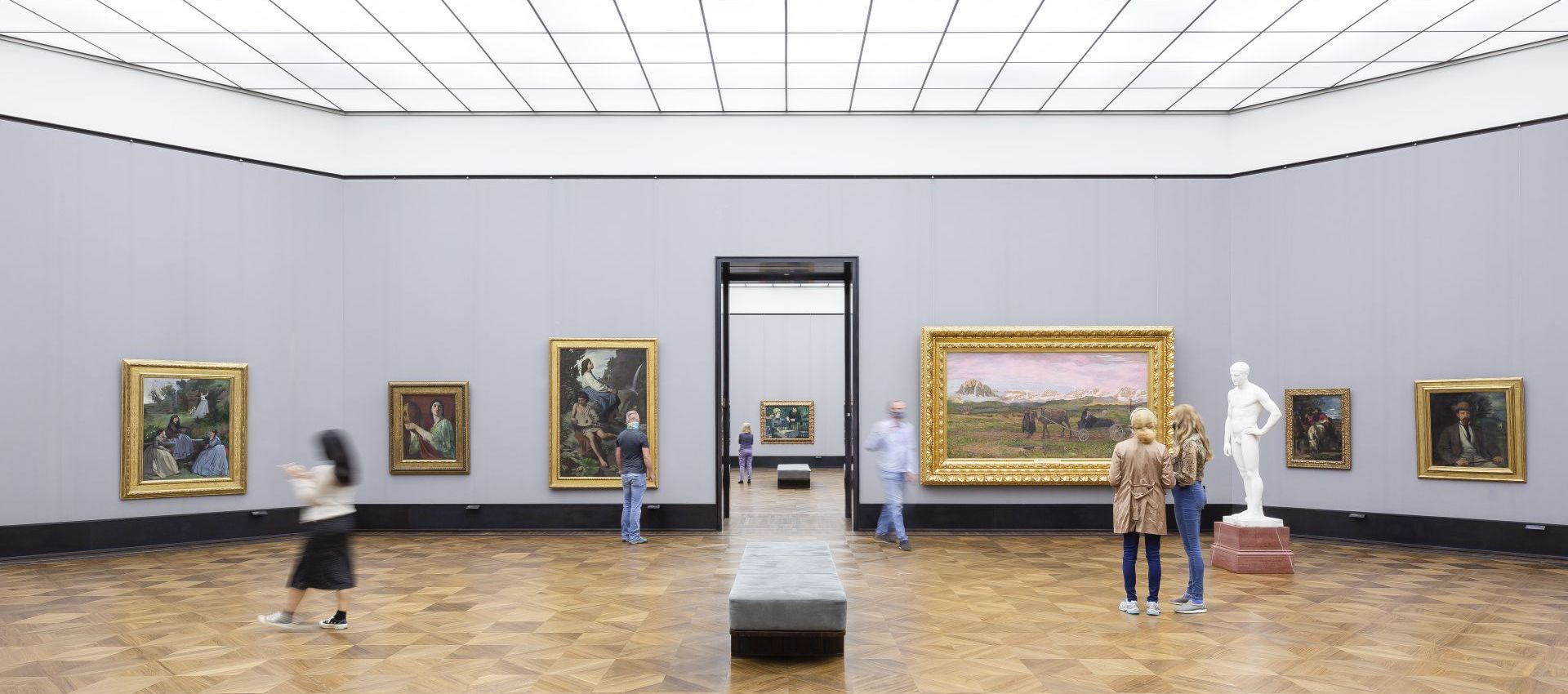
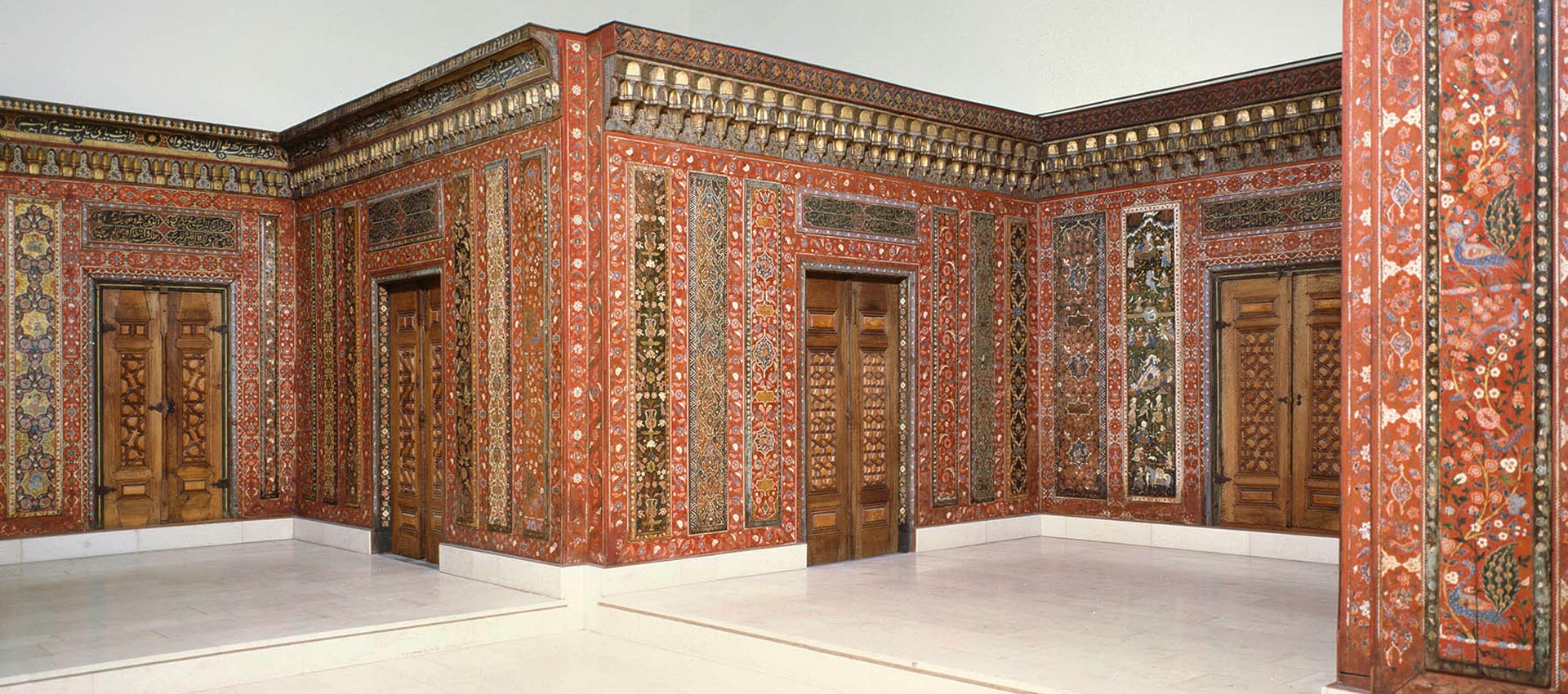
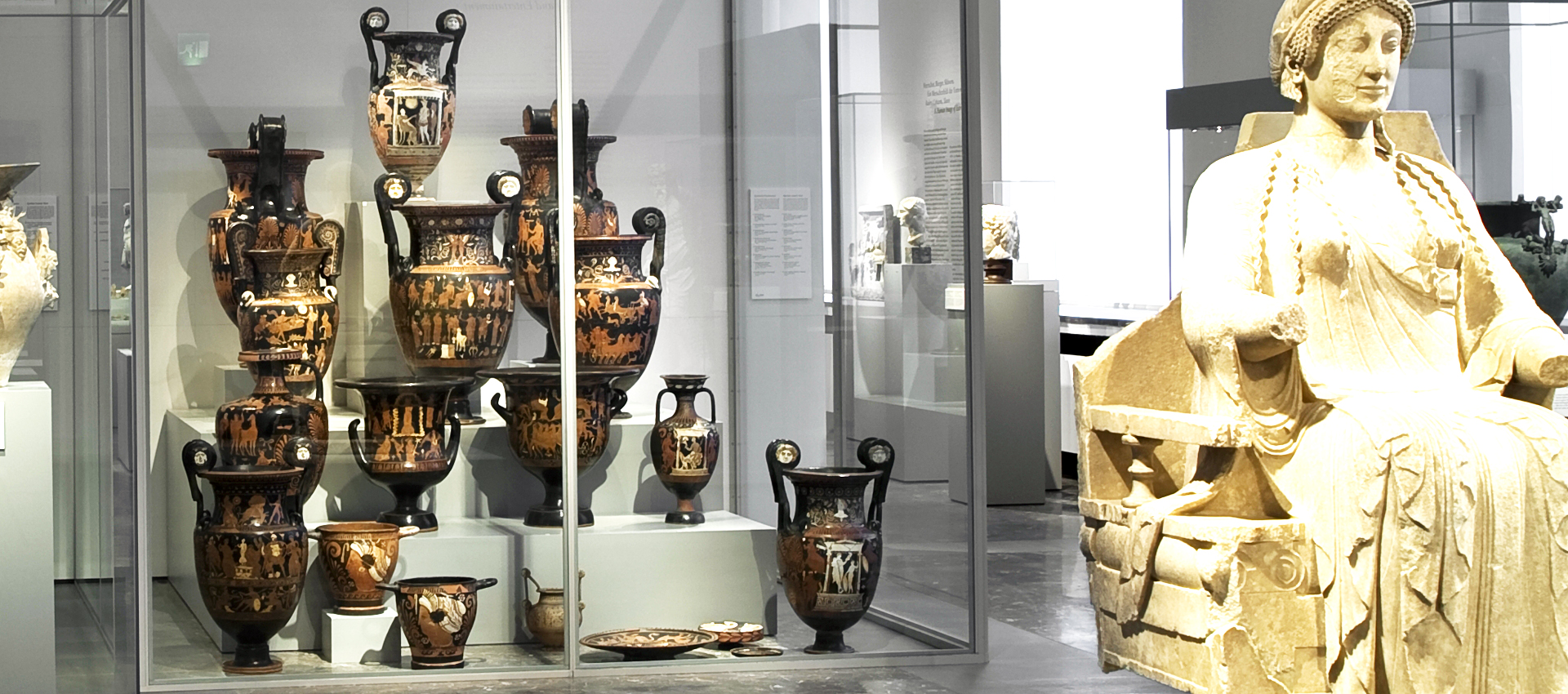
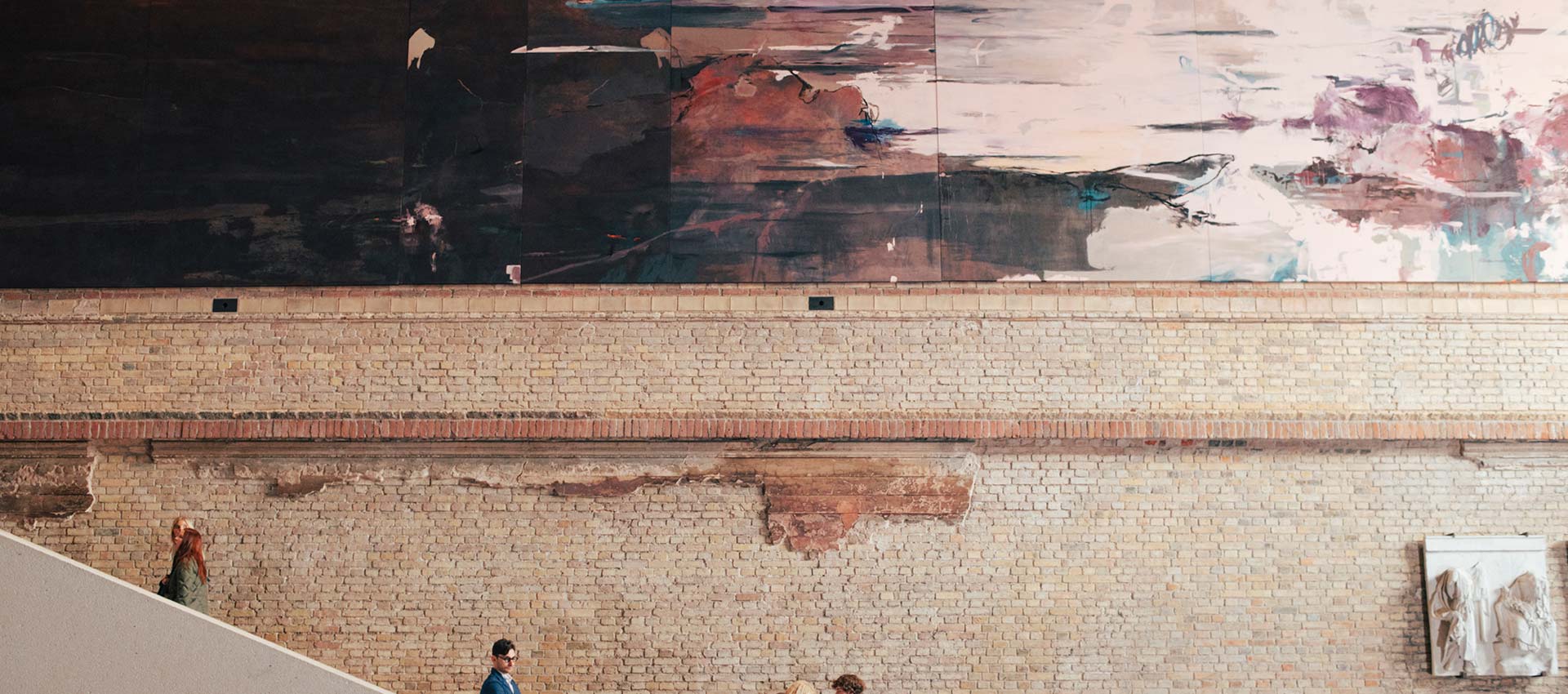
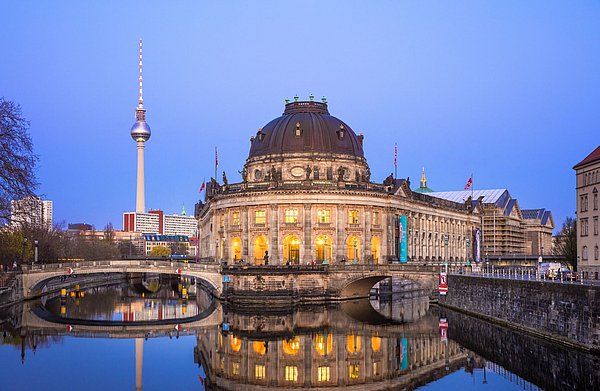
Here on Berlin’s Museum Island, we have made a conscious decision to work together with all the resident museums and to present the island to the outside world, to visitors, as a single entity. Our guests don’t mind whether they are wandering through the rooms of the Museum of Prehistory and Early History or the Egyptian Museum here at the Neues Museum. In the Pergamon Museum, too, visitors have previously moved through the rooms and experienced exhibits from the Museum of the Ancient Near East, the Collection of Classical Antiquities and the Museum of Islamic Art as a single entity. Essentially, here on Museum Island we offer a unique panorama of the cultures of the ancient world. And with the Museum of Byzantine Art and the Sculpture Collection in the Bode Museum, we can extend this arc right through to the Renaissance and beyond.
So, essentially, it’s about attracting more visitors?
The potential is certainly there! The collections naturally have their own distinct focuses; they are absolutely unique from a scholarly perspective, even internationally, and each one explores different facets. But for visitors, there must also be a good overall impression and an engaging visitor experience.
Things are moving forward on Museum Island. The Caspar David Friedrich exhibition at the Alte Nationalgalerie was a success, and the exhibition on the Nile island of Elephantine at the Neues Museum is also going well. At the same time, there are additional closure days and the effects of the coronavirus pandemic are still being felt. Are you still confident?
I am absolutely convinced that we have real strengths here on Museum Island that we must capitalise on. The building works at the Pergamon Museum are a challenge, but also an opportunity. The North Wing will open in three years’ time.
The additional closing days are, of course, very unfortunate, and we hope that we will have adequate funding next year. This is clearly a call to action for politicians. We need this too, because next year we want to celebrate the 200th anniversary of the laying of the foundation stone for Museum Island. Over the next five years – leading up to the 200th anniversary of the opening in 2030 – we want to keep the spotlight on different museums and themes, and we have already begun working on the programme together with VisitBerlin, the State of Berlin and other partners.
The financial difficulties arose primarily due to losses during the pandemic. Are you still feeling the effects of the Covid-19 period?
Here on the island, we are heavily dependent on how tourism changes. The decline in visitor numbers we are seeing this year is linked to the fact that BER Airport is not operating at full capacity. The number of low-cost flights from Europe has fallen significantly since last year. Berlin is the only airport that does not currently have the same passenger volume as before the pandemic. We feel this directly on Museum Island. International connections, for example to Asia and America, are also largely missing so far. In terms of content, we can be compared to the Louvre or the British Museum, but then one must also look, in the same breath, at how many international flights arrive in Paris and London every day.
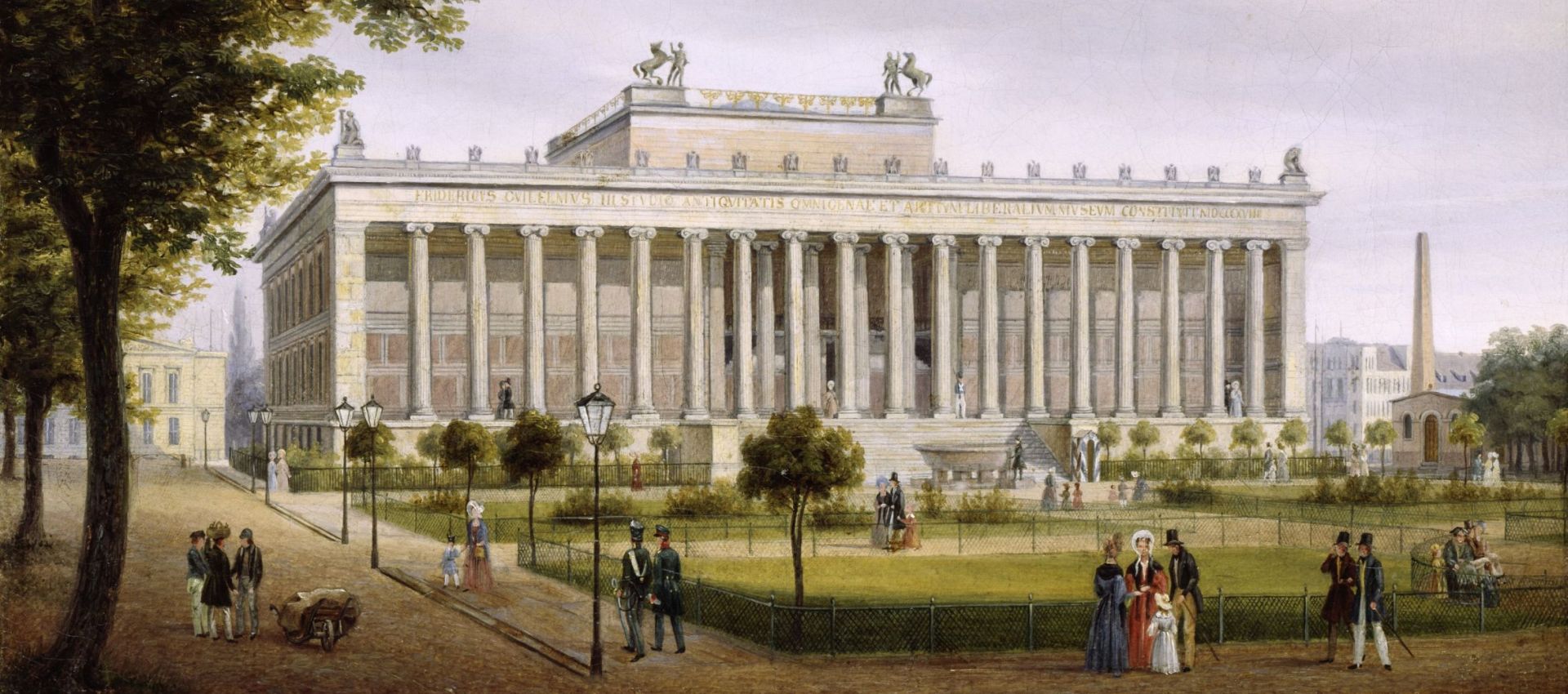
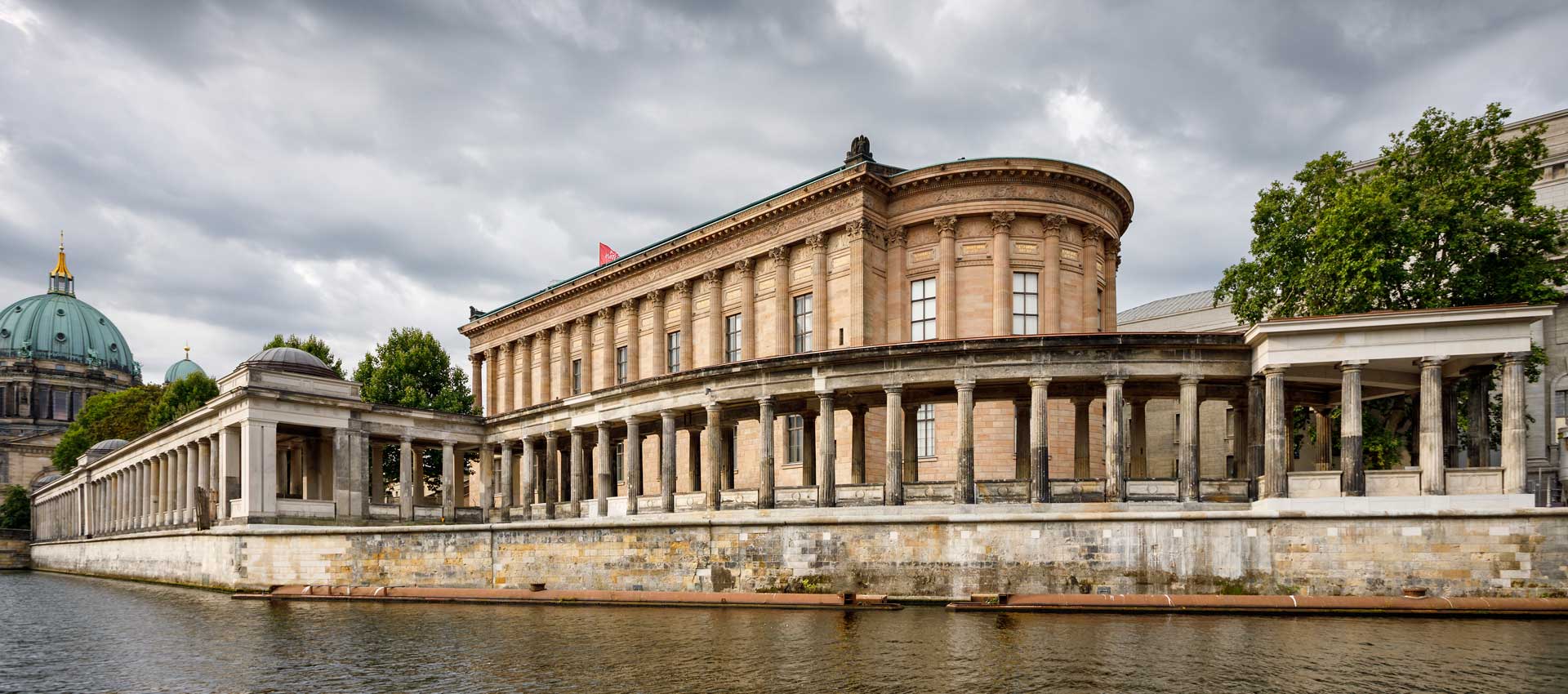
This year, the refurbishment of the colonnades will also enhance the visitor experience on the island; following an extended period of construction, they will once again be fully accessible. For the first time, visitors can stroll across the island as they did 100 years ago and enjoy the atmosphere …
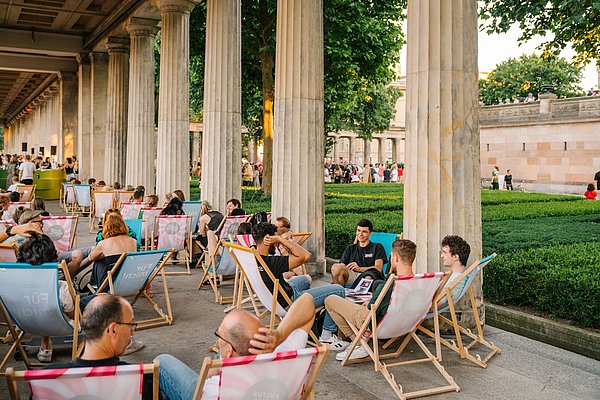
The colonnades epitomise a truly Mediterranean way of life: Berlin by the water. We have looked forward to this moment with joy and have prepared for it. The finest setting for this, which we already know from previous years, is the Colonnade Bar, which we have revived this year.
This new life beneath the colonnades – a bar, film nights, DJs – was unthinkable just a few years ago. The Colonnade Courtyard seemed like a sacred place of culture, far removed from mundane pleasures.
We want to make the Colonnade Courtyard and Museum Island as a whole a place worth living in and anchor it much more firmly in the city’s social fabric. To do this, we must open up. A venue like the Colonnade Bar is aimed directly at Berliners who come here in the evenings to rediscover this place. At the same time, of course, we remain very mindful of Museum Island’s status as a World Heritage Site. We know that overuse is harmful. But I think the events we are now holding here convey this sense of responsibility.
Alongside the major changes taking place during this ‘summer of reform’, there are also two new appointments to be made. Anette Hüsch and Antje Scherner are coming to the island to take up their posts as directors of the Alte Nationalgalerie and the Bode Museum respectively. How do you view these changes in leadership?
I am delighted that Antje Scherner will take up her post as director of the Bode Museum as early as 15 August. It is important that this institution once again has a permanent director and that, following a lengthy interim period, a breath of fresh air and new, bold ideas will hopefully find their way into the Museum of Byzantine Art and the Sculpture Collection there. The museum is an absolutely vital part of the island – the most photographed building in the complex – and we in the archaeological collections are naturally looking forward to being able to build on the Byzantine art, the Early and High Middle Ages right through to the Renaissance. This is crucial to understanding the overall cultural dimension here.
Meanwhile, at the Alte Nationalgalerie, Ralph Gleis will continue to lead the institution until the end of the year, and we are also looking forward to welcoming Anette Hüsch there.
Almost as an aside, another institution was added to the SPK’s portfolio this summer: the PETRI. It is set to become a centre for Berlin archaeology, closely linked to the Museum of Prehistory and Early History – what exactly does that entail?
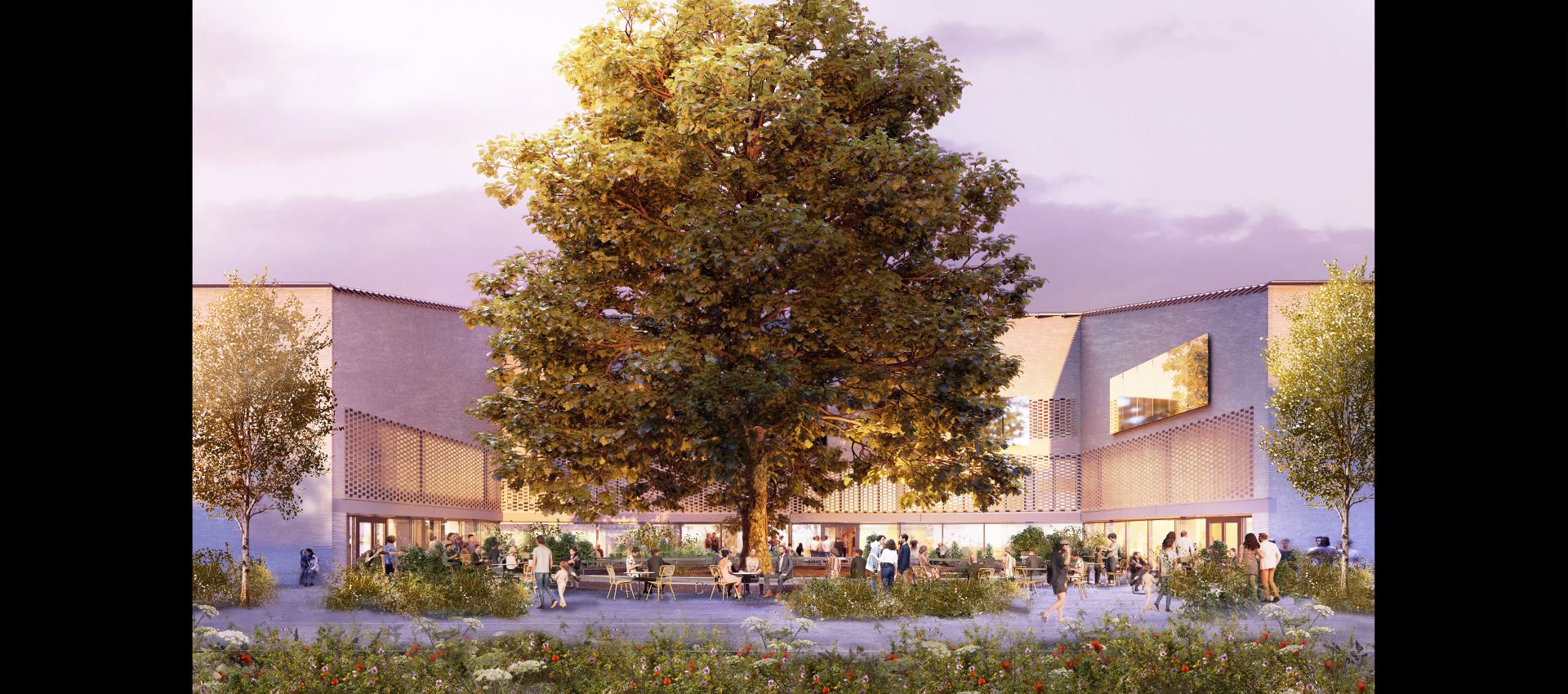
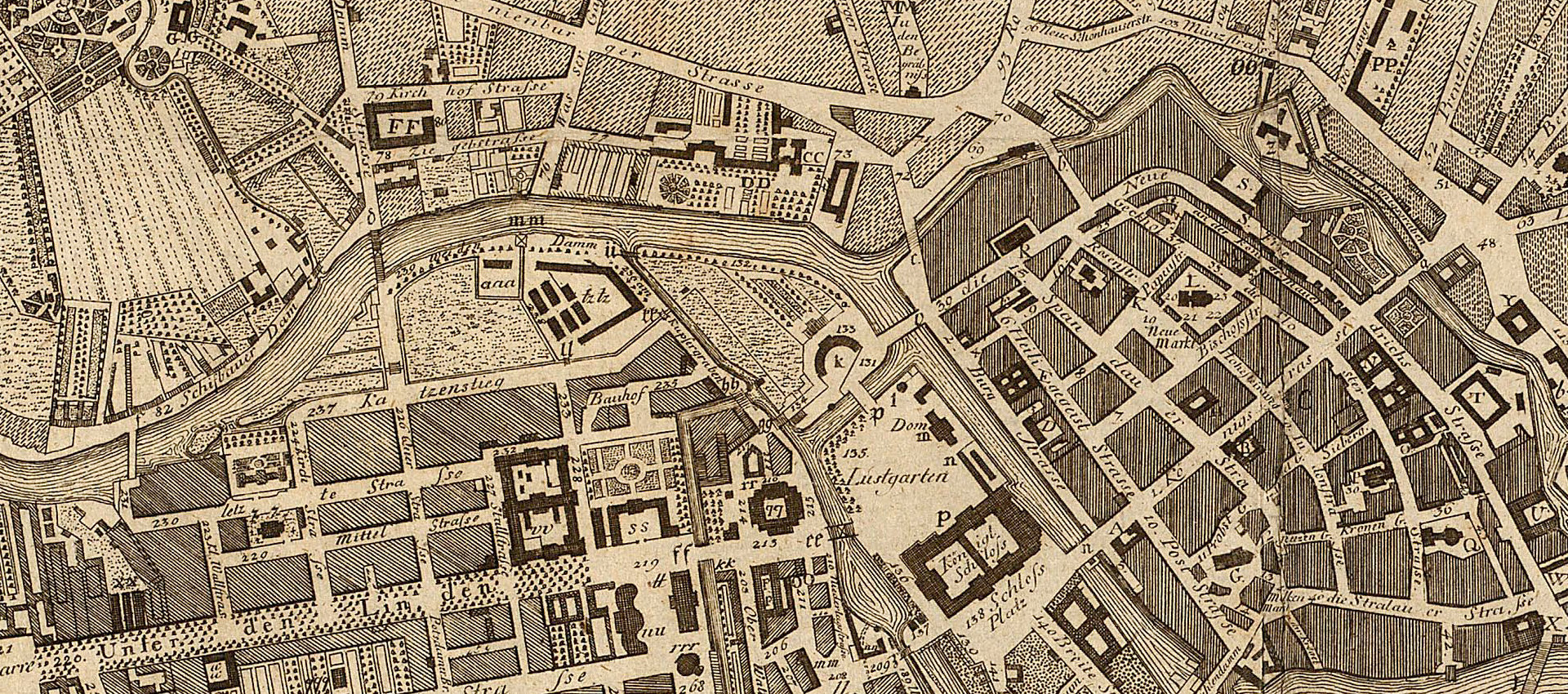
‘PETRI Berlin – discover archaeology’ is something quite special. It is situated right on Petriplatz, virtually in the shadow of Museum Island and Berlin Palace. Yet hardly anyone knows that this was once a very central location for Berlin, as it is home to the historic centre of Cölln. Berlin began as the twin city of Berlin-Cölln and was only united as the Prussian capital of Berlin in 1710. We carried out excavations there and found the remains of old Cölln: a cemetery, a church and a Latin school. Today, the PETRI stands directly above the ruins of the old Latin school.
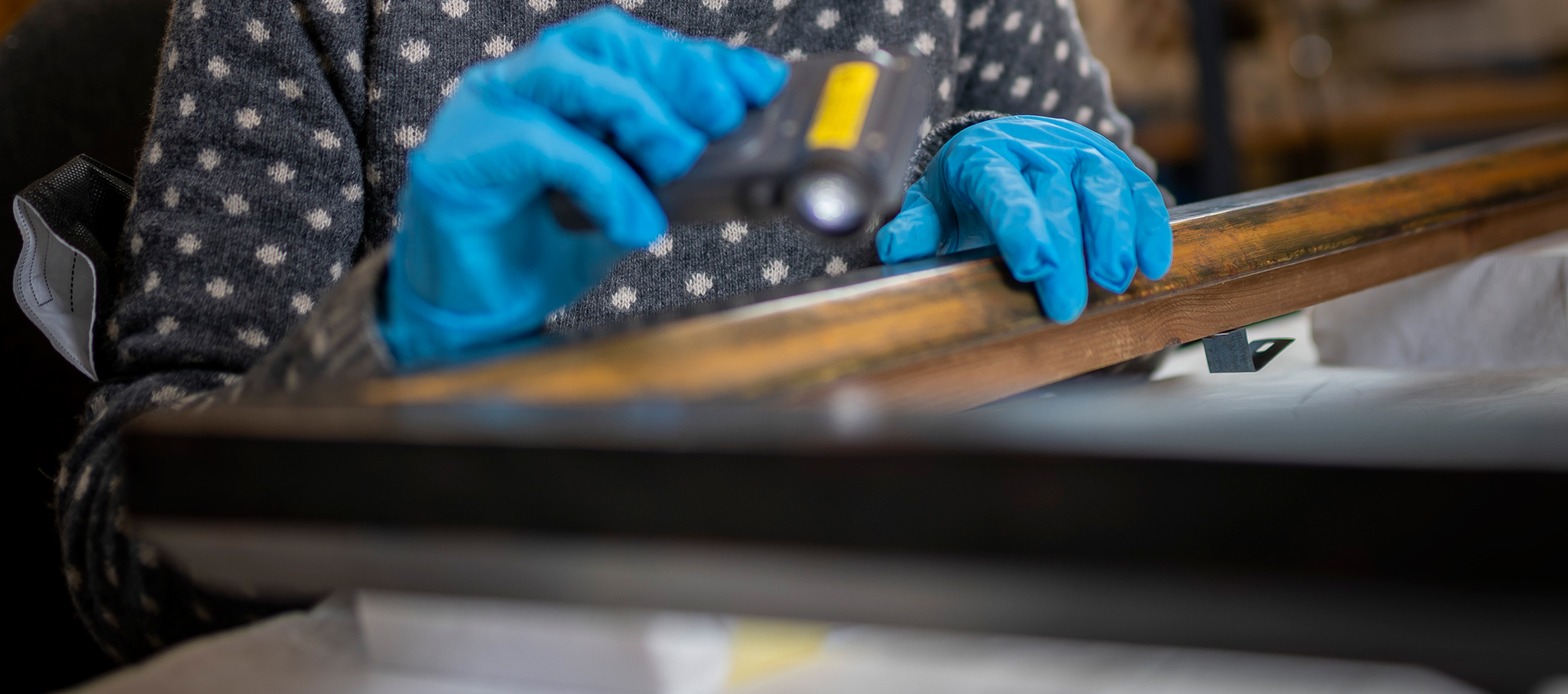
I am not only Director of the Museum of Prehistory and Early History, but also, in close cooperation with the Berlin State Office for the Preservation of Historical Monuments, Berlin’s State Archaeologist. Thanks to this dual role, finds from Berlin’s archaeological excavations are deposited with us at the Neues Museum and are looked after by us. The Berlin State Office for the Preservation of Historical Monuments and the Museum of Prehistory and Early History, together with the Berlin Senate, conceived the new building as a centre for archaeology, where we aim to house important working areas such as storage facilities and restoration workshops, whilst also showcasing our archaeological work. After all, we cannot present our actual work here at the Neues Museum to the same extent; it takes place behind closed doors – yet it is so fascinating, and I repeatedly see how museum visitors are captivated by it and ask many questions. And that is precisely what we showcase at the PETRI: across seven floors, visitors are guided through the entire archaeological working process and can observe it. From the excavation level, where digging and documentation take place, through the cleaning and restoration of finds, right up to the interpretation and presentation of the finds. So the building is not a museum, but rather an archaeological laboratory.
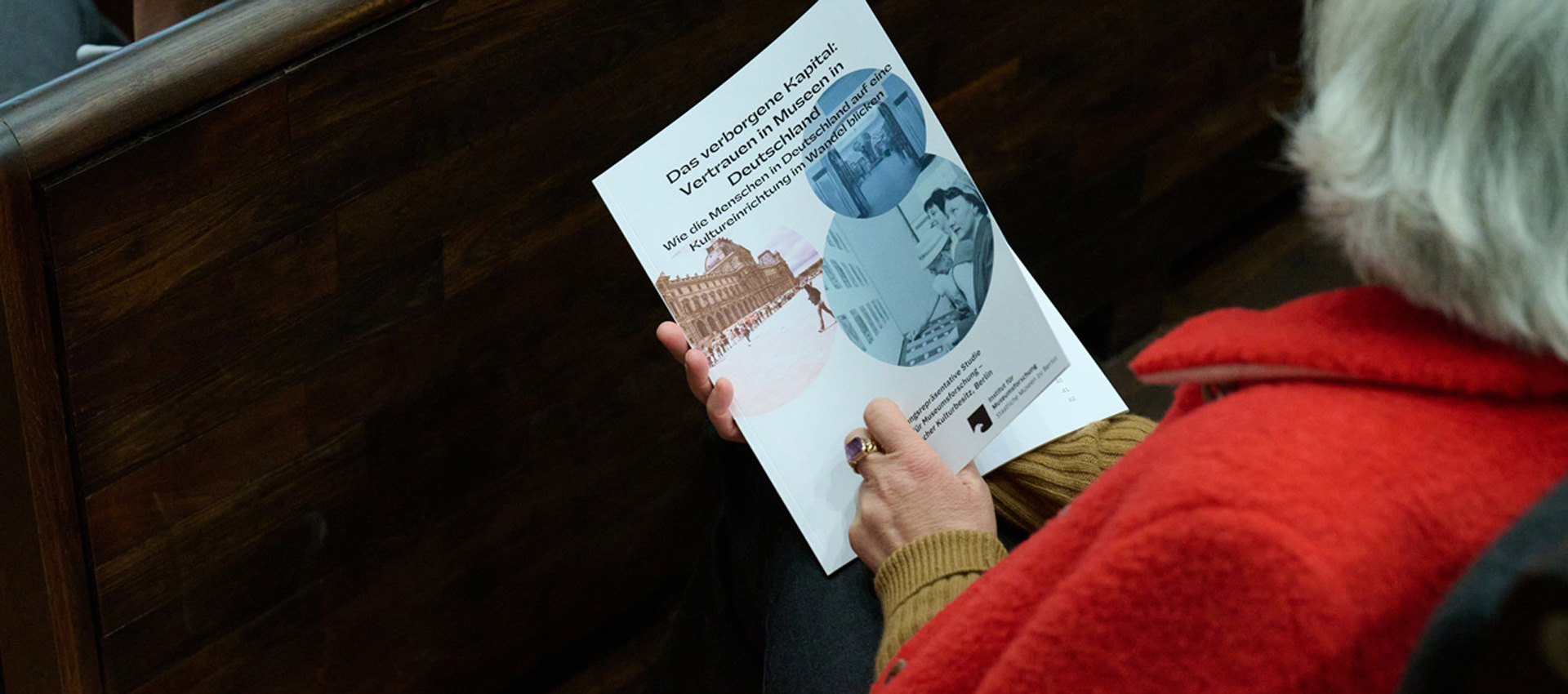
We sat down for an interview back in 2019, which focused largely on public enthusiasm. We’re meeting again today, and the Institute for Museum Research has just published a study identifying museums as places of trust – regarded as trustworthy by people immediately after family and friends, and even before the media, academia and political parties. On the one hand, people trust us; on the other, they aren’t coming to the museum – what do such findings mean for the work done in museums?
It is a huge responsibility for museums to handle this trust appropriately. It is, of course, a wonderful vote of confidence and shows that, for example, Berlin’s museums have, over the course of their 200-year history, developed into an institution capable of withstanding the vicissitudes of time. The question of how to make such an institution resilient and to what extent museums should engage in social debates is one that preoccupies us intensely. Museums can, of course, act as a mirror for the discussion, but I have since become rather sceptical as to the extent to which every social debate should also be played out in museums. Given their diversity, you will certainly find different answers to this.
This scepticism is also reflected in the study mentioned: people come to museums to sharpen their critical faculties, not to have an opinion imposed on them …
When the Museum Island was established, Frederick William IV designated it a “sanctuary for art and science”. This aspiration still holds true today and implies that a certain tranquillity is needed here, that one should be able to reflect and not have every current debate brought here. The Museum Island, with its various institutions, can also be a place of reassurance amidst the hectic present. A place to pause, where one can ask: what potential does society actually have? Our cultural history museums in particular can demonstrate everything that has already happened, what has developed, and what may well have existed in the past. And then one gains a certain sense of calm and can leave the heat and ideology outside, and on this basis then influence society.