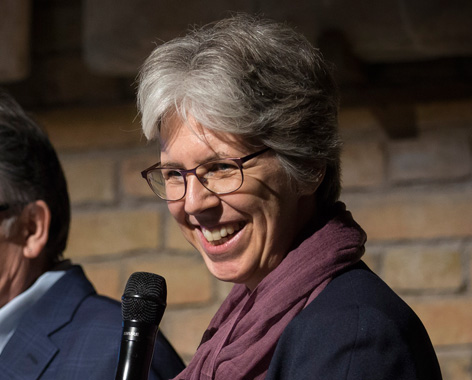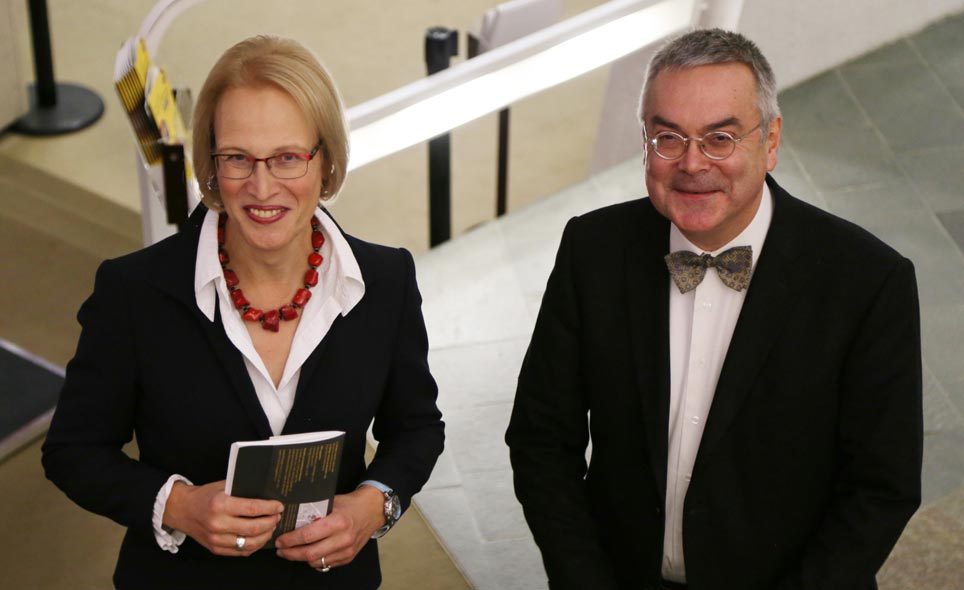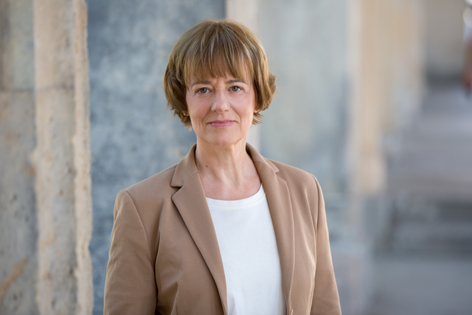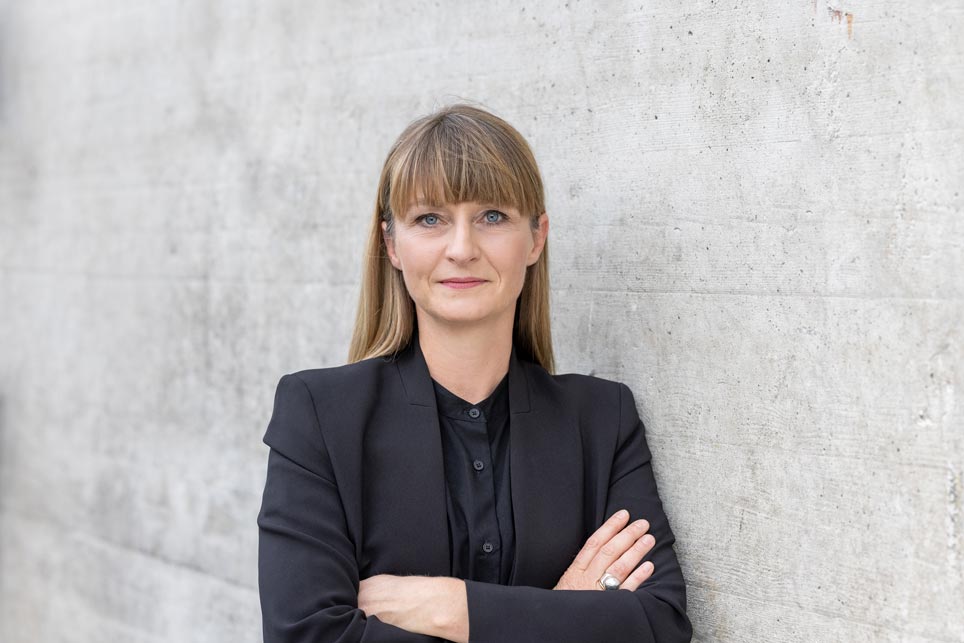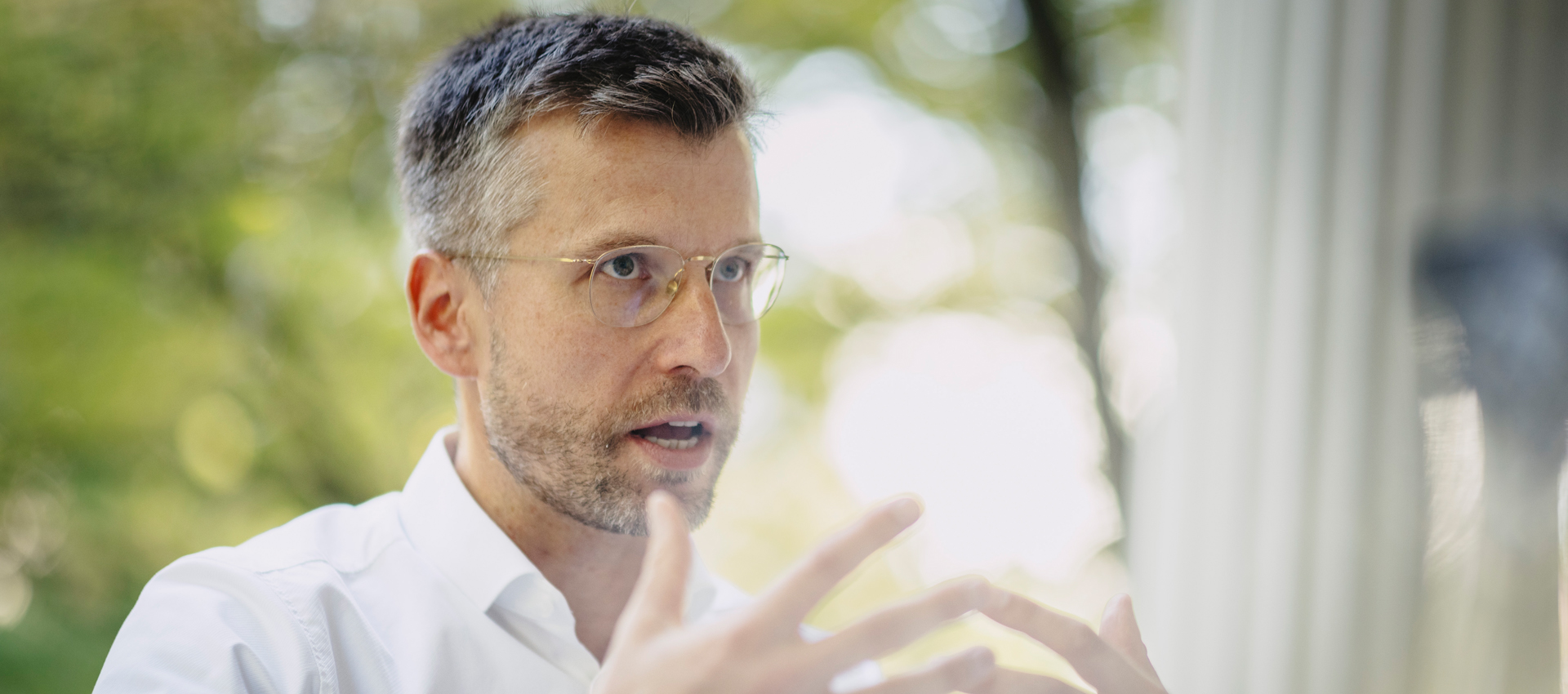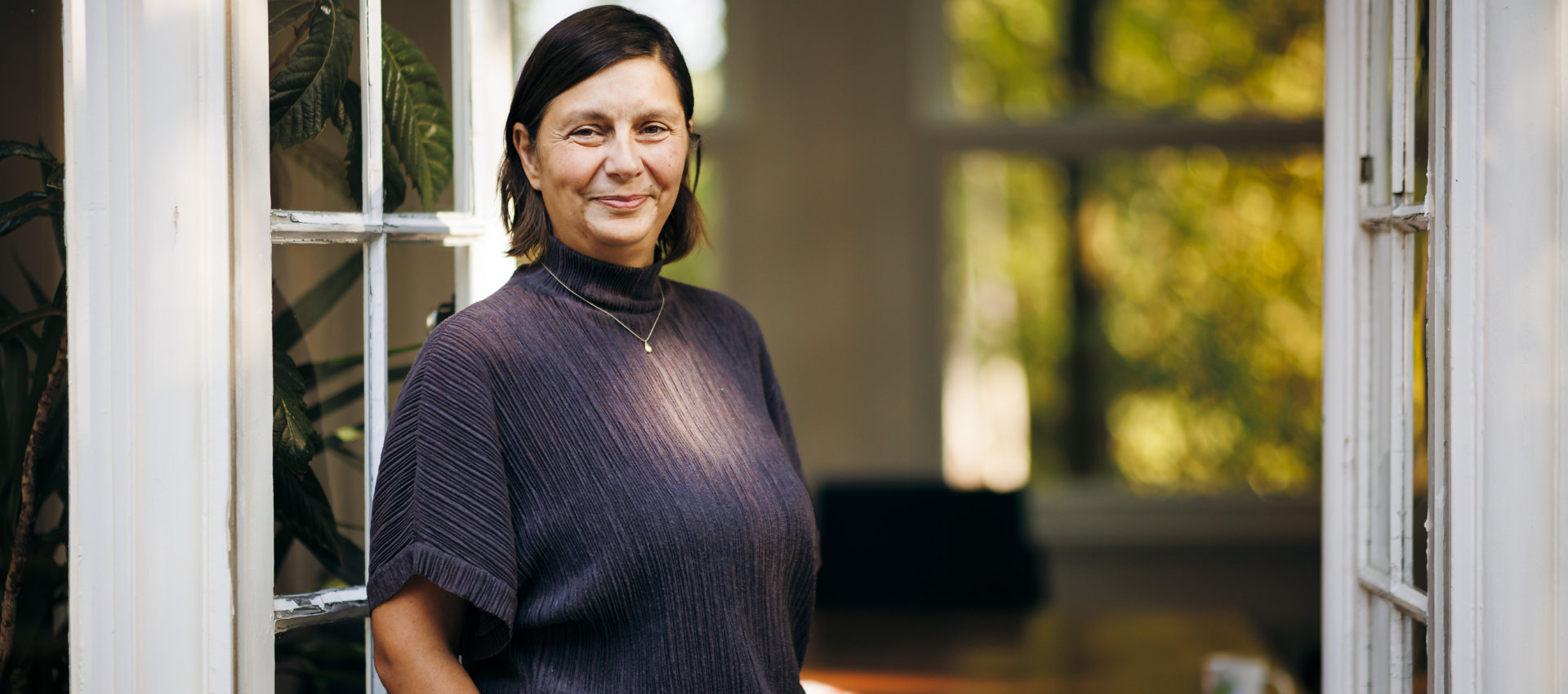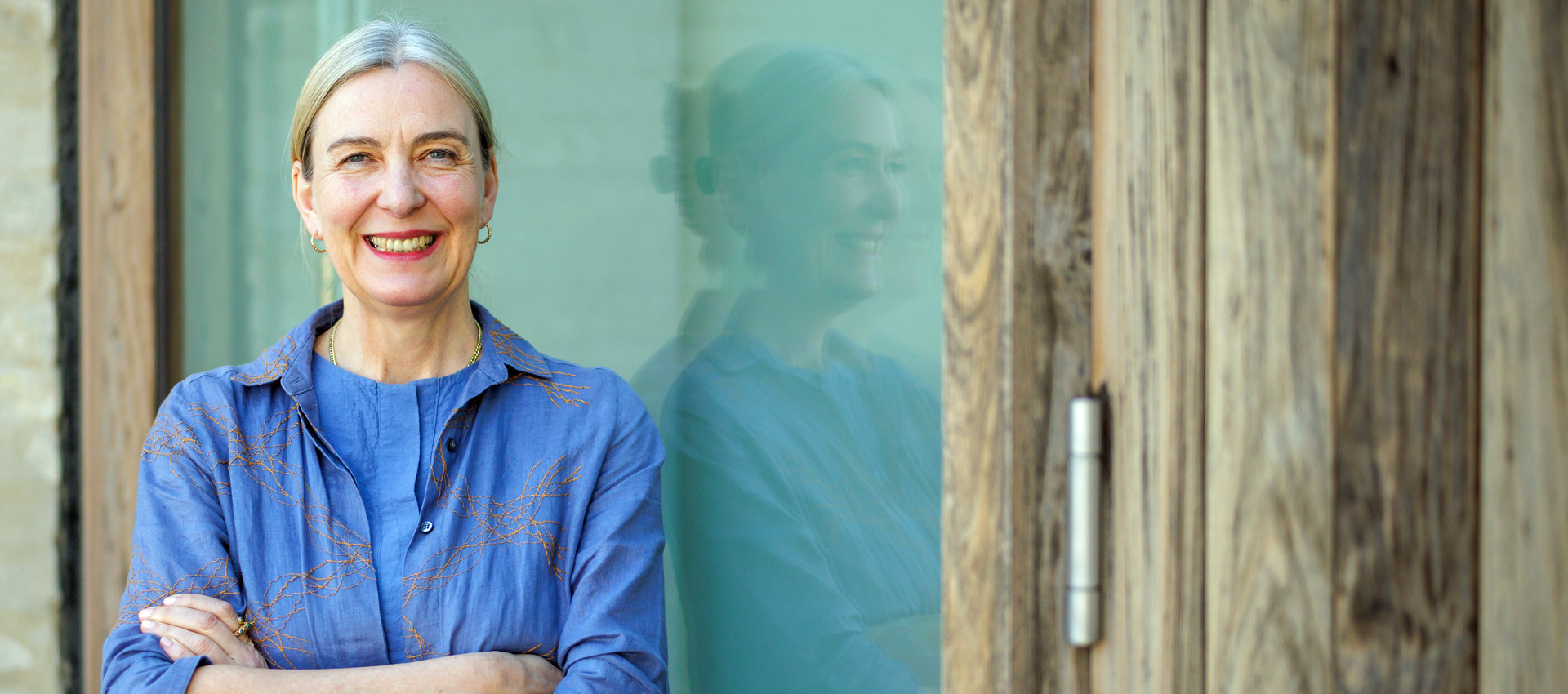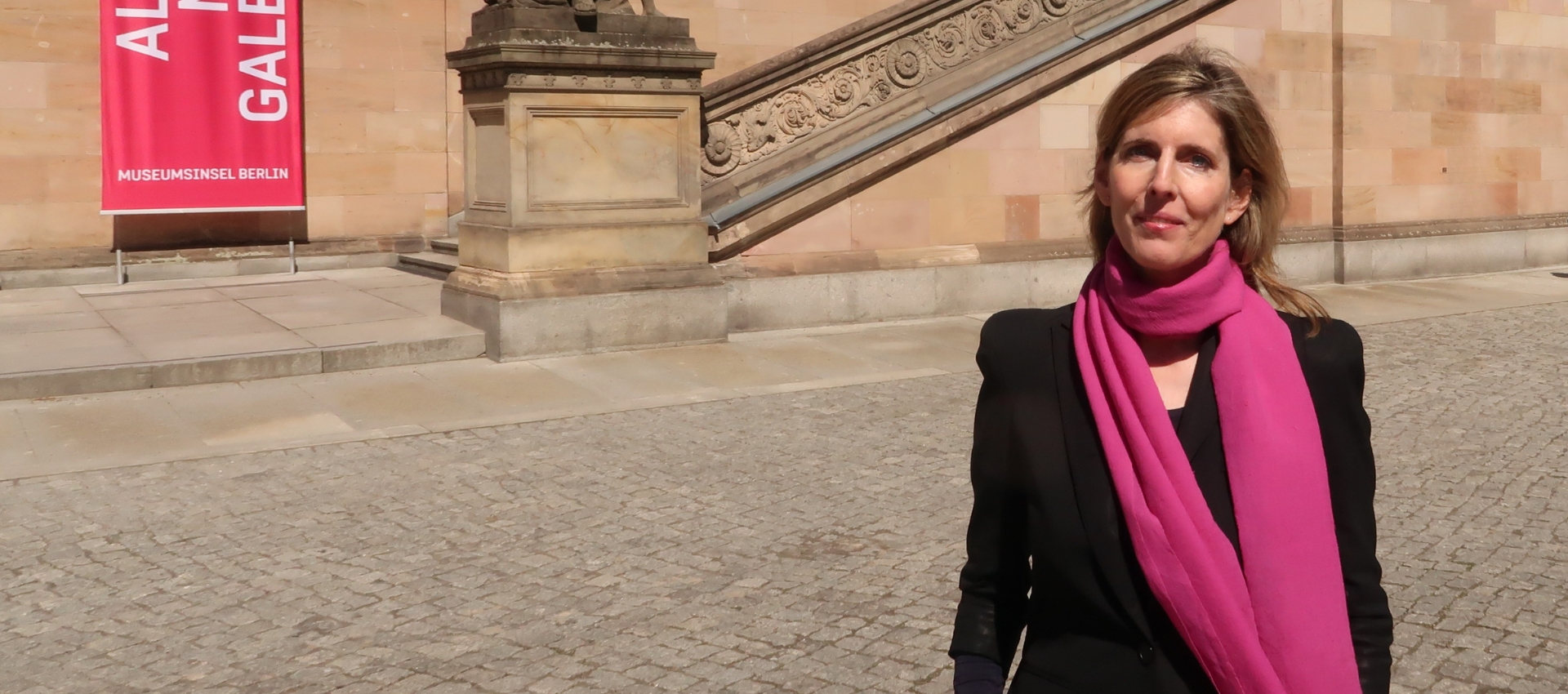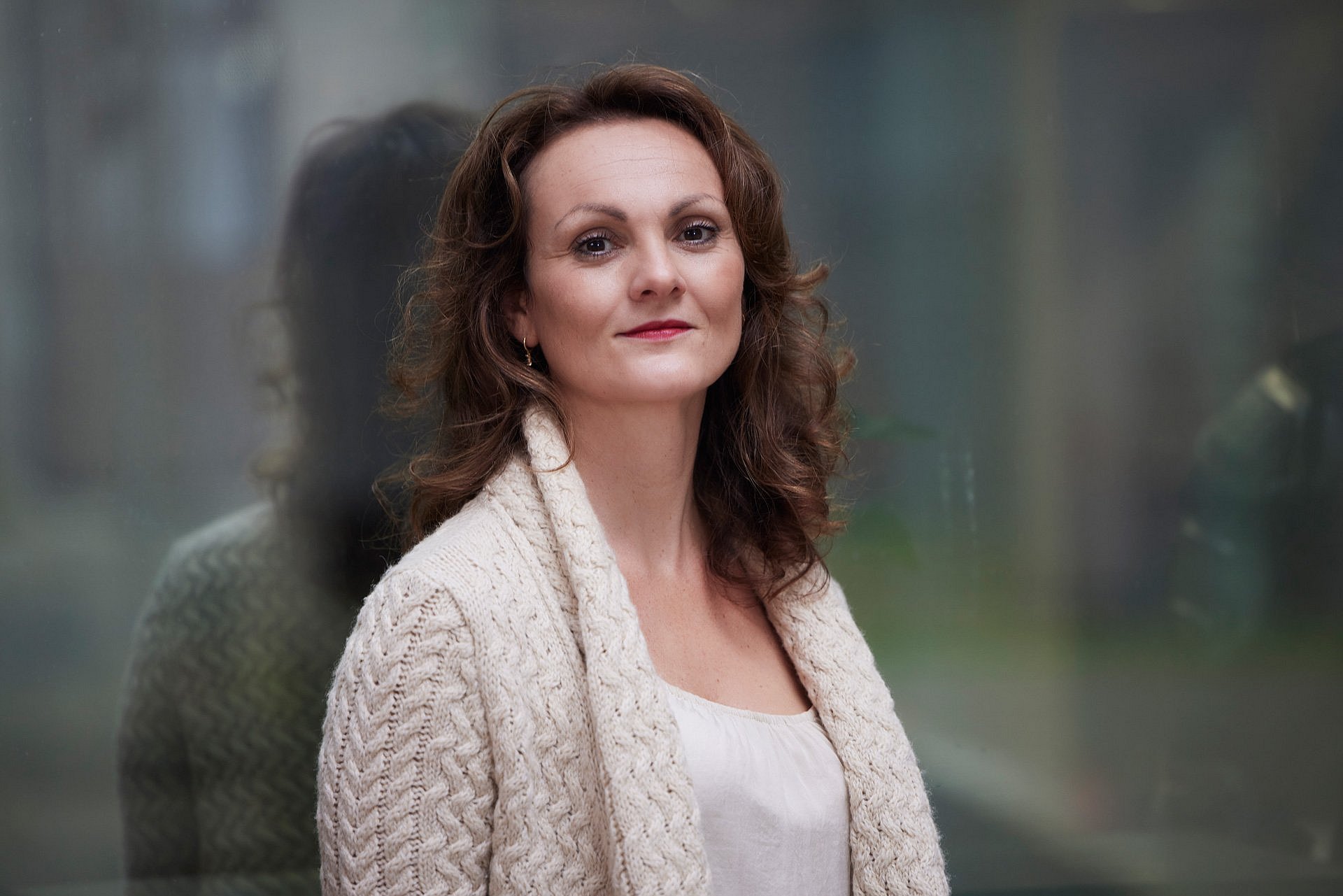
Since 15 January 2024, Julie Nautré has been supporting the consortium of seven SPK institutions in making the diversity of museum and research work more visible to various target groups. Having previously worked for the Friends of the National Gallery and the visitor services of the Berlin State Museums, she is particularly delighted to be back in Dahlem – after all, she has a personal connection to the place. Here she talks about the vision of FC Dahlem and the appeal of her new role.
© Laurence Chaperon
Ms Nautré, you joined the SPK as Scientific Director of the Dahlem Research Campus in mid-January. What were you doing before that? What appeals to you about your new role?
Julie Nautré: I’m delighted to be back at the SPK, and to have such a wonderful role to boot. The Foundation is an old acquaintance of mine. I’ve worked here before, specifically in the Visitor Services department of the Staatliche Museen zu Berlin, coordinating the reopening of the Neue Nationalgalerie in 2021 from a visitor services perspective.
Most recently, I was with the Friends of the National Gallery, where I was entrusted with a wide range of exciting tasks such as sponsor relations, fundraising and managing the events programme. I am now delighted to have the opportunity to play a coordinating and conceptual role in the development of the Dahlem Research Campus. I find it particularly appealing to make research processes – which usually take place behind the scenes – more visible, thereby facilitating new forms of knowledge and the incorporation of fresh perspectives.
Seven institutions within the SPK have joined forces to establish the Dahlem Research Campus, a new kind of research hub. What kinds of questions are they exploring there?
Each of these institutions has specific research priorities and different approaches. The common thread lies in the museum context. I see it as a central task to make this diversity of museum and research work visible and to harness the synergies. I hope to be able to play a targeted role in bringing together the interests of all stakeholders. However, participation is also a top priority at the research campus. How can we facilitate participation and implement new approaches to knowledge transfer? And, of course: how do we manage to build a community for the Dahlem Research Campus and make the site so attractive to our target groups that they are happy to visit? Exciting challenges, but I am confident that we can achieve this by joining forces.
What is at the top of your agenda for the coming months as managing director of FC Dahlem?
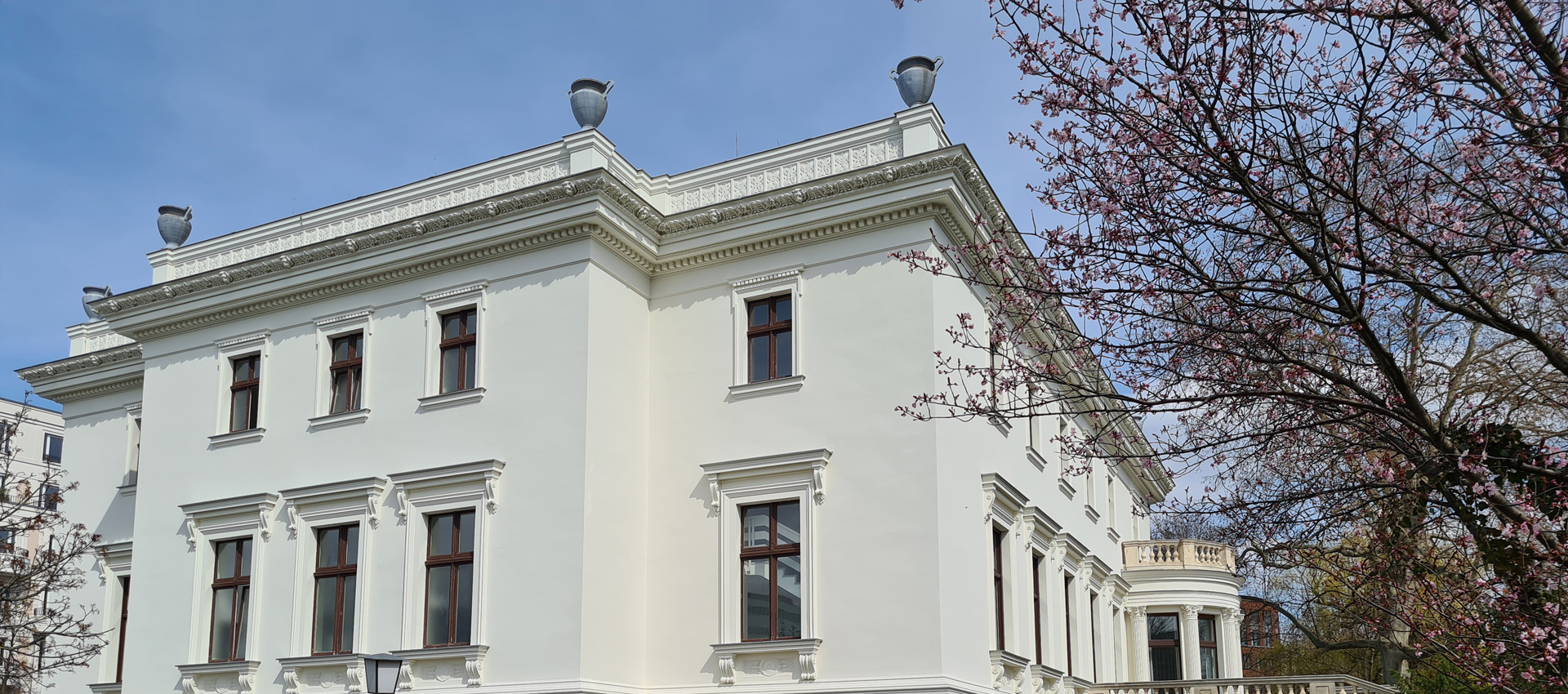
My start is initially very much dominated by organisational matters. In practical terms, it’s about making the site usable again. That means organising rooms and storage areas and initiating maintenance work. I’m coordinating the processes and am thankfully supported in this by dedicated colleagues.
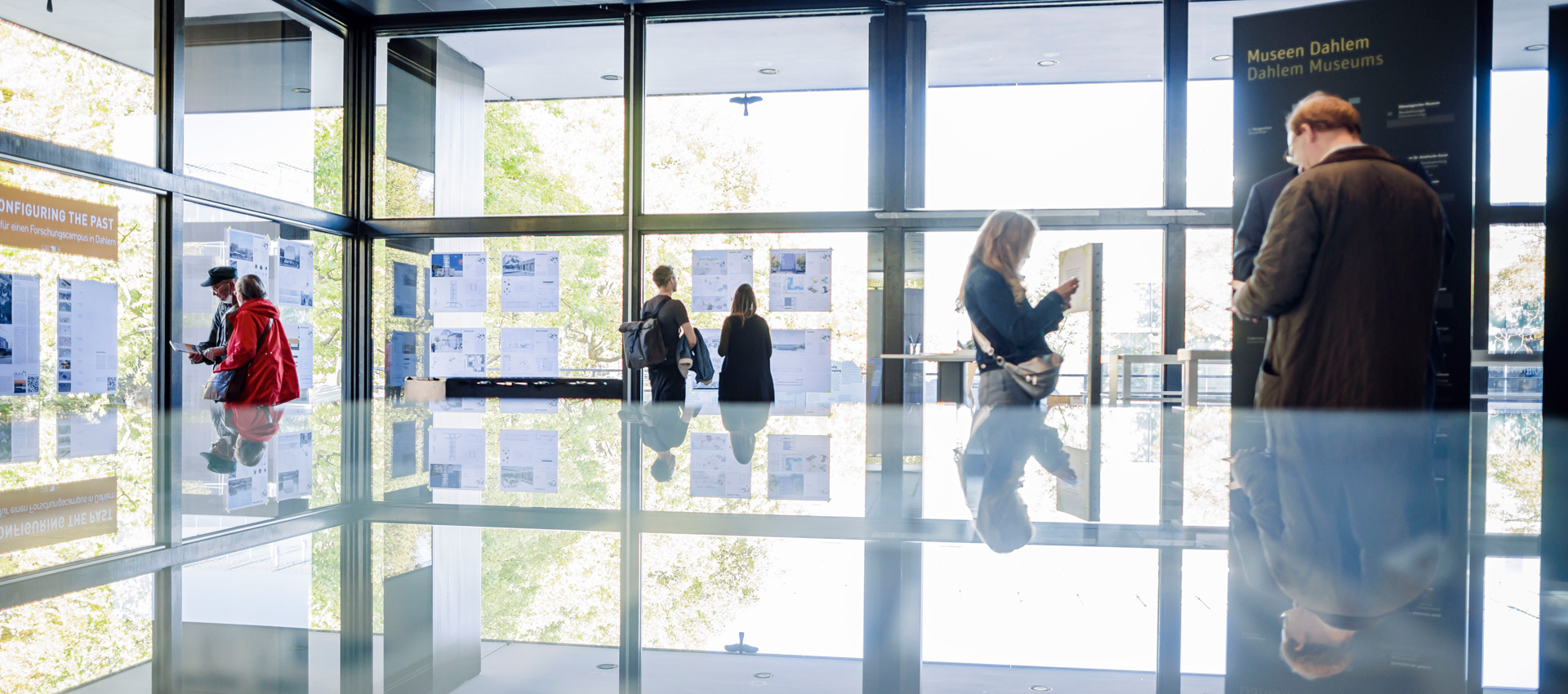
Two specific projects for the coming months are the implementation of the ‘Time & Temporality’ exhibition, a ‘ThinkSpace’ at the research campus, and building a community via social media. The conceptual approach for ‘Time & Temporality’ is a process-oriented, interactive and multi-perspective exhibition designed to facilitate exchange and co-creative development by visitors. There will therefore be partially curated thematic islands designed to encourage active participation from the audience and to make the development process visible. The presentation will be open to the public from this autumn and will be the first DenkRaum project.
In the future, further themes are to be realised in this format. It is important to me to showcase the breadth of museum research at the Dahlem site to the wider public in diverse ways for various target groups.
Have you found a favourite spot or a favourite piece at the SPK yet?
I’ve already met lots of brilliant colleagues who are connected to the Dahlem site in very different ways. I myself have a personal connection to this place, as my mother was a lecturer at the FU and I have many childhood memories of Dahlem. Being here now and being able to use these spaces is brilliant! So, generally speaking, I can say: Dahlem is my favourite place.
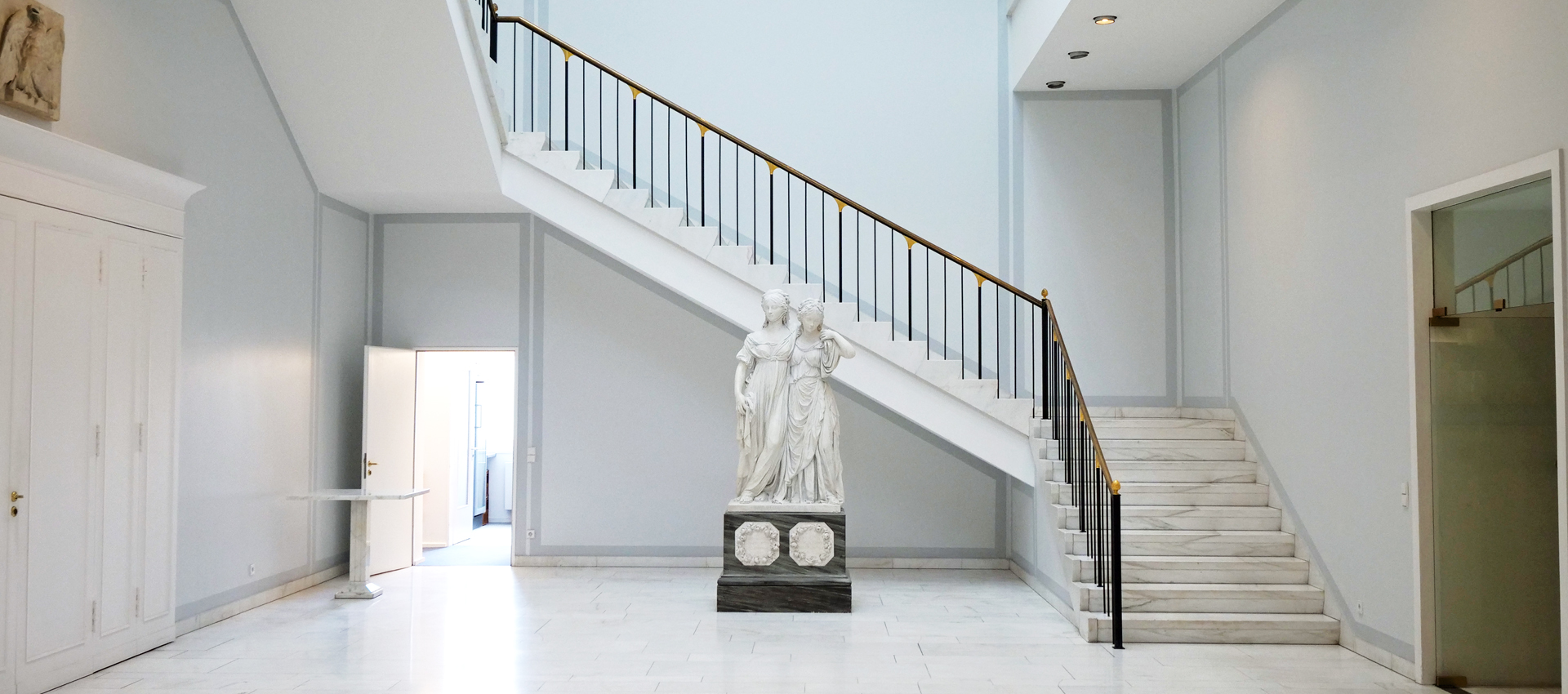
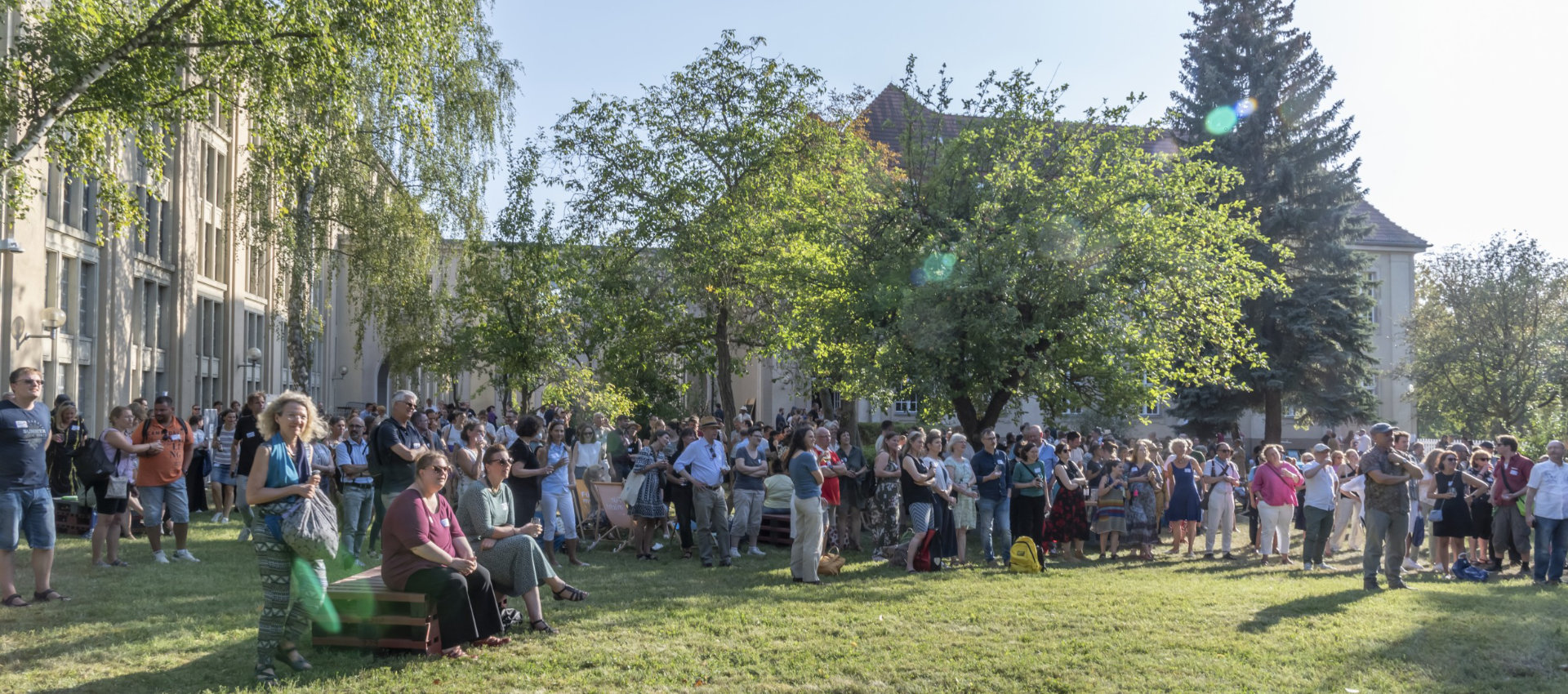
There’s a particularly lovely view from the open space between the main stairwells on the second floor of the research campus. From there, you can look out onto the garden with the replica of the Sanchi Gate. This space is wonderful and will hopefully soon be used for special events. The Dahlem site is a great place overall – do come and visit soon!