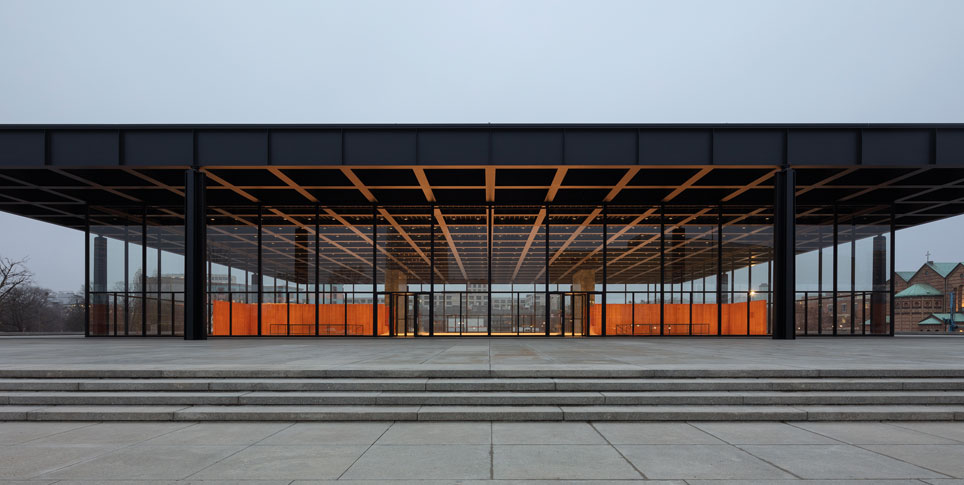
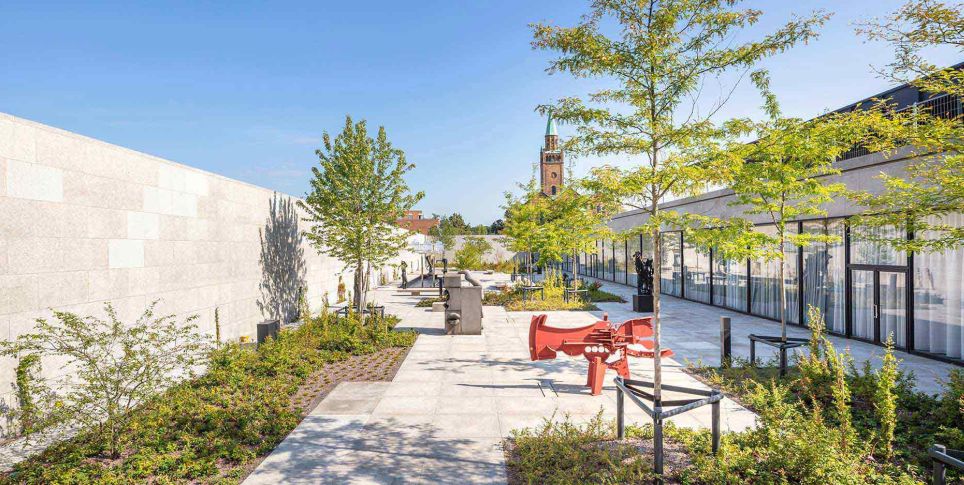
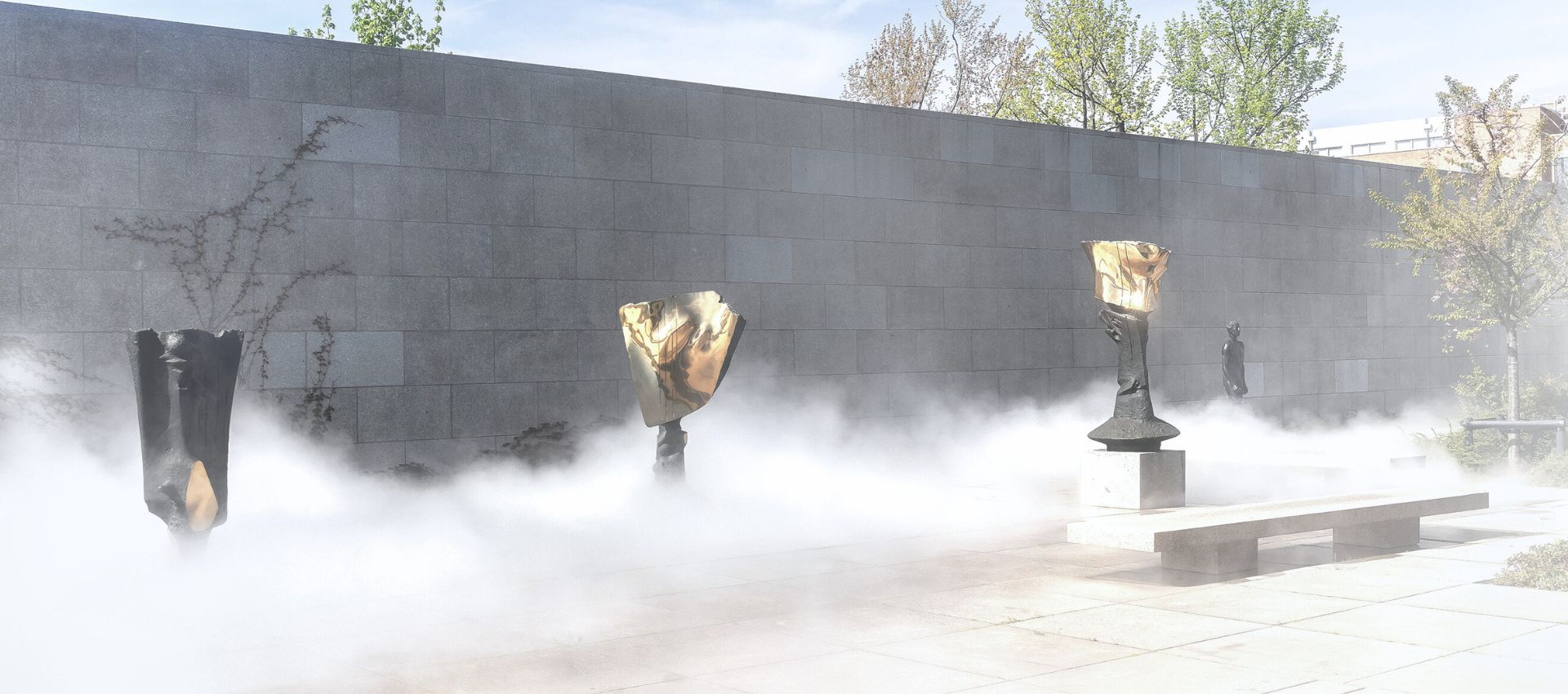
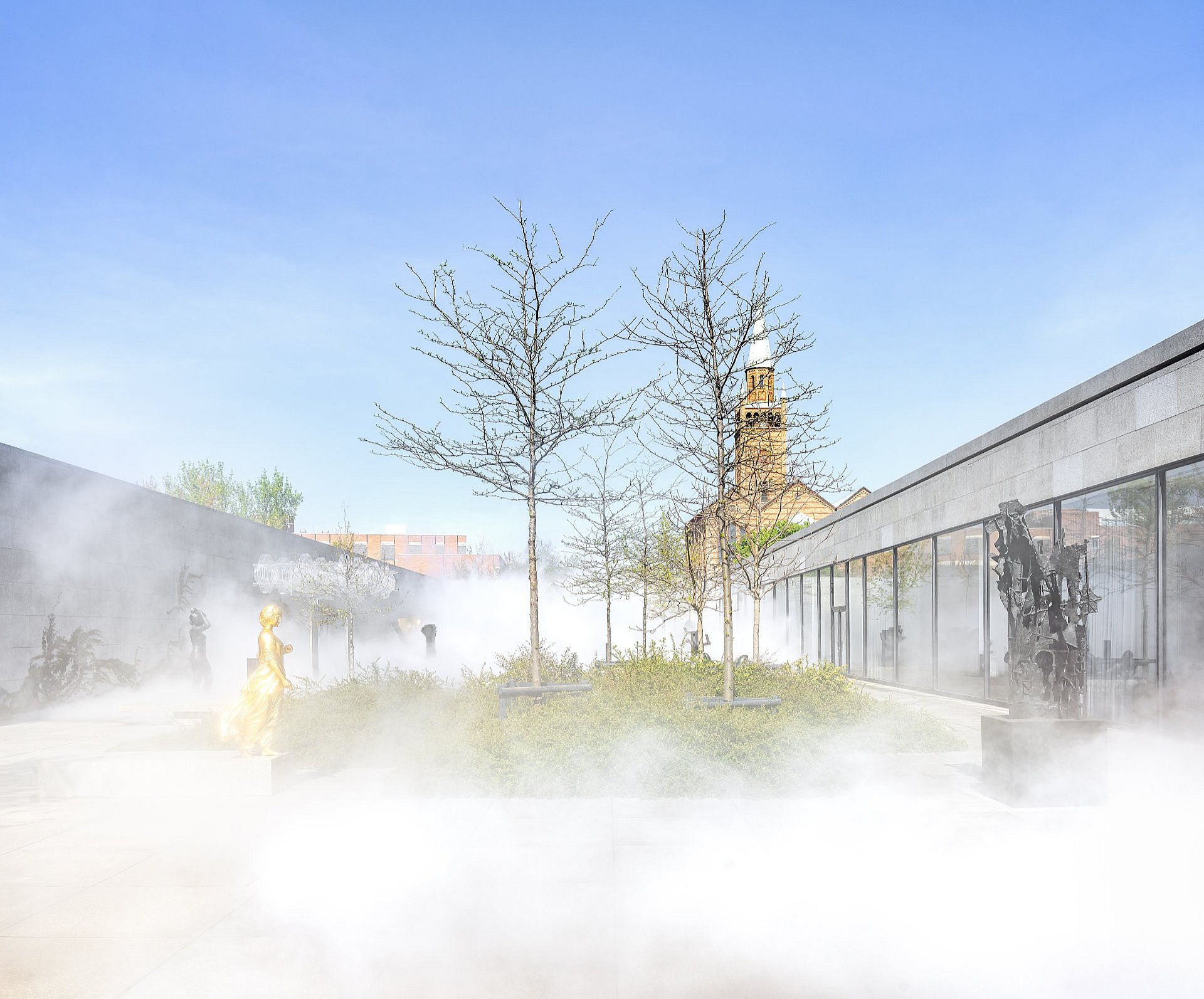
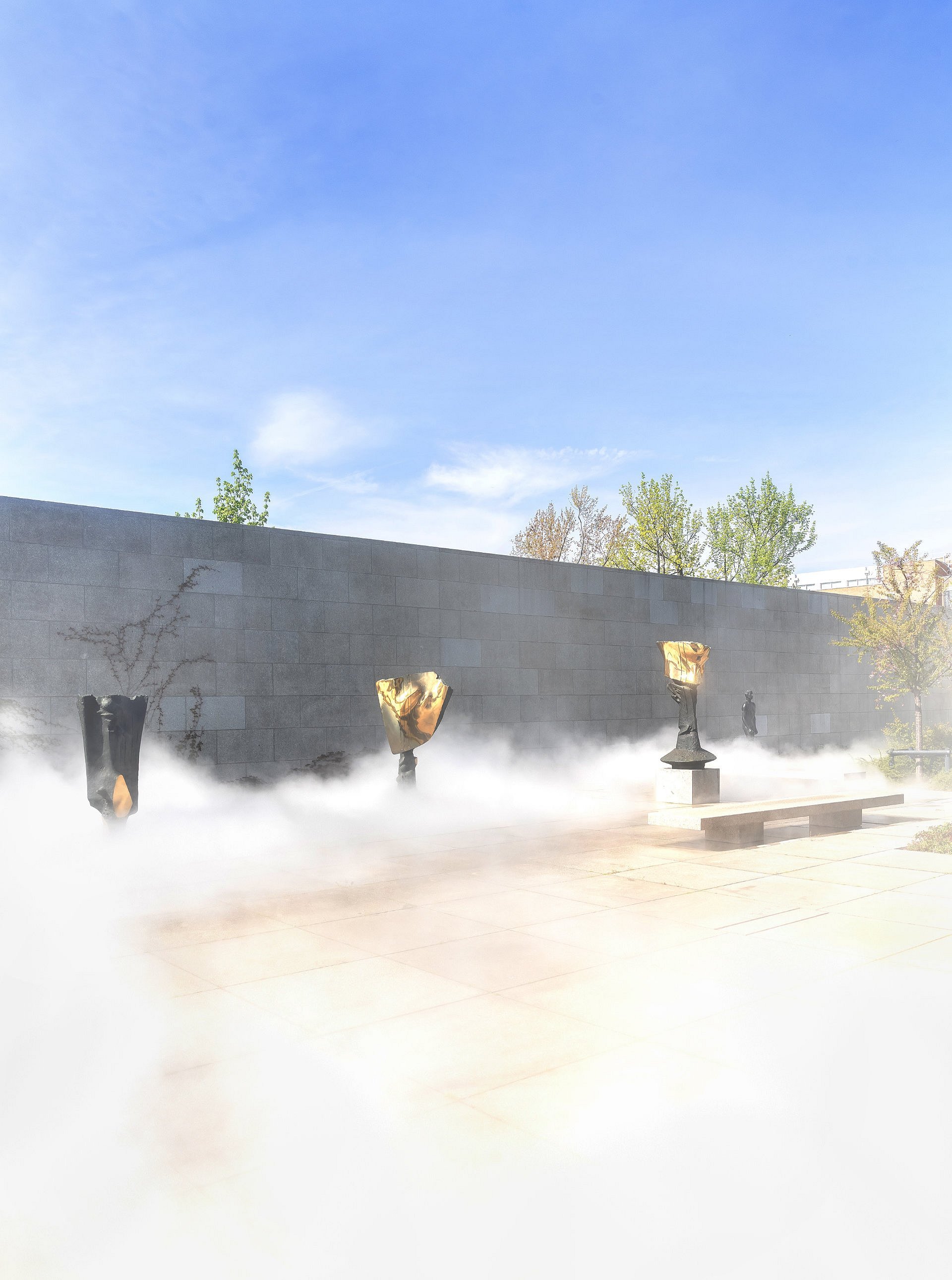
Visitors to the sculpture garden of the Neue Nationalgalerie can currently witness a striking phenomenon: every hour on the hour, the garden fills with thick wisps of mist. They shroud the sculptures and people in an air of mystery before the wind blows them away.
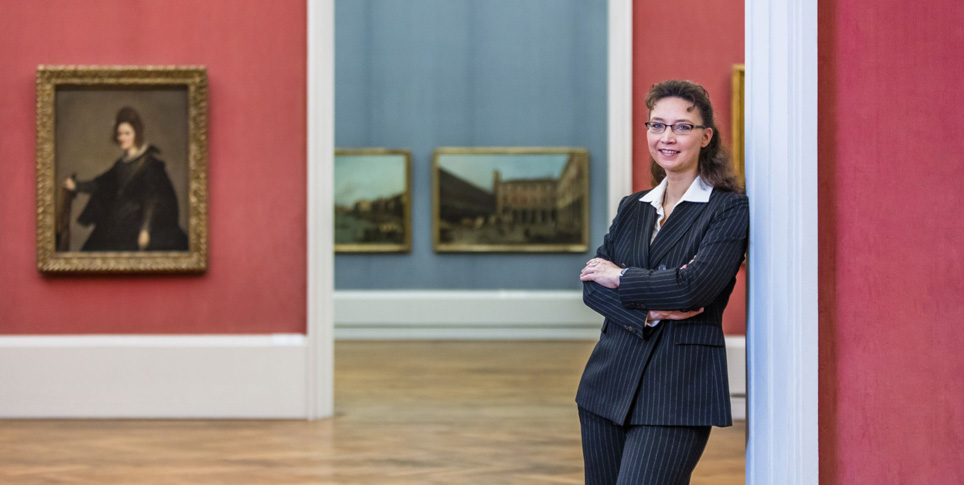
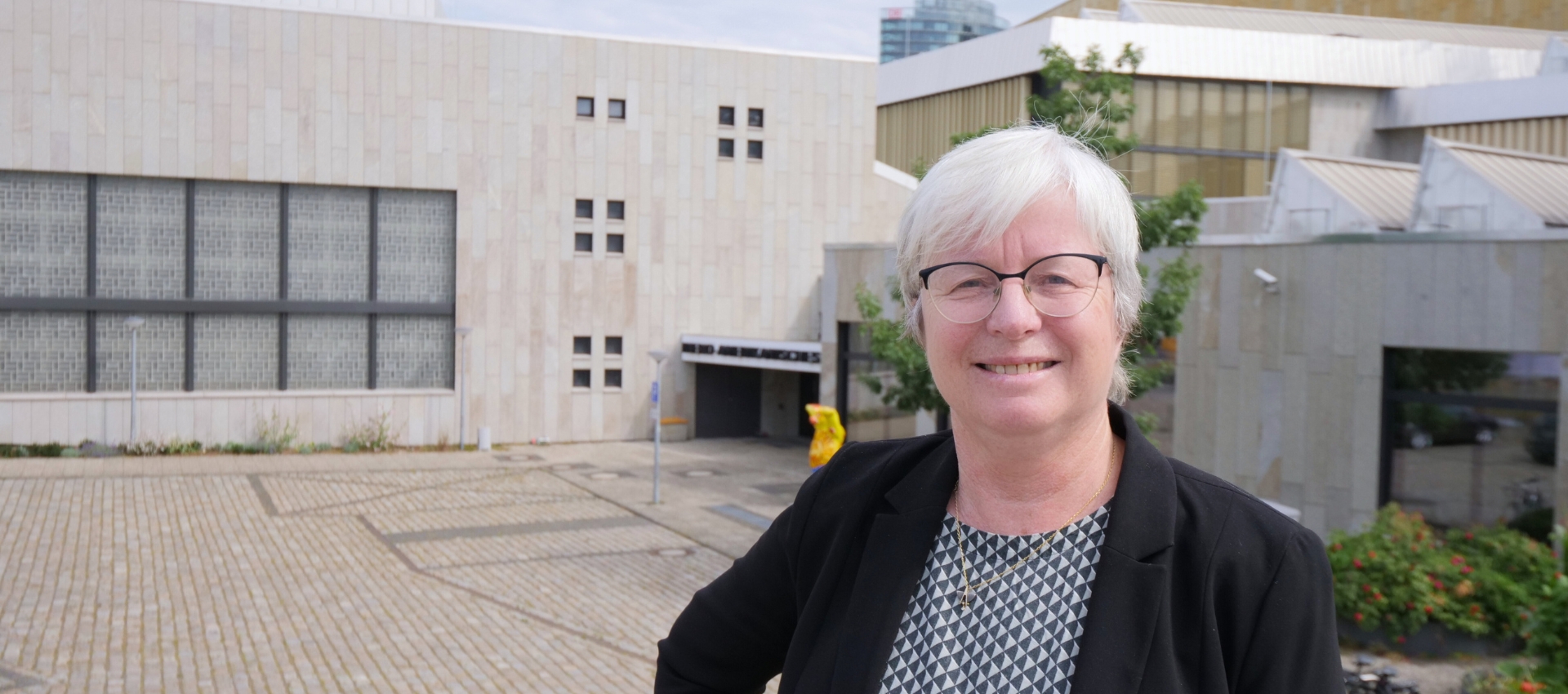
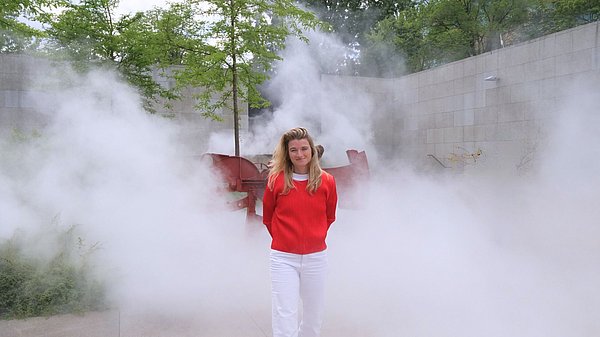
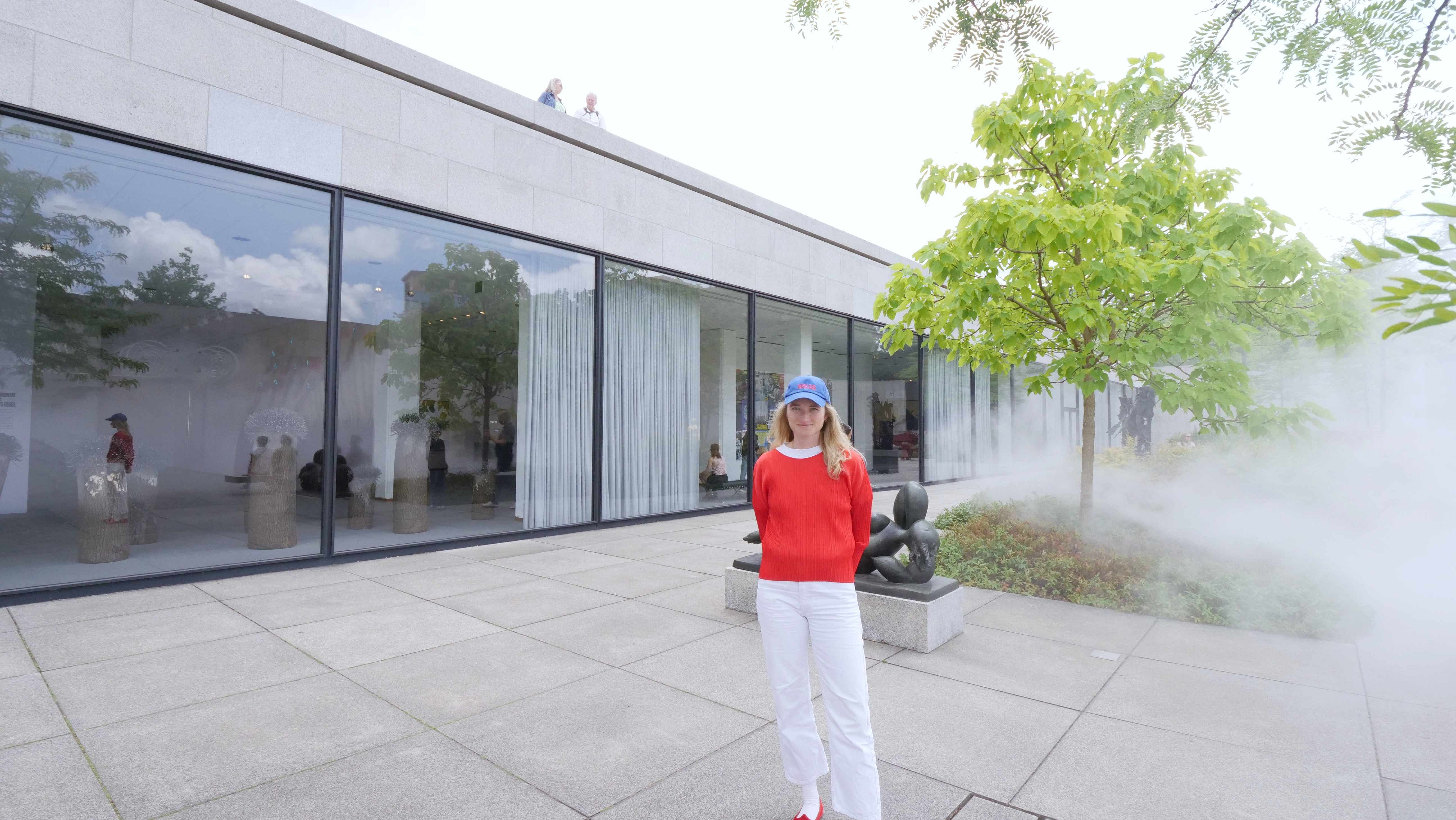
Standing in the midst of the mist is curator Lisa Botti, who, together with Klaus Biesenbach, curated this site-specific installation by Japanese artist Fujiko Nakaya in the garden of the iconic Mies van der Rohe building. We talk to her about elusive sculptures and the fascination of the hidden.
Fujiko Nakaya works with an ephemeral medium. It is precisely this that makes her works extremely popular. What is so fascinating about this unusual artistic practice?
Lisa Botti: What is particularly fascinating about her is that she has been working with this highly unusual medium since the 1970s, a medium that did not yet exist in art at that time. Artists have, of course, always worked with all manner of materials: marble, wood, iron, steel. But to create a performative, installation-based sculpture from such a complex natural phenomenon is a revolutionary invention. And Nakaya is still active despite being 92 years old. That’s impressive!
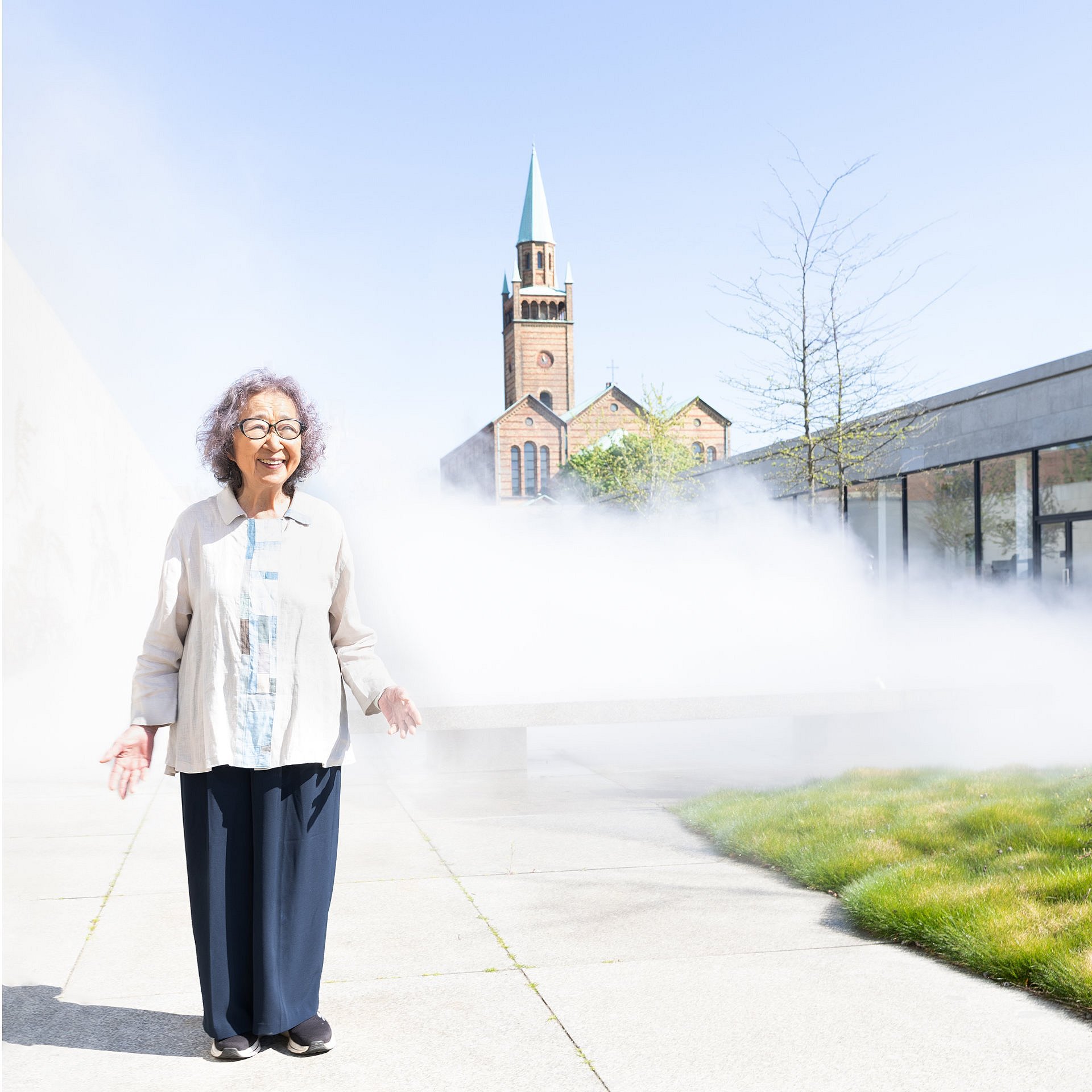
The artist
Fujiko Nakaya was born in Sapporo, Japan, in 1933. She first came to prominence in the 1960s as a member of the New York collective ‘Experiments in Arts and Technology’ (E.A.T.). She achieved international success with the development of immersive mist sculptures, which she has been exhibiting since 1970 using a system that generates pure water mist.
Fujiko Nakaya in her mist sculpture in the sculpture garden of the Neue Nationalgalerie. © Neue Nationalgalerie – Stiftung Preußischer Kulturbesitz / David von Becker
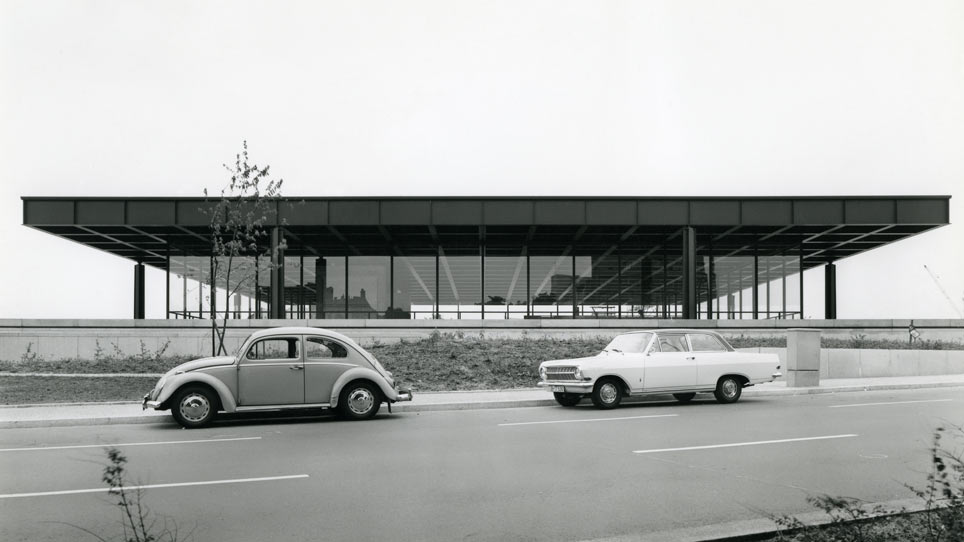
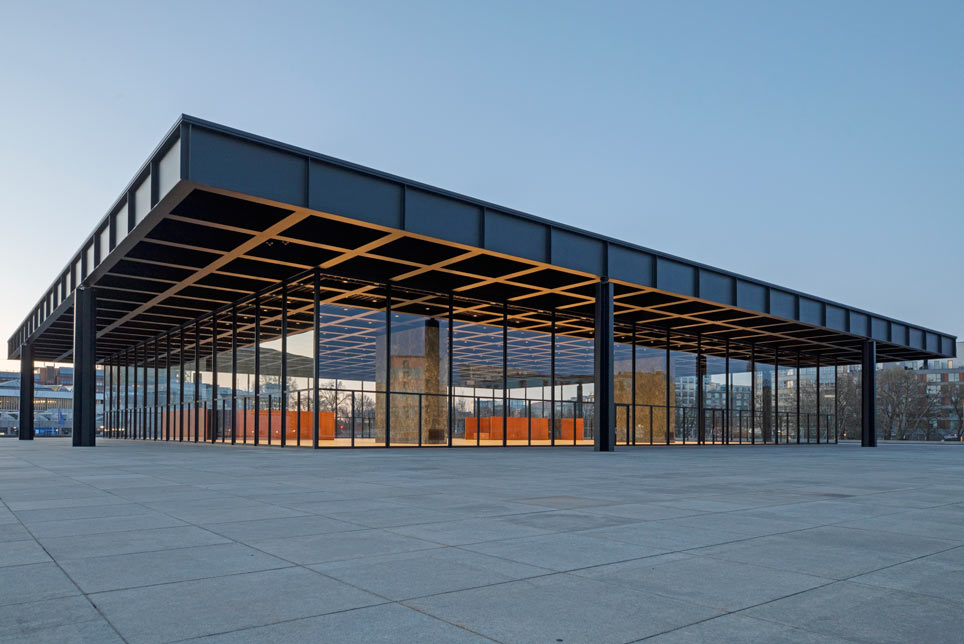
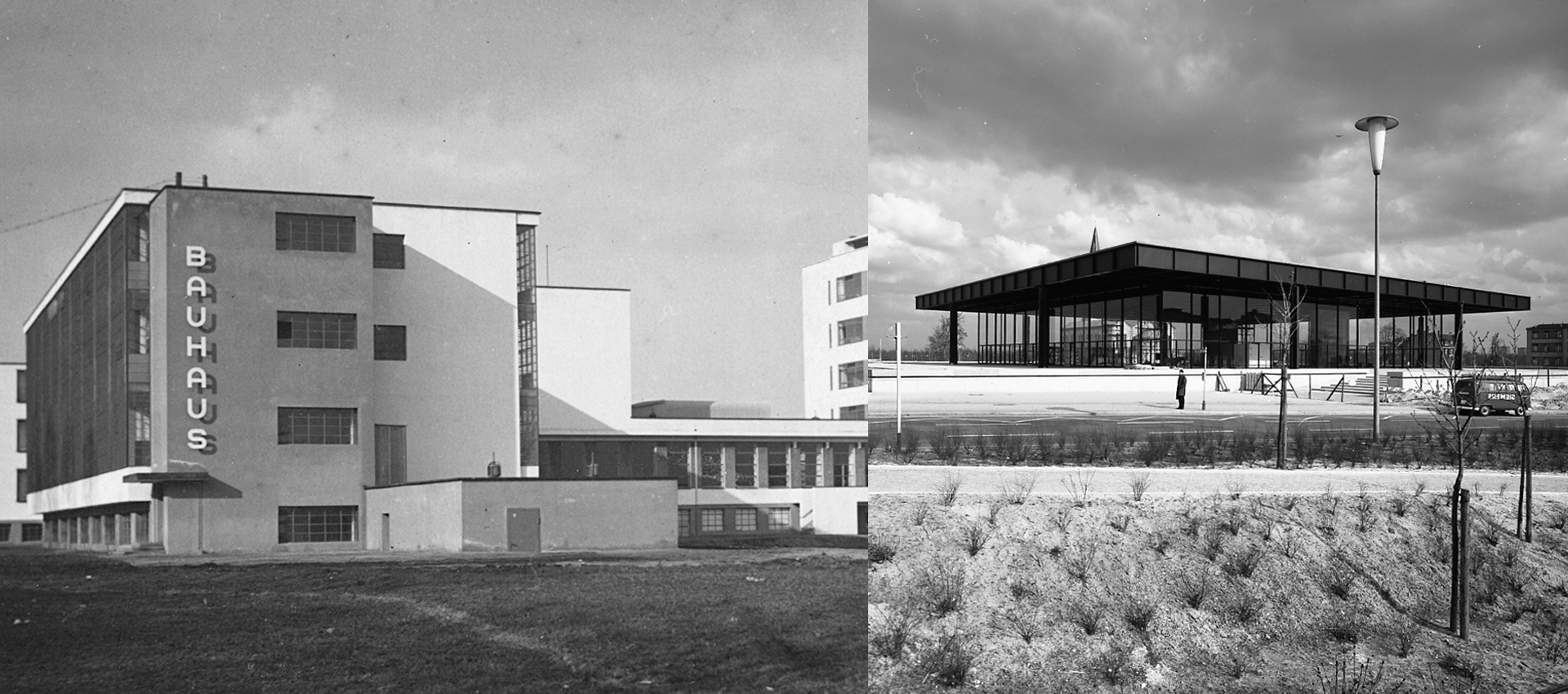
There is also a temporal parallel: the Mies van der Rohe building was completed in 1968, whilst Nakaya’s first fog sculpture was on display at the 1970 Osaka World Expo. To what extent is her fog sculpture tailor-made for this location?
We have been working for years to make the sculpture garden an even more vibrant space. This is achieved through concerts, drinks and even yoga. But we also wanted to revolutionise the concept of the garden – through installations that are more than just a sculpture on a plinth. In this context, Nakaya’s work was particularly exciting for us. The artist came to Berlin twice to explore the existing space and meteorological conditions, such as the wind. In doing so, she engaged intensively with Mies van der Rohe’s architecture. The aim was to combine his clear formal language – the rectangular – with the fluid, the mobile, the soft. To this end, she spent several days meticulously choreographing where she and her team would position the fog nozzles.
And the sculpture is always different?
The temperature conditions make a big difference. In colder weather, for example, the mist tends to linger closer to the ground. We recognise this from nature too.
Does it make a difference, from a curatorial perspective, to display a work in an outdoor space?
From a curatorial perspective, indoor spaces offer greater predictability. Outdoors, the wind and weather always play a part – but that is precisely what makes it exciting. At the same time, it is so much more accessible. People who are simply strolling along the terrace, perhaps without even a ticket, might then see this installation. It makes an impression and draws them in.
Is there a broader theme underlying Nakaya’s series of works?
With Fujiko Nakaya, one senses not only a fascination with and love for nature but also a strong spirit of discovery: her father, Ukichiro Nakaya, was a famous physicist, the inventor of artificial snow and a visiting professor in the USA. She grew up between Japan and America. In New York, she came into contact with the collective ‘Experiments in Arts and Technology’ (E.A.T.). She has, in a sense, always lived at the intersection of art, technology and engineering.
And yet, for her, nature is always the linchpin. She makes it visible through her fog sculptures. Recently, for example, she installed a huge fog sculpture in a forest in Thailand. Because the fog ‘re-packages’ its surroundings, one perceives them differently. Nature suddenly comes into focus. You sense just how valuable and important it is. This shift in focus also takes place here in the sculpture garden. It’s a bit like with Christo’s sculptures. By wrapping something up, he made people think about it.
What has the audience reaction been like so far?
It’s a huge hit with visitors of all ages. Children are, of course, absolutely fascinated by the mist. But adults enjoy stepping into it too. It’s a bit like walking into a cloud. There’s something dreamlike about it. The fact that it only happens at the top of the hour for eight minutes gives it the feel of an event.
What are the plans for the sculpture garden?
In future, we want to showcase more female artists in the very male-dominated sculpture garden. Just recently, Alicja Kwade’s sculpture ‘Goldelse’ (2021) was donated to us. Our very successful ‘Sound in the Garden’ programme will also continue this year, bringing the sculpture garden to life with evening summer concerts.
Are there any points of overlap with the Nebel sculpture?
In fact, Fujiko Nakaya has often collaborated with musicians. We are currently working on a special programme that builds on this collaboration.
Fujiko Nakaya’s fog sculpture in the sculpture garden of the Neue Nationalgalerie can be viewed until 14 September 2025. The sculpture is activated on the hour between 11 am and 5 pm. On Thursdays until 7 pm.
The exhibition is sponsored by the Board of Trustees of the Prussian Cultural Heritage Foundation.