When it comes to colonial legacies in museums, the issue is not merely one of objects acquired under unjust circumstances or even stolen, and whether or not they should be returned. The visual imagery created within Europe itself also serves as a record of the colonial past. Colonialism thrived on everyday propaganda in the form of visual narratives, some of which can still be found today. Christina Thomson, Head of the Graphic Design Collection at the Art Library, has explored colonial narratives in early poster advertising as part of a research project.

How did you actually come up with this topic?
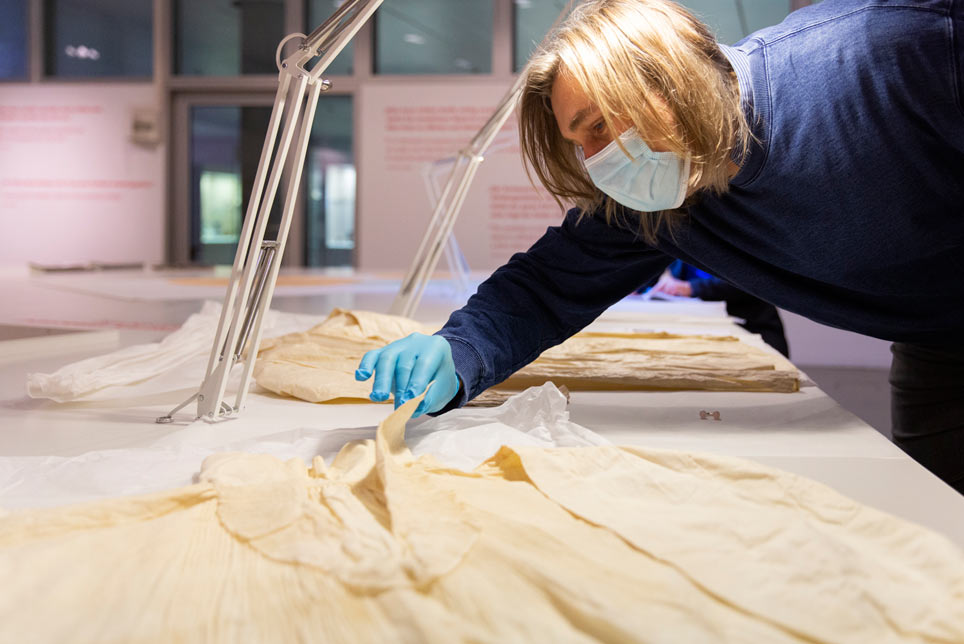
Christina Thomson: Actually, the topic came to us – specifically when, in 2020 as part of the ‘Neustart Kultur’ initiative, we were digitising the 3,800 earliest posters in the collection and wanted to make them available via the German Digital Library. It quickly became clear that simply putting them online wasn’t an option: there are too many images that convey messages ranging from discriminatory to racist, or that evoke problematic narratives. And so the “Colonial Contexts” project was born.
There is, of course, much debate about how to deal with sensitive images. One approach is the so-called ‘poison cabinet method’, whereby one simply locks away what one does not wish to reproduce or cannot critically edit due to a lack of resources. We decided not to conceal the issue, but rather to research the images and publish them with commentary.
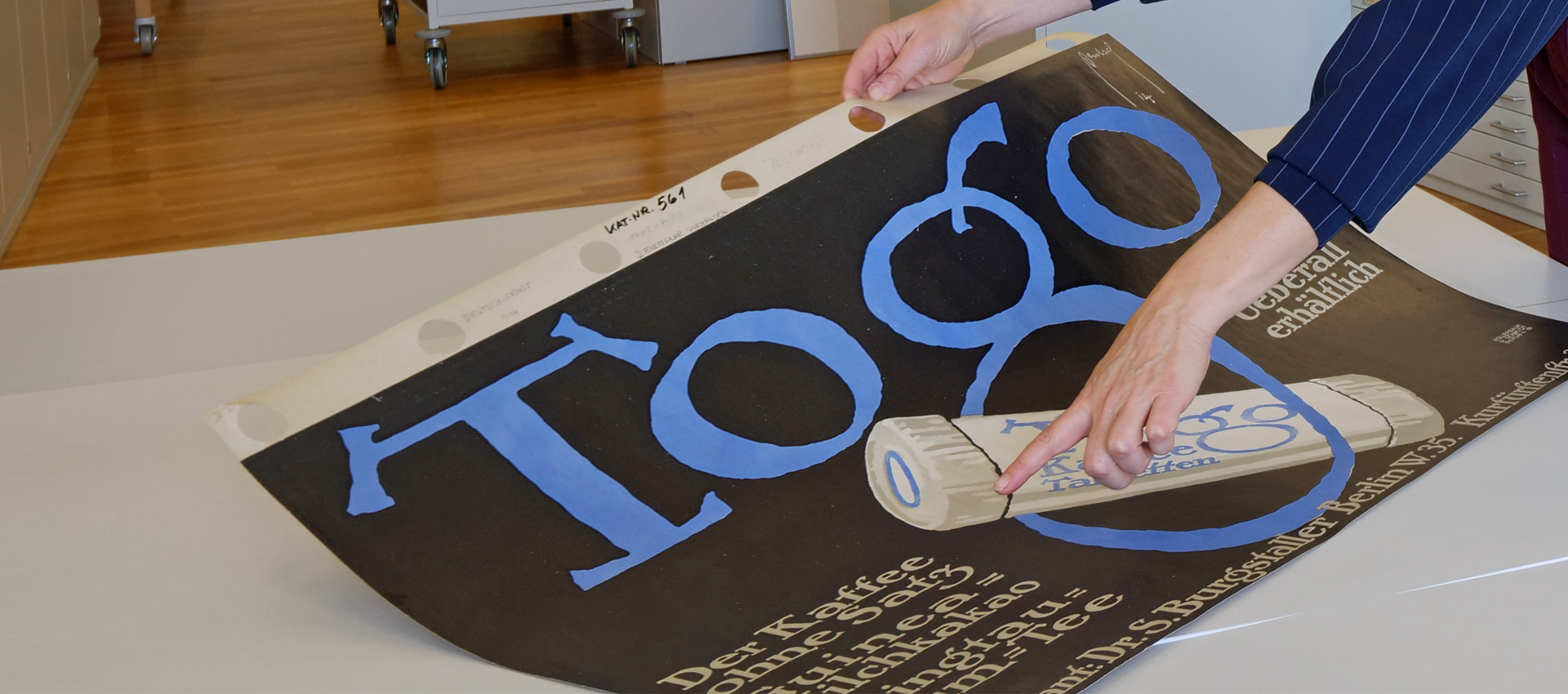
In the collection of 3,800 scanned posters, we found around 400 with a colonial connection. For the project, we did not focus solely on discriminatory images, but examined everything that, in a broader sense, illustrates the colonial context – including, for example, advertising for consumer goods, cultural events or tourism.
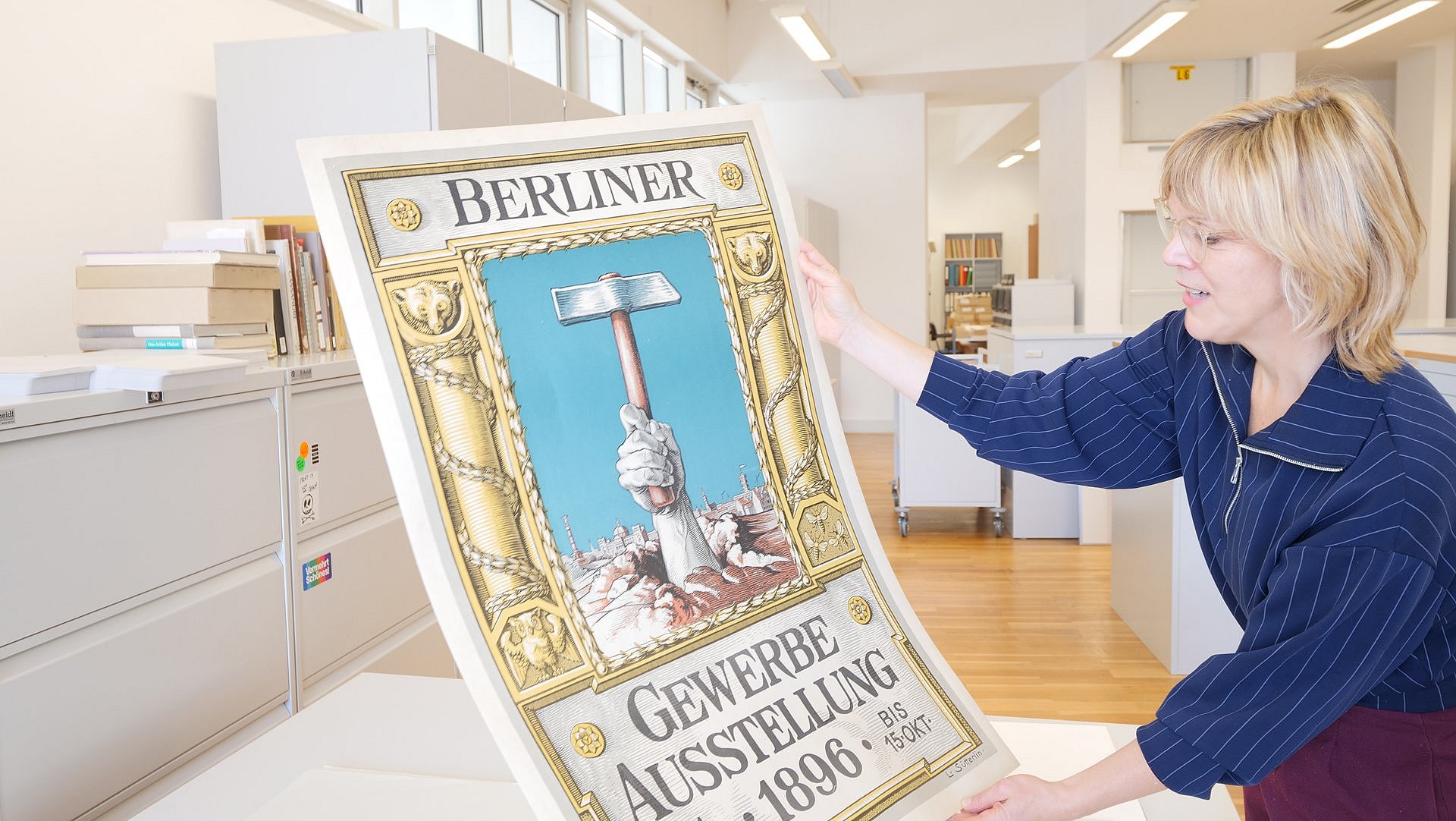
From the 1870s onwards – following the invention of the necessary printing techniques such as colour lithography – colourful pictorial advertising became a widespread means of communication. The 19th century was the era in which the great poster artists came to the fore and museums worldwide recognised poster art as worthy of collection. At the same time, consumer trends also took a leap forward during that period: thanks to industrialisation, new and ever-increasing numbers of goods were constantly being produced and shipped in from overseas at ever-lower prices. Advertising was absolutely essential for marketing these goods. Consumption is thus an important link to colonialism: a society that happily consumes tends to support the politics that enable it to do so. Imperialism was built on the broad masses of happy Europeans cycling and sipping coffee, for whom everyday luxuries were more important than the exploitation of people and nature that preceded them.
So how did you go about it?
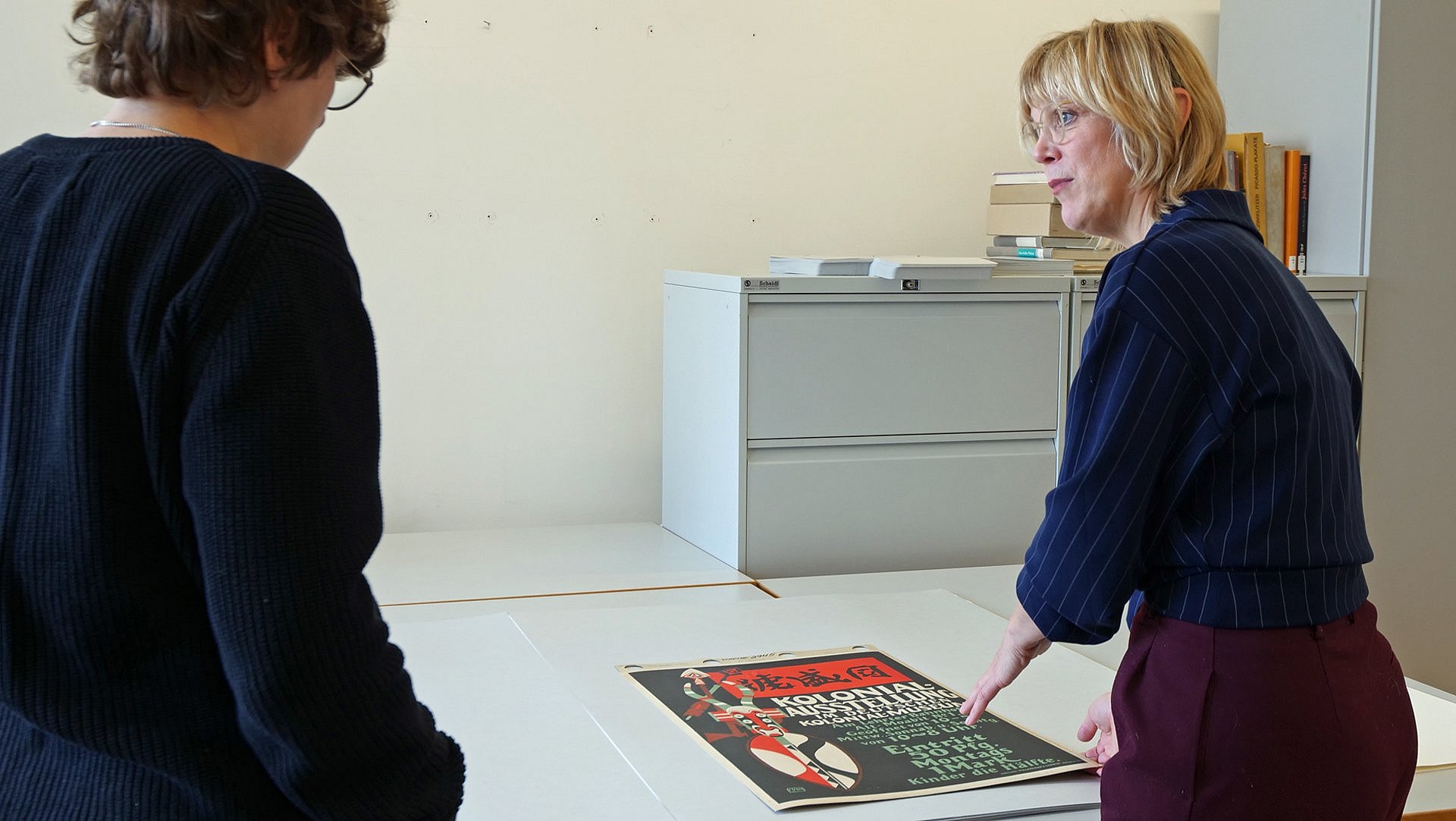
Thomson: We selected 240 posters for in-depth analysis and put together a team of three researchers. I was able to bring in two external perspectives, which made me realise that I myself am not just a little bit blinkered, but that my Eurocentric art-historical background also means I only have certain perspectives. Questioning that and discussing it within the team was essential to the project.
The two excellent external partners were Kristina Lowis, an art historian specialising in historical photographs and depictions of people, and Ibou Diop, who led the ‘Remembering Colonialism’ project at the Berlin City Museum and has done a great deal of work on decolonisation in the city.
To publish the research findings, we opted for a purely digital publication, specifically a contextualised one. This means that the posters are made available exclusively alongside explanatory texts. Racist and other images requiring particular contextualisation have been marked with a disruption: the digital stamp “Context”, placed across the image in large letters, is intended to prevent an unreflective perception of the image and, of course, to stop uncritical downloading and reproduction.
In addition, there is a virtual exhibition at DDB Studio, where the images are paired with critical texts and audio commentaries by Anna Yeboah, Tahir Della and hn. Lyonga. This critical approach and the inclusion of other voices were very important to us.
Research QUESTIONS
How do you actually restore paper? How do you recognise whether a painting is genuine? And how do you play Beethoven properly? With the Research QUESTIONS, we give you the opportunity to ask us your questions. In each issue of the research newsletter, a researcher from the SPK answers selected questions from the community on a specific topic.
In these times of a shift to the right and the bashing of ‘wokeness’, isn’t engaging with what are certainly ‘stubborn’ colonial narratives also a statement in itself?
Thomson: Absolutely. Simply entering into the discourse on how to deal with the colonial legacy, or even making an effort to address it at all, is, for me, a political stance.
I find it striking and alarming how much the themes of the colonial era have persisted throughout the entire 20th century and are now being repeated in the rhetoric of right-wing parties: once again, it’s about propaganda and national identity, about social hierarchies and, quite clearly, about white supremacy. The latter in particular – the myth of the European as a superior human being – is currently very widespread once again across Europe in right-wing conservative discourse.
The historical advertising we have examined invokes precisely such colonial-racist tropes – these are narratives and fabrications, stereotypes and clichés, but not facts. Our project clearly demonstrates how fabricated narratives are translated into manipulative images for the masses. This is another reason why I believe it is important to conduct such research right now, even if it means facing discussions and opposition. This creates a platform for dialogue, and that helps us to grapple with issues that are uncomfortable.
What are some examples of colonial narratives in visual advertising? What is a typical trope?
Thomson: The exoticised fictional character is a well-known trope that has endured for a very long time. The Sarotti mascot, for example, was used for 100 years with almost no changes: a caricatured figure wearing a turban, hurrying towards the viewer with a tray. The narrative behind such a figure is that there are rulers and servants, and that white chocolate consumers have a right to be served, and indeed by those who are supposedly inferior to them – the so-called ‘subalterns’, the colonised.
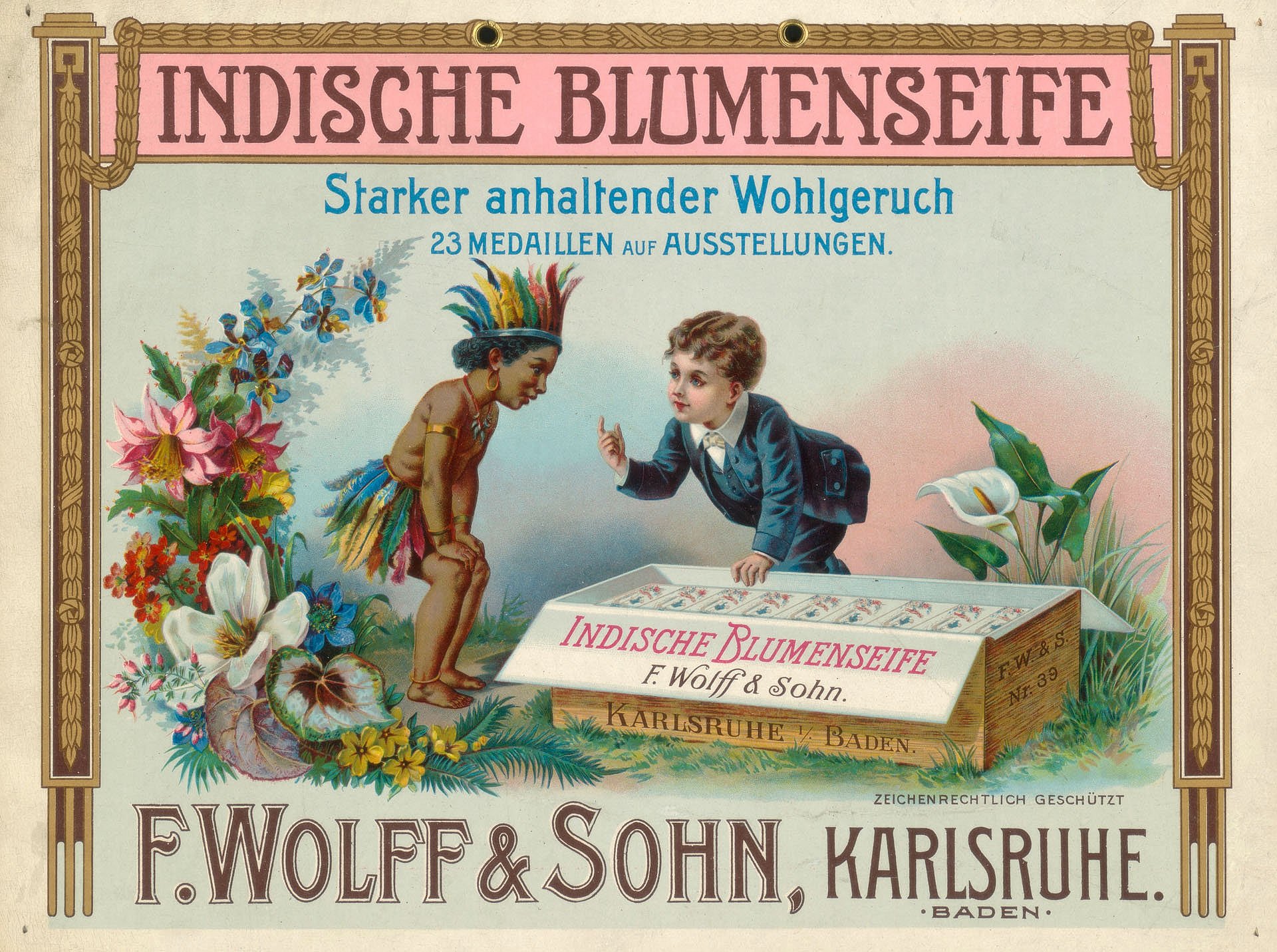
These are often depicted as childlike in advertising images, because adults do, after all, look down on children. So when people from other cultures are portrayed with childlike features, this image instinctively creates a sense of superiority.
Soap is a very old trope in racist advertising. Around 1900, there were a shocking number of extremely racist images in which Black people were being told what or how they should wash, particularly by small white children. The advertised products often had a skin-lightening effect, which the adverts made fun of.
This exists in very blatant forms, but the same message is also present in seemingly harmless depictions of children, such as our poster for ‘Indian Flower Soap’; it’s just that the cute image is harder to decode. Just a few years ago, Nivea advertised a deodorant with the slogan “white is purity”, and a Dove advert featured a clip showing the transformation from dark to light skin.
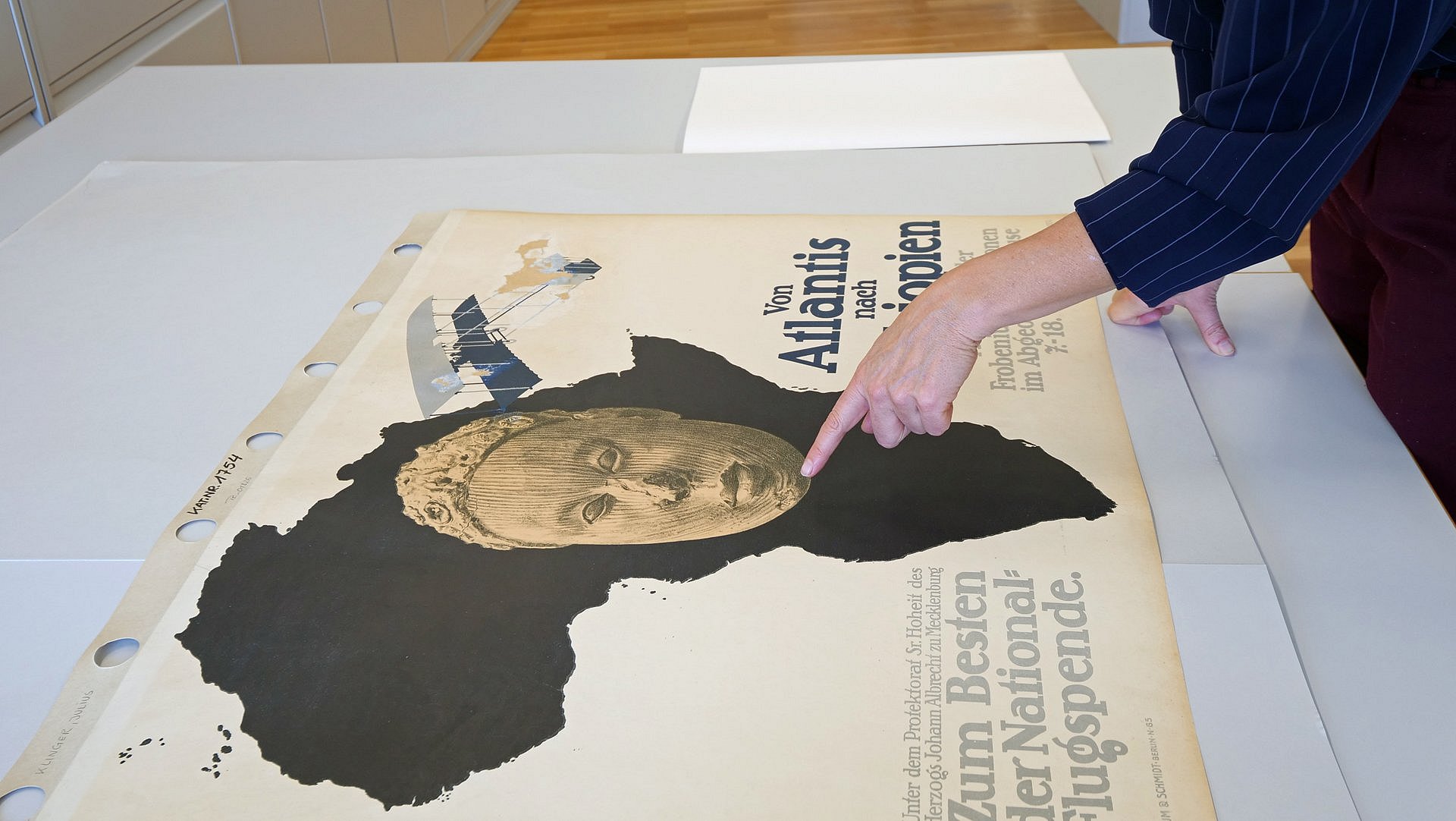
Another classic narrative of the Eurocentric and colonialist worldview is the depiction of the African continent as a homogeneously black-coloured expanse – as if Africa were the outline of a void, a no-man’s-land from which others were free to help themselves. This fiction of a ‘terra nullius’ appears throughout the 20th century in advertising imagery, even when promoting charitable causes.
Orientalism is also strongly represented in poster advertising around 1900: images that Europe invents to communicate about other countries and cultures. It is sometimes absurd what is advertised using Oriental motifs: beer from Munich, rainproof hiking gear or loden made from camel hair. Yet the aim is rarely to truly represent these ‘foreign’ cultures, but rather to create a counter-image. The ‘Orient’ stands symbolically for a Western construct of the ‘Other’.
As an example of hidden colonial references in product advertising, let me mention rubber: there is a great deal of advertising for rubber goods, such as car tyres, bicycles with pneumatic tyres, tennis balls or rubber soles. Rubber has, in fact, only been manufactured industrially since the 1930s. Before that, everything came from rubber plantations in overseas colonies, where the raw material was extracted through forced labour and extreme brutality. Behind the everyday nature of these overseas products lie supply chains that are often just as unquestioned today as they were back then.

The symposium marking the conclusion of the research project is called ‘Stubborn Patterns’. Why are the colonial patterns in visual advertising ‘stubborn’? Do they still exist today?
Thomson: The Sarotti character, which is now called the “Magician of the Senses” but looks little different, is not the only example of continuity in brand communication. There are many companies that have continued to use racist logos for decades.
Only recently, Uncle Ben’s and Aunt Jemima have been renamed in the US, and Bahlsen’s “Afrika” biscuit is now called “Perpetum” after 60 years. Chocolate kisses were called something else in my childhood, and I remember more than one advert in which racist imagery was rife.
At the symposium, there will be an intriguing talk on AI-generated advertising. When it comes to chocolate, the old stereotypes are quickly reproduced here: an African woman in a headscarf or a deserted African landscape. This clearly shows how firmly these narratives are entrenched, not only in our minds but also in the digitally multiplied visual worlds.
The notion of white supremacy also persists stubbornly in advertising: in 2006, PlayStation promoted its new white console model with an image of a white woman brutally grabbing a Black woman by the chin from above. In 2018, H&M published an advert featuring a young Black boy wearing a jumper with the slogan “Coolest Monkey in the Jungle”, alongside an image of a white boy whose jumper declared him a “Survival Expert”. The American Eagle advert released this summer follows a similar pattern, reproducing the narrative of the genetic superiority of white beauty with the slogan “Sidney Sweeney has great jeans/genes”.
A lack of historical awareness is a central theme. Through our research and the symposium, we also aim to demonstrate that discrimination and fantasies of superiority have a long, persistent tradition, and that it is time to routinely question these visual patterns.
Symposium
“Stubborn Patterns: Colonial Narratives in Visual Advertising” (21 and 22 November 2025) in cooperation with the German Historical Museum Foundation and the Berlin City Museum Foundation
Will there be a physical exhibition as well as the virtual one?
Thomson: We discussed this at length within the research team and ultimately decided against it. Firstly, because an online exhibition provides us with a free, permanent and public presentation that can reach more people over the long term and regardless of location.
Secondly, in the virtual presentation, critical contextualisation in the form of texts is more prominent alongside the digital image than in a room filled with large-format originals. Any physical exhibition inevitably places the exhibits on a pedestal, easily drawing the eye to their aesthetics and craftsmanship rather than their content. Breaking this visual habit of prioritising value works significantly better without the aura of the original.
Broadly speaking, the question here is also: how do we deal with what we have in the collection? Ultimately, I am not keen on exhibiting such problematic images and then leaving visitors to grapple with them on their own. I would rather spark a conversation about them – next year, for example, I will be hosting a ‘Up Close!’ evening, to which I warmly invite you.