On 4 September 2022, something incredible happened at the Kulturforum, a venue often considered uninviting: with a touch of self-deprecating humour, yet also with confidence, the neighbouring cultural institutions invited the public to a ‘Day in the Green’ – featuring art, culture and culinary delights. We were there.
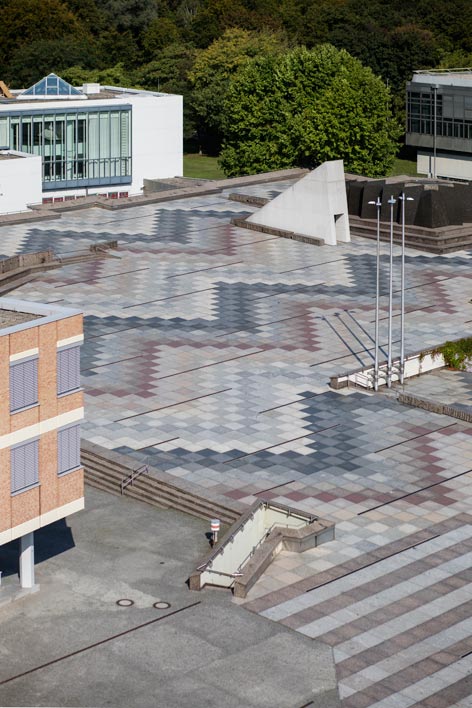
People do love surprises. Let’s say: most of them. So it was no surprise that on 4 September, thousands made their way to the Kulturforum. The task was to find out where exactly this supposed ‘green space’ was. Malicious tongues might suggest that these Sunday day-trippers looked as out of place as neophytes in the Kulturforum’s biotope, which is otherwise considered rather barren and, above all, grey, but that is, of course, nonsense.
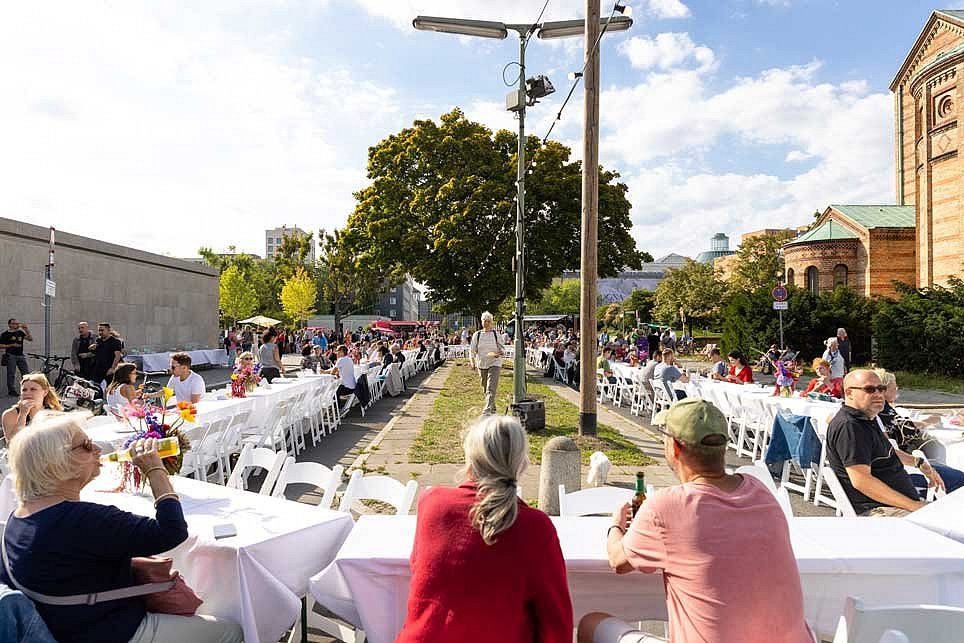
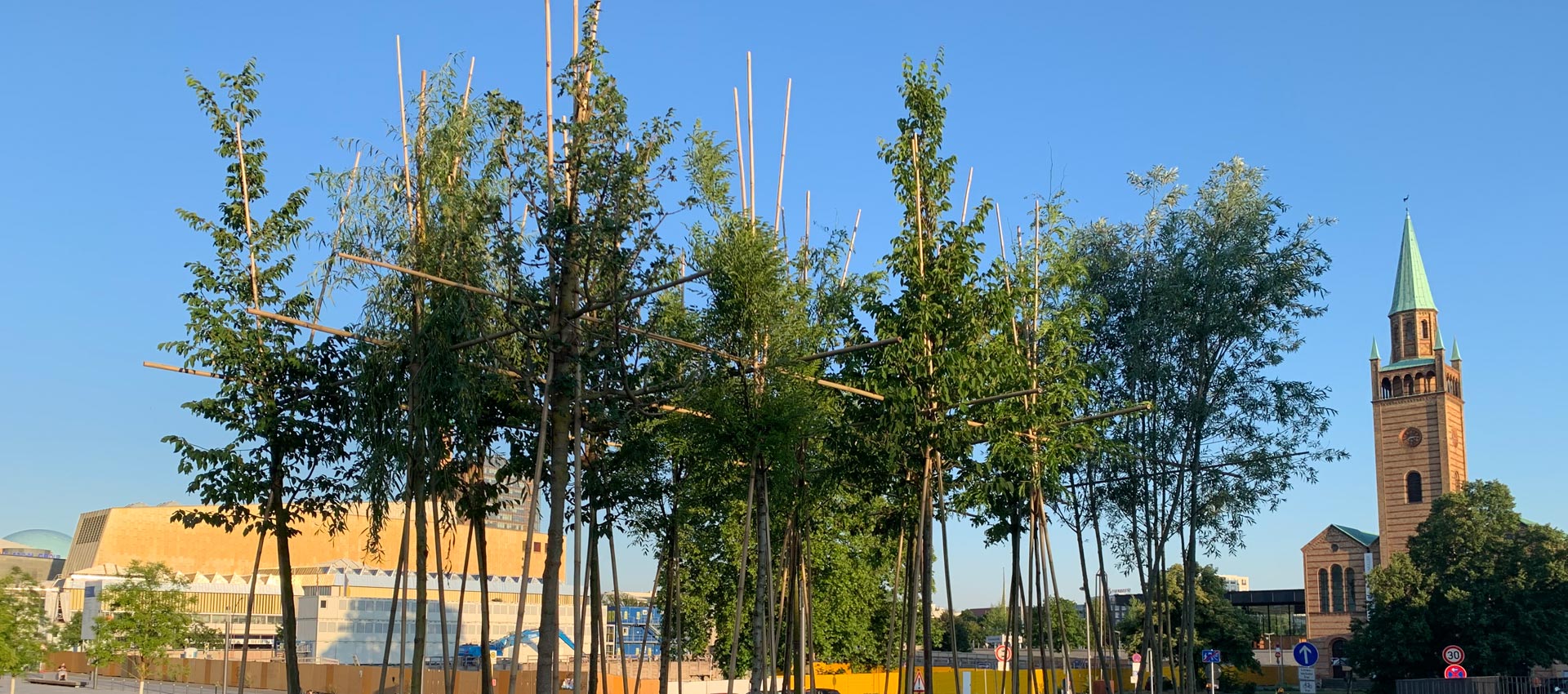
This enormous display is actually a campaign to promote more museum gardens © Stefanie Heider
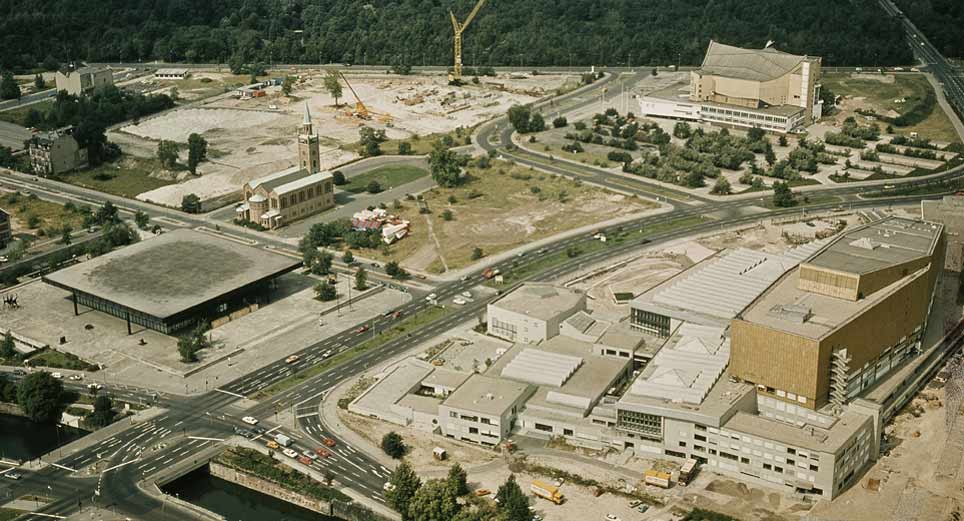
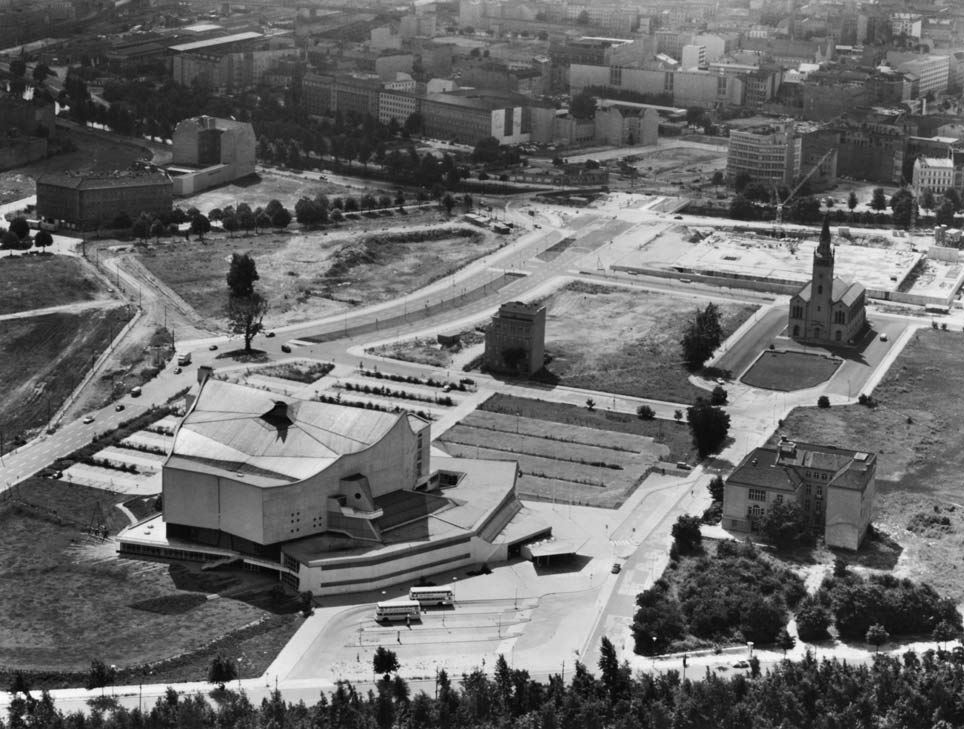
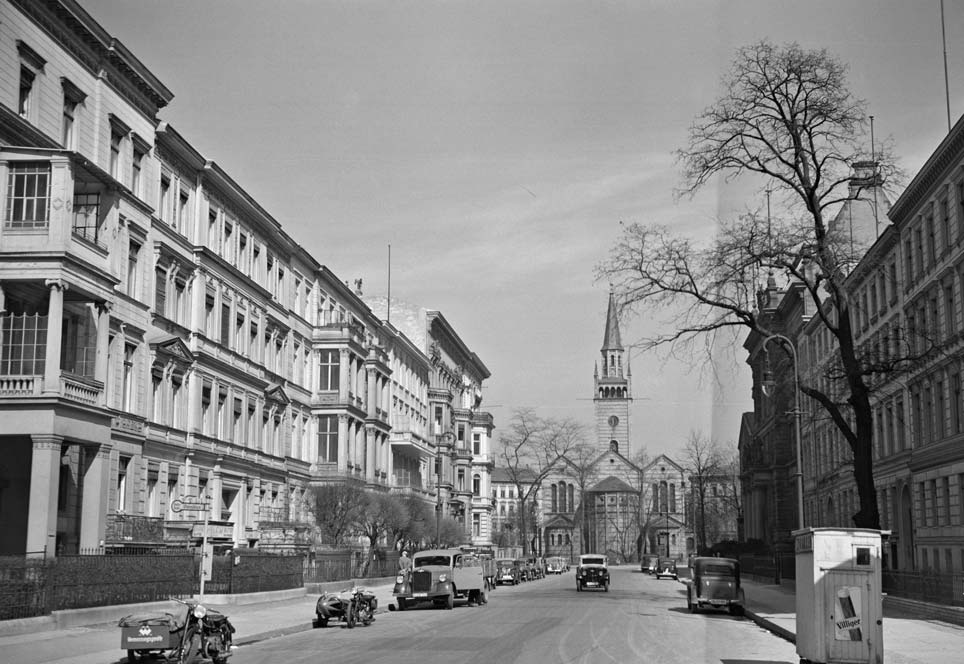
Incidentally, it wasn’t that long ago that the area around the Kulturforum was a green destination for those seeking relaxation: in the 18th century, this was still the outskirts of the city, and after the vast Tiergarten was converted from the Elector’s hunting grounds into a public park, the area around today’s Kulturforum became a popular summer retreat.
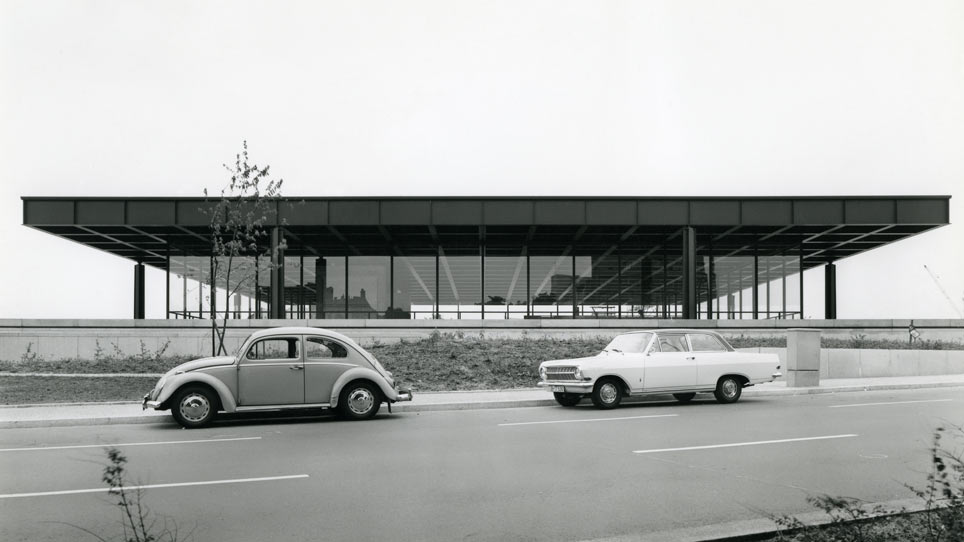
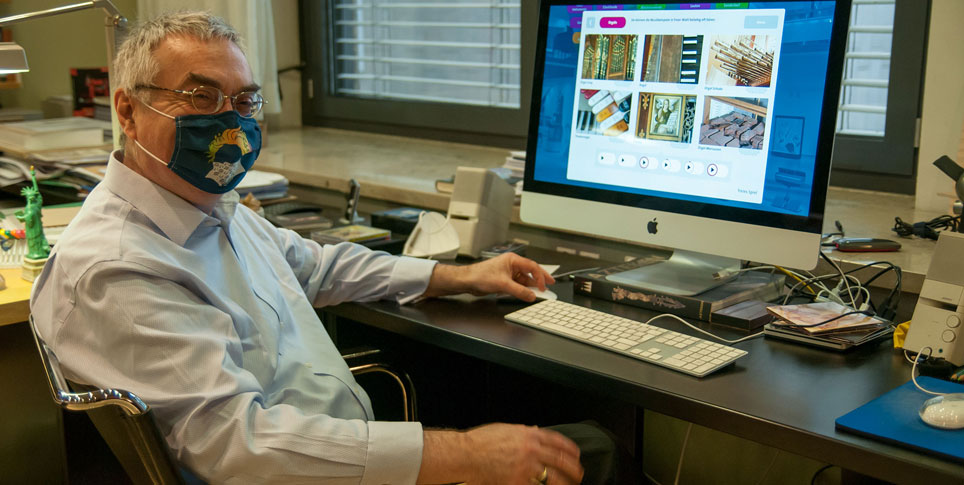
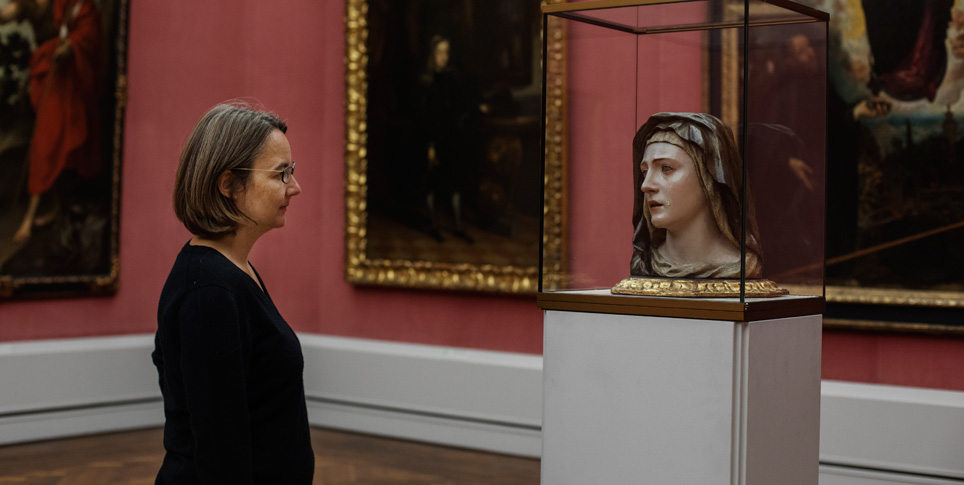
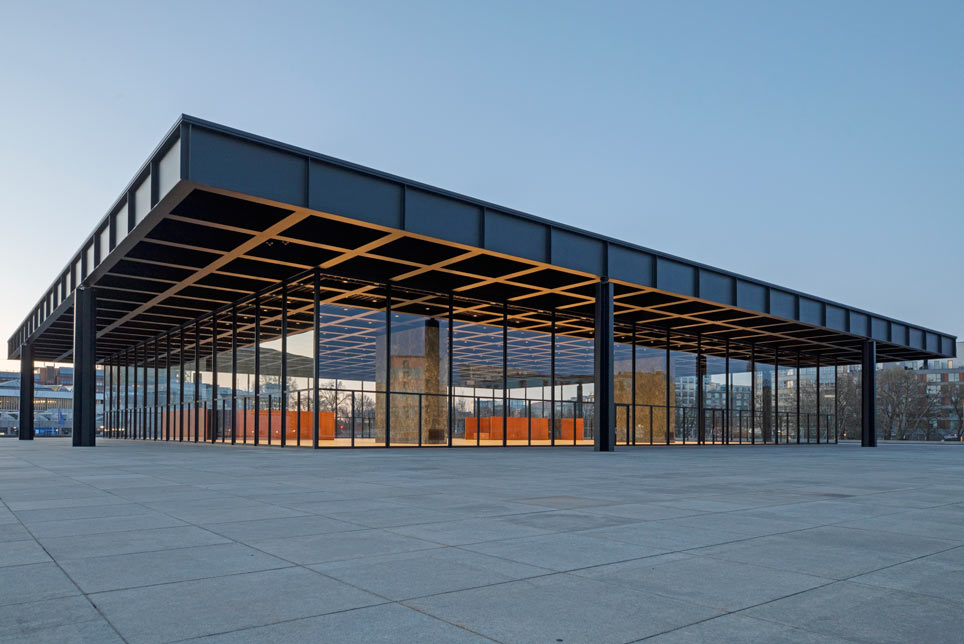
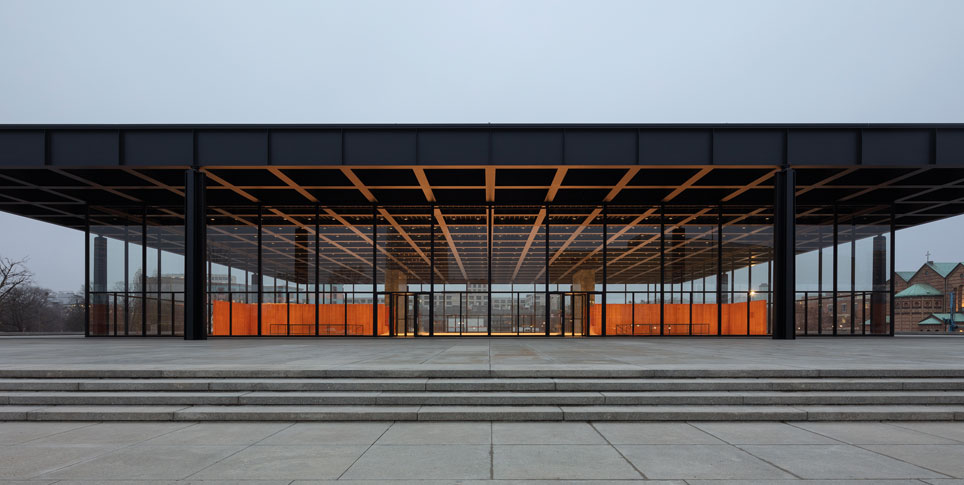
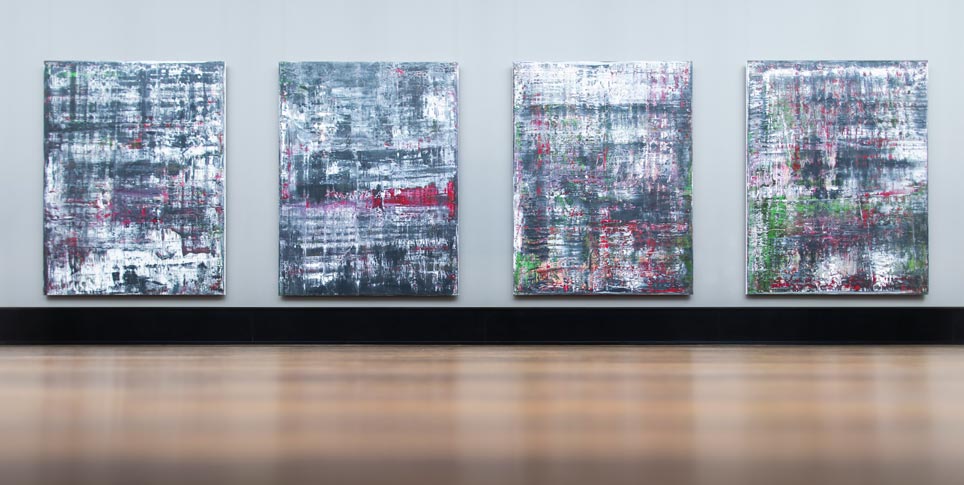
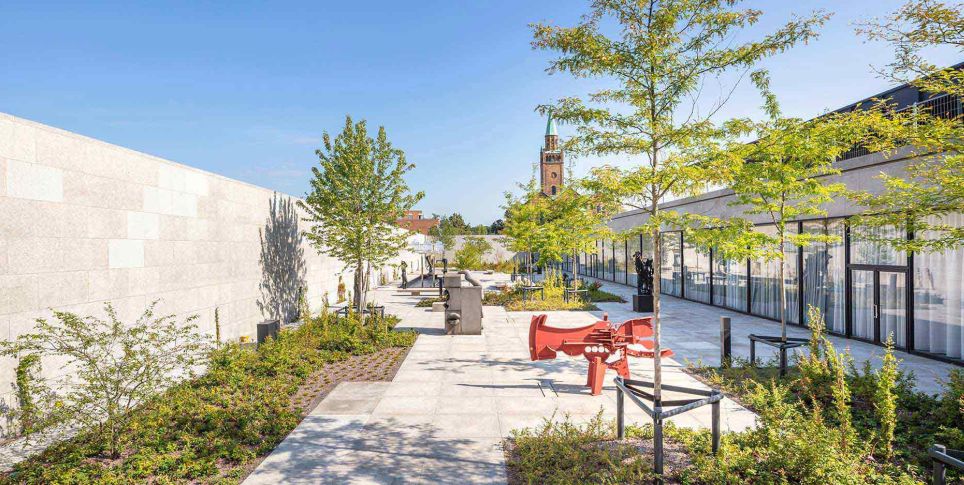
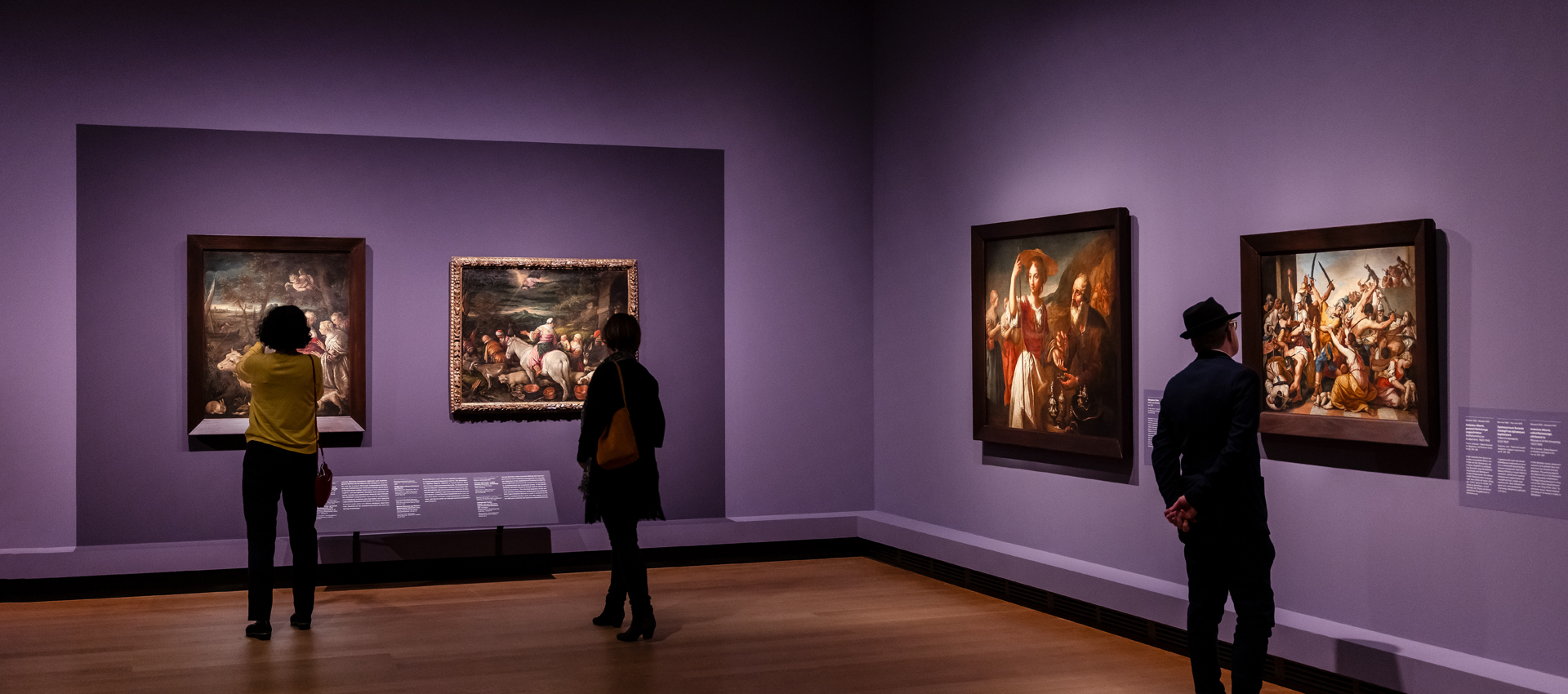
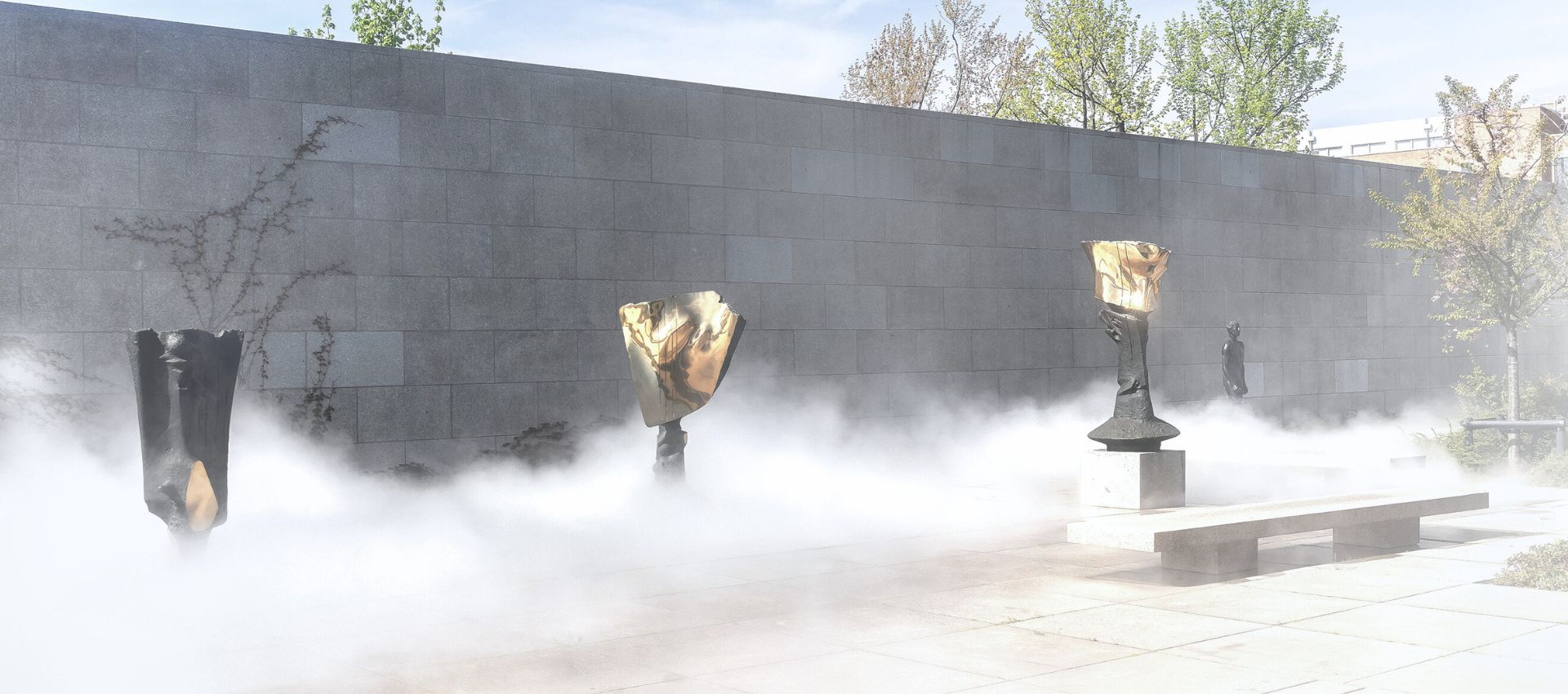
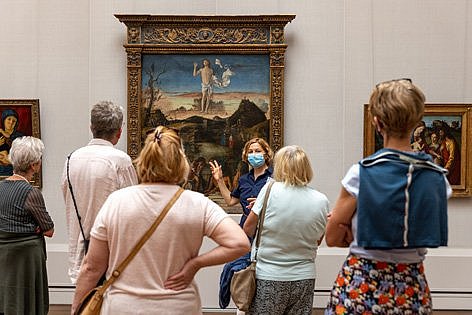
But where is that relaxing greenery 200 years later? On the one hand, of course, in the collections of the museums: gardens, plants, forests and the like have always been popular, rich and frequently depicted motifs in art, as guided tours of the Neue Nationalgalerie, the Kupferstichkabinett, the Kunstbibliothek or the Gemäldegalerie demonstrate. As befits such distinguished institutions, many of the Kulturforum’s venues have gardens: the Neue Nationalgalerie has its almost legendary sculpture garden, between the Philharmonie and the State Institute for Music Research lies the lesser-known Philharmonic Garden (where there was, of course, music), and the State Library had simply turned the lawn in front of its entrance into a pop-up garden, where guests could lounge in deckchairs, shudder at E.T.A. Hoffmann’s stories and listen to the sounds of old Berlin barrel organs.
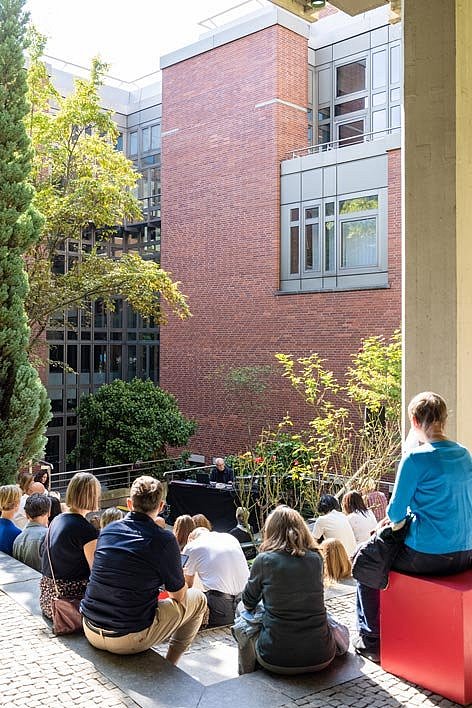
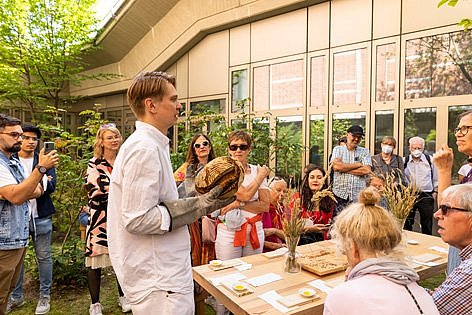
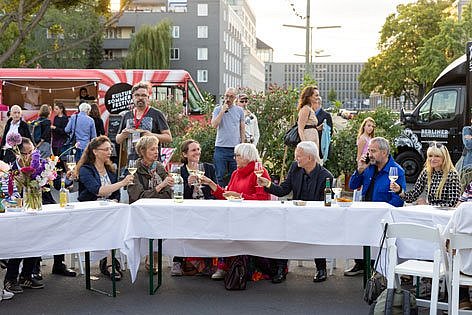
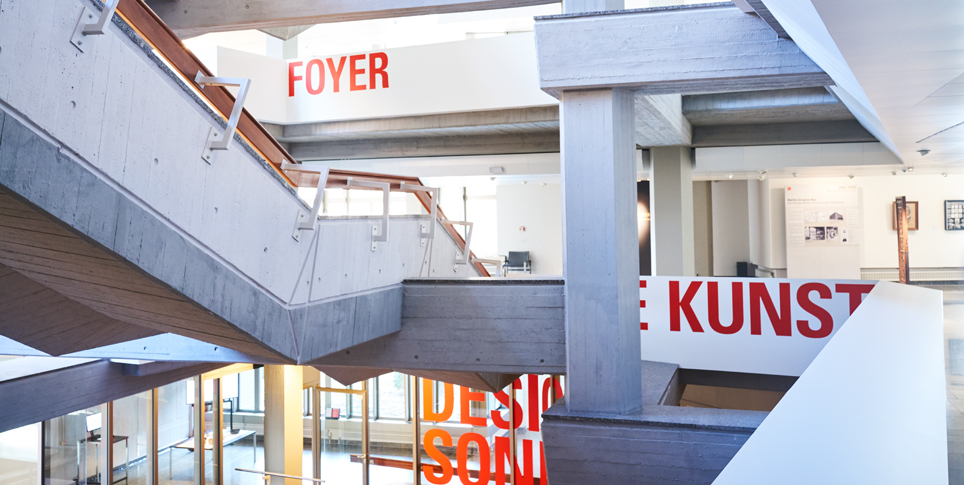
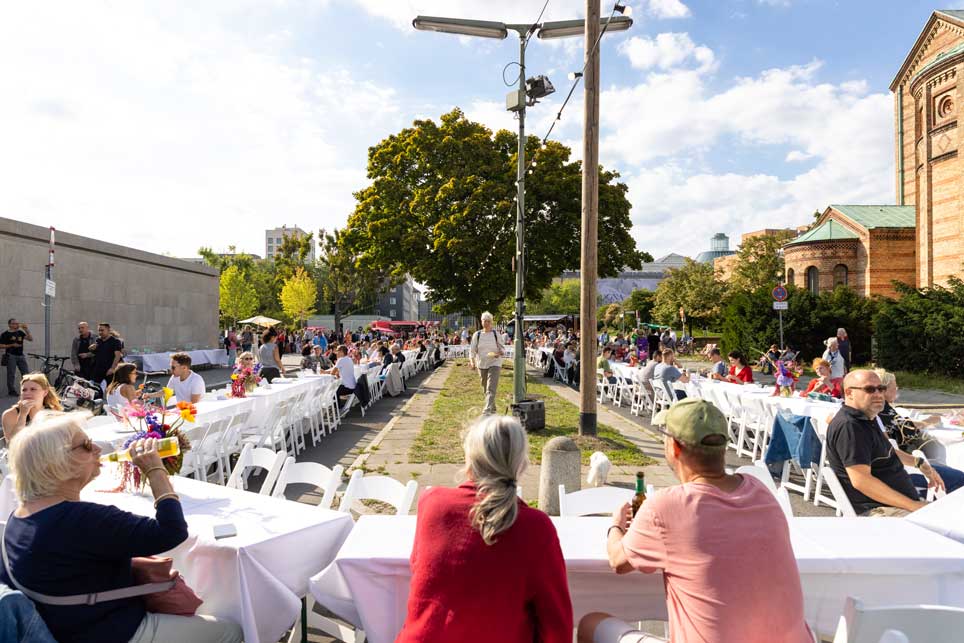
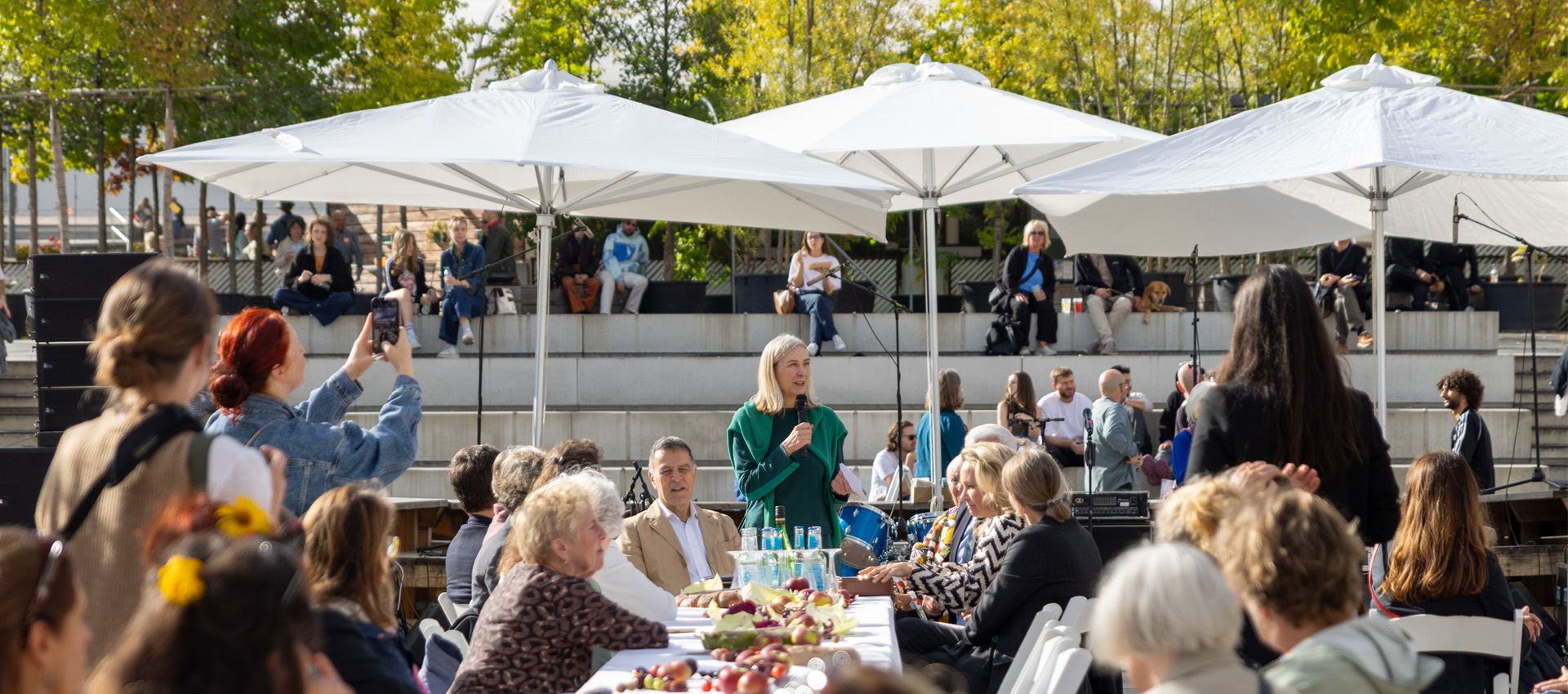
The highlight of the day, however, was undoubtedly the two green oases inside the Museum of Decorative Arts. Rolf Gutbrod’s soft-brutalist building is regarded by some as a kind of architectural behemoth; visitors were likely even more astonished by the inner courtyards. The larger of the two was filled with a sound installation by New York artist Arnold Dreyblatt, whilst the other hosted a food performance by Chmara.rosinke centred on the theme of ‘bread’. The culinary and social highlight of the day, however, was a huge banquet table on Sigismundstraße. Where resourceful motorists usually disrupt the forum atmosphere between the New National Gallery and St. Matthew’s Church, on this special Sunday an oval table draped in a white tablecloth invited people to gather for free cake, free coffee, free apple spritzer and free currywurst. In the afternoon, the highly intriguing sounds of a concert by the band DEEP GOLD, cobbled together from various meta-levels, filled the air; shortly before dusk, Minister of State for Culture Claudia Roth, accompanied by the Federal Minister of Food and Agriculture, Cem Özdemir, graced the occasion with her presence. She ate a currywurst, chatted with the crowd and gave an impassioned speech about the day – it had to be impassioned, as the event had been declared a demonstration for more museum gardens, an administrative lever to wrest Sigismundstraße back from the cars.
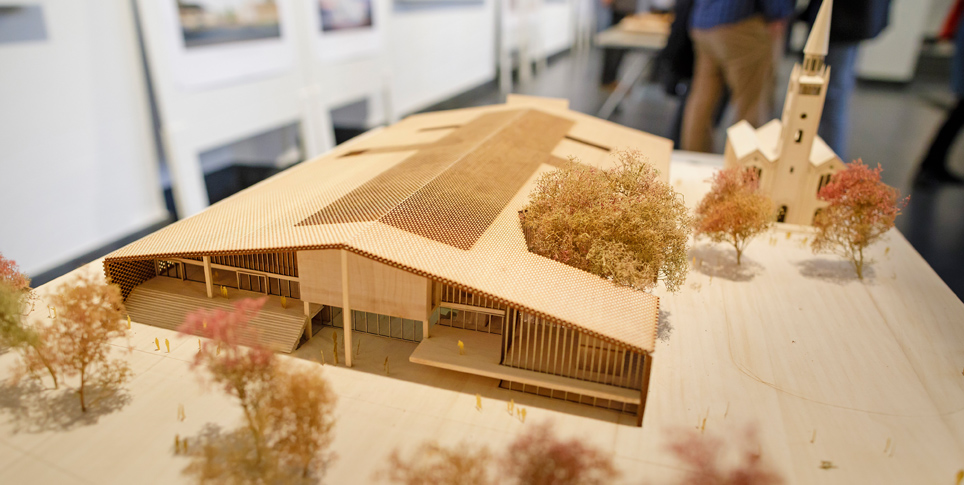
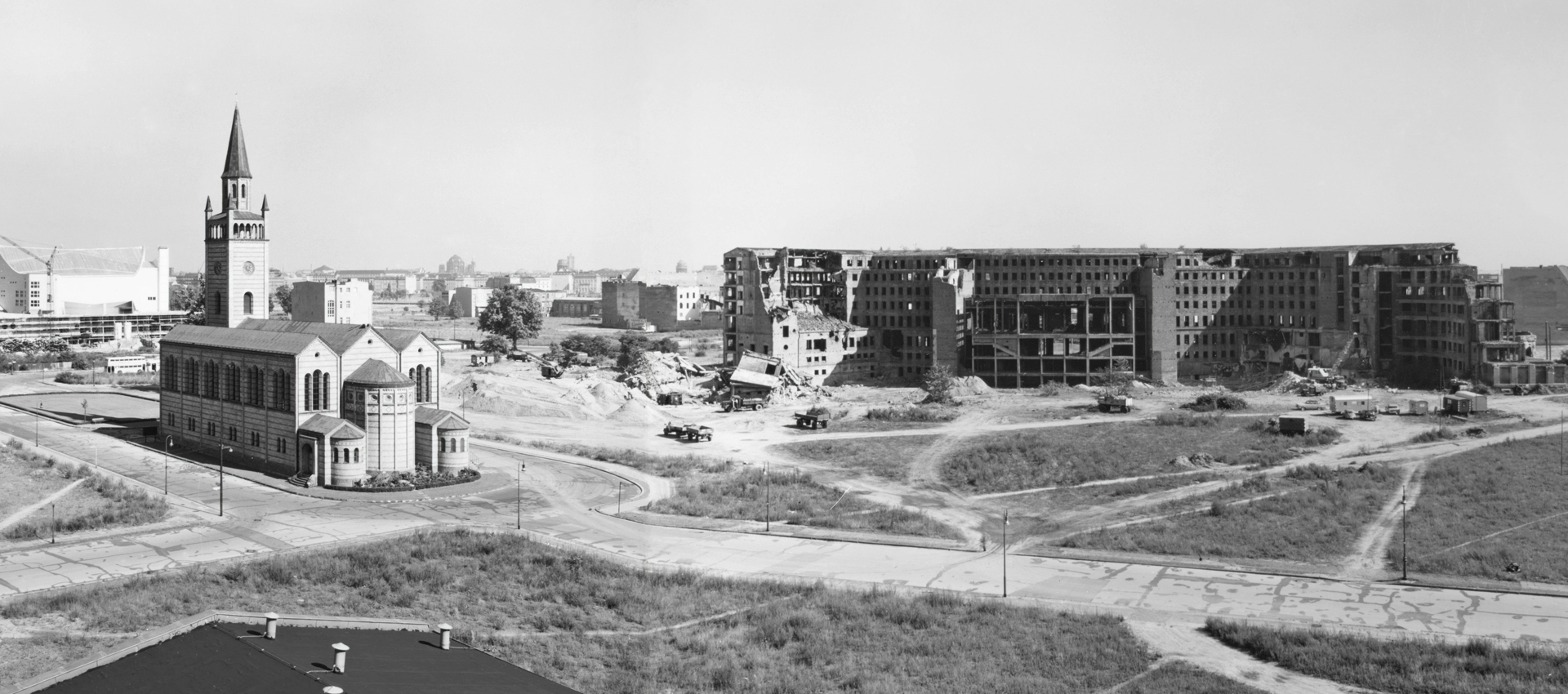
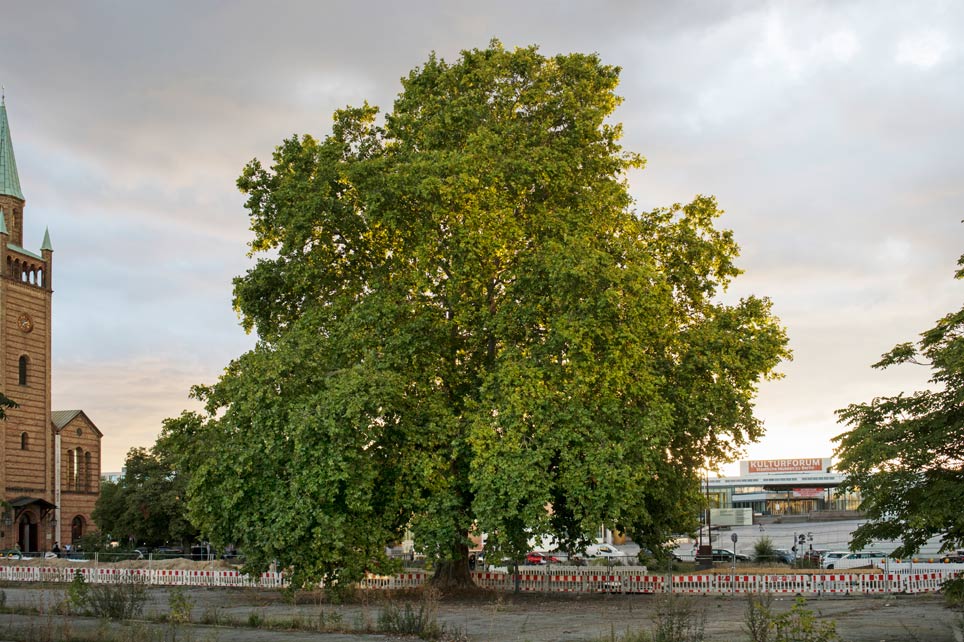
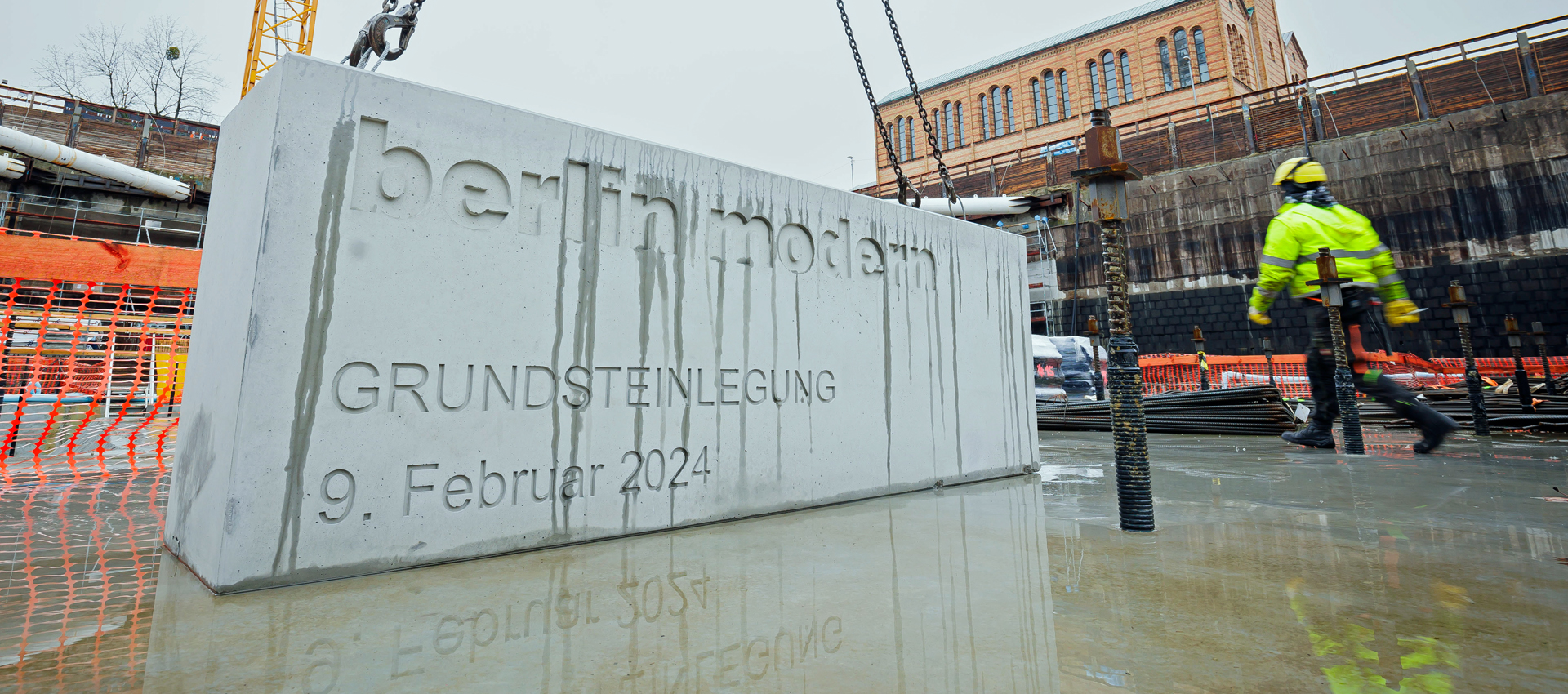
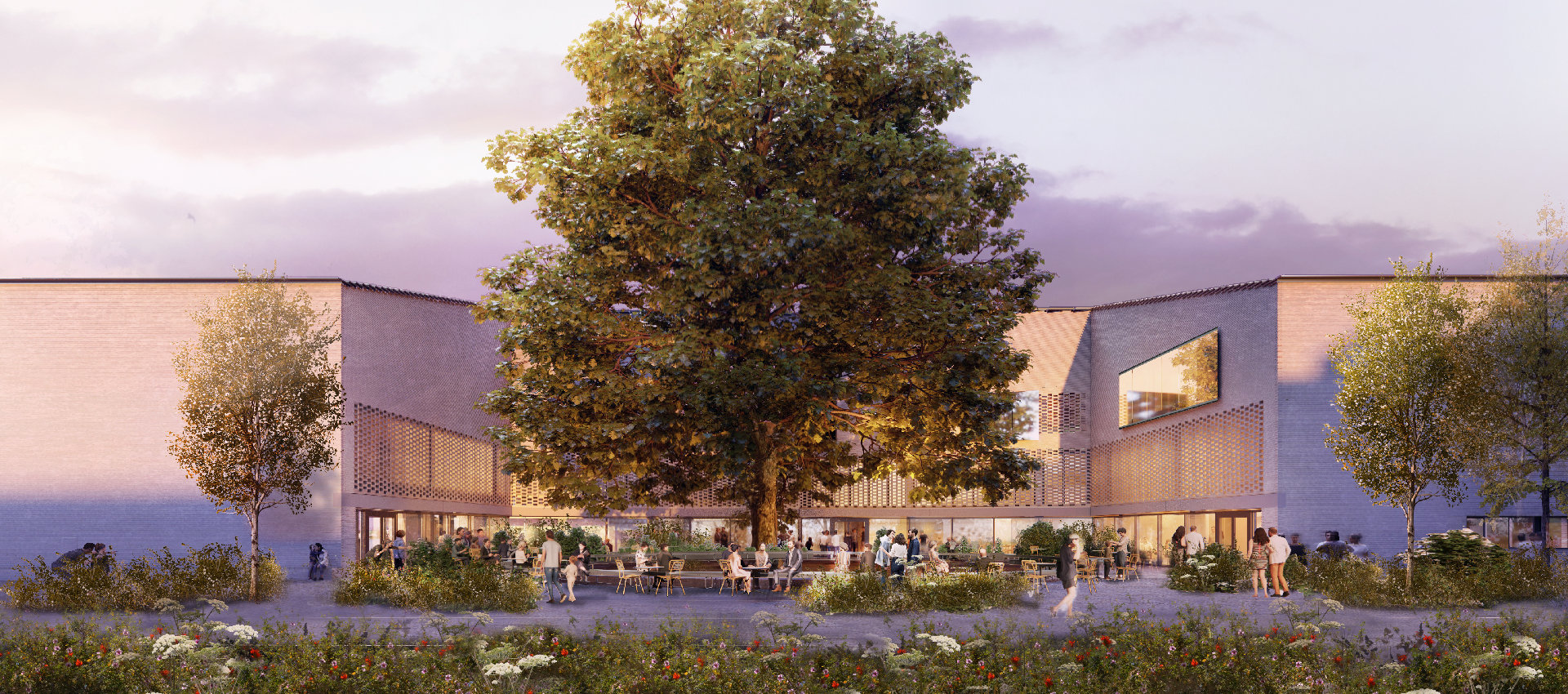
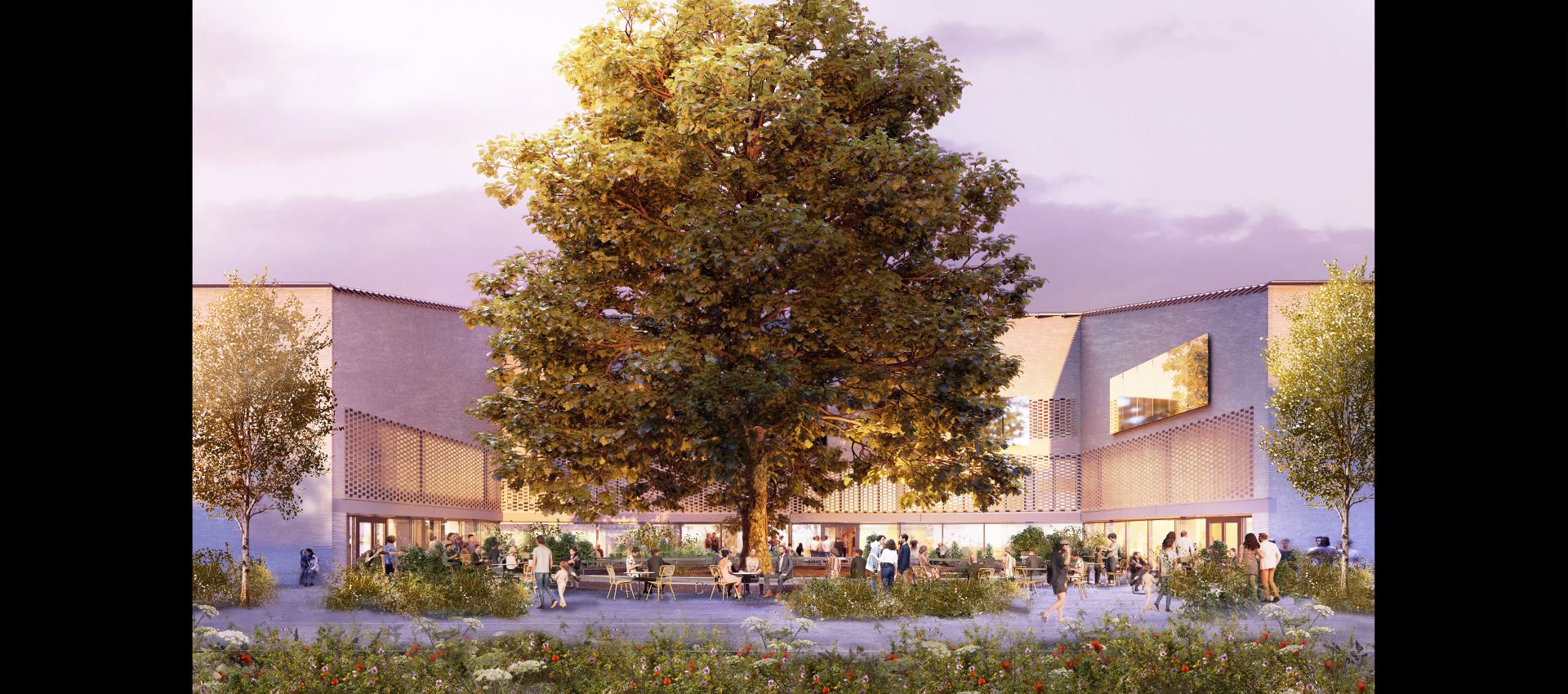
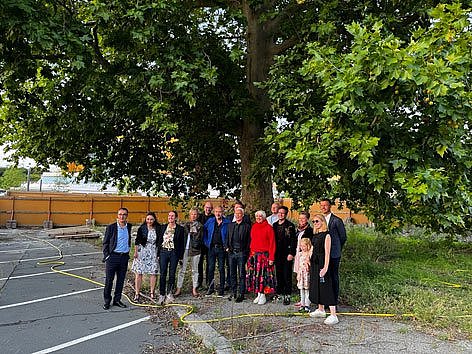
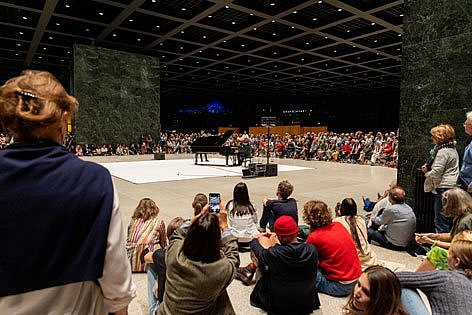
Afterwards, everyone gathered for a group photo at the green heart of the Kulturforum, which in a few years’ time will also become the green heart of the new National Gallery building: the mighty 150-year-old plane tree. This natural monument has survived the adversities of the 20th century – from the demolition of the neighbourhood in favour of the megalomania of Germania, through the bombs of the Second World War, to the planning paradigm of a ‘car-friendly cultural city’ in post-war West Berlin – and is now being integrated into the new building. After darkness had fallen over the Kulturforum, Till Brönner played “Improvisations on Mies” in the upper hall of the Neue Nationalgalerie – a memorable conclusion to a memorable day. For the “Day in the Green” seemed as promising to the residents of the Kulturforum as the scent of petrichor after a long drought: “The interplay of all the institutions has turned the Kulturforum into a true forum: music, literature, art, science and religion, all together! I have rarely seen the Kulturforum so lively and cheerful,” rejoiced Hannes Langbein, pastor of St. Matthäus Church and one of the leading figures behind the event. And SPK President Parzinger also predicted: “This was certainly not the last joint initiative by the local residents, for the keen interest shown by the guests has demonstrated that, with the right programme, the Kulturforum is an extremely vibrant, urban venue.”