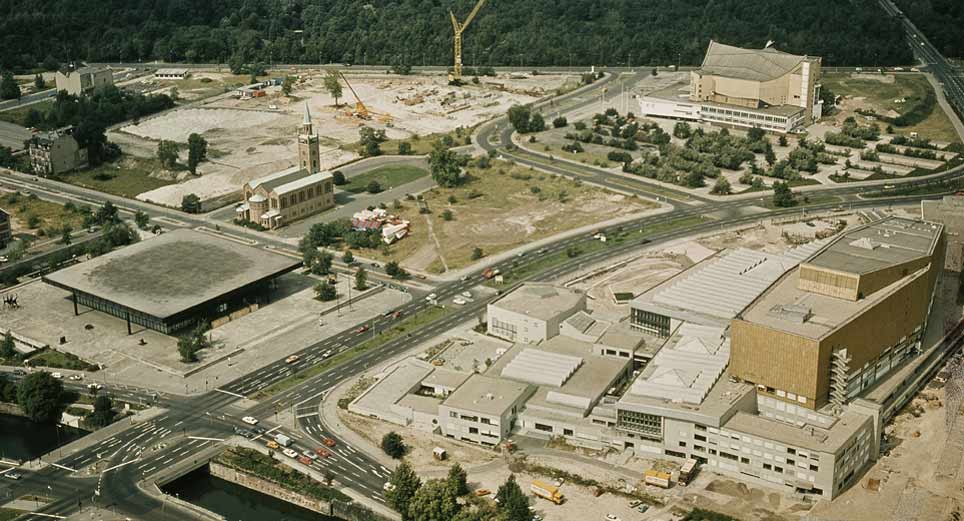
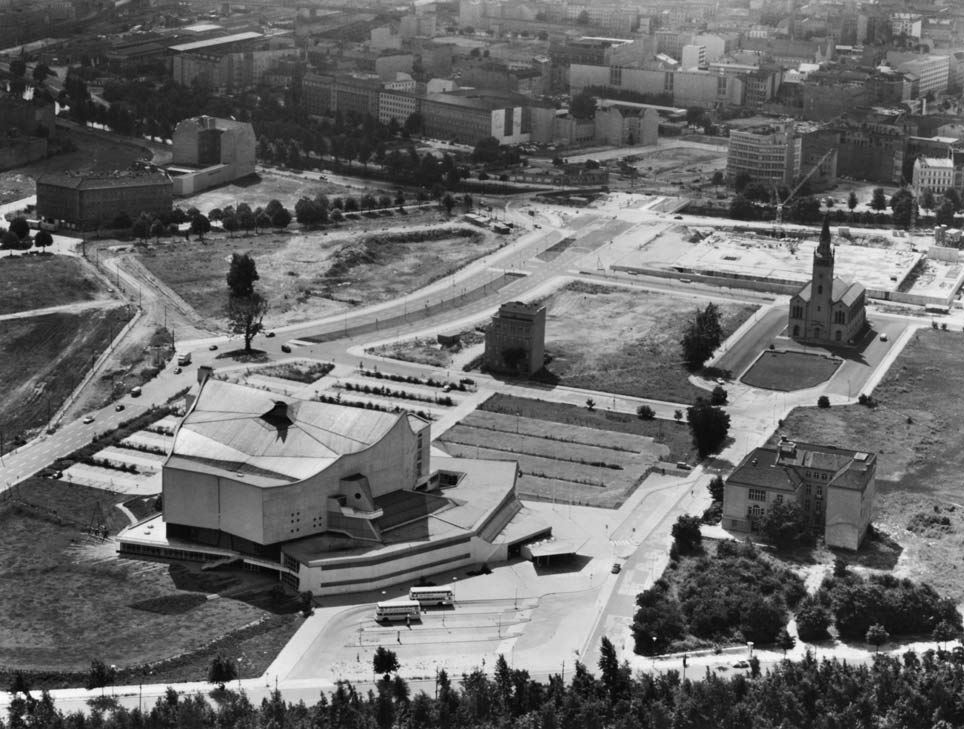
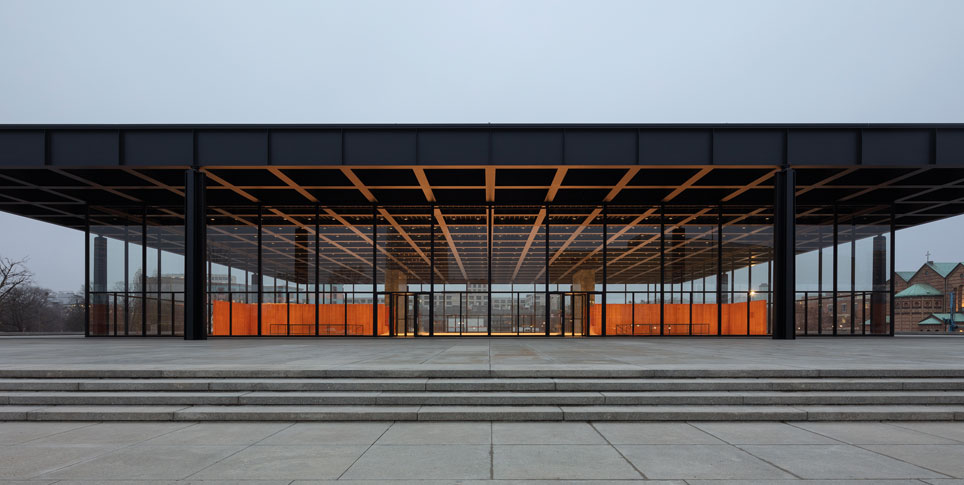
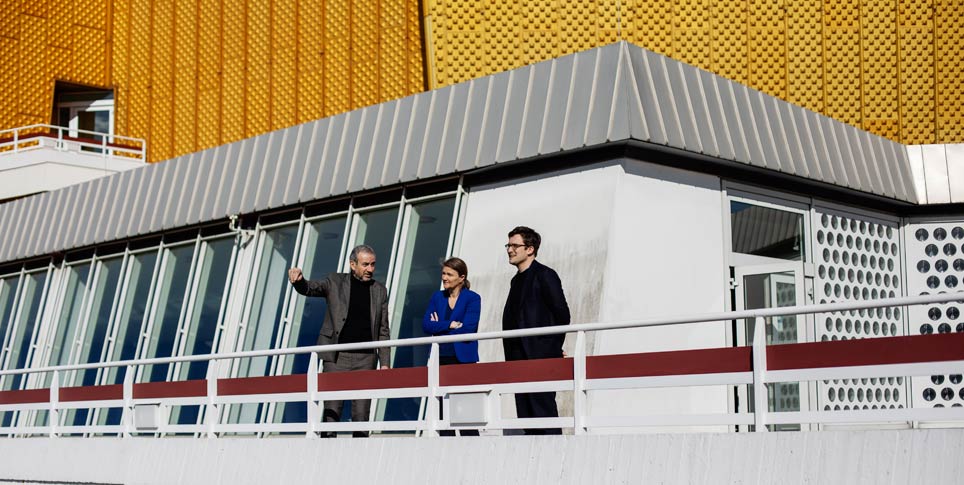
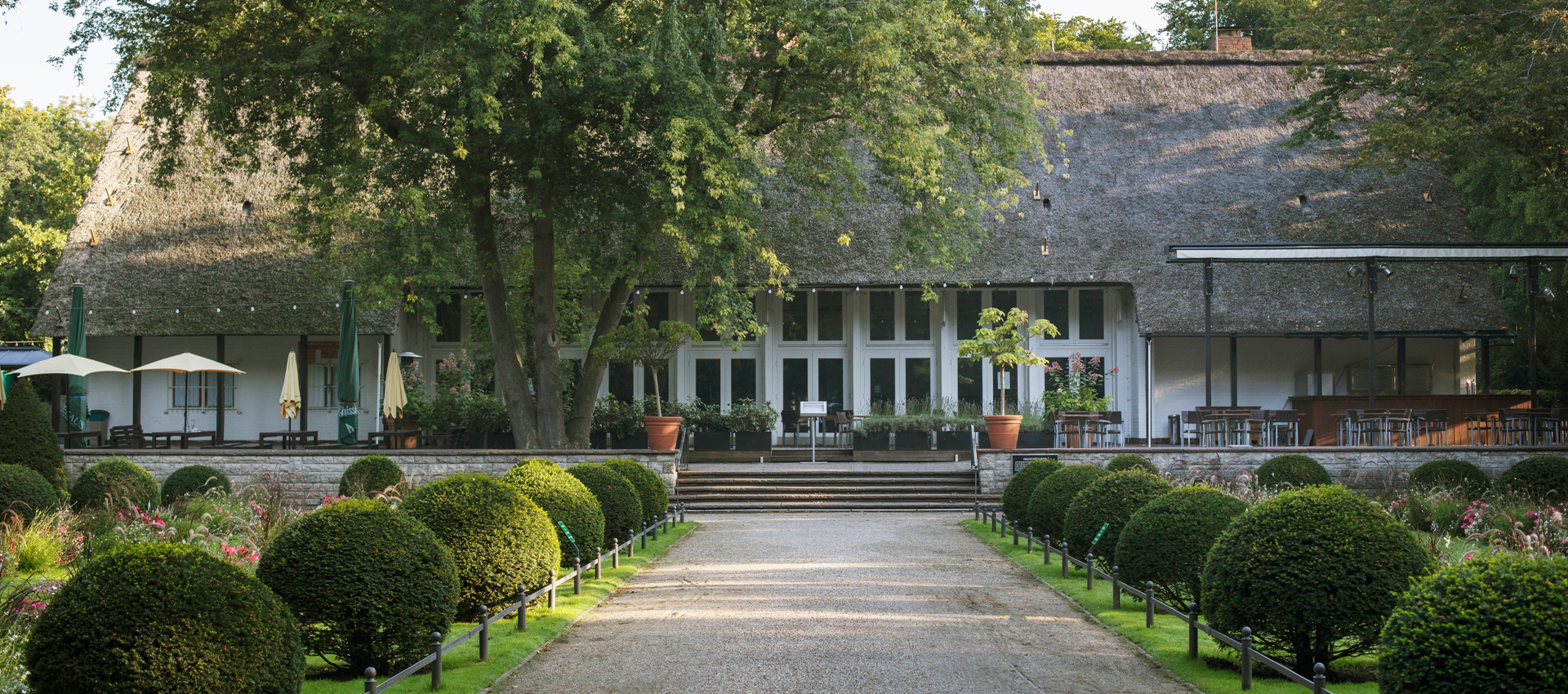
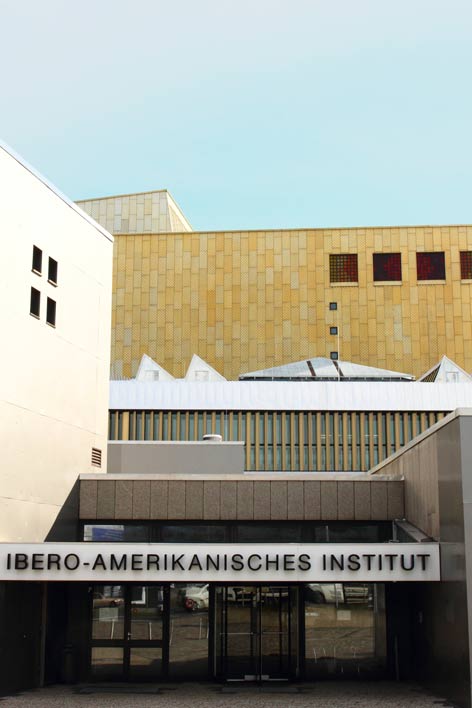
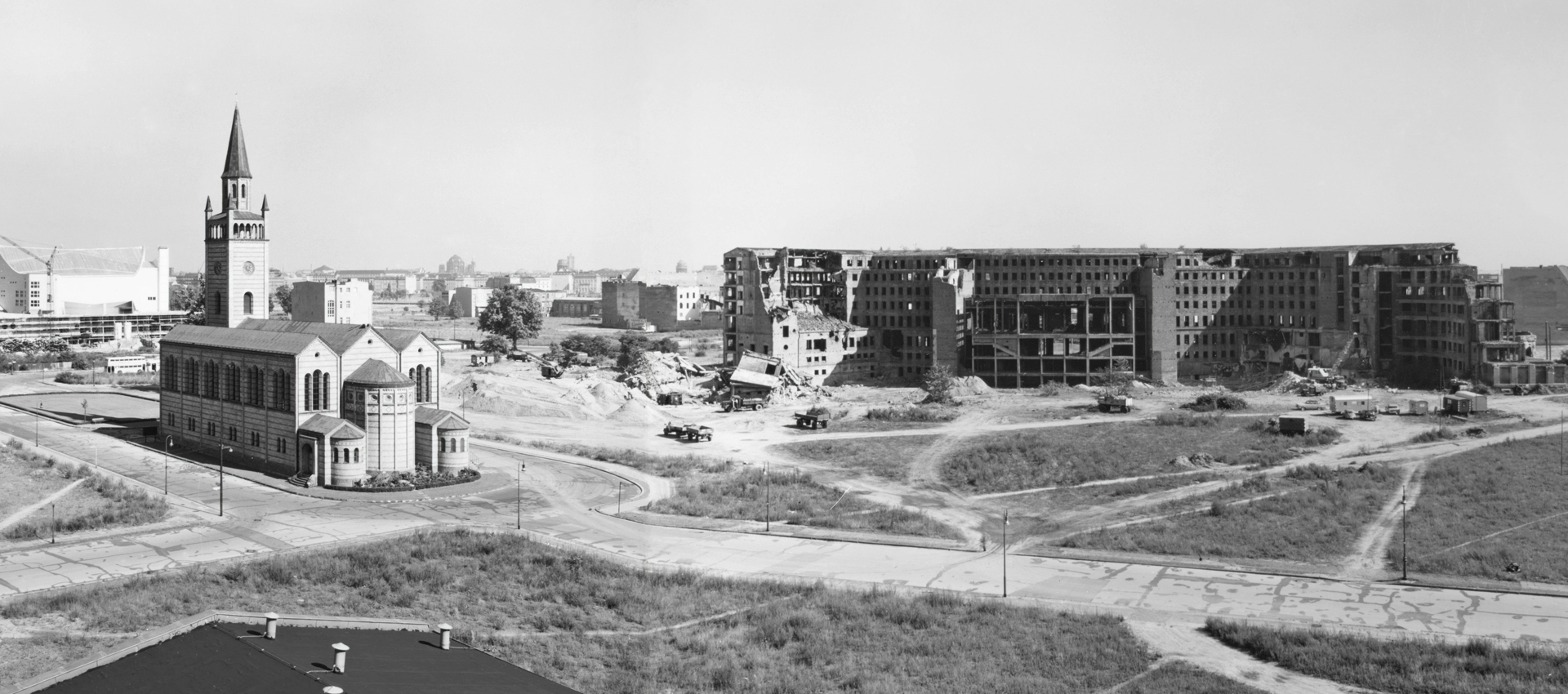
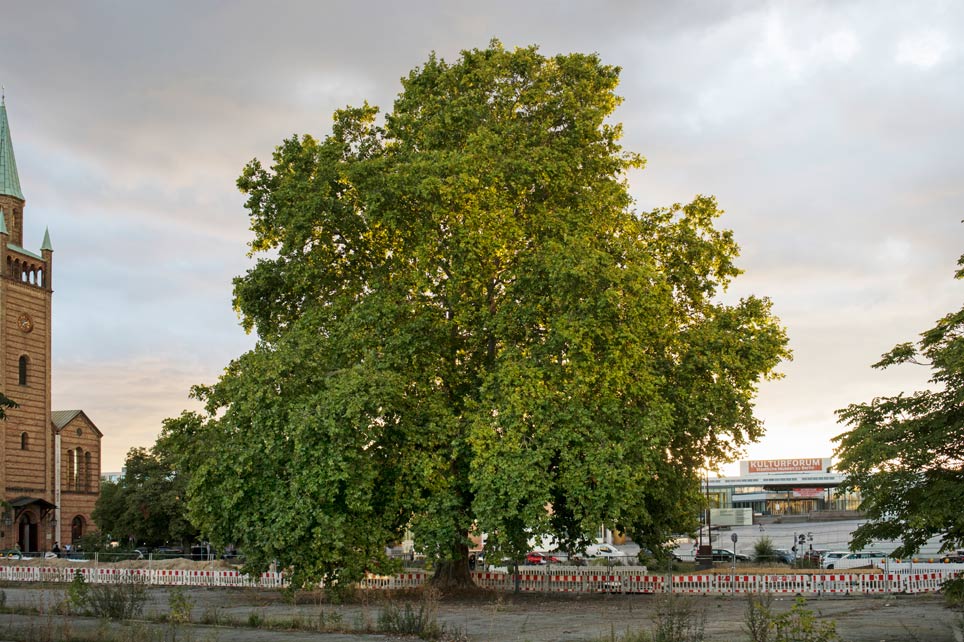
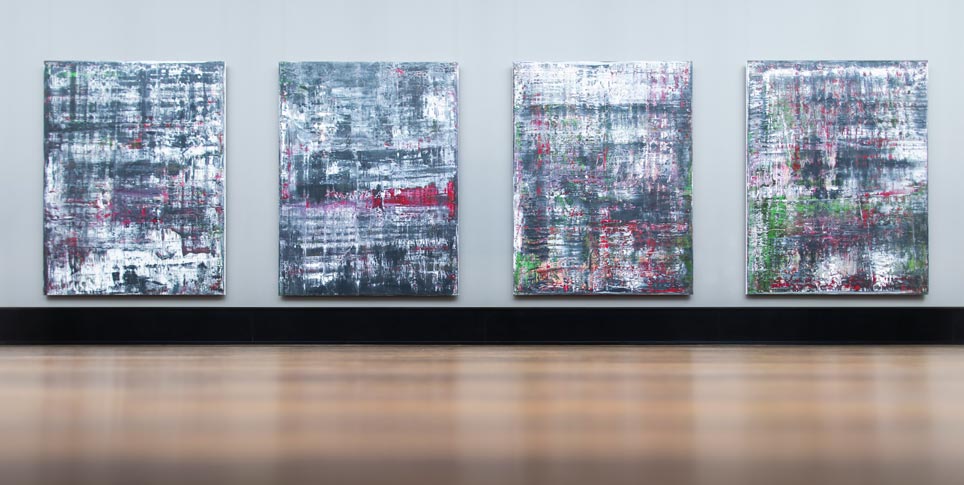
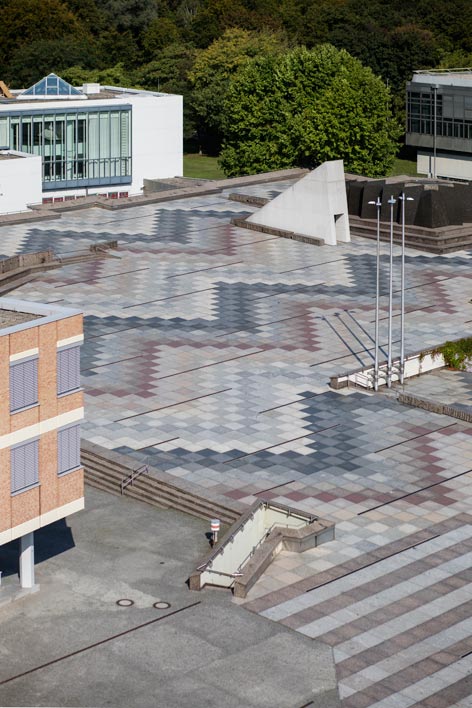
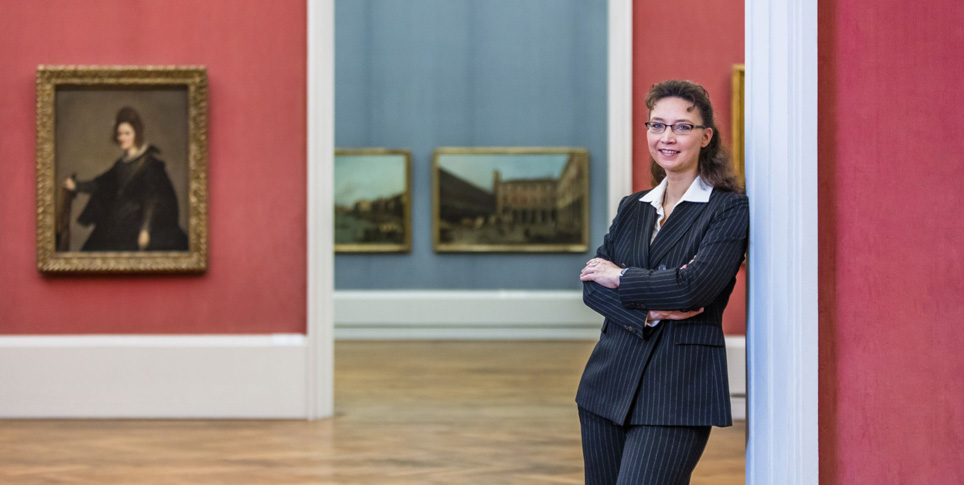
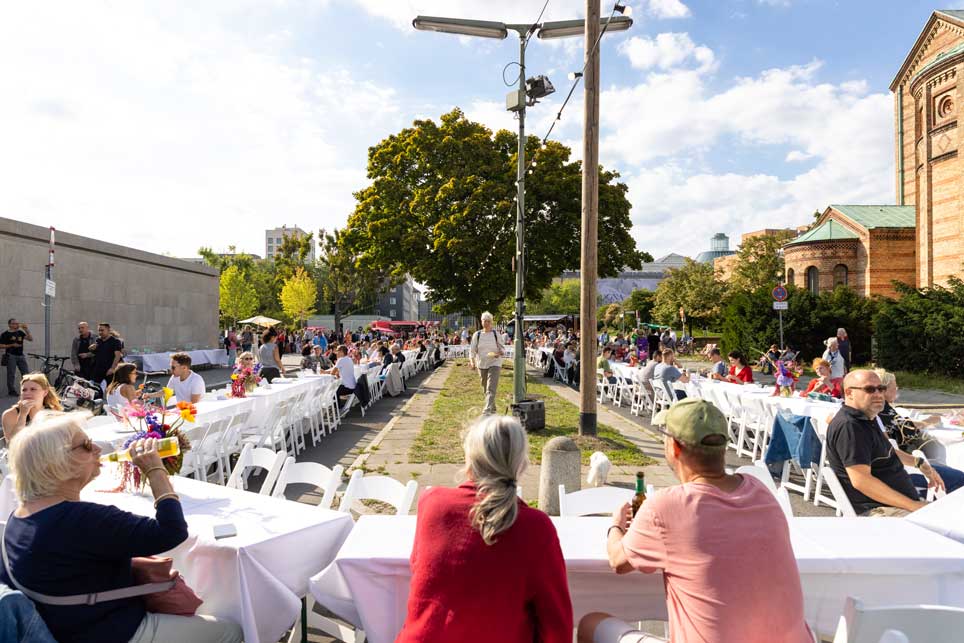
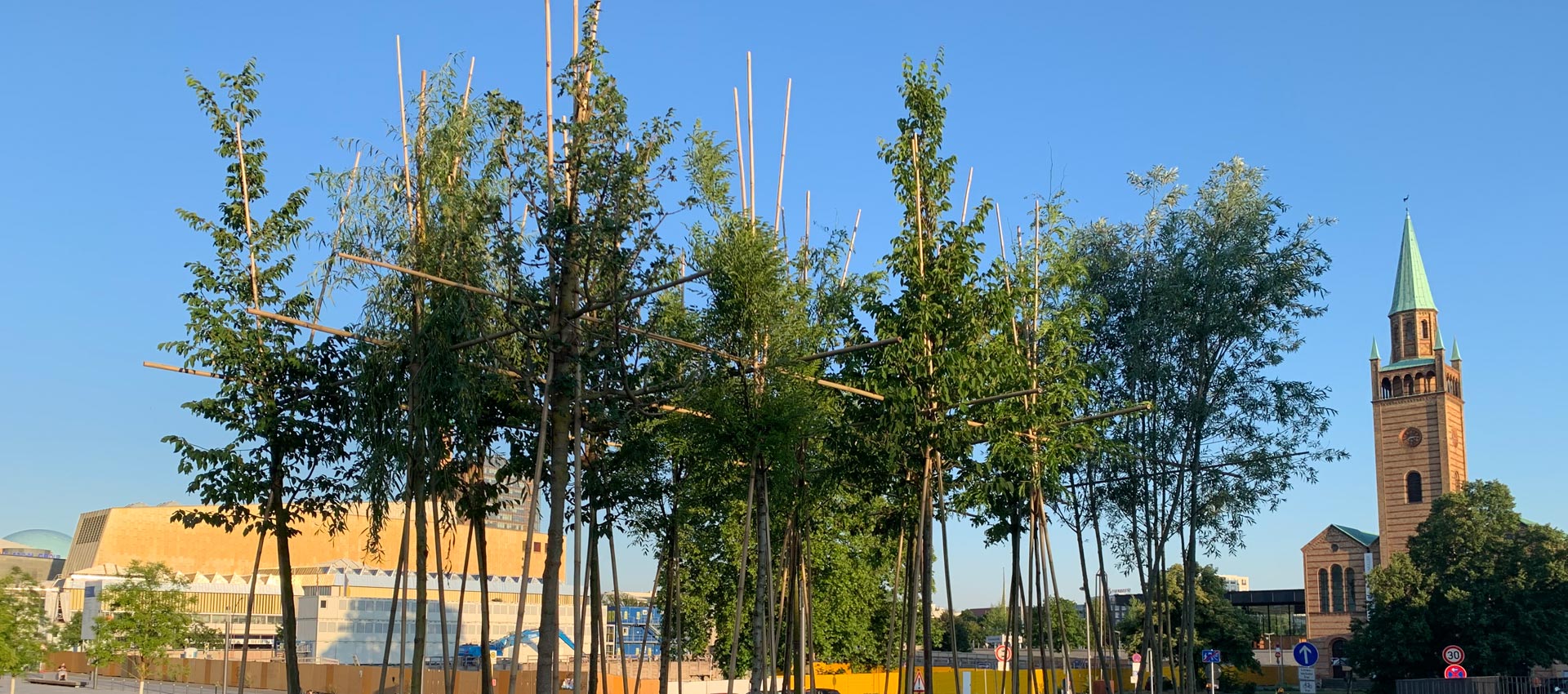
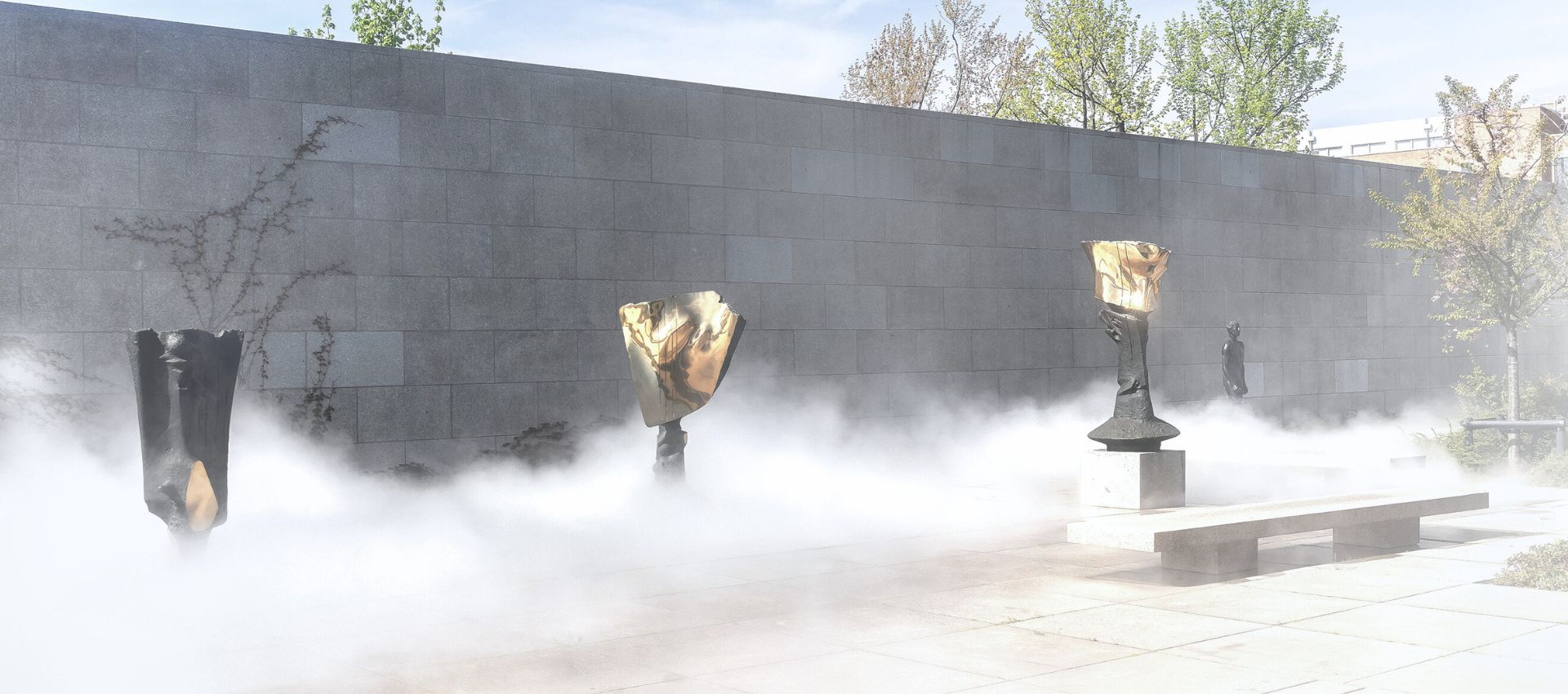
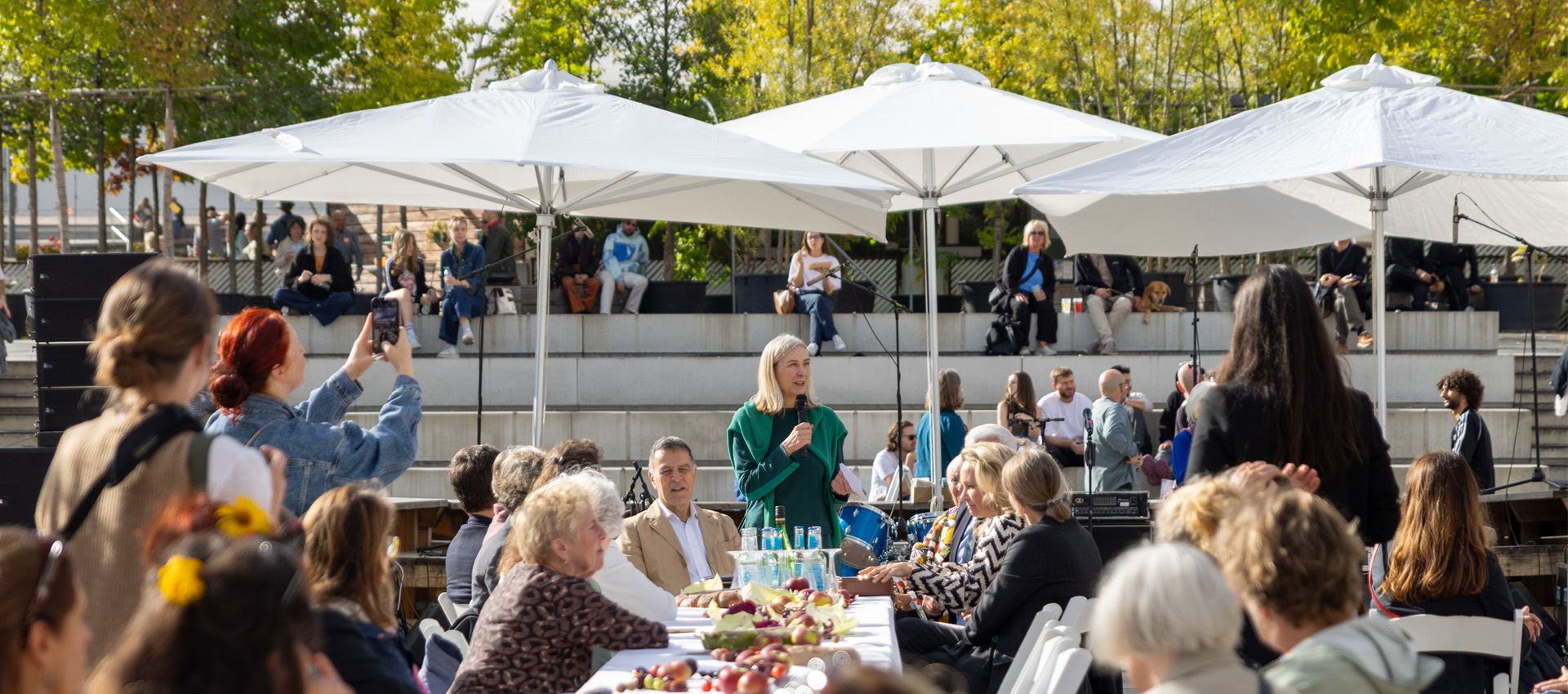
Hardly anyone would have expected this: residents living near the Kulturforum – often decried as an architectural wasteland – are inviting the public to a ‘Day in the Green’. In the rather unknown gardens of the Philharmonie, the Neue Nationalgalerie and the State Library, or within the collections of the Art Library, the Kupferstichkabinett and the Gemäldegalerie, as well as on the forecourt of St Matthew’s Church and the closed-off Sigismundstraße, the Kulturforum reveals its undiscovered green side through musical, culinary and artistic performances. The Museum of Decorative Arts will of course be taking part too. Curator Claudia Banz explains what to expect here on “Day in the Green”.
This coming Sunday (4 September), the gardens of the Kulturforum will be explored – including, of course, those at the Museum of Decorative Arts, where there will be two performances. What’s it all about?
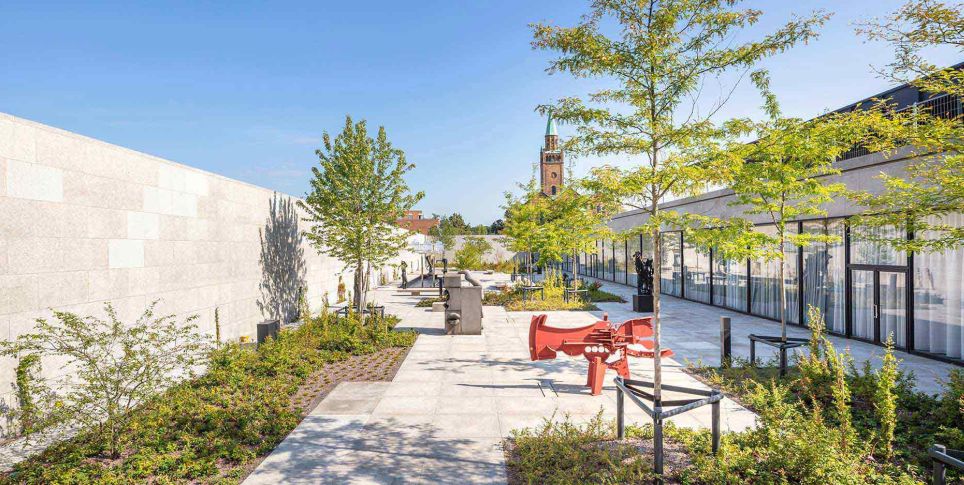
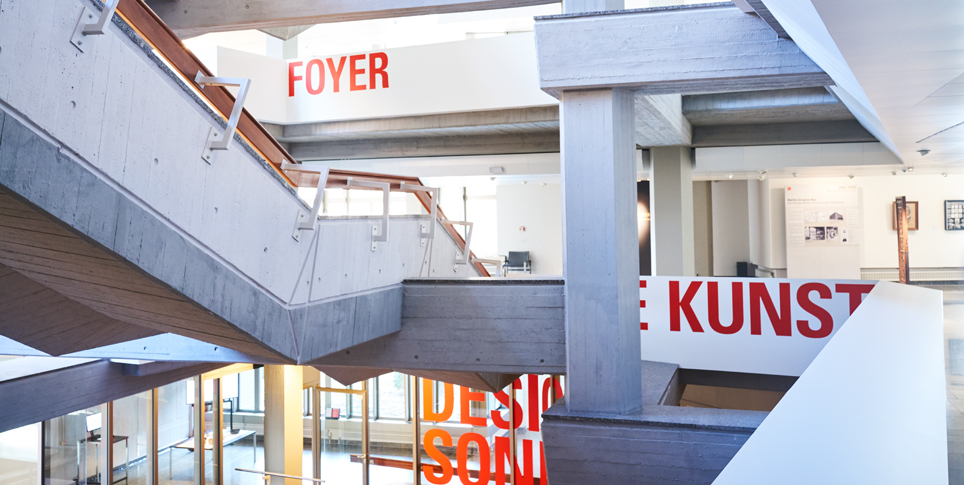
Claudia Banz: The inner gardens of the Museum of Decorative Arts are something very special – partly because they fit into architect Rolf Gutbrod’s original overall concept, namely to view architecture as landscape. His aim was to merge the flowing spaces of the interior and exterior. It’s a wonderful opportunity that, as part of this lovely collaborative project, we can finally make use of our large inner courtyard. The Museum of Decorative Arts actually has two inner courtyards, and the large one hasn’t really been accessible to the public in recent years. During the ‘Day in the Green’, there will now be a sound performance there by Arnold Dreyblatt, a New York-based composer and artist. I’d often had the idea of making the building’s soft-brutalist architecture resonate, and now Dreyblatt is attempting to find the sonic equivalent of this. He studied under John Cage and La Monte Young, amongst others, so he’s very much at home in the world of minimal music. We can look forward to this with great anticipation, as he’s tailoring this sound performance specifically to our building.
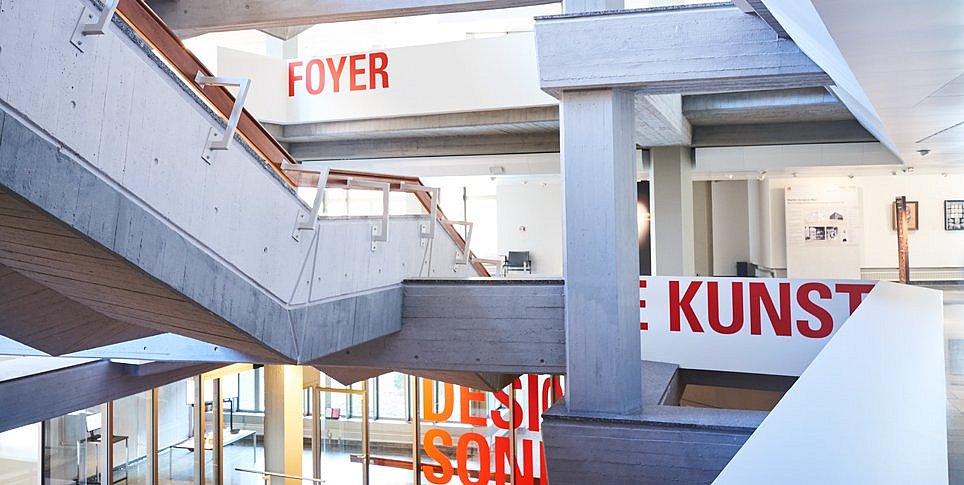
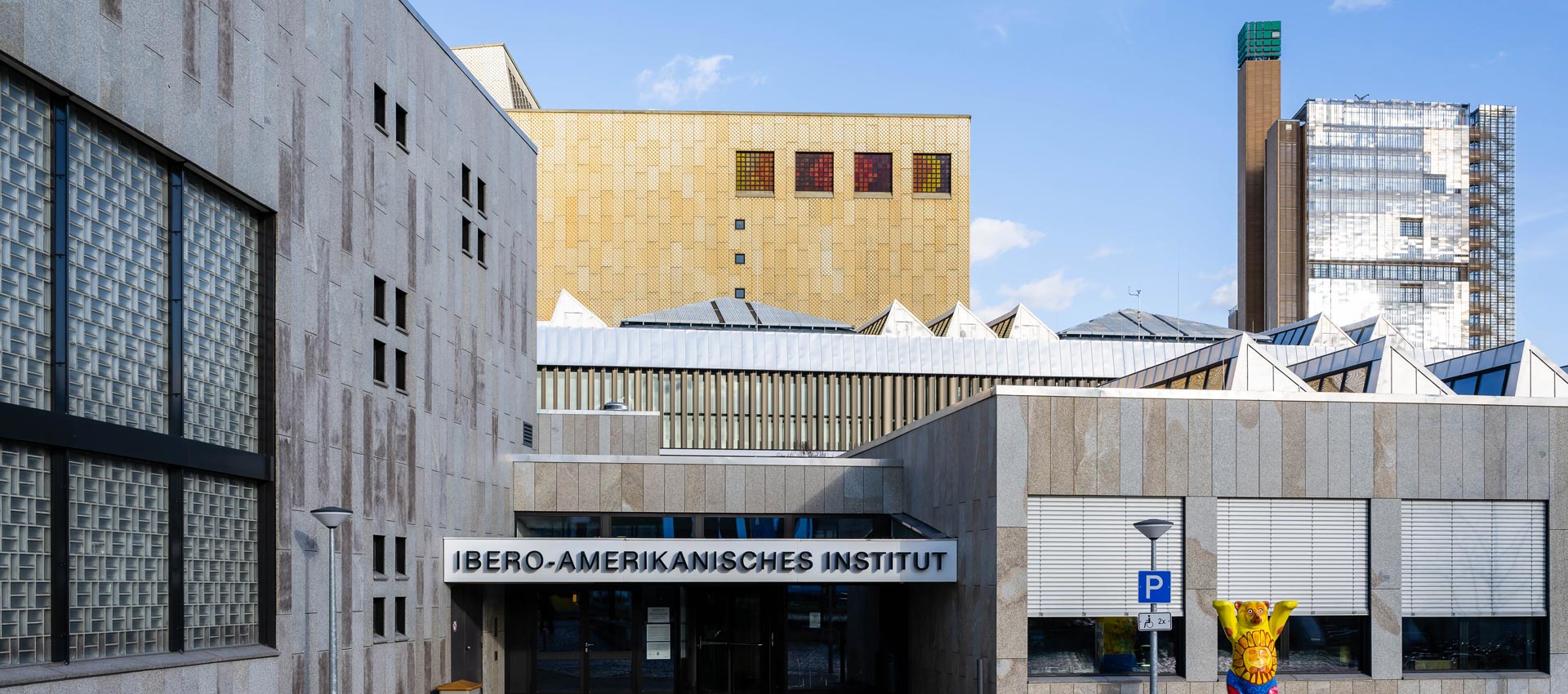
Soft Brutalist architecture by Rolf Gutbrod: The stairwell of the Museum of Decorative Arts © SPK/Benne Ochs
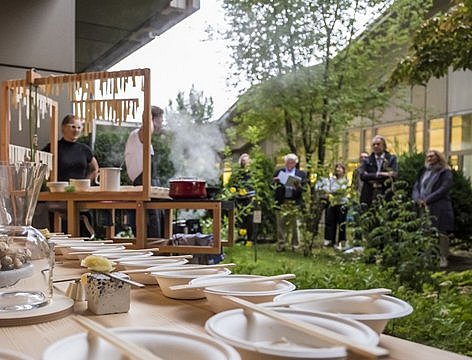
There is a second project in the smaller inner courtyard. Incidentally, this space isn’t quite so ‘undiscovered’; I was actually able to bring it to life as part of the Food Revolution 5.0 exhibition in 2018. Back then, the focus was on food as an important material that can be shaped – which was very fitting for the venue, given that the Museum of Applied Arts deals with many different materials, from wood and glass to porcelain and so on. And here, too, the focus is on the connection between nature, architecture, design and creativity. Chmara.rosinke, a design studio whose founders originally come from Poland, studied in Vienna and now live and work in Berlin, will be staging a food performance here. They engage intensively with the complex theme of ‘cuisine’ and how food functions as a kind of social glue.
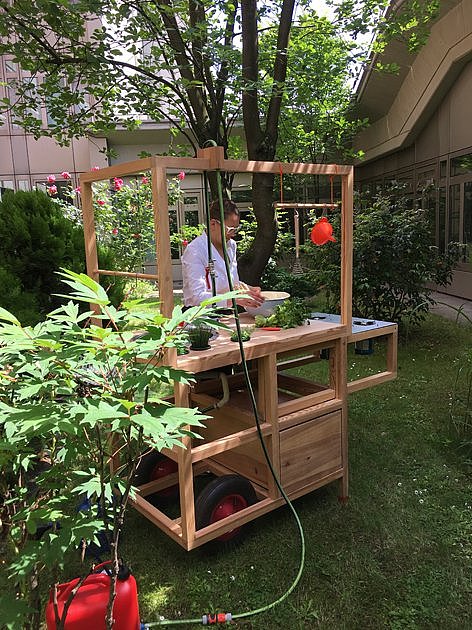
For their performances, Chmara.rosinke have developed, among other things, ‘Mobile Hospitality’, a kind of mobile kitchen complete with table and stools, with which they have travelled the world and also made a stop at the Kunstgewerbemuseum Berlin during Food Revolution 5.0. Incidentally, we were also able to acquire a version of “Mobile Hospitality” for the collection, which will be put to use again on Sunday. At the “Day in the Green”, the focus is on one of our most important foods: bread. Maceij Chmara is researching this topic and writing his design dissertation on it. Sourdough and fermentation have, of course, been a focus of food design for some time now. Put simply, Sunday is all about “eating together outdoors in the garden or in public spaces” and “food as a design process and design object”.
The small inner garden was activated for the food exhibition; the large one is opening for this festival for the first time in around 30 years. What else used to happen there?
Banz: The large garden was apparently used now and then in the distant past for openings. It actually offers great potential for events. The theme of the “garden” is, after all, a multifaceted design theme. Hopefully, by upgrading the courtyard a little, this will provide the impetus to be able to realise more here again in the future. The next opening of Design-Lab #12 on 28 September will also take place in the large courtyard. It’s simply an exciting place.
Incidentally, the Museum of Decorative Arts has many spaces that have been neglected for various reasons and which can – and should – be rediscovered. The festival on Sunday is a great opportunity to breathe new life into them.
Following last year’s ‘Utopie Kulturforum’, ‘A Day in the Green’ is another joint initiative by the Kulturforum’s neighbours aimed at revitalising the area. Are there already plans for further joint activities?
Banz: I don’t know if further collaborations are already planned, but I would of course think that would be brilliant, because it offers a very good opportunity to tackle the whole issue of the Kulturforum as a ‘problem area’ in a rather light-hearted and slightly playful way. It’s an issue that concerns all of us neighbours: how can we make the Kulturforum more popular? And also more visible, more tangible? How can we anchor the Kulturforum within Berlin’s urban society?
These projects are, of course, fantastic starting points, and I’d be delighted if we could commit to doing something together every year under a new theme. If that were to develop into a series and become a regular feature, that would be a lovely prospect.
What other ways are there to ‘heal’ the Kulturforum, as is always called for?
Perhaps we should think even more deeply about the sustainability of the site. How about becoming ‘greener’ and ‘bringing nature over’ from the Tiergarten, rather than continuing to seal it off. I could also envisage quite a few things at the Museum of Decorative Arts: from urban gardening on the roof and solar panels, a rooftop bar, to green façades and vertical farming. These are important themes that can send out a positive message. The hook for Sunday’s cultural festival – namely that one wouldn’t actually expect to find ‘greenery’ at the Kulturforum – is a potential that should be further exploited. Incidentally, that was also the original idea of Rolf Gutbrod, who had actually planned a kind of park landscape here. His assistant, now over 90 years old, recounted at the Food opening – where we had decorated the Piazzetta with 50 apple trees – that Gutbrod had originally conceived today’s Piazzetta as a sort of park or garden, where one would reach the museum entrances via winding paths. And then stroll across a wide open staircase into the Tiergarten. The pillars on one of our outdoor terraces are the sad remnants of this magnificent idea. To take the interplay of architecture and nature – or ‘social green’ – a step further, and to engage in co-productive work on a new culture of public spaces: these would surely be worthwhile perspectives for the Kulturforum.