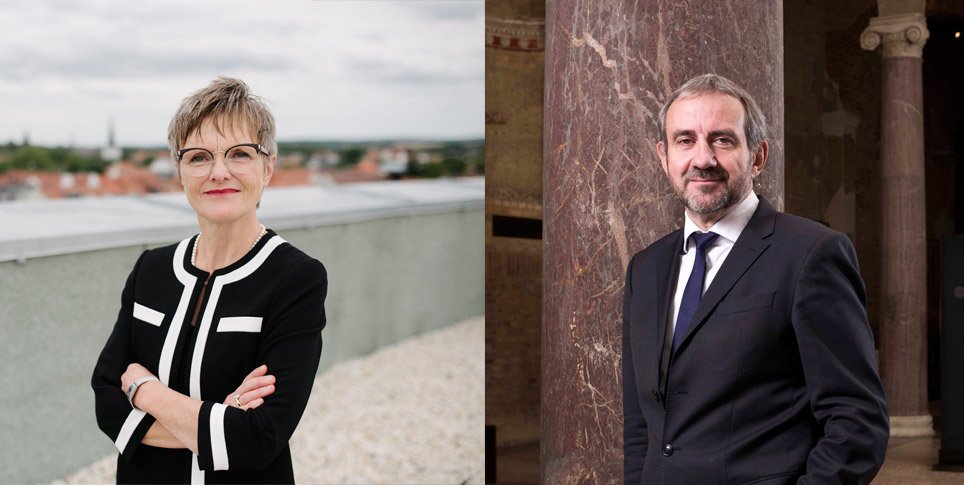
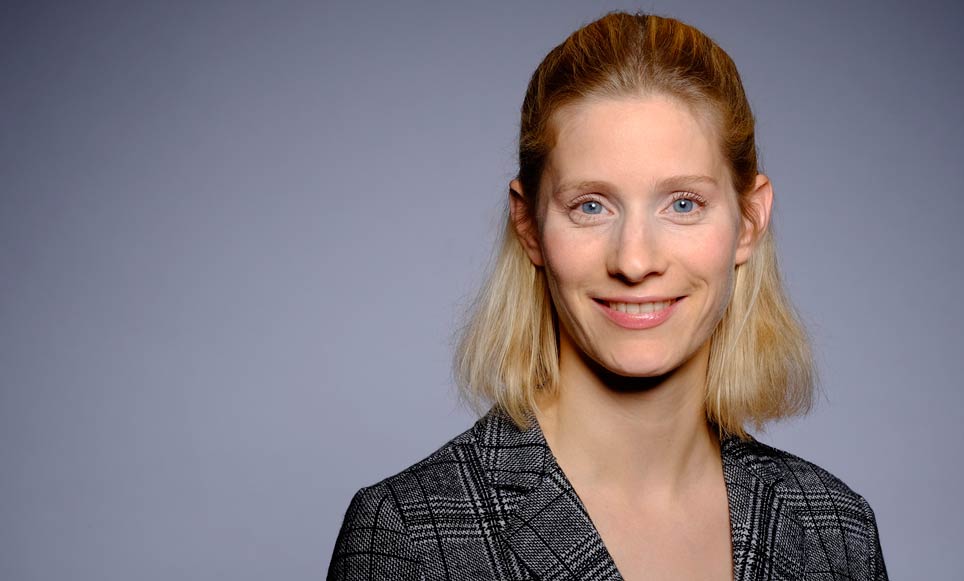
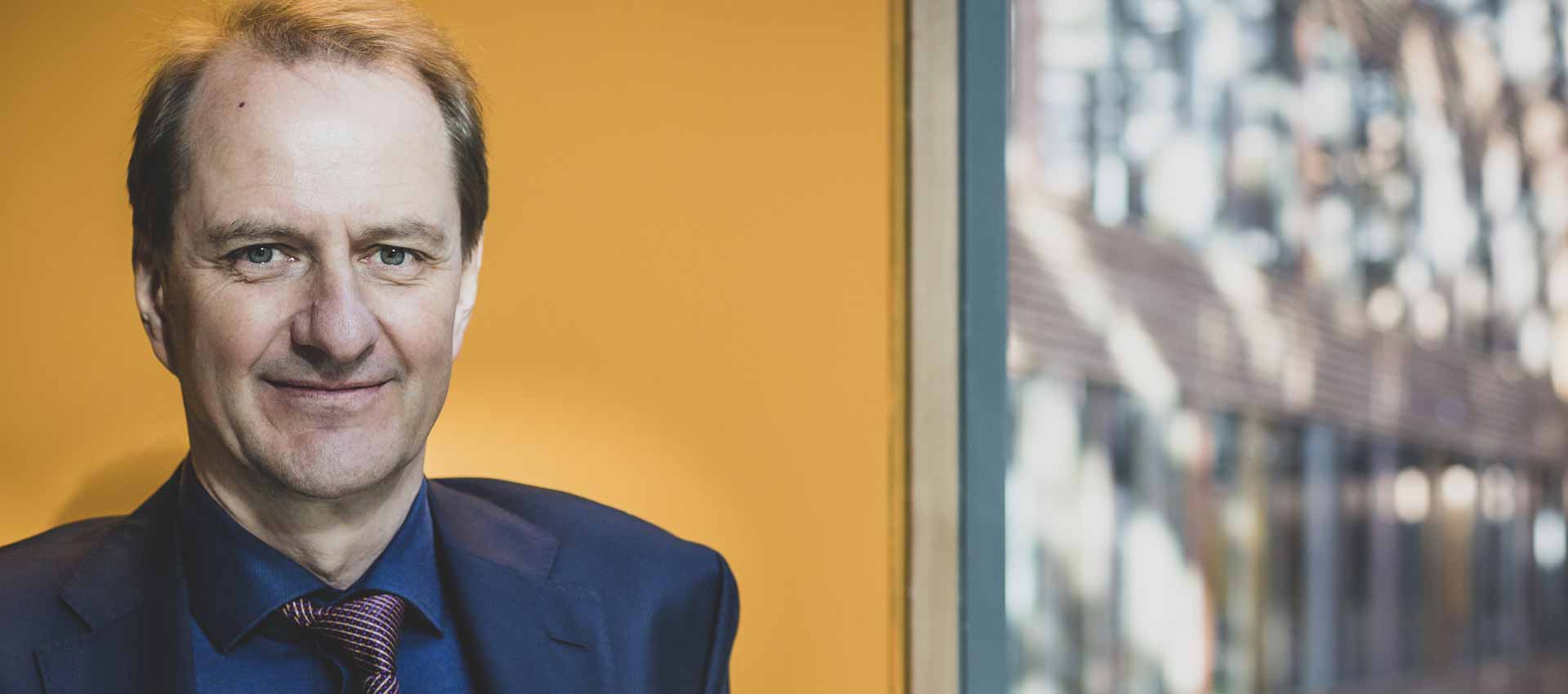
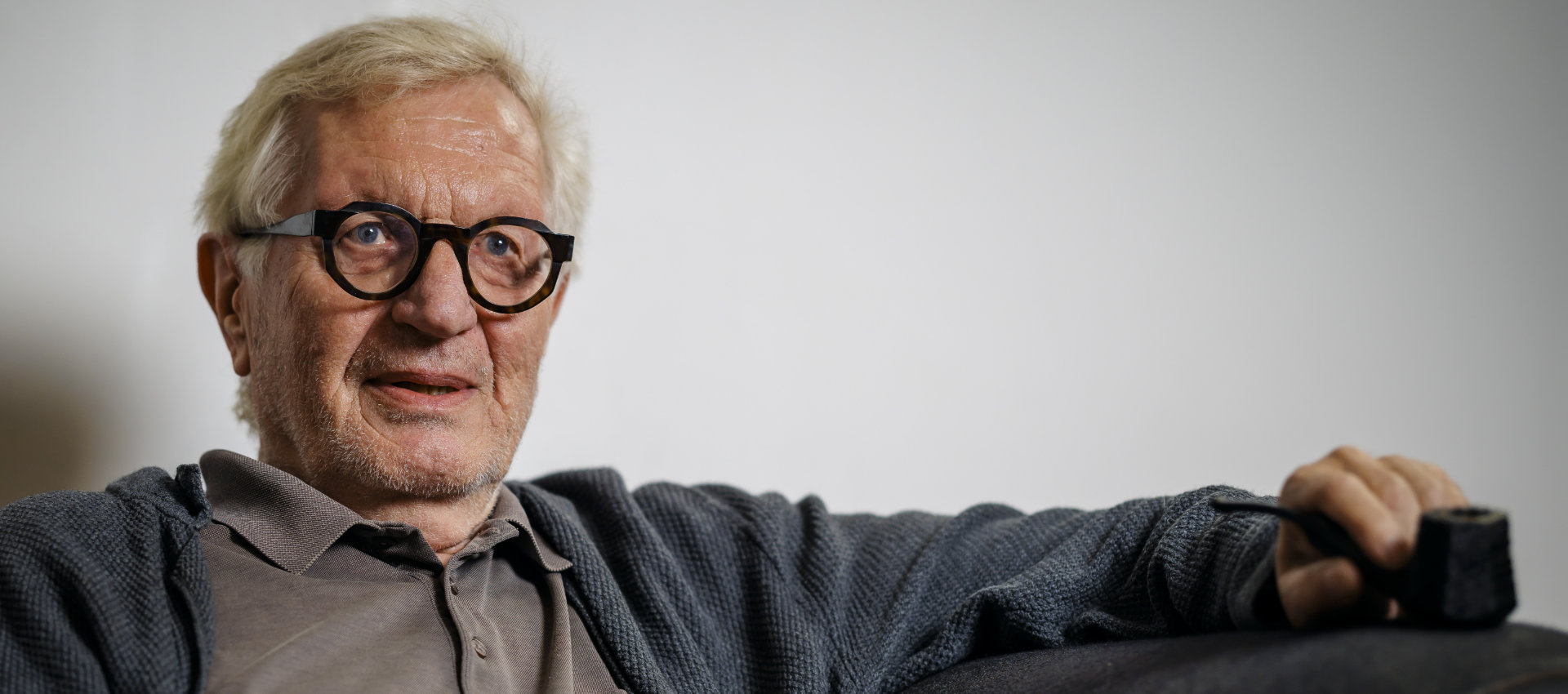
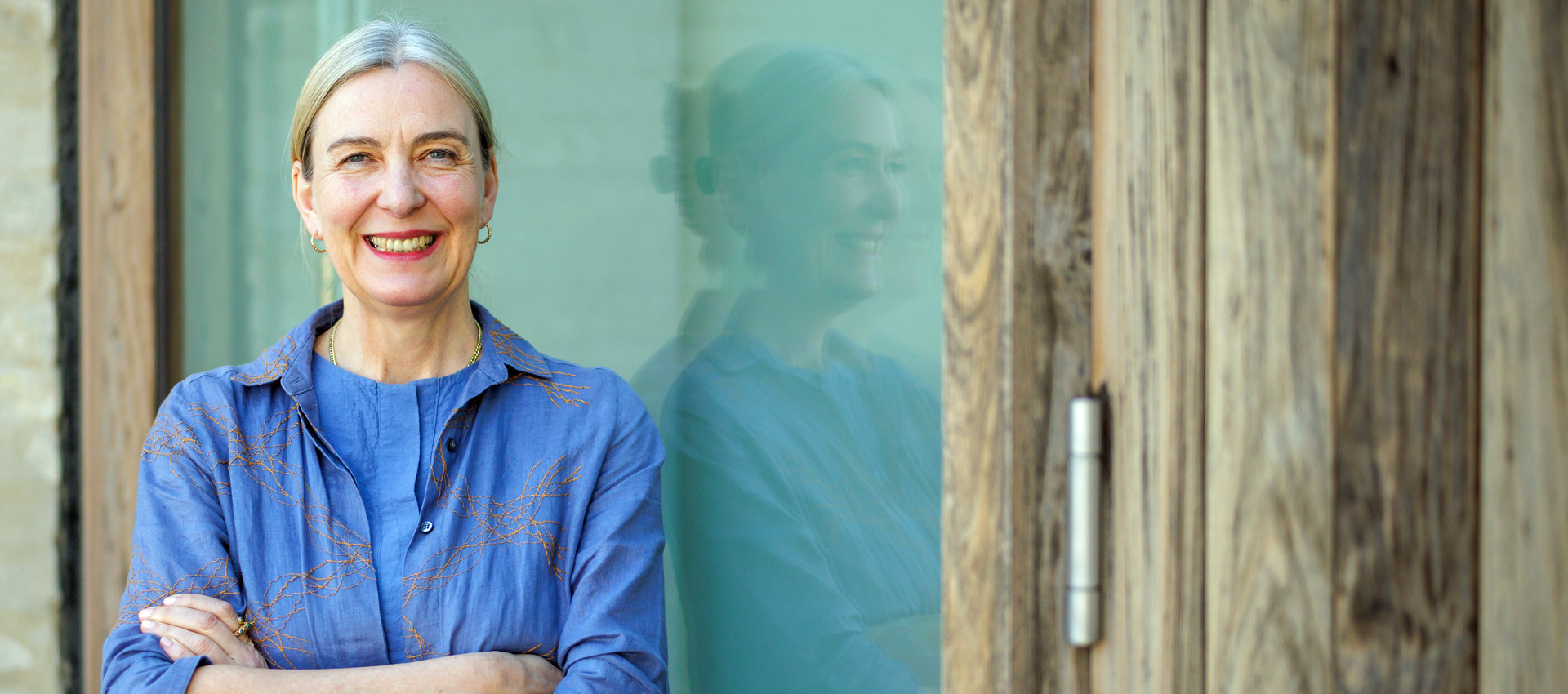
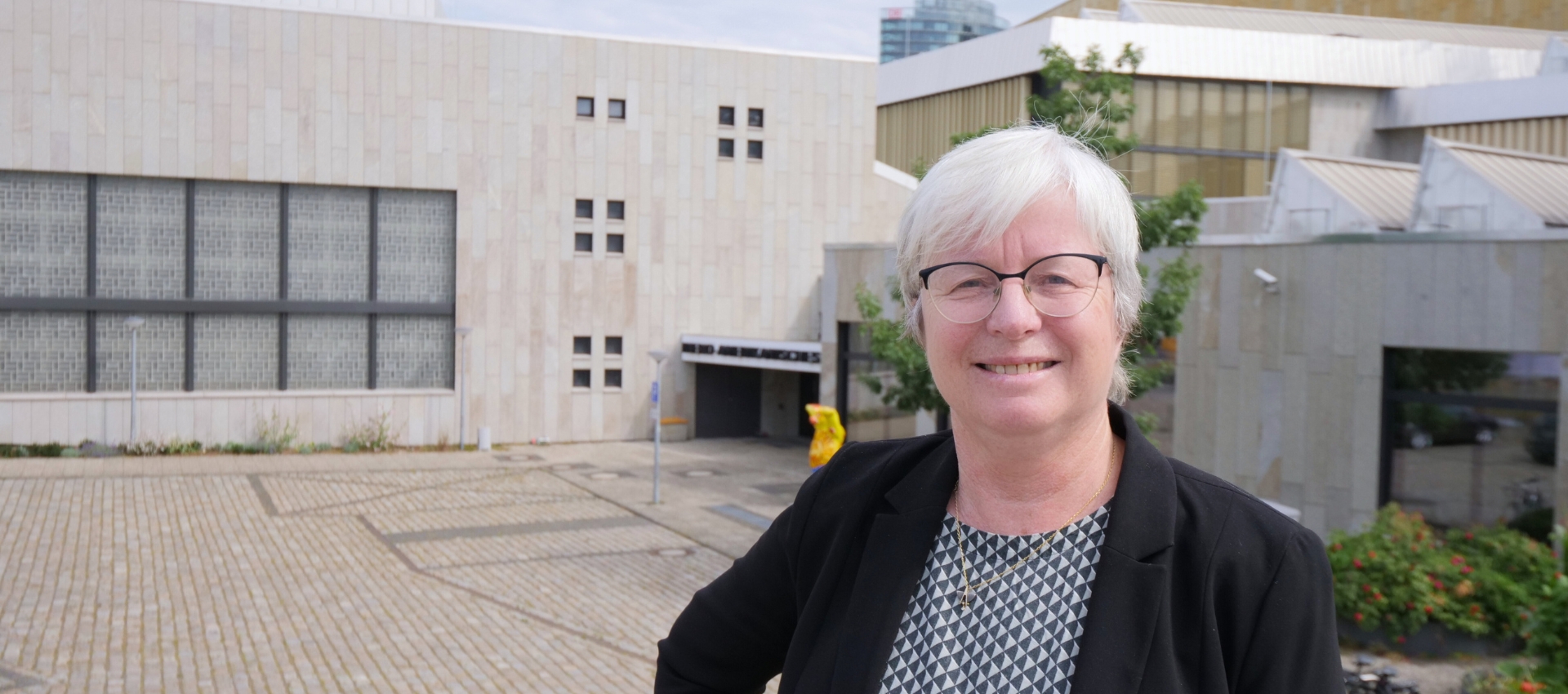
Climate change, green visions and a host of requirements – landscape architect Maren Brakebusch discusses the challenges of spatial design surrounding the ‘berlin modern’ projectat the Kulturforum. She is responsible for the open-space design of the project on behalf of VOGT Landscape Architects.
What is your vision for the landscaping around berlin modern?
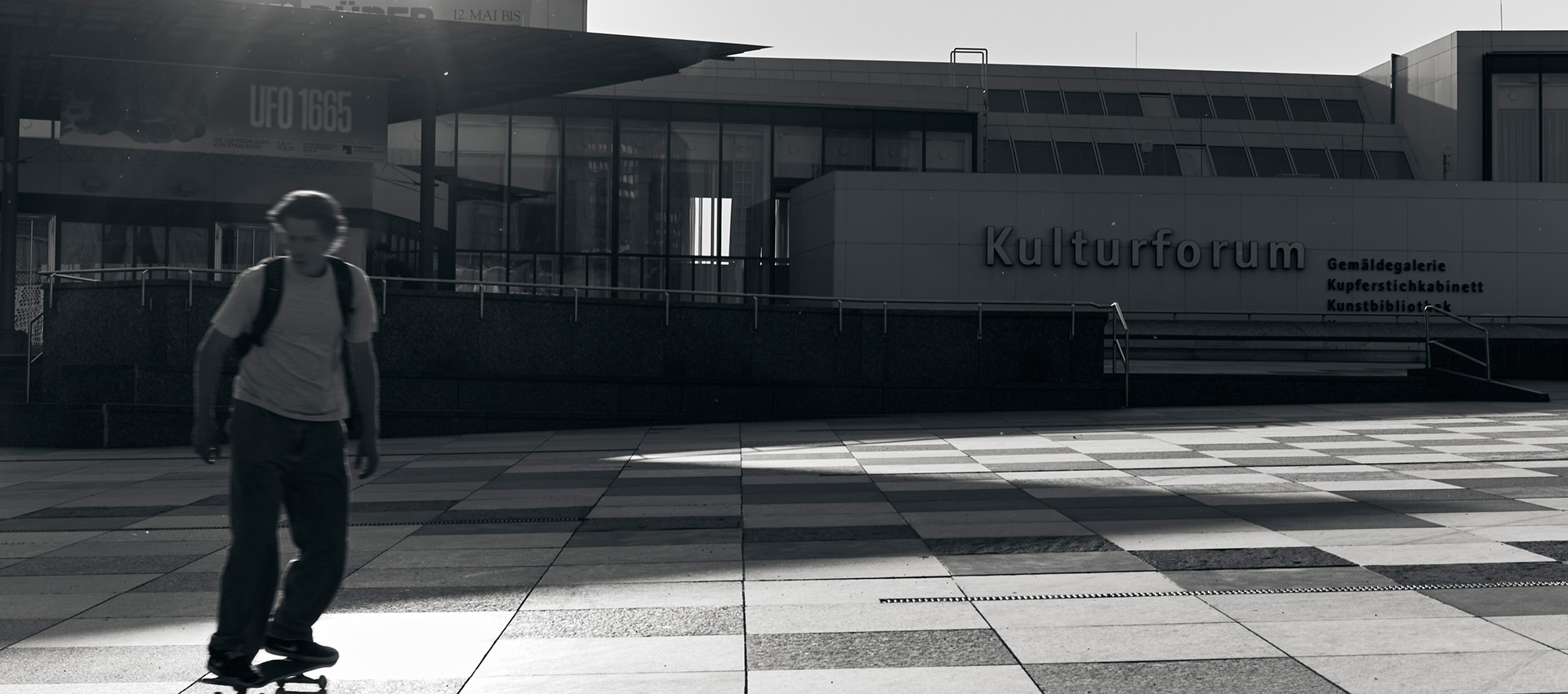
Maren Brakebusch: There are an incredible number of requirements at berlin modern. At the same time, we have to work with a space where the building occupies the entire site area. This means that, as landscape architects, we had very little scope for action and are taking on the role of mediators to a much greater extent, balancing the many different needs addressed to the space. And: The debate about the open space at berlin modern has always been one that had to be conducted with regard to the entire site. The Kulturforum is a place of historical and political complexity and is undergoing a process of transformation. The uses of the individual buildings, which were previously very inward-looking, are increasingly shifting towards the shared and connecting open space. berlin modern is almost symbolic of this change.
For us landscape architects, too, the focus is very much on the collective discourse regarding participation in this public space, alongside design-related questions. This is a central and important message of berlin modern – not only through its architecture, but also through the open spaces and connections it creates. It is important to us to create a recognisable place with a high quality of stay for the whole of urban society.
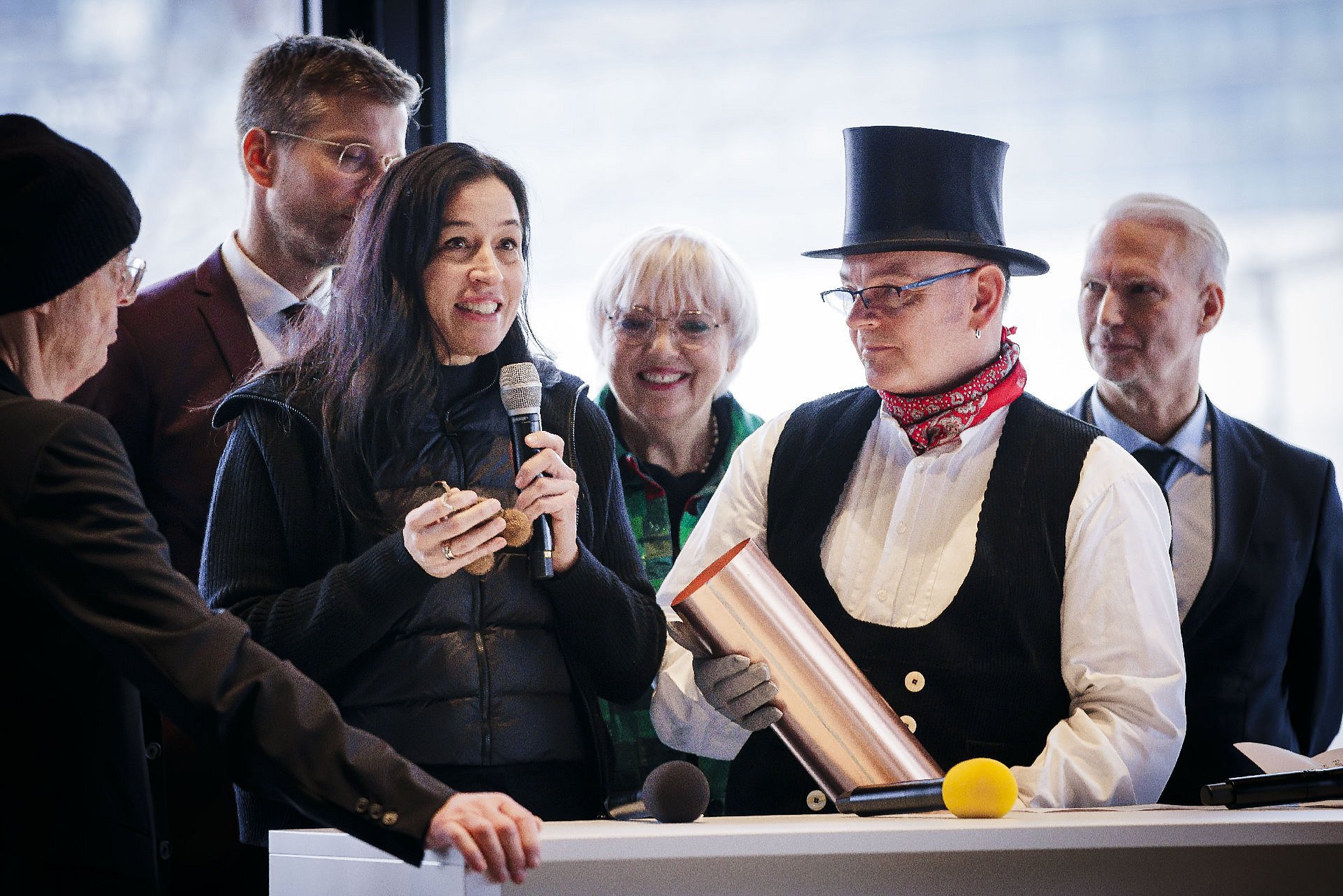
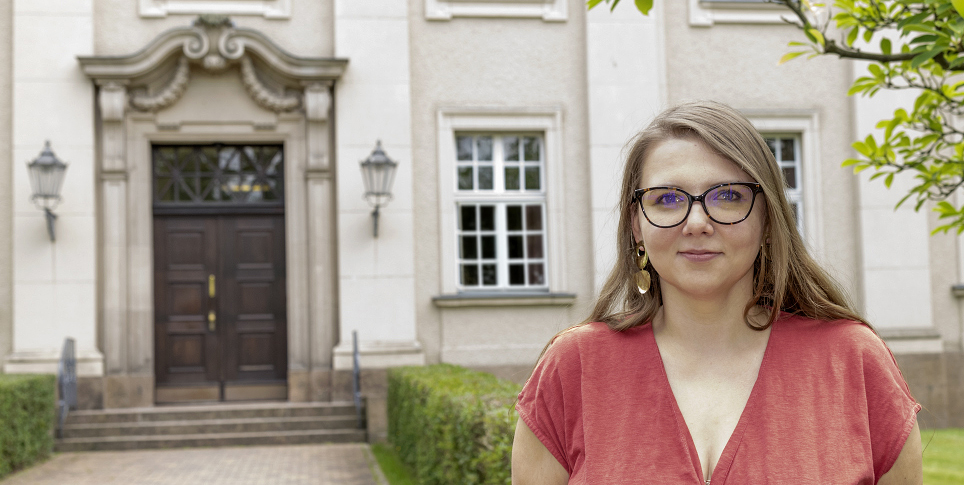
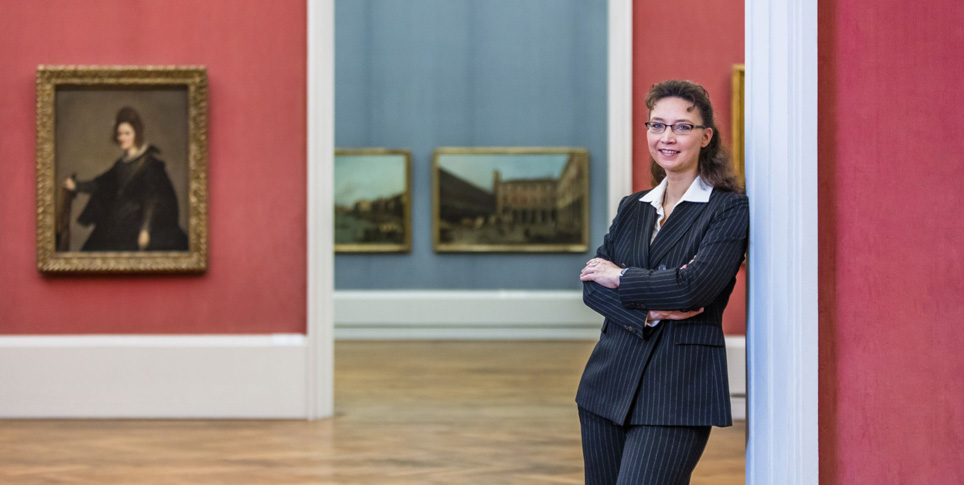
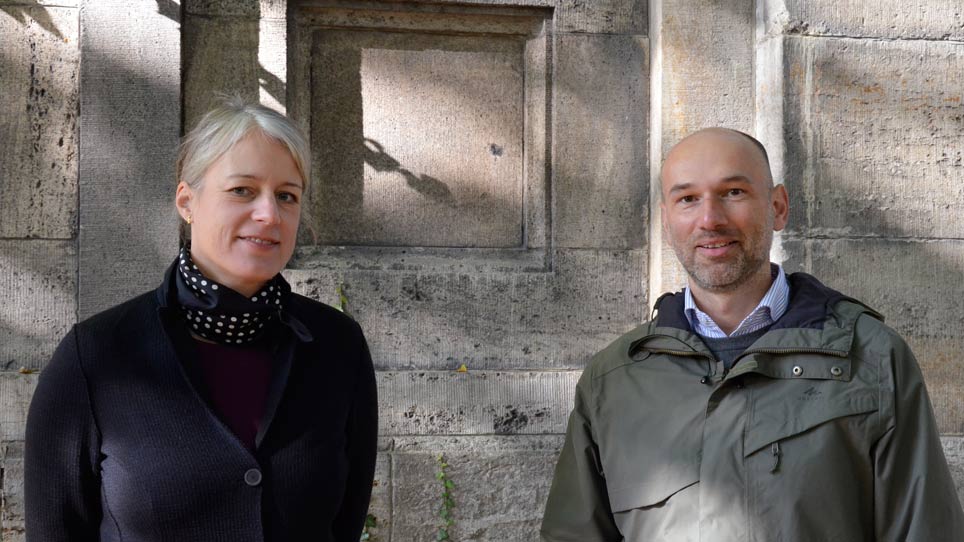
Maren Brakebusch studied landscape architecture at Leibniz University Hannover and has been a professor of garden and landscape architecture at the University of Applied Sciences and Arts Potsdam since 2022, as well as a member of the Berlin Building Committee. She has been part of the team at VOGT Landscape Architects since 2002 and, together with Thomas Kissling, heads the firm’s offices in Zurich, London, Berlin and Paris. In 2016, VOGT, together with the architectural firm Herzog & de Meuron, won the design competition for berlin modern.
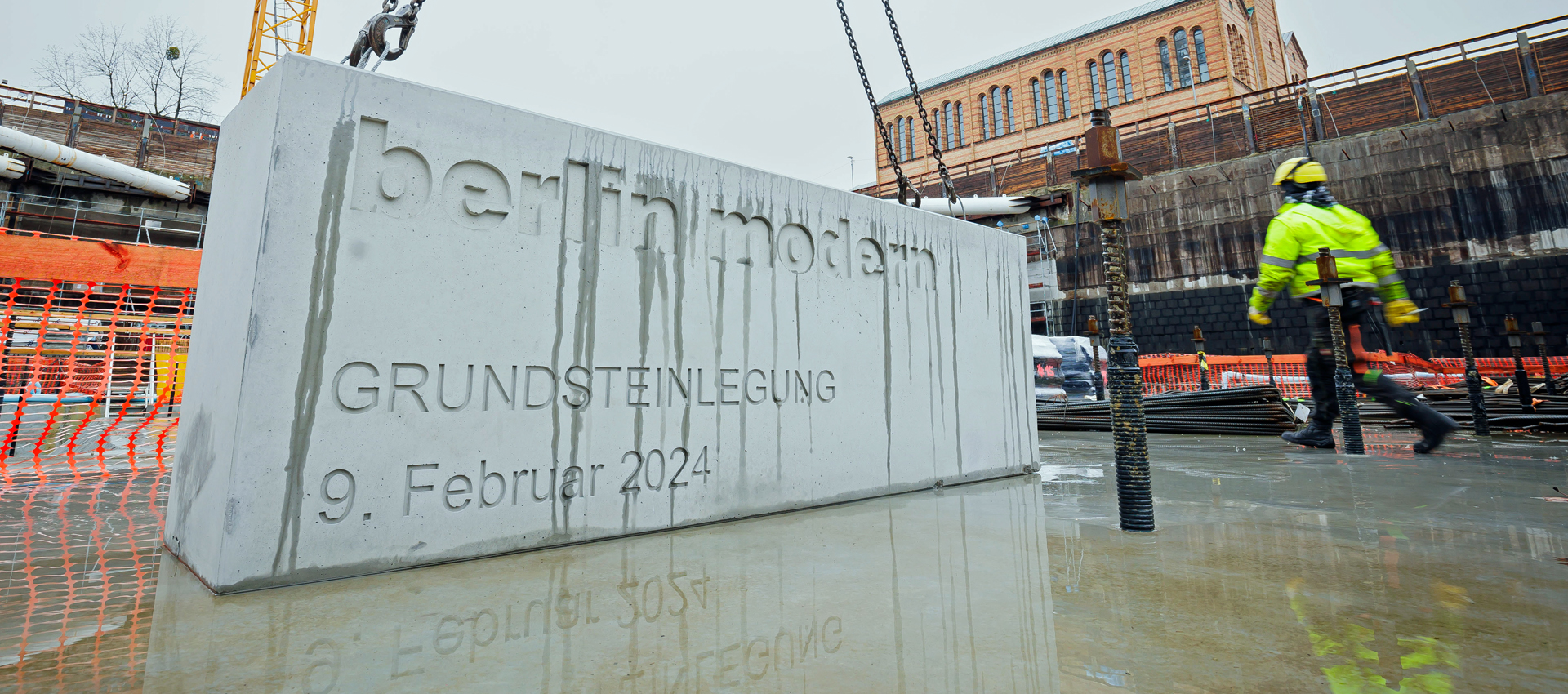
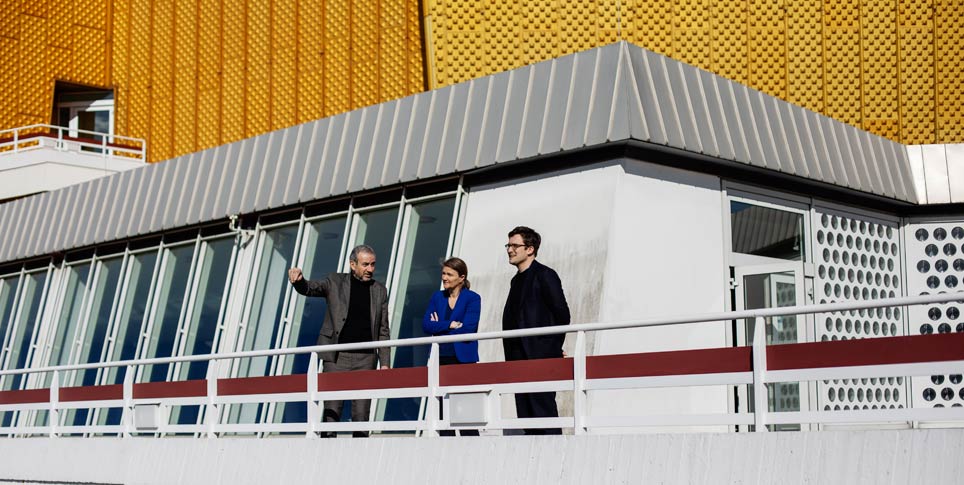
Photo: Maren Brakebusch (3rd from left) filling the time capsule with plane tree seeds for the foundation stone of berlin modern. SPK / photohek / Thomas Trutschel
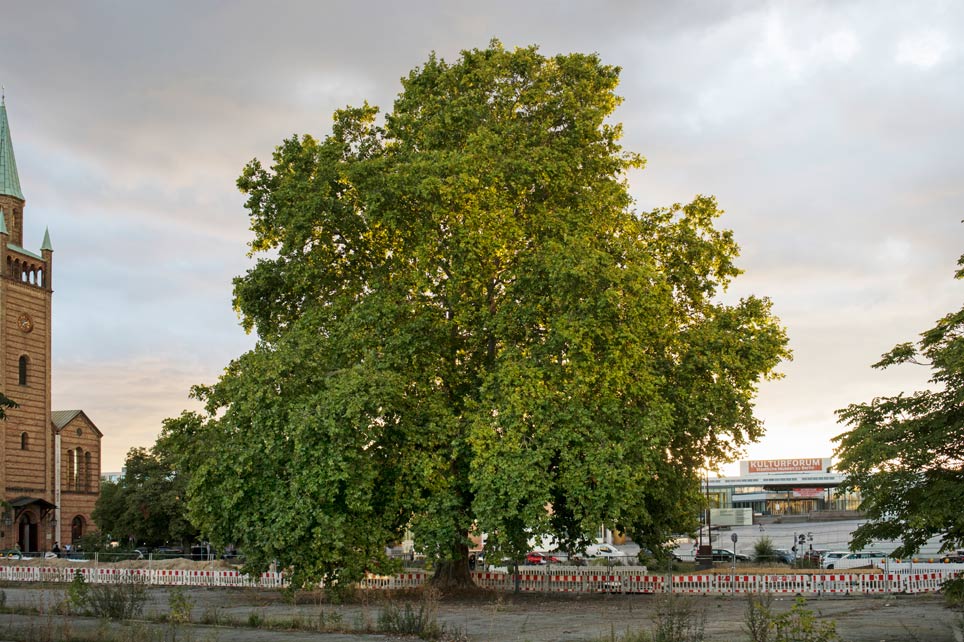
At the ceremonial laying of the foundation stone for berlin modern, you placed a branch bearing fruit from the famous 150-year-old plane tree at the Kulturforum inside the time capsule. What makes this tree so special to you?
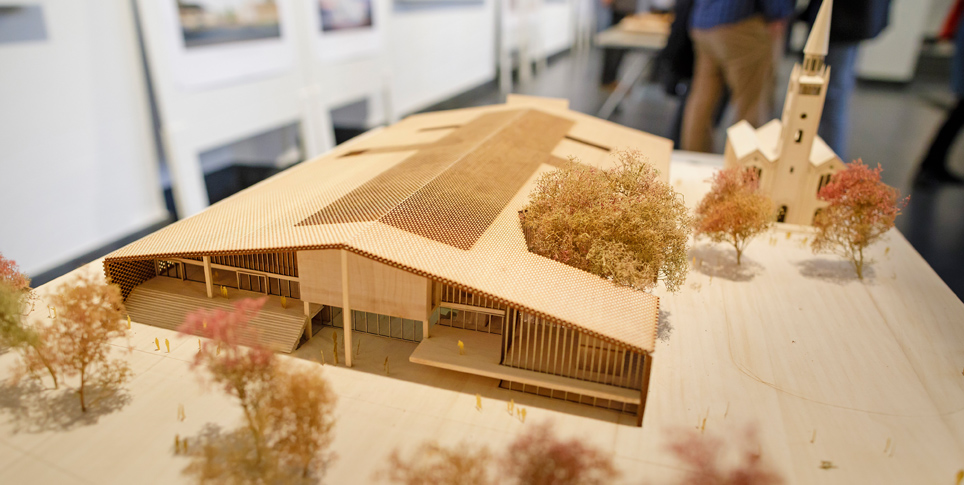
In our contribution to the time capsule, we were concerned not only with a record of the present but, above all, with the idea of the future. As a classic tree of the south, the plane tree embodies the architectural promise of a ‘Berlin on the Mediterranean’. This is particularly evident not only in the tree itself but also in its ensemble with the neighbouring St. Matthew’s Church, whose architecture is inspired by the Romanesque style of northern Italy.
It was important to us to make it clear that this promise will soon become reality: from 2070 onwards, Berlin is expected to have a climate comparable to that of the Mediterranean regions. We must therefore address this in our planning today and already factor in and shape this change.
How do you take these challenges of climate change into account in your planning?
Fundamentally, resilient planning should be part of every landscape architect’s toolkit today. After all, we have known for more than 30 years that human-induced climate change exists and what it means for us. Looking back, however, we must acknowledge that the willingness to act only increased once the visible consequences became apparent, when abstract knowledge became physically and visually tangible.
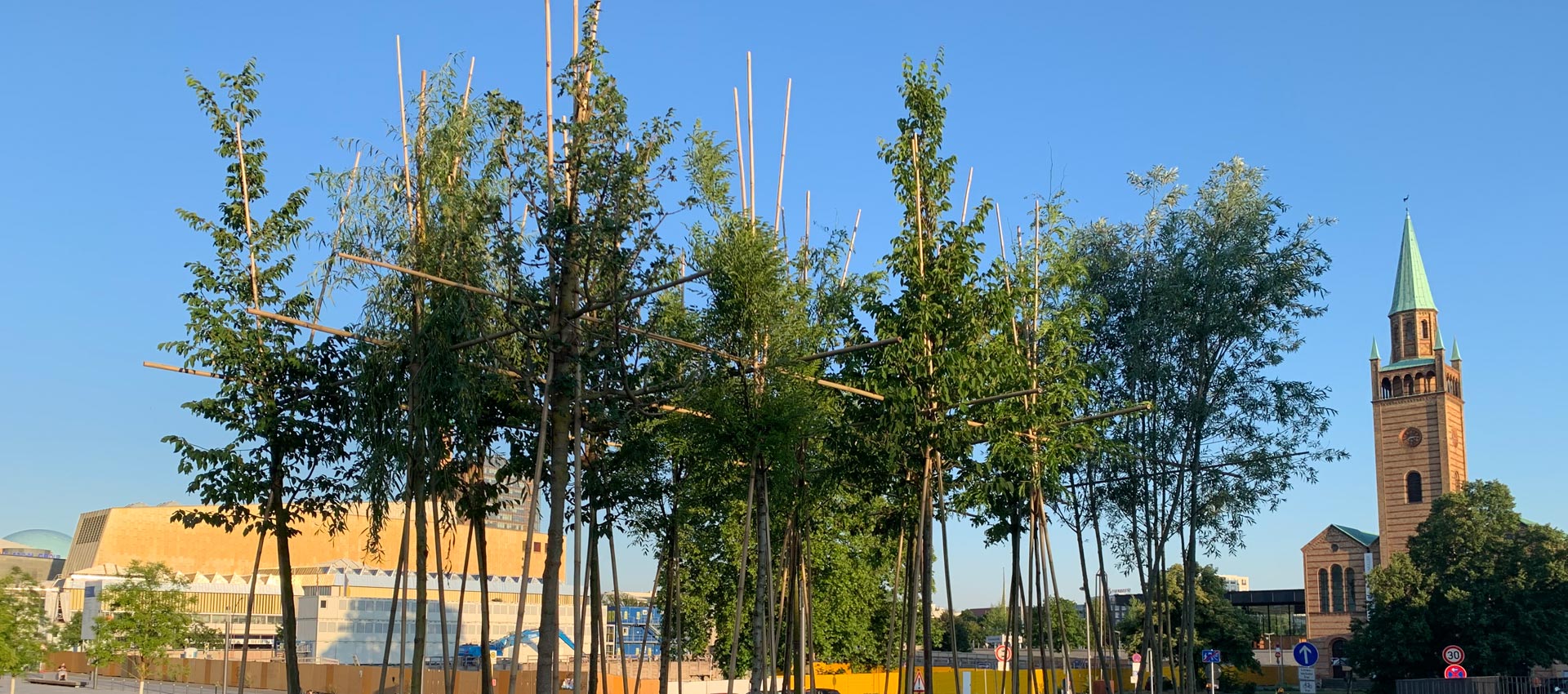
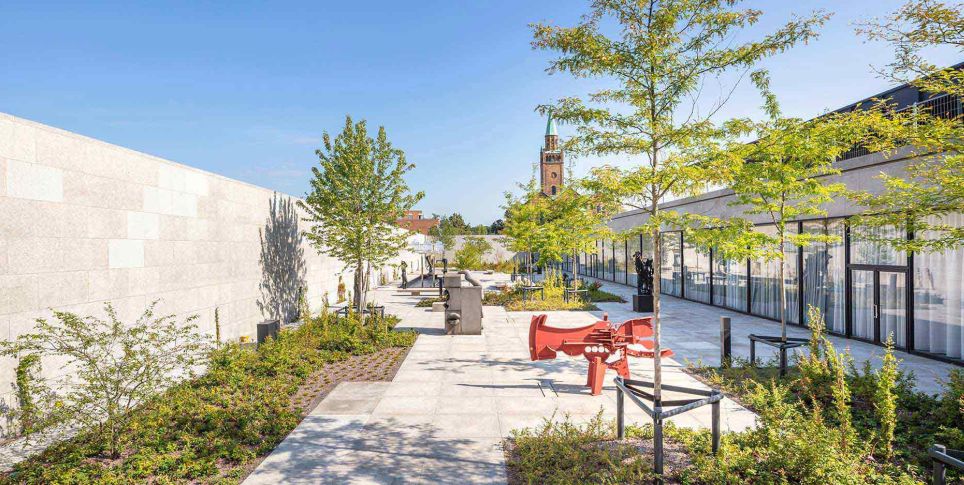
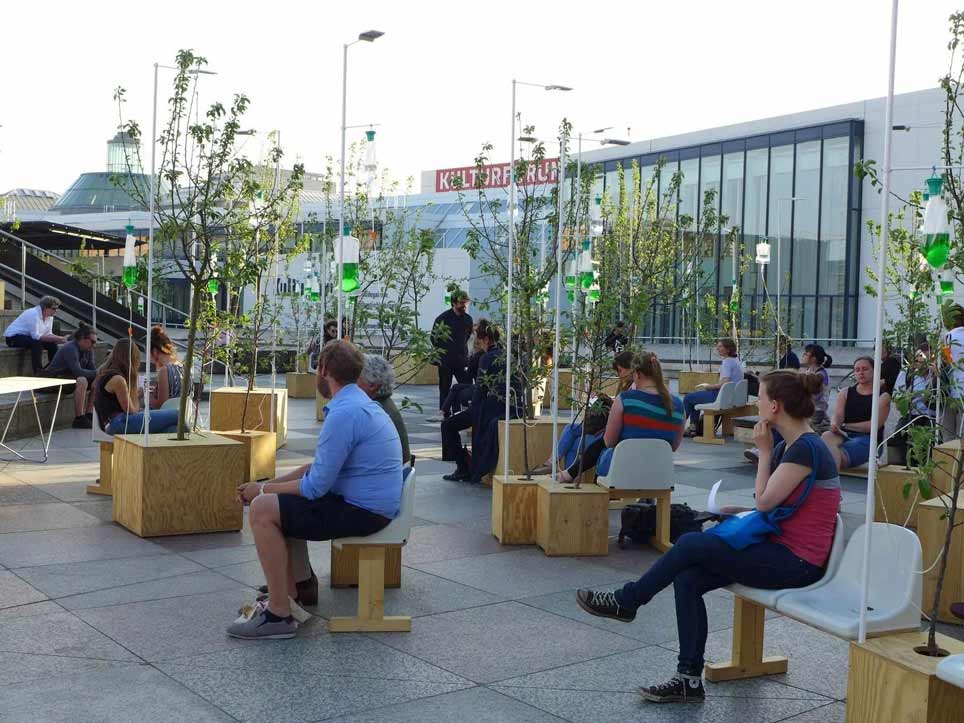
When we arrive at the Kulturforum on a very hot day, it is certainly physically challenging. The temporary tree nursery is a simple and vivid experiment that demonstrates how valuable shade-providing trees are for the microclimate, the atmosphere and the spatial experience. Their presence has a positive effect on our own well-being and transforms what was once merely a transit point into a place with a high quality of stay. But climate change brings further changes with it: alongside rising temperatures, the frequency of heavy rainfall events is increasing, as more moisture is bound in the air. These events are currently also encountering a highly densely built-up urban environment at the Kulturforum, which is simply unable to absorb these volumes of water.
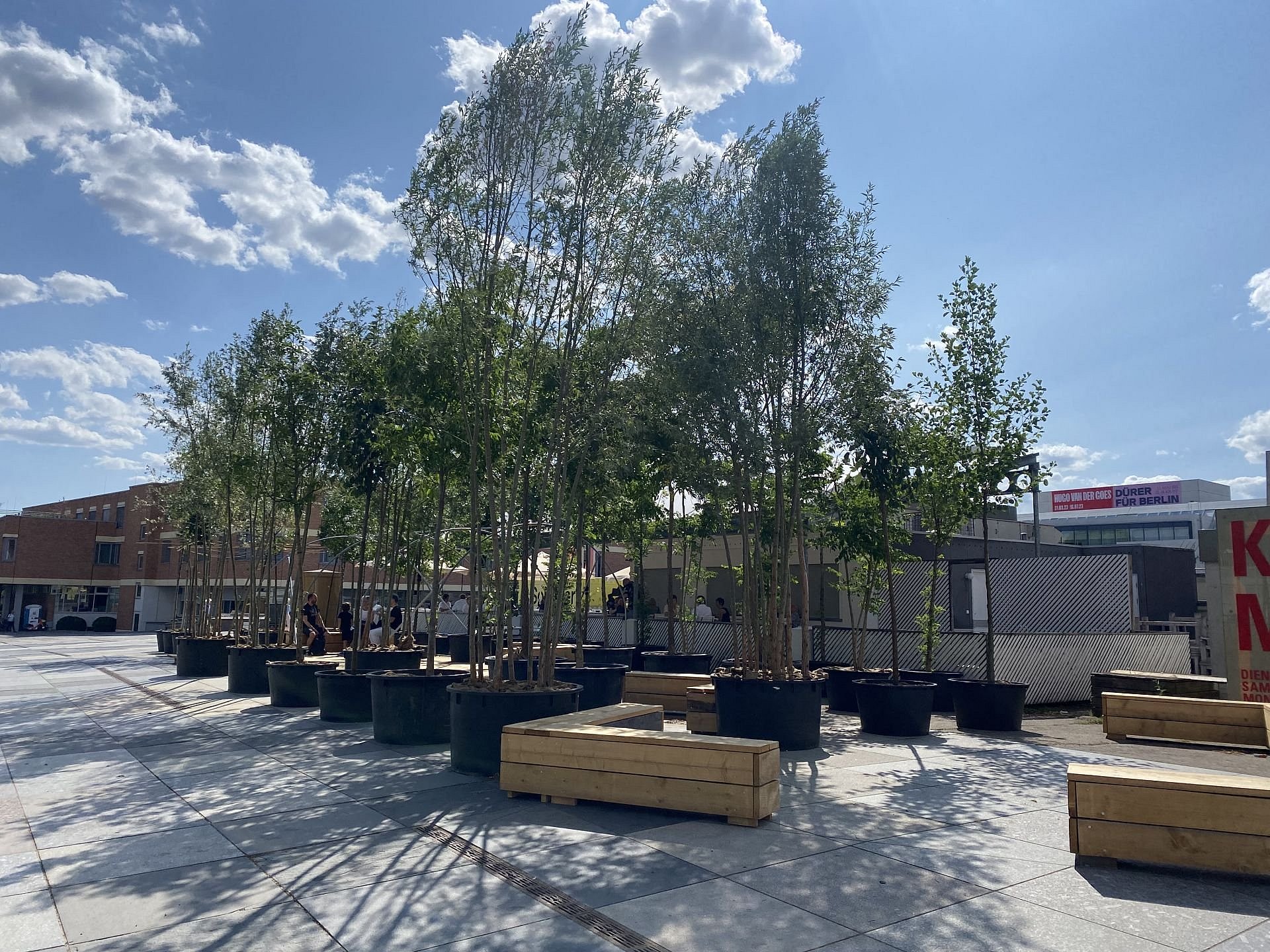
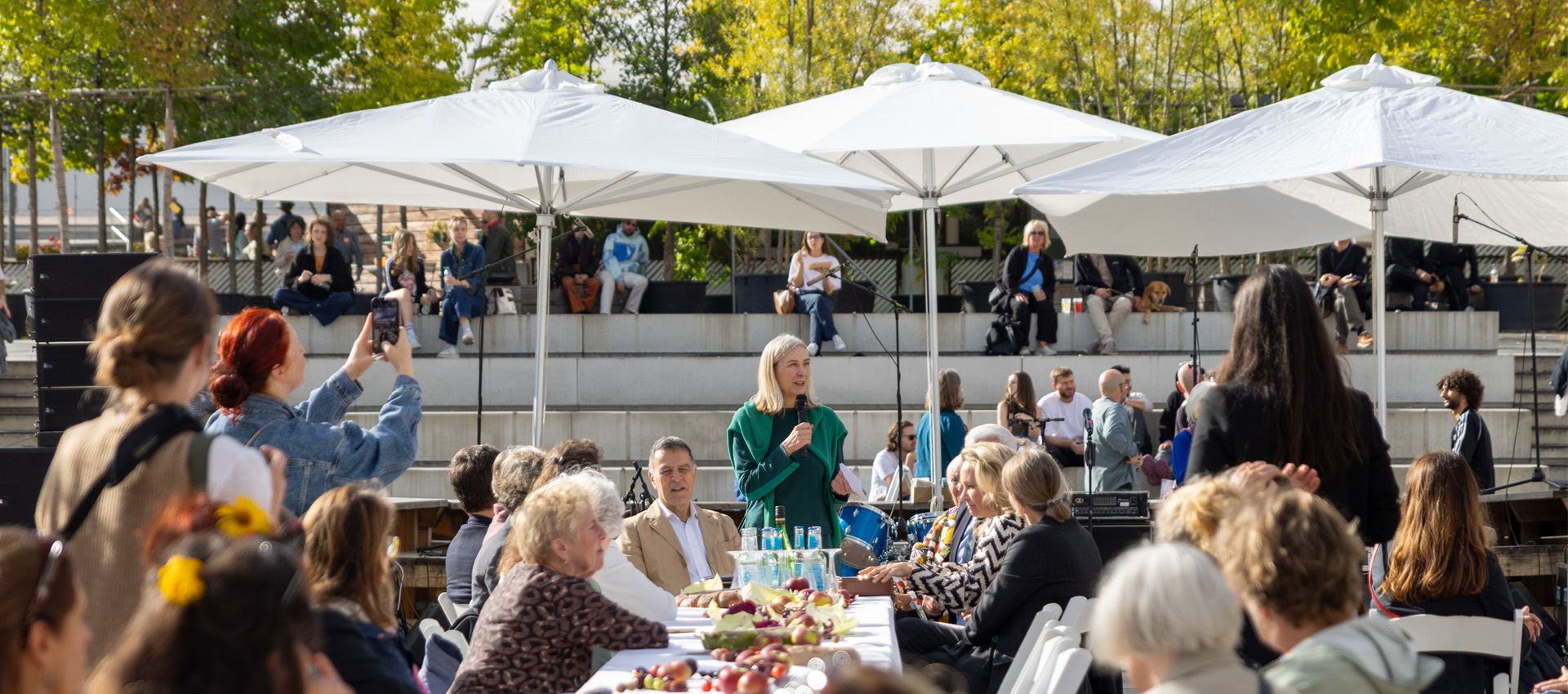
Green neighbourhood project: shade-providing trees to improve the climate of the square. The presence of plants also has a positive impact on the atmosphere and well-being.
Photo: SPK / Killisch
Is it possible to make use of this rainwater, which in Berlin is becoming increasingly rare but all the more intense?
The answer lies in the ‘sponge city’ concept practised in Berlin. This means creating the conditions for the ground to absorb water and release it again during periods when it isn’t raining. And this is also how the outdoor spaces at berlin modern are designed: we are planning to use large infiltration trenches (buffer reservoirs) to collect the water, so that it can be used to water the surrounding trees and green areas during dry periods. We see the whole thing as a system. No drinking water should be wasted here.
When looking to the future, it is certainly also fascinating to examine the green visions for the Kulturforum that have existed in the past. What role do historical plans and considerations play for you?
A key aspect of the design process was engaging with what already exists. We try to design on the basis of knowledge and are convinced that, if you superimpose past and present issues at a single location, something like a watermark for the subsequent design becomes visible. The plane tree, for example, has always been regarded as a significant witness to history. Even today, it is understood as part of the new building.
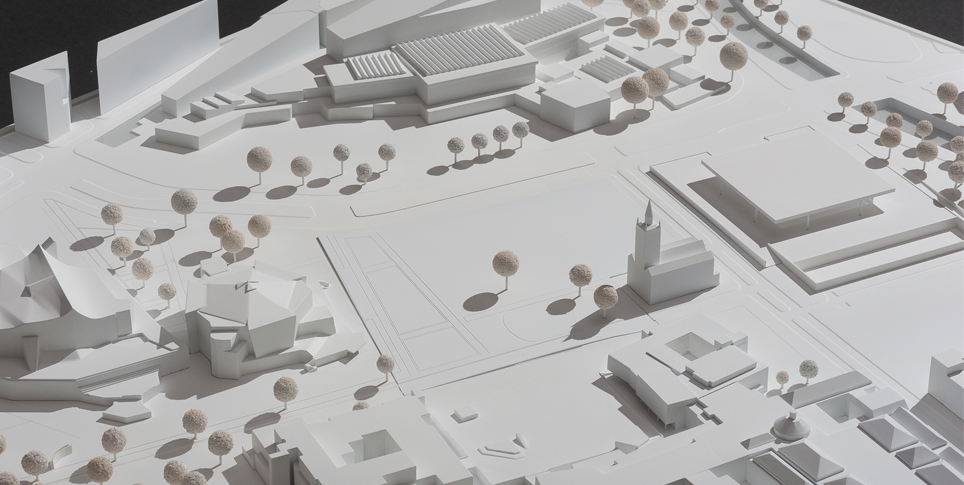
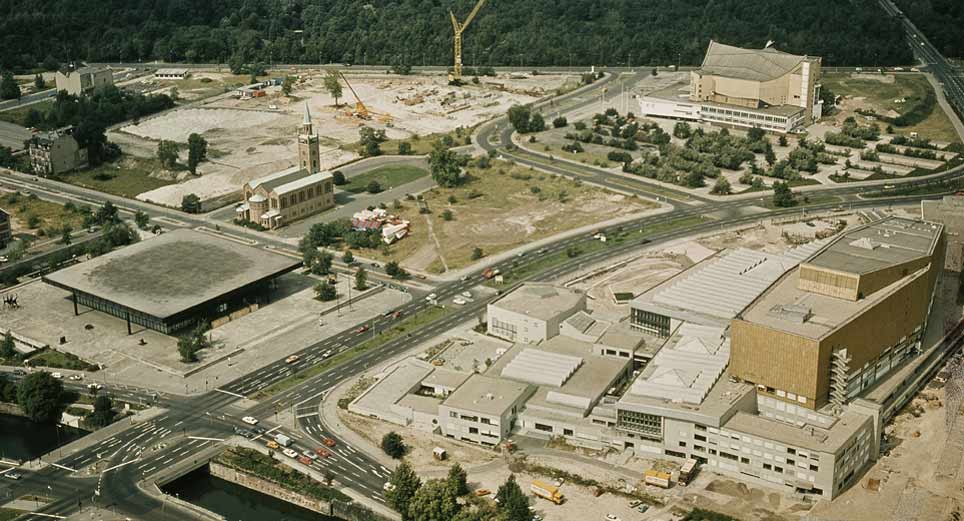
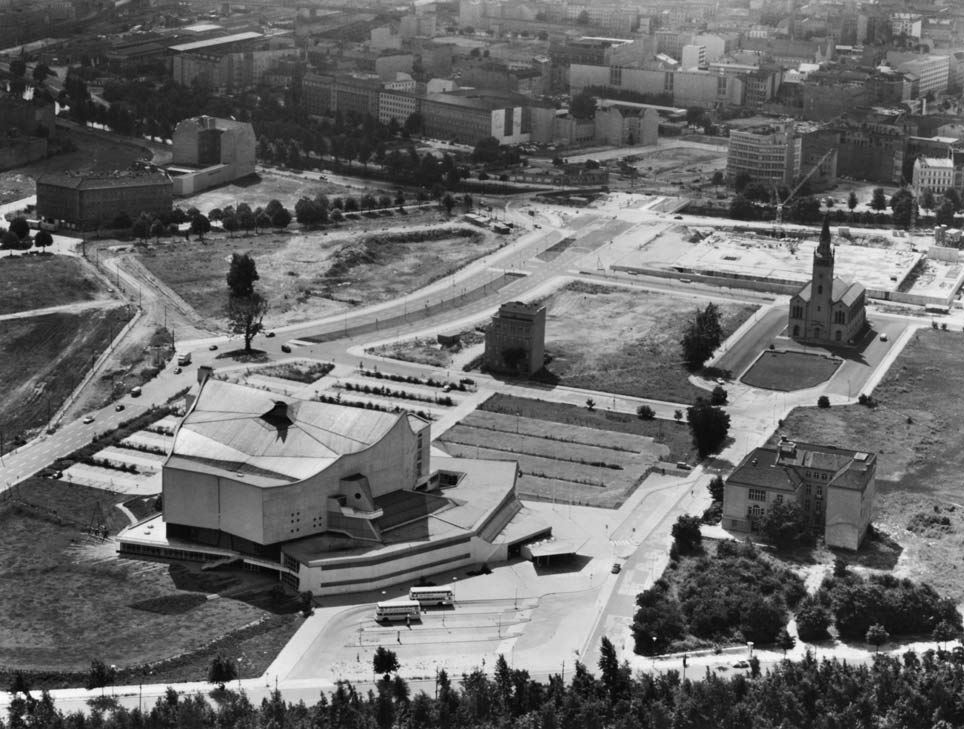
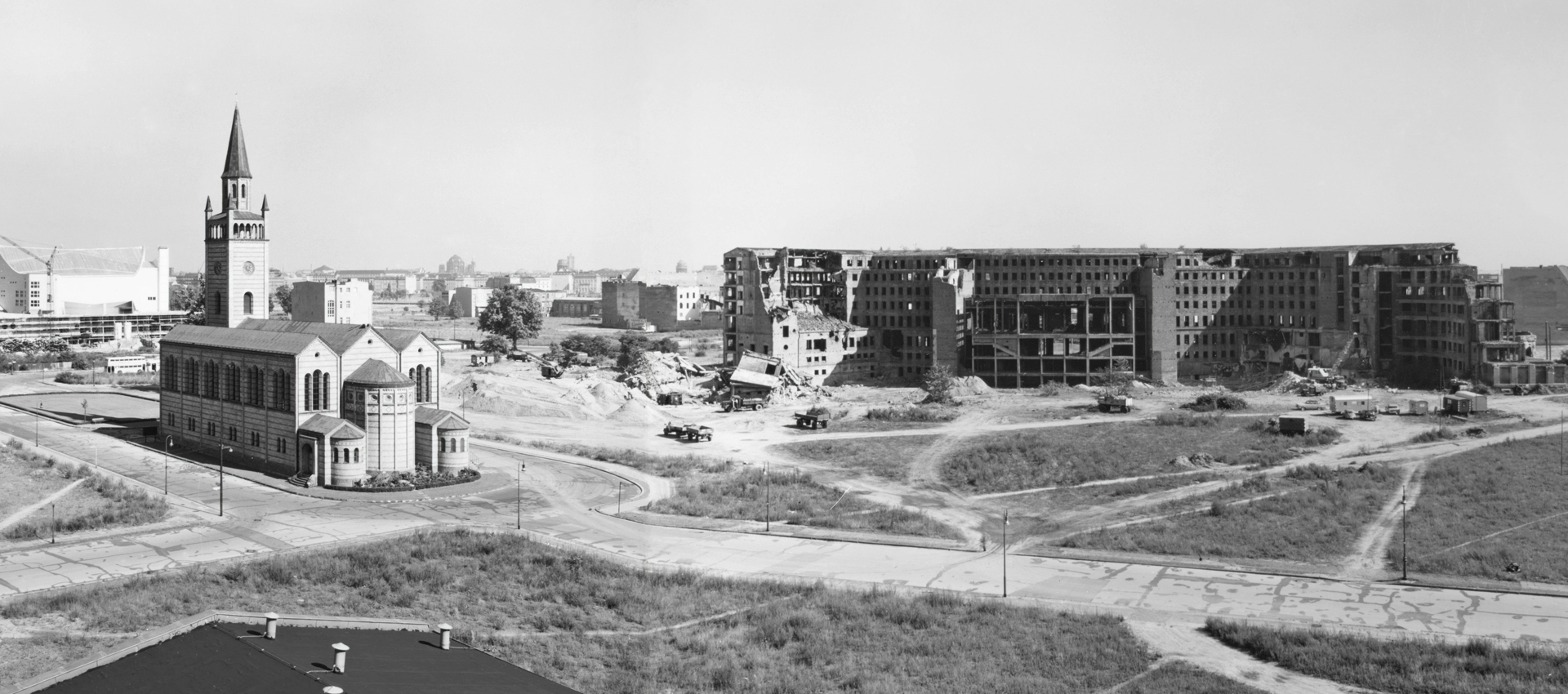
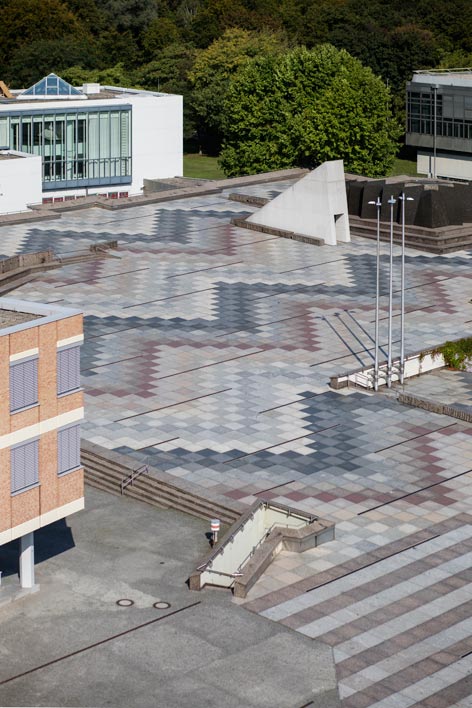
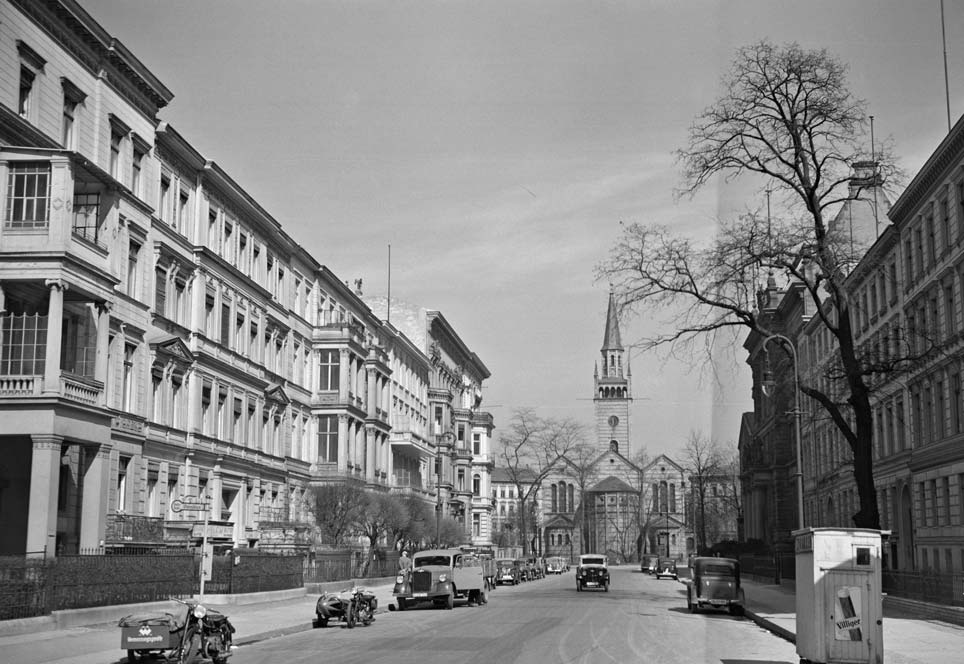
However, the large-scale context was also important in our considerations, and in particular the existing landscape areas: the Tiergarten to the north and the Landwehr Canal to the south. The same applies to the history of the site, that is, this former neighbourhood with its structure, its streets and the question: how do we deal with Matthäikirchplatz or Scharounplatz? Here too, the visions were not rigid, as the site ultimately appears today, but rather heavily landscaped with connections to the Tiergarten.
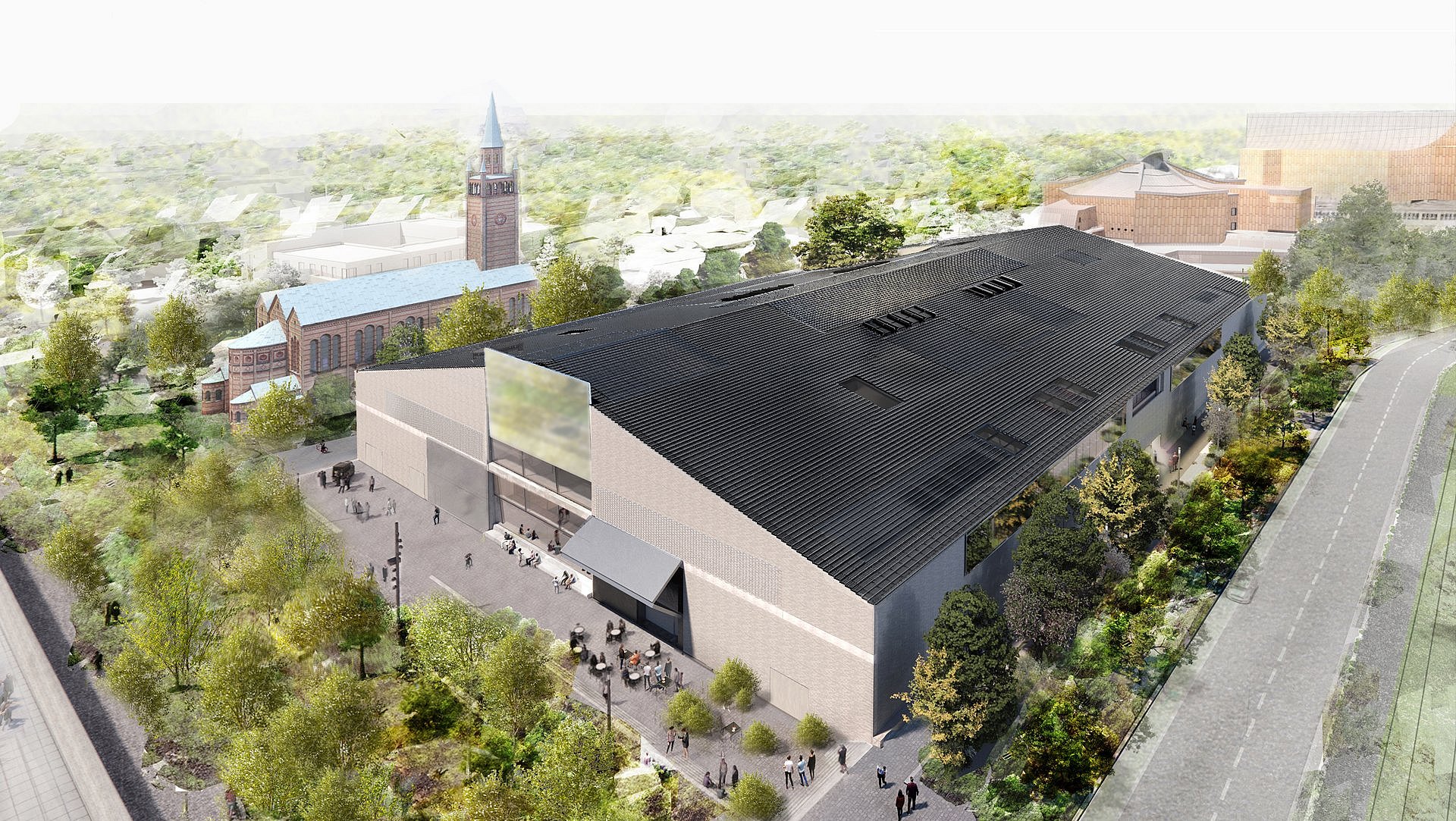
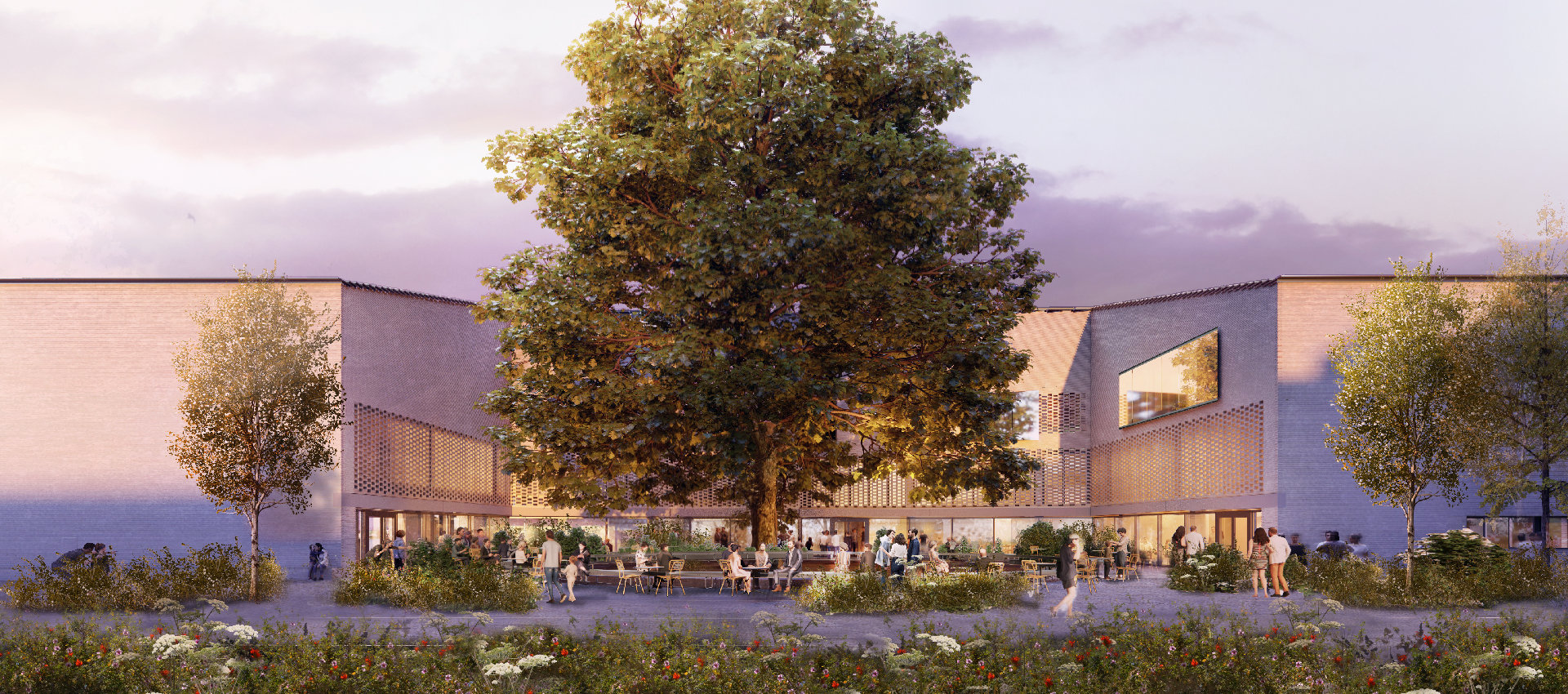
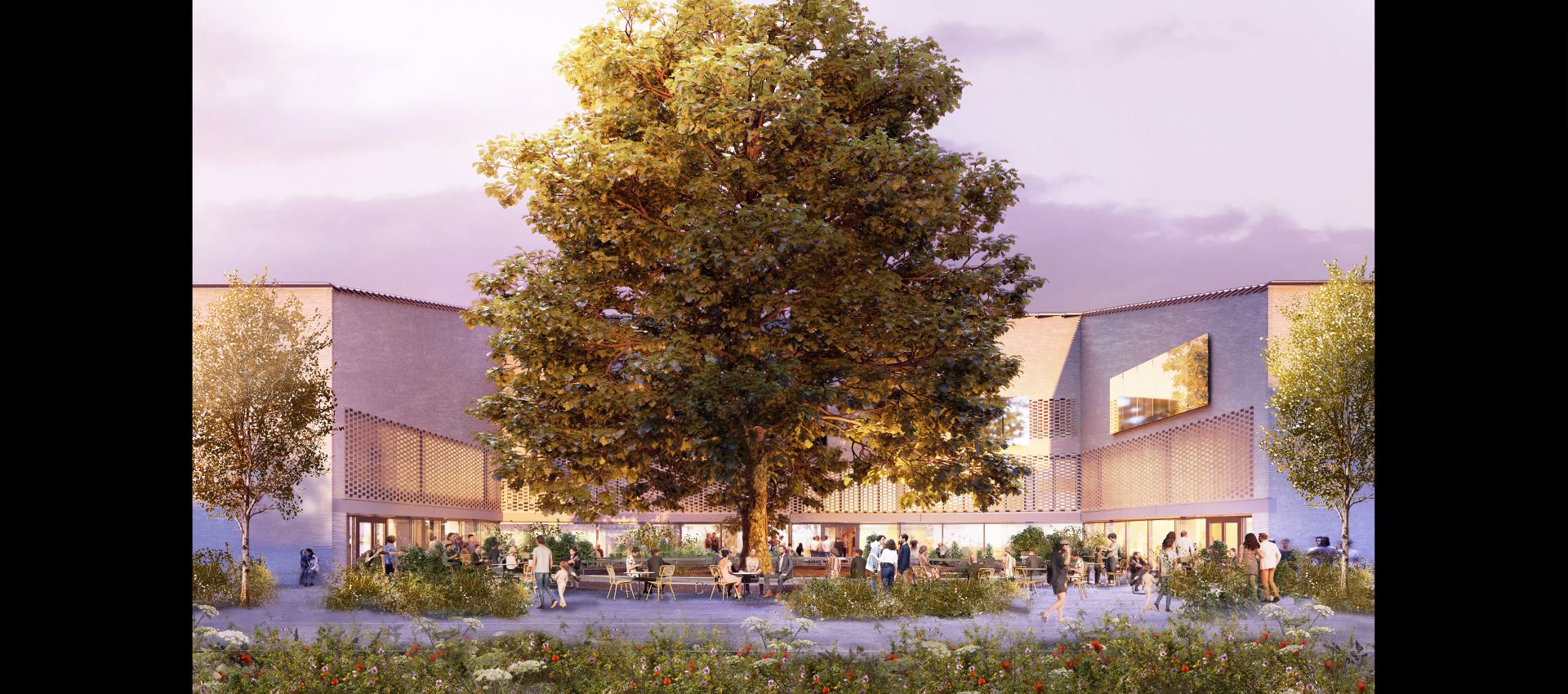
(rendering, 2024) © Herzog & de Meuron
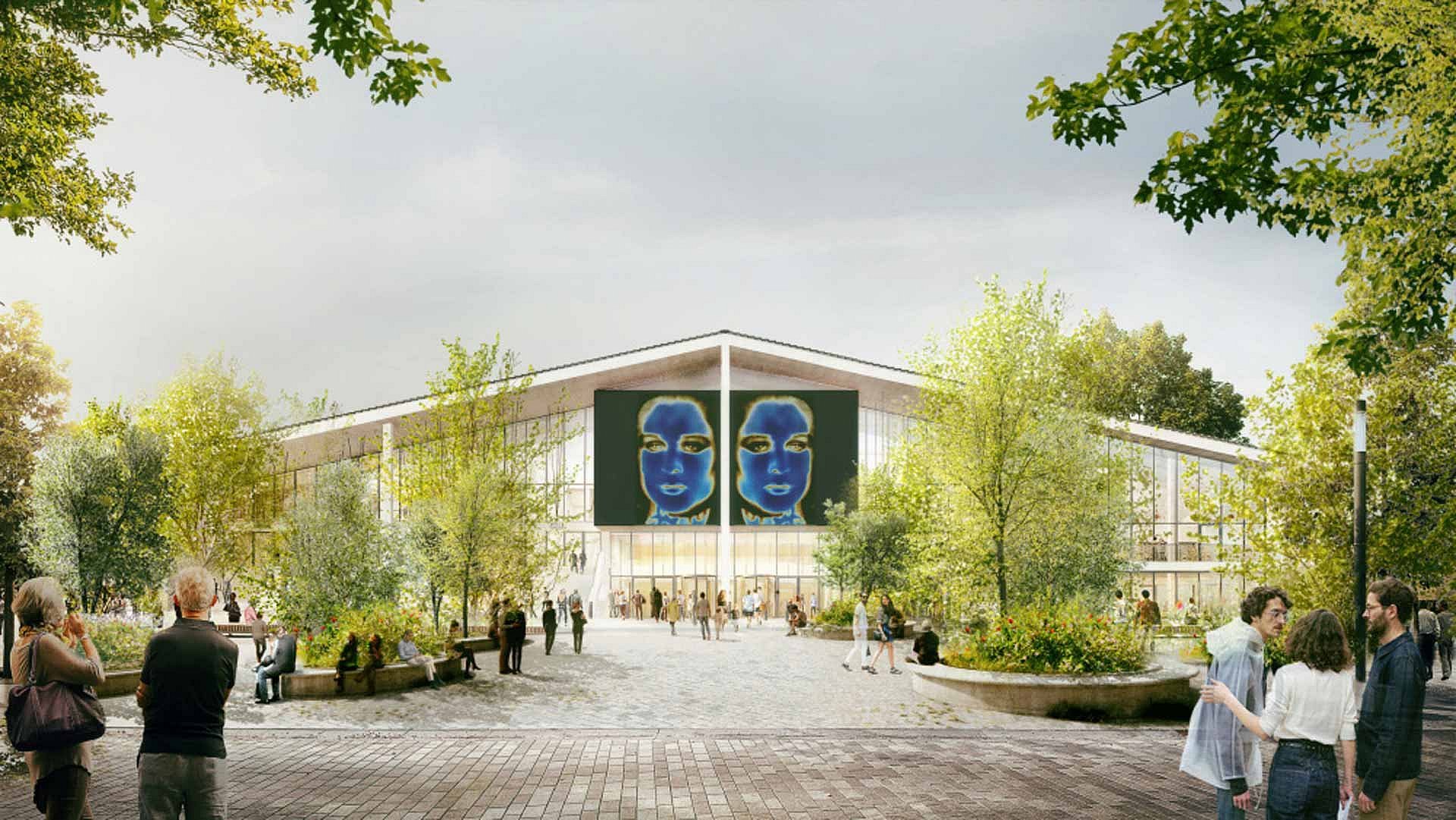
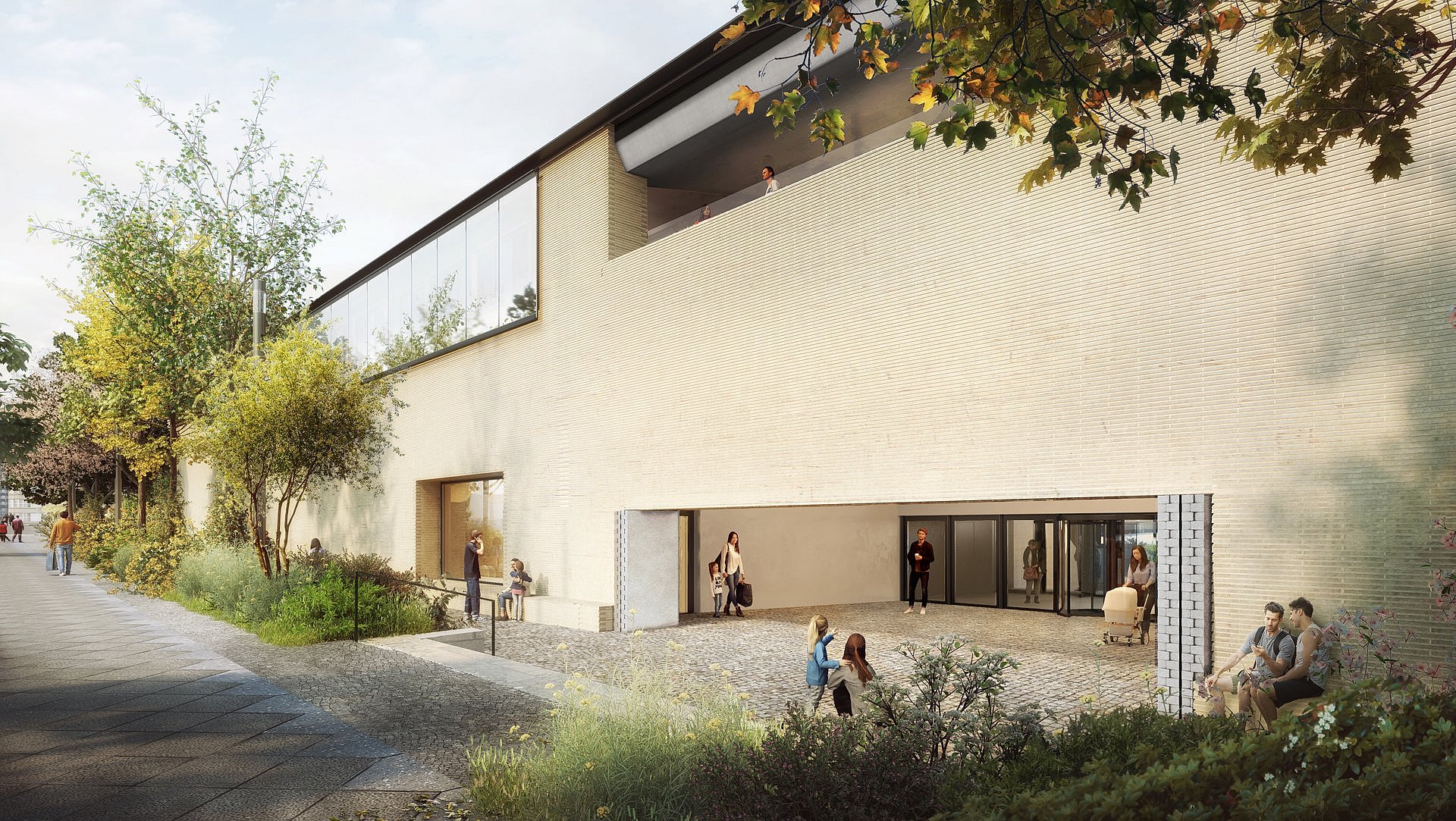
(rendering, 2024) © Herzog & de Meuron
How important is dialogue with the various neighbours of the Kulturforum?
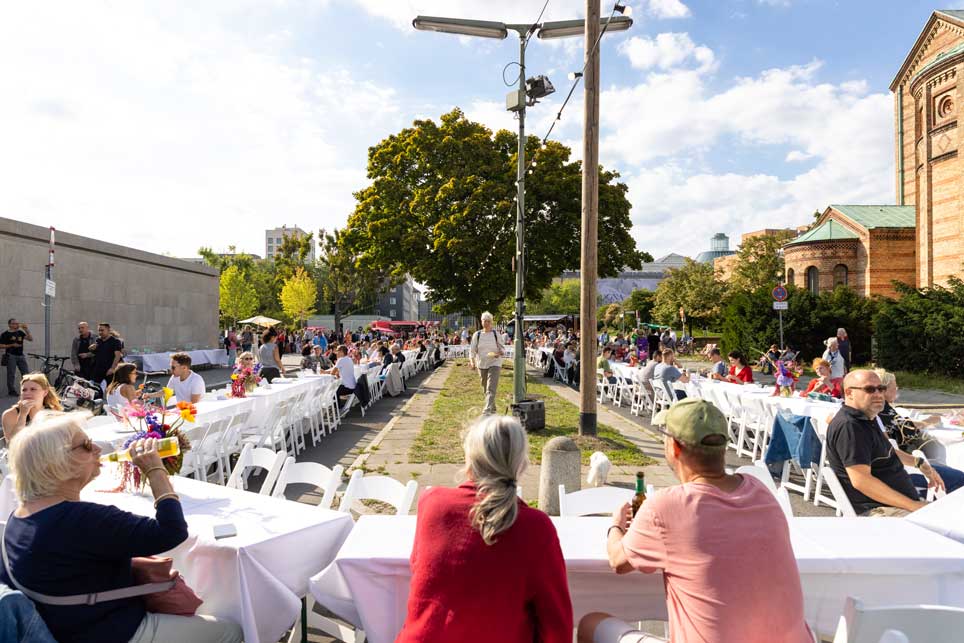
The more we understand the needs of this space, the more precise our response can naturally be. Initially, the discussion about the Kulturforum was still relatively limited, but new initiatives, such as ‘Tag im Grünen’ or the interdisciplinary ‘Grünes Kulturforum’ workshop, brought together all local residents and the relevant Sentas, district and building authorities, and fostered discussion about the challenges as well as the opportunities of a holistic approach to the area.
We have tried to take these ideas on board and develop a design concept from them. This is no easy task: every single tree must be more or less integrated into the existing landscape – a challenging process, but one that is extremely important. The fact that the Building Committee and the Public Spaces Design Advisory Board are now taking on this space demonstrates precisely its significance for the city as a whole.
That all still sounds very process-oriented.
Yes, and I believe that is key. If we fail to take the city’s processual nature into account – particularly in Berlin – then we are squandering opportunities for the day after tomorrow.

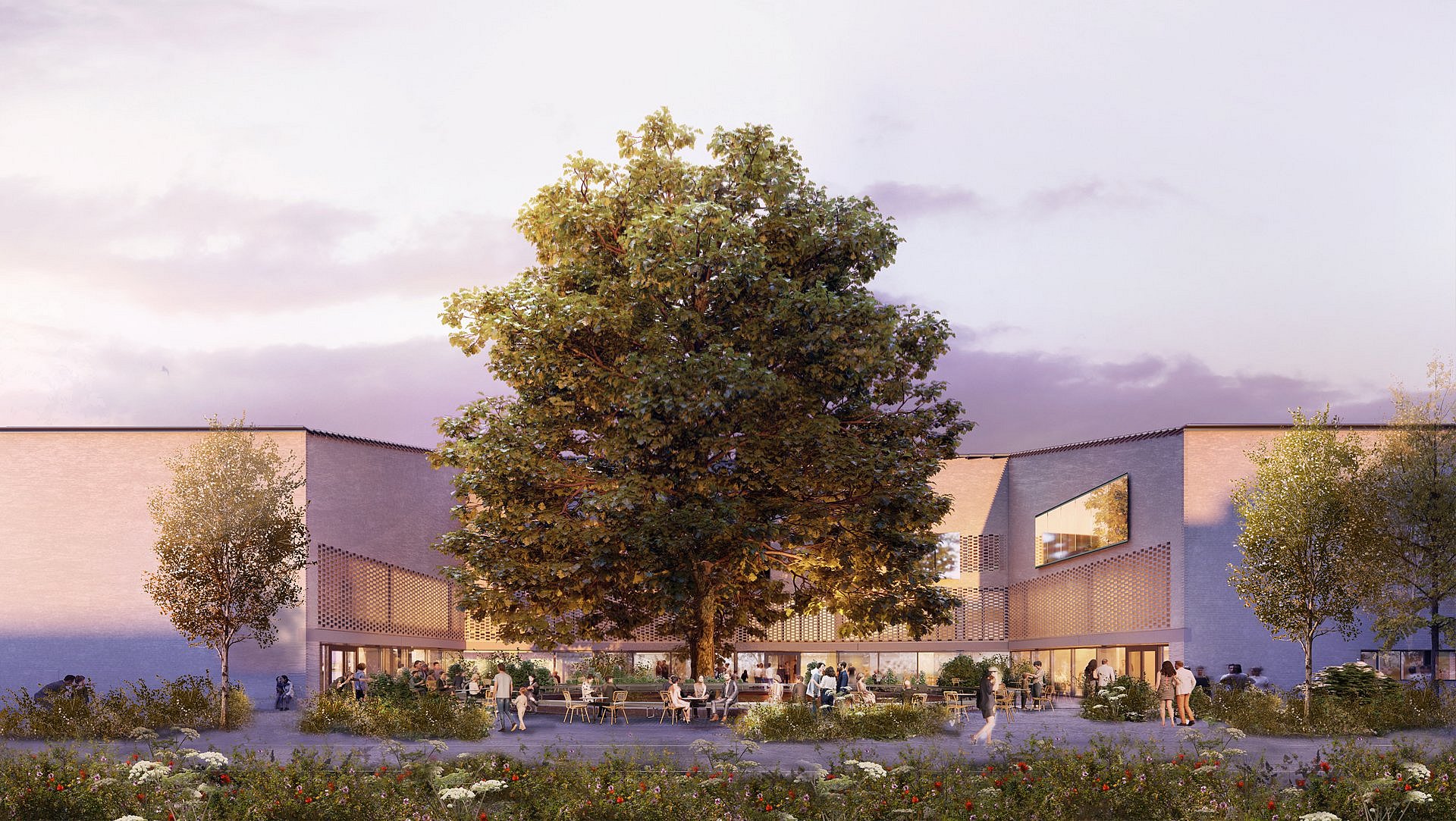
(rendering, 2024). © Herzog & de Meuron
Can this be applied to landscaping as well?
Resilient planning for climate change does not mean that a switch is flipped and we suddenly have a Mediterranean climate in Berlin. The east wind from Siberia will, of course, continue to reach us here. So we must always consider: what will still be growing in 2070, whilst also taking into account the increase in biodiversity that forms the basis of life for the existing fauna.
Alongside the reference to the surrounding landscape, the plans of Mies van der Rohe and Scharoun naturally also form an important basis for the choice of future urban vegetation at the Kulturforum. Tree species such as maple, hornbeam and oak respect what already exists, but also take the future into account in the choice of varieties.
What role does art, which is to find its home in Berlin Modern, play in the outdoor spaces?
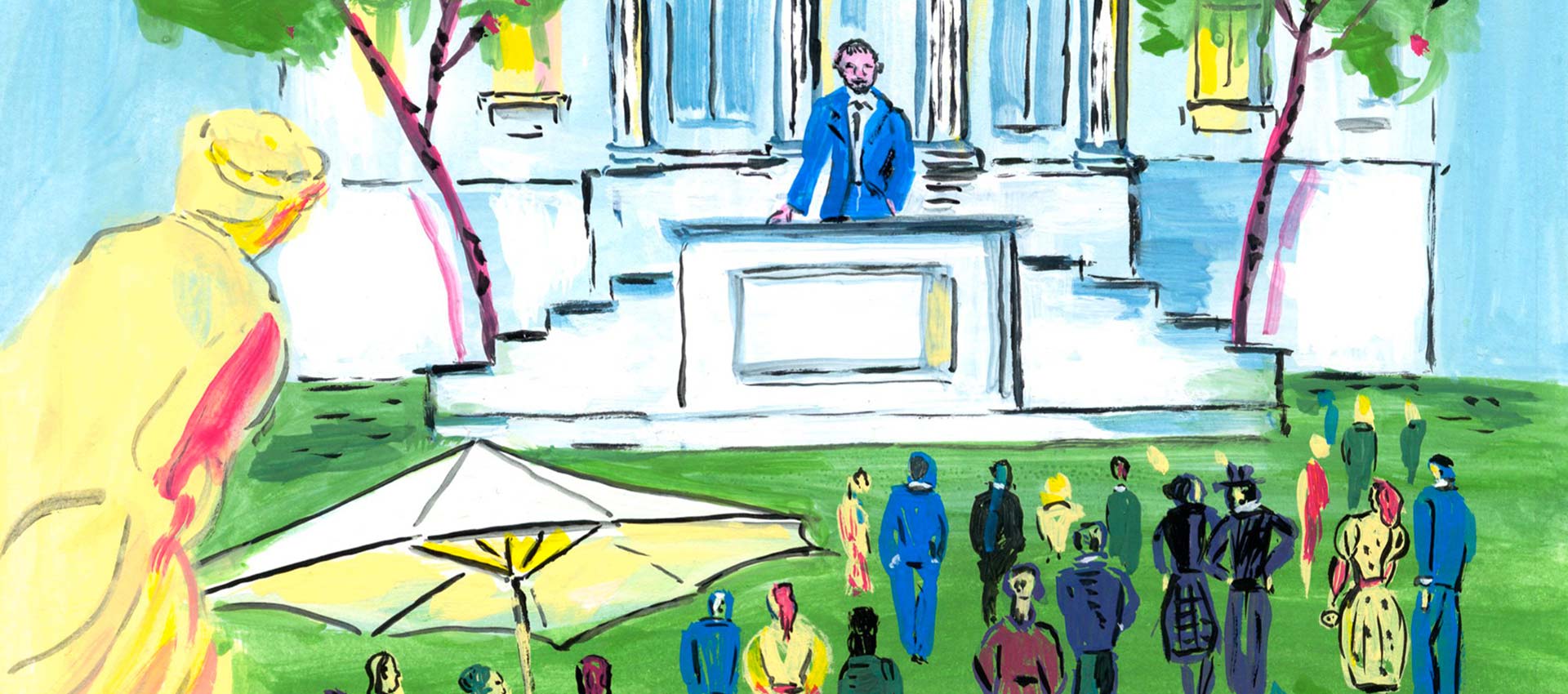
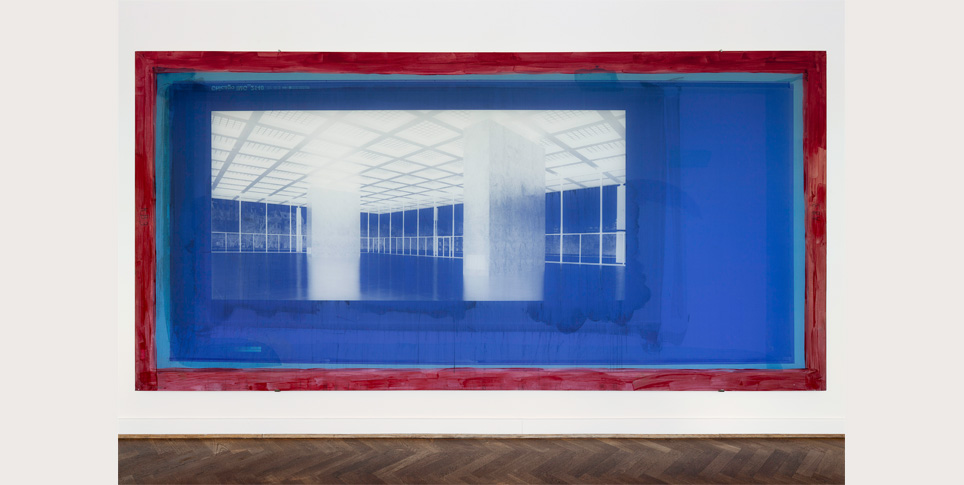
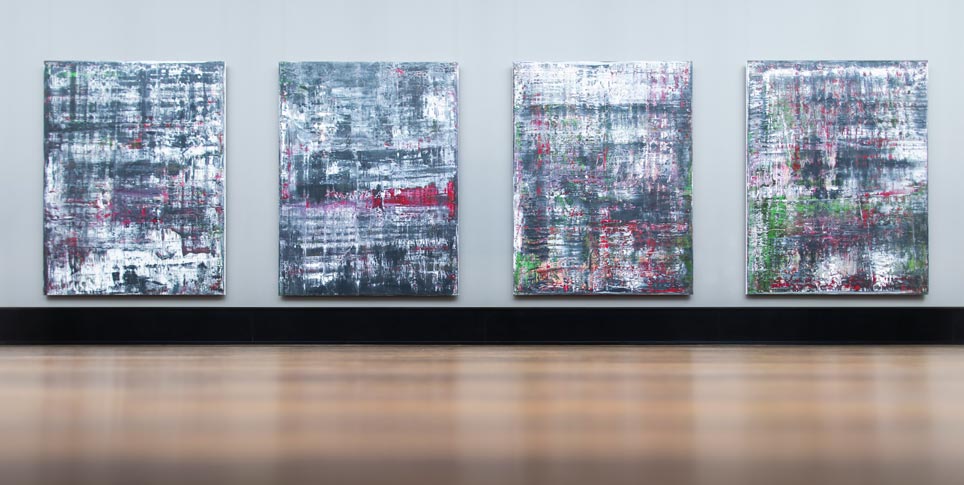
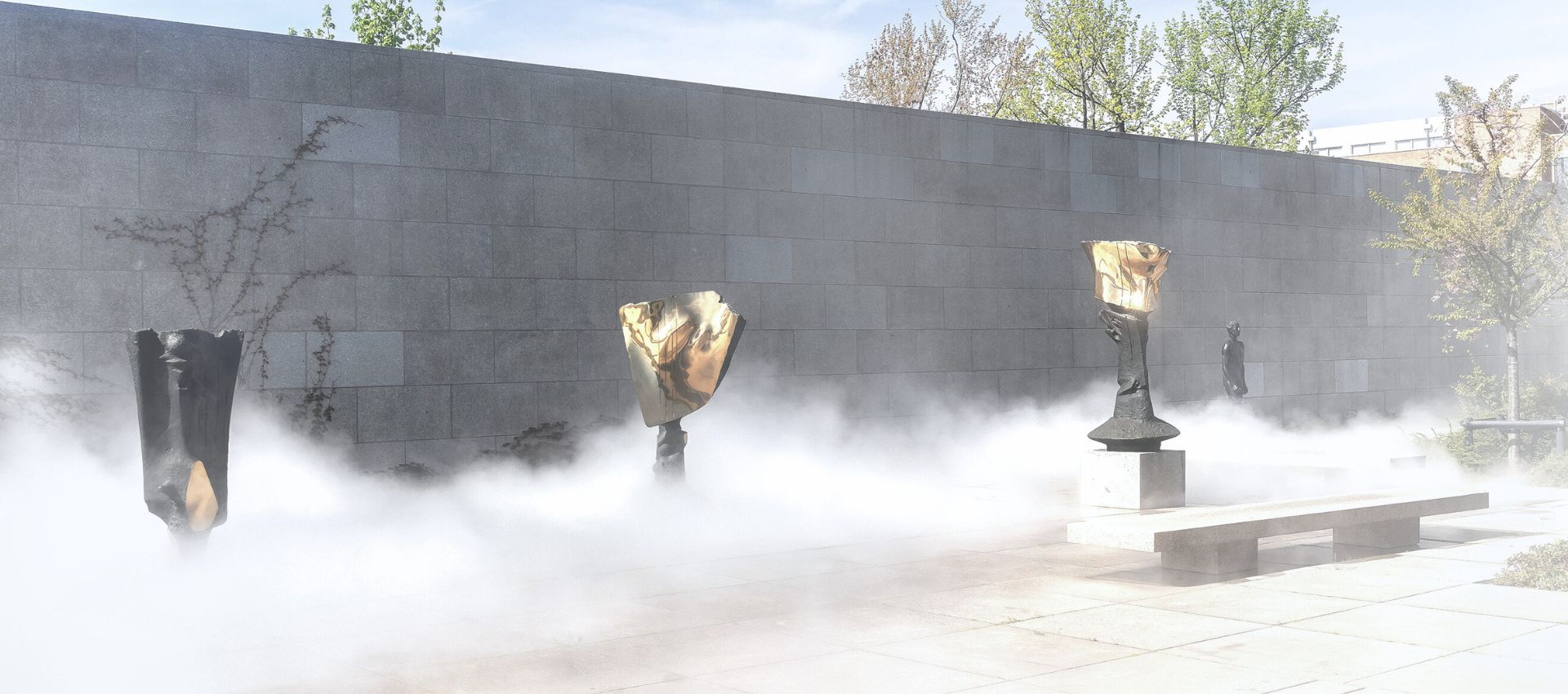
The space we are designing must also be able to serve as a starting point for artistic interventions in the future. Art does not stop at the building’s boundary. It has a certain charisma. And for that we need the space – precisely to unfold these exciting intersections between the buildings. This became clear at the laying of the foundation stone with the two artistic contributions.
Further links
- berlin modern website
- Project page: VOGT Landscape Architects
- Article on the laying of the foundation stone
- Kulturforum Nursery
- Article on ‘A Day in the Green’ 2023
- Interview with architectural theorist Fritz Neumeyer
- “As old as a tree”: The plane tree on Scharounplatz