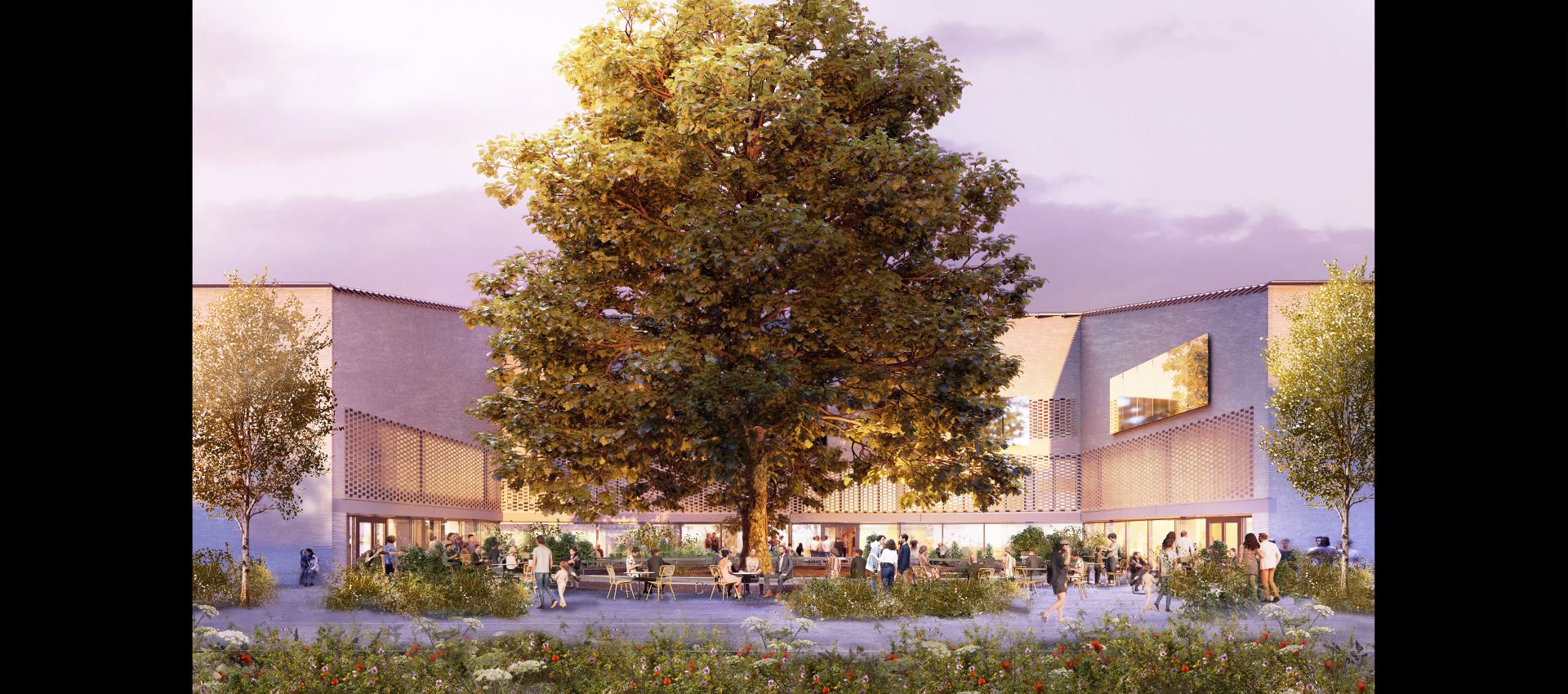
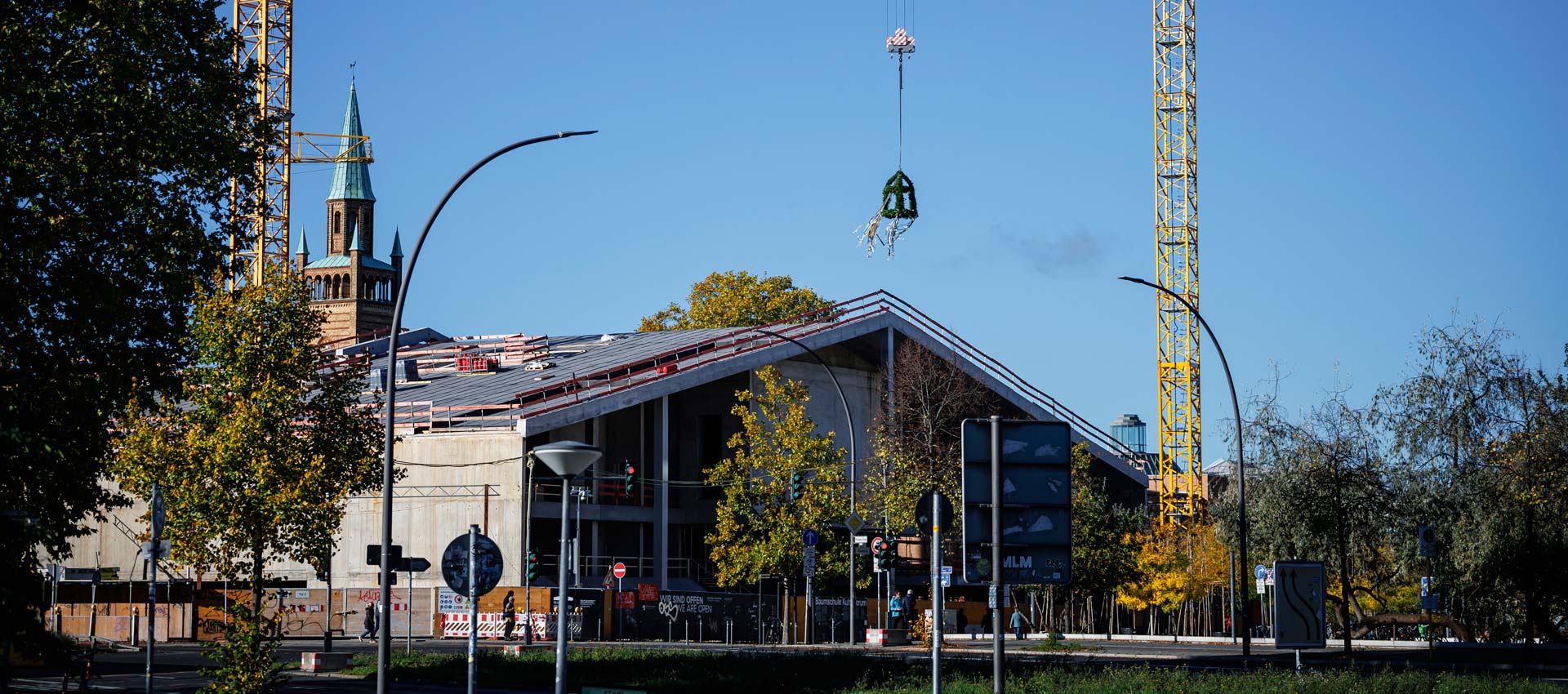
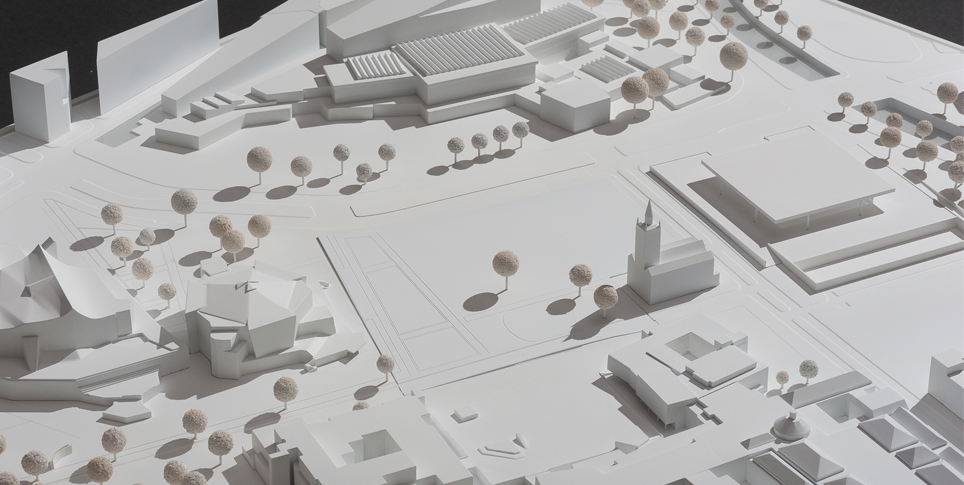
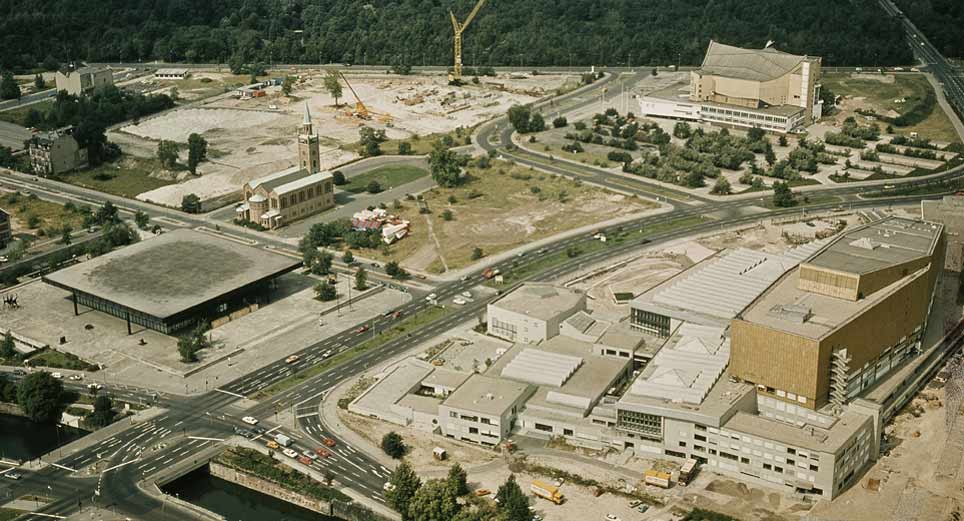
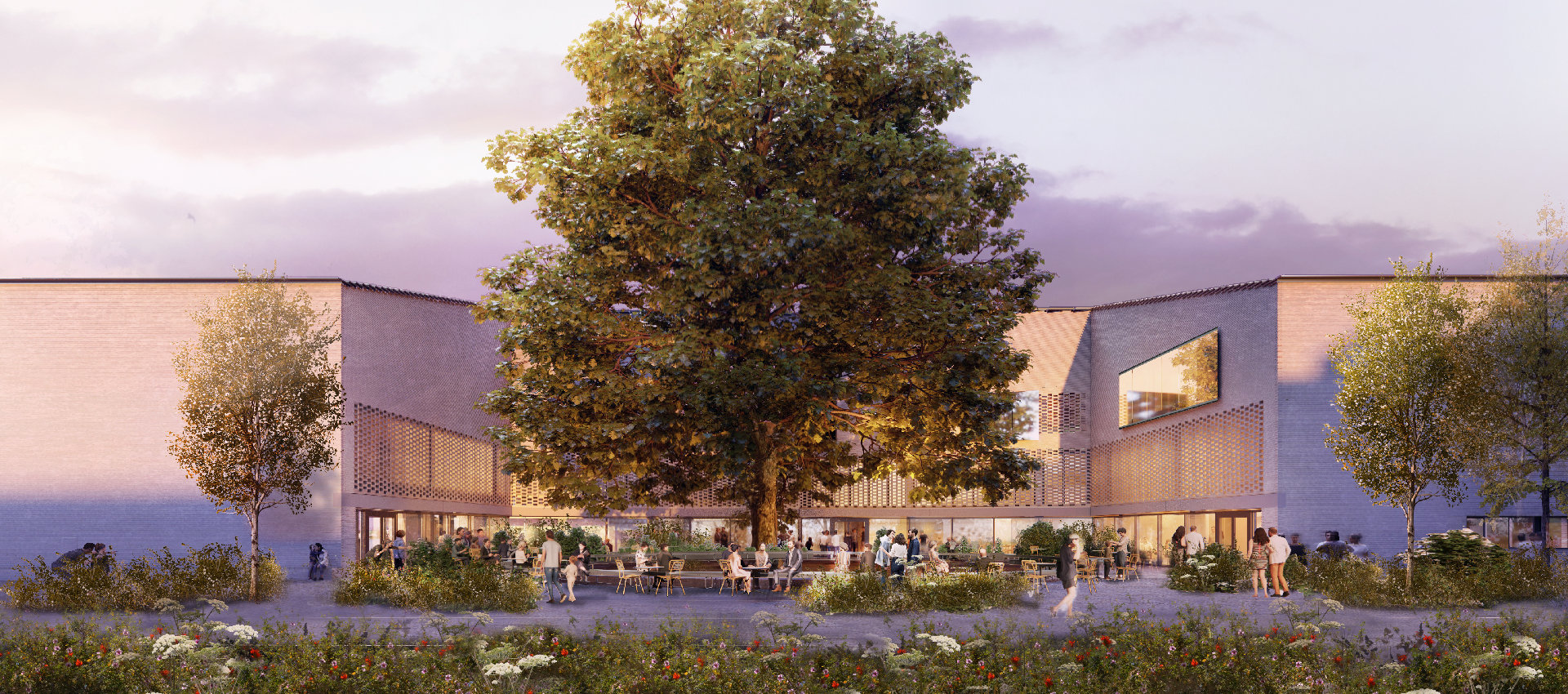
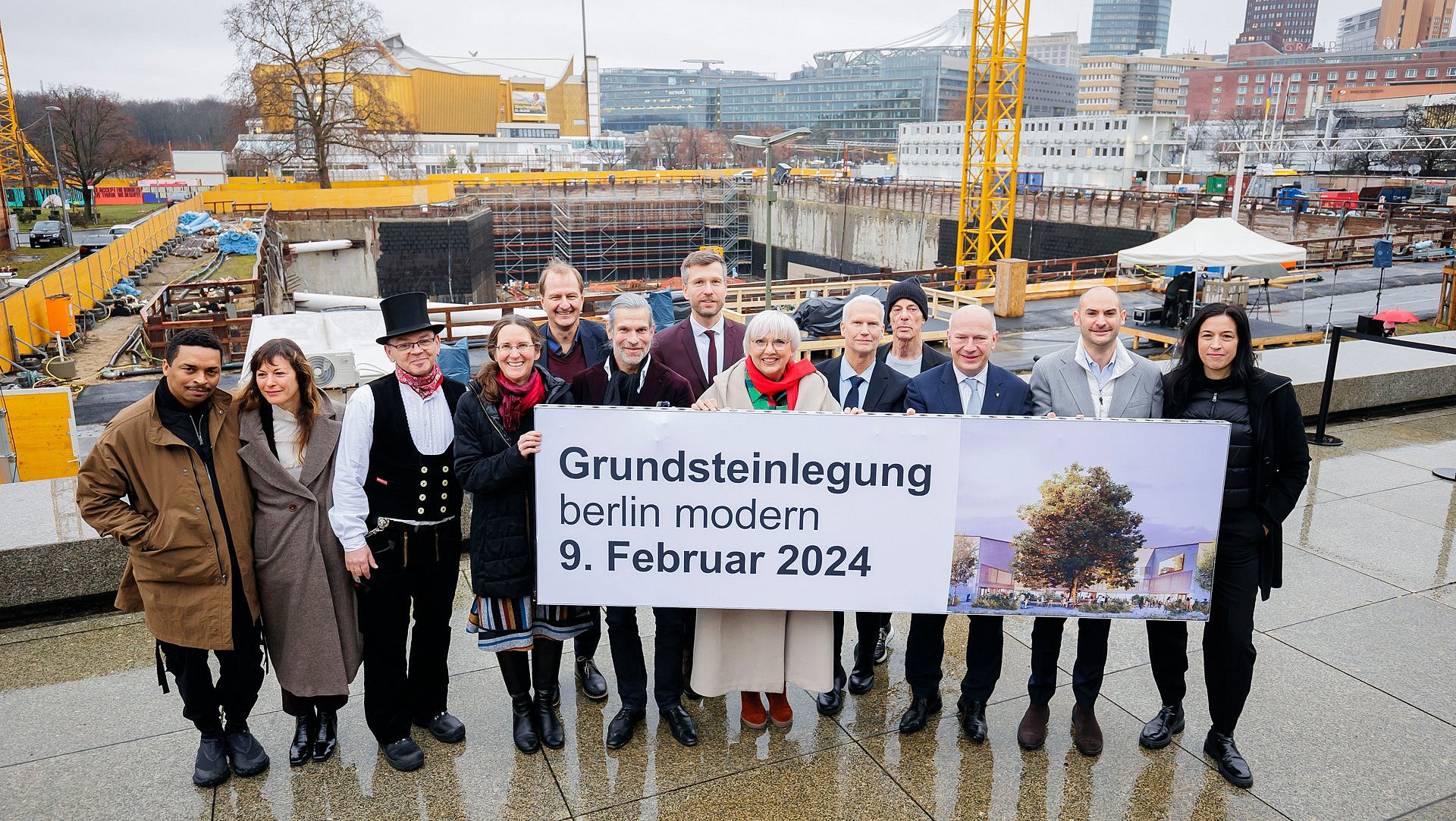
On 9 February 2024, the foundation stone was laid at the Kulturforum for the building that is set to complete the Kulturforum, bring together the collections of the Neue Nationalgalerie and set new standards for museums in the 21st century: berlin modern
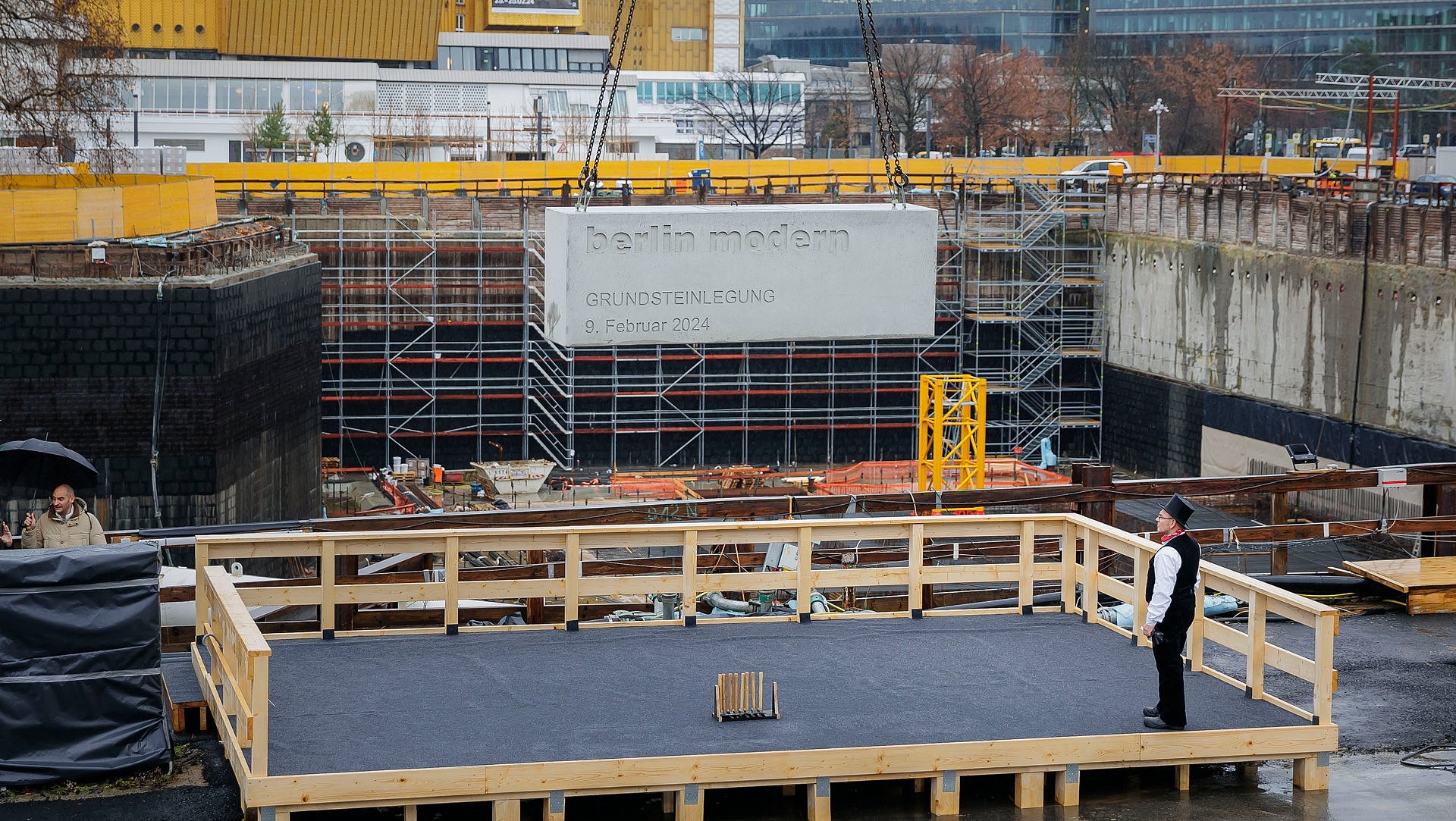
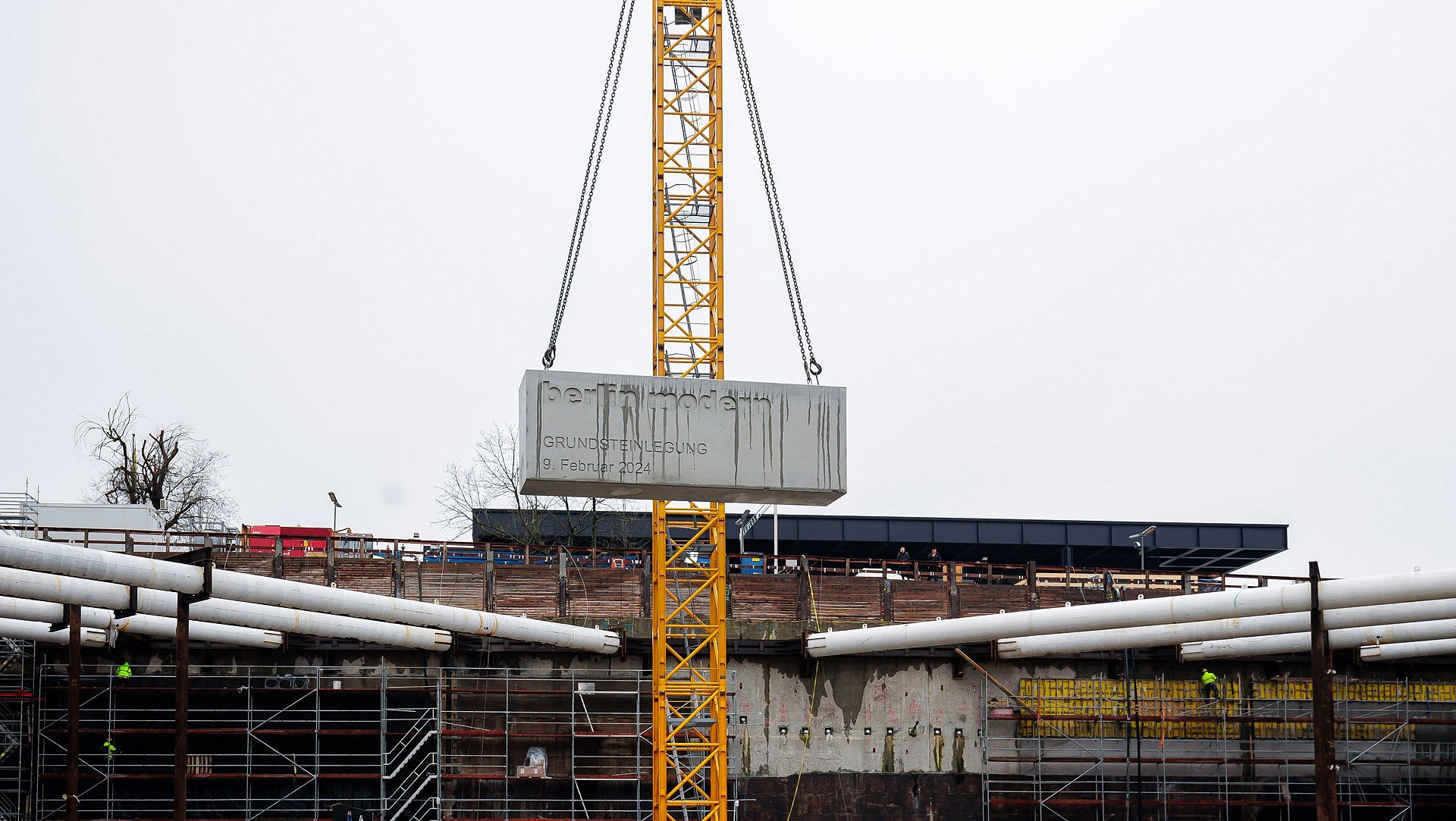
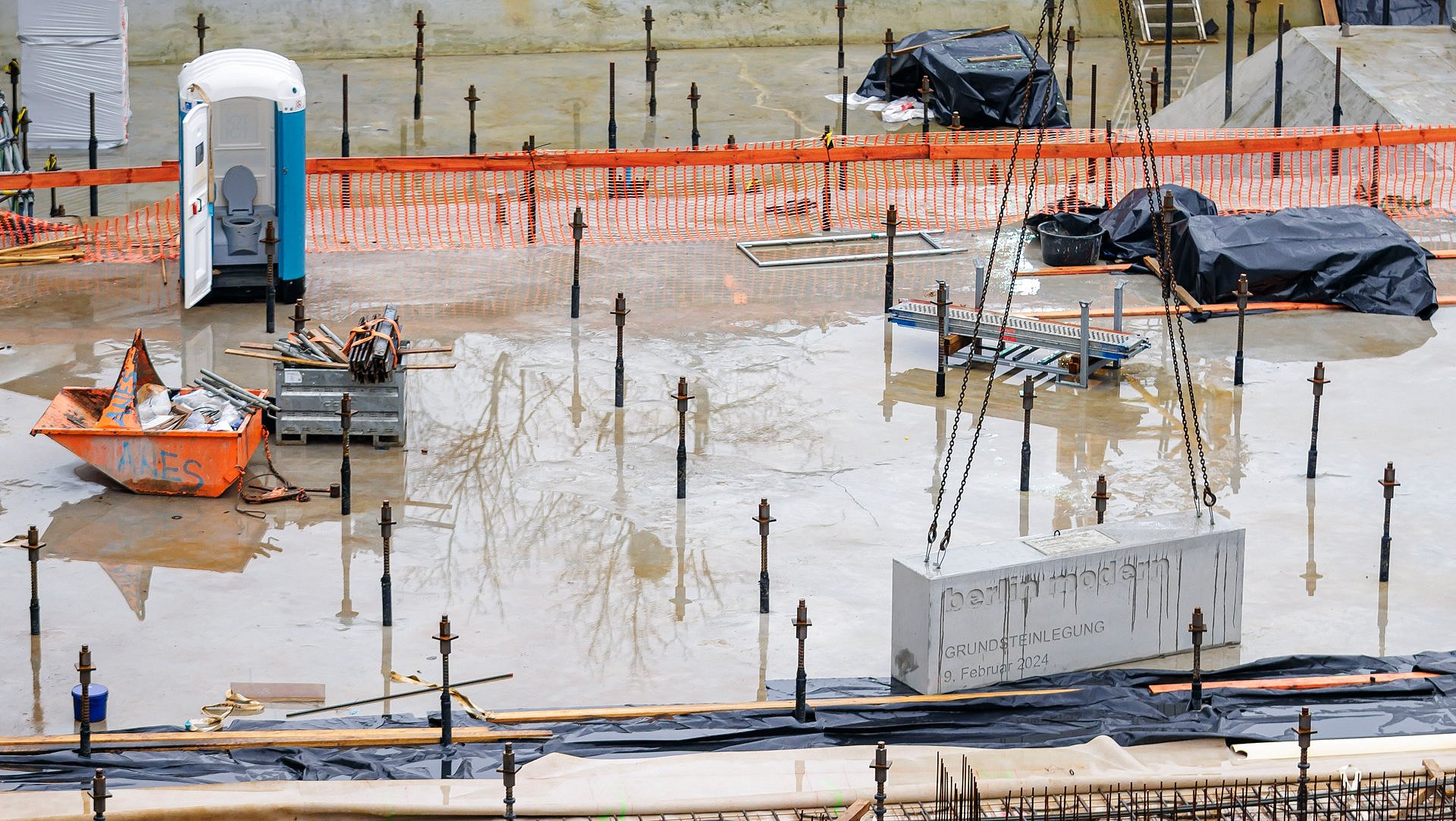
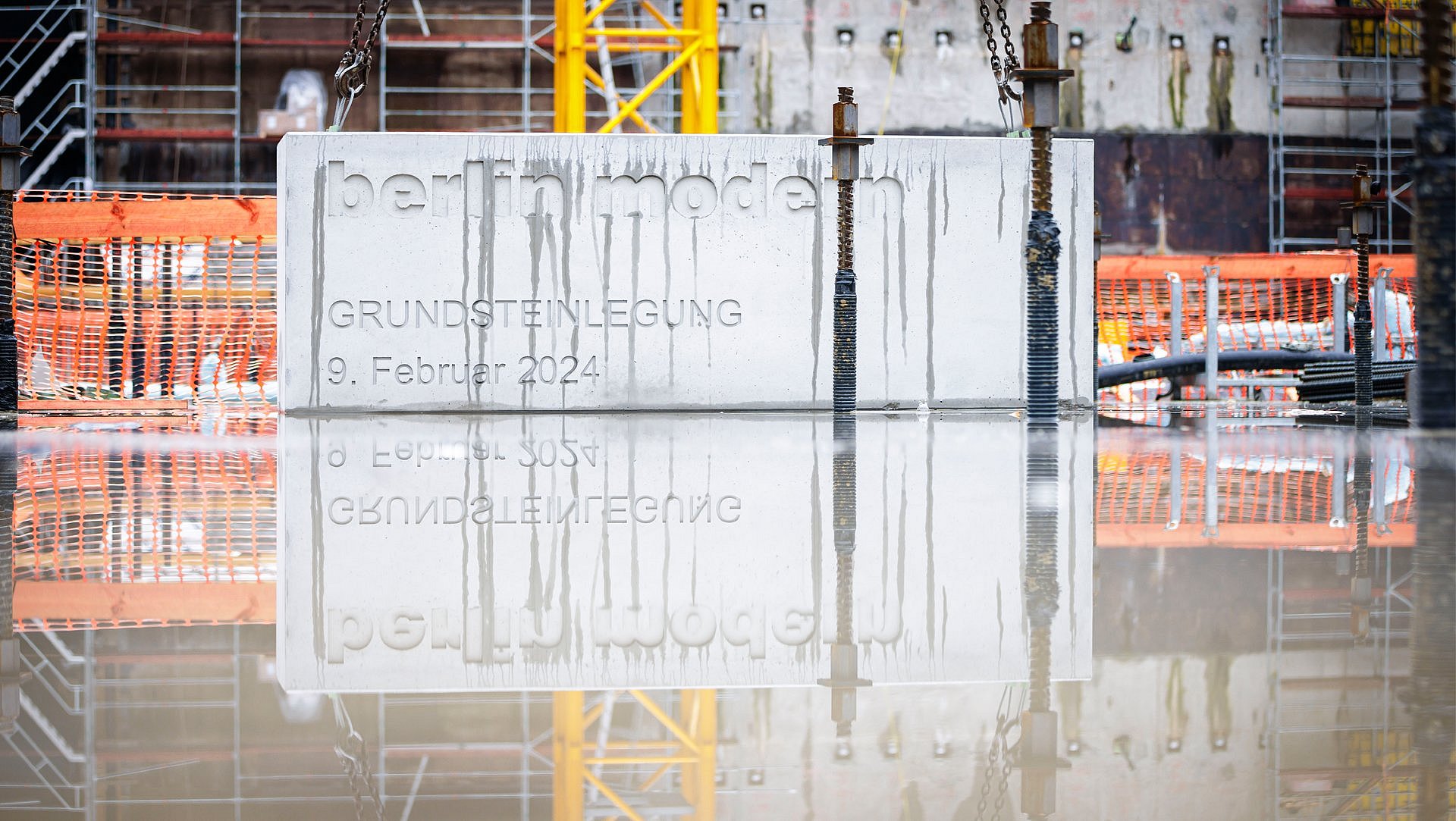
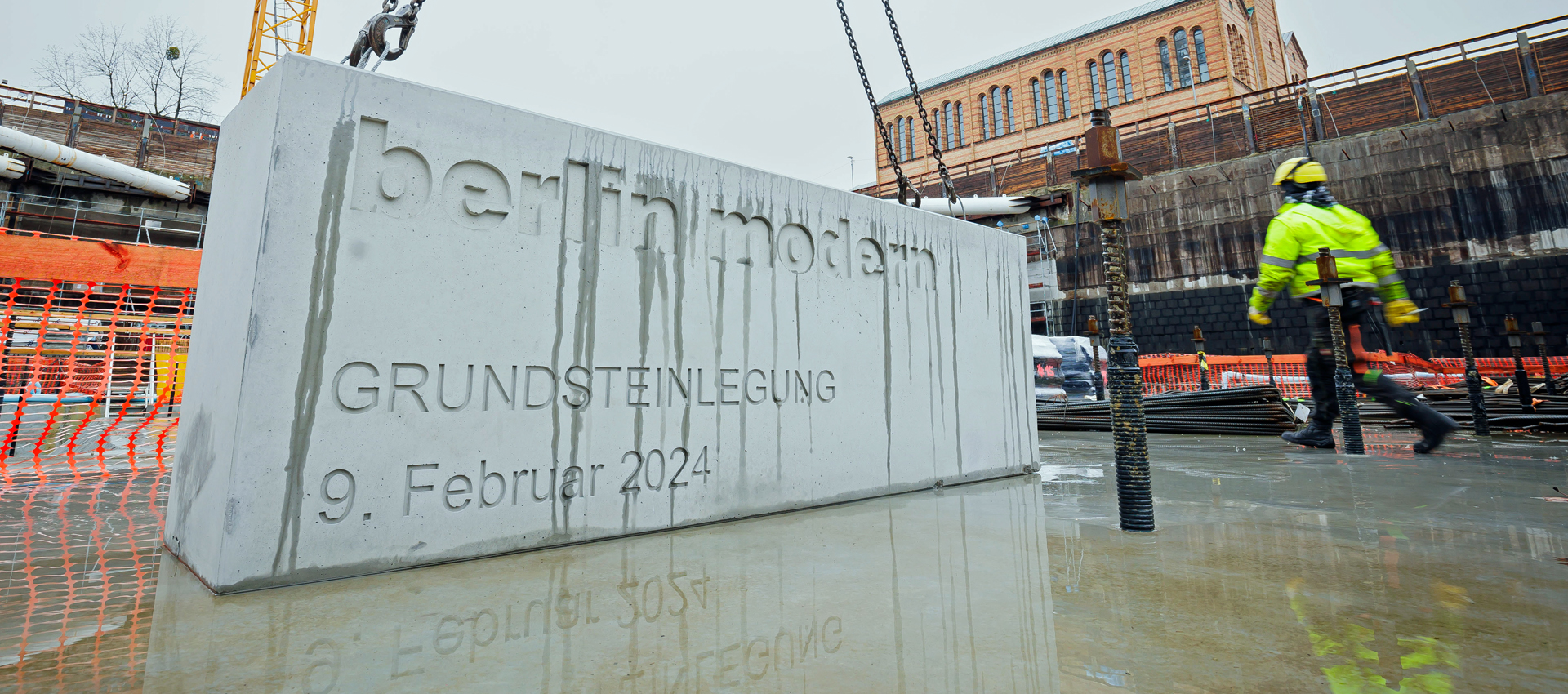
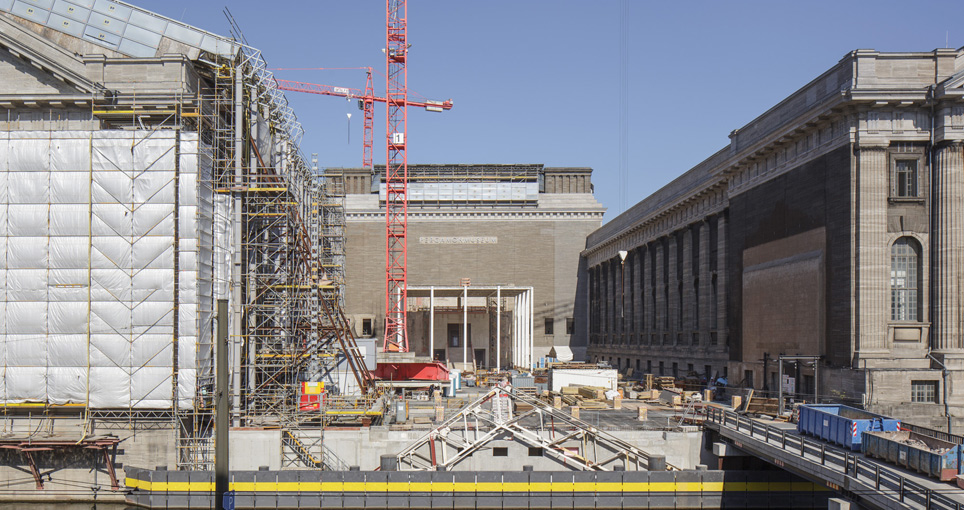
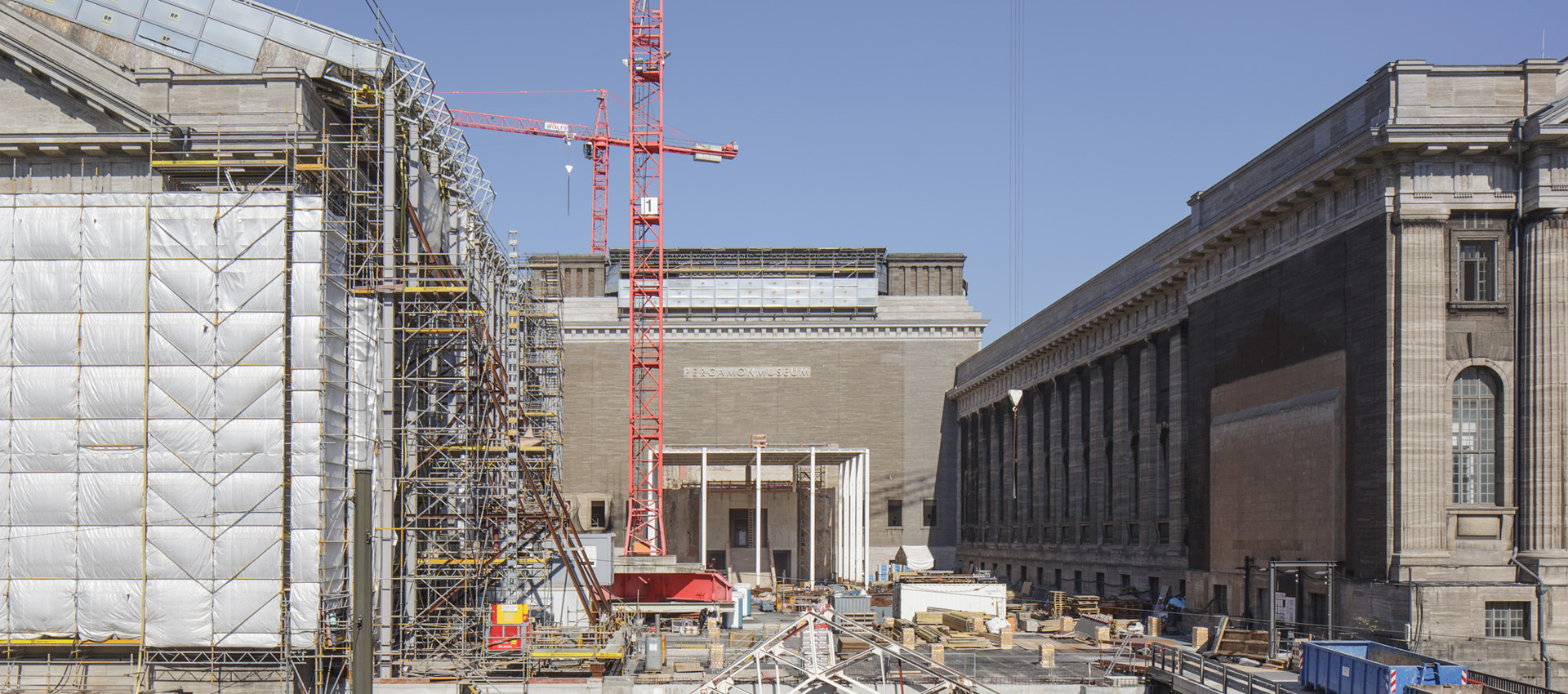
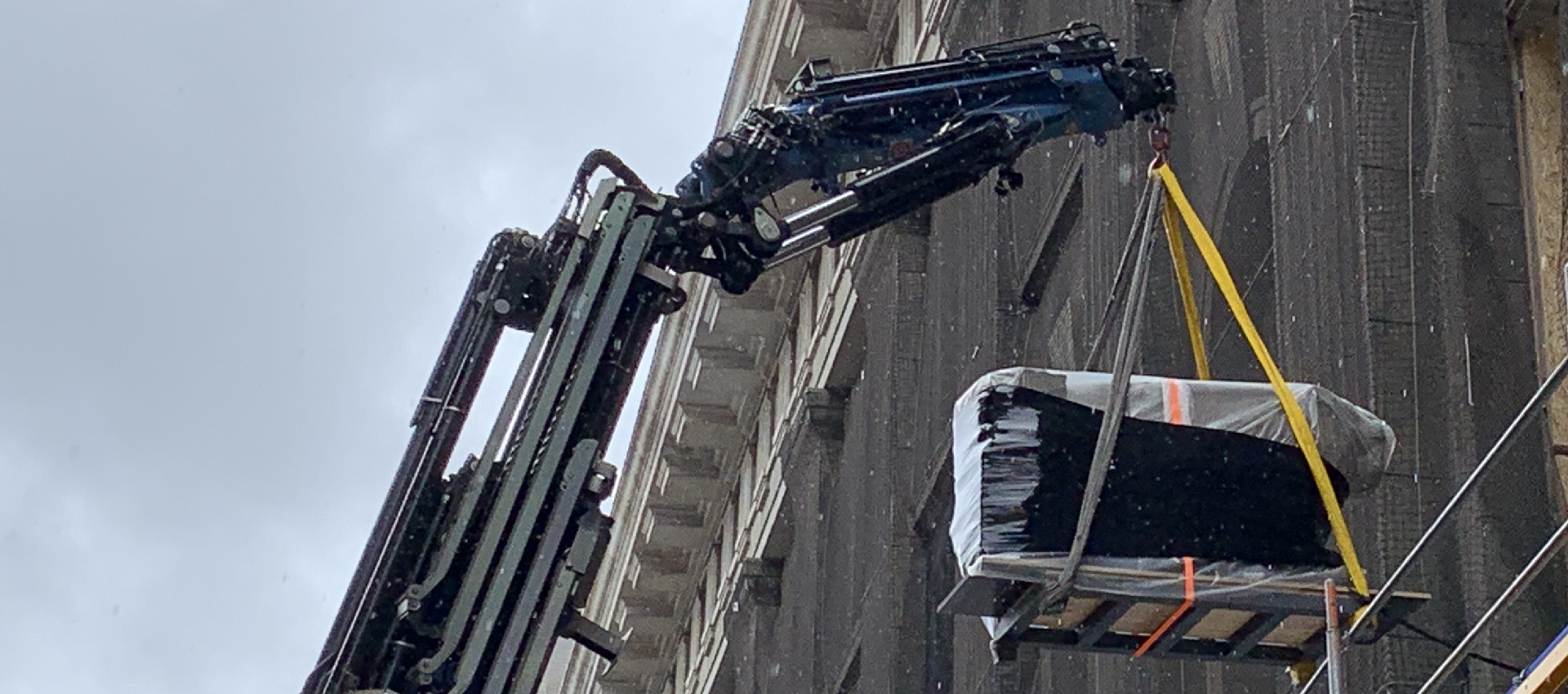
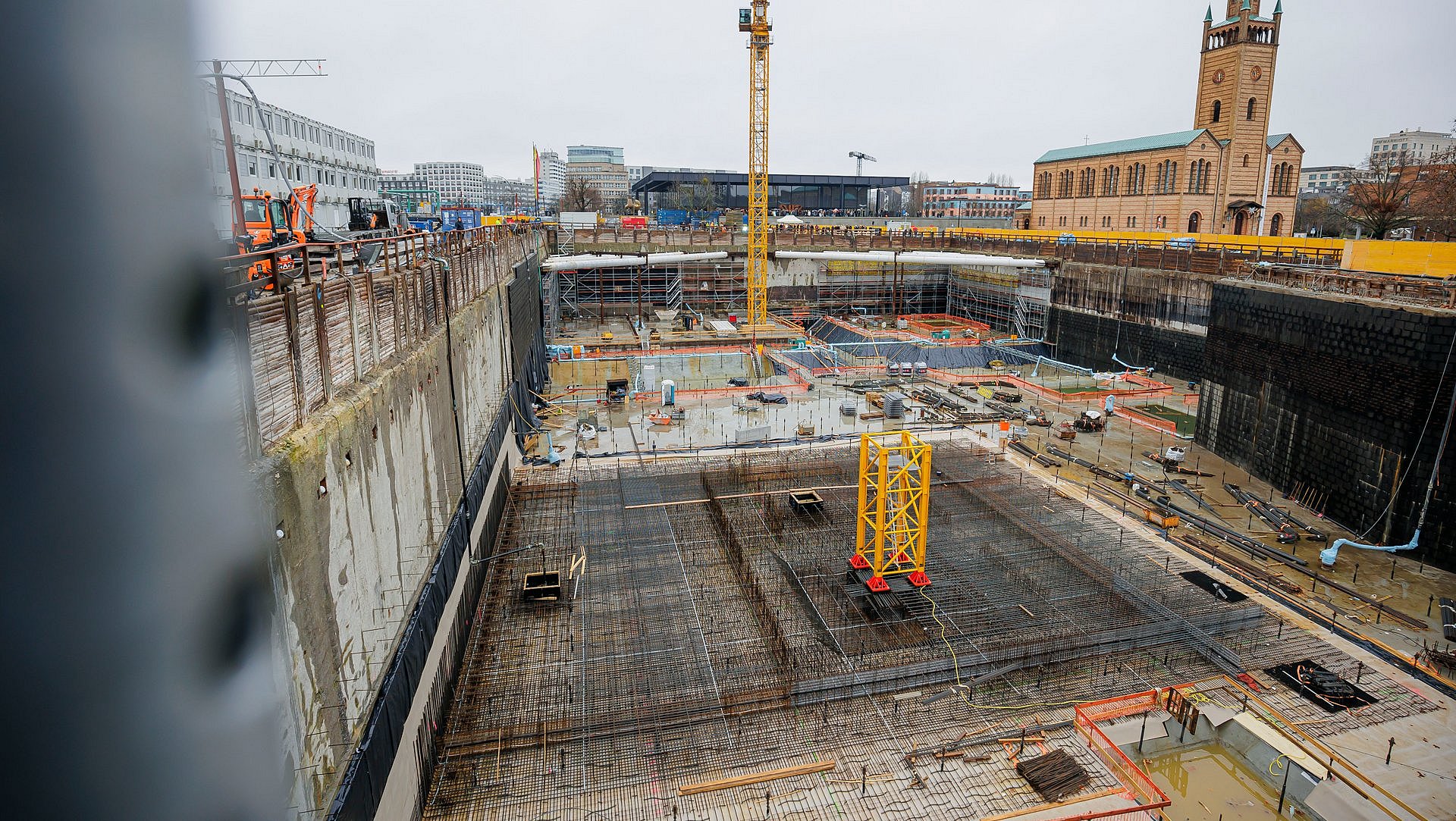
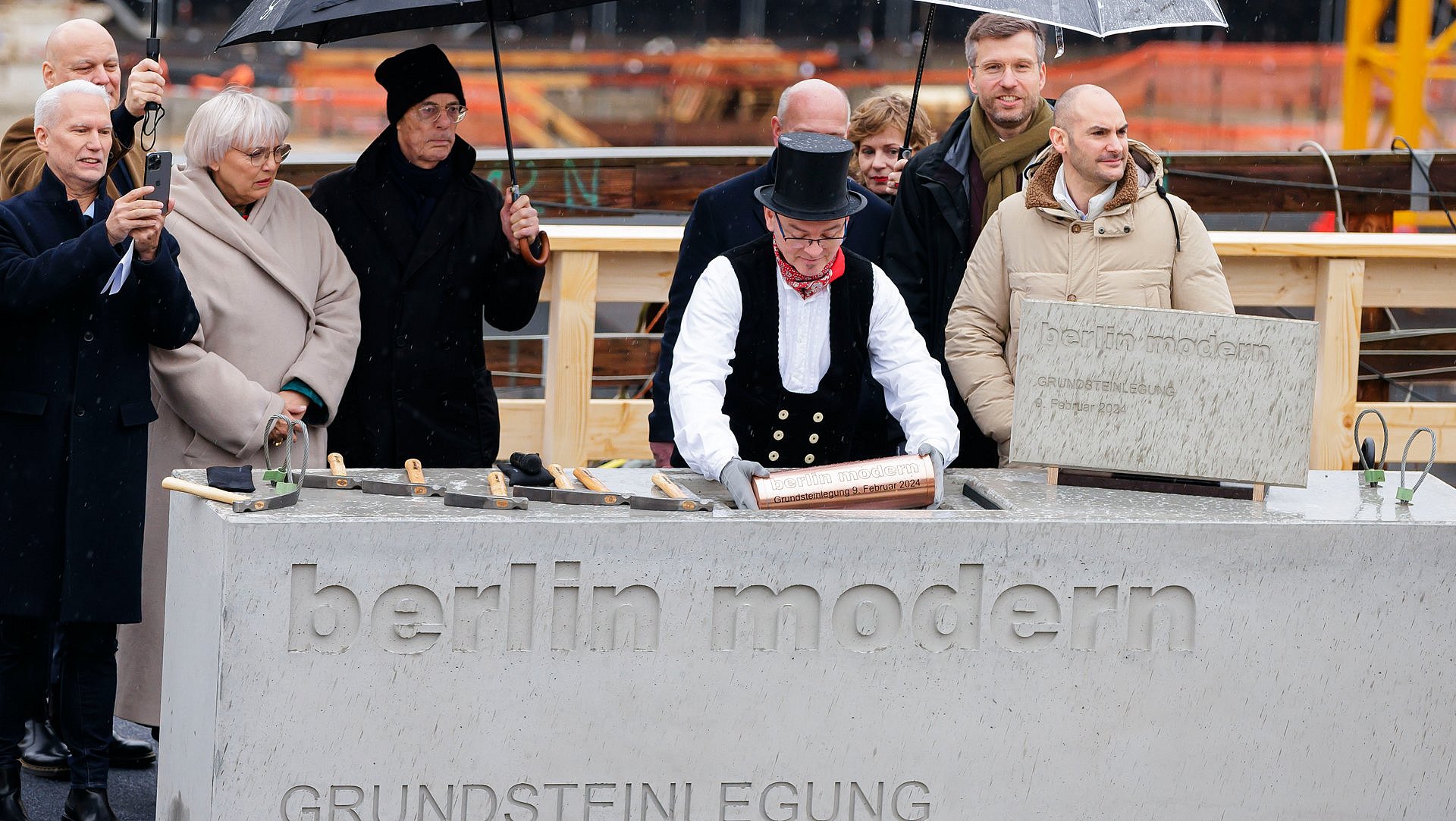
There it lay, the foundation stone. In the February rain, on a specially constructed platform next to the Neue Nationalgalerie, ready to be hoisted by one of the three cranes into the impressive excavation pit between the Mies Temple and the Philharmonie. Had it continued to rain like that for days on end, it could have turned into a pop-up swimming pool, the depth of which might well have led to the founding of Berlin’s first freediving club. The foundation stone was correspondingly large: a rectangular block which, despite its mass, appeared thoroughly elegant in its concrete appearance thanks to its dimensions and clean lines – modern, in short. A modern, archetypal foundation stone for a modern, archetypal building. Engraved in naturally clear, modern typography were the date (09.02.2024), the purpose (laying of the foundation stone) and the name of the new building: berlin modern.
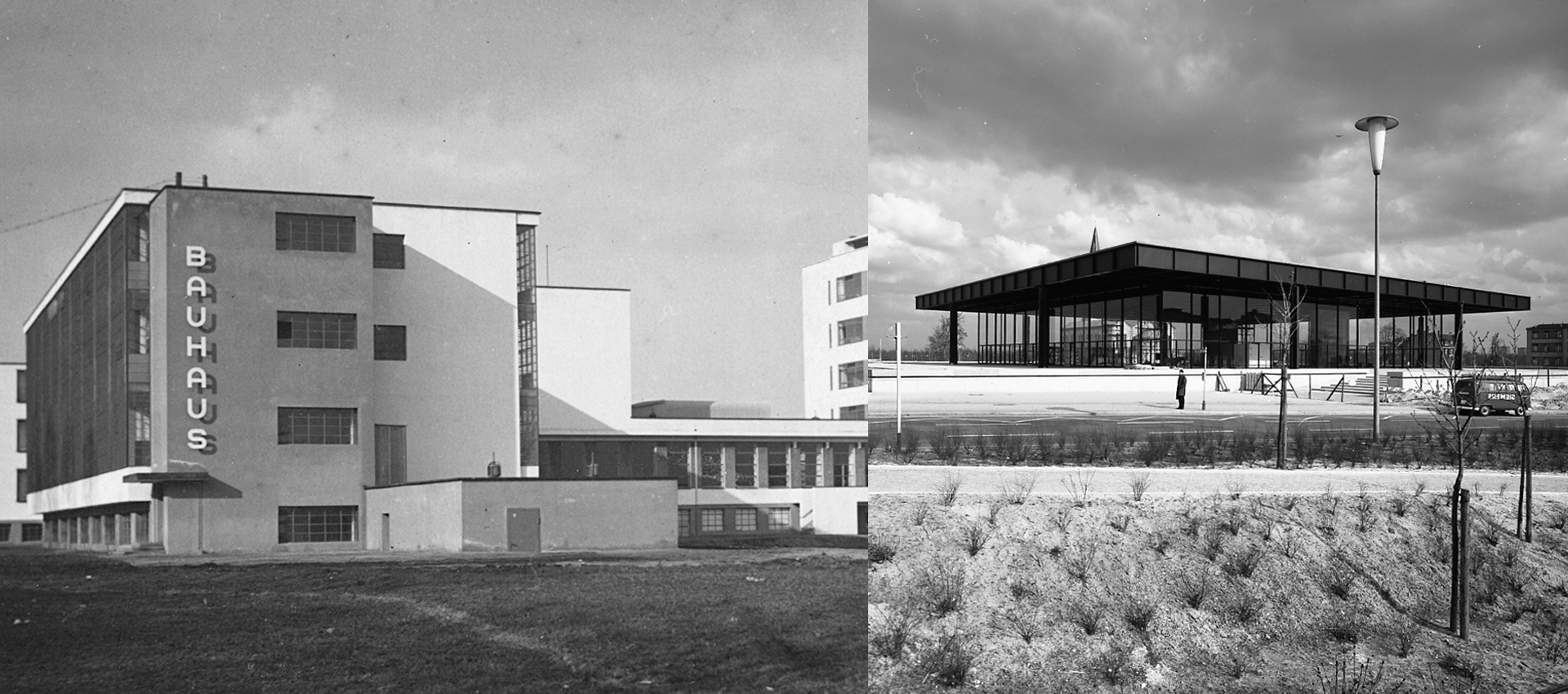
One might think that the consistent use of lower-case letters in the new name is another nod to modernism, namely to the Bauhaus, where everything was written in lower-case to save time (keyword: sustainability) and to dissolve letter hierarchies (keyword: participation) – after all, this ‘berlin modern’, in its now decade-long development process, has sparked a debate on ecologically sustainable building and, moreover, sets out in its programme to become an open house for everyone.
Art is always about making and doing
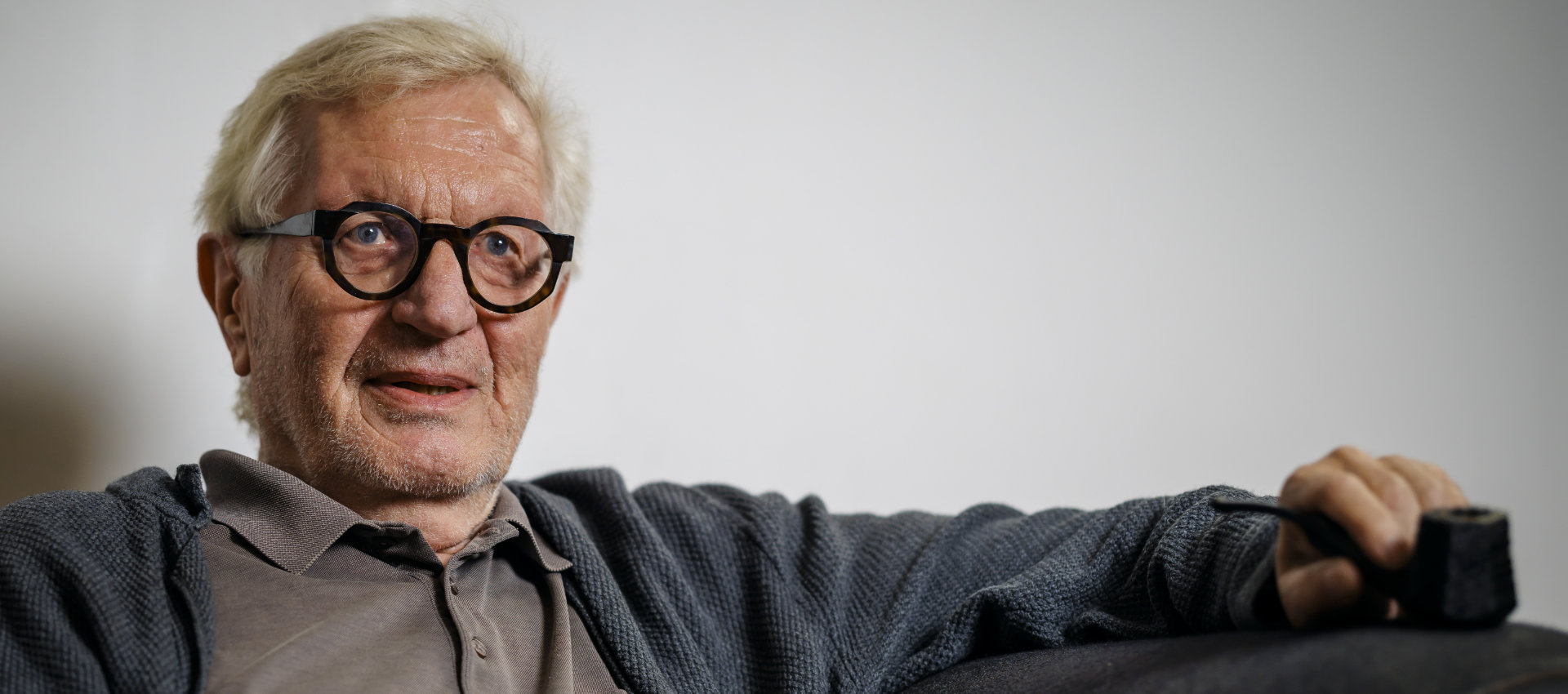
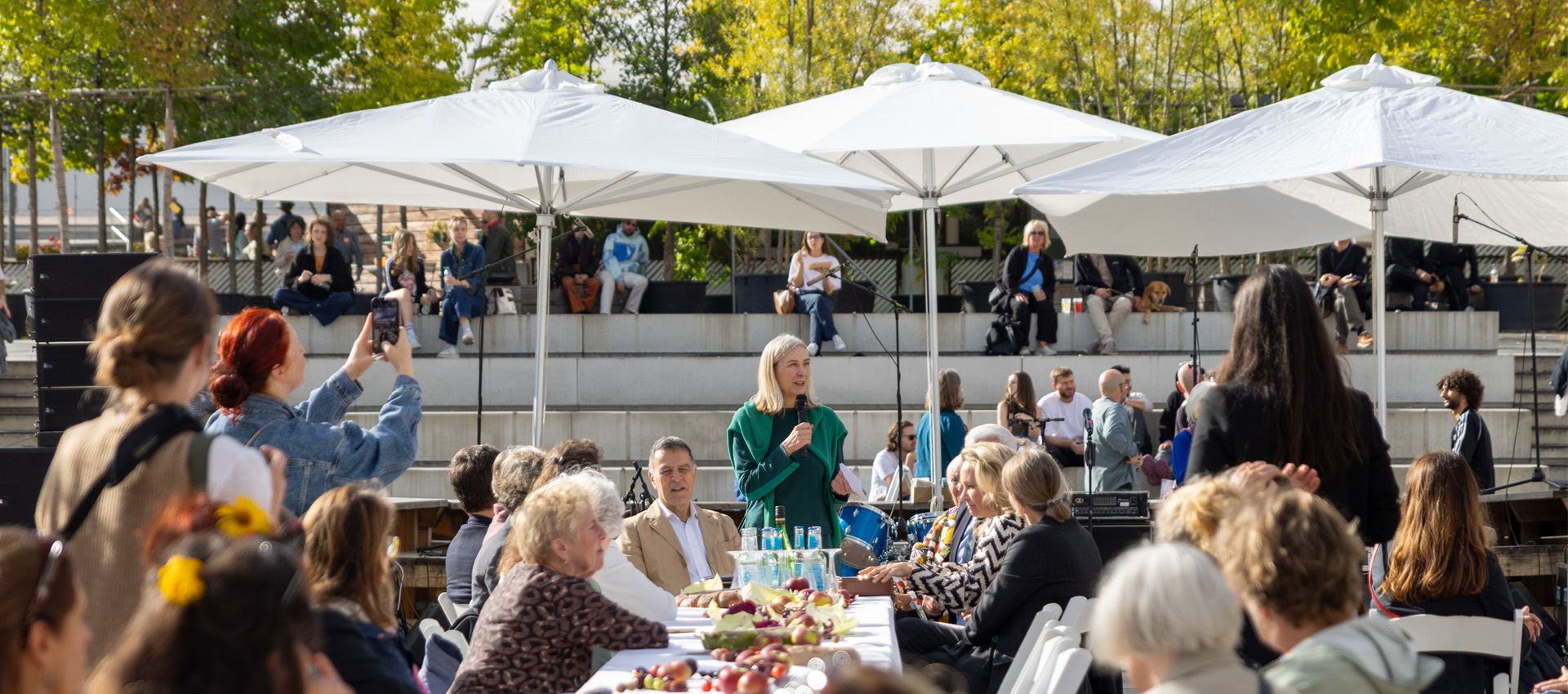
But in his speech at the laying of the foundation stone, museum director Klaus Biesenbach explains the lower-case spelling quite differently: ‘berlin modern’ is written in lower case, he says, because it is a verb. After all, one must create and act every day, especially if one wants a living museum; art, after all, is lived practice. To underpin this, alongside the obligatory greetings and speeches, the traditional filling of the time capsule and the crane ballet to lower it into the excavation pit, art was a key feature of the foundation-laying ceremony programme.
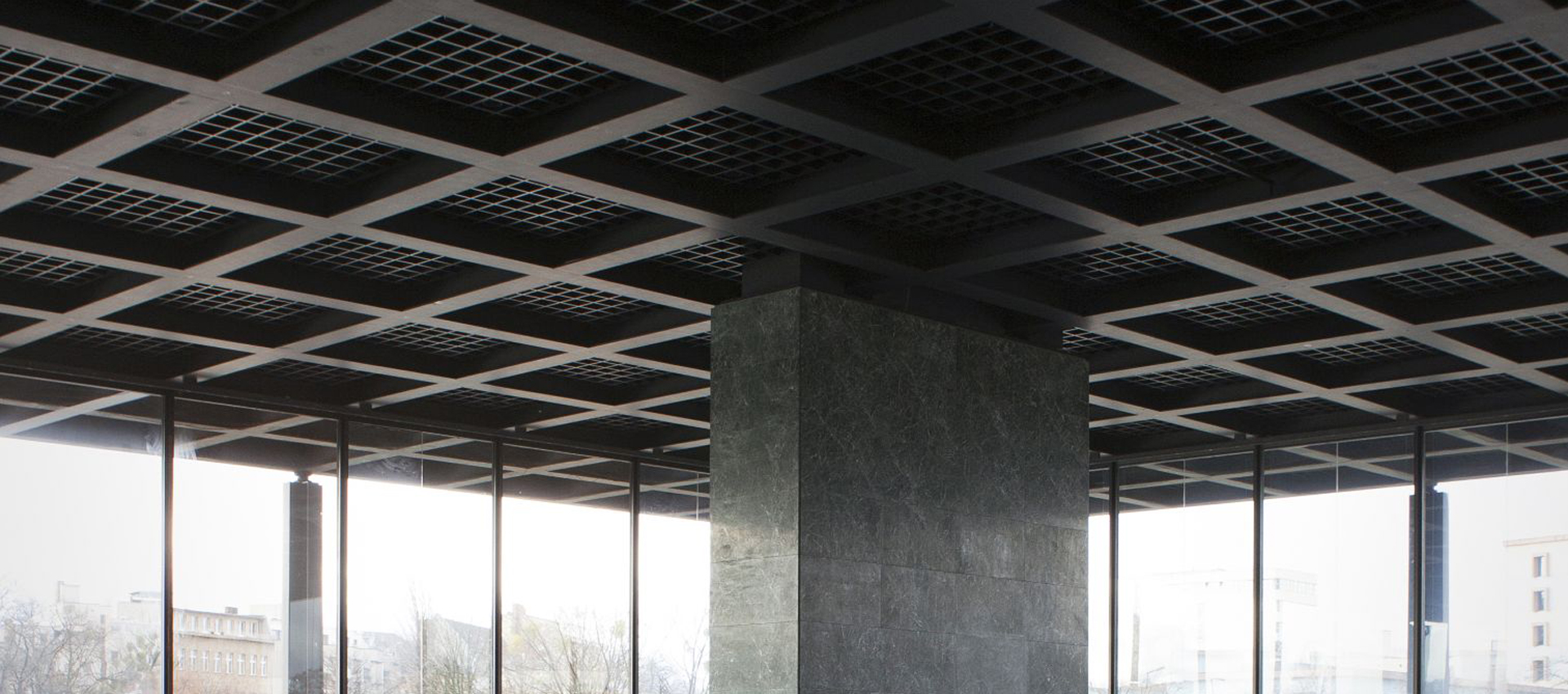
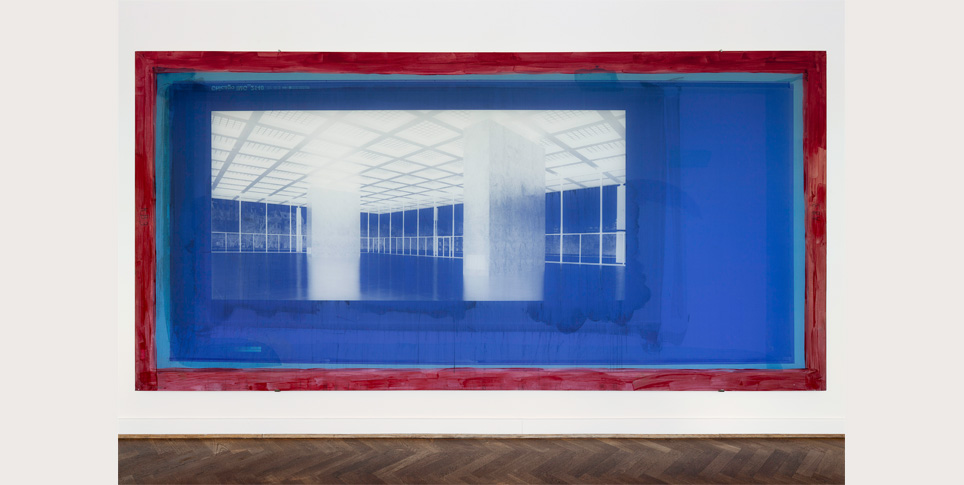
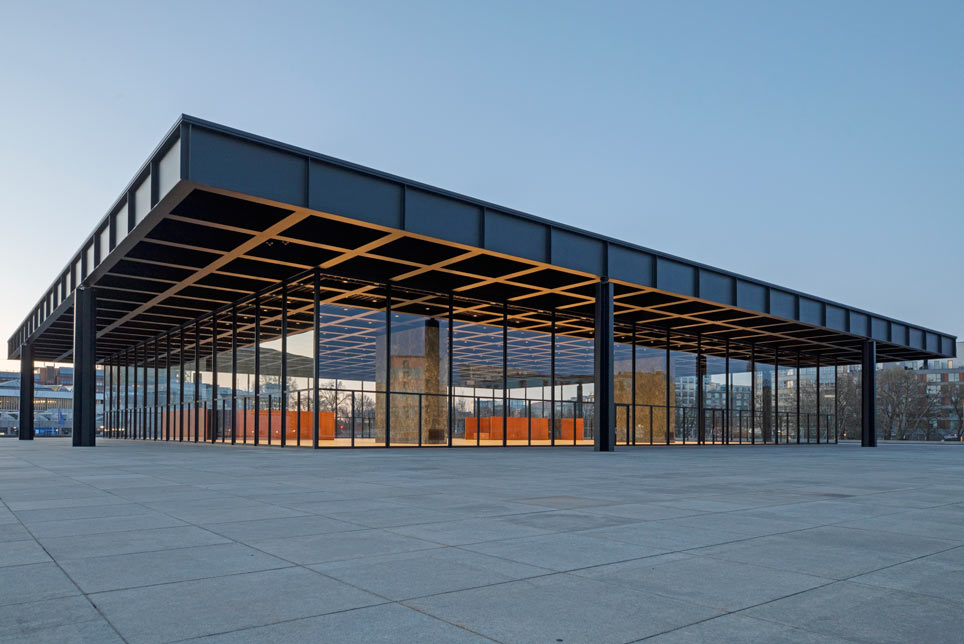
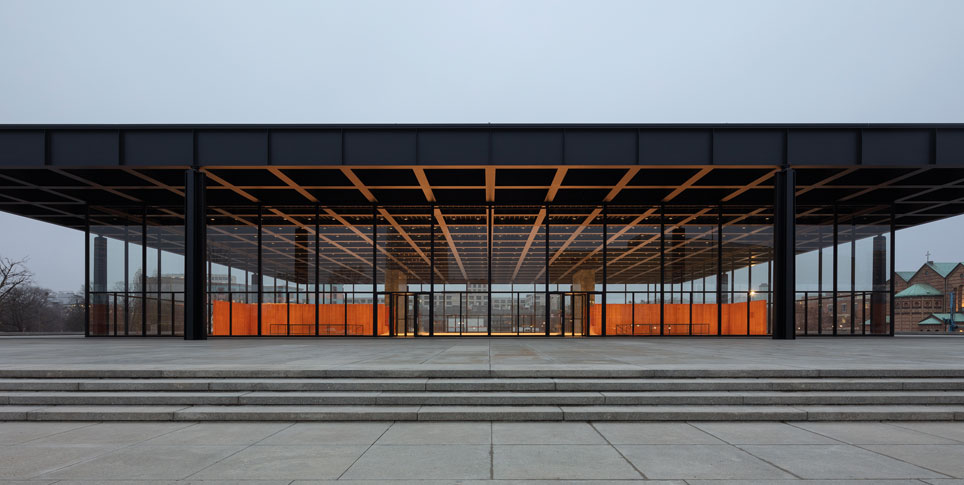
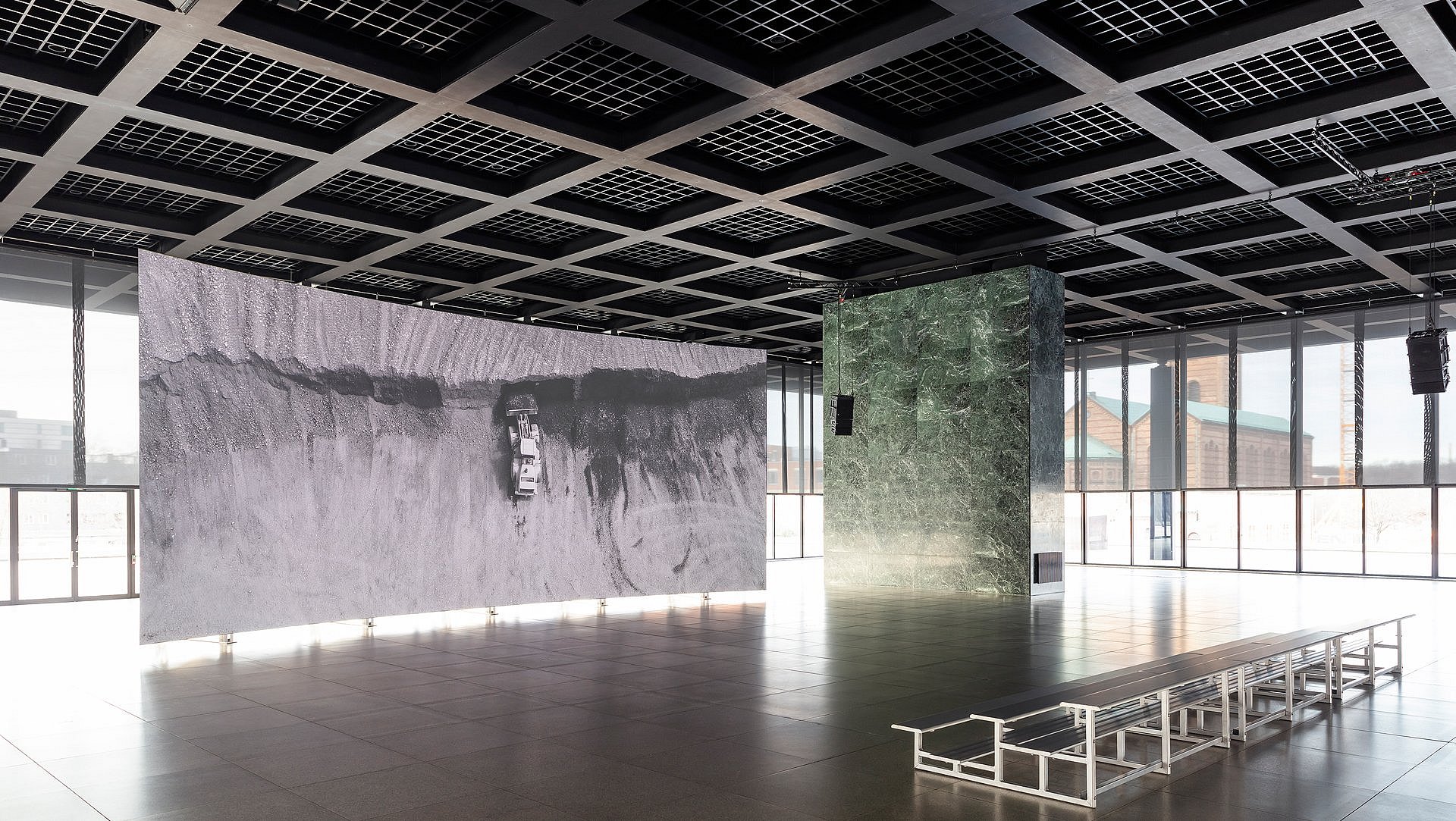
In fact, there was a double feature, as alongside the acoustic accompaniment to the floating foundation stone by the American New Wave avant-garde artist Deantoni Parks, featuring a drum kit and synthesiser, Lucy Raven and her video installation “Ready Mix” formed a key part of the ceremony. The film, presented on an enormous screen in the centre of the Glass Hall of the Neue Nationalgalerie, shows black-and-white footage from a concrete and gravel plant in Idaho – accompanied by an unmistakable soundscape, woven from industrial-style sounds such as pounding, rattling and hammering by Deantoni Parks. Lucy Raven’s work is a thoroughly critical commentary on the new building, whose excavation pit lies within sight. Upon entering Mies’s Glass Hall and looking to the left, one sees how concrete is produced, what forces and energies must be unleashed to do so, and what effect this has on the landscape; looking to the right, one sees the enormous excavation pit and the very purpose for which this concrete is being used.
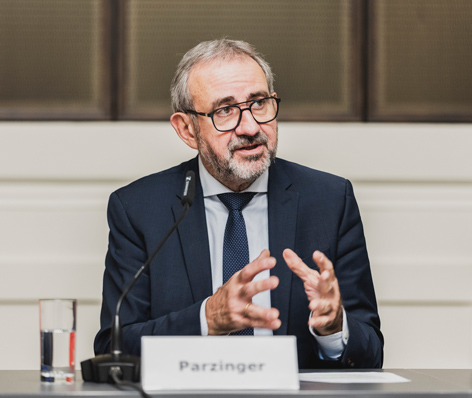
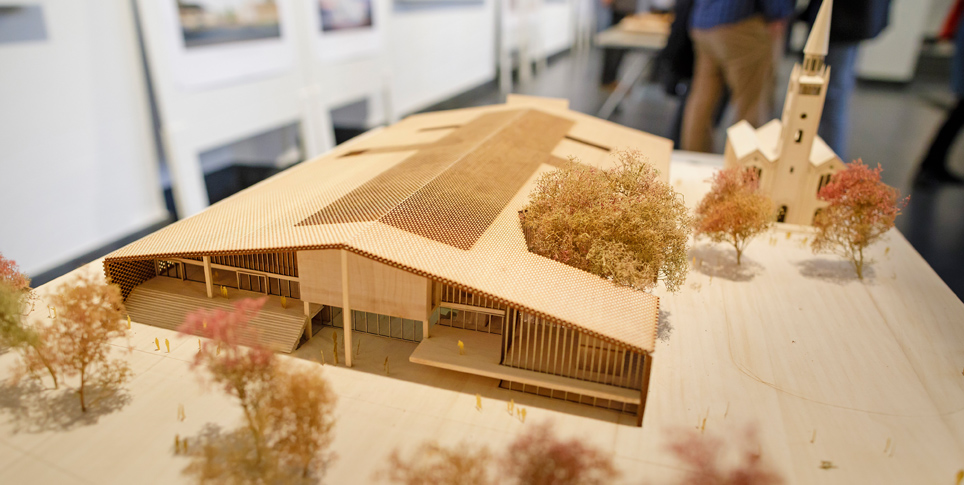
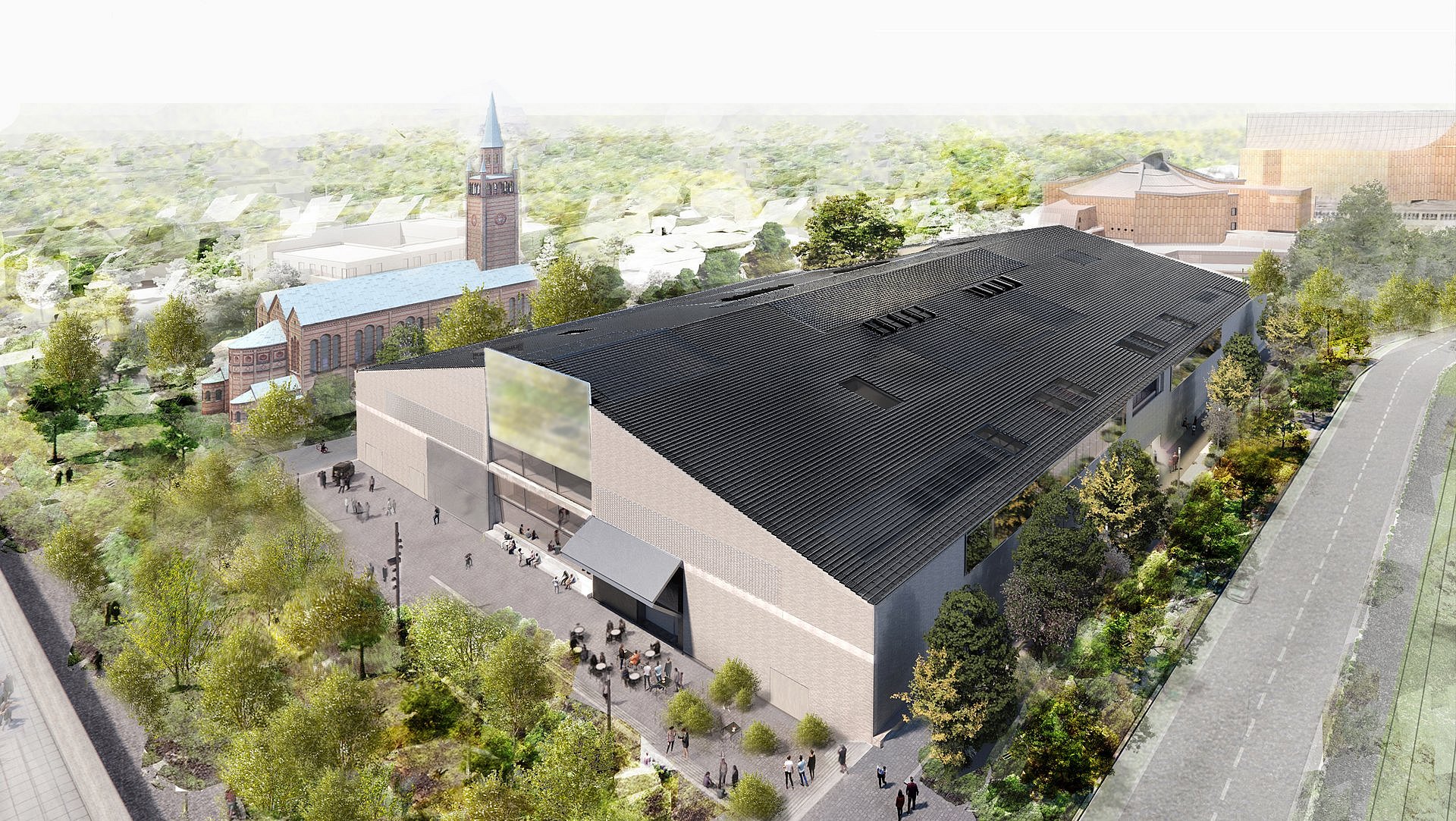
These very issues concerning concrete and its sustainability – or the sustainability of construction in general – form a key part of the story behind the creation of berlin modern. It was not just the pandemic that meant more than four years passed between the ground-breaking ceremony in 2019 and the laying of the foundation stone. The design by Herzog & de Meuron was revised to make the building more environmentally sustainable. As SPK President Parzinger says in his video message: “We have always viewed the development of the building as a process; form and content must constantly be adapted to new requirements, particularly in such an outstanding flagship project.”
The Birth of the Internationalgalerie
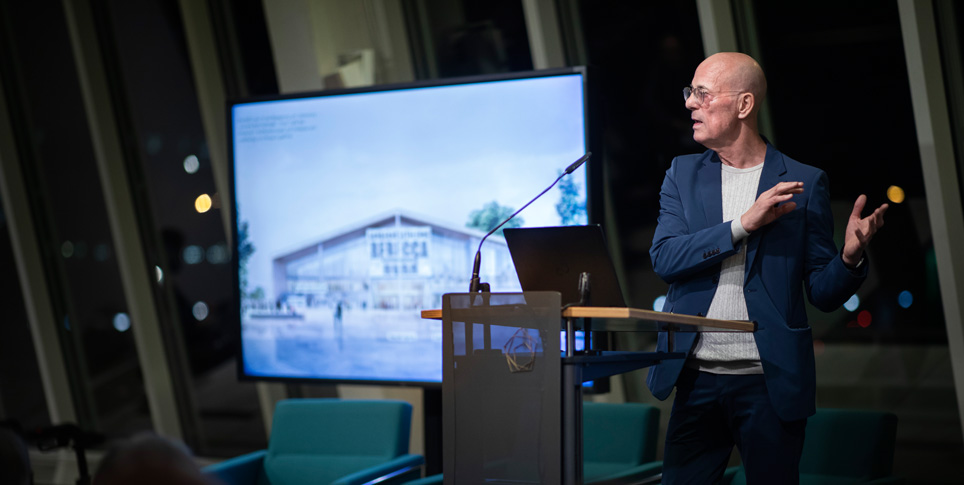
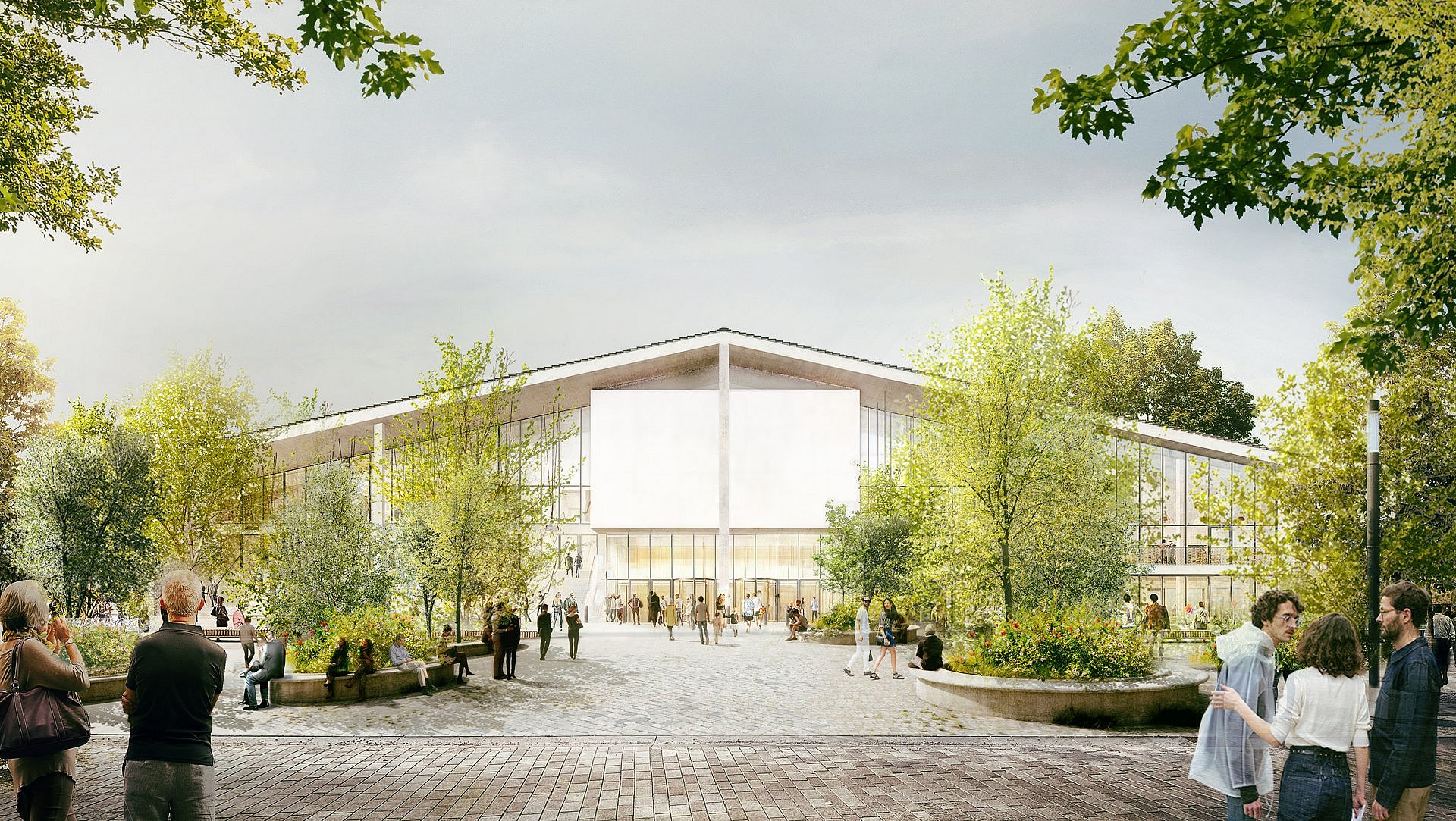
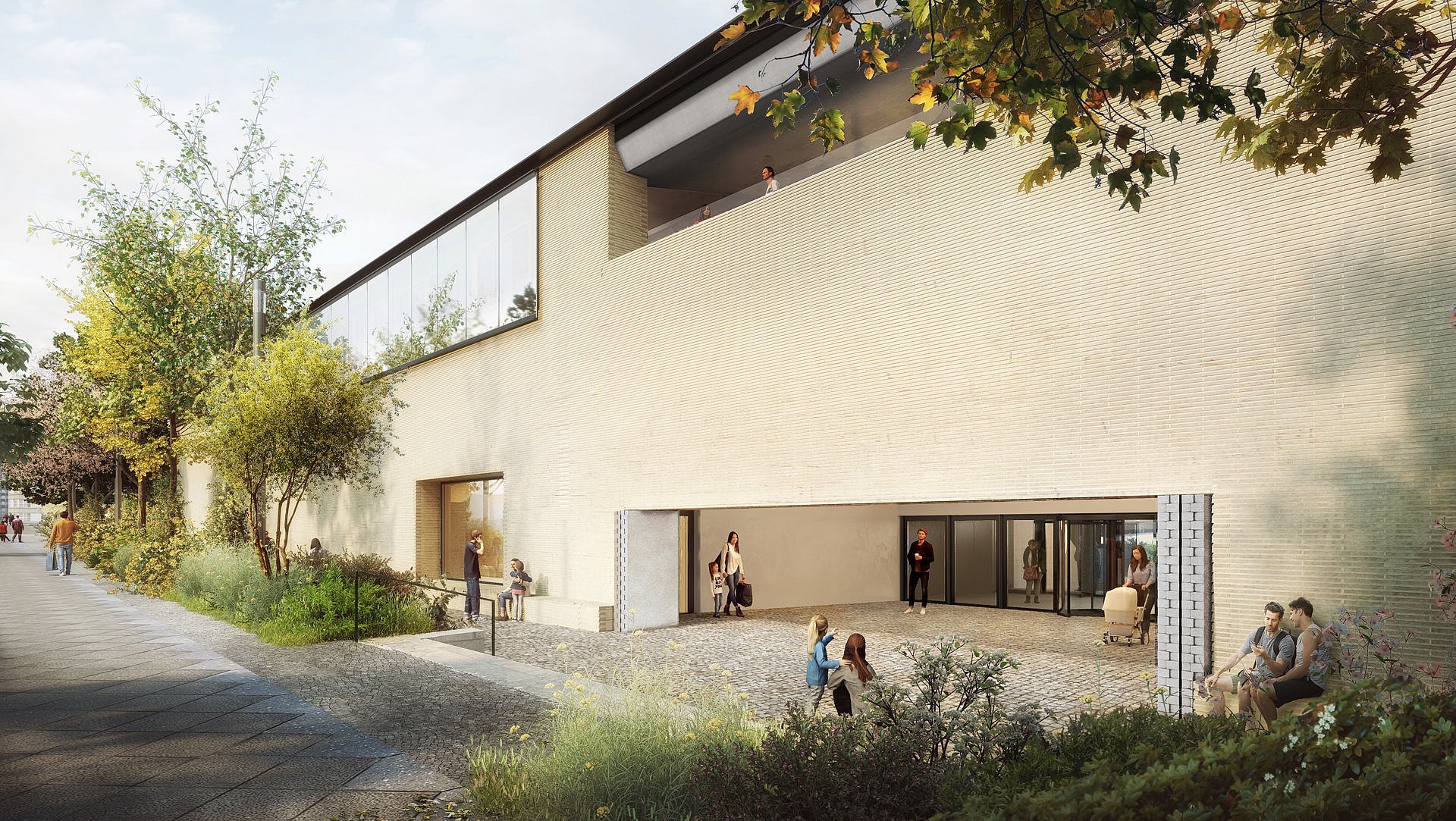
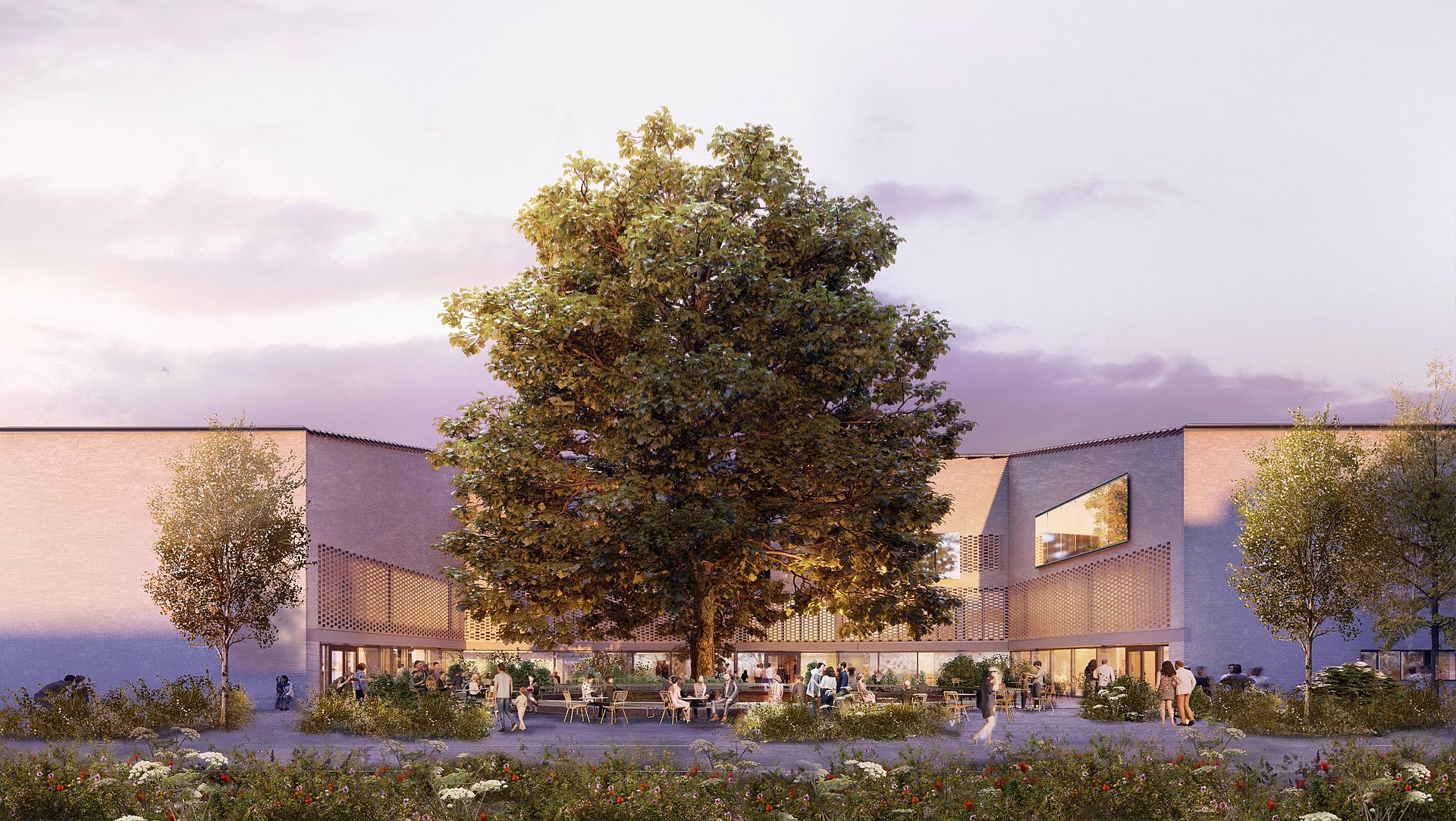
It has been a success: solar panels on the roof, energy-efficient underfloor heating and cooling inside, and plenty of greenery all round have made berlin modern a “beacon of sustainability”, as Dirk Messmer, President of the Federal Environment Agency, said in his speech. The building is an “avant-garde model” that helps to “set the standards of tomorrow”. Architect Jacques Herzog also believes the modifications to the design – with which his firm won the competition in 2016 – are both right and important. He says that a process-oriented approach is typical of “our work”. Moreover, “a building is not something static, but should express life; the transformation of society’s values”.
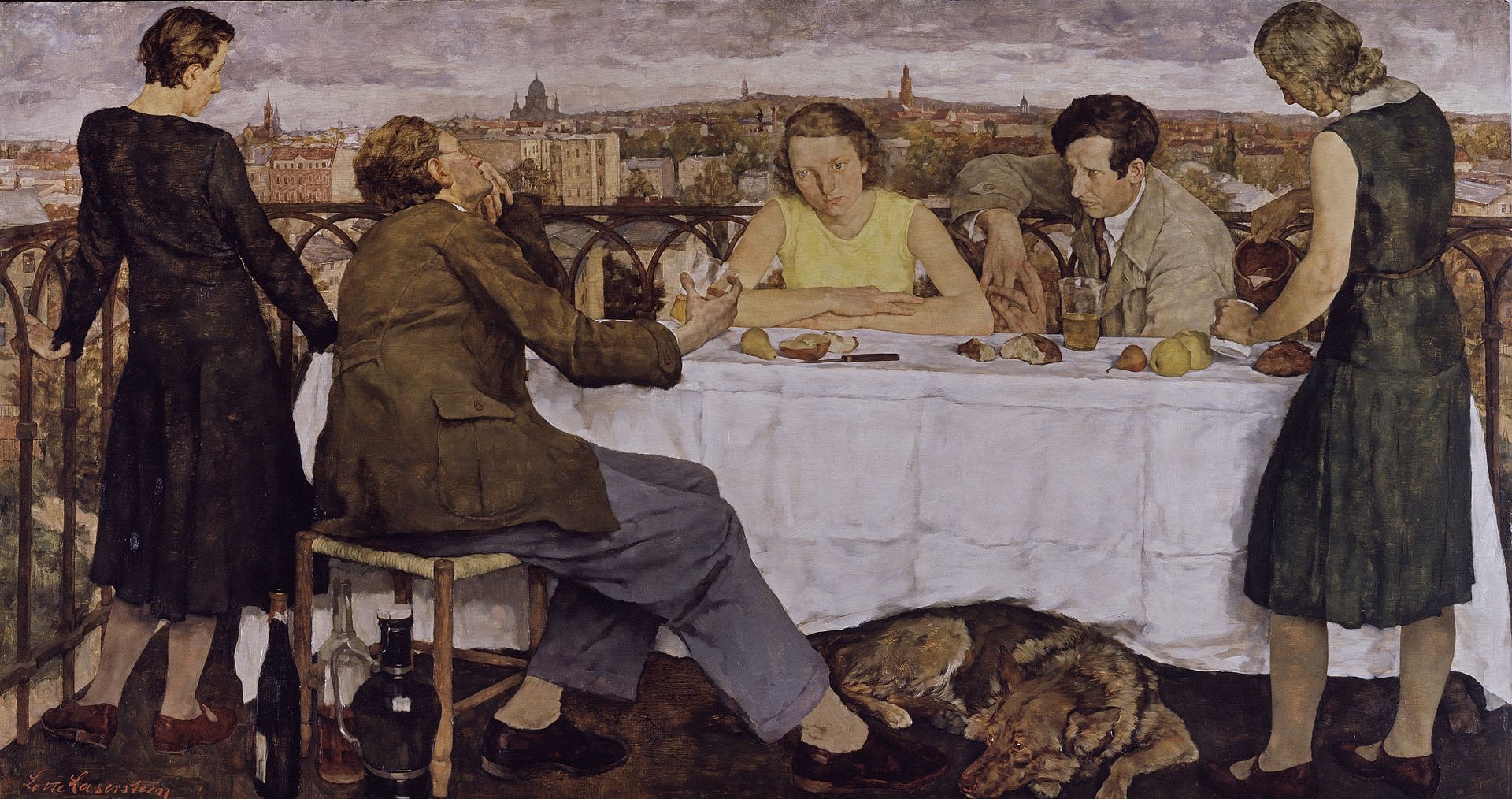
For it is not only the exterior, but also the interior of the building that must meet the demands of the 21st century. “We want more women, more female artists in the Neue Nationalgalerie’s collection. And we must shift our focus, broaden our perspectives: the collection must become more international, indeed more global. The Neue Nationalgalerie must become an ‘International Gallery’!” demands Parzinger. And in her speech, Minister of State for Culture Claudia Roth also calls not for an “elitist temple of art but an open house for everyone”.
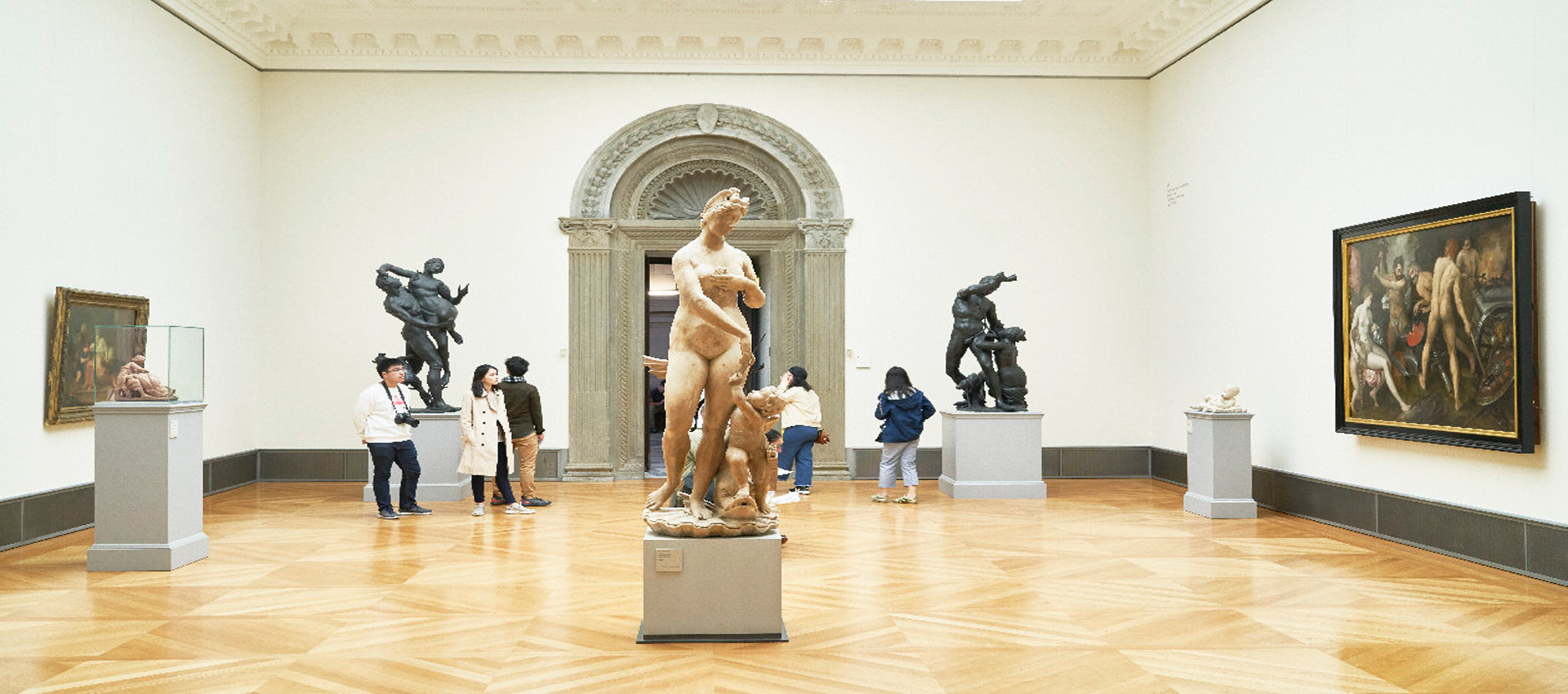
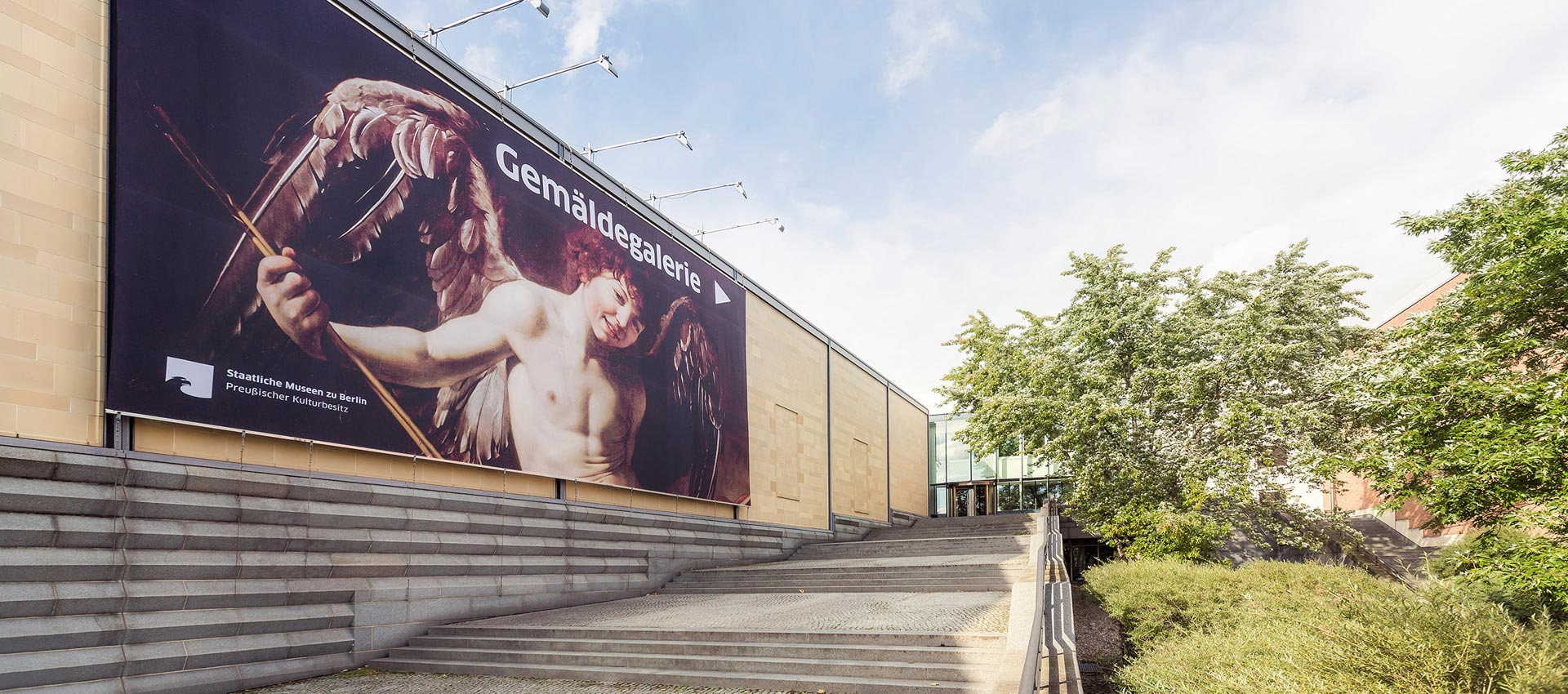
And this is precisely why the scale of berlin modern is justified, for naturally, a house open to all cannot be small, otherwise ‘everyone’ simply wouldn’t fit inside. And everyone wants to come; Klaus Biesenbach recounts the bittersweet days when potential visitors to the National Gallery had to be turned away because the museum was simply overcrowded. Incidentally, it is not only the people who need space, but also the art they wish to experience: currently, barely 3% of the Neue Nationalgalerie’s collection can be displayed. berlin modern will change that.
Crane ballet with a time capsule
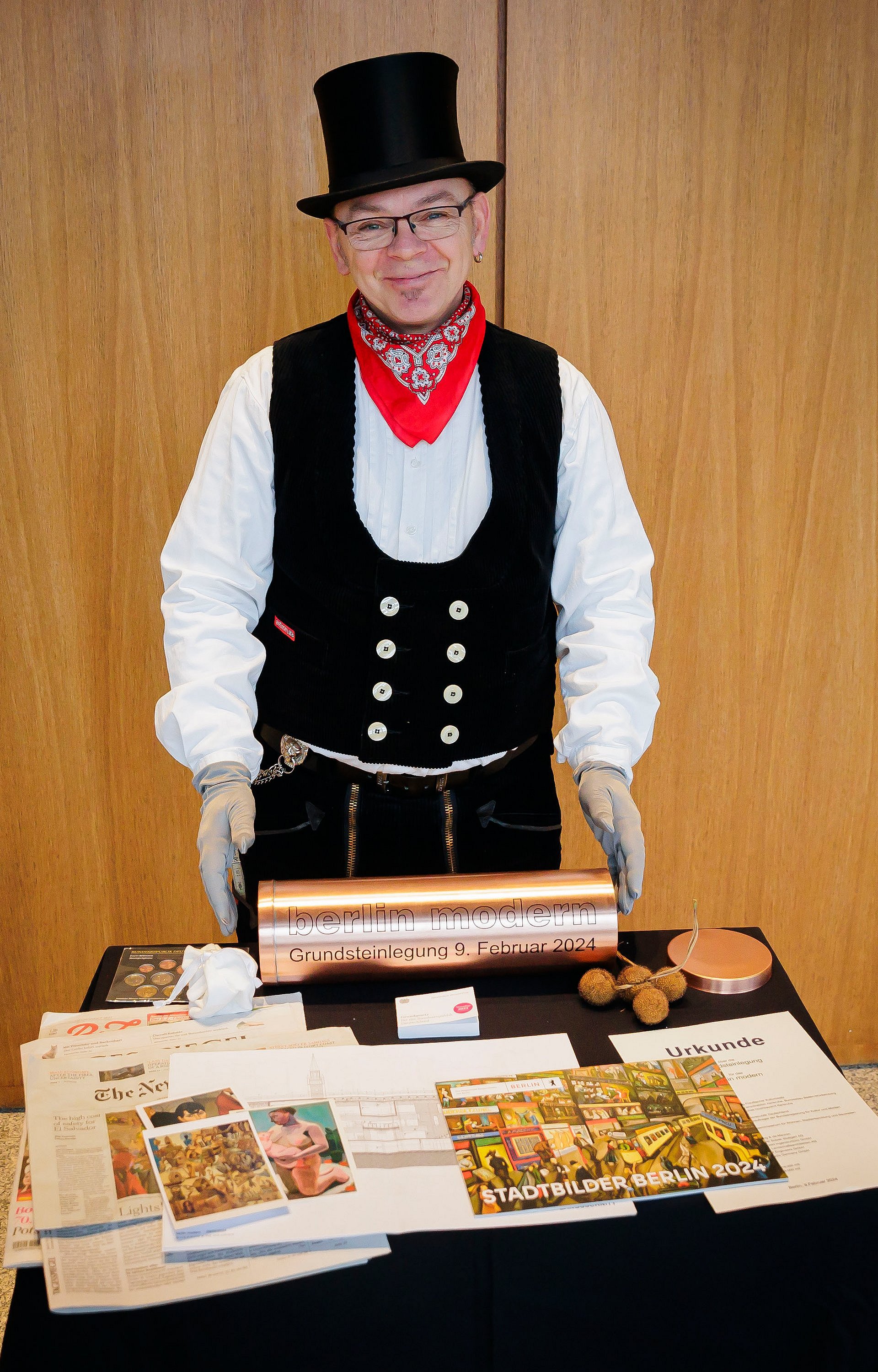
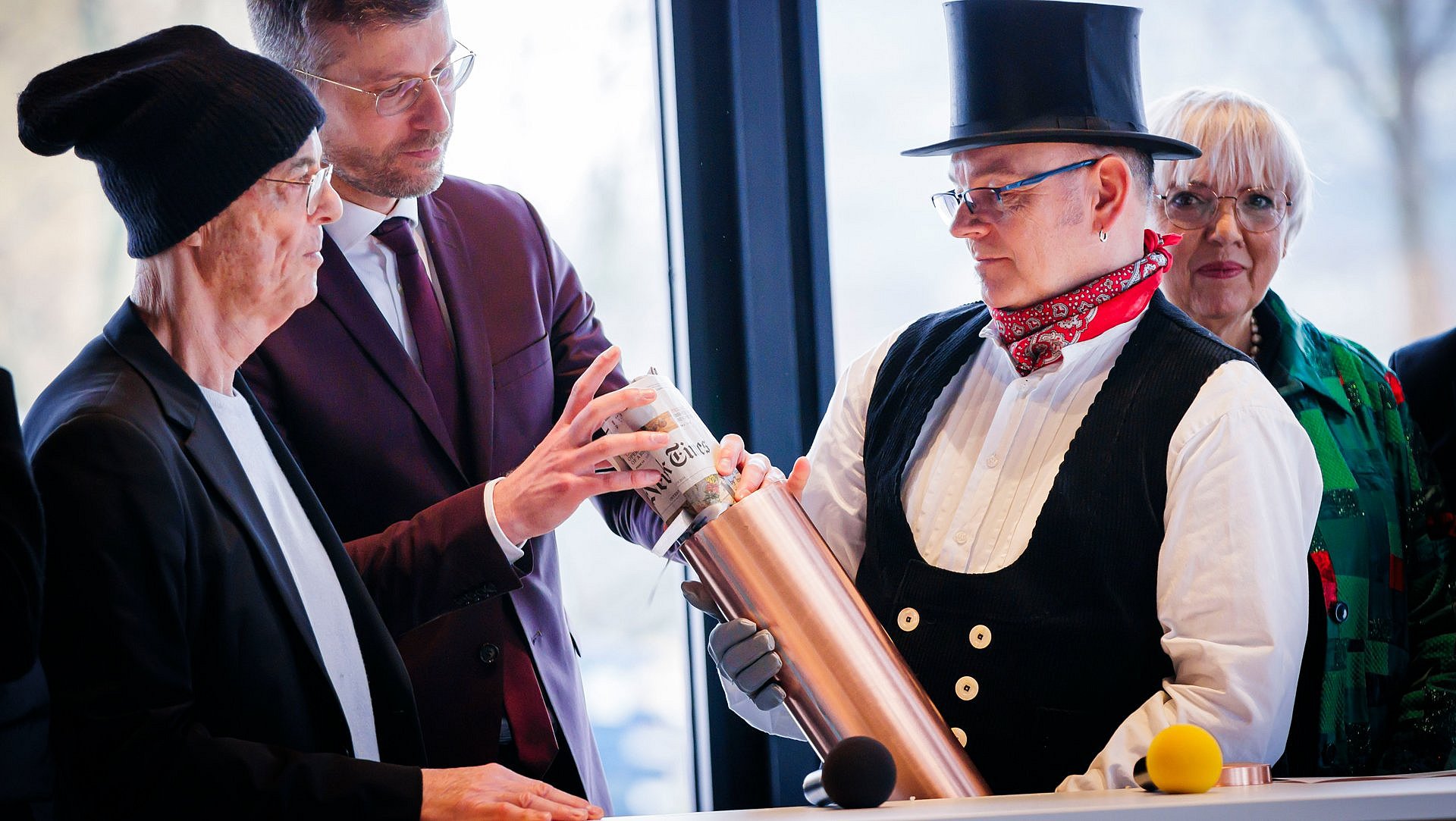
Once the speeches have outlined the theoretical framework of the new building, it is time for action: the foundation stone must be symbolically imbued with a time capsule and then, so to speak, activated with blessings and three hammer blows, before being lowered into the deep, deep excavation pit following a 10-minute crane ballet. Ethnologists from both within and outside Europe would have delighted in this ritual. But first, the capsule must be filled, and it is quite astonishing how much fits into such a copper tube, barely as long as a forearm.
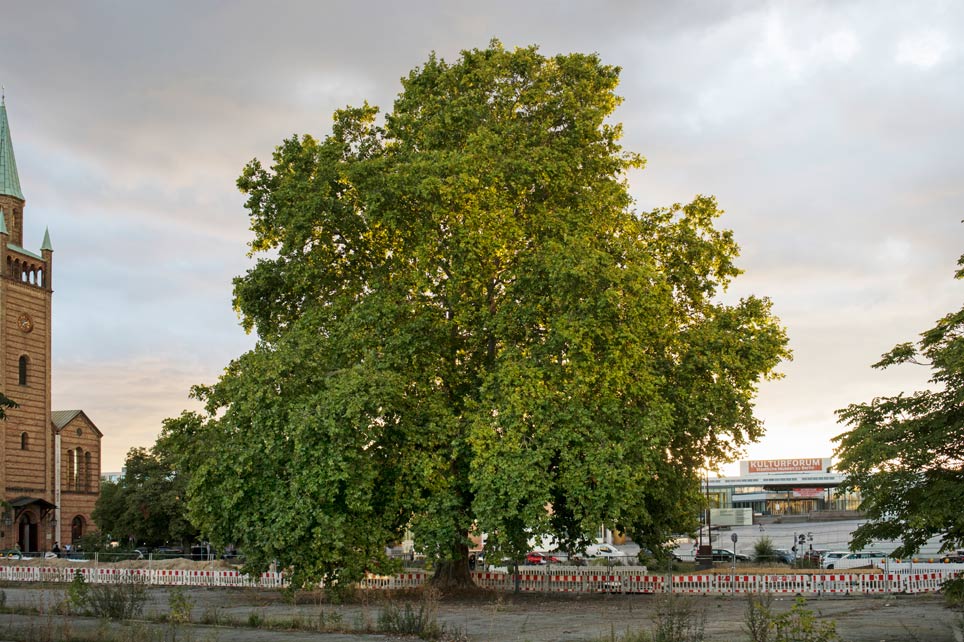
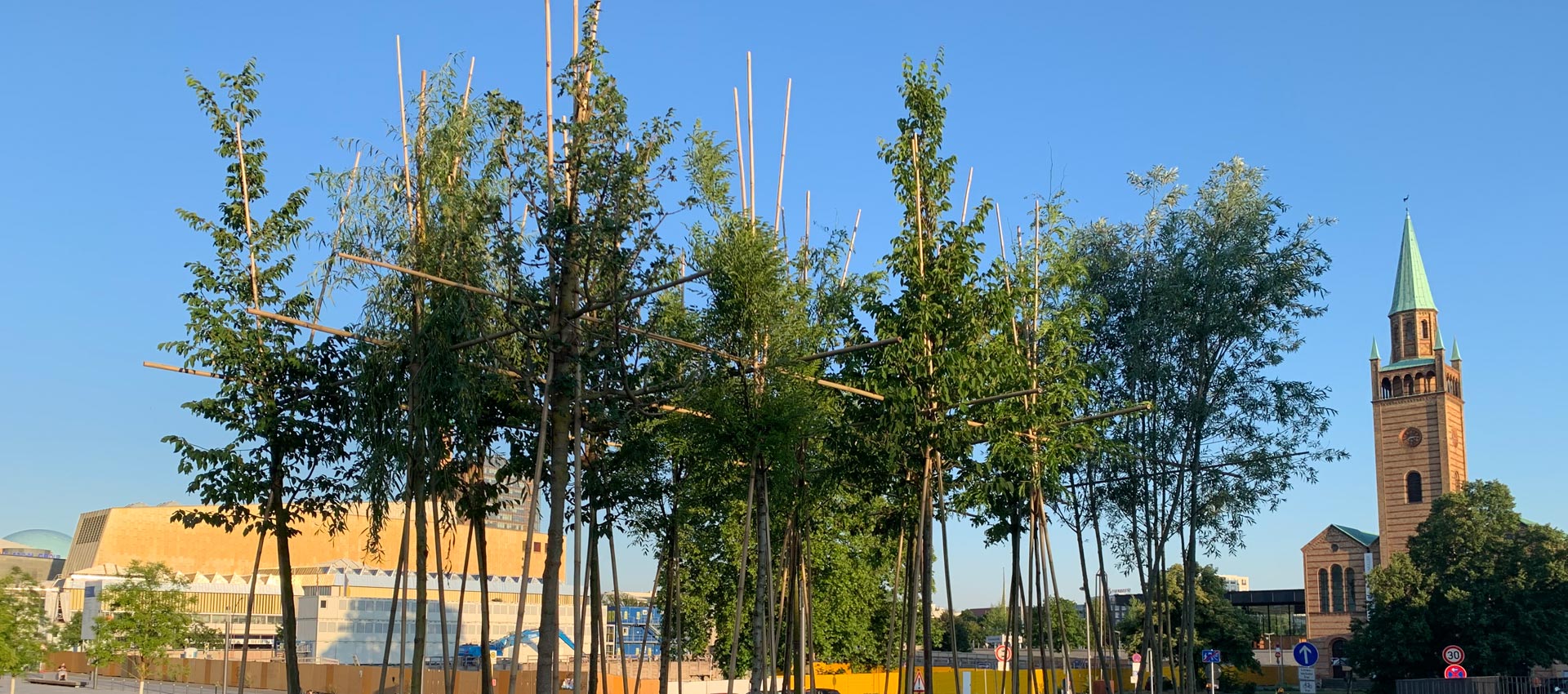
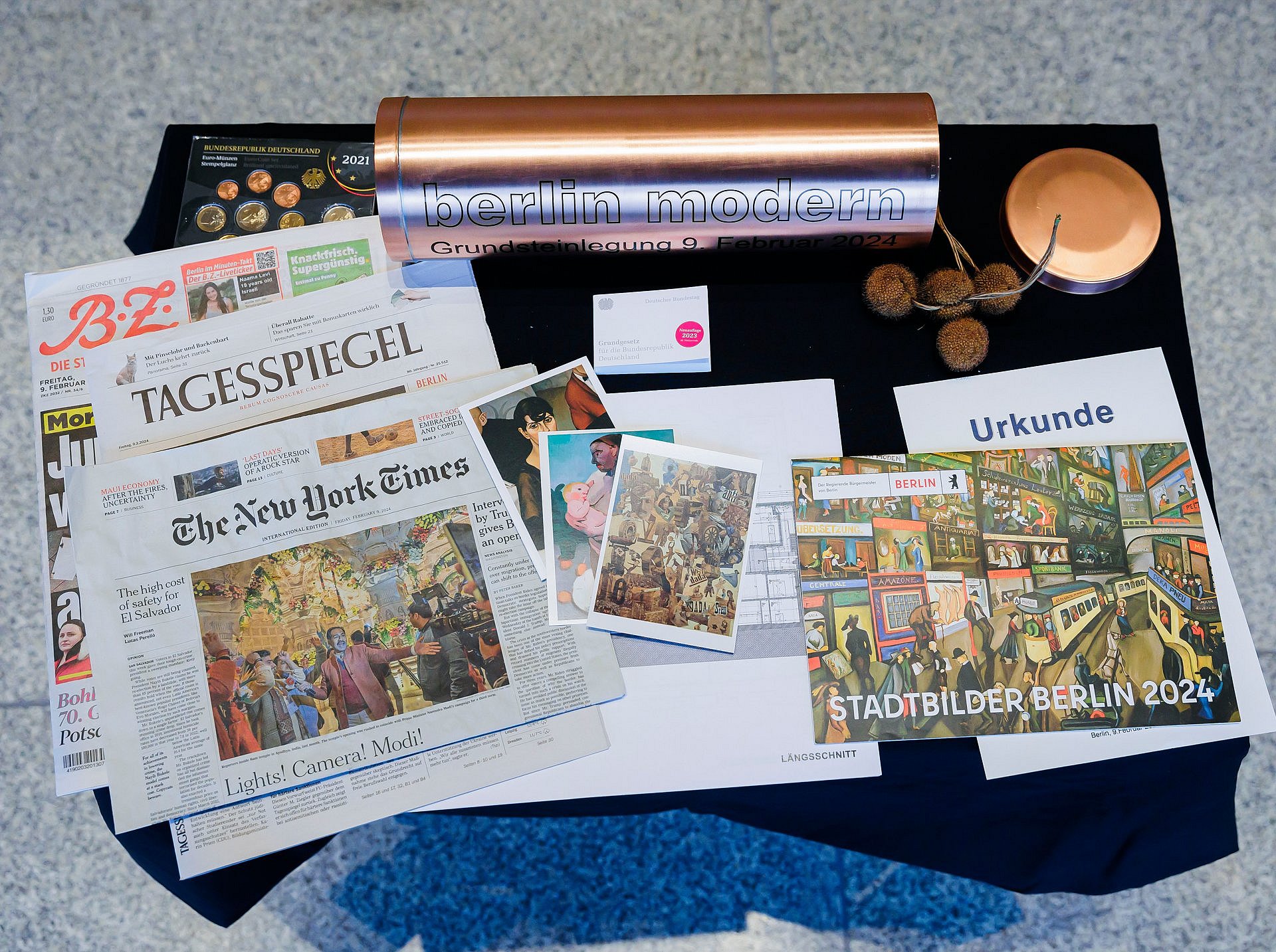
Everyone involved has brought something along, and as there are many people involved, quite a lot has been gathered: three newspapers from 9 February 2024 (Gero Dimter, Vice-President of the SPK), three postcards featuring works by Paula Modersohn-Becker and Christian Schad (Klaus Biesenbach), a current city calendar (Berlin’s Governing Mayor Kai Wegner), the building plans (Jacques Herzog), the building certificate (Danyal Bayaz, Minister of Finance of Baden-Württemberg), a set of euro coins and a miniature copy of the Basic Law (Claudia Roth), and the fruit of a plane tree (Maren Brakebusch, Vogt Landscape Architects). Then foreman Andreas Baeskow seals the capsule and the ceremony proceeds as planned. May the blessings offered by Claudia Roth, Gero Dimter and Klaus Biesenbach act like magic spells, bringing to life an inspiring, vibrant, inclusive and open new museum building. The activated foundation stone descends into the pit to the accompaniment of artistic sounds. The opening is scheduled for 2027, but of course the topping-out ceremony will be celebrated beforehand.