Through their patronage, Johanna and Eduard Arnhold made a significant contribution to Berlin’s cultural life. Their generous work was erased from the collective memory by the Nazis. The SPK feels a special connection to the memory of the Arnholds.
From Coal Merchant to Art Lover
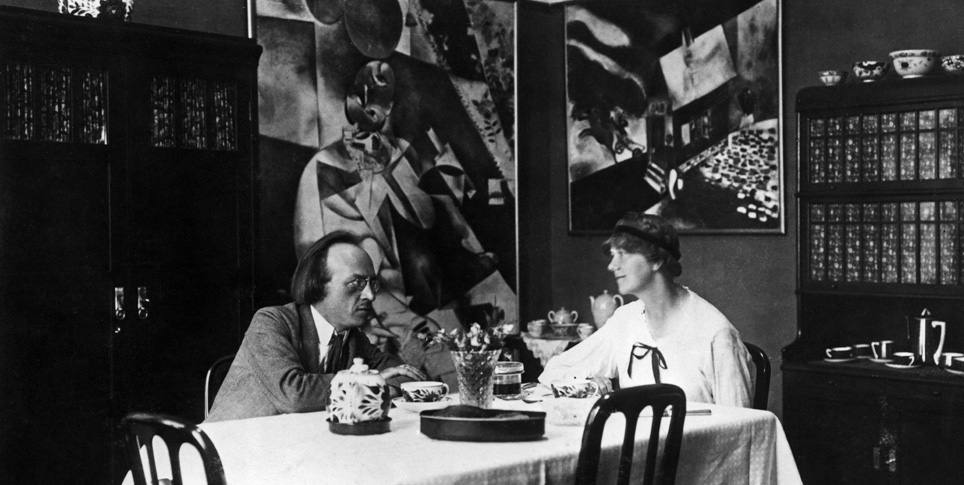
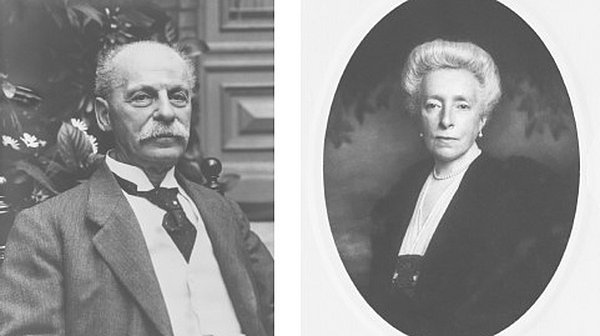
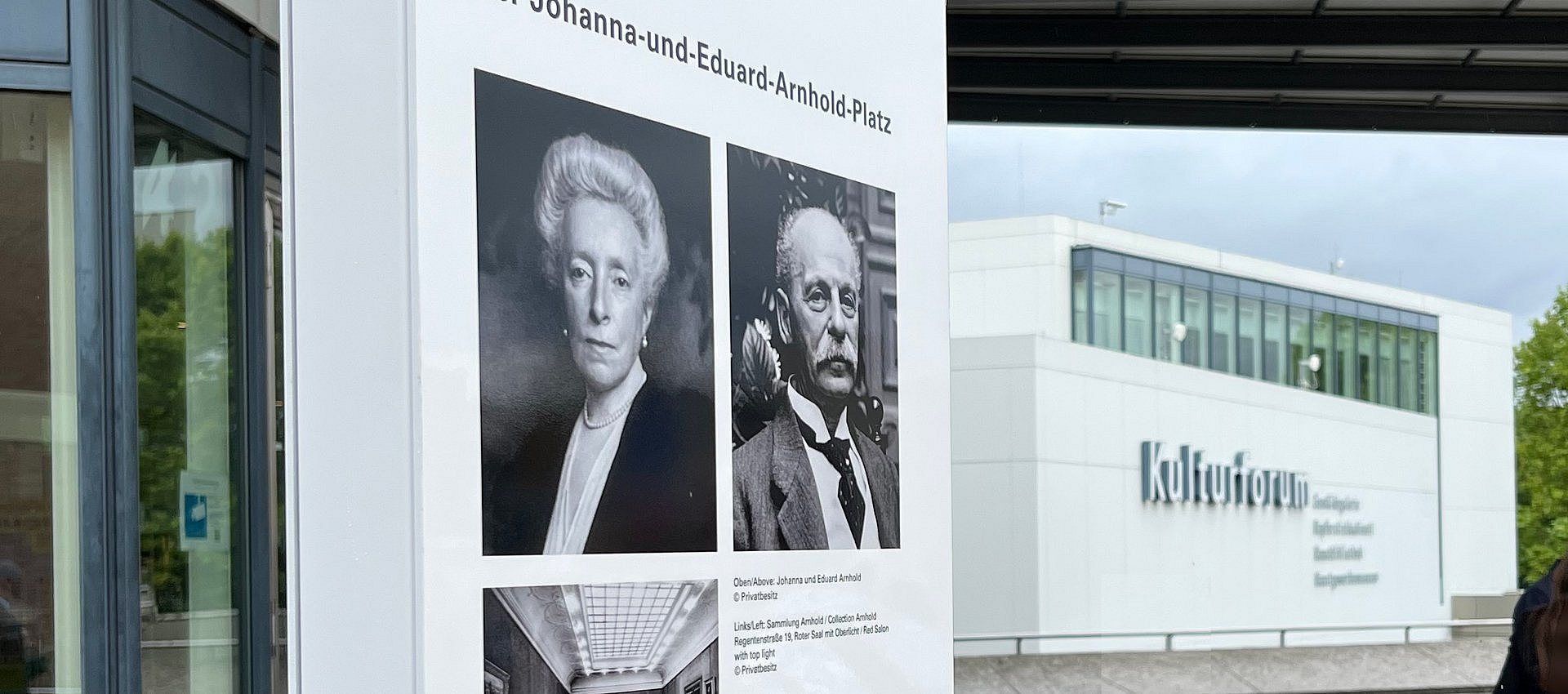
Eduard Arnhold (1849–1925) was born in Dessau, the son of a Jewish doctor who treated the poor. At the age of 14, he began an apprenticeship in Berlin with the coal wholesaler Caesar Wollheim. Within just a few years, he had become the owner of the company and, as a major energy supplier, one of the richest and most influential men in the country. In 1881, he married Johanna Arnthal (1859–1929), the daughter of a Jewish family from Hamburg.
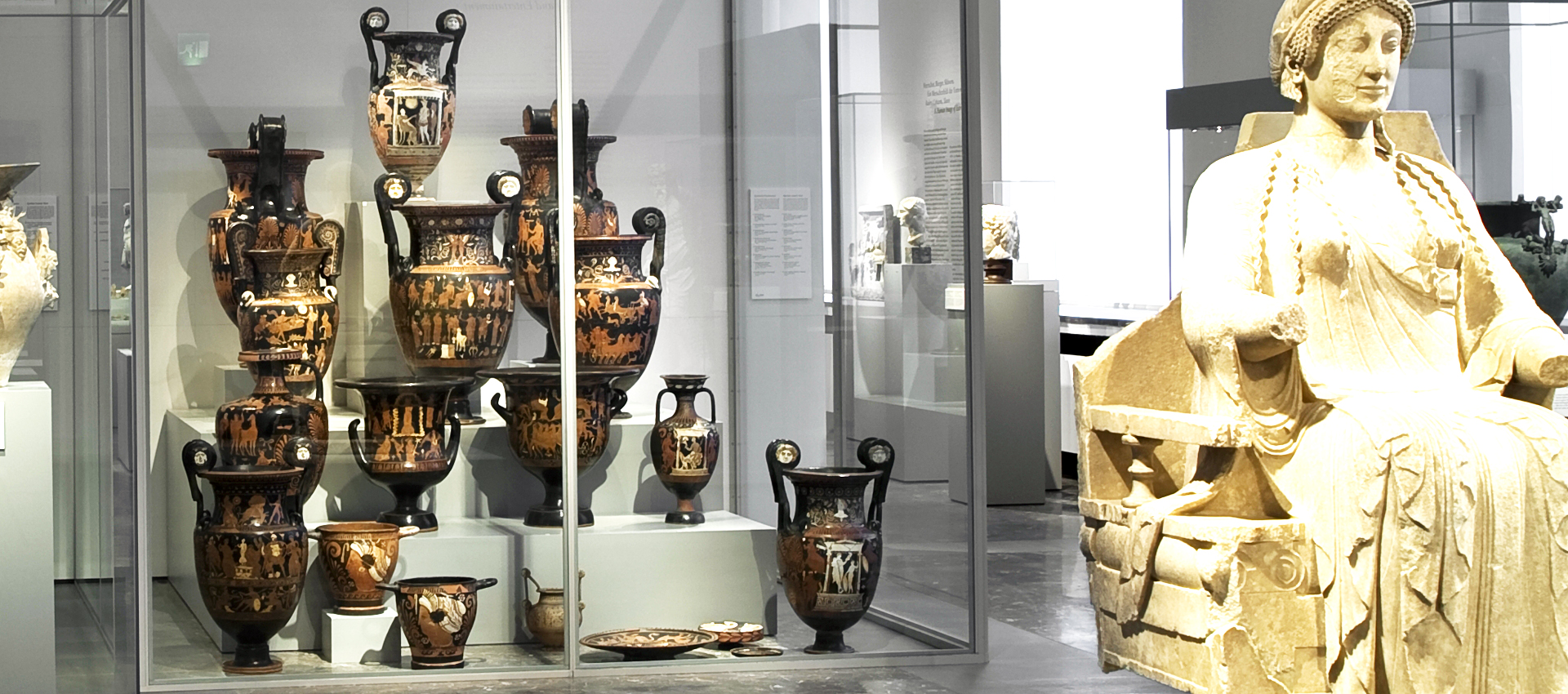
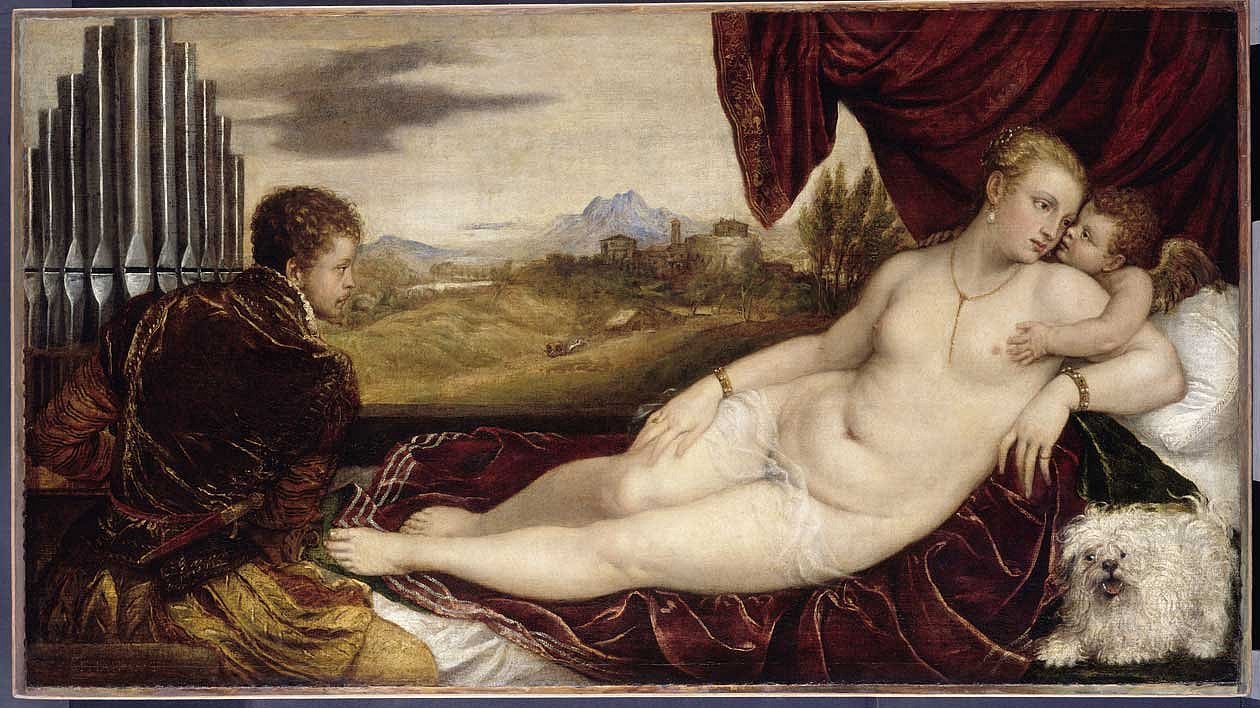
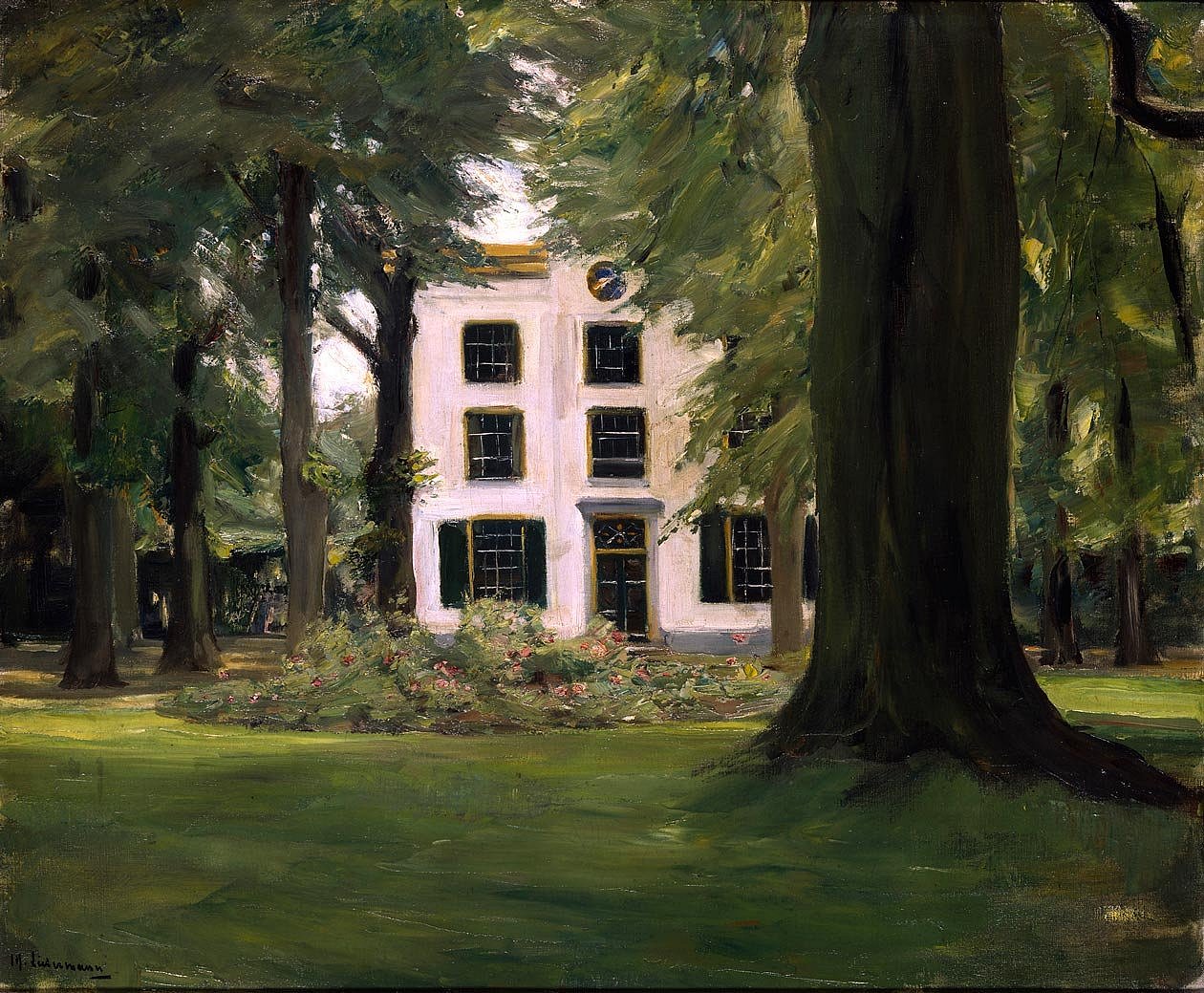
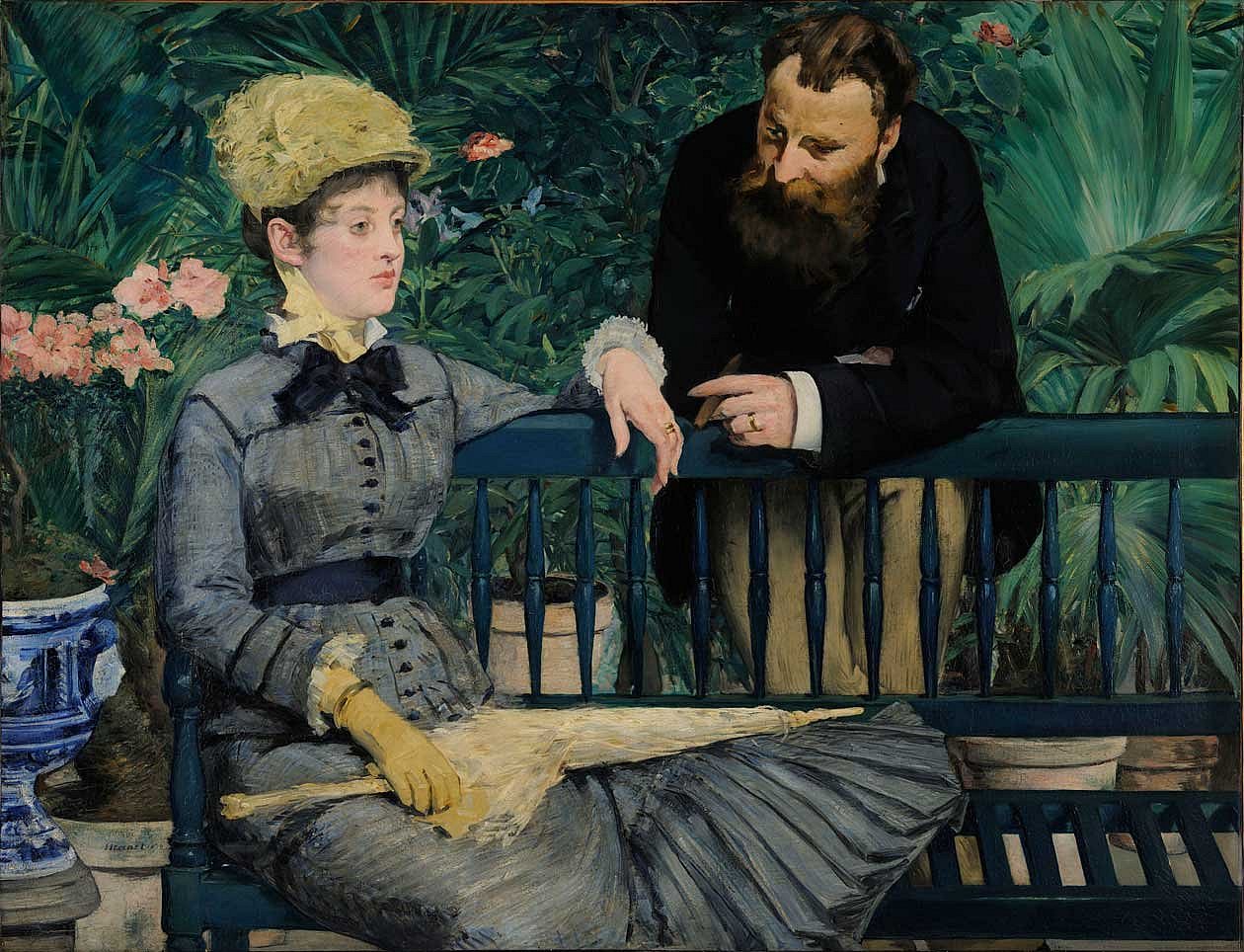
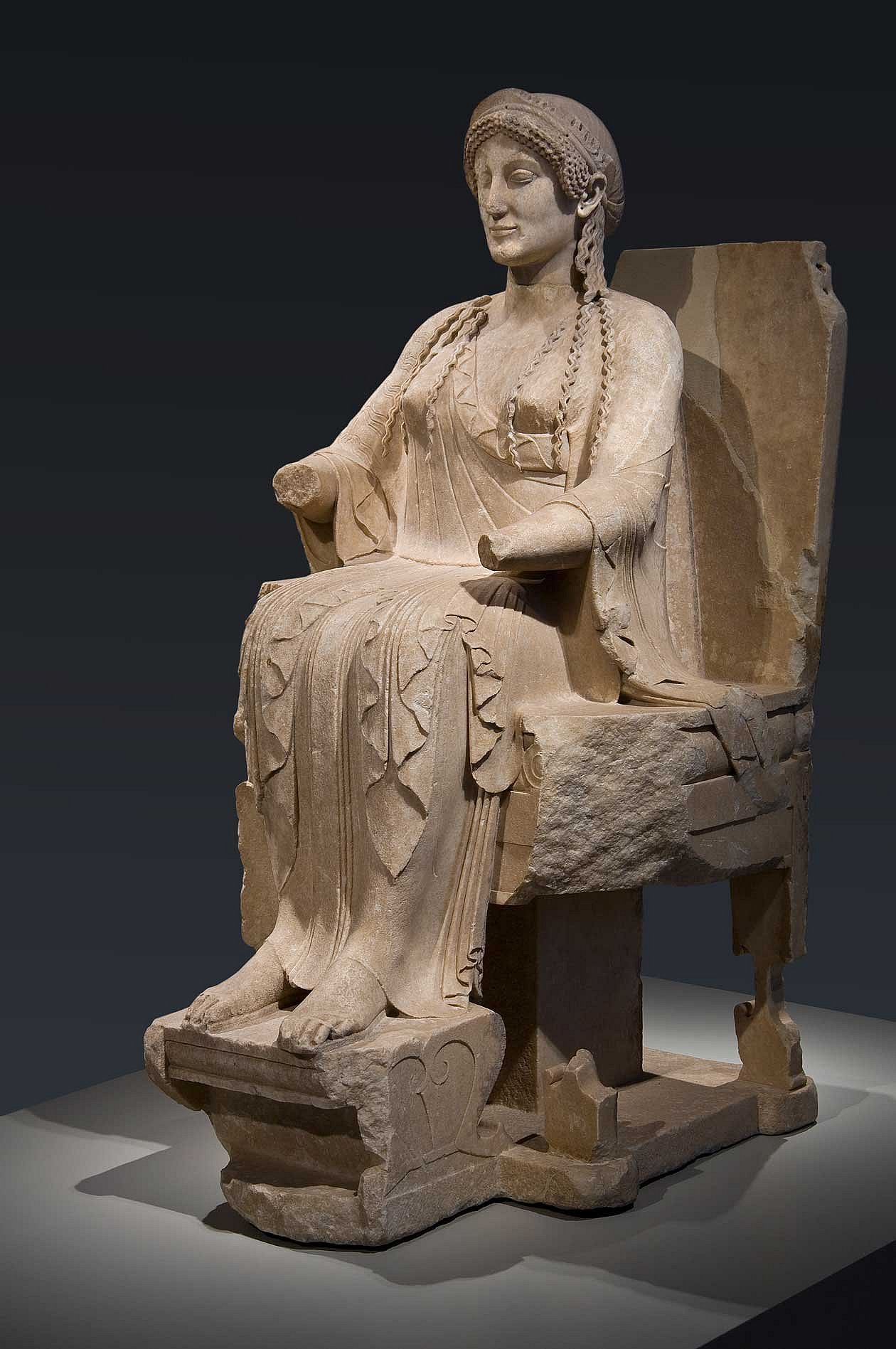
In keeping with his ethical motto ‘Wealth entails responsibility’, Arnhold was deeply committed to the arts and society and, alongside James Simon, was the most significant patron of the arts of his time. Arnhold not only supported the construction of new transport routes, trams and airships; he also sponsored the Academy of Arts and provided patronage to the major museums in Berlin and Munich. For example, the Gemäldegalerie was able to acquire its most famous work by Titian (“Venus with the Organist”) thanks to a co-donation from Eduard Arnhold. He donated Max Liebermann’s “Country House in Hilversum” to the National Gallery, and, together with other patrons, Edouard Manet’s “Winter Garden”; he also provided financial support to the Collection of Classical Antiquities for the purchase of the “Throne of the Goddess of Taranto”.
The Max Planck Society, the Advancement of Women and Art Scholarships
Arnhold was a co-founder of the Kaiser Wilhelm Society for the Promotion of Science (now the Max Planck Society) and the Kaiser Friedrich Museum Association, which is still active today. Together with his wife, he also established the ‘Johanna-Heim’, which opened up educational and life opportunities for girls and young women, many of whom came from impoverished backgrounds.
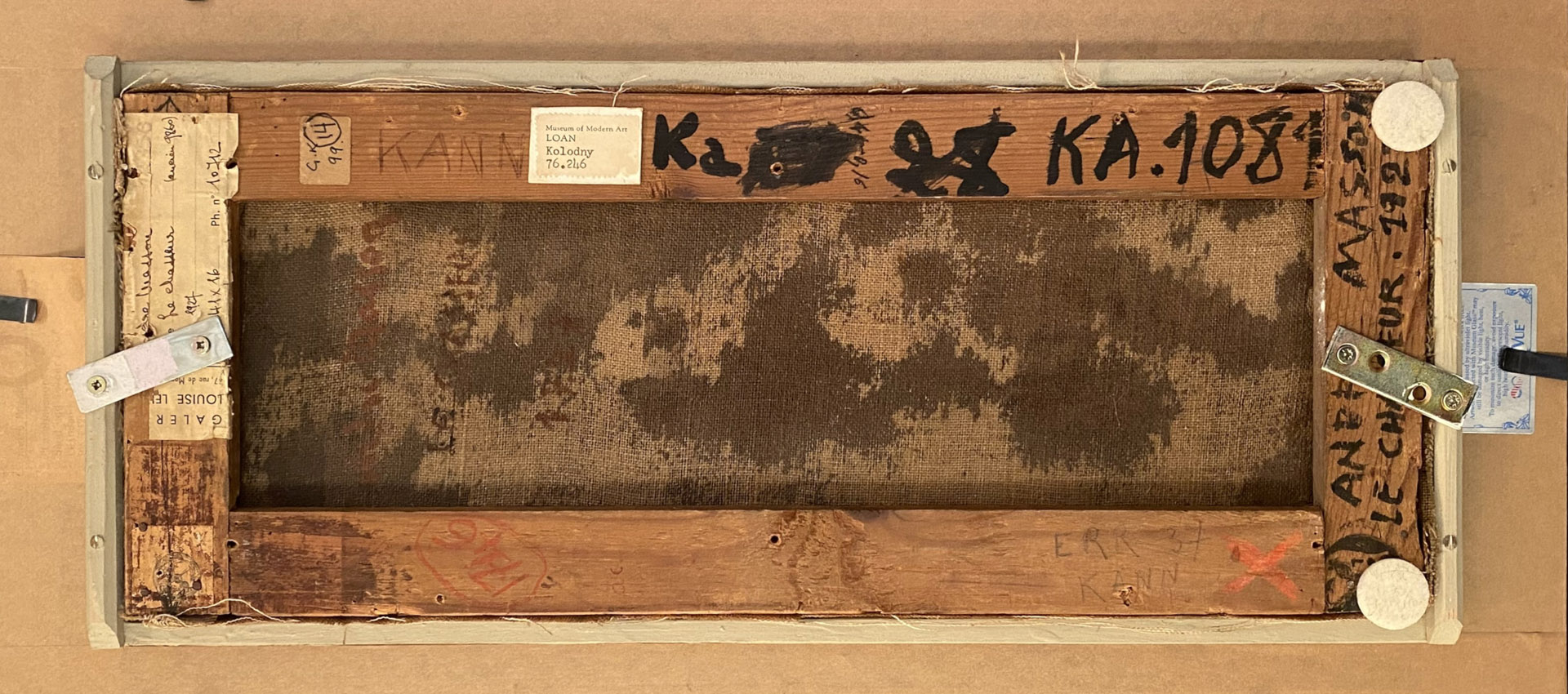
For art scholarship holders, the couple founded the Villa Massimo in Rome, which today, as the German Academy in Rome Villa Massimo, is the Federal Republic of Germany’s most important institution for the promotion of leading German artists abroad.
Impressionism at the Kulturforum
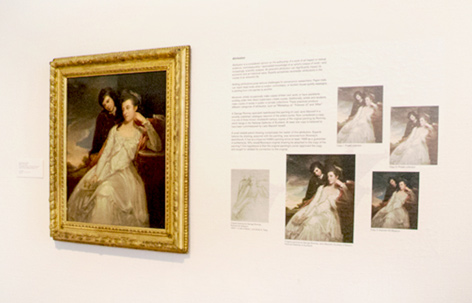
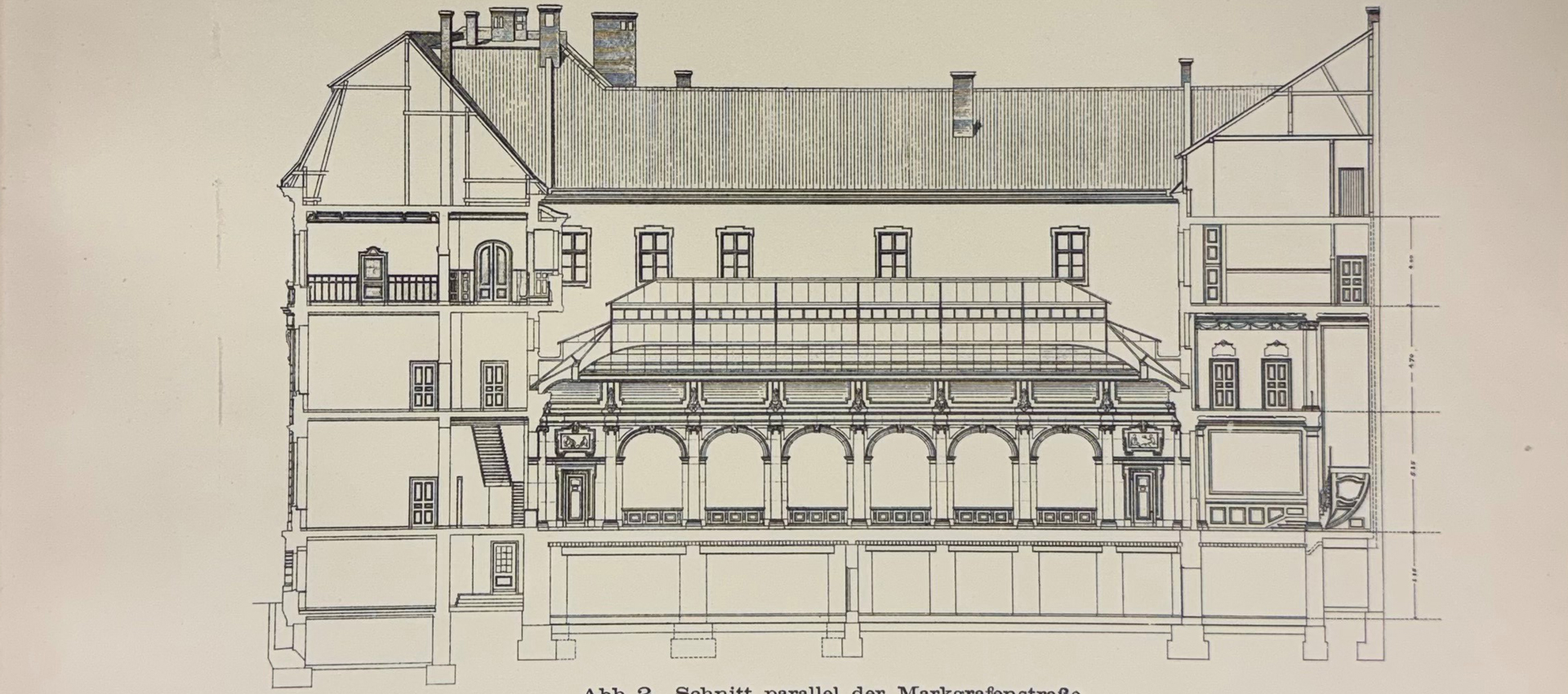
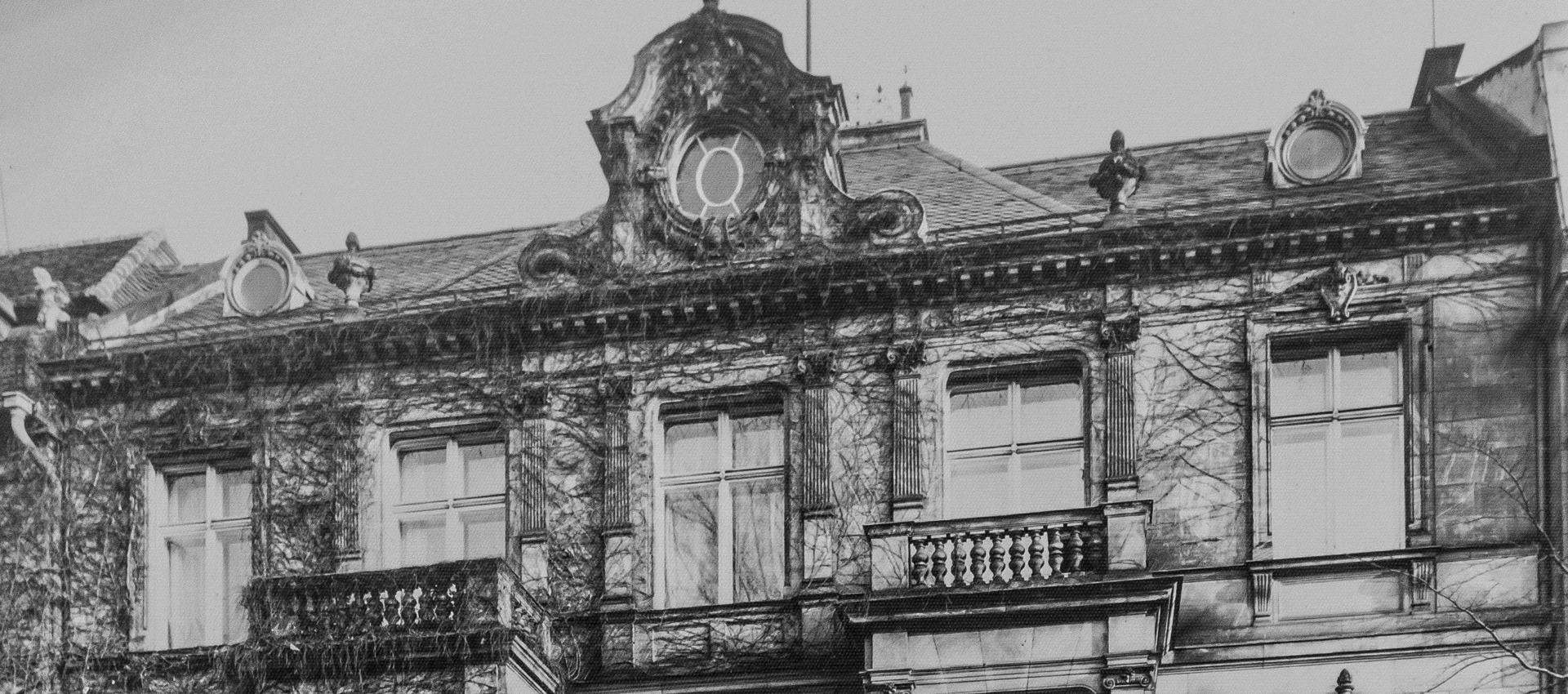
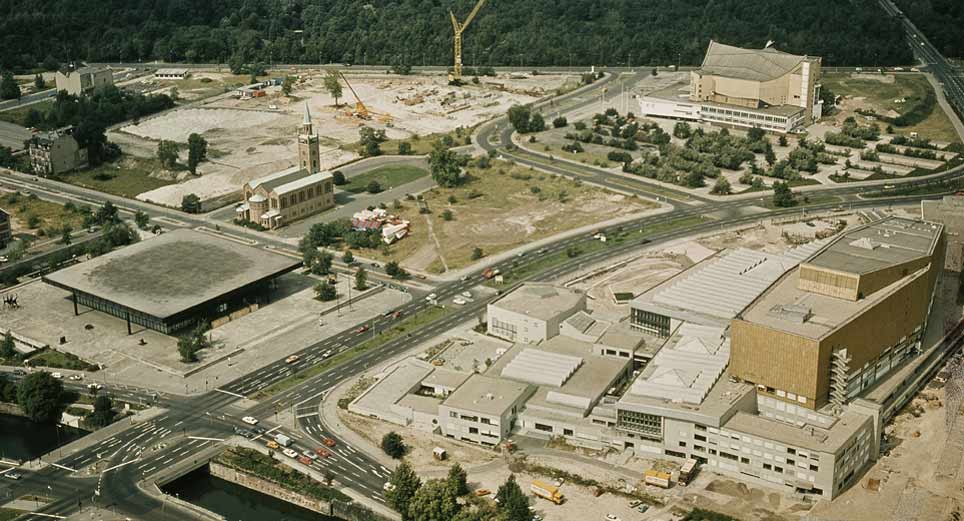
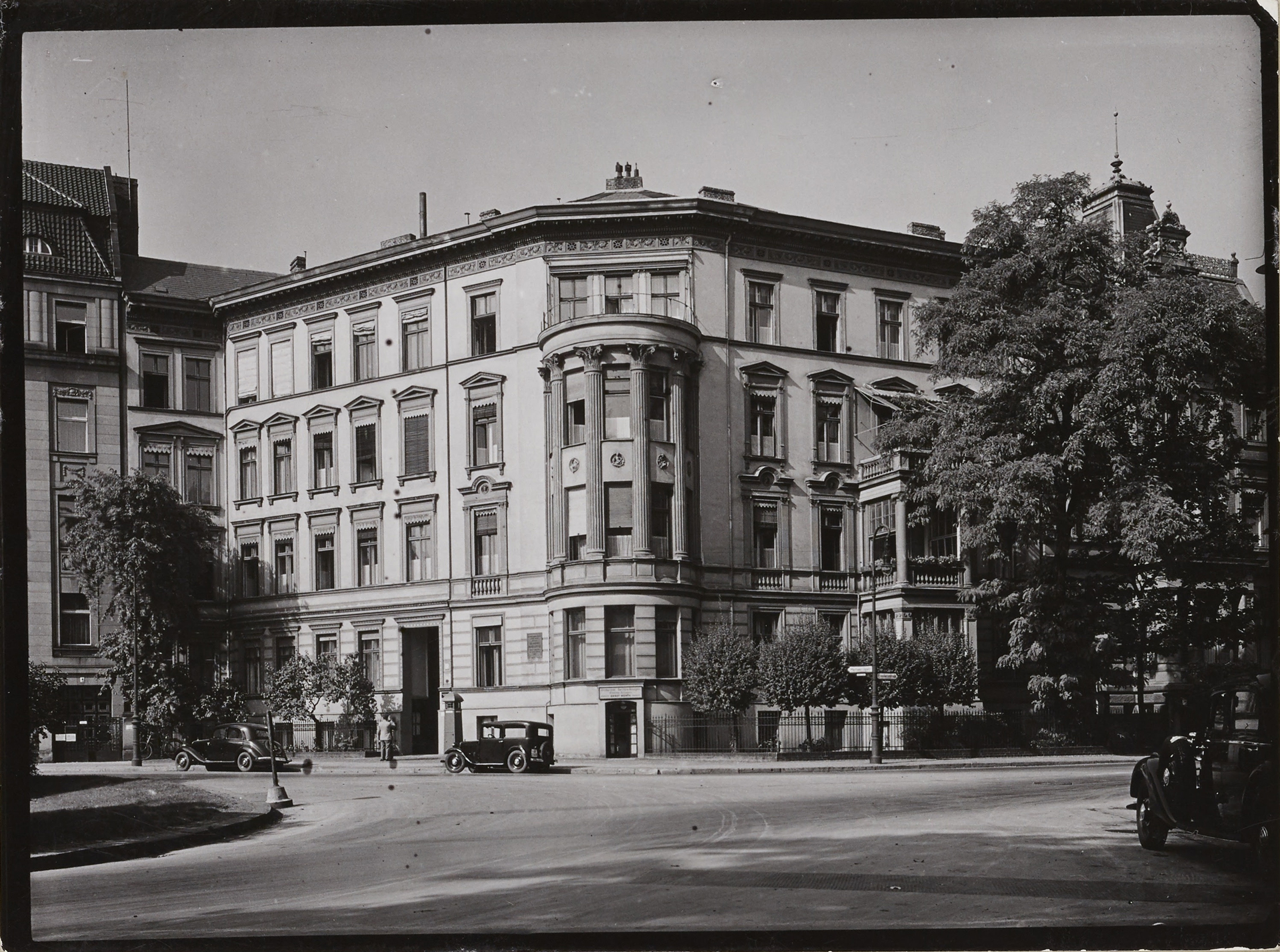
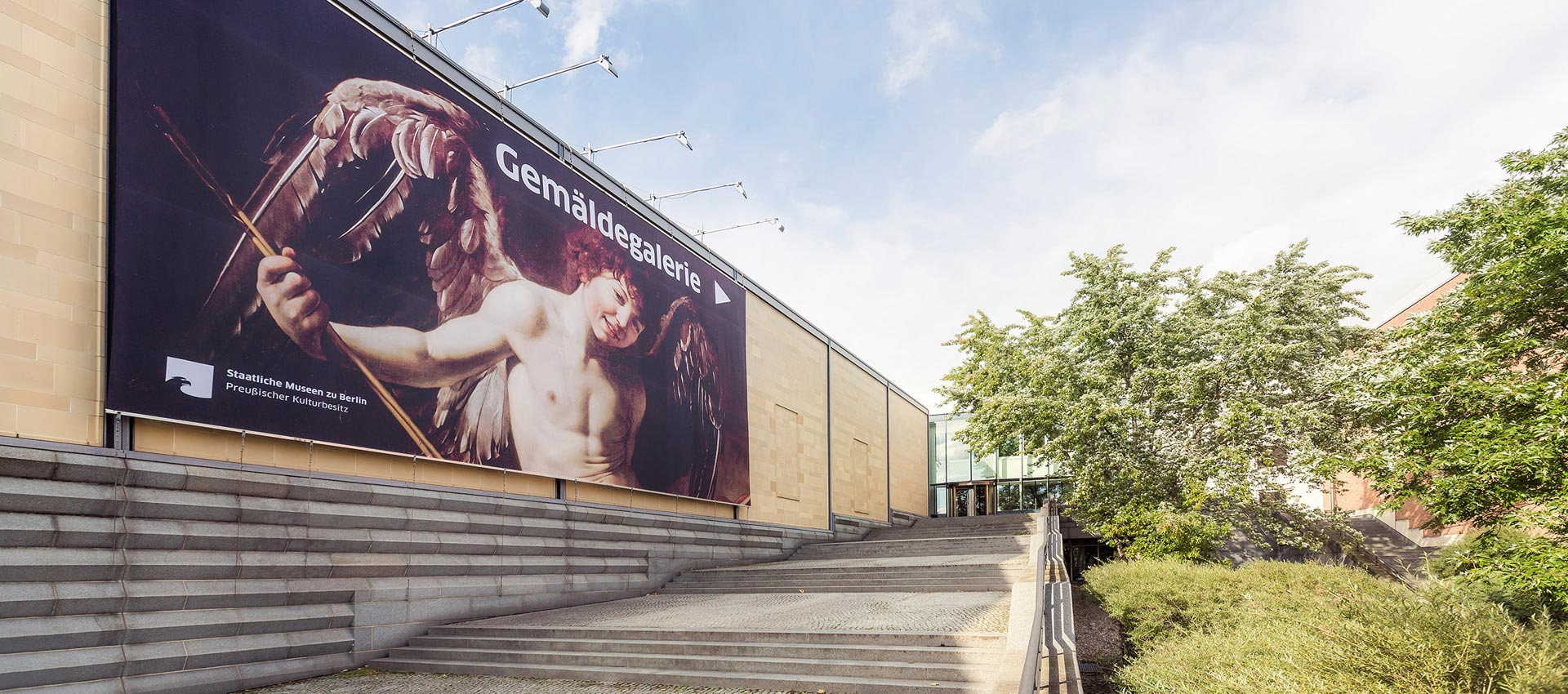
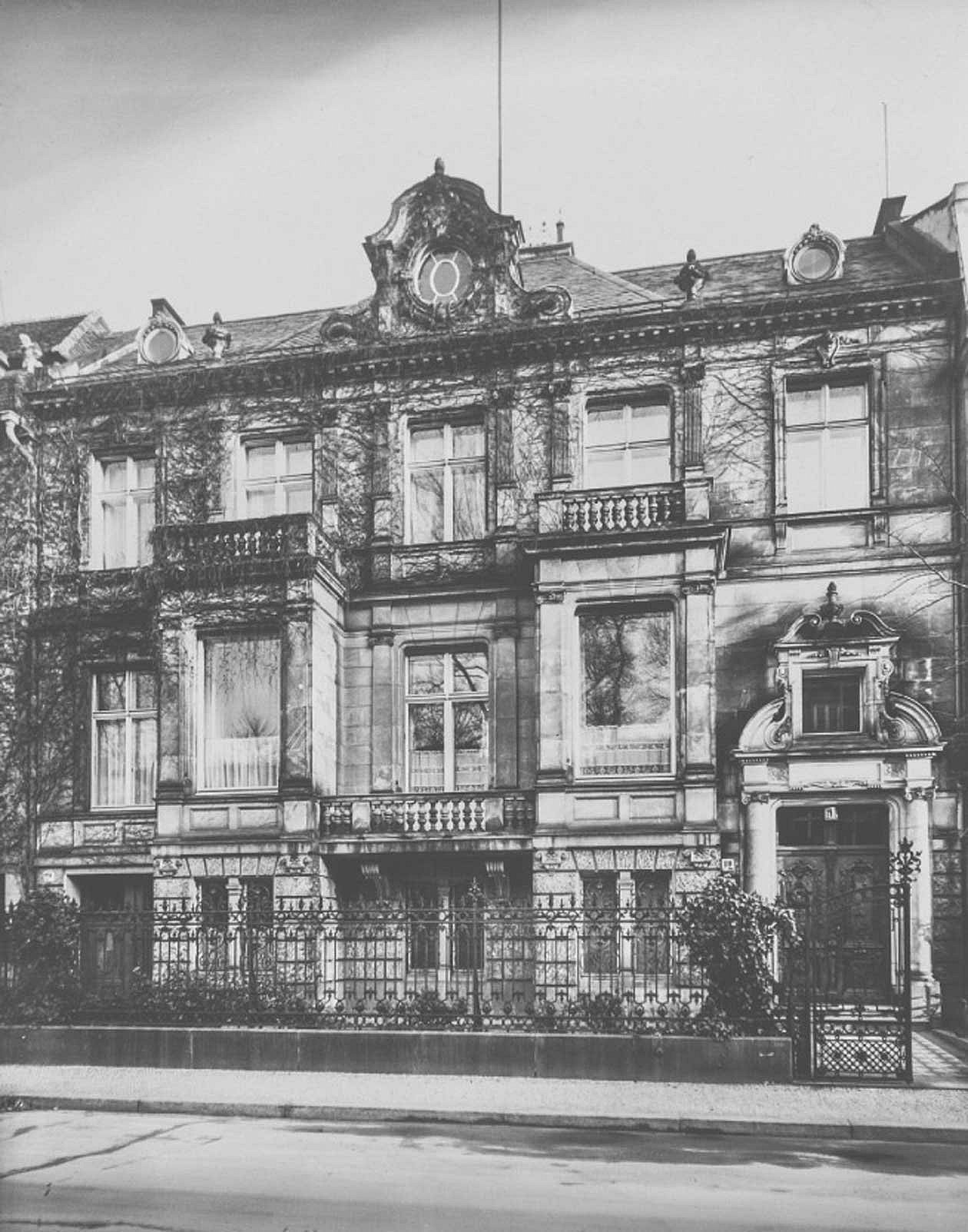
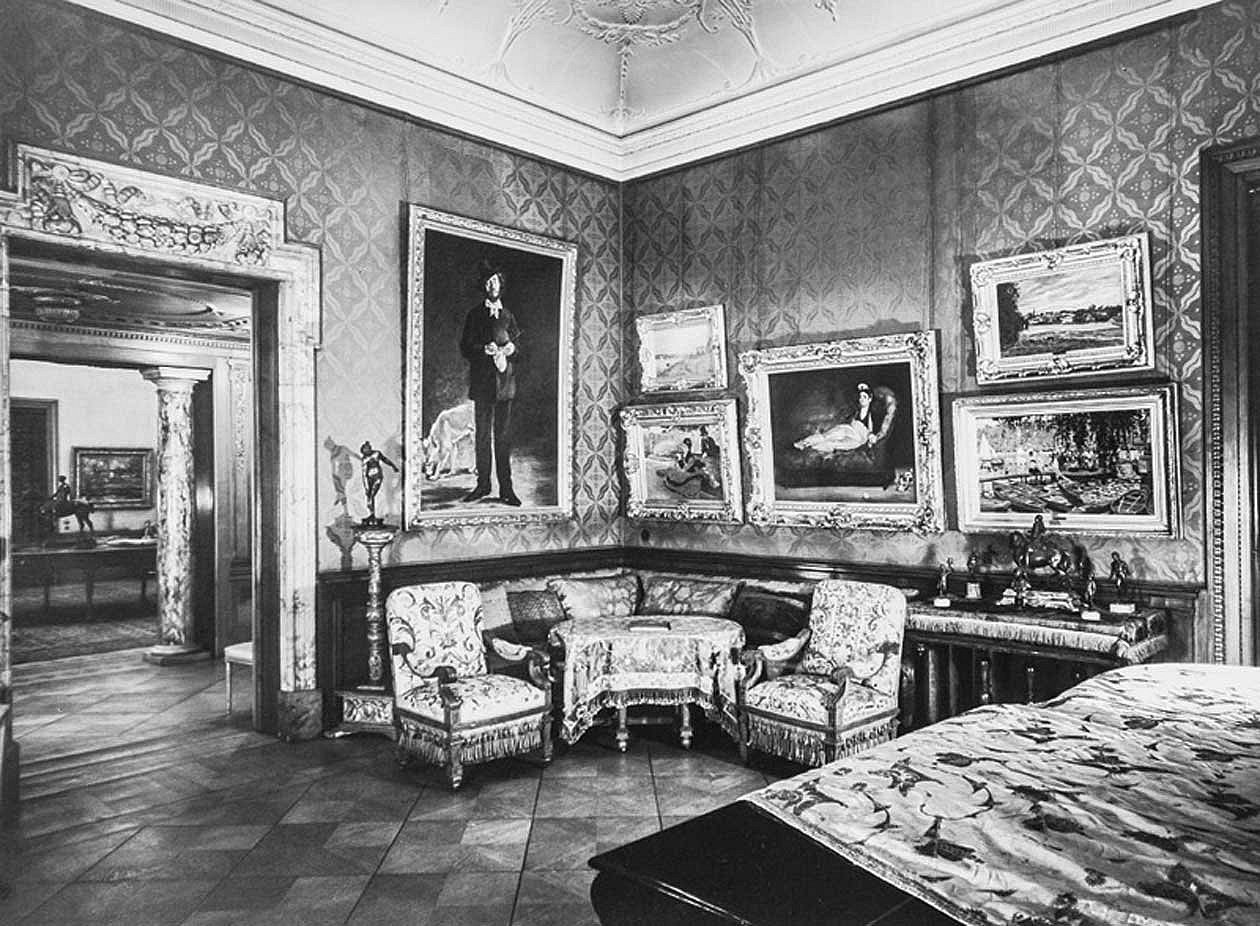
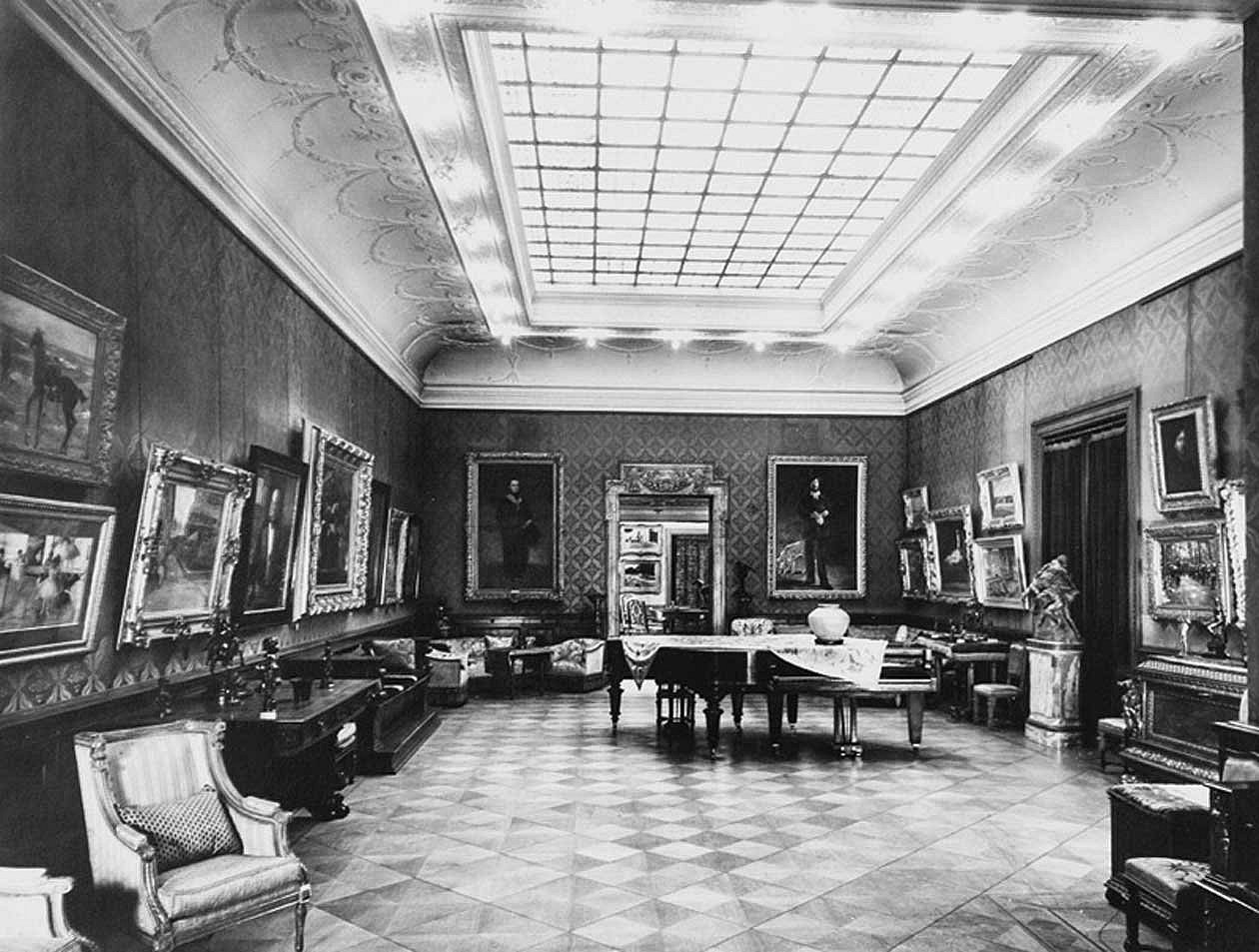
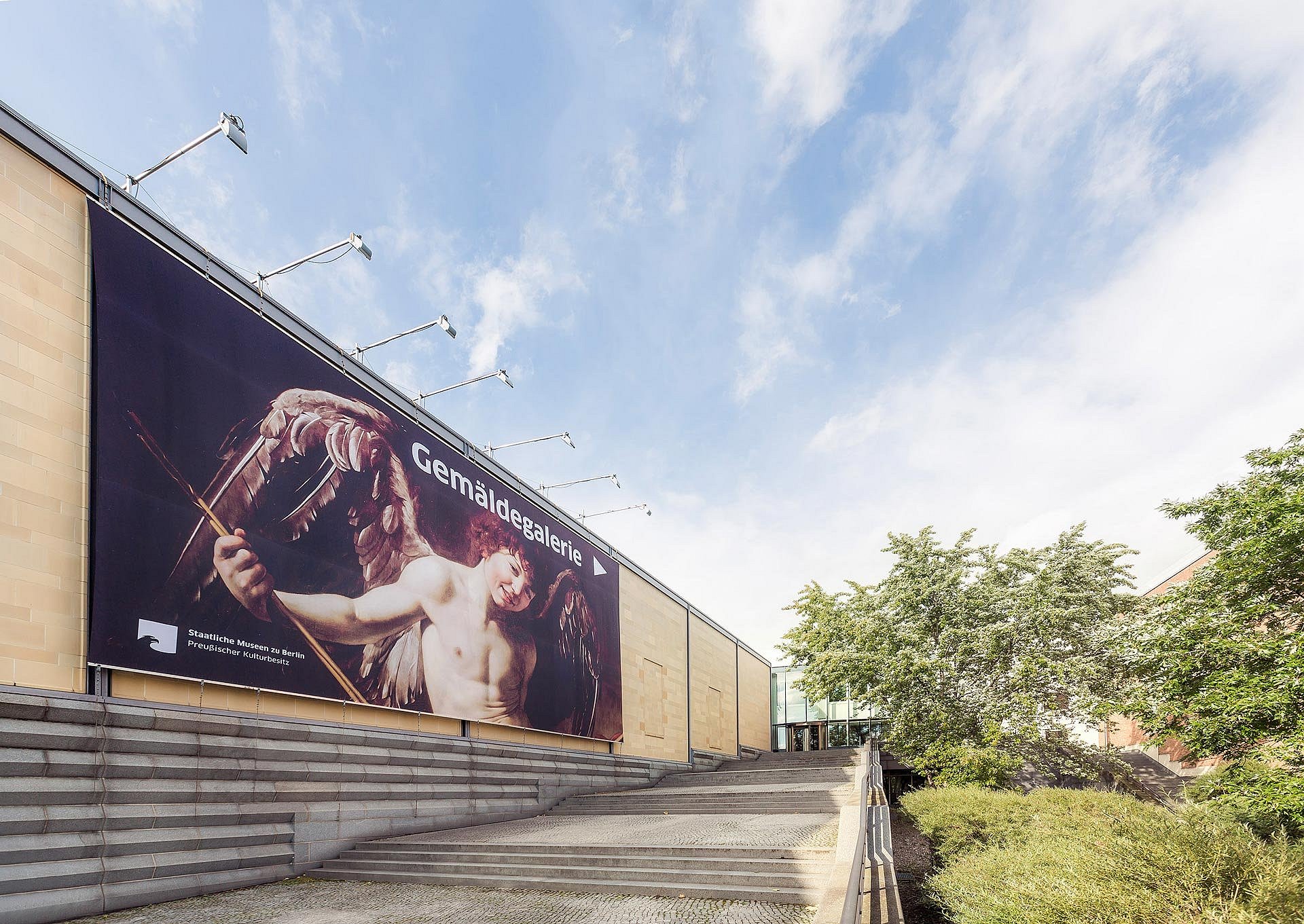
Arnhold was committed like no other to the French Impressionists, who were still ostracised in the German Empire. The art collection he built up together with his wife was regarded at the beginning of the 20th century as the most valuable private collection of modern art in Germany, featuring works by artists such as Goya, Manet, Monet, Cézanne, Degas and Renoir, as well as works by Böcklin, Lenbach, Klinger, Feuerbach, Menzel, Leibl, Slevogt, Thoma, Corinth and Lesser Ury – and, of course, works by his friend Max Liebermann. In 1898/99, Johanna and Eduard Arnhold moved into a villa at what was then Regentenstraße 19, where they temporarily opened the collection to the public. The Gemäldegalerie now stands on the site.
Erased traces, forgotten names
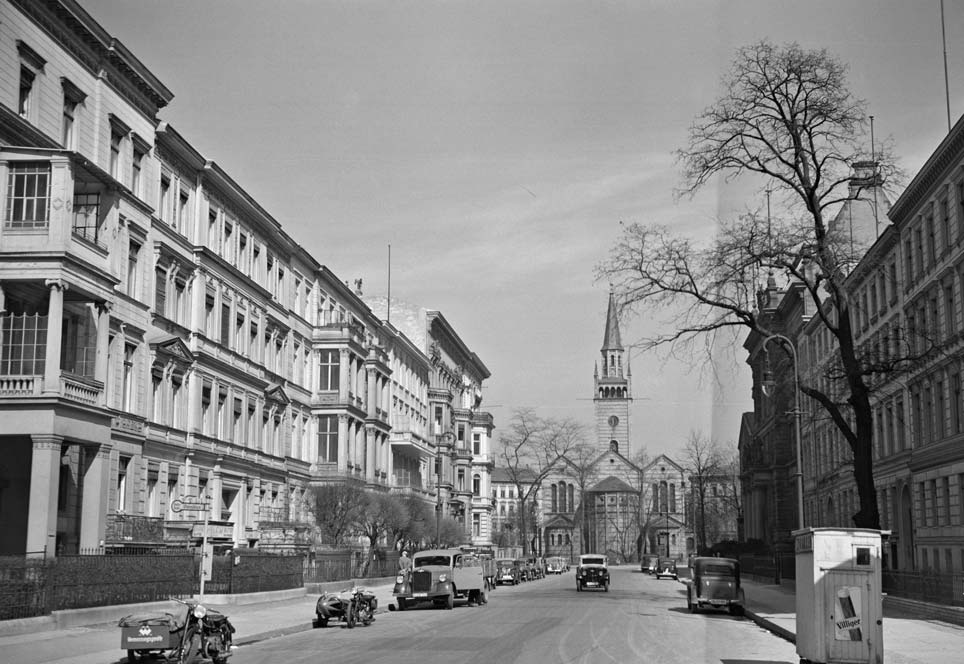
Johanna and Eduard Arnhold’s villa in the Tiergarten district was destroyed during the Second World War. The Nazis erased every trace of the couple. Arnholdstraße in Berlin-Britz, which had commemorated Eduard Arnold since 1912, was renamed Holzmindener Straße in 1938 as part of a wave of street renamings motivated by anti-Semitism. This name remains unchanged to this day. The collection was inherited by the Arnholds’ Protestant adopted daughter, Elisabeth, whom the couple had taken in in 1887 when she was four years old. Numerous works were destroyed during the war, have gone missing, or have been scattered due to sales.
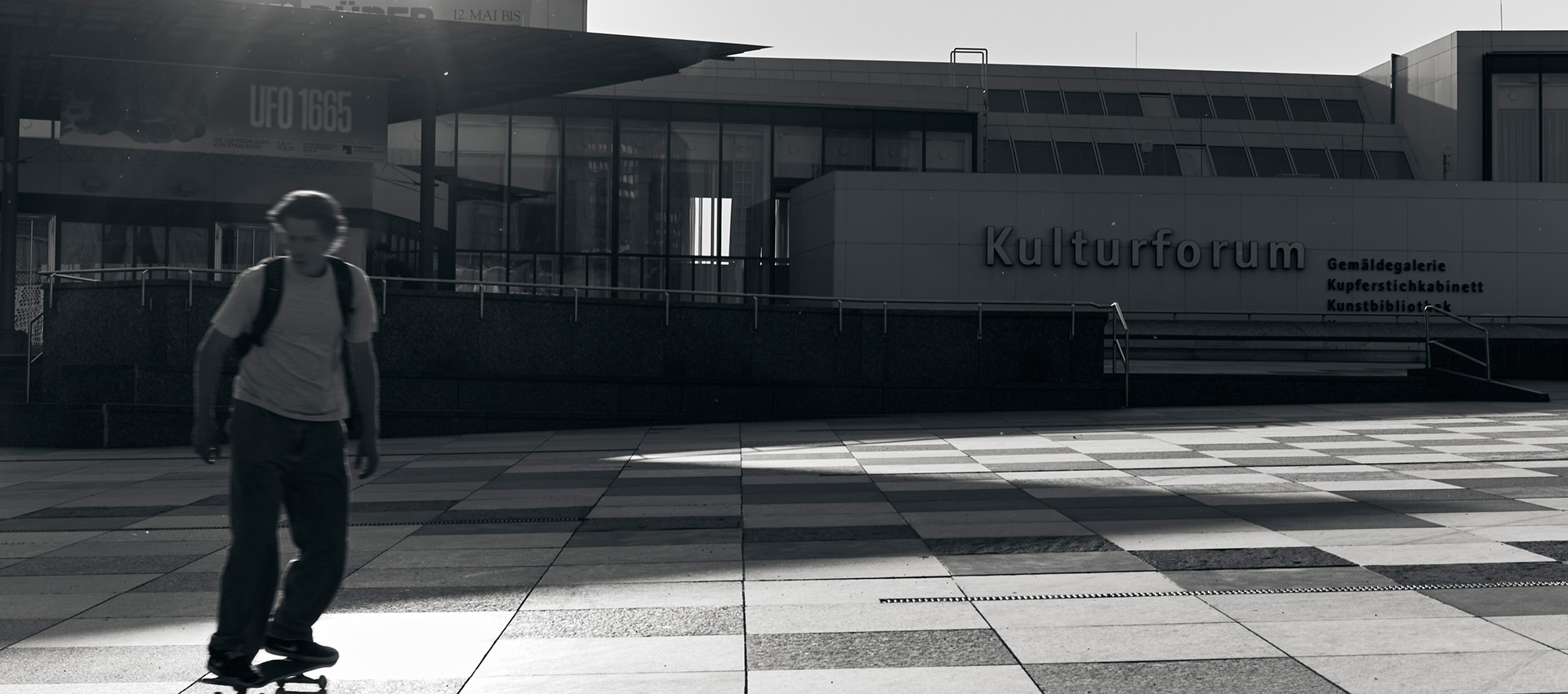
Piazzetta at the Kulturforum commemorates Johanna and Eduard Arnhold
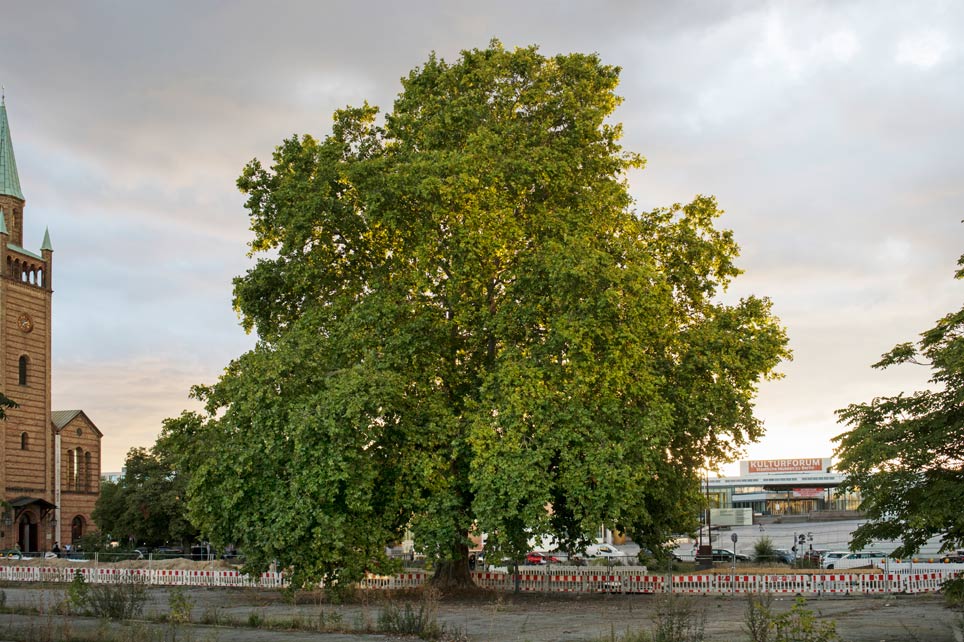
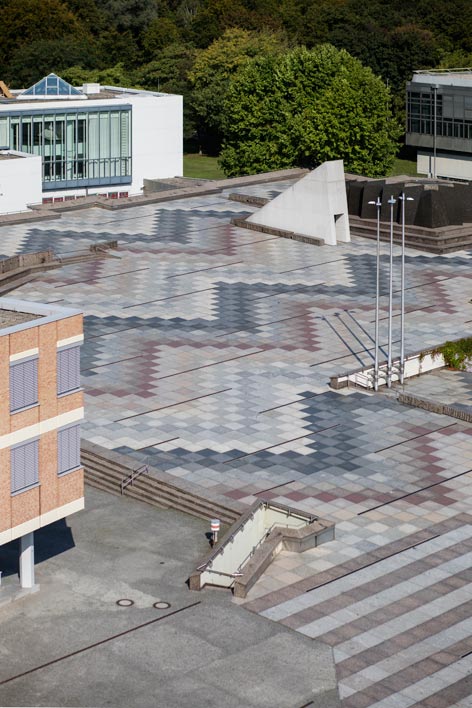
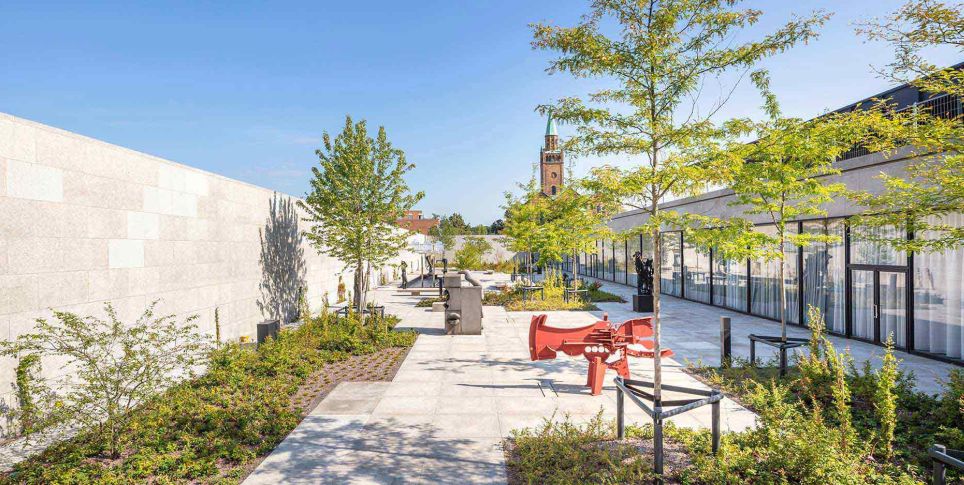
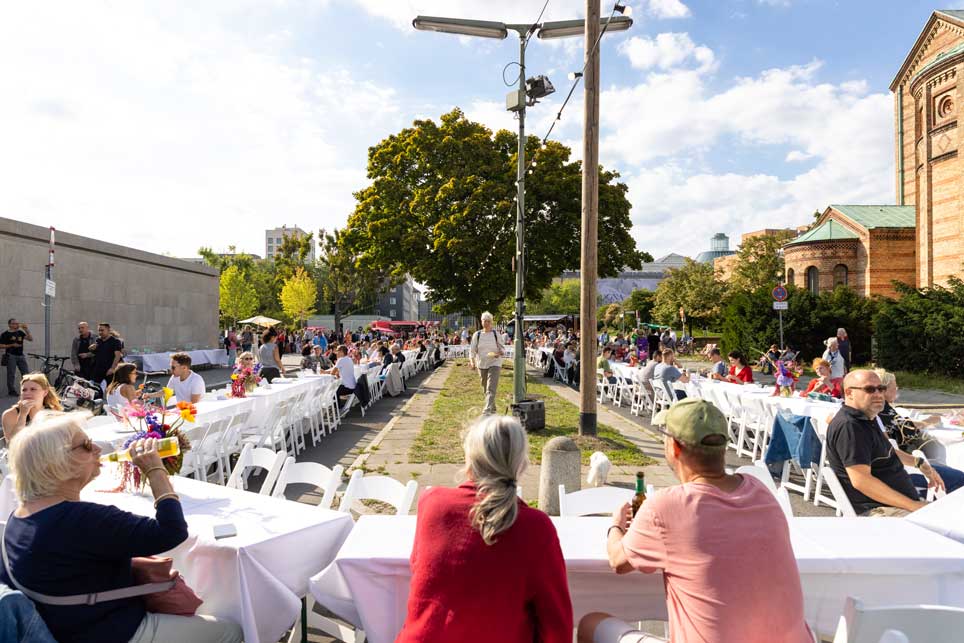
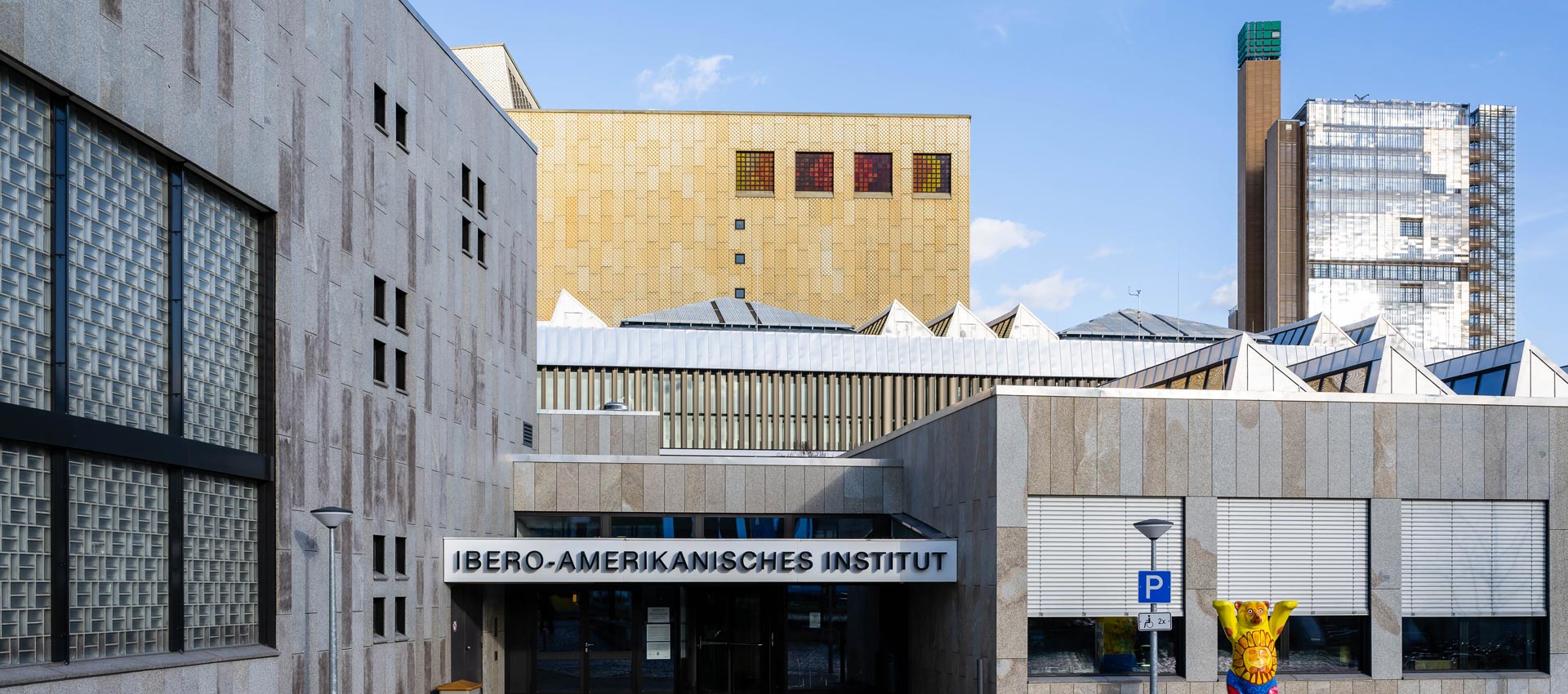
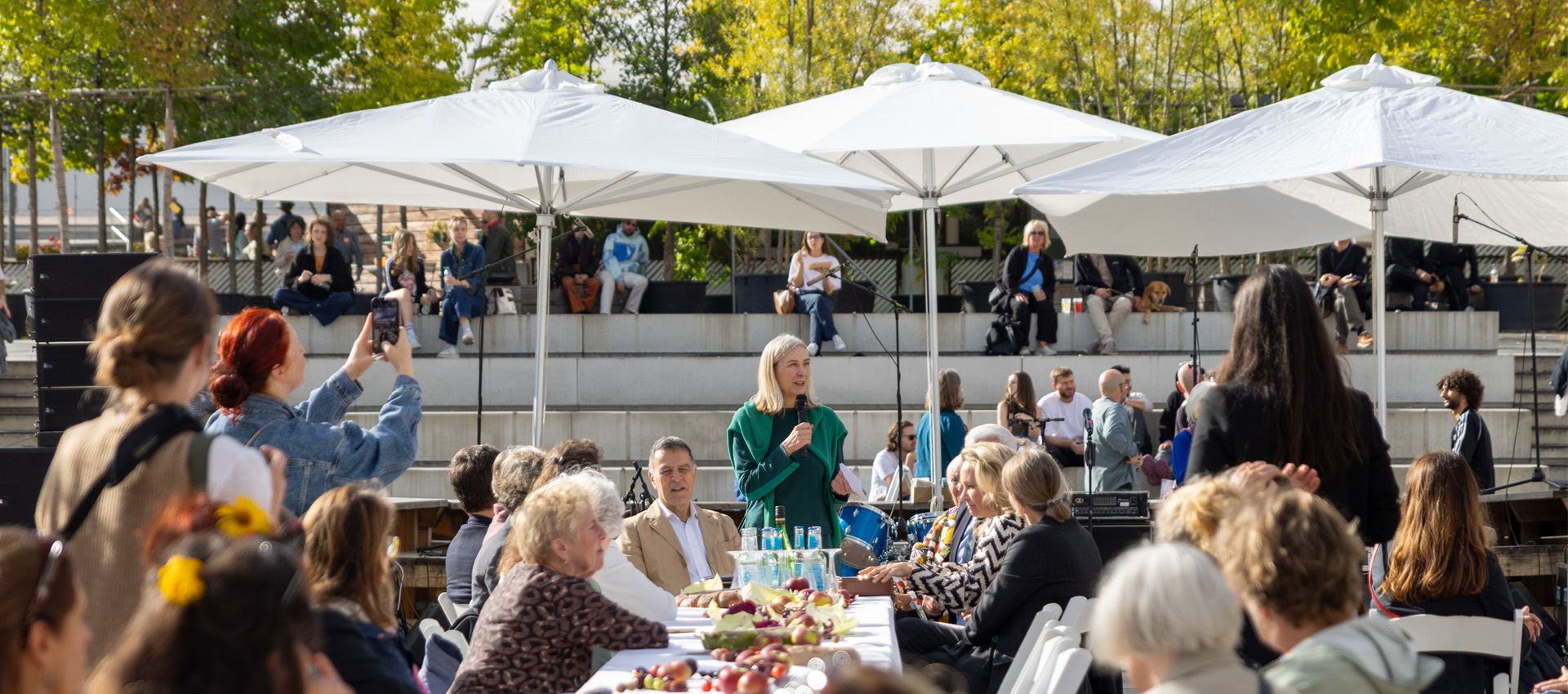
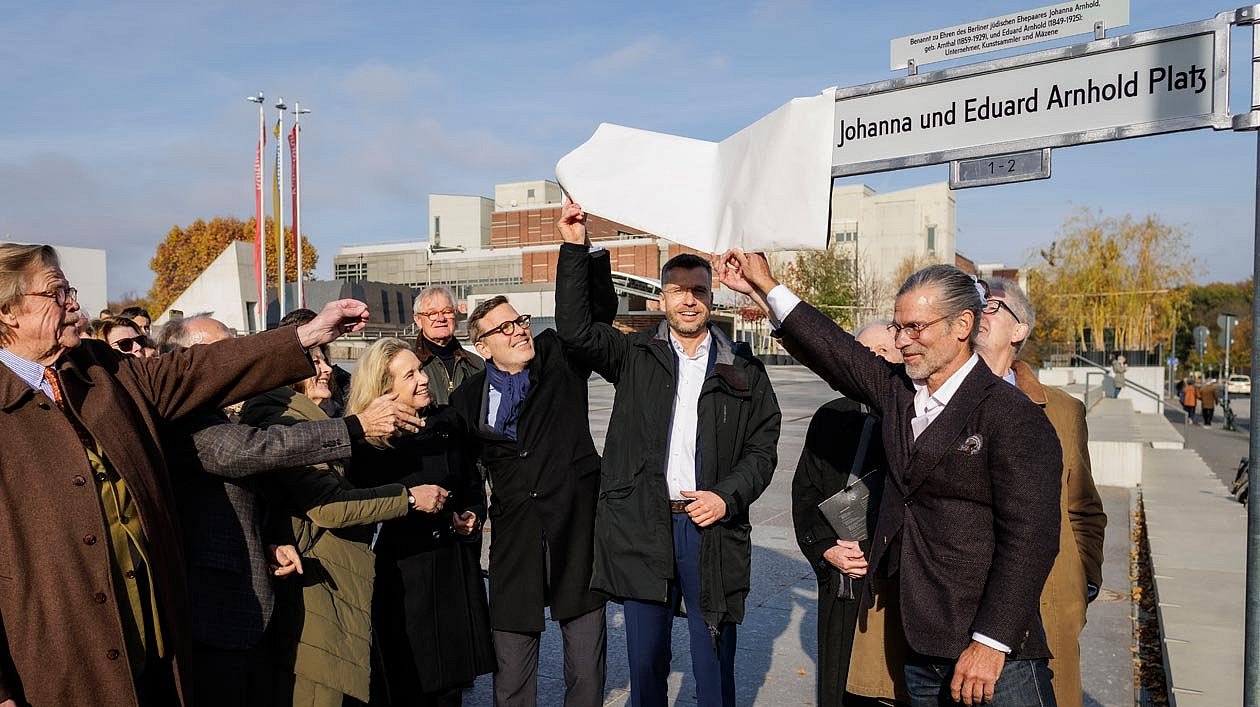
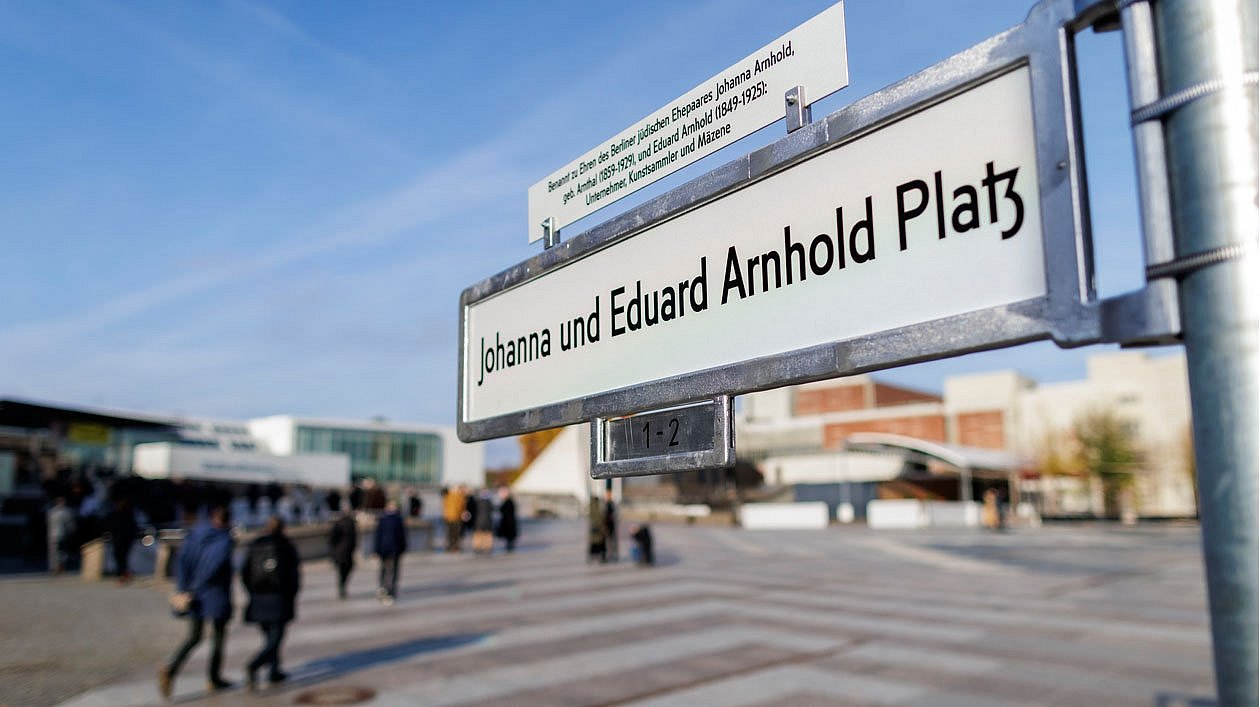
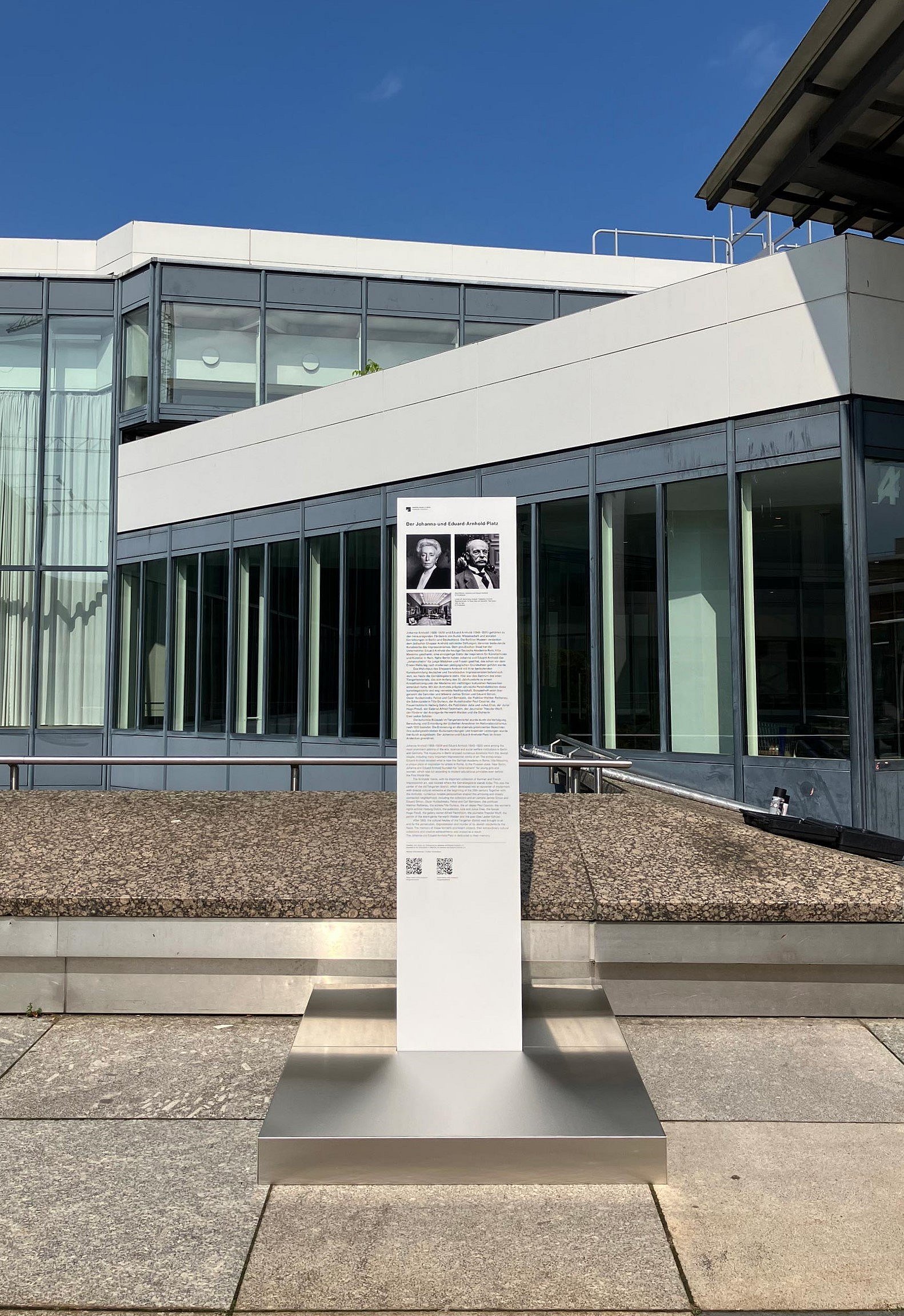
Since 4 November 2024, the square in front of the entrance to the museums at the Kulturforum has borne the name of the Arnhold couple; on 17 July 2025, a commemorative stele was also unveiled there, providing information about the lives and work of the Arnholds. The square also commemorates the commitment of many other, predominantly Jewish, people in the Tiergarten district.
Among them were, among others, the collectors and art patrons Felice and Carl Bernstein, Oscar Huldschinsky and his son Paul Huldschinsky, the collectors and art patrons James and Eduard Simon, the entrepreneurs and politicians Emil and Walther Rathenau, the actress Tilla Durieux, the art dealers and publishers Bruno and Paul Cassirer, the women’s rights activist Hedwig Dohm, the principal author of the Weimar Constitution Hugo Preuß, the author couple Julie and Julius Elias, the art historian Julius Meier-Graefe, the gallery owner and publicist Alfred Flechtheim, the journalist Theodor Wolff, the Ullstein family of publishers, the writer, publisher and patron of the arts Herwarth Walden, and the poet Else Lasker-Schüler.
The renaming of the so-called Piazzetta to Johanna-und-Eduard-Arnhold-Platz and the erection of the memorial stele are primarily due to a civic initiative, the ‘Verein zur Erinnerung an Johanna und Eduard Arnhold e.V.’ which aims to commemorate the civic engagement of the Jewish middle class in Germany and Berlin and worked together with the SPK to bring the project to fruition.
The Art History (and Stories) of the Tiergarten District: Rediscovering a Special Neighbourhood
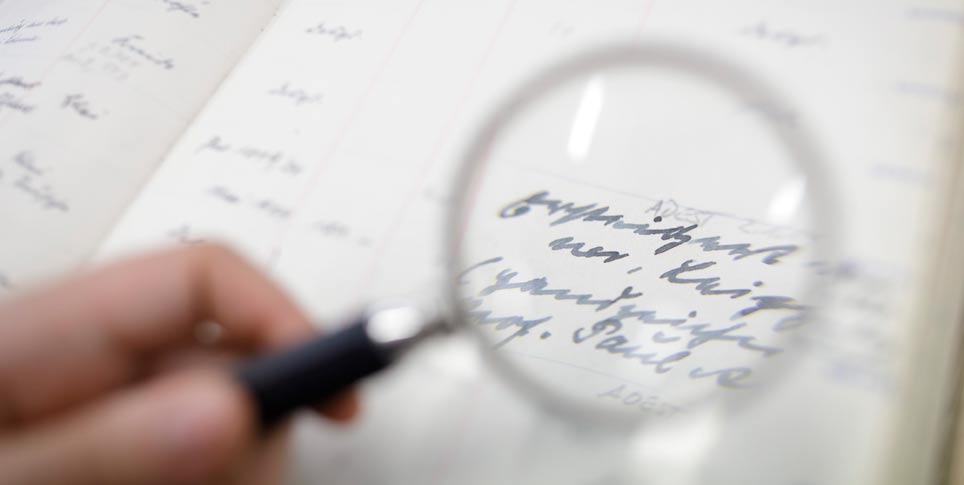
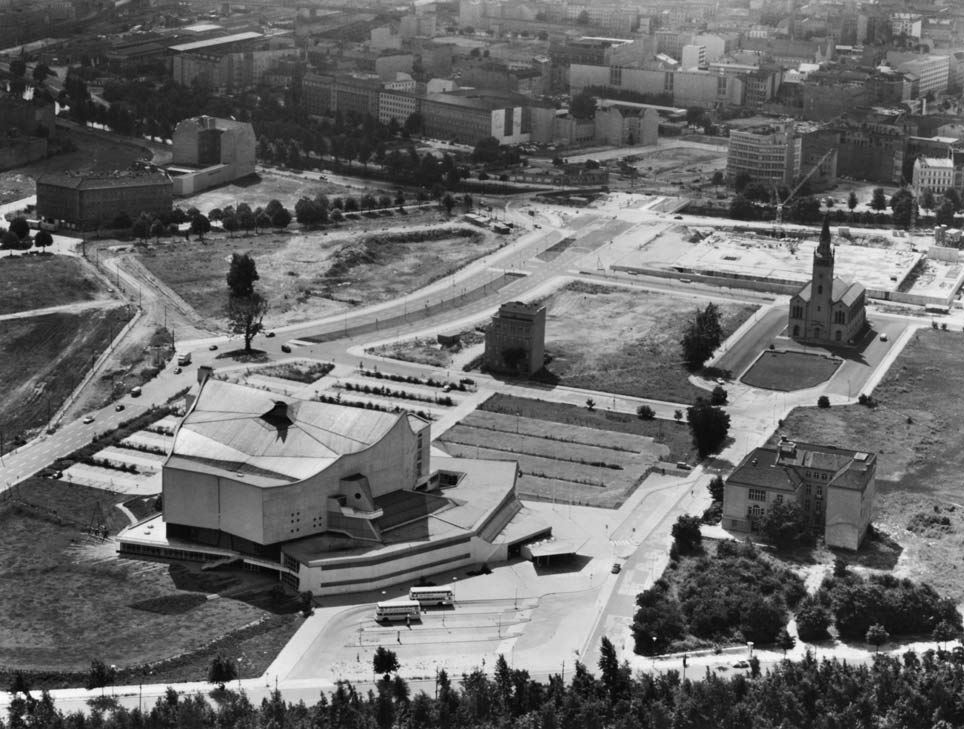
Since 2022, the Art Library has been running the research project “The Art History(ies) of the Tiergarten District”, funded by the Federal Government Commissioner for Culture and the Media. The aim is to reconstruct the history of this art-loving district surrounding today’s Kulturforum – a history that has largely been forgotten since 1945 – to bring together existing research findings and to supplement them with new source studies.
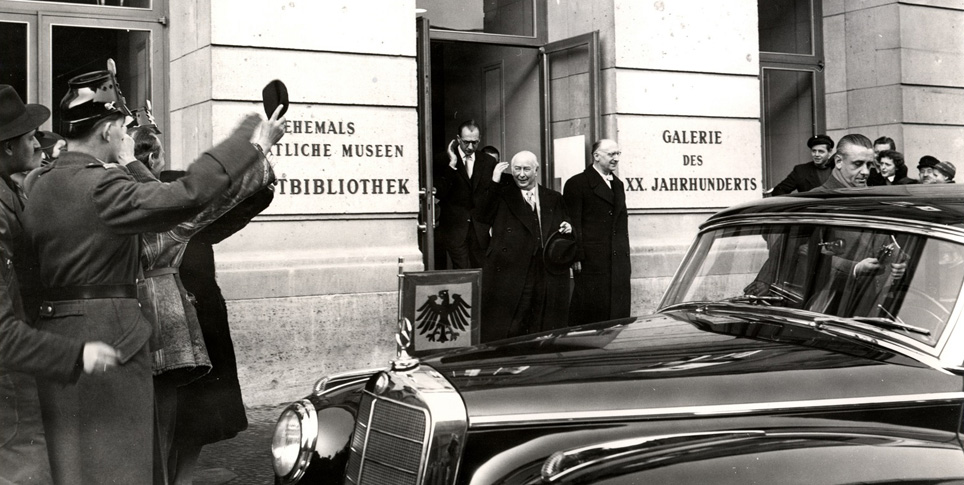
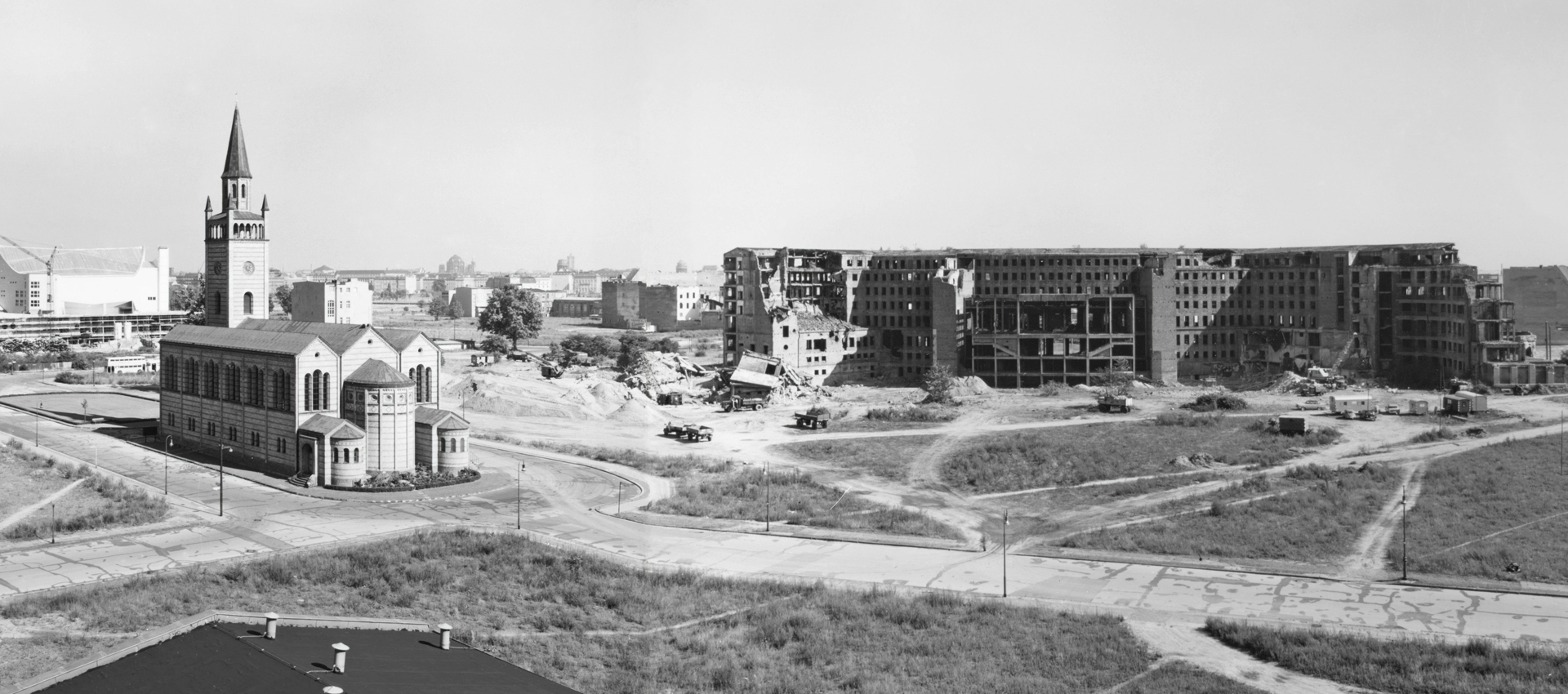
The focus here is on the glorious era of the early 20th century, when the Tiergarten district, with its cultural networks, developed into a centre of modernism, the art trade, fashion, photography and interior design. This unique cultural heyday was brought to an end by the persecution, dispossession and murder of the Jewish residents under National Socialism after 1933, and the district was largely destroyed during the Second World War.
Further links
- Magazine article: The major benefactors
- Magazine article: Beneath the Pavement Lies the City
- Magazine article: Atlantis of the Modern Age
- News: Piazzetta is now called Johanna-and-Eduard-Arnhold-Platz
- Photo gallery of the Arnholds
- Invitation: Unveiling of the memorial stele for Johanna and Eduard Arnhold at the Kulturforum
- Arnhold Initiative
- Villa Massimo
Ideas for a memorial site
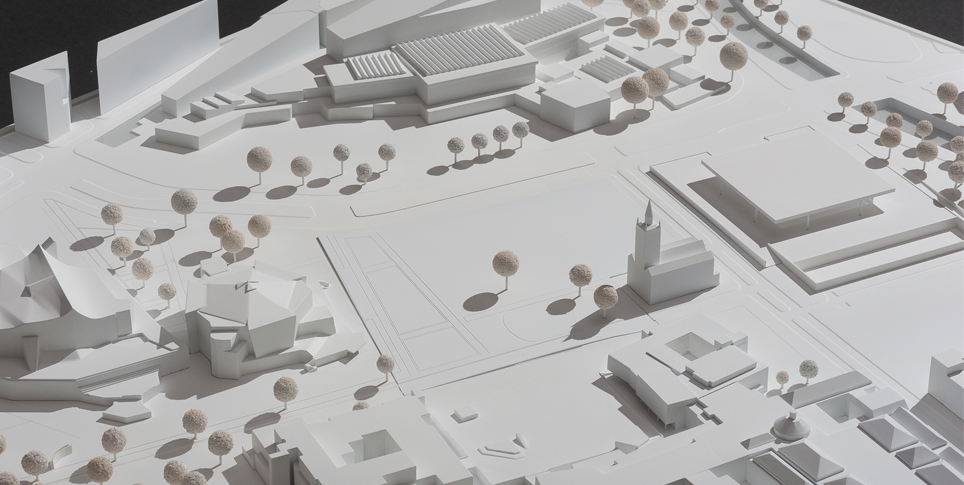
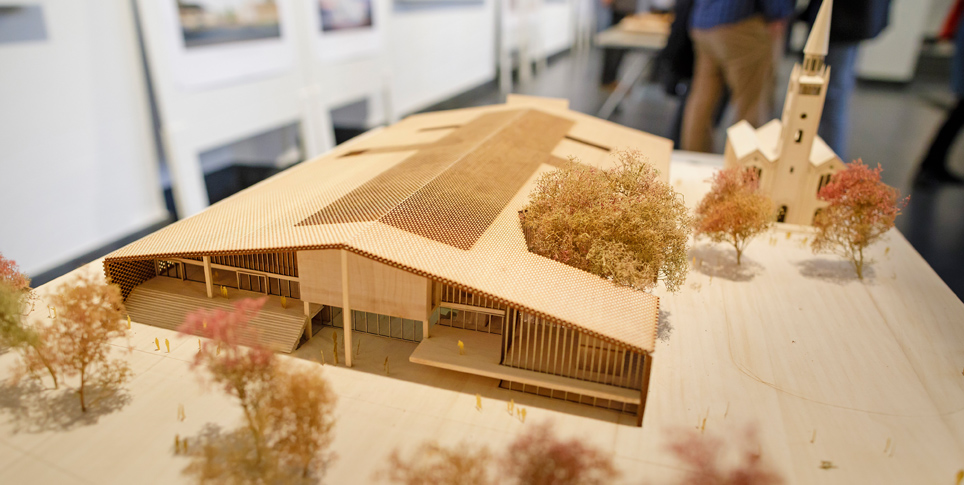
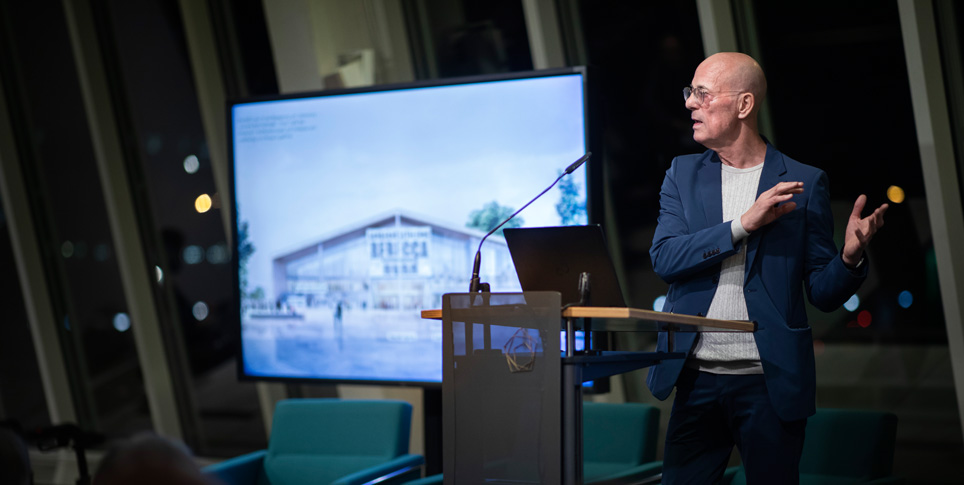
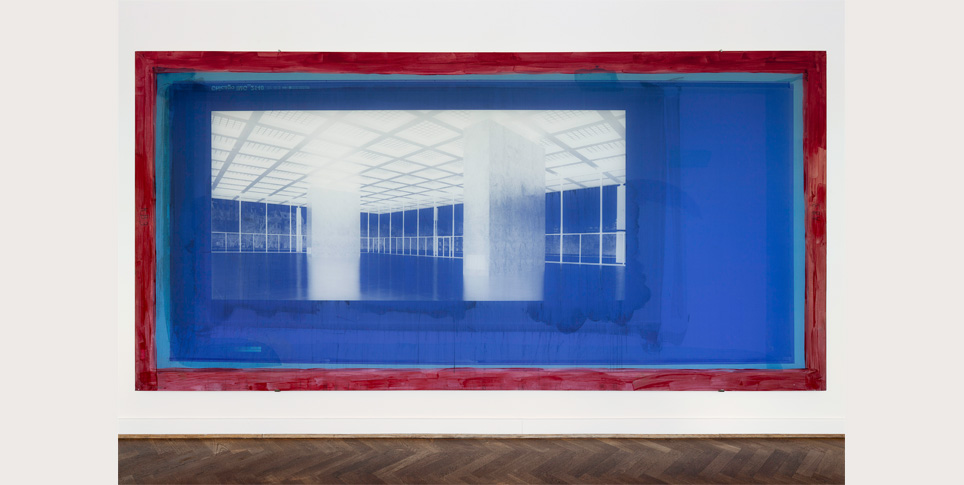
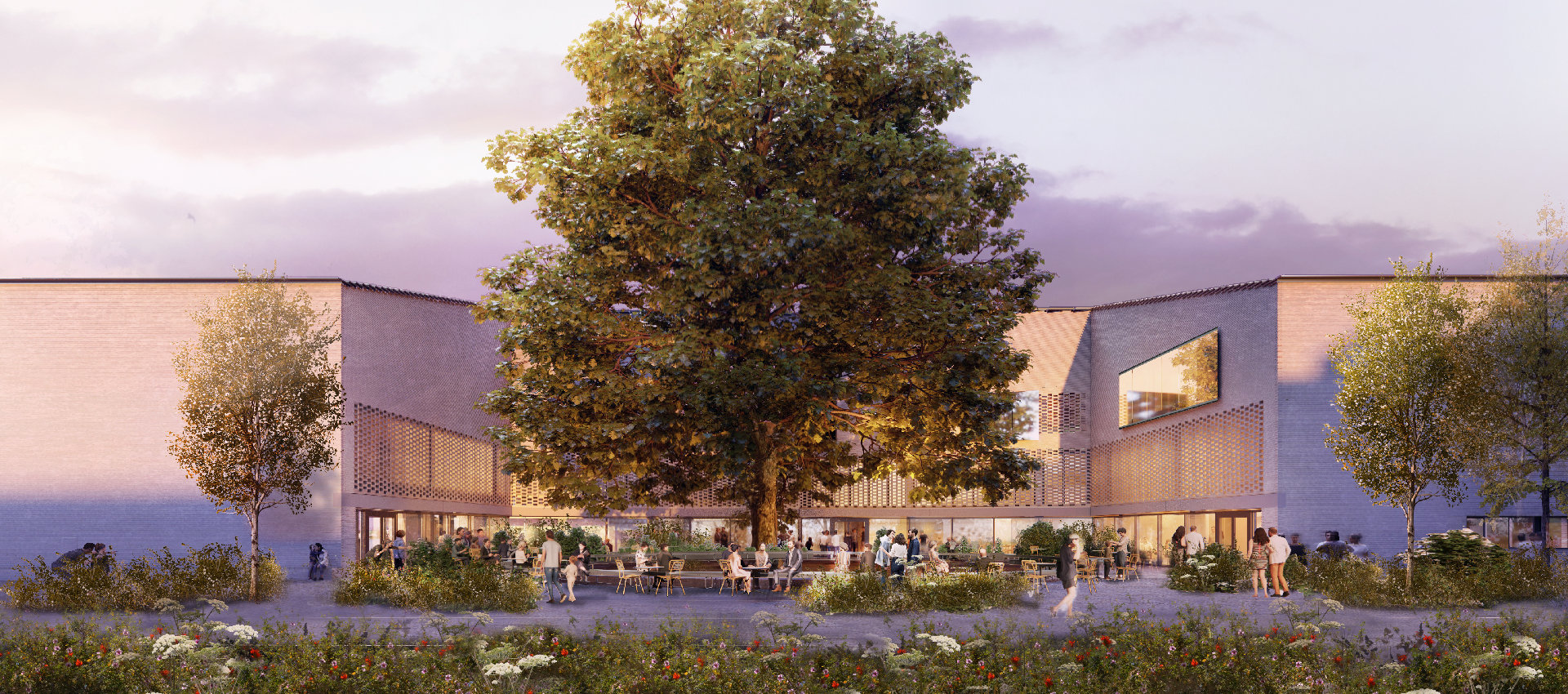
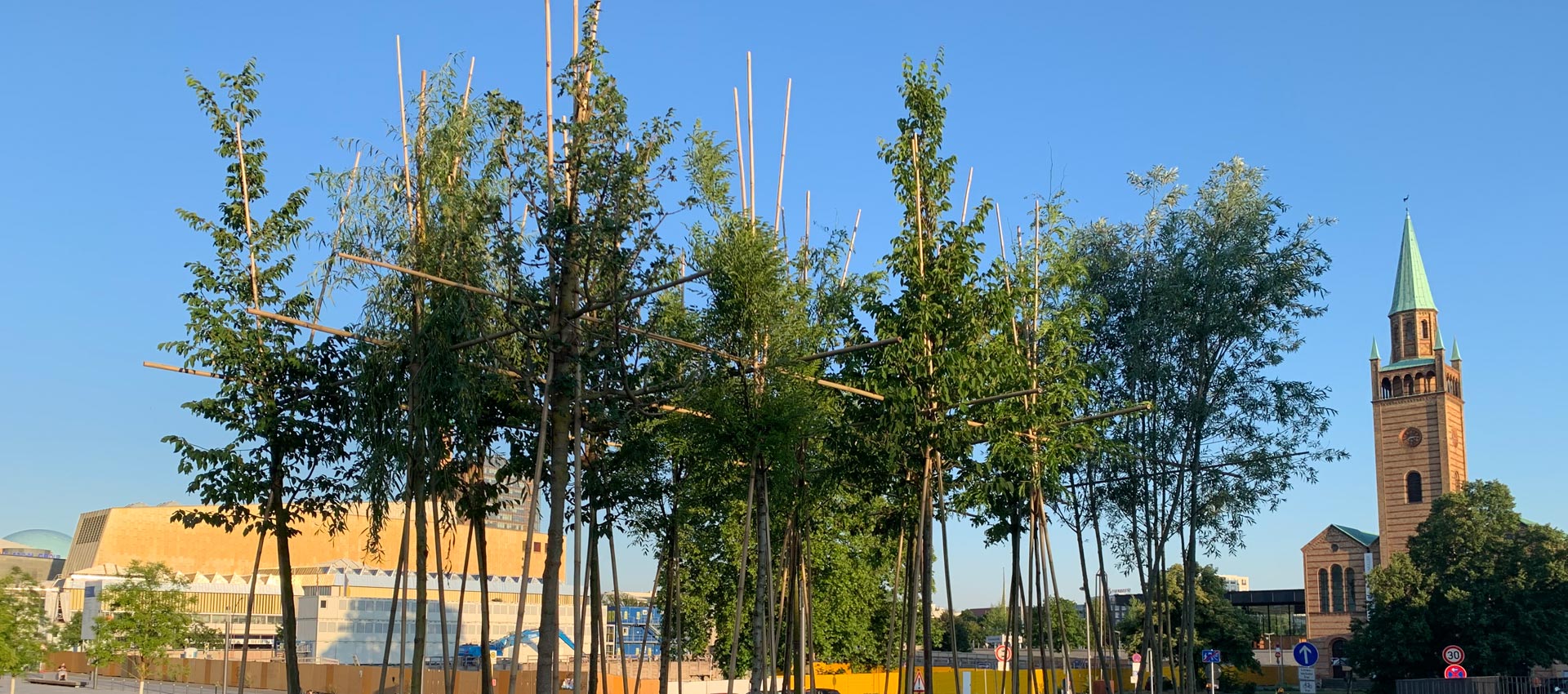
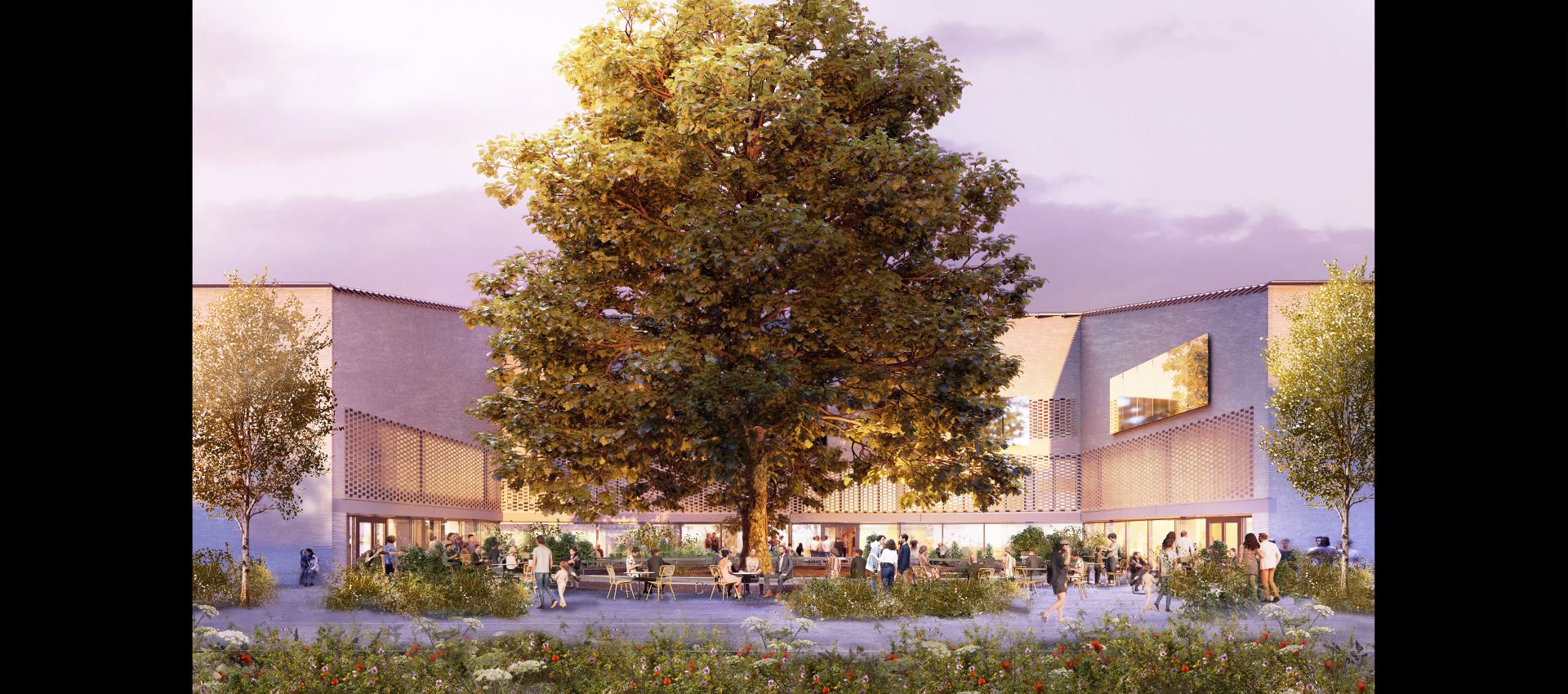
In 2021, Lars Krückeberg, founder of GRAFT and a Villa Massimo fellow (2018/19), designed a memorial site in the Tiergarten district dedicated to the patron couple and the German-Jewish bourgeoisie. The design was unveiled on 17 July 2025 at the Kulturforum on Johanna-und-Eduard-Arnhold-Platz as part of the Villa Massimo’s commemorative events marking the 100th anniversary of Eduard Arnhold’s death.