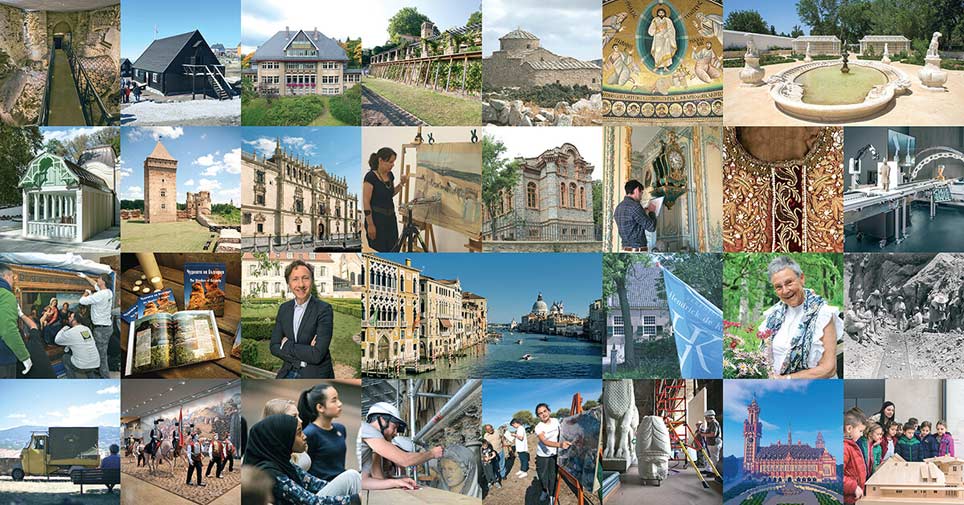
In June 2018, representatives from across Europe will gather in Berlin to explore what cultural preservation and cultural heritage mean for the European community. Thirty projects from 17 countries, which have been honoured with the European Union Prize for Cultural Heritage / Europa Nostra Award 2018, demonstrate what is already happening on a practical level.
What do a vineyard in Potsdam, an educational programme in Italy, textiles from Georgia and a 3D scanning facility have in common? Each of these projects exemplifies the preservation or promotion of cultural heritage in an exemplary manner. For this reason, projects from across Europe will once again be honoured with the European Union Prize for Cultural Heritage this year. The prize is awarded to European projects that highlight the cultural heritage of their respective countries and demonstrate exemplary approaches to it in the categories of conservation, communication, research or committed civil society engagement.
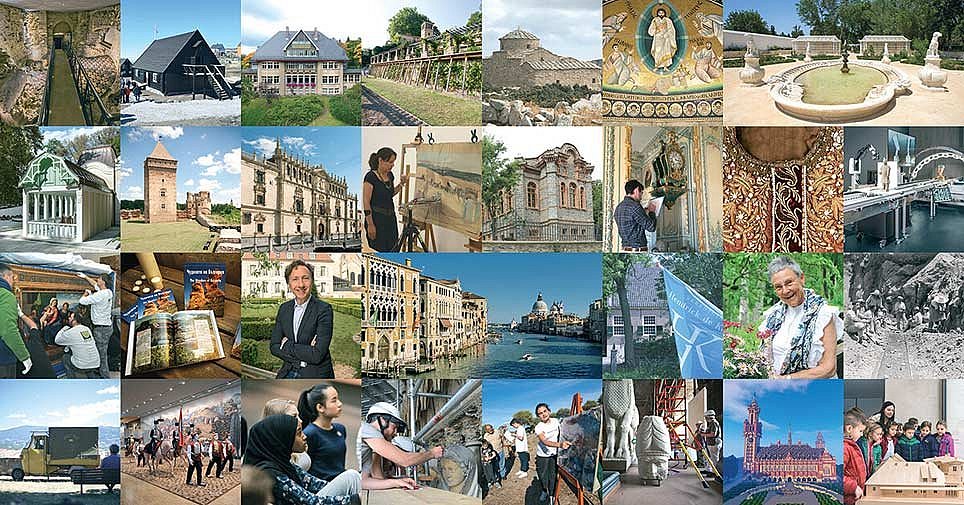
2018 Award Winners © Europa Nostra
The aim of the prize is to strengthen, broaden and raise awareness of cultural heritage across Europe. For this reason, seven projects are awarded the ‘Grand Prix’ from among the 30 winners. For the ‘Public Choice Award’, citizens from across Europe were able to vote for their favourite project via an online poll.
The European Union Prize for Cultural Heritage now looks back on a 16-year history: the prize was launched by the European Commission in 2002 and has been organised by Europa Nostra ever since.
The big day is 22 June 2018 – the seven Grand Prix winners and the winner of the Public Choice Award will be announced at the European Heritage Award Ceremony. The award ceremony will take place as part of the European Cultural Heritage Summit, organised by the Prussian Cultural Heritage Foundation in collaboration with the German National Committee for Monument Protection and Europa Nostra.
This year, three forward-looking projects from Germany are among the winners and are hoping to win the grand prize.
Recovery just like a hundred years ago: Dr Barner’s Sanatorium in Braunlage/Harz
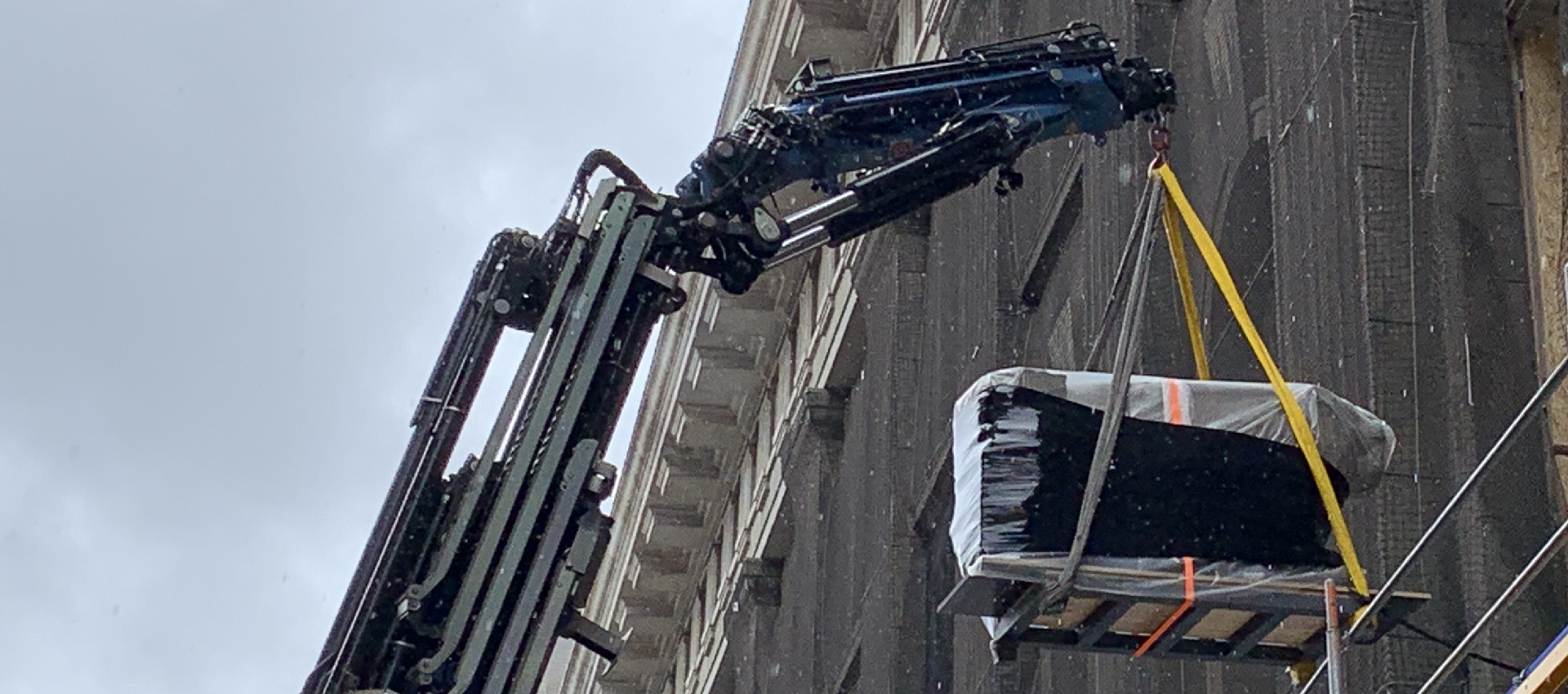
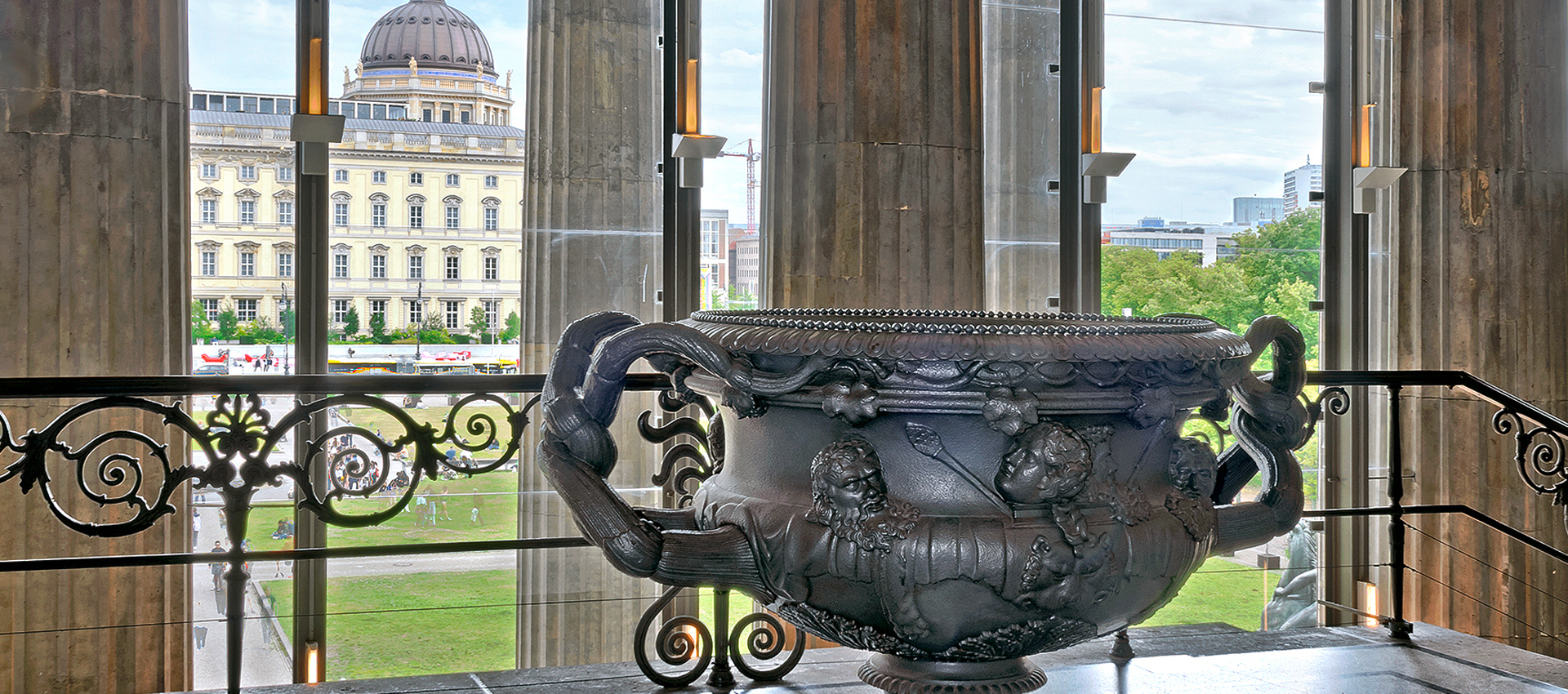
In the ‘Conservation’ category, the ‘Dr Barner’s Sanatorium’ is being honoured: the sanatorium in Braunlage is one of the most impressive Art Nouveau buildings in the whole of Germany. It has now been carefully and comprehensively restored by David Chipperfield Architects, the architects behind the James Simon Gallery on Museum Island, so that upon entering, one is transported back to a world of a hundred years ago. As the site is still used as a hospital and sanatorium for people with psychosomatic illnesses, the extensive restoration work had to take place whilst the facility remained in operation. The end result is impressive.
Strolling through the vineyard of the Prussian kings: The Winzerberg: Royal Vineyard in Sanssouci, Potsdam
A grassroots movement par excellence: until 2005, a forgotten 300-year-old vineyard lay at the heart of the Prussian palace complex, Sanssouci Park. Thanks to a citizens’ initiative, the site was restored over a ten-year period by thousands of volunteers, culminating in 2015. The aim was not only to restore the vineyard to its original form but also to use the original cultivation methods. The historic vineyard is now open to both Potsdam residents and visitors.
A great example of community engagement.
A revolution in the digitisation of cultural heritage: CultLab3D
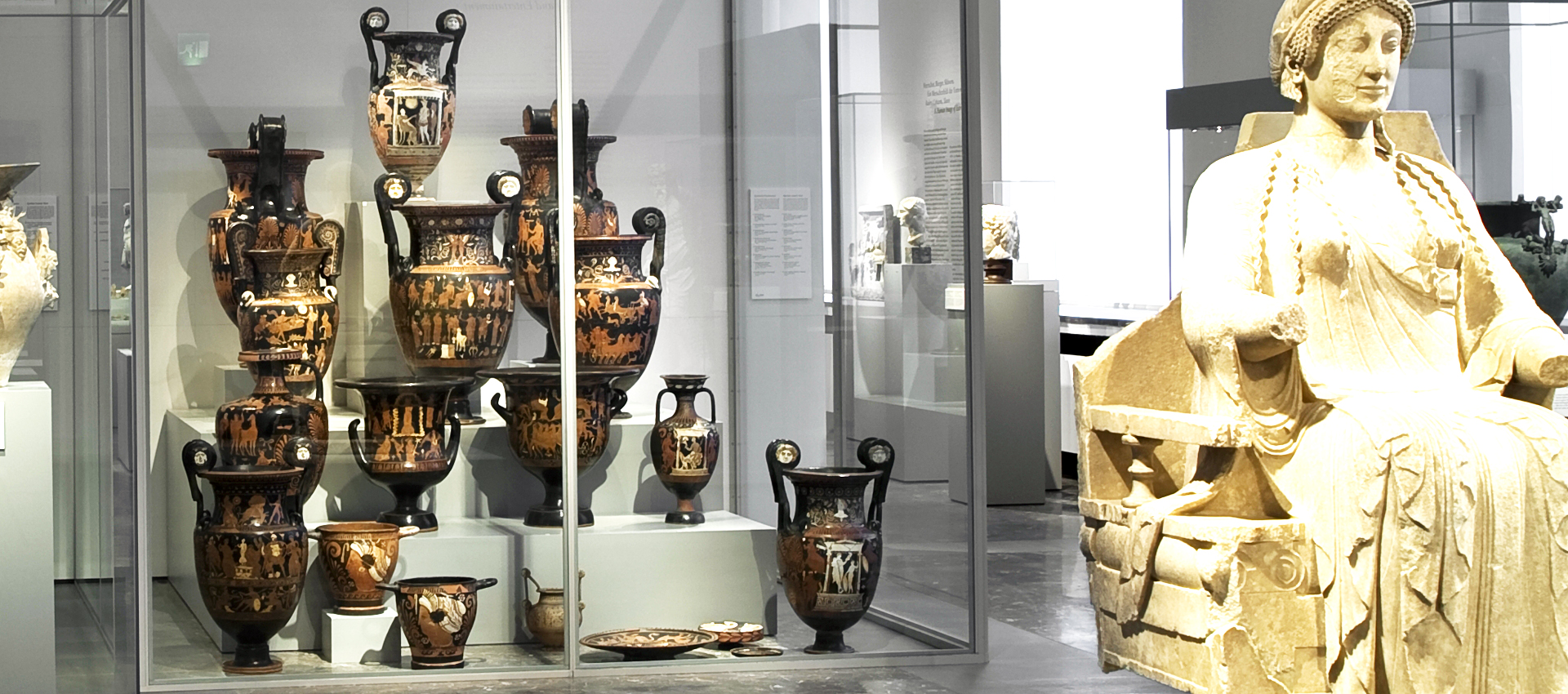
It is a revolution in the museum world: the CultLab3D scanning line, developed by Fraunhofer IGD in collaboration with the Staatliche Museen zu Berlin and the Liebieghaus, makes it possible for the first time to capture collection objects in three dimensions in just a few minutes and convert them into authentic digital models. Until now, 3D reproduction techniques for museum treasures have been expensive and, above all, time-consuming. The Prussian Cultural Heritage Foundation has also been able to test just how cost-effective the new digitisation process is: in 2014, a trial run saw statuettes from the Collection of Classical Antiquities, cuneiform tablets from the Museum of the Ancient Near East, wind instruments from the ethnomusicological collection of the Ethnological Museum and much more digitised.
The European Union Prize for Cultural Heritage 2018
© Europa Nostra
Dr Barners’ Sanatorium in Braunlage, Harz
© Europa Nostra
The Winzerberg: The Royal Vineyard at Sanssouci, Potsdam
© Europa Nostra
CultLab3D
© Europa Nostra
Preservation of cultural heritage
- St. Wenceslas Rotunda (Czech Republic)
- Poul Egede’s Mission House (Denmark)
- Ief Postino: Belgium and Italy Connected by Letters (Belgium)
- Collaborative Conservation of the Apse Mosaic of the Transfiguration in the Basilica at St Catherine’s Monastery (Egypt)
- The Winzerberg – Royal Vineyard at Potsdam-Sanssouci (Germany)
- Dr Barner’s Sanatorium (Germany)
- Byzantine Church of Hagia Kyriaki (Greece)
- The Botanical Garden of the National Palace of Queluz (Portugal)
- The Bač Fortress (Serbia)
- The Pavilion of Prince Miloš at the Bukovička Spa (Serbia)
- Sorolla’s Sketches for “Vision of Spain” (Spain)
- Façade of San Ildefonso College (Spain)
- Zografyon Greek School (Turkey)
Education
- The Alka of Sinj Museum (Croatia)
- Culture Leap: Educational Programme (Finland)
- National Institute of Cultural Heritage: Educational and Training Programme for Conservators (France)
- Open Monuments (Italy)
- The Rising From Destruction Campaign (Italy)
- GeoCraftNL: Minecraft Heritage Project by
- GeoFort (Netherlands)
- Plečnik House (Slovenia)