The Second World War came to an end in 1945. This is commemorated by the exhibition “The Angel of History: Walter Benjamin, Paul Klee and the Berlin Angels 80 Years After the End of the War” at the Bode Museum, the site-specific installation “The Missing House” by Christian Boltanski in the Mitte district, and a citizen science project run by the State Library
There are events that we simply must remember, even if it is not easy to find the right way to do so. The end of the Second World War 80 years ago is one such event, but how should we deal with it? How should we tell its story? The Prussian Cultural Heritage Foundation is currently showcasing three projects that approach this historic milestone in very different ways – and each of them addresses it with sensitivity and empathy, in an unusual and moving manner.
All three highlight what every war leaves behind, alongside death, despair and destruction: the void. People and objects, houses and streets, trees and animals, living and non-living things – simply gone. Sometimes it helps to fill these gaps; sometimes it is more powerful to preserve them.
Christian Boltanski’s “The Missing House”
- News: Christian Boltanski’s “The Missing House” is to be included in the “Infinite Exhibition” at the Hamburger Bahnhof
- Microsite
The Angel of History. Walter Benjamin, Paul Klee and the Berlin Angels 80 Years After the End of the War (8 May 2025 to 13 July 2025, Bode Museum)
Memories of the end of the war in Berlin
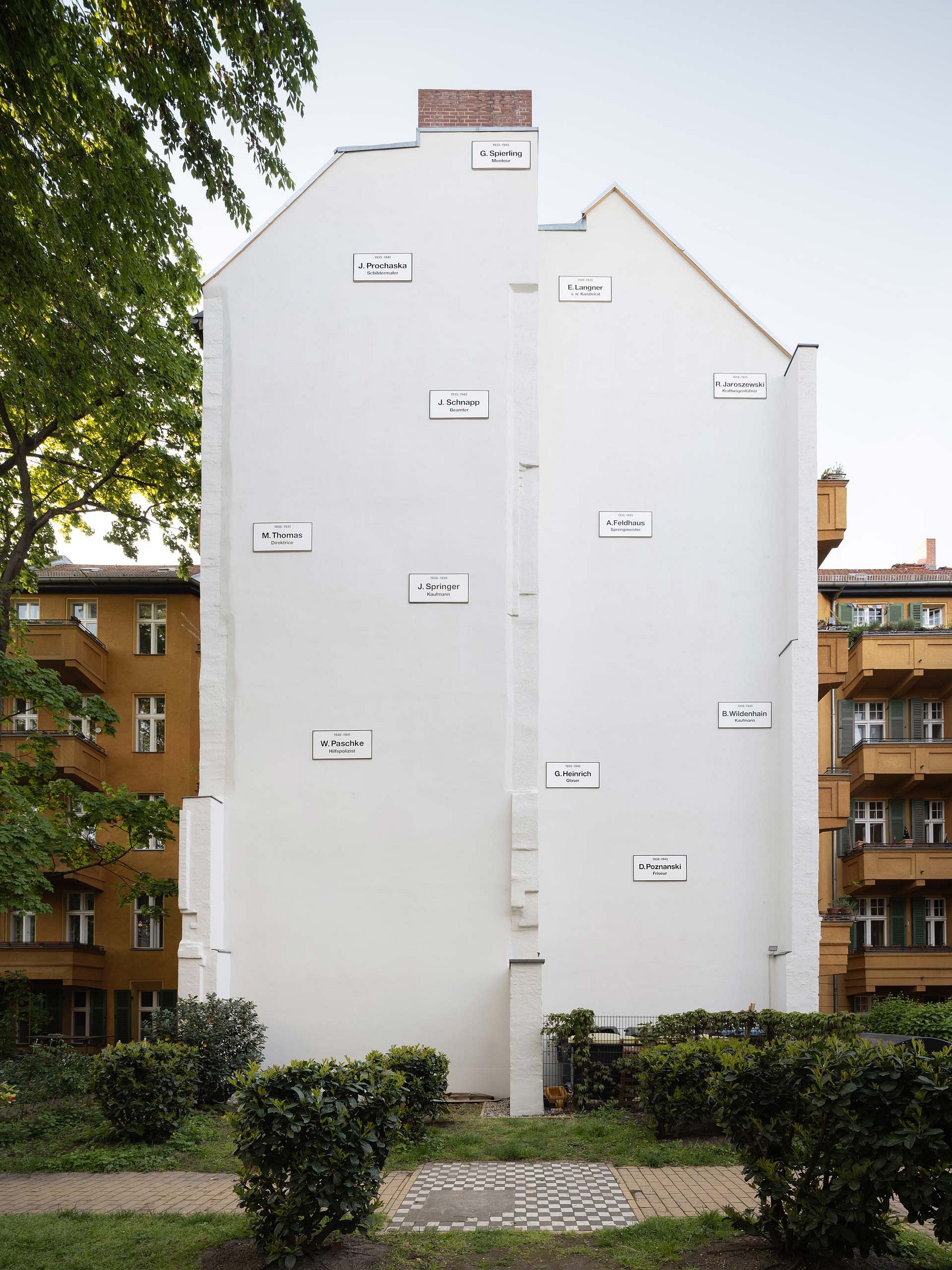
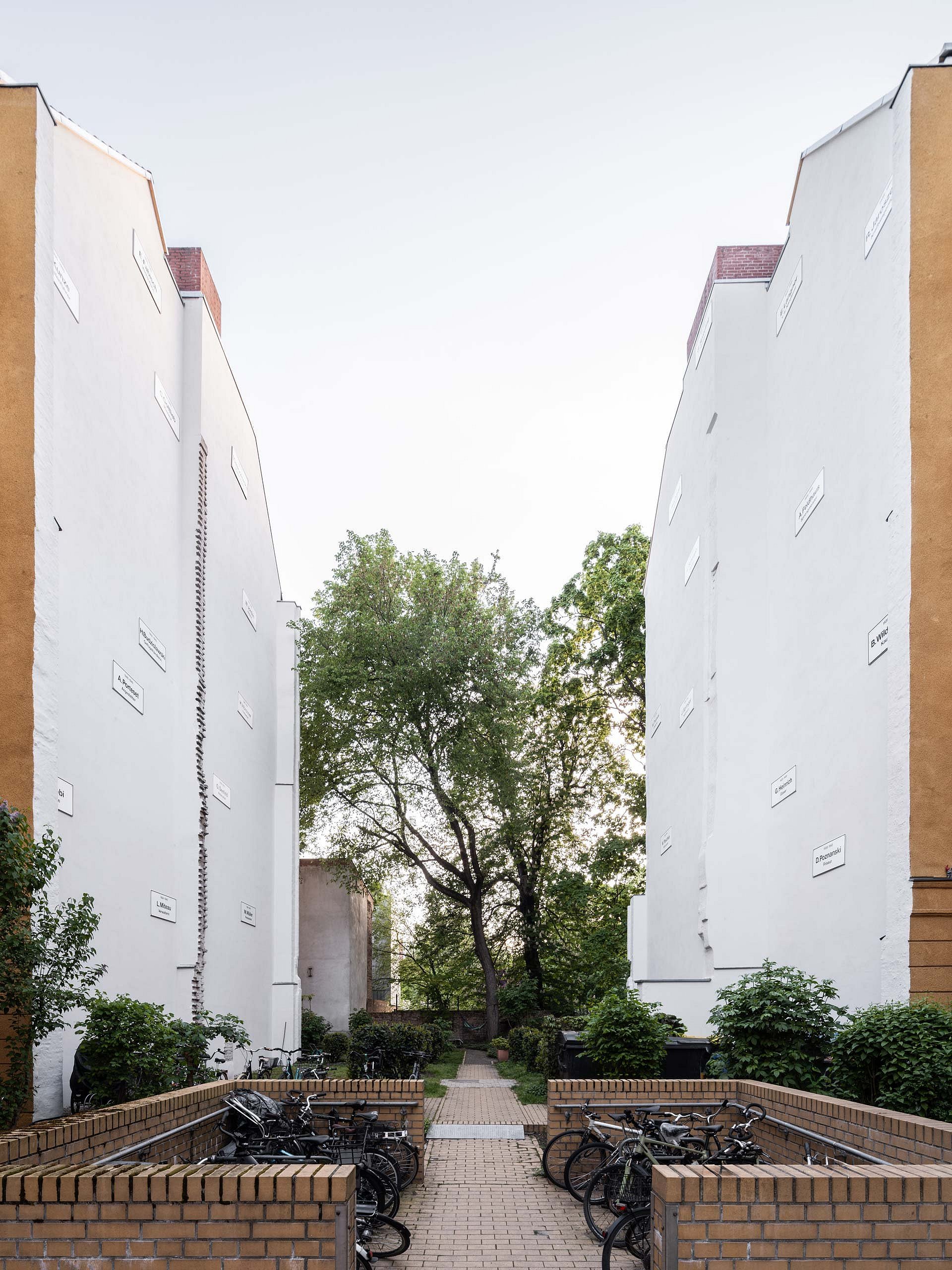
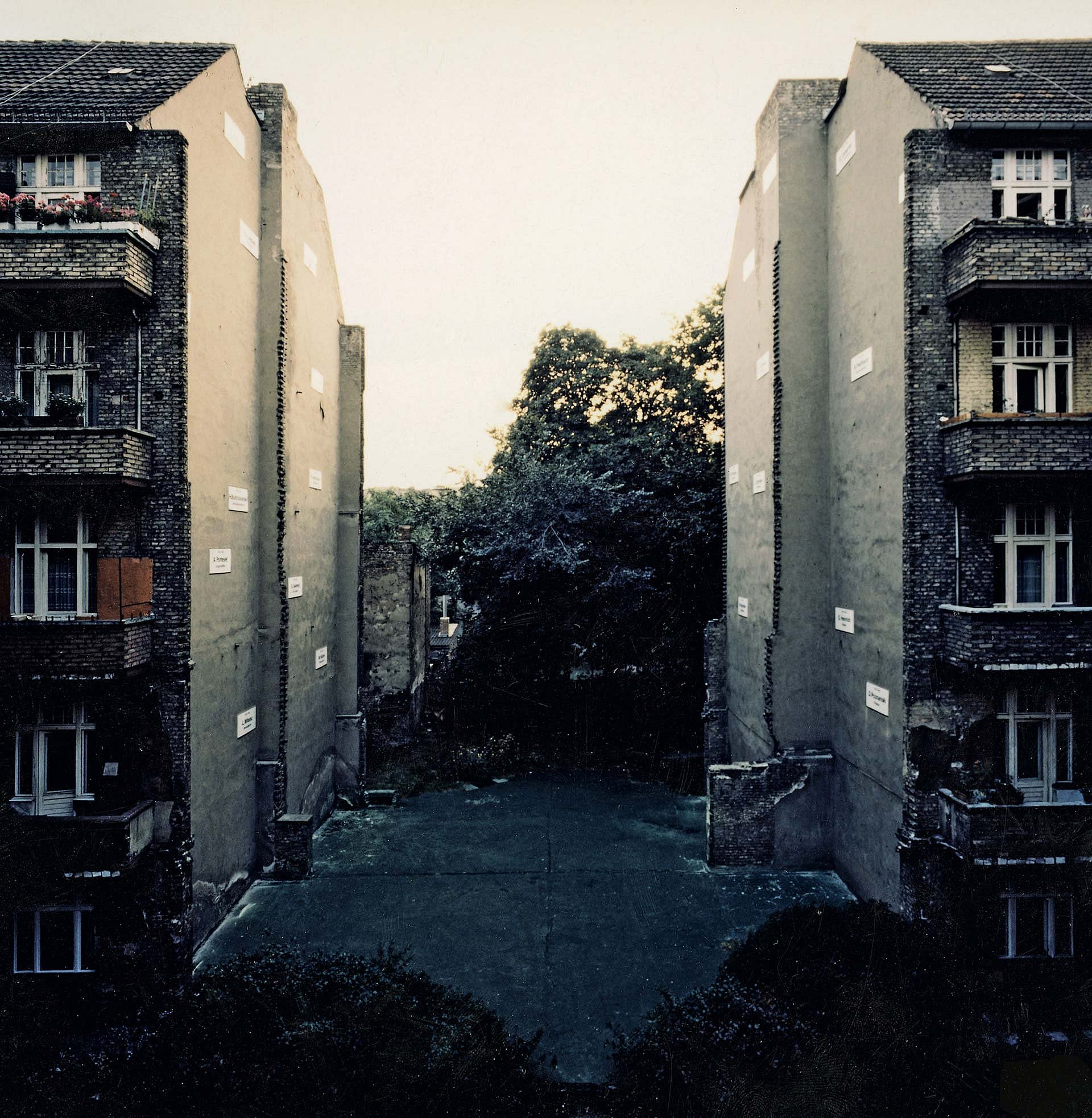
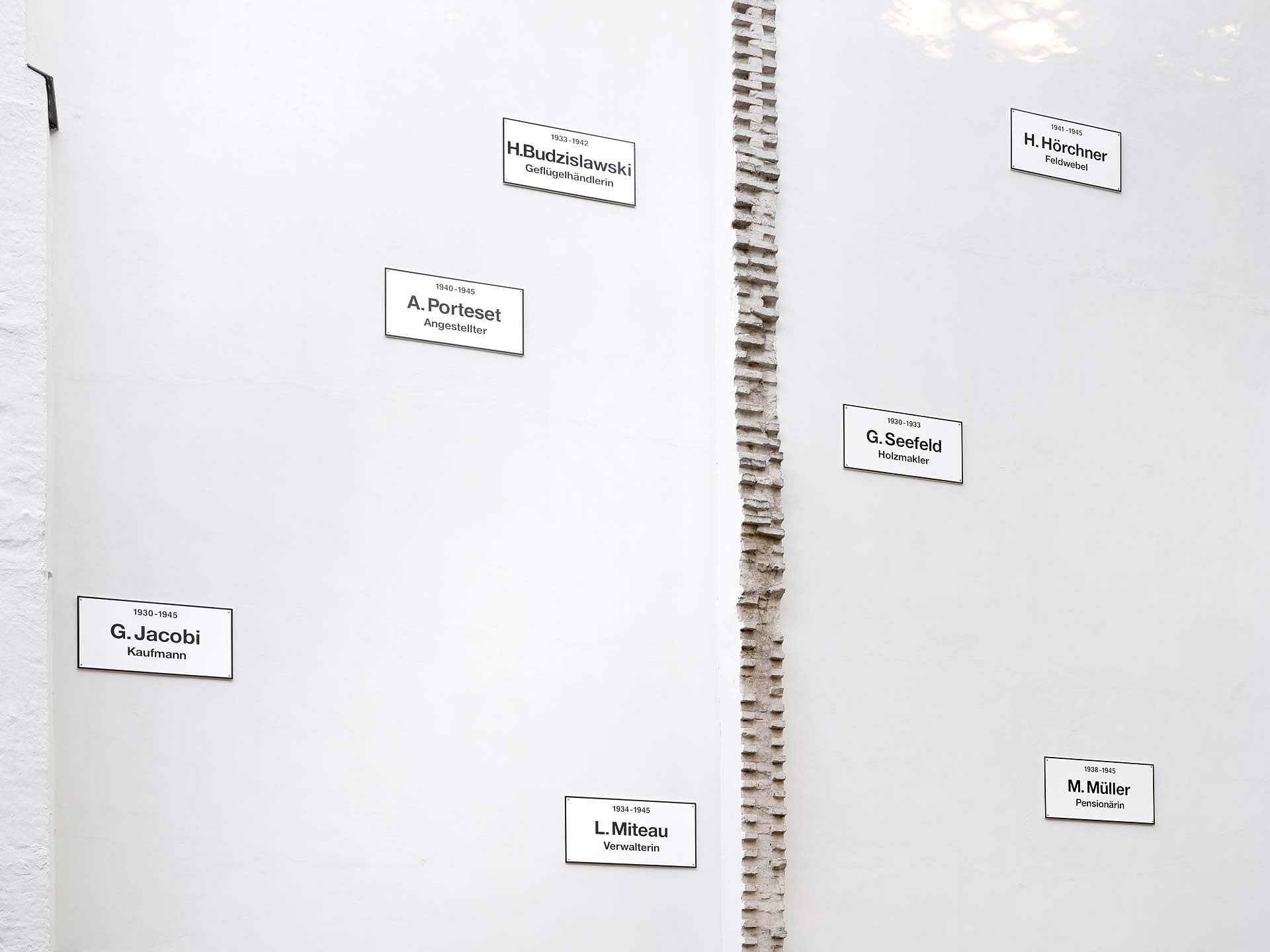
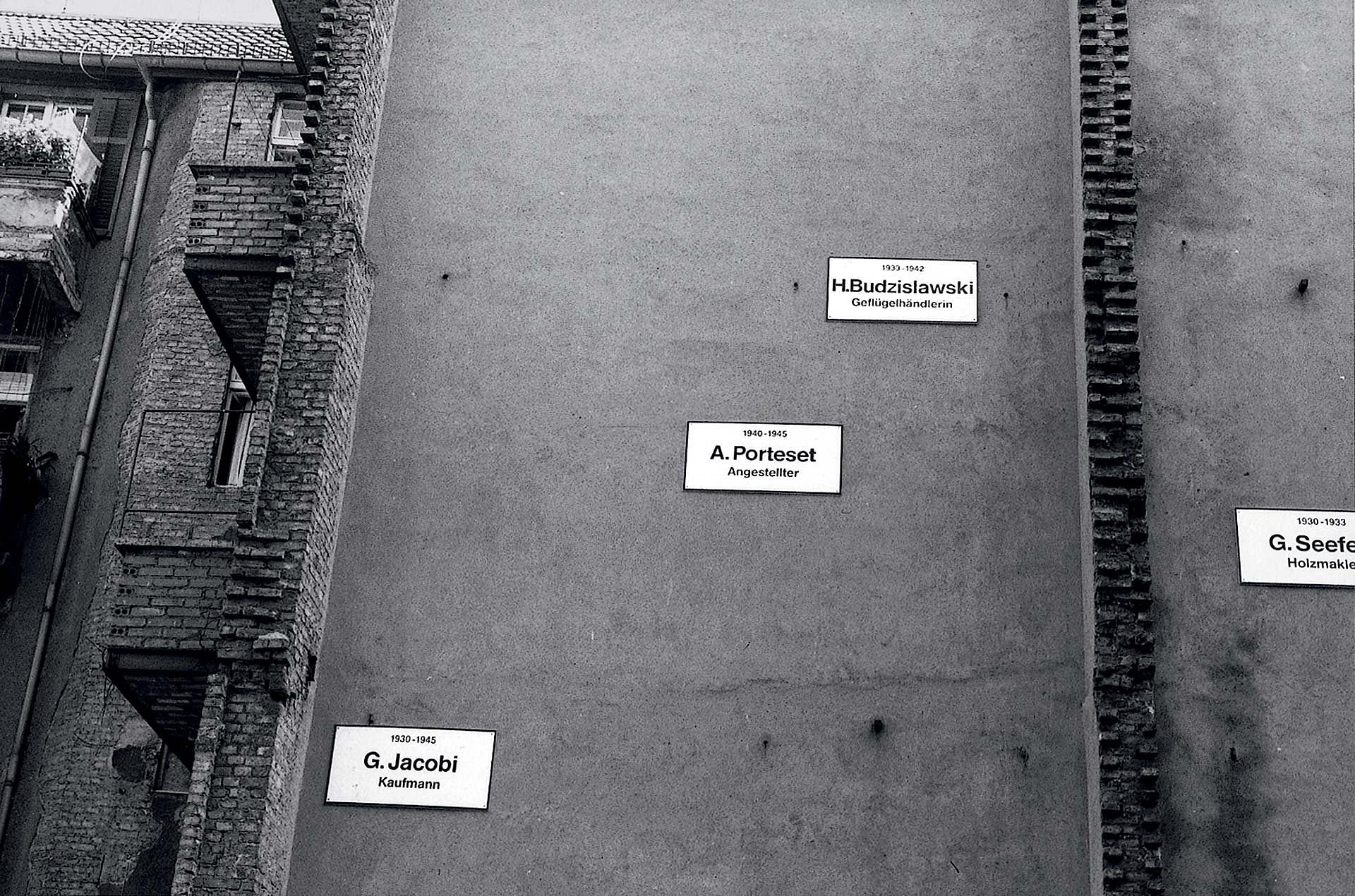
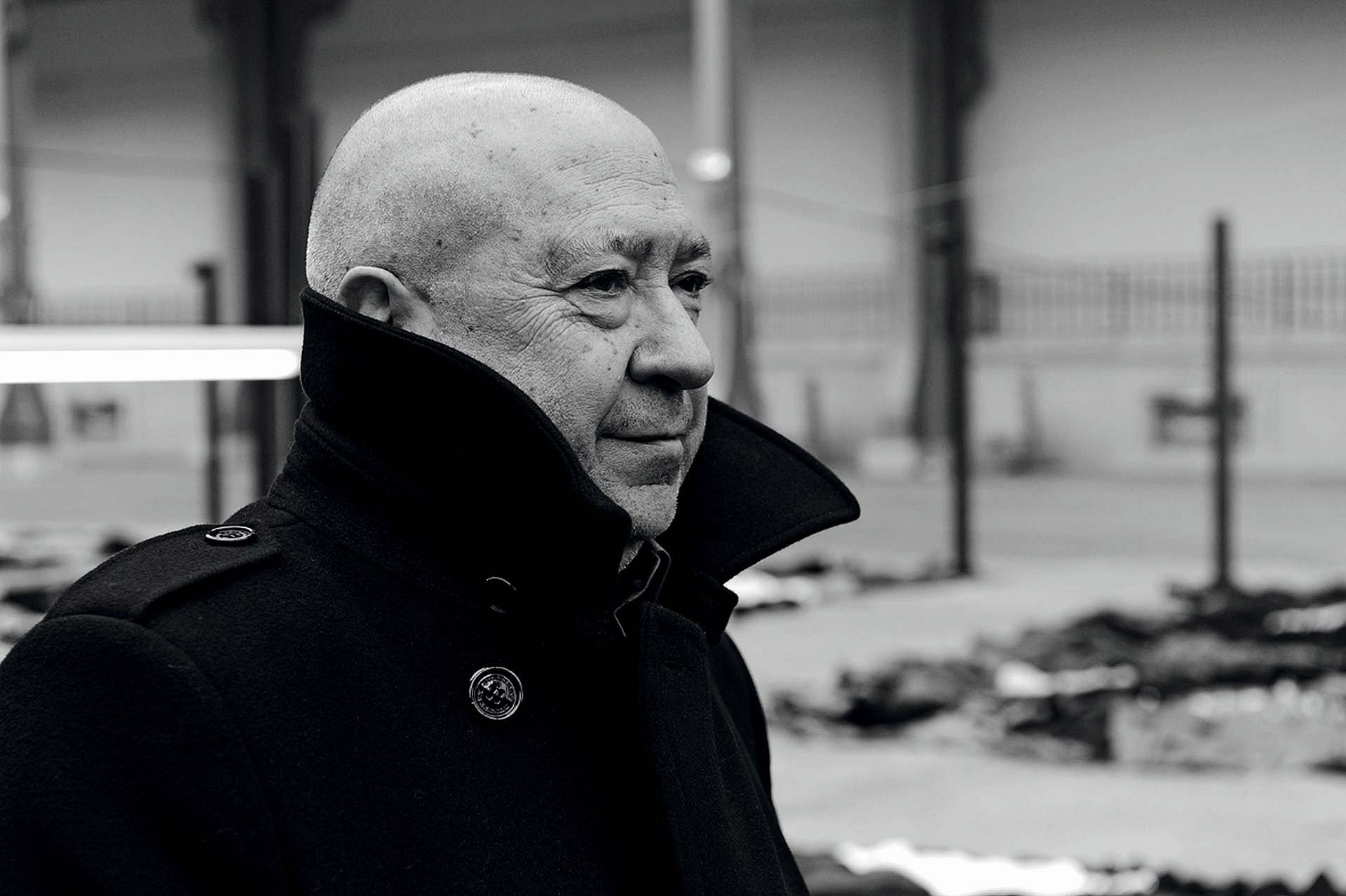
The French artist Christian Boltanski (1944–2021) chose the latter approach. His site-specific artwork “The Missing House”, created in 1990, has now been donated by Annette Messager to the Hamburger Bahnhof and secured on a permanent basis as part of its “Infinite Exhibition”. With 24 nameplates on two light-coloured fire walls facing each other, it commemorates the tenants who once lived at Große Hamburger Straße 15–16.
However, their house has long since ceased to exist. It was built in 1911 and partially destroyed during the bombing raid of 3 February 1945. Before the war, it was inhabited mainly by Jewish families, who were expropriated and deported. Others died in this bombing raid.
Alongside the names of the Jewish and non-Jewish residents, the plaques list their professions and the period during which they lived here. They are distributed across the walls, which are over 20 metres high, and appear like a giant ‘silent doorman’ in the public space.
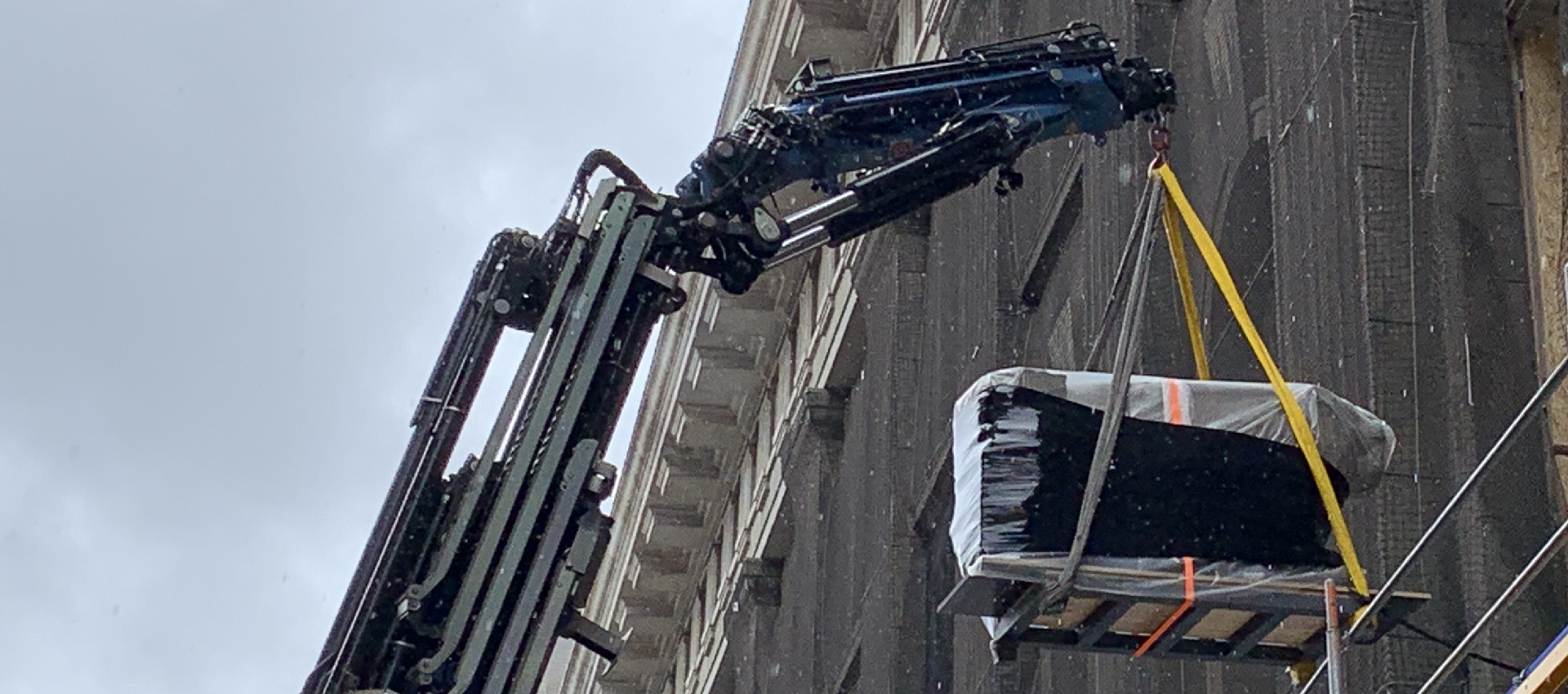
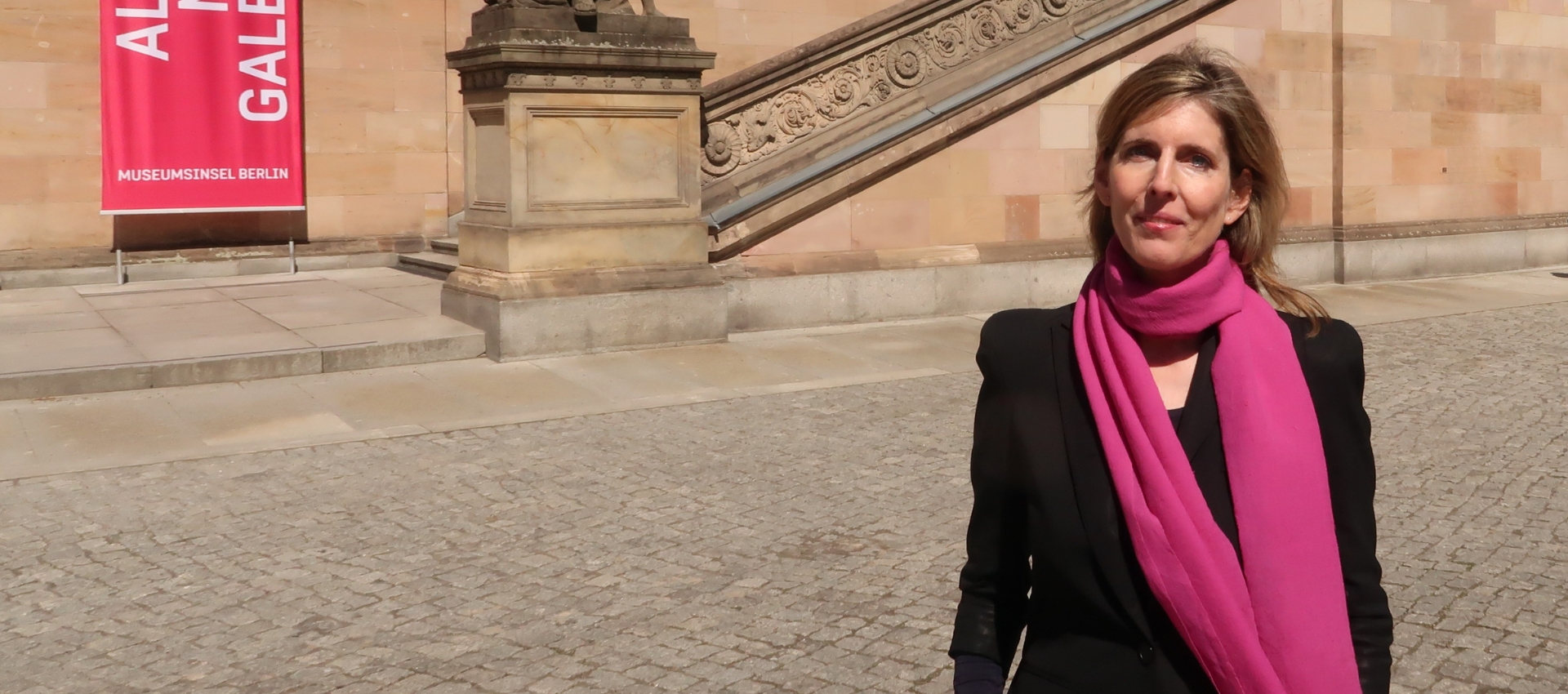
The research carried out by Boltanski’s team drew on a Berlin telephone directory sorted by address, second-hand bookshops, libraries, archives and building records held at the State Library in East Berlin. The wooden panels have since been restored and remain in the museum; instead, on 8 May 2025, the 80th anniversary of the end of the Second World War, replicas by the Munich-based restorer Iris Winkelmeyer were installed on site.
Thanks to Boltanski’s work, the former tenants have had their names and identities restored. Thus, the empty space between the two buildings becomes a place of remembrance for the persecution of the Jews, the Holocaust, and the destruction wrought by the Second World War, particularly in the city of Berlin.
“But a storm is blowing from Paradise”
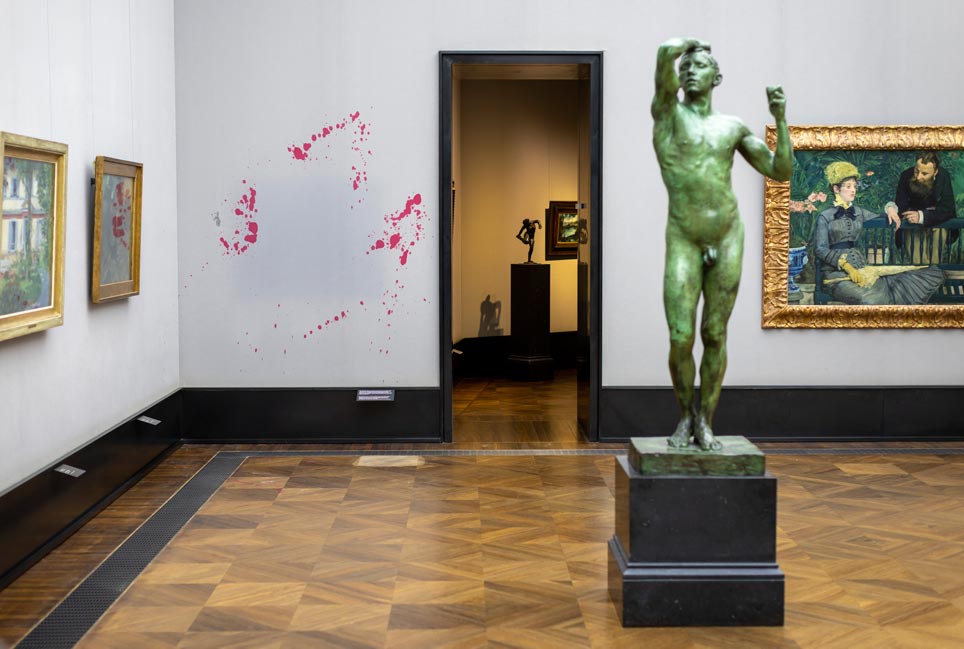
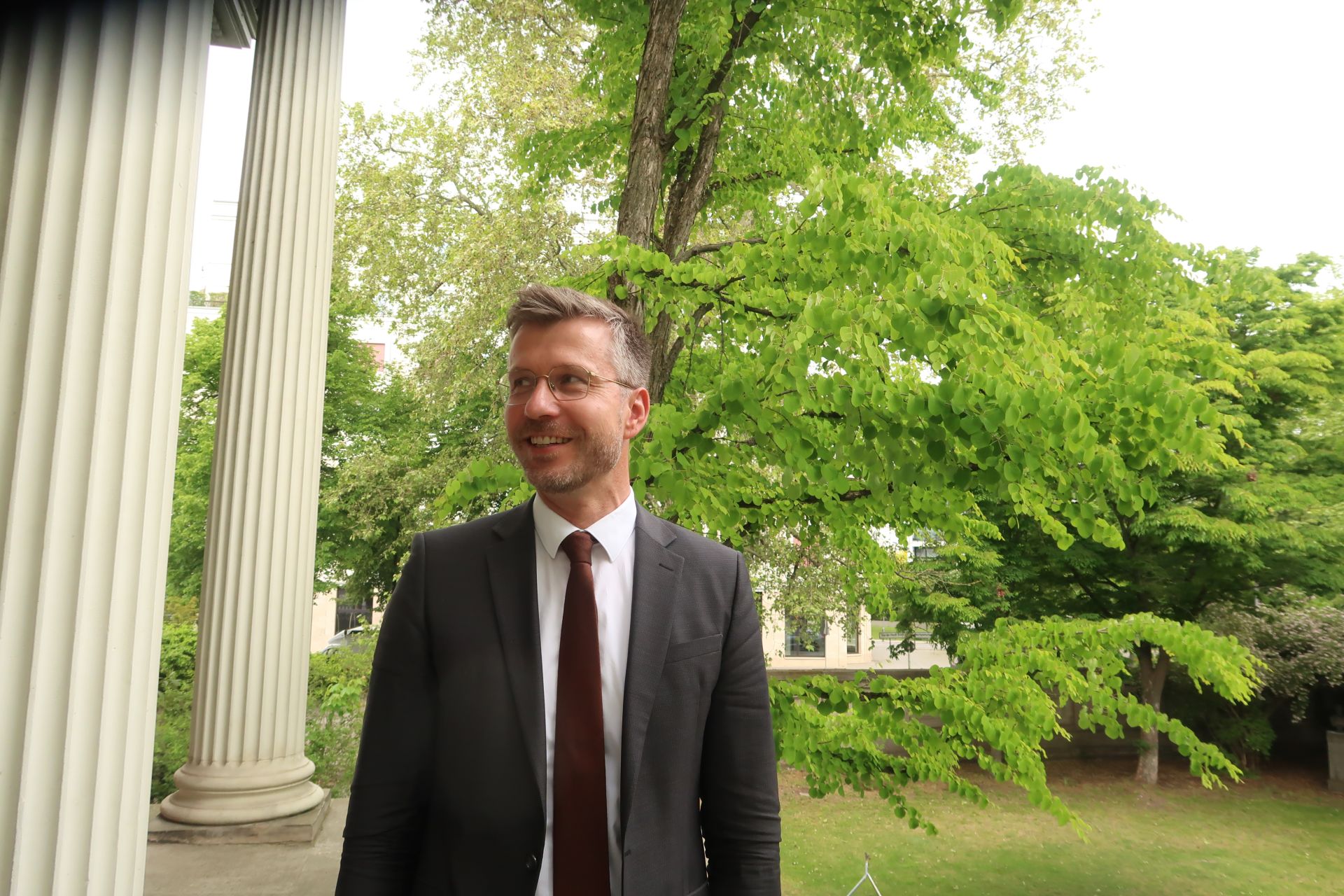
The exhibition “The Angel of History. Walter Benjamin, Paul Klee and the Berlin Angels 80 Years After the End of the War” also focuses on Berlin. This special presentation by the Sculpture Collection, the Museum of Byzantine Art and the Picture Gallery is a tribute to the great philosopher Walter Benjamin, who was born in Charlottenburg in 1892.
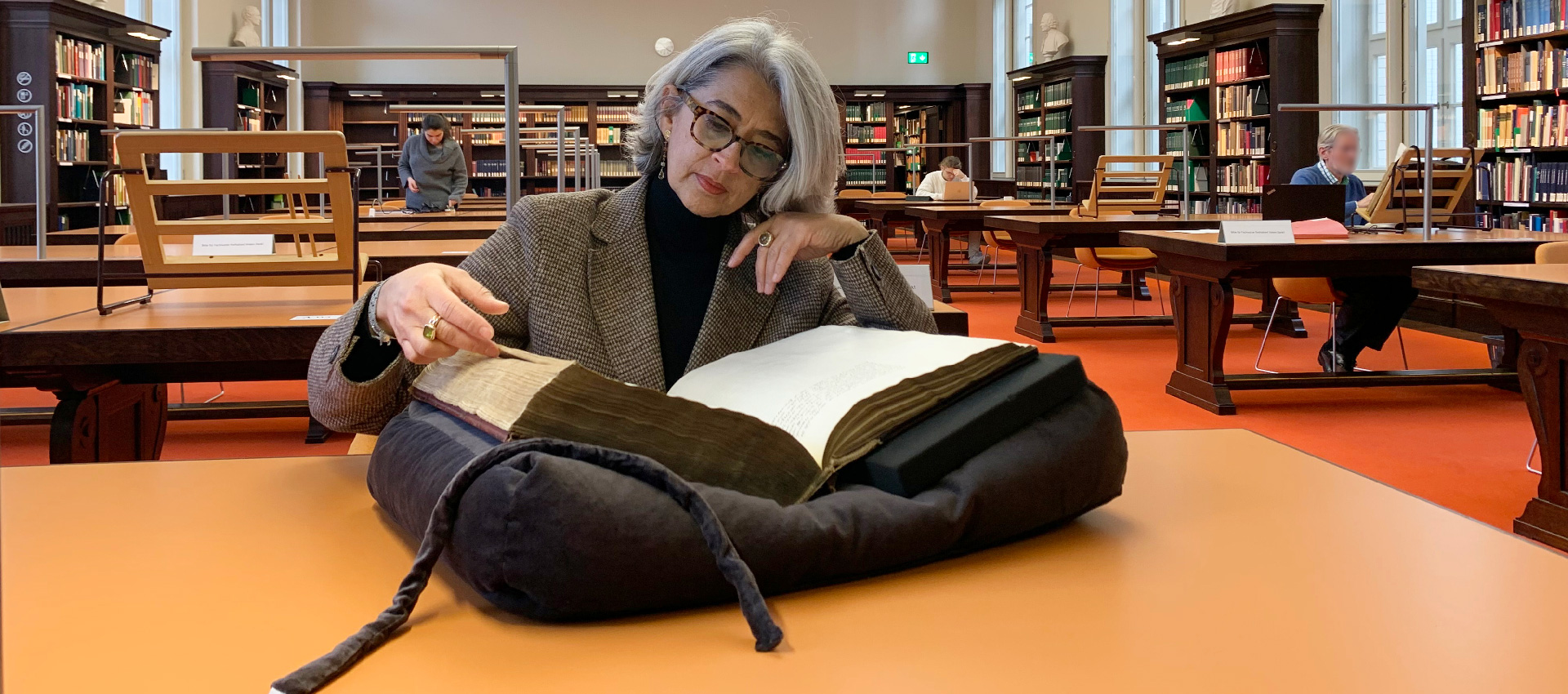
Curator Neville Rowley has succeeded in borrowing “Angelus novus” – surely Paul Klee’s best-known work, thanks to Benjamin’s writings – from the Israel Museum in Jerusalem. However, this is a highly rare occurrence due to the work’s physical fragility.
Benjamin purchased the small drawing – an oil transfer and watercolour on paper – in a Munich gallery in 1921. With brief interruptions, it accompanied him until his suicide in 1940 in the Spanish border town of Portbou and inspired his essay “On the Concept of History” (1939/40).
Thesis IX in that essay reads: “There is a painting by Klee called Angelus Novus. It depicts an angel who looks as though he is about to move away from something he is staring at. His eyes are wide open, his mouth is agape and his wings are spread. The angel of history must look like this. He has turned his face towards the past. Where a chain of events appears before us, he sees a single catastrophe that ceaselessly heaps ruin upon ruin and hurls them at his feet. He would like to linger, to rouse the dead and piece together the shattered. But a storm blows from Paradise, which has caught itself in his wings and is so strong that the angel can no longer close them. This storm drives him inexorably into the future, to which he turns his back, whilst the heap of rubble before him rises to the heavens. What we call progress is this storm.”
Benjamin’s interpretation gave Klee’s drawing an aura that still surrounds it today, even if one does not necessarily have to agree with his exegesis. On loan from the archives of the Berlin Academy of Arts, where Benjamin’s estate is being catalogued, the original of Thesis IX is on display, in German and in Benjamin’s French translation.
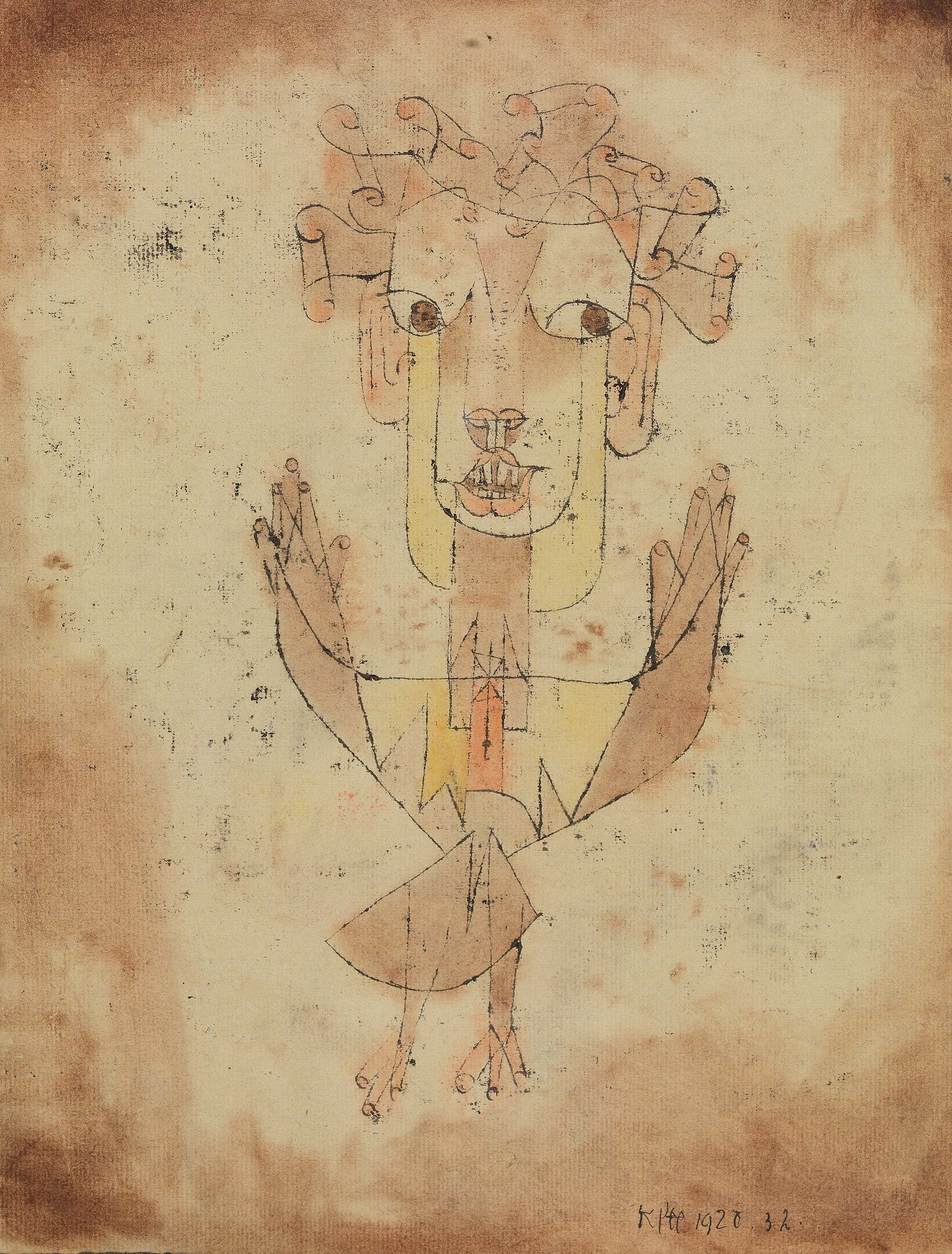
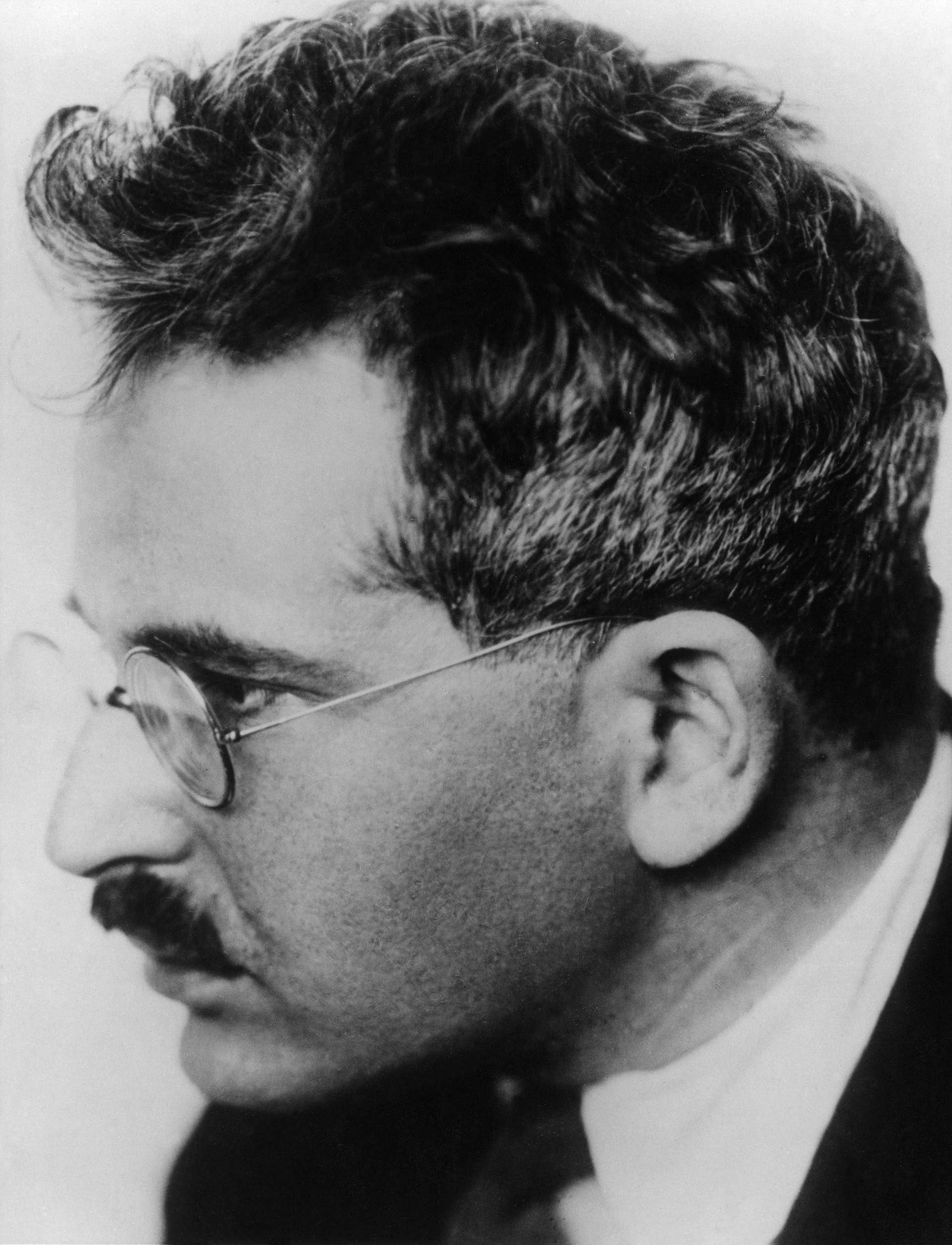
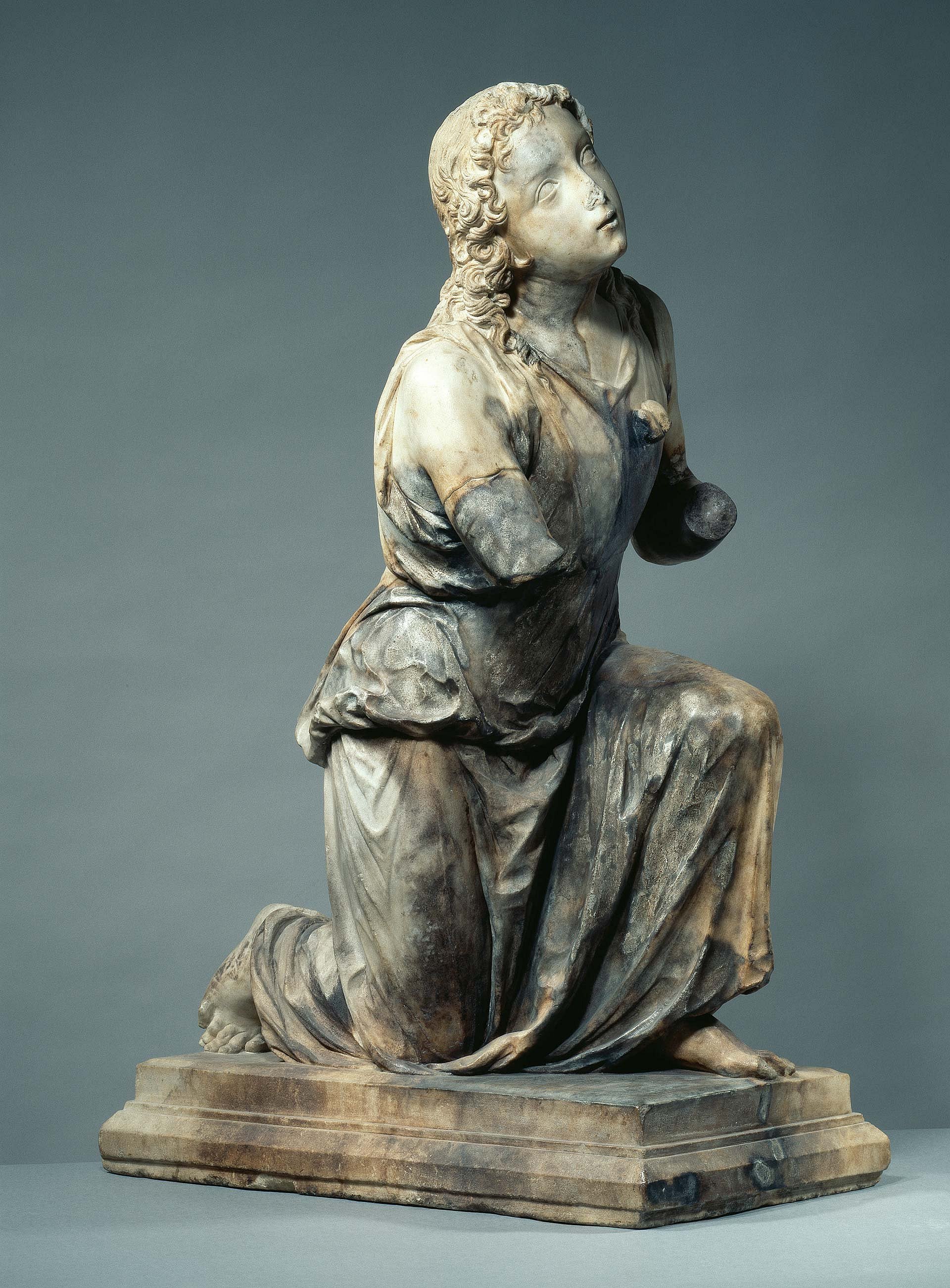
Angels bear witness to the extent of the destruction
Rowley describes ‘Angelus novus’ as a magnet that commands attention not only in this exhibition. This masterpiece compels visitors everywhere to look very closely and to recall Benjamin’s words once more, in order to grasp what the philosopher had realised at the time.
Those born after the war naturally see before them the catastrophe of the Second World War and subsequent conflicts. With just a few objects, the echo chamber of this horror is extended from Klee’s angel to the exhibits on the red walls all around, where similar angels are situated.
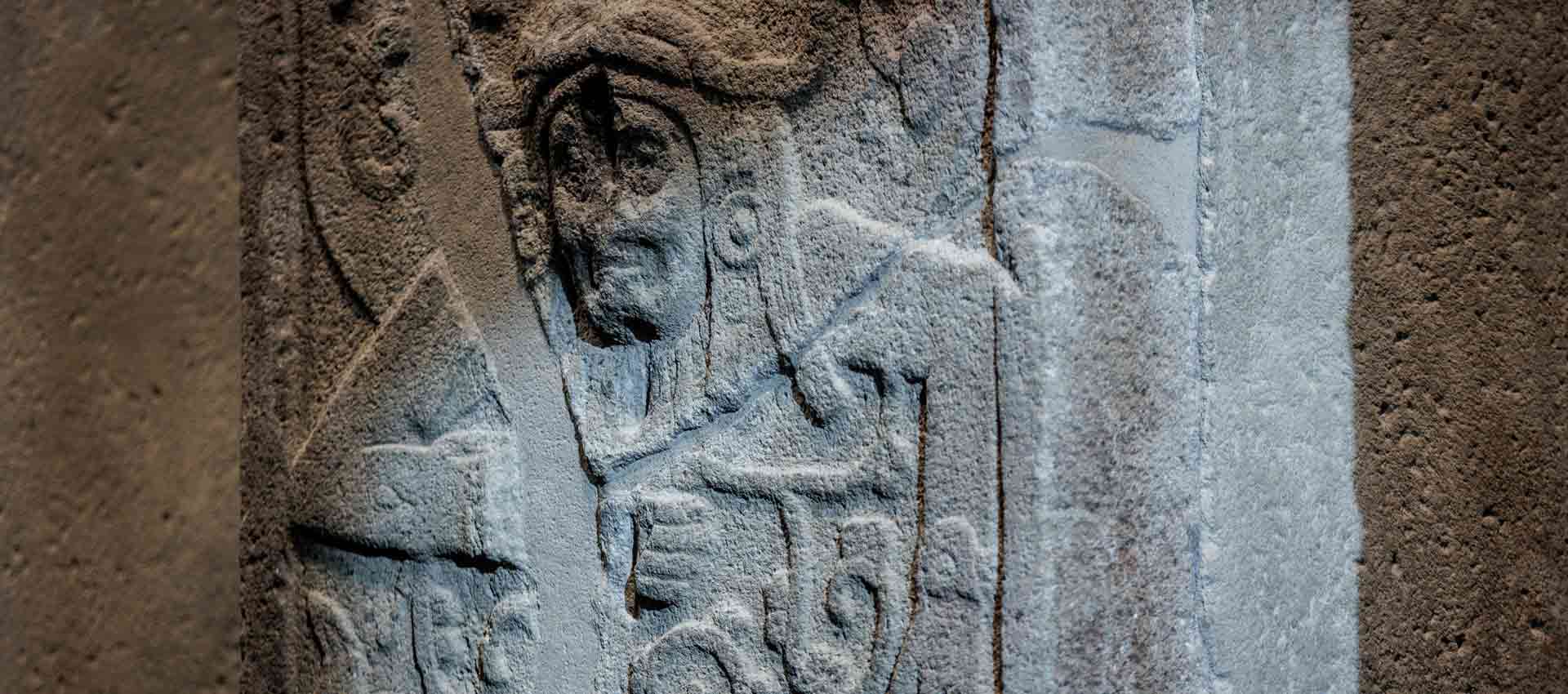
After all, the Bode Museum is known, among other things, for its angel figures. Two of them are shown here as a pars pro toto for the art-historical losses of the war years and for the voids they have left behind. The kneeling angel by the Venetian sculptor Giambattista Bregno was shattered in a fire in 1945 at the Friedrichshain anti-aircraft bunker, where thousands of artworks from Berlin’s museums had been relocated. For a long time, people did not want to deal with this marble child, Rowley explains; it was too depressing to look at, let alone exhibit. It was not until 1980 that it was restored, and now, blackened by soot, it raises its armless arms upwards like a memorial to universal mourning.
The second angel was depicted in Caravaggio’s painting ‘Saint Matthew with the Angel’. It was completely destroyed in the fire at the anti-aircraft bunker’s temporary storage facility. A photograph of it is on display, preserving the work for posterity, at least in black and white and in its original size.
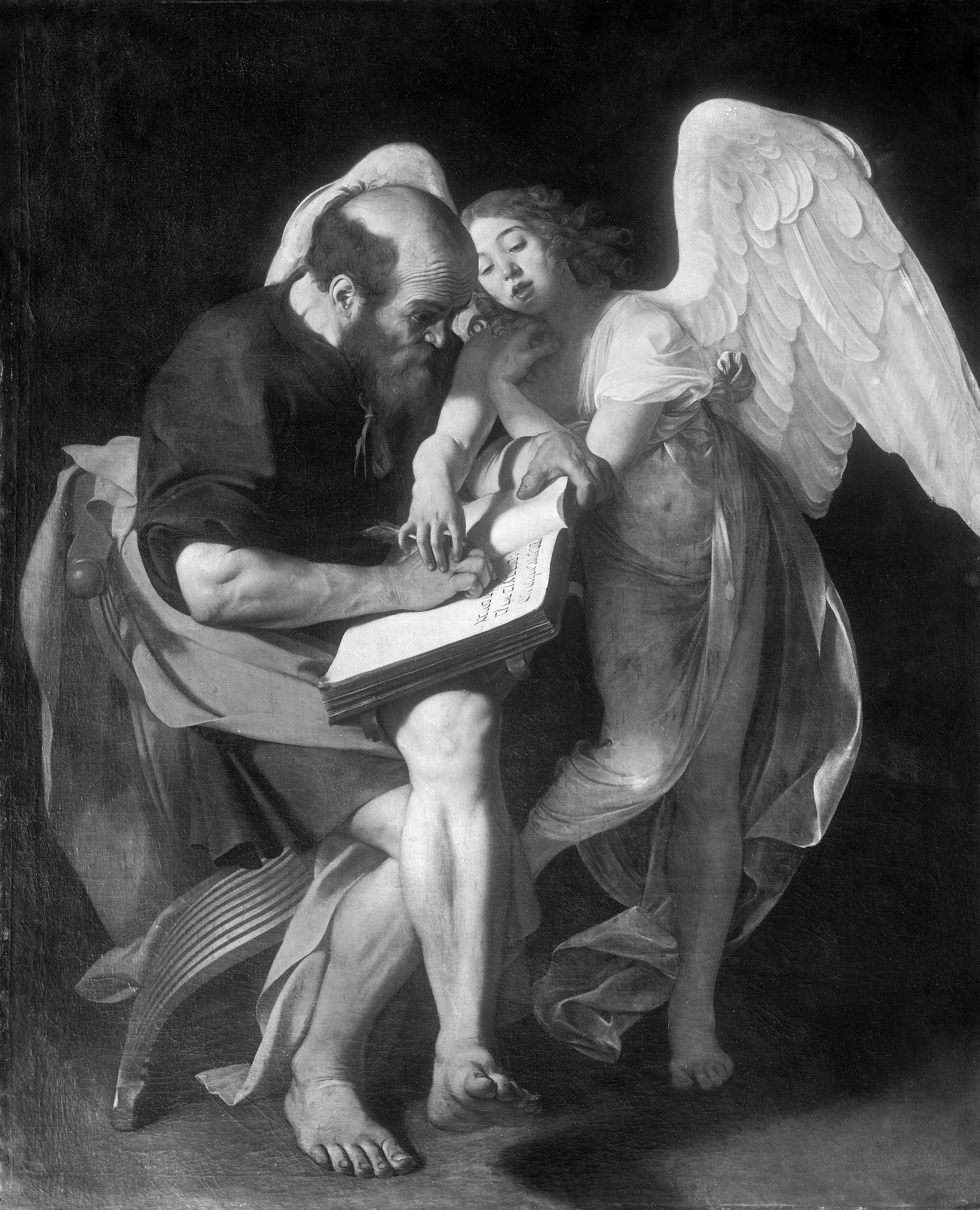
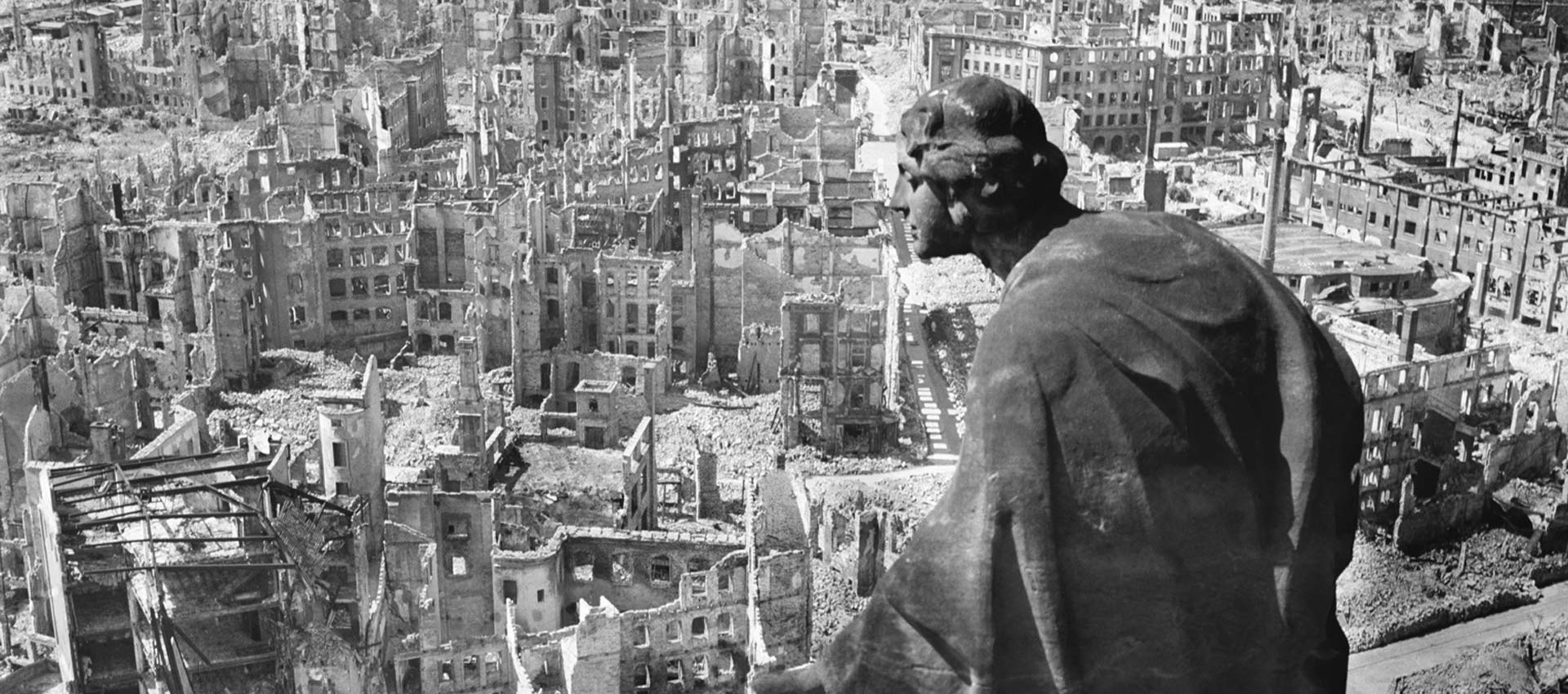
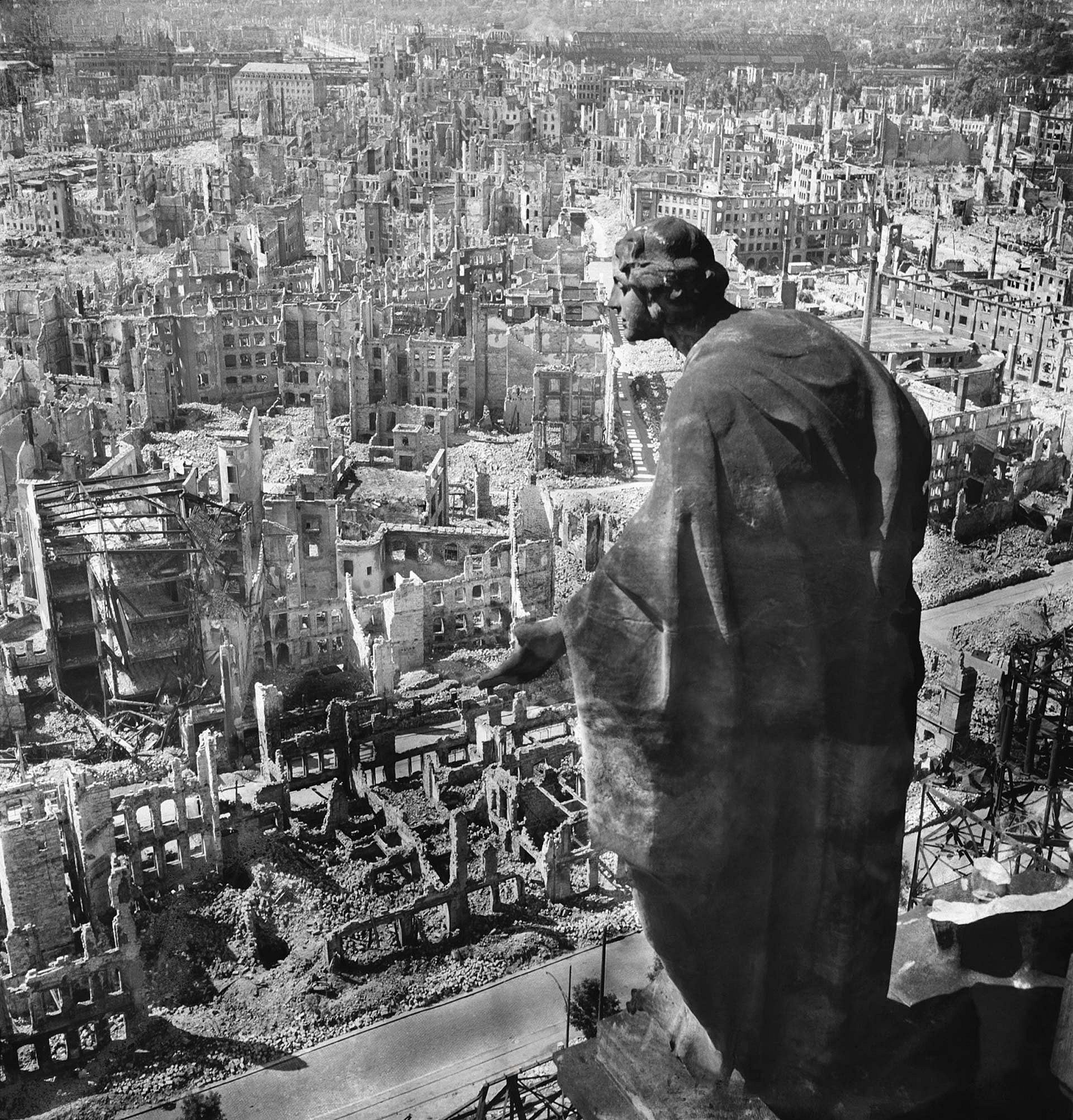
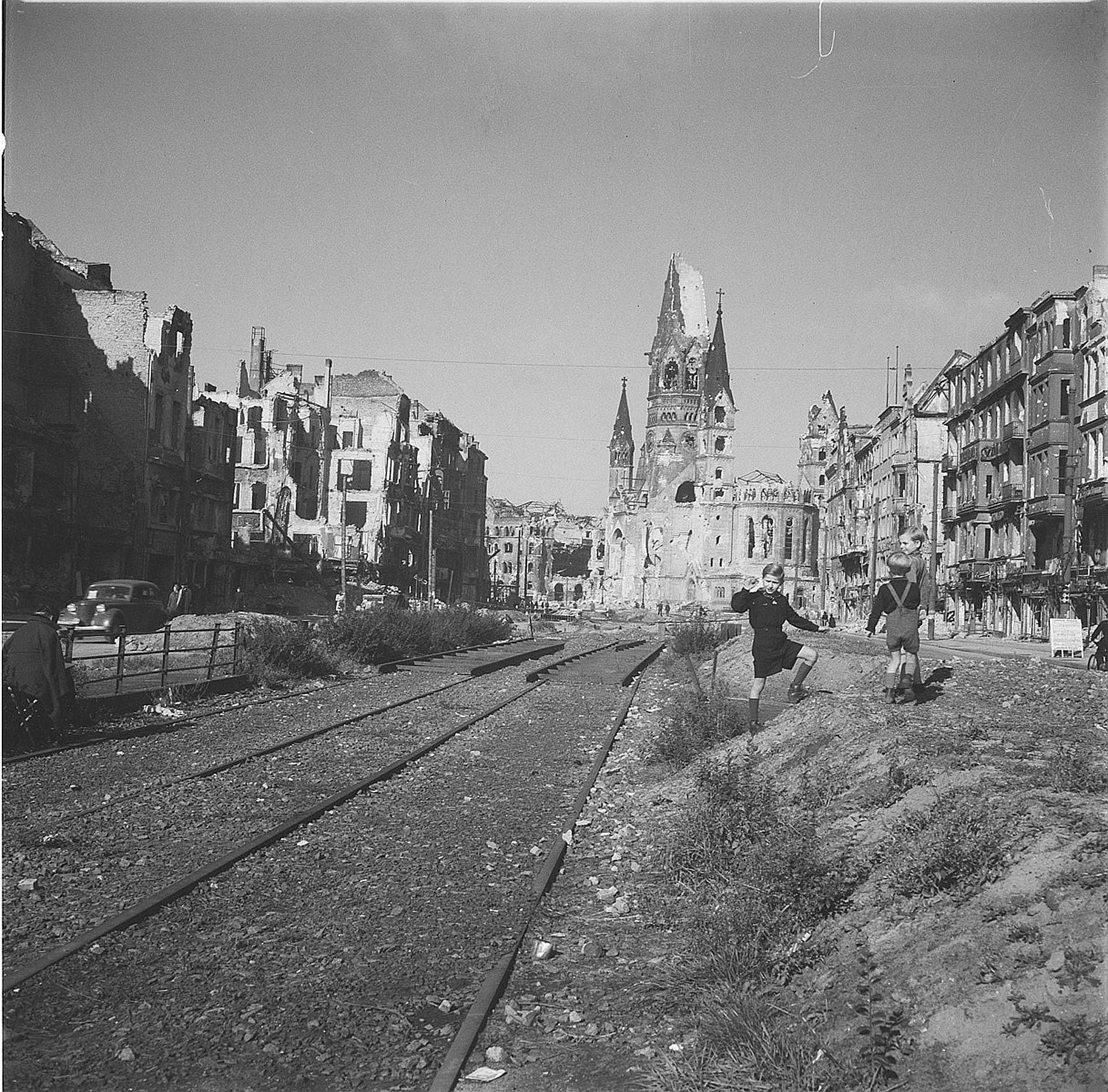
Two further photographs, both from 1945, illustrate the extent of the bomb damage: Richard Peter Sr.’s view of devastated Dresden from the town hall tower, and Fritz Eschen’s view of the ruins of the Kaiser Wilhelm Memorial Church.
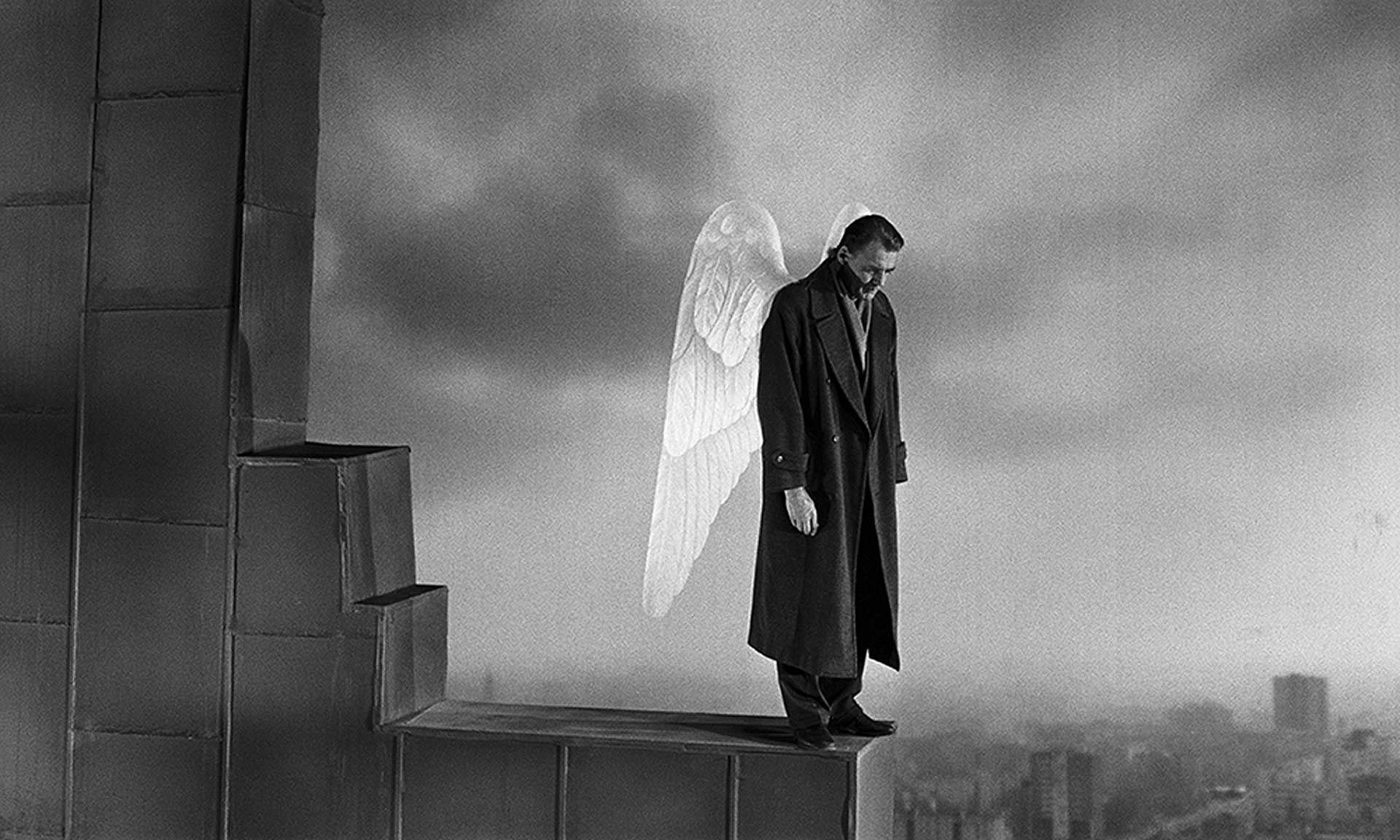
This is beautifully complemented by a clip from Wim Wenders’ film *Wings of Desire* (1987), in which the actor Bruno Ganz, as the angel Damiel, looks down from the tower of the Memorial Church onto the city and its bustling inhabitants. Later, in a scene set in the State Library in West Berlin, a female user says in a voice-over: “Walter Benjamin bought Paul Klee’s watercolour Angelus Novus in 1921”, whilst Ganz and Otto Sander (as the angel Cassiel) walk past her – invisible to mere mortals.
The connection between angels, Berlin and Benjamin is obvious – as is the link between two works from vastly different eras. One of these is ‘Melencolia I’ (1514) by Albrecht Dürer, on loan from the Kupferstichkabinett, as a reproduction of it was found in Walter Benjamin’s private collection. In his day, the engraving was the subject of lively debate due to its enigmatic imagery. “It is a rebus for which we have lost the key,” explains Rowley: “That is what makes engaging with it so vivid.”
Opposite this, he has placed the colour photograph taken by Gisèle Freund in Paris in 1938 of Benjamin resting his head in his hand, much like the melancholic angel in Dürer’s engraving. “The objects speak to one another,” says Rowley, outlining the concept behind his minimalist exhibition: “Less is more!”
A new database for post-war documents
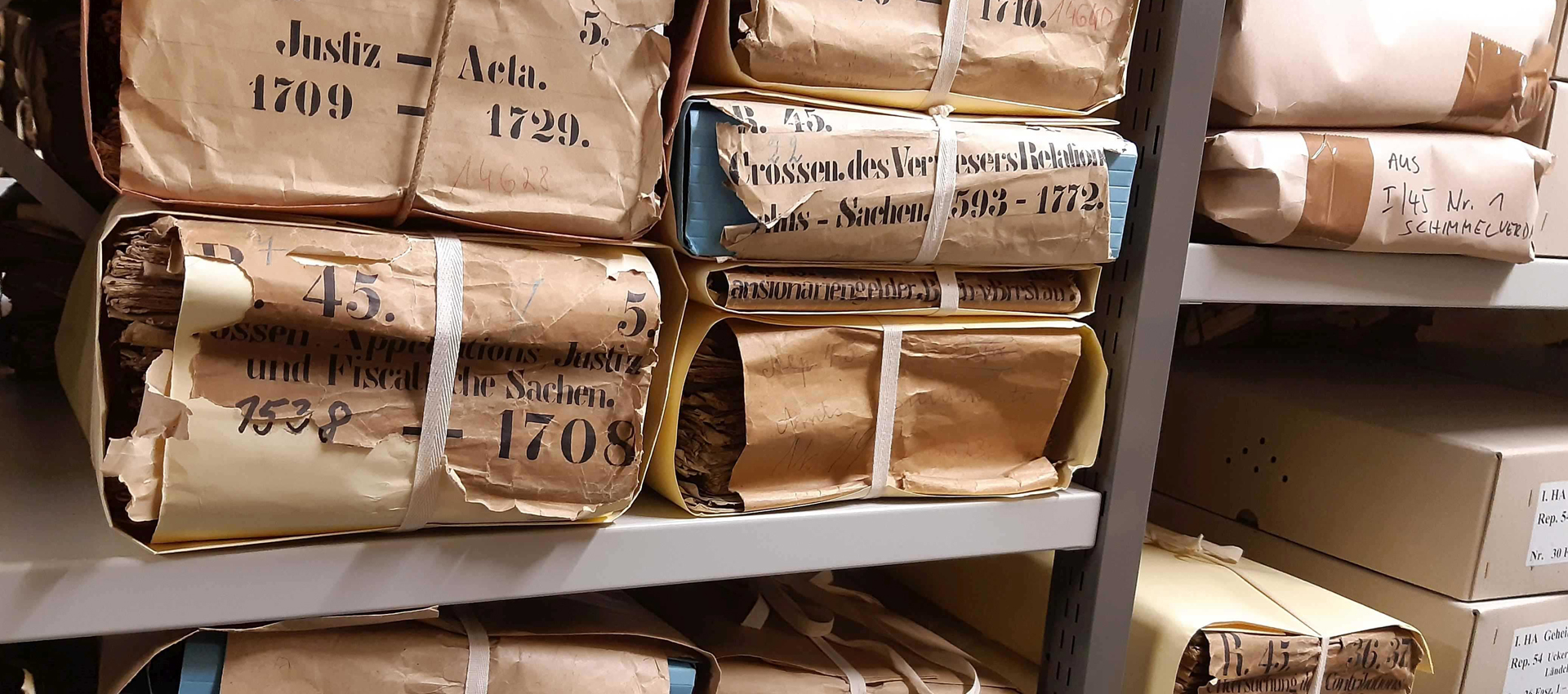
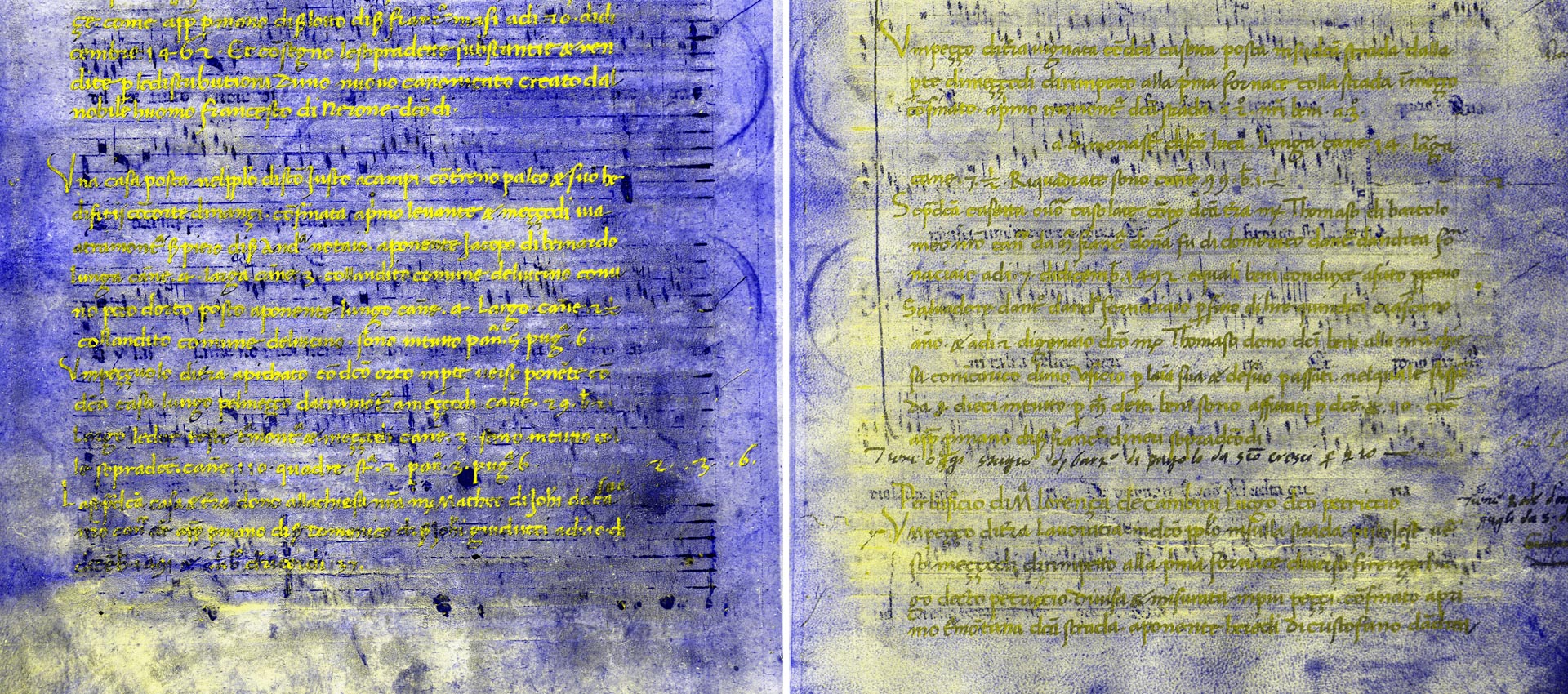
What remains? The State Library on Unter den Linden put this question to Berliners – and people responded! During a special event, people could have their private documents digitised free of charge and prepared for online publication, or upload them themselves.
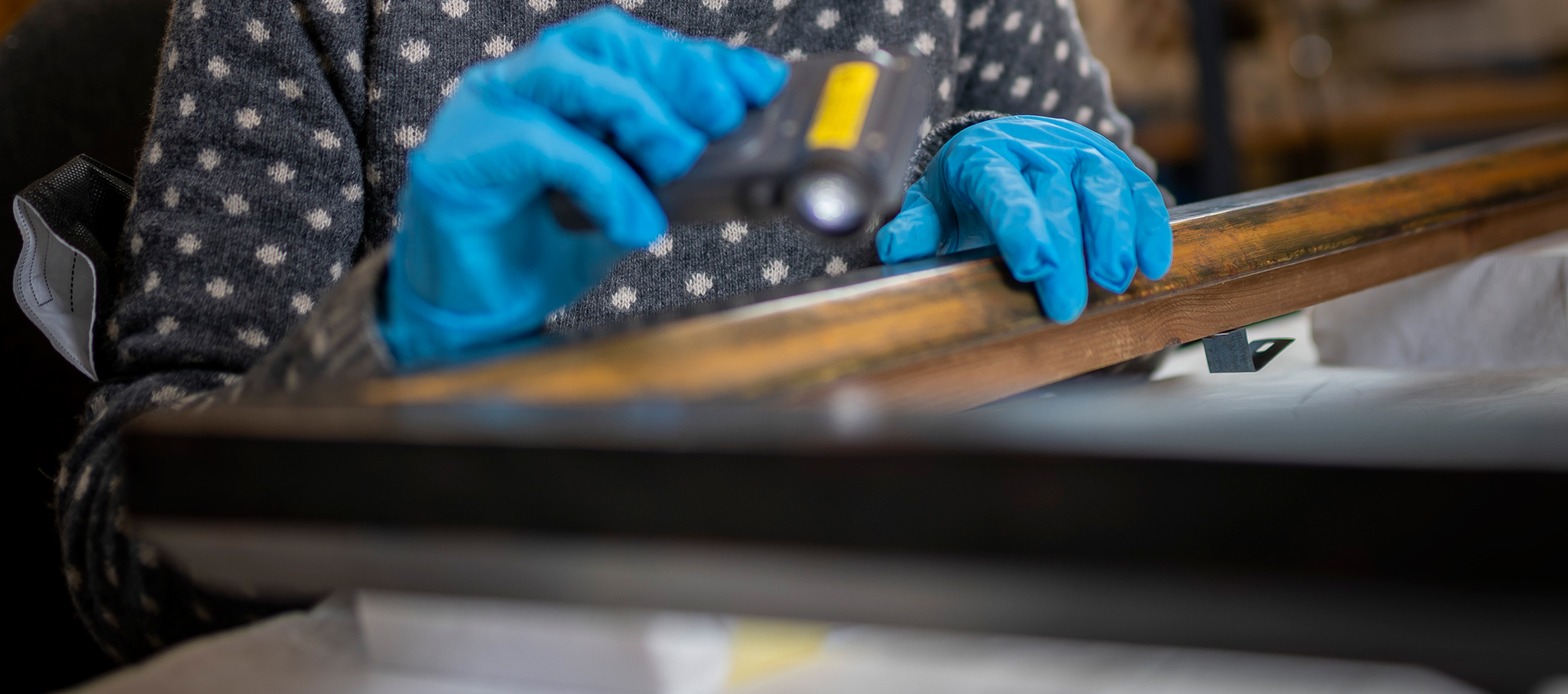
Around 70 people turned up, bringing items from the immediate post-war period (1945–1950) such as letters, photos, diaries, calendars and identity documents, which are now accessible to anyone interested via a new database. The 1,800 files are being made available gradually. The site will remain open until 30 June and can be added to until then. In this citizen science project, these items are given a story that can be shared with others. The gaps in the fabric of memories and perceptions can be filled.
The past does not fade away
How long will this legacy remain with us? Neville Rowley quotes the Swiss-French film director Jean-Luc Godard (1930–2022) in response, who once said: “Le passé n’est jamais mort. D’ailleurs, il n’est même pas passé.” (The past is never dead. It is not even past.) And because the past does not fade away, we should engage with it in order to better understand the present.
In this spirit, Rowley defines his understanding of good museum work in general: “We are also responsible for the works that have disappeared. If we no longer speak of them, they are gone for good. But what is a museum other than a place where one tries not to forget beauty? And not to forget history?”