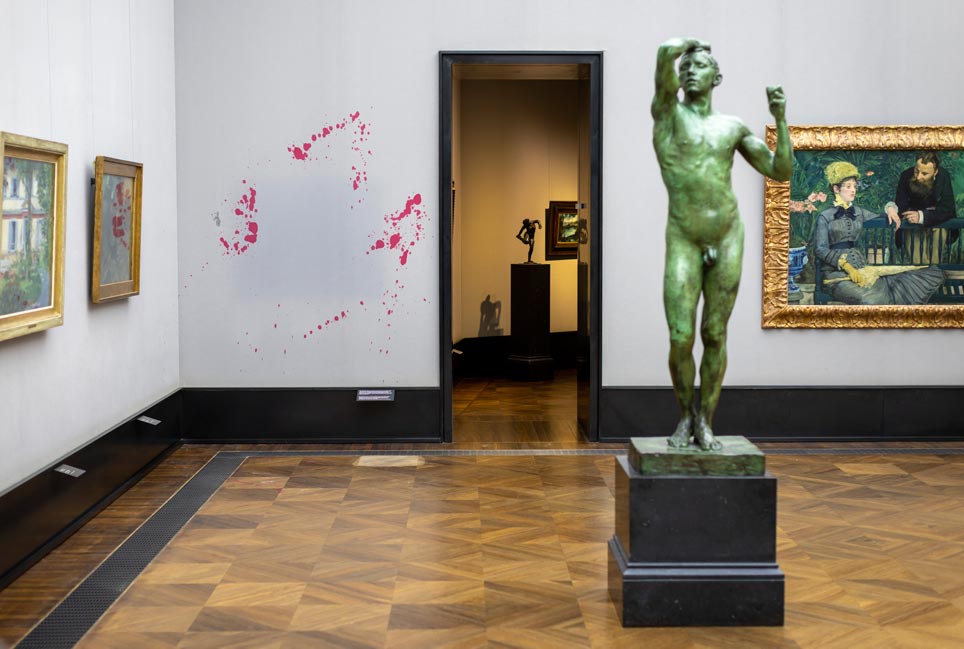
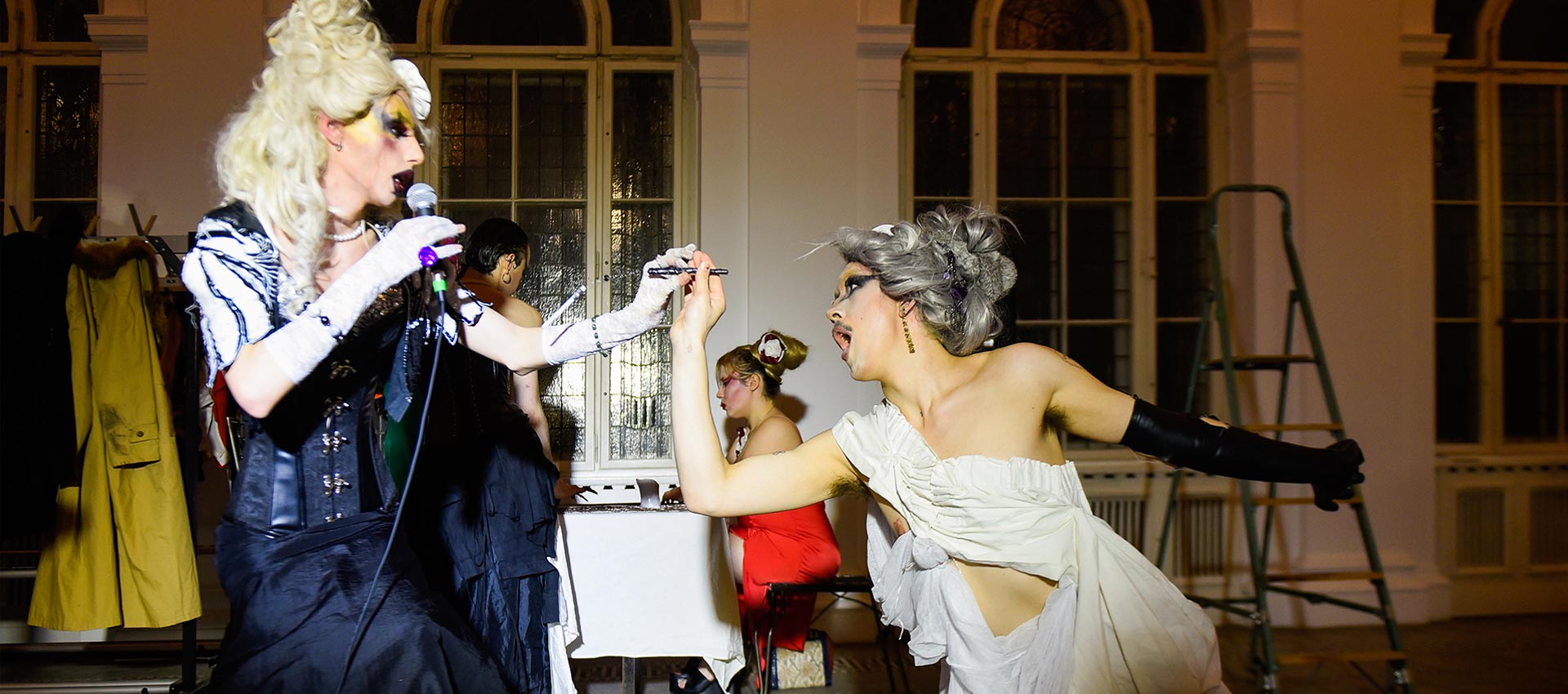
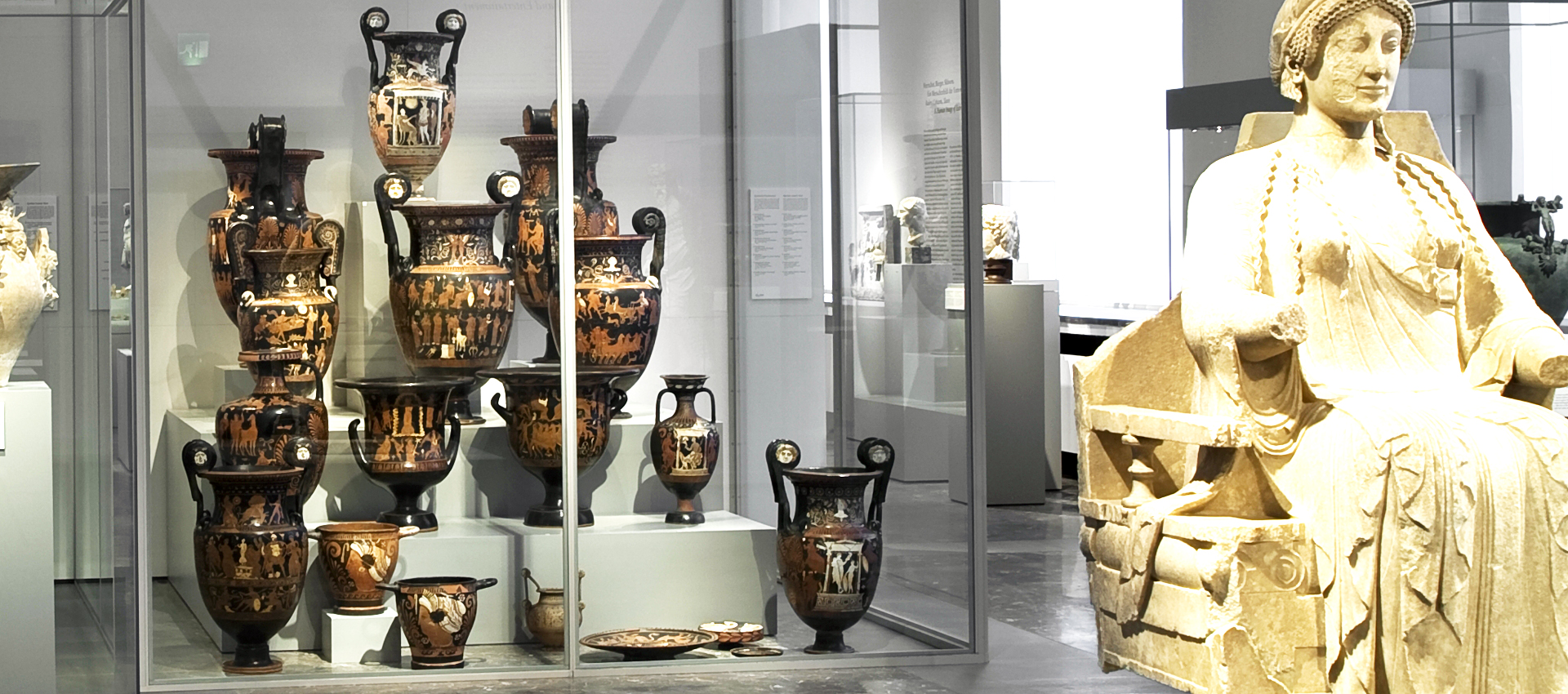
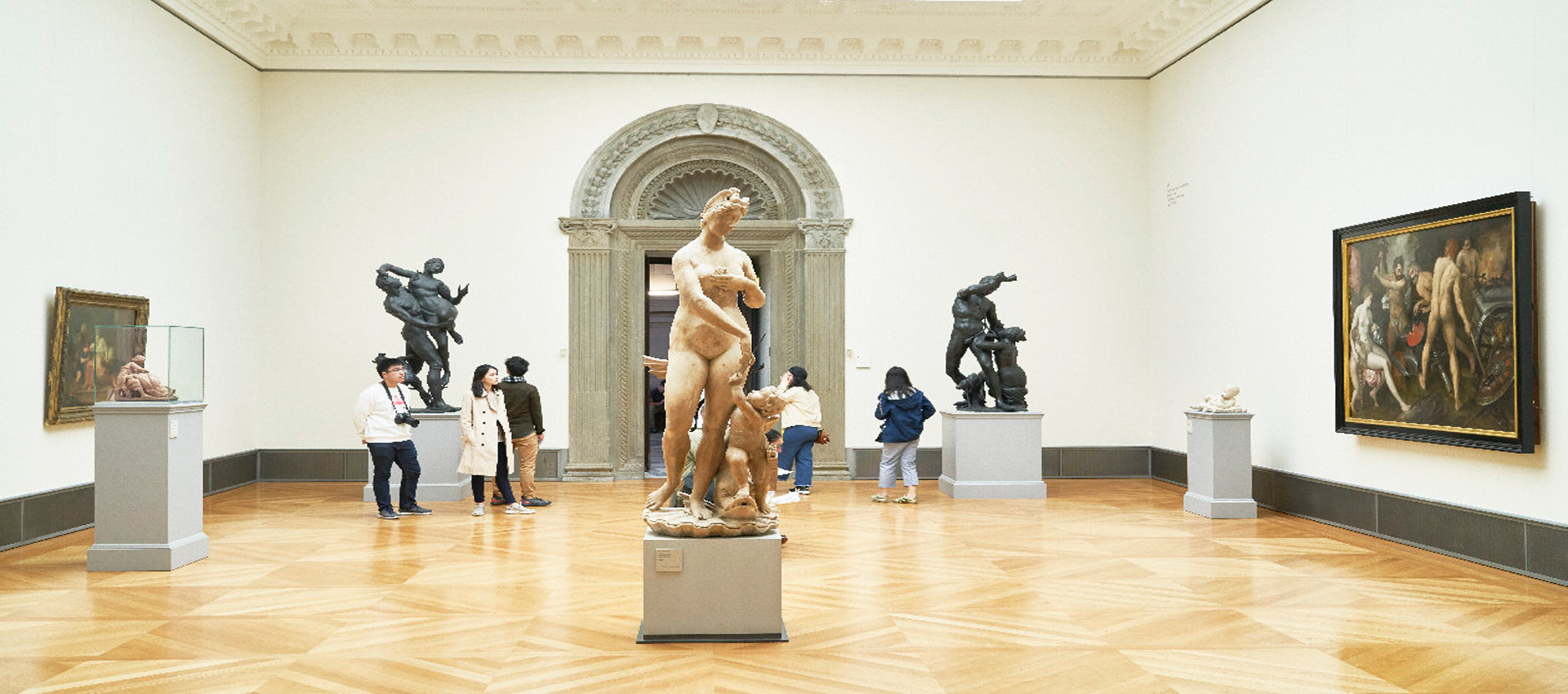
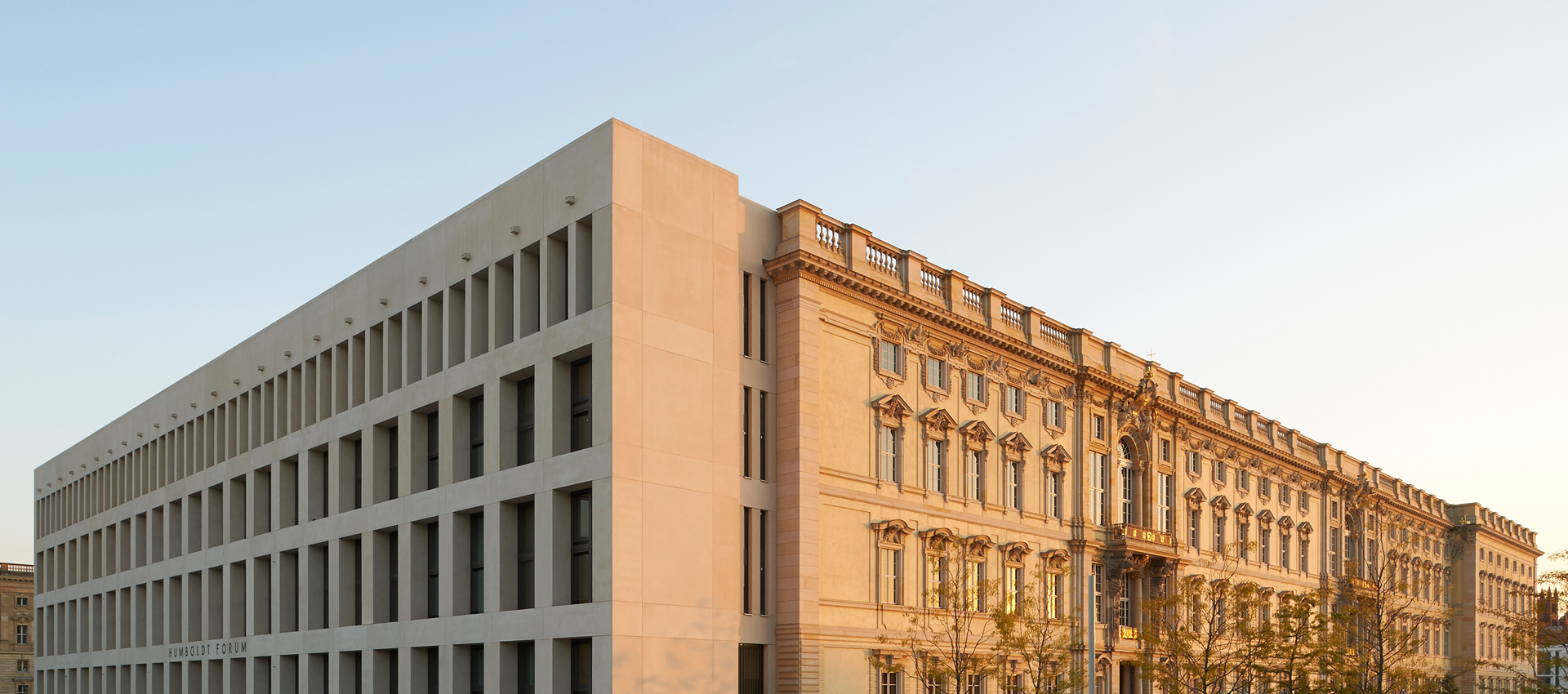
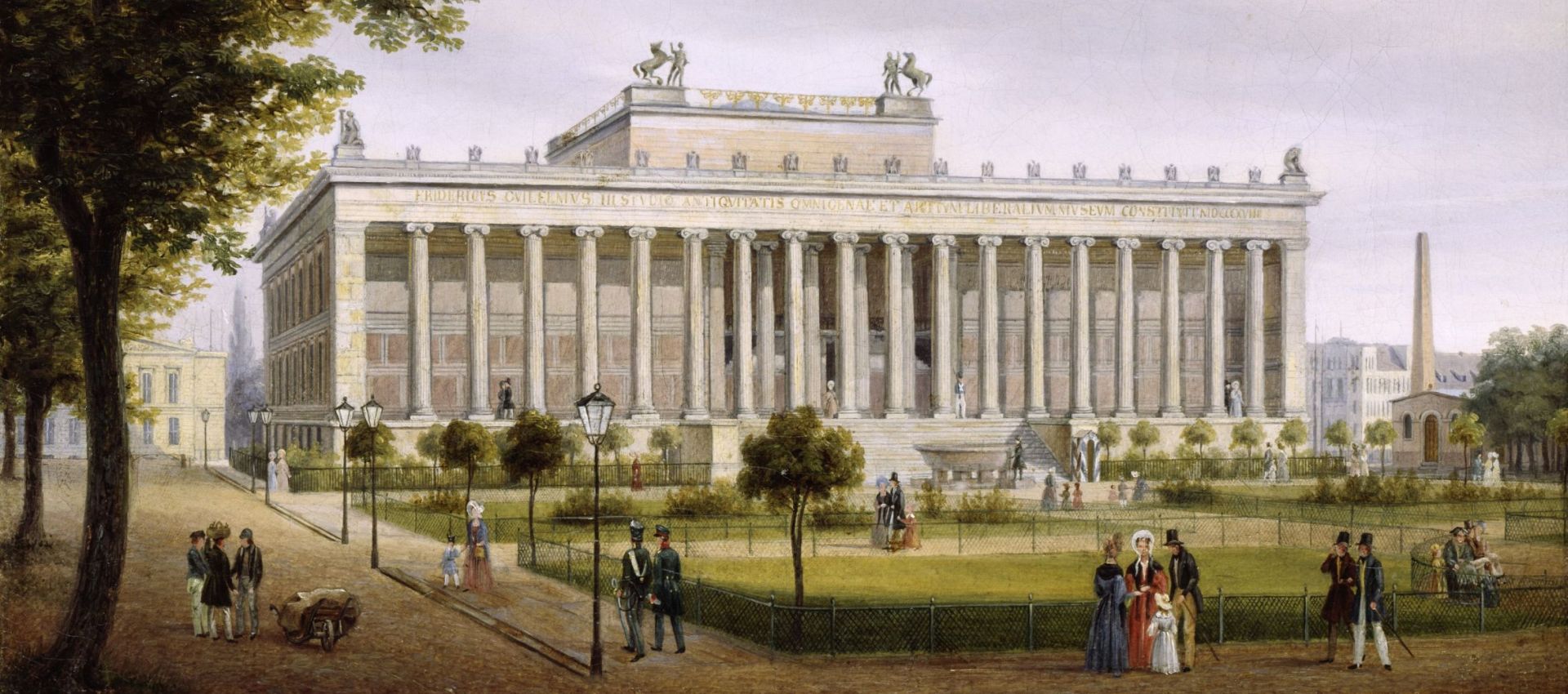
As part of the special exhibition "Zeitsprung. Art Meets Art", twelve students from the Saar College of Fine Arts are engaging with exhibits at the Bode Museum. Through an artistic intervention, they juxtapose historical artworks with contemporary perspectives.
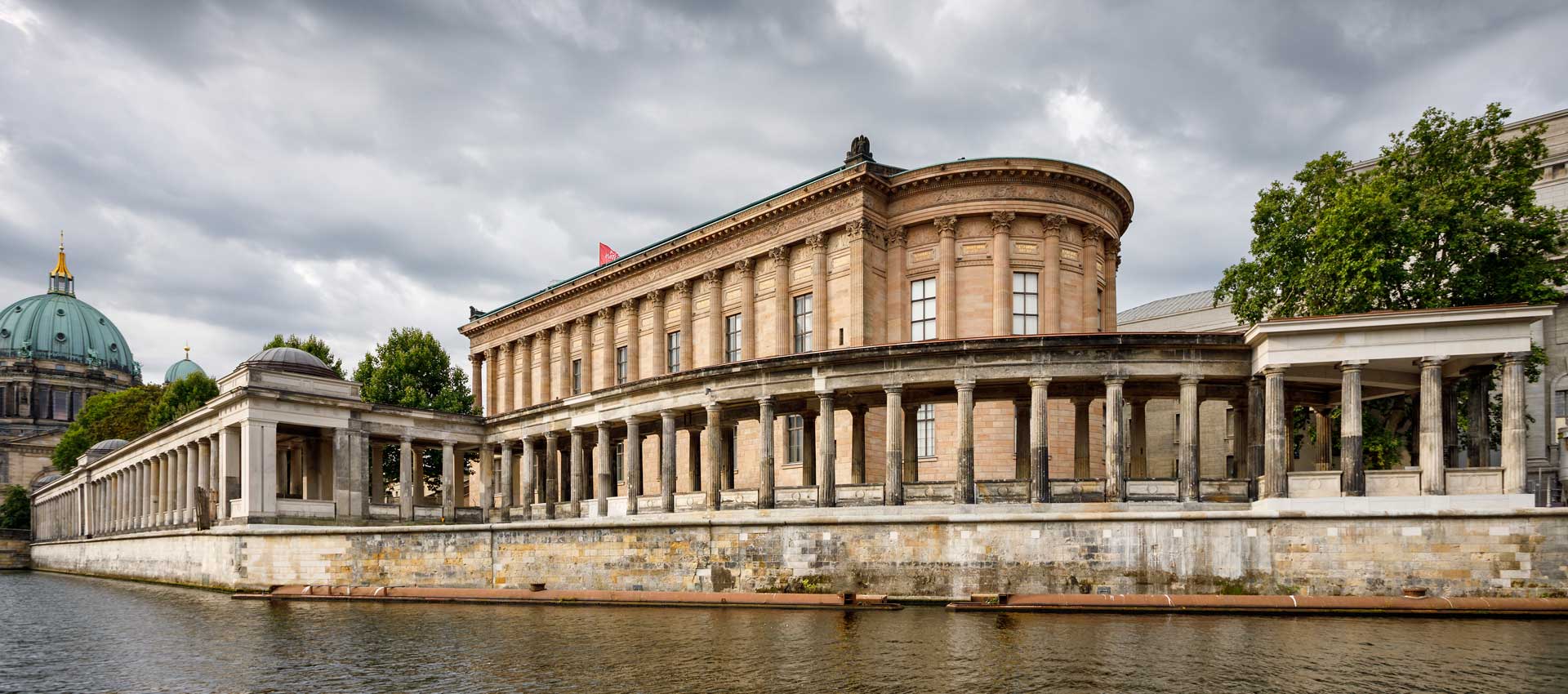
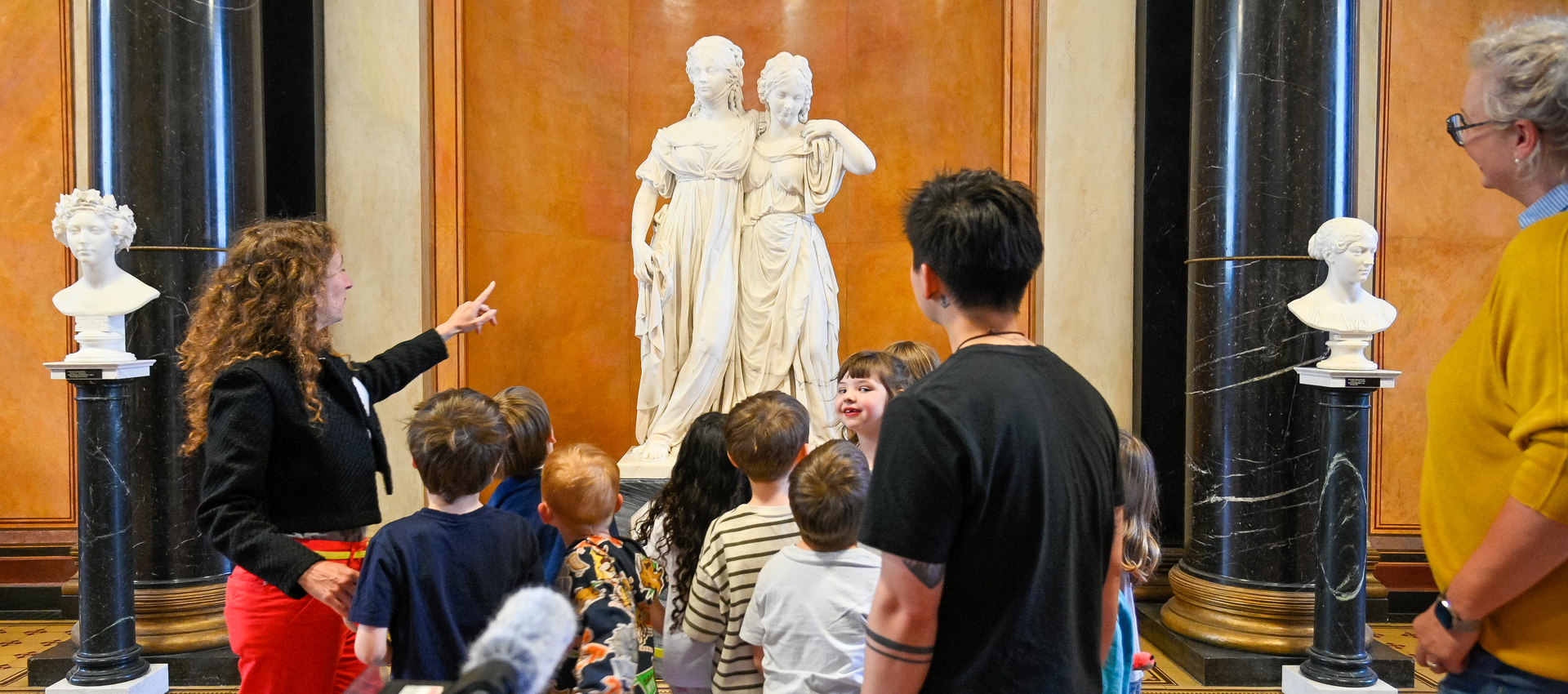
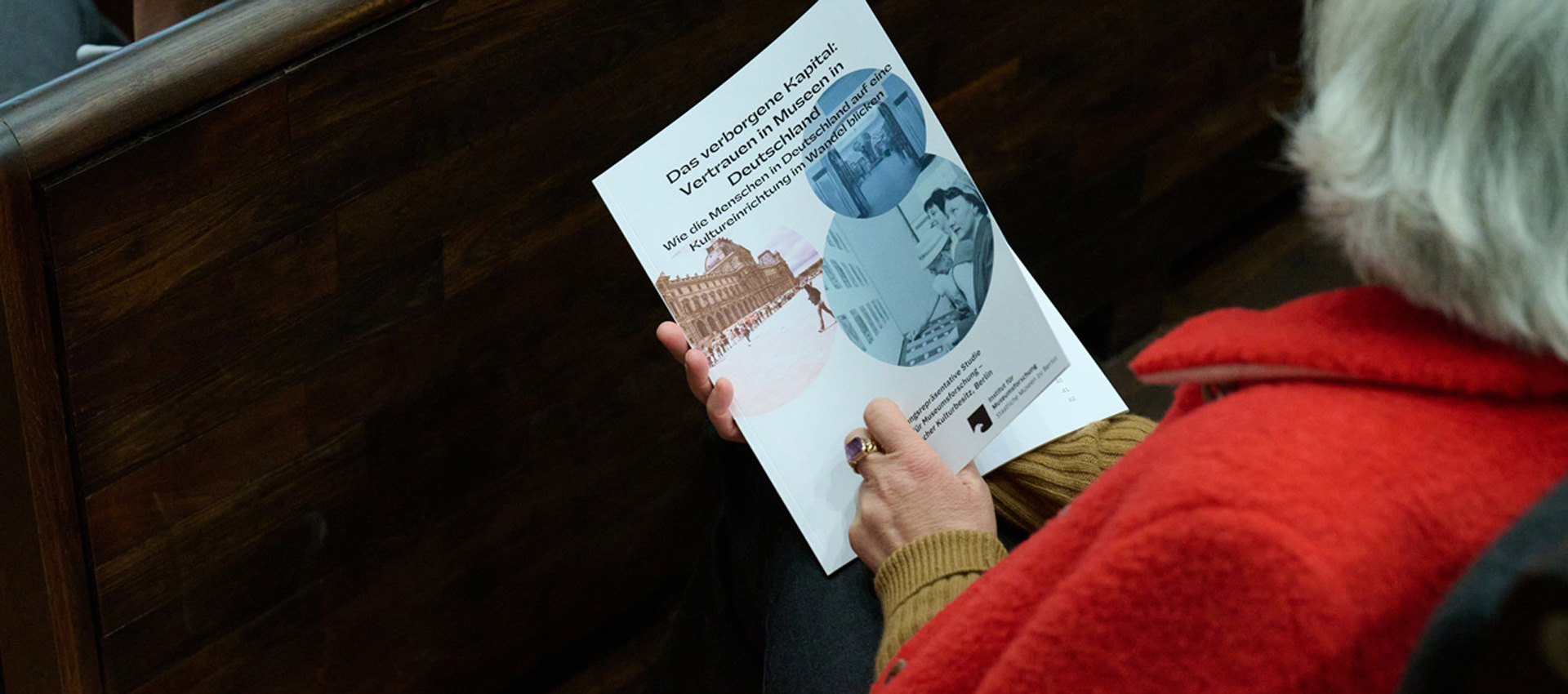
As part of the federal-state cooperation between the Prussian Cultural Heritage Foundation and the Saarland, the special exhibition ‘Zeitsprung. Kunst sieht Kunst’ will be on display at the Bode Museum from 15 February to 13 April 2025, showcasing works by twelve students from the Saar College of Fine Arts. In dialogue with curators from the Sculpture Collection and the Museum of Byzantine Art, the young artists discovered much that is contemporary in the initially alien human forms and developed approaches to ancient art that render the objects vivid, lifelike and tangible in an unusual way. A brochure documents the project and is available free of charge at the museum as well as in digital form.
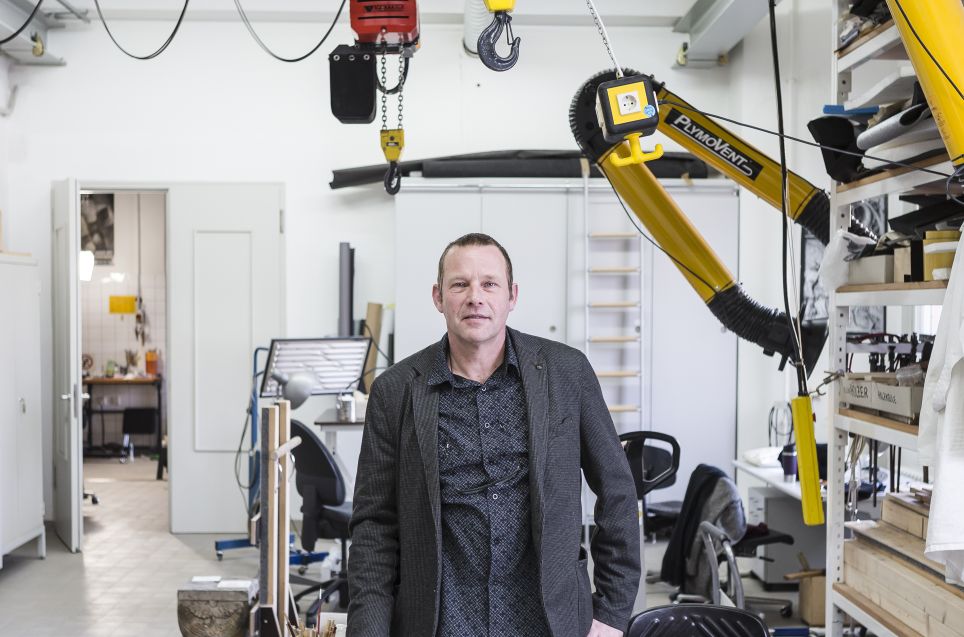
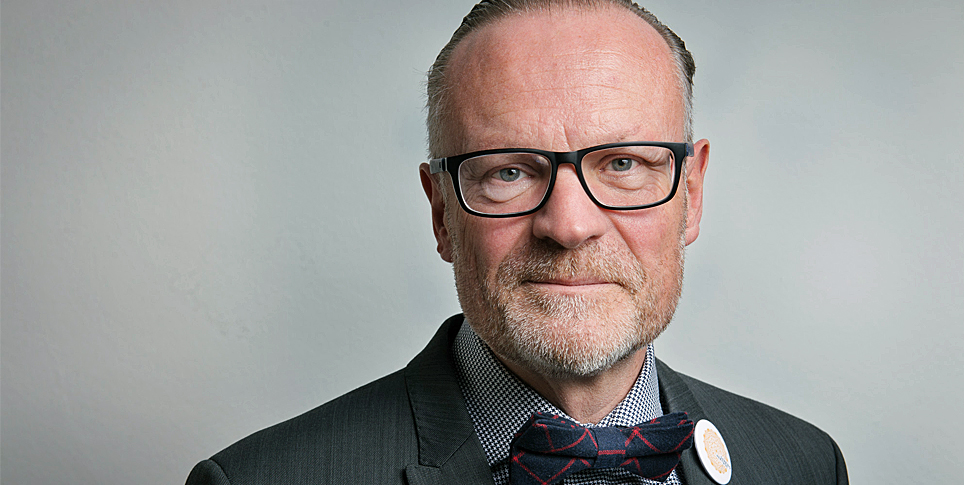
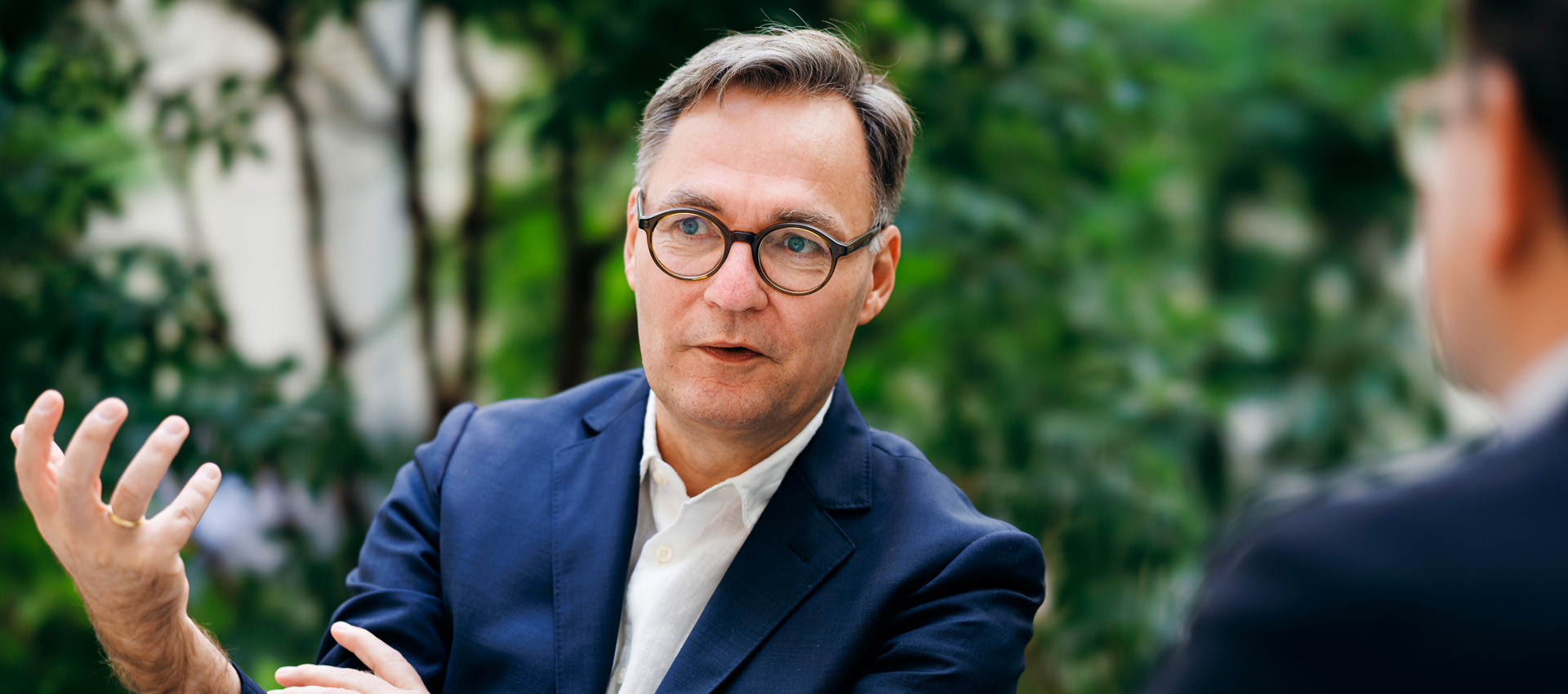
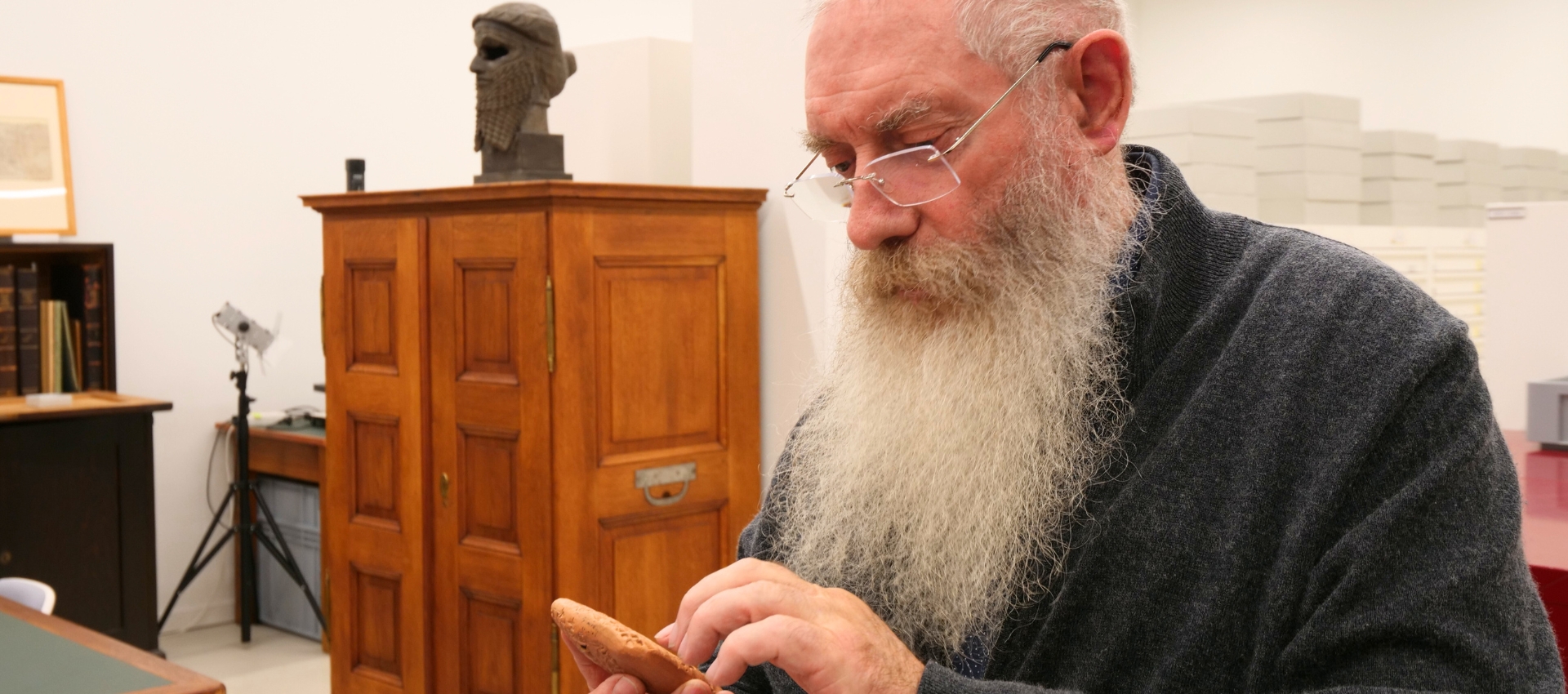
In conversation with the SPK, Eric Lanz, Professor of Video and Artistic Photography at the HBKsaar, and the artists Claudius Rodenbüsch and Melissa Pelk provide an insight into the creation of the exhibition and their experiences.
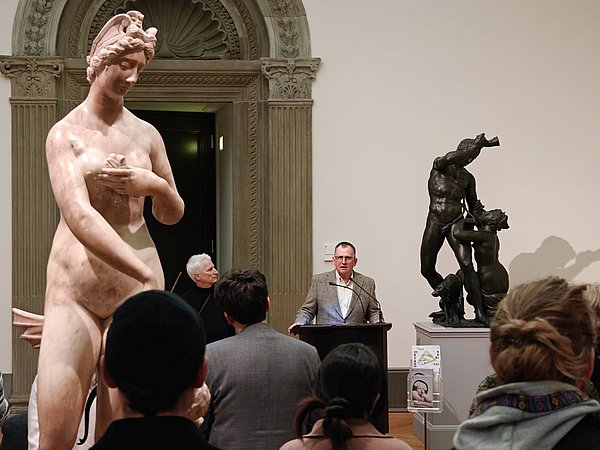
Students from the HBK Saar have staged an intervention at the Bode Museum: works from the Museum’s collection of Byzantine art and sculpture are juxtaposed with the students’ contemporary interpretations. How did the collaboration with the museum come about?
Eric Lanz: We went on an excursion to Berlin and visited several venues there. It was here at the Bode Museum that we had the most exciting encounters. The great temporal distance from the exhibits, which span a period from late antiquity to the 18th century, allowed us to experiment more freely. In a contemporary museum, an intervention would have been more difficult; here, the distance was there and we were able to work with current artistic commentary and new perspectives.
How exactly did the creative process unfold? You visited the museum – what specifically inspired you there?
Melissa Pelk: I was particularly inspired by the many religious sculptures. I grew up in a Christian environment, attended my First Communion and Confirmation. As a child, I went to church very often with my mother and looked at the iconography there. Even though I am no longer a believer today, I still feel a certain reverence when I look at such works: they still have a very powerful effect today. I am still very interested in this socio-cultural significance of saints and martyrs.
Added to this is the masterful craftsmanship of these artworks in the Bode Museum. These fragile objects exude a special sense of grandeur. When you stand before them, you feel fascinated and awestruck. Yet behind these saints there were once real people – Mary was not only the Christian Mother of God, but also a woman, and Saint Crispin was venerated by the faithful, yet at the same time was ‘merely’ a shoemaker. I find this tension between holiness and humanity very fascinating.
Are you referring to the small sculpture of Crispin from 1420, which is housed in the Bode Museum?
Melissa Pelk: Exactly! I found this artistically crafted figure, with its intricately rendered folds of clothing, shoes and tools, particularly impressive. The figure kneels, completely absorbed in his craft, and captivates the viewer. Yet his hands are missing – they have presumably fallen victim to the elements or mechanical damage over the centuries. This combination of vulnerability, the profane and the sacred was my main inspiration for my intervention, a video. I wanted to capture these contrasts visually and reinterpret the role of these figures. It was an exciting challenge!

Another piece relates to a sculpture of Persephone ...
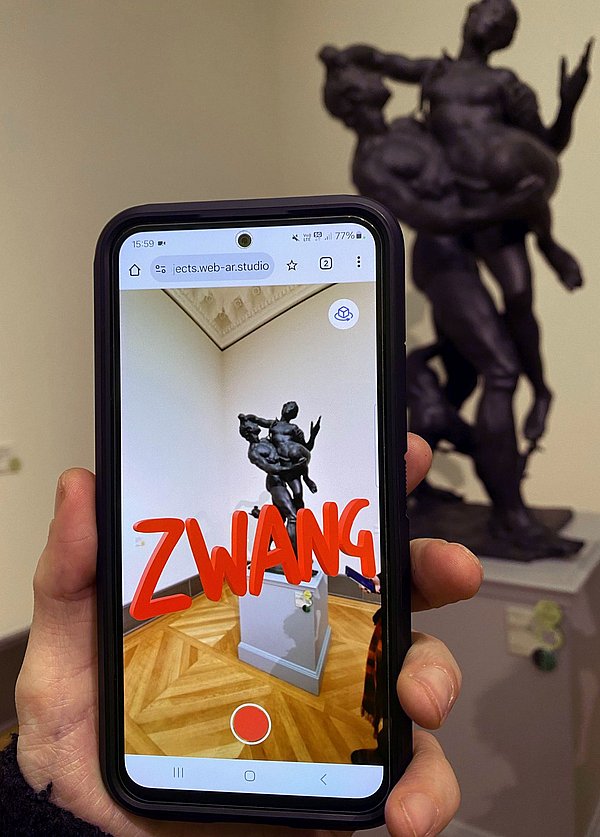
Claudius Rodenbüsch: We walked through the museum and looked to see what appealed to us. The sculpture ‘The Rape of Persephone’ immediately caught my eye. The facial expression of the central figure did not strike me as voluntary, which immediately reminded me of a sexual assault. Later, I realised that the sculpture is called “The Rape of Proserpina” in English. The myth itself is about the renewal of the seasons, but from a modern perspective, the depiction also involves an act of coercion that is often not addressed in the classical interpretation. I found this perspective fascinating and wanted to explore it artistically.
During the creative process, two institutions with very different working methods and organisational structures came together – what was that like for you?
Claudius Rodenbüsch: Organisationally, many things weren’t feasible in the way we’d initially envisaged. For example, I originally wanted to project directly onto the sculpture using a projector, which wasn’t possible. We had to find compromises and develop alternative solutions. But ultimately, we found a workable approach within the given constraints and are satisfied with it.
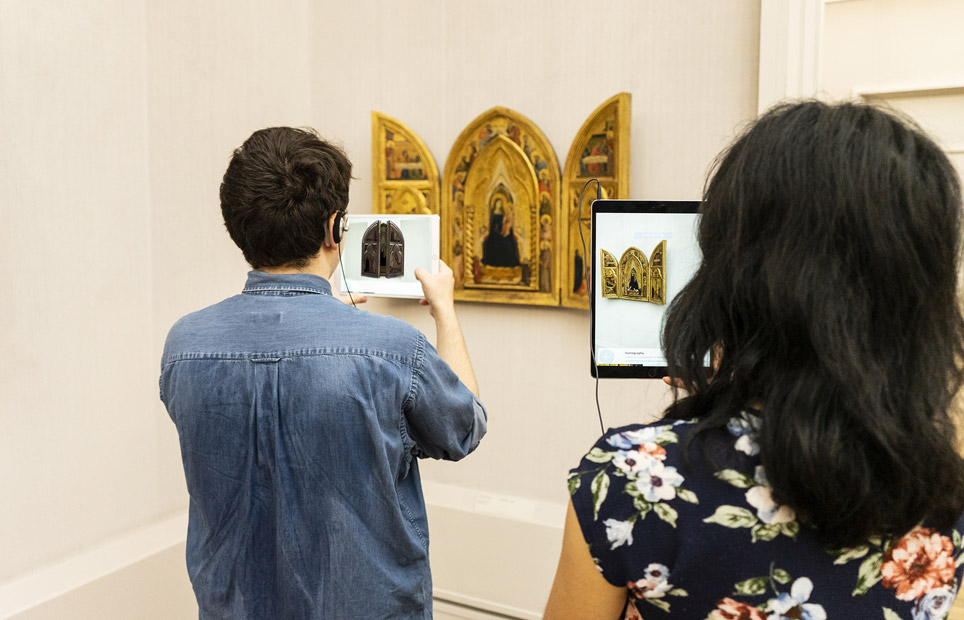
Eric Lanz: As artists, we approach spaces differently; we use spaces as part of our work, as a tool. In museums, everything is strictly organised – you can’t simply place something there or make changes. That’s why we used a virtual layer, for instance through QR codes that allow access to videos or 3D objects. This enabled us to visualise our ideas without overstepping conservation boundaries.
Was this restriction also an opportunity to learn?
Claudius Rodenbüsch: Absolutely. Working with a major institution showed us that processes there move more slowly than, say, at university. It was a challenge to find an artistic statement within these structures that we could stand by. I think we succeeded. And the fact that it wasn’t so easy presented us with an artistic challenge and was instructive.
Melissa Pelk: I found it particularly exciting to engage more intensively with the research; I’ve never done that to such an extent before as I did for this project. I studied a 500-page catalogue of the works. As a museum visitor, I would never previously have given a thought to where a sculpture had stood over the course of its 500 years. I immersed myself deeply in the world of the martyrs – their stories are often absurd, but fascinating. I will certainly carry this intensive engagement with the historical context forward into future projects.
Speaking of lessons learnt: what else are you taking away from this? And are there already plans for further collaborations?
Eric Lanz: We’ve certainly learnt a great deal, and there could indeed be further collaborations with museums; we’ve already received non-binding enquiries back home in Saarland. It was exciting to see that, despite the differences between art college and museum – with their different rhythms and tasks – there was a genuine interest in collaboration. It was particularly impressive that curators, who might otherwise be dealing with ancient textiles, took such a keen interest in our work. This shows that such interdisciplinary projects are fruitful. There have already been initial expressions of interest in further collaborations. Now we need to consider how to develop this further.
In Berlin, and within the cultural sector more broadly, there is often discussion about how museums can remain relevant and make old art accessible to the present day. Interventions like yours build a bridge. Were you aware of this social dimension, or did you focus purely on the objects?
Eric Lanz: That wasn’t our primary focus. Our engagement was more personal and artistic – we wanted to understand what speaks to us and how we can respond to it without reflecting on an overarching meta-level. Perhaps that’s what makes the works so direct.
Melissa Pelk: But I don’t think you can avoid that level anymore. Every artistic work always carries a certain political stance within it – not necessarily activist, but there’s always something resonating. The mere comparison between the reality of an artist’s life 500 years ago and that of a contemporary artist working on their laptop carries a political dimension. This contrast is inevitable – and often precisely the most exciting aspect.
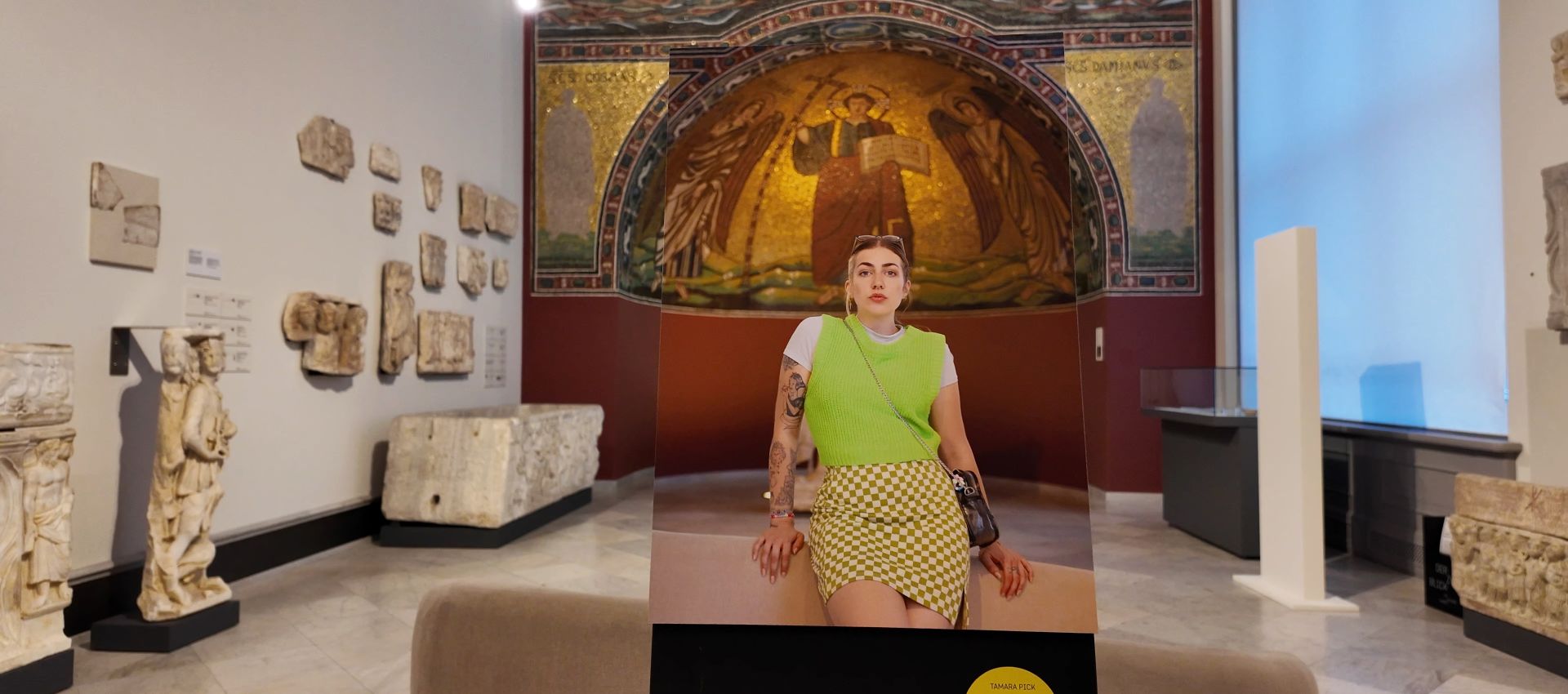
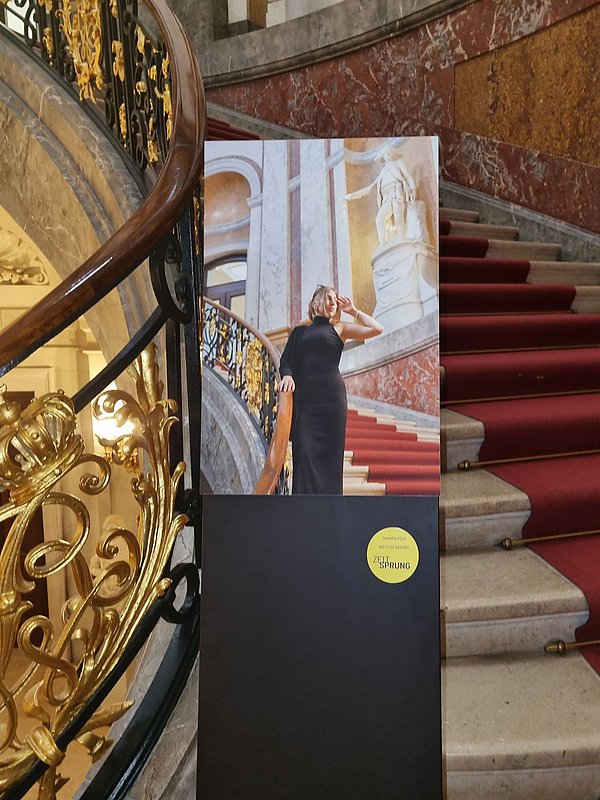
Another fascinating perspective is that of Tamara Pick, who was mentioned by Christine Streichert-Clivot, the Saarland Minister for Education and Culture, during the tour. Pick offers a critical commentary on the role of museums by addressing the topic of selfies and how visitors interact with the museum.
Eric Lanz: Tamara Pick’s work engages with the discourse surrounding museums as places of self-expression. She has placed selfies in the museum that offer a critical commentary on this trend. Her work shows that visitors often try to imitate the poses of sculptures and, in a sense, transform themselves into sculptures. In doing so, however, museums also ‘degenerate’ into places of pure self-expression, without any reflection on or engagement with their content. She ironically addresses this development by staging herself in this manner. Her references, however, go further. When Tamara Pick stands in front of a sculpture of a pilgrim, she ironically alludes to the ‘cultural pilgrims’ and stages herself as part of the artwork. She has also produced postcards featuring her image, thereby symbolically elevating herself.
An intervention often reaches an audience that has little contact with contemporary art. Many visitors to the Bode Museum do not expect such art forms. What do you hope for from their reaction?
Claudius Rodenbüsch: First and foremost, I hope that people will use the app we developed as part of the project and thereby gain a new perspective. Perhaps my interpretation might reach someone and make them think…
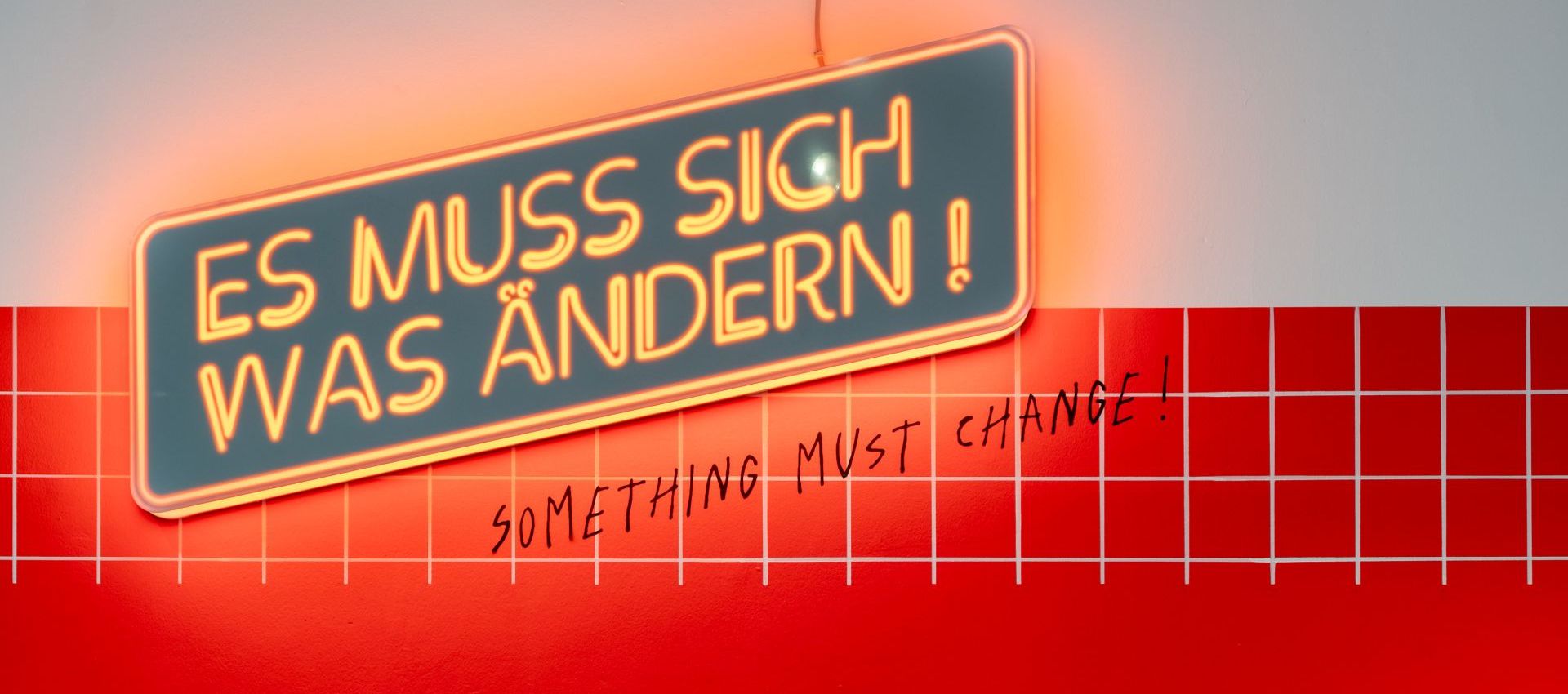
Eric Lanz: People often enter museums with a sense of awe, as the works on display are considered culturally significant and the high level of craftsmanship is impressive. Yet art can also have a direct connection to the present day. Our intervention encourages reflection on current issues such as sexual assault. You might not think of this straight away, but the museum lends itself to these themes if you look more closely. This is also evident in the motif of our exhibition poster: an alabaster sculpture of a deity of silence is wearing headphones, thereby becoming a ‘sound sculpture’. A seemingly small intervention with a big impact. So it is always about an update that leaves its mark and opens up new perspectives on the old artworks.
The exhibition on the intervention runs until 13 April at the Bode Museum. Is there also a publication on the project?
Eric Lanz: Yes, we also wanted to document the preparatory work, which makes up a large part of the project. The brochure presents each museum piece across a double-page spread, accompanied by a text by the art student. The following double-page spread then presents the intervention that emerged from the encounter. Some concepts that were not ultimately realised are also included. The brochure thus provides a comprehensive insight into the process. It also contains an index of the sculptures featured, which was compiled in consultation with the curatorial team, and suggests an alternative route through the museum.

The special exhibition "Time Leap. Art Sees Art. HBKsaar Visits the Bode Museum” was organised as part of the federal-state cooperation between the Saarland Ministry of Education and Culture (MBK) and the Prussian Cultural Heritage Foundation (SPK), with financial support from the SPK’s federal programme for travel and exhibition costs and from the MBK for a student video documentation project.
Dr Elisabeth Ehlers, Dr Cäcilia Fluck and Dr Tobias Kunz supervised the project on behalf of the Sculpture Collection and the Museum of Byzantine Art. The works and brochure were produced in seminars in the fields of art history and art theory, led by Prof. Dr Matthias Winzen, and video and artistic photography, led by Prof. Eric Lanz, at the Saar College of Fine Arts, with support from the Leonore Leonardy Foundation. The participating students from the HBKsaar are: Ham Babaei, Clara Höferlin, Diana Kadochnikova, Nils Kammer, Haegang Lee, Thekla Lüken (known as Klaßen), Constanze Metzel (symposium), Anna Nau (symposium), Sarah Niecke, Melissa Pelk, Tamara Pick, Claudius Rodenbüsch, Heidrun Stern, Elisabeth Sunik (symposium) and Jennifer Trenkel.