Whether it was the post-Stalinist Soviet Union, the civil rights movement in the USA or the Chinese Cultural Revolution: Gerd Ruge was there on the ground – and, as an ARD correspondent, brought the world events of the 20th century into West German living rooms. The estate of this legendary reporter, who died in 2021, was recently bequeathed to the Berlin State Library for research purposes. Ruge’s daughter Elisabeth and his fellow journalist Christian Neef discuss the insights contained in this private archive, how political reporting worked in pre-digital times, and the art of remaining objective.
Ms Ruge, why did you choose the Stabi as the location for your father’s estate? And what would you like to see happen to the estate?
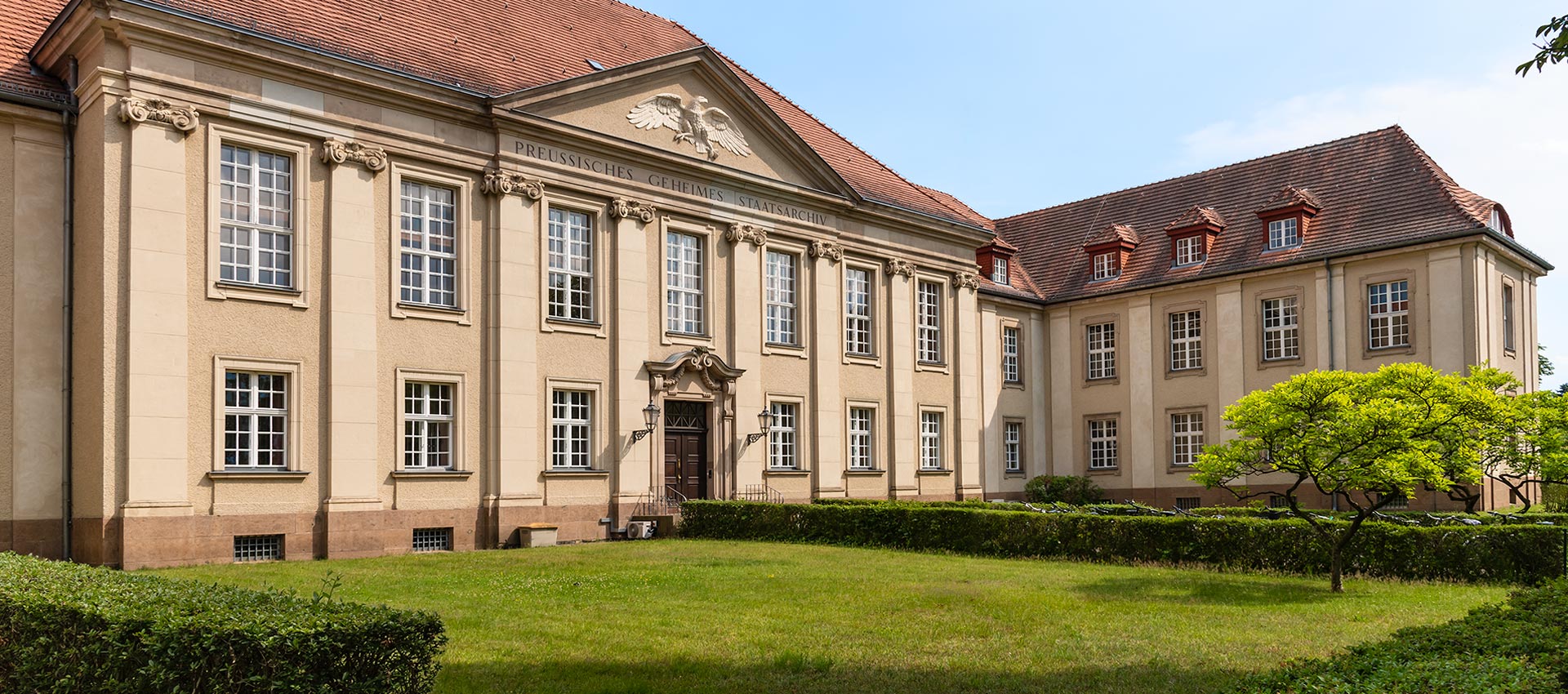
Ruge: For one thing, I thought it was very fitting for this estate to be located right in the heart of the capital – surrounded by major TV studios such as ARD and ZDF and a number of newspaper and other editorial offices. There were, of course, other offers to take it on, but Achim Bonte’s warmth and genuine interest contributed to the feeling that this estate should be placed somewhere where people are truly enthusiastic about it. Apart from that, the State Library has the resources and expertise to process this rather substantial estate.
What does the collection tell us? About Gerd Ruge as a person, but also about the 20th century?
Ruge: First of all, it should be said that neither my brother nor I knew that my father had such an archive. Although ‘archive’ is somewhat of an understatement; it was a collection of loose sheets in suitcases, boxes, drawers and bags. After our father died, I began sorting through the flat and the basement rooms and realised that this jumble of paper, whilst rather chaotic, was actually really interesting and moving, partly because the many documents traced back to the early months after the end of the war in 1945 and then to the time of the very young journalist Gerd Ruge. The most fascinating thing, however, is that, using these papers – which were subsequently organised to form an archive – one can trace the life of a great journalist through the second half of the 20th century.
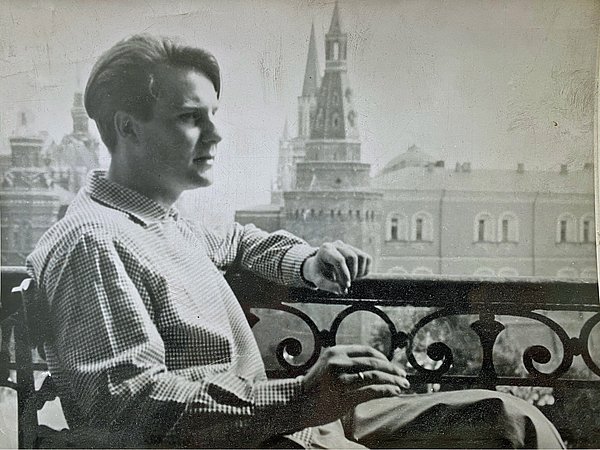
Neef: This archive is a reflection of the political and social events of the second half of the 20th century, and that is what makes it so fascinating. One could call it a stroke of luck – certainly for Gerd Ruge too – to have been posted to three countries that played such a vital role in that second half of the 20th century. Ruge arrived in the Soviet Union shortly after Stalin’s death, just as the Thaw and Khrushchev’s reforms were beginning.
Then came the move to the USA in the 1960s, also during a very dramatic period following the Kennedy assassination, through the civil rights movement right up to the assassination of Martin Luther King – another very significant phase. Subsequently, he went to China during the Cultural Revolution until Mao’s death. These are three very significant stages in world history; he was very fortunate to have been there at the heart of it all. We are, of course, too, because so much of his work has been preserved for us: not only the films, but also many fascinating analyses and political commentaries.
It is said that Gerd Ruge’s estate also reflects the intertwining of individual journalistic commitment and official foreign policy in the post-war decades. Might things have turned out differently had this reporting not taken place?
Ruge: My father’s colleagues and his audience all agree on one of his qualities: modesty. He didn’t set himself up as the nation’s great explainer, telling people how things were or would be. He was rather cautious in that regard. Gerd Ruge would certainly have smiled at this question and said that, unfortunately, there wasn’t much he could do about that either.
Many of the things Christian Neef has just mentioned were certainly perceived as threatening by people watching on their screens in their living rooms, such as the Cuban Missile Crisis. And the intertwining of world politics and personal commitment here rather means that Gerd Ruge was a voice people trusted. They felt there was someone there who was trying to understand for himself what was happening. And who then paints as precise a picture as possible, before perhaps attempting an interpretation in a third step. But that was only one step out of three, and perhaps not even the most important one. Gerd Ruge, for example, was no ‘Kremlin astrologer’; he preferred to take to the streets, talk to people and try to understand what the mood in the country was at that moment.
This is where the intertwining of events of global political significance with the personal level takes place: that of the reporter, but also with the personal perceptions of the people in whose country he is staying.
Gerd Ruge has not set himself up as the nation’s great explainer, telling people how things are or will be.
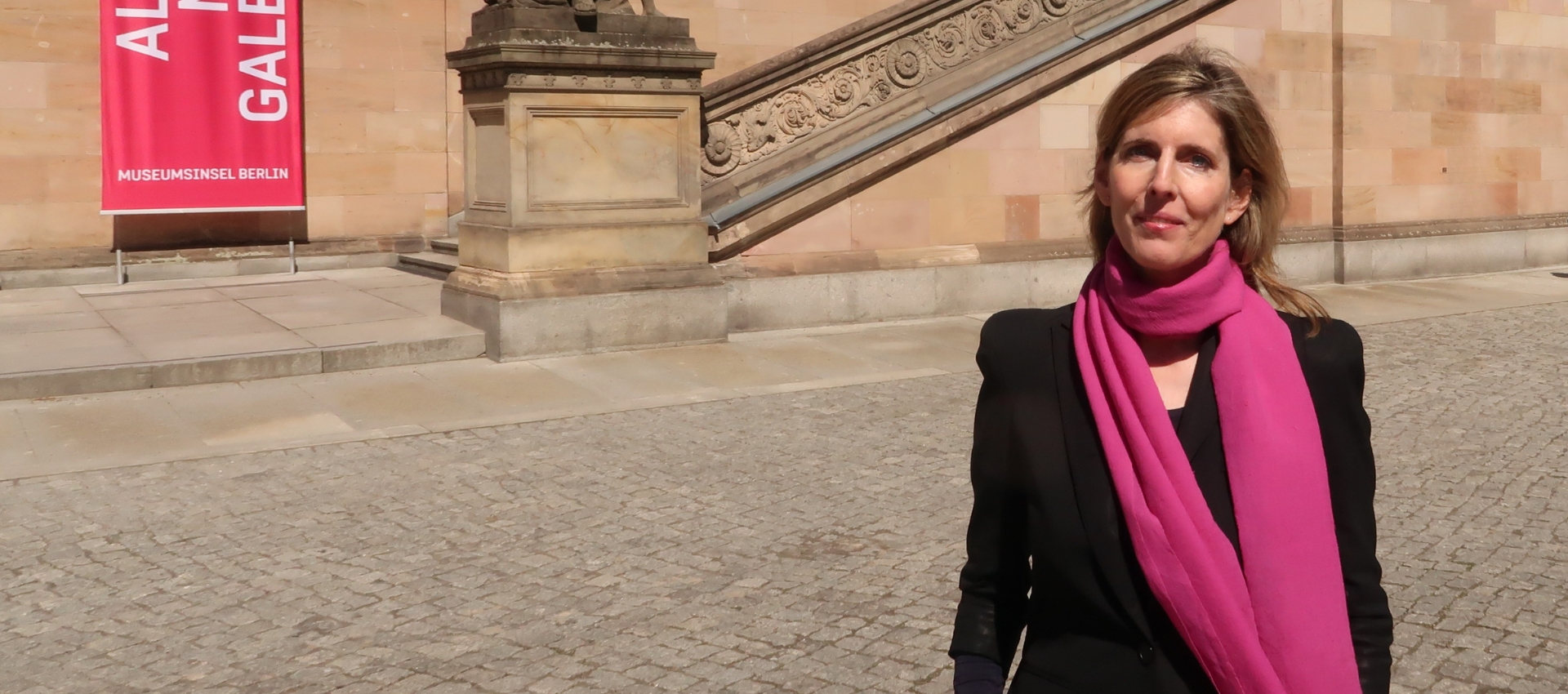
Elisabeth Ruge
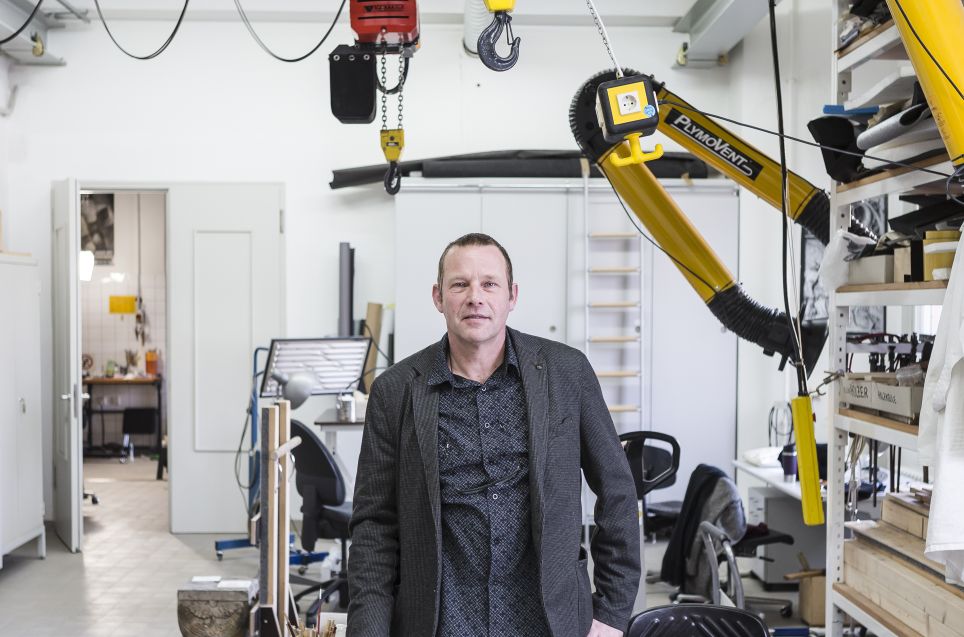
Elisabeth Ruge is an author, publisher and literary agent. She is a co-founder of Berlin Verlag and PEN Berlin, and the daughter of Gerd Ruge.
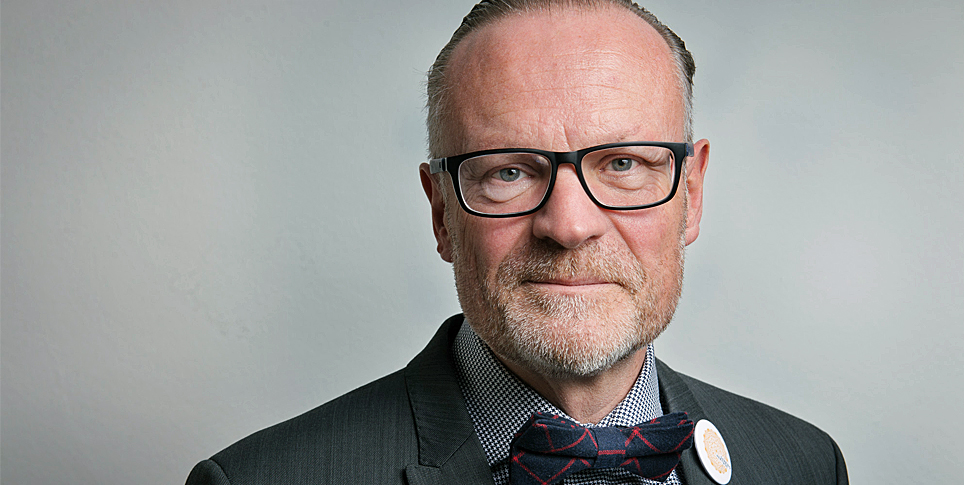
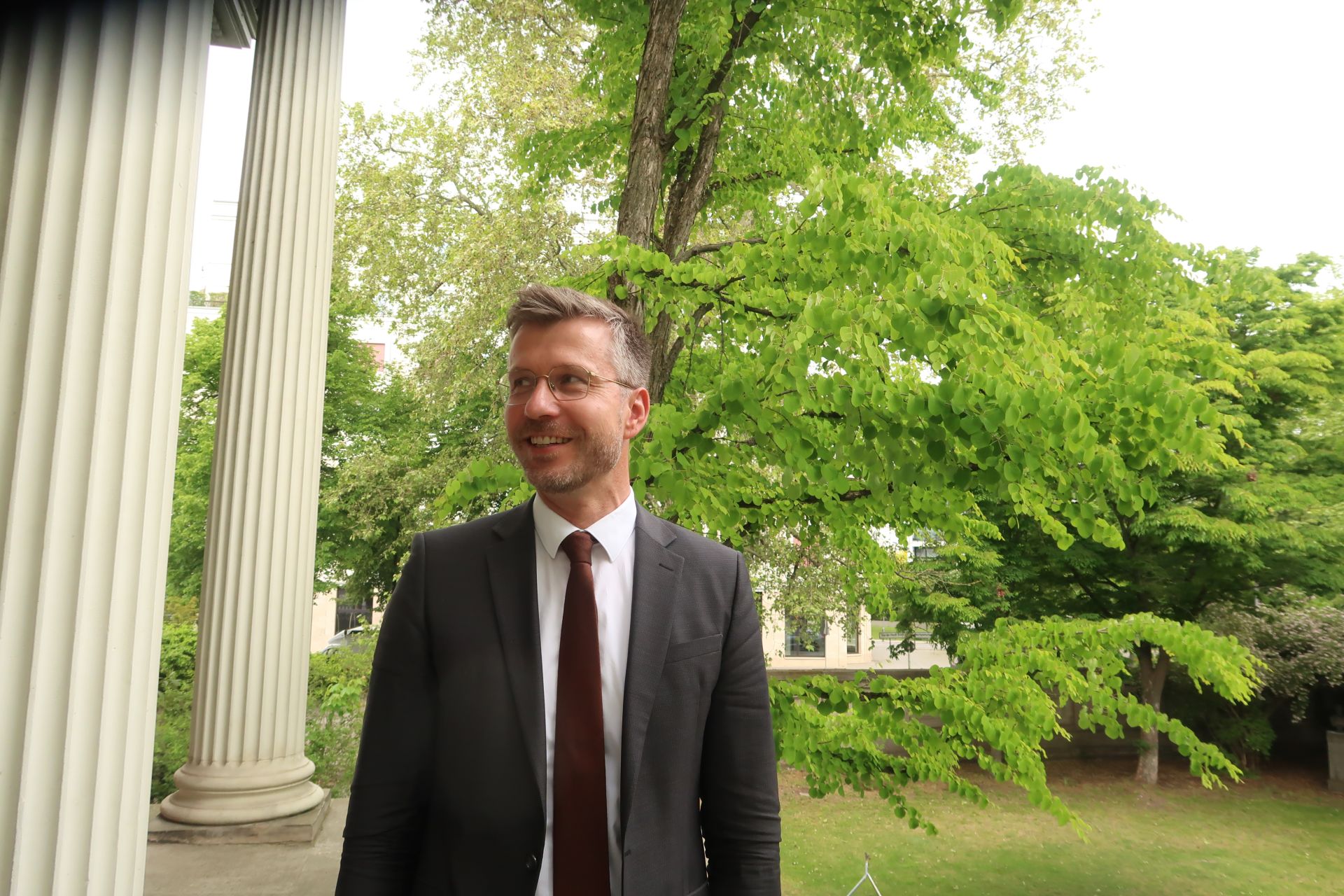
The journalist and author, Christian Neef, was Russia correspondent for DER SPIEGEL from 1991 to 1996, later becoming deputy head of its foreign affairs department.
Neef: The question of the extent to which journalism influences politics – or even global politics – has always been a preoccupation of Gerd Ruge’s. When he was in charge of the WDR studio in Bonn, Bonn’s Ostpolitik was a period in which this became a major issue. That was when the great battle of interpretations over the Eastern Treaties took place, between two camps – including journalists – who were fighting each other tooth and nail. One side was in favour of rapprochement with the other side of the Iron Curtain, whilst the other saw this as Bolshevism making its way into Germany. And right in the middle of it all stood Gerd Ruge with his journalistic pieces, constantly asking himself to what extent it was legitimate to try, through journalistic means, to influence politics, to steer it in some way? That was actually happening at the time, particularly through the right-wing press, which attempted to discredit the Eastern Treaties, certainly using illegitimate means as well.
Gerd Ruge then came to the conclusion that this could not actually be the journalist’s role, that the journalist must exercise restraint. He must see what he sees and report on it, but he should – for heaven’s sake! – not attempt to steer politics through his own means. That is something that distinguishes his journalism from today’s journalism.
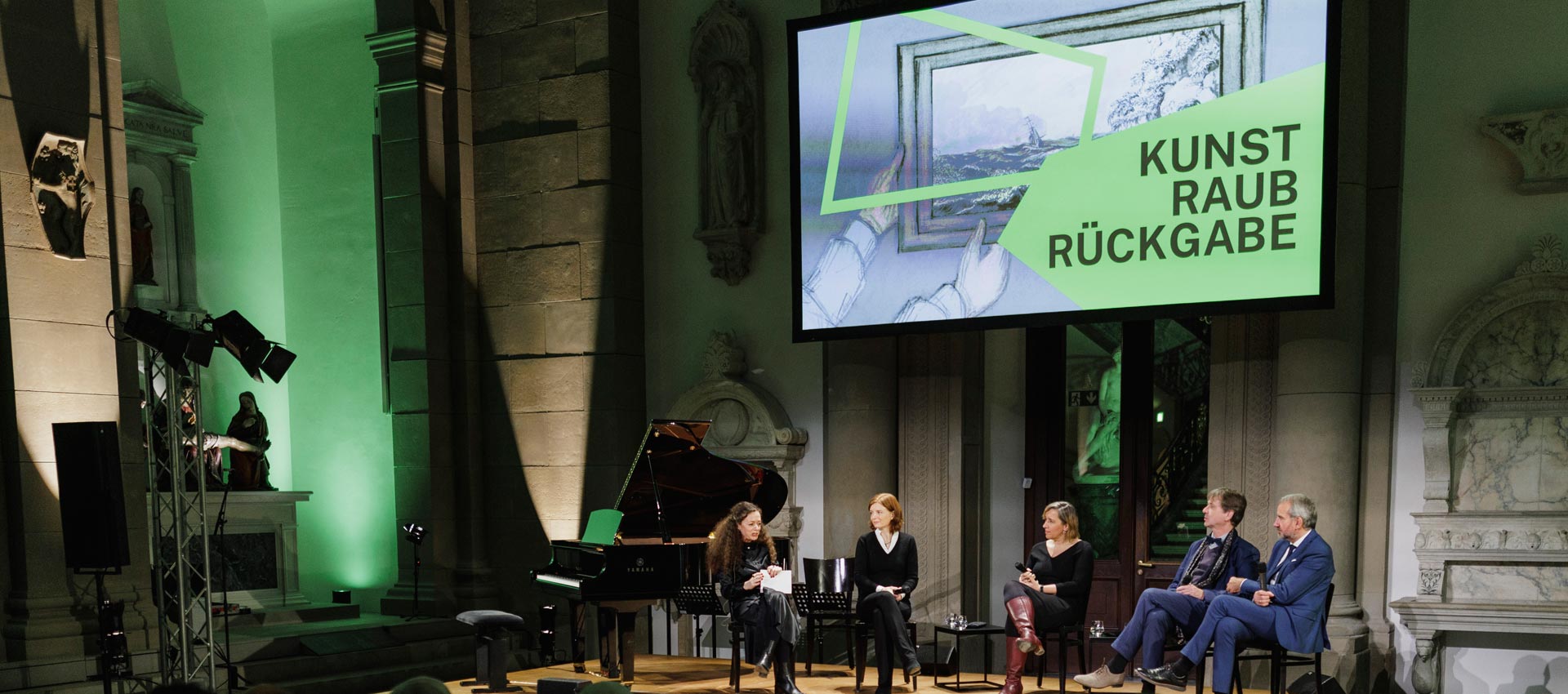
The evening at the Stabi to mark the handover of the estate was also about the changing conditions of political reporting – what exactly has changed and what have been the consequences?
Ruge: What has clearly changed is the way the news reaches people. No longer just via regional or national newspapers or television stations, but filtered through social media platforms such as Facebook, YouTube, Instagram and TikTok. When my father was asked to comment on the changed situation on the occasion of his 90th birthday, he said that the speed of news dissemination had exploded; one could simply hardly keep up.
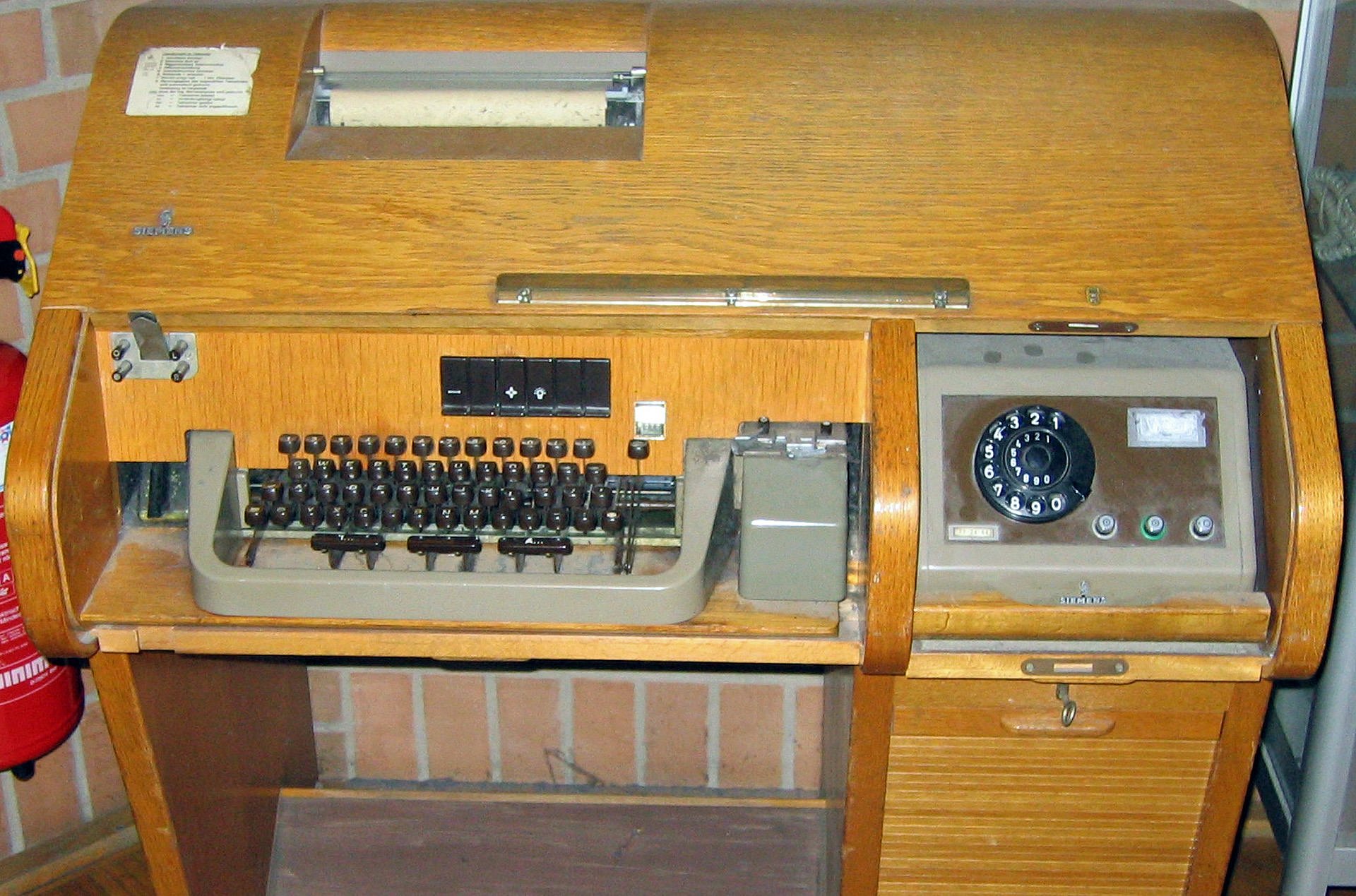
During his time in Moscow in the 1950s, however, my father sent a dispatch report every day. He typed it up on a typewriter and took it to the main telegraph office, where the report was first submitted to the censorship office; whilst he sat there twiddling his thumbs, waiting for everything to be stamped and, where necessary, redacted. Then the text had to be telegraphed in the first place, and my father had to wait again (doodles on the back of his manuscript sheets often reveal that he often sat around for longer periods) until everything had been transmitted to Germany, where it was then, of course, read the next day at the earliest. Those were very different processes.
Nowadays, everyone has to present not only the facts immediately, but also an analysis, within nanoseconds. In the context of reporting on Ukraine, for example, this can certainly be an advantage, but it naturally carries risks – and above all, it puts reporters under incredible pressure.
Neef: The fast pace and the resulting pressure are the key issues. Foreign correspondents in particular are forced these days to do several things almost simultaneously because they have to produce content for various media platforms. So it’s not enough just to write an article; you also have to record an audio piece or perhaps shoot a video. All of that naturally takes time away from research. Gerd Ruge made intensive use of his time on the ground for research. He spent weeks travelling through countries – then completely unknown here – such as Tito’s Yugoslavia, through Korea, which had just emerged from a brutal war, and through Vietnam, conducting thorough research there.
We often don’t have that time anymore today. Unfortunately, this scarcity seems to have a negative effect on curiosity. Gerd Ruge once said that young journalists no longer seem to him to be as curious as he used to be himself. There are certainly links to the new media, which lead one to believe that one is already informed and knows everything simply because one has clicked through somewhere. Spending weeks on the ground and talking to people is quite another matter. But that requires time and money, neither of which is available to the same extent as in the past. Which newspaper can still afford such a thing today? That is a huge difference from the days when Gerd Ruge was working. One can and must regret that. But that is the way of the world.
There is a lot of talk at the moment about times of ‘poly-crisis’. Did Gerd Ruge anticipate such a development in the 21st century? Was that, for example, part of the statement on his 90th birthday?
Ruge: That term has only been in circulation for a few months; my father’s 90th was in August six years ago. There was already a war in Ukraine back then, but fortunately he did not live to see 7 October and the subsequent escalation in the Middle East, nor the earlier escalation in the Ukraine war, as that would certainly have shaken him. However, he may well have had some inkling of what was to come, even if not in concrete terms. In any case, he was of the view that NATO’s eastward expansion had not been adequately prepared and therefore saw a certain risk that things might go wrong in the long run as a result – even though he was very much in favour of the expansion and was by no means a ‘Putin sympathiser’.
Neef: That is precisely the point. Both in journalism and in these political assessments, he was someone who never propagated certainties, but instead constantly questioned many things. Even in his earliest reports from Indochina in the 1950s. His attitude was: I’ll tell you what I see and what I’ve learnt from the people – but I can’t really judge whether that’s the crux of the political situation here.
Nowadays, such a statement would be seen as uninformed; nobody would admit to anything like that. Although it is an important aspect of journalism to allow doubt, scepticism or ignorance to show through, because that is precisely what constitutes credibility. Gerd Ruge has repeatedly emphasised this in recent years, always with a slight smile. He was always opposed to journalists wanting to get involved. Gerd Ruge was a staunch opponent of the idea that one can practise ‘position journalism’ – that is, taking a clear side and omitting information that might harm that stance or the desired political image.
Gerd Ruge has always been opposed to journalists trying to interfere.
Christian Neef
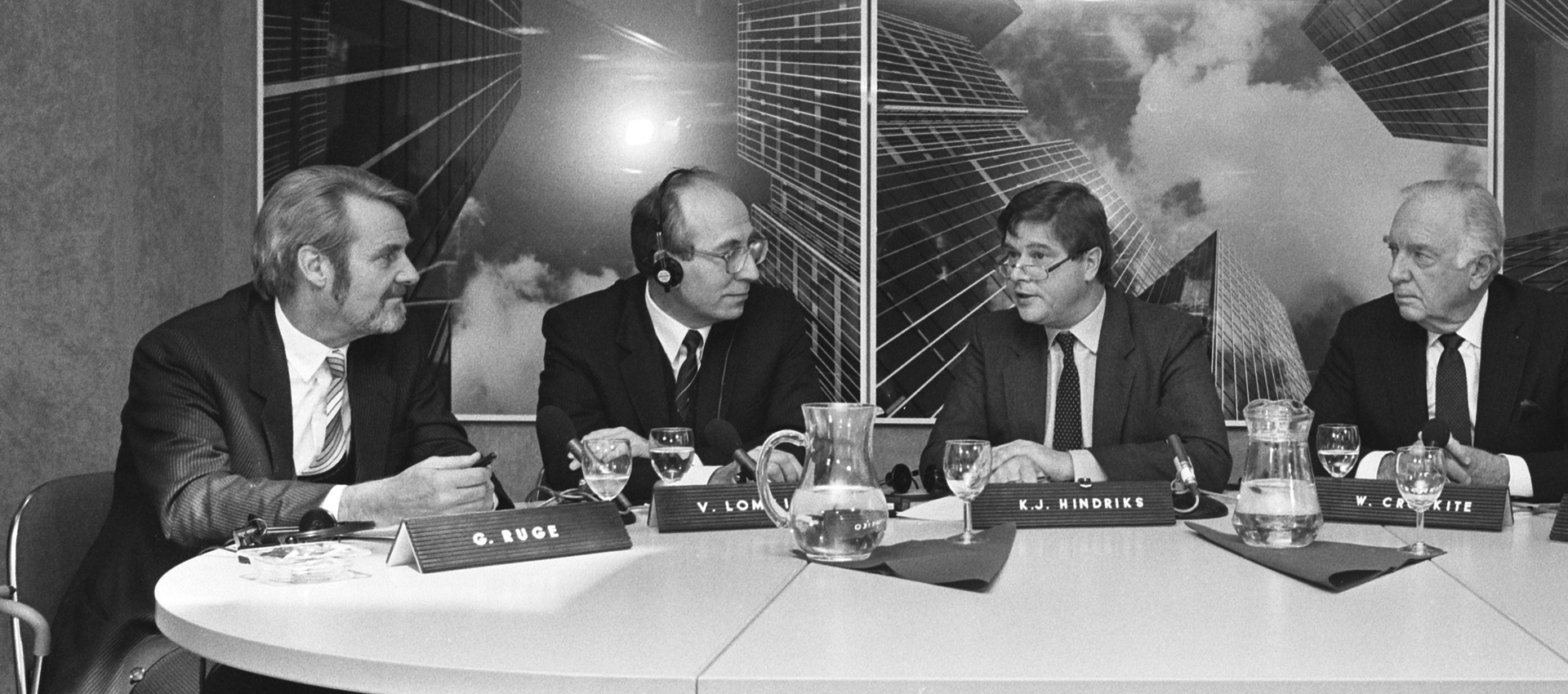
Ruge: He also often reflected on what it means to be a reporter. In the early 1960s, my father chaired a major round-table discussion on the *Spiegel* affair, bringing together all sorts of representatives from the world of journalism and various institutions. The discussion centred on the relationship between national security and the press’s duty to inform. That remains a huge issue to this day – one need only think of Julian Assange.
My father’s interest in and reflection on the question of the press’s significance for democracy naturally also has something to do with the fact that, as a young adult, he was released from a dictatorship and observed how a young democracy builds a media landscape and makes press freedom a guiding principle.
Neef: I have to say something rather heretical again, namely that journalists of that generation were much more reliant on their own thinking, simply because there were fewer resources available. Today, as a journalist, you get all sorts of information through a wide variety of channels. Back then, at best there was the telex, and hardly any official sources from the host country that were truly reliable. Otherwise, there was nothing. He had to work everything out for himself.
That is something which, in today’s journalism – partly fortunately – no longer happens in quite the same way. Nevertheless, it increases my respect for colleagues like Gerd Ruge, who worked in the 1950s and 60s, when journalism was still a very difficult business.
Ruge: Sometimes it reminds me of how, when visiting the doctor, you might find that an older female doctor is sometimes the better diagnostician, simply because she is used to having to analyse things without modern, and above all digital, aids.
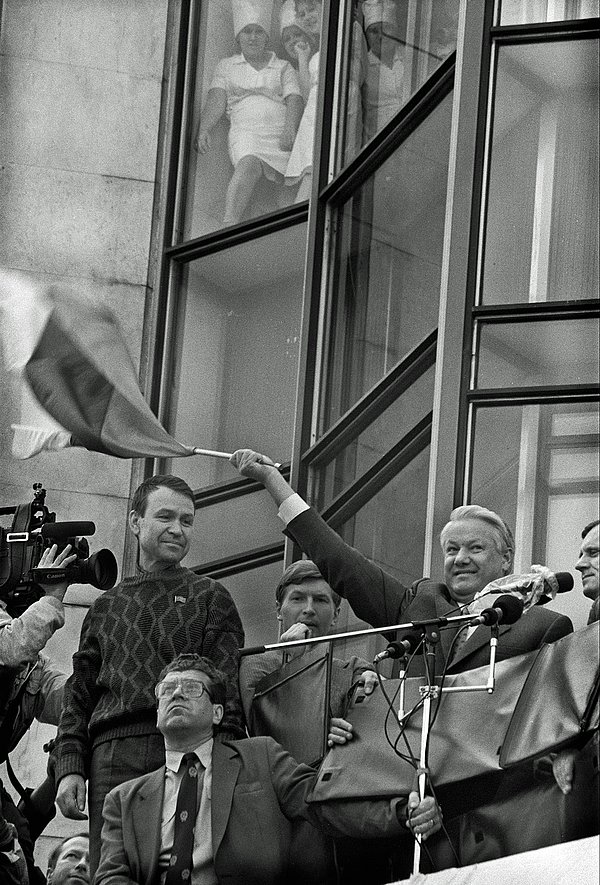
This also honed my father’s powers of observation over the decades. During the Gorbachev coup, at the first major press conference announcing how things would proceed following Gorbachev’s removal, he asked his cameraman: “Focus on his hands!” – for they were trembling violently. His succinct comment on this was: “That’s not really what people look like when they’re preparing to take over and lead a great empire.” That’s a small example of his way of looking closely at things. He didn’t say, “This isn’t going to work out.” He captured a moment and showed: “Here we see these people who are clearly unsettled and afraid of their own courage.” As it turned out later, that was indeed the case.
It seems there is a great deal to learn from Gerd Ruge and his legacy. Could you briefly summarise what you have learnt from him?
Ruge: Because he was my father, I naturally learnt a great deal from him; I could tell you a whole lot. One thing, however, which is also subtly reflected in his journalistic work, strikes me as particularly important: namely, that there is an elusive yet undeniably real ‘bigger picture’ that points beyond everyday politics and beyond what we humans manage to achieve together here, for better or for worse.
For him, this was reflected in nature. He was also a keen birdwatcher. When we went for walks or hikes with him as children, he could name every tree – and he took pleasure in these things in a very deep, simple, unspectacular way. He understood that there is a greater principle at work. That helps you to put things into perspective a little and not always take yourself so terribly seriously.
Neef: For me, the most impressive thing is his ability to remain objective. To try to recognise things and not operate on the basis of preconceived judgements. That’s how I got to know him in Moscow in the late 1980s, personally too. That impressed me because it set him apart from others even back then.