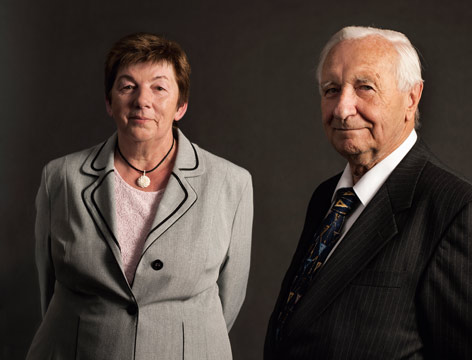
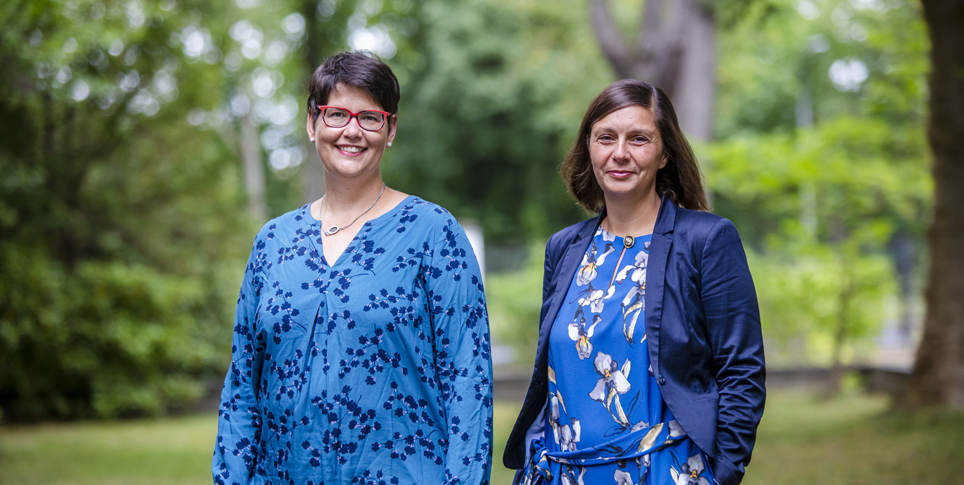
In an interview, economic historians Laetitia Lenel (University of Duisburg-Essen) and Mark Spoerer (University of Regensburg) discuss their collaboration with the Berlin State Library and the importance of curated historical datasets.
You are both currently working as historians on several collaborative projects with the SBB, most notably the “Chamber of Commerce Reports” and the Emporion research data hub. What do these projects involve?
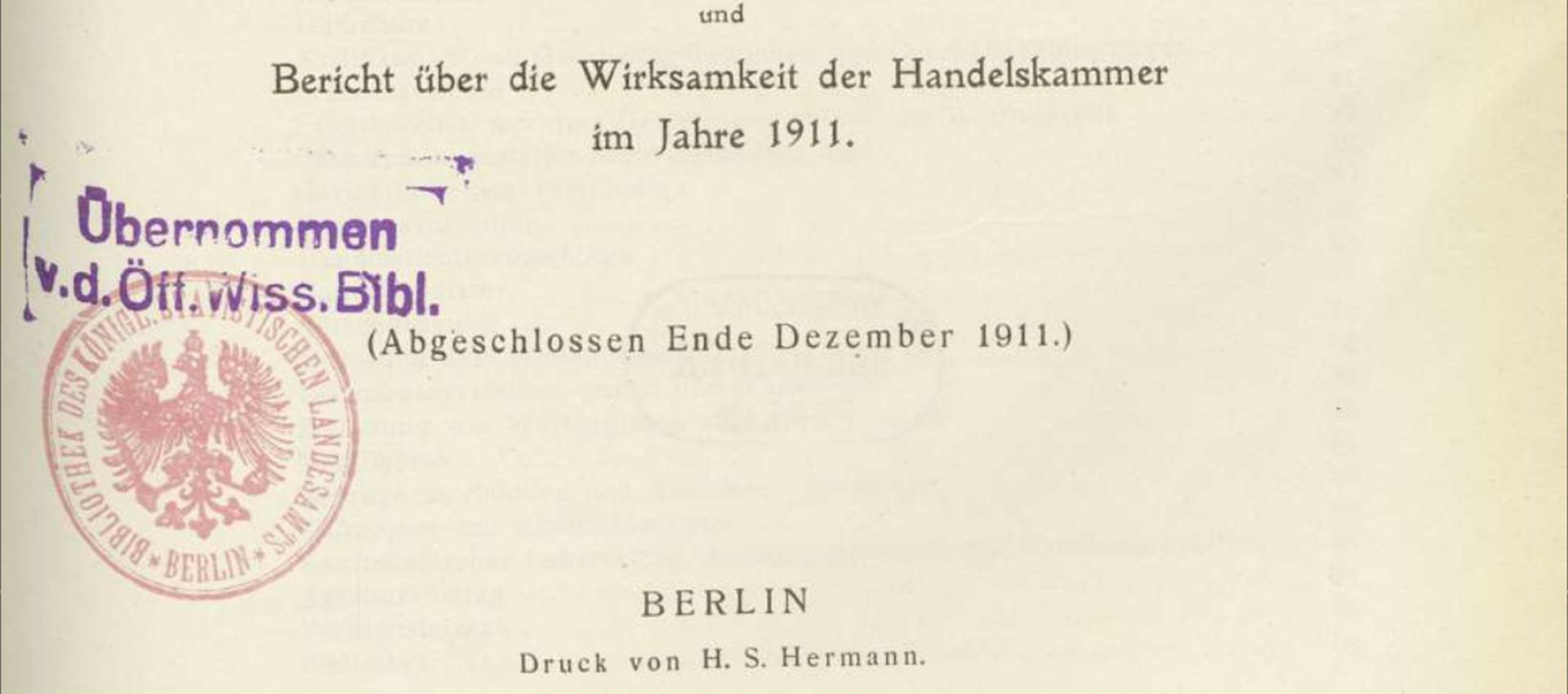
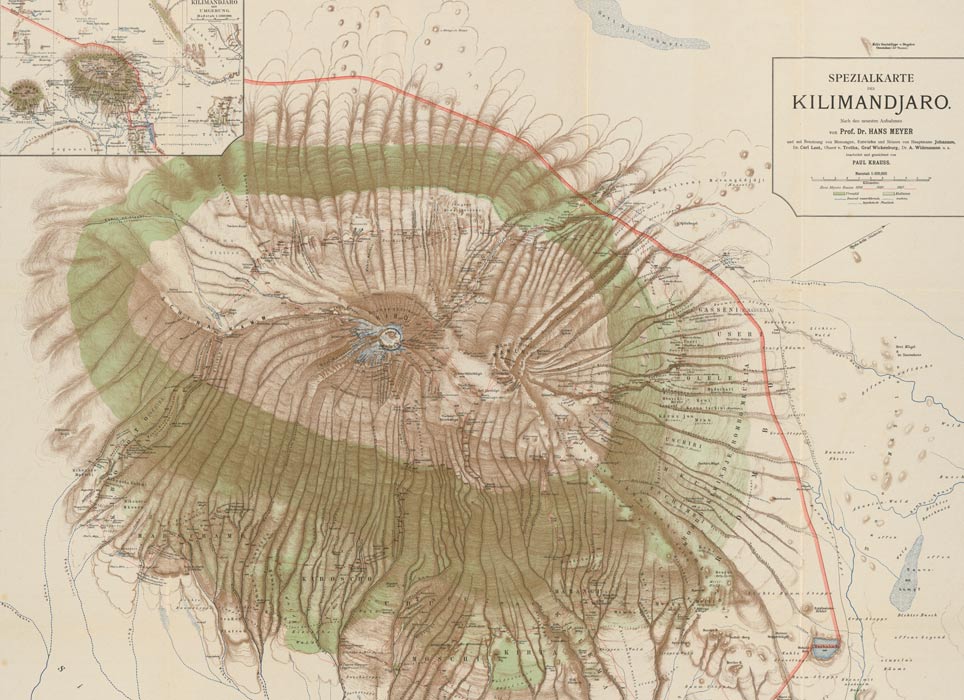
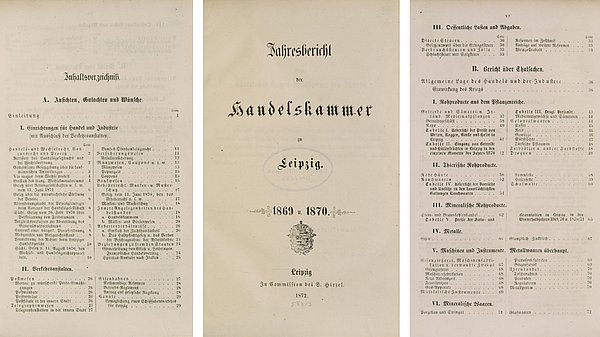
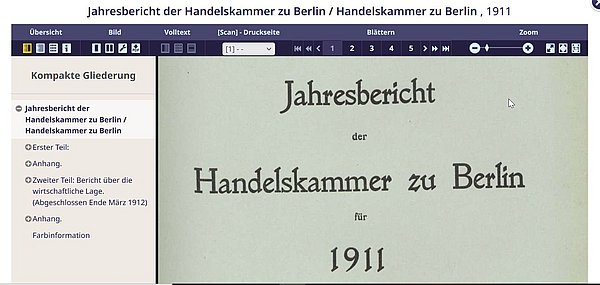
Mark Spoerer: The Chamber of Commerce Reports project involves the digitisation and analysis of the annual reports published by German chambers of commerce, some of which date back to before the mid-19th century. These reports follow a standardised structure, which allows for comparisons to be made. So far, we have a rough idea of the overall German economy in the 19th century, but not of regional economies. The Chamber of Commerce Reports are a very useful and informative source for this.
Laetitia Lenel: With Emporion (emporion.gswg.info), we have created a research data hub for social and economic history. Emporion enables the free, standards-compliant publication of time series, historical statistical and panel data, text mining analyses and data papers in open access. Since 2023, it has been jointly supported by the DFG Priority Programme 1859 ‘Experience and Expectation. Historical Foundations of Economic Behaviour’, the Society for Social and Economic History (GSWG) and the Berlin State Library (SBB).

What role do historical and statistical data play in research?
MS: In historical studies, we must constantly (and, incidentally, methodologically necessarily) make comparisons in order to establish the significance of a historical event. Quantification allows for a more precise comparison, although one must, of course, always bear in mind, from a source-critical perspective, that the criteria according to which data was collected in the past almost never correspond exactly to a contemporary research question.
In other disciplines, such as economics or meteorology, researchers are delighted when they can draw on long time series. We act as suppliers of data for them, the collection of which would be far too time-consuming for them (which is perfectly fine).
LL: Economic and social history has been a largely data-driven field from the outset. In recent years, this fact has also attracted increased attention in the realm of research policy, as more and more funding bodies and the data availability policies of numerous journals and publishers are making open access to research data mandatory in order to enable the verification and reproducibility of studies and results.
In the study of history, we must constantly (and, incidentally, as a matter of methodological necessity) make comparisons in order to establish the significance of a historical event.
Mark Spoerer
What are the current challenges facing data repositories, and what potential solutions are being explored in collaboration with the State Library?
MS: The main problem is ensuring the long-term archiving of data that has often been painstakingly extracted from archives or libraries and processed, usually using taxpayers’ money. My hard drive or even my university’s research data repository are less suitable than a state library, which can look back on a truly long tradition and will hopefully continue to exist in the future, in whatever form that may take.
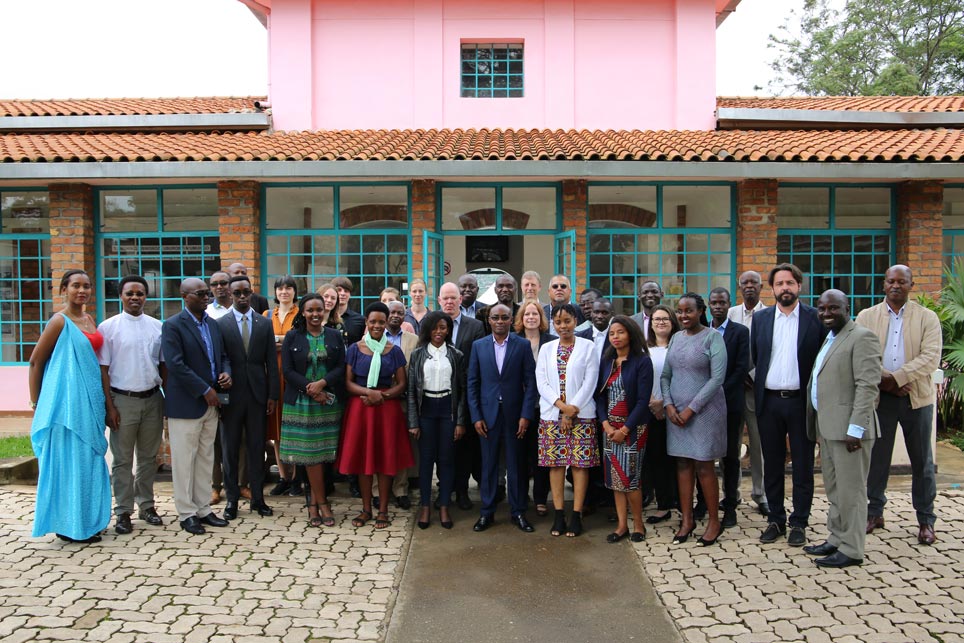
LL: Yes, until now the necessary infrastructure simply didn’t exist. There were individual institutional research data repositories, but these were only accessible to members of the university in question. With Emporion, we therefore wanted to create a research data repository that is open to the entire discipline. In doing so, we also aimed to continue the productive culture of dialogue and cooperation that bridges the various strands of the discipline – a culture that has shaped and enriched our priority programme.
What are the biggest challenges when it comes to processing and providing the data?
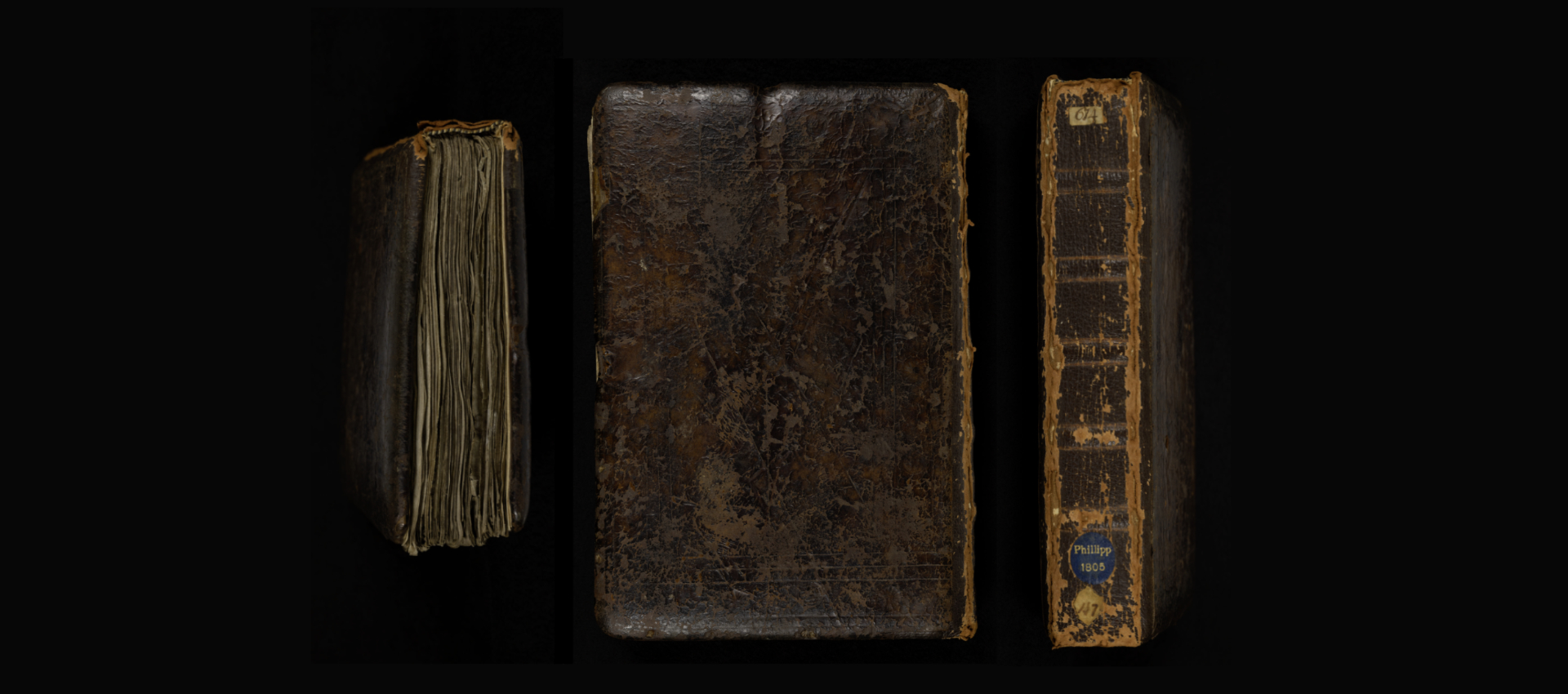
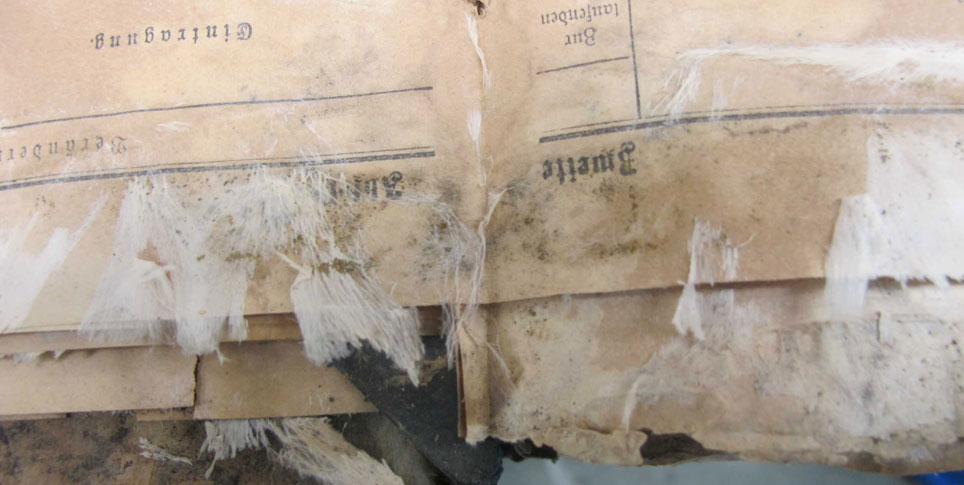
MS: That depends entirely on the situation. Here in Regensburg, for example, we are currently in the process of successfully completing a project to digitise and index around 1,100 hospital account books dating back to the mid-14th century, which have been preserved almost in their entirety. These account books are so valuable for historical research because they contain wages and prices, which allows us to draw conclusions about people’s standard of living over a very long period. Now, 400,000 digitised records are online. When we began drafting the project proposal in 2017, there was no way of imagining that this treasure trove could be analysed using AI methods.
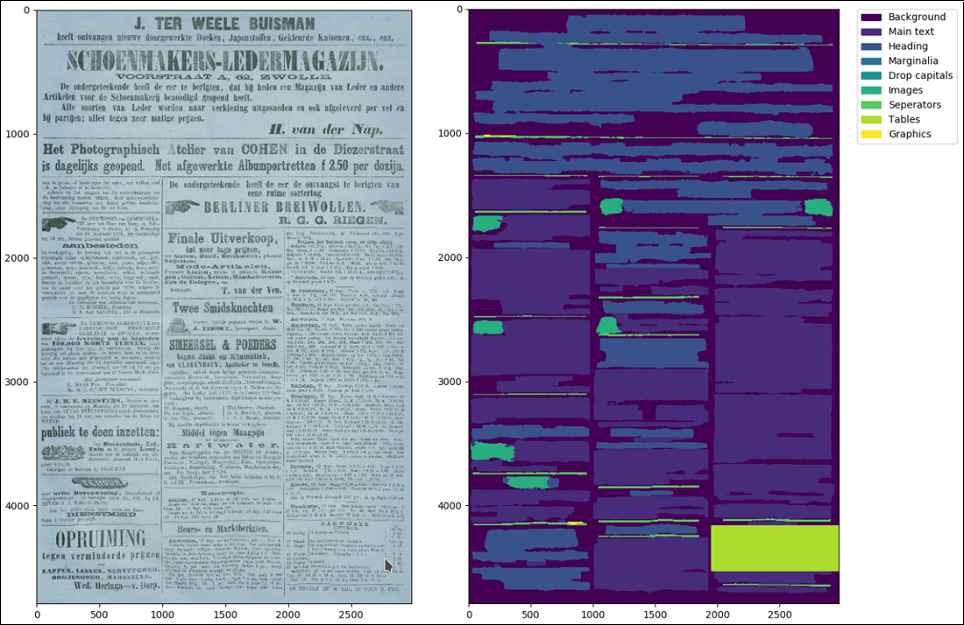
The challenges are quite different when it comes to modern economic and social data. It’s hard to believe, but at the moment AI is still not reliably capable of recognising somewhat old-fashioned tables as such and converting them into machine-readable table format (CSV), even when they are available in printed form and have been properly digitised (very important!). That will certainly change within the next two to five years, however.
LL: Collecting and processing data is always time-consuming and costly. As a result, many researchers are reluctant to make their own data available to others. A shift in mindset is needed here, and that takes time. At the same time, the open access publication of time series, historical statistical and panel data, vector geodata and text mining analyses could help to reduce inequalities in the scientific system. After all, it enables people at an early stage in their careers to use data that would otherwise often only be collectable with a considerable investment of funds and resources.
We wish to continue the productive culture of dialogue and cooperation that has shaped and enriched our priority programme.
Laetita Lenel
What role does Open Access play in your work?
LL: A significant one. We are currently in the process of publishing a handbook on Economic Expectations in Historical Perspective, which documents the key findings of our research programme and brings them together with further international perspectives on the topic. Thanks to funding from several institutions, the handbook will be published in Open Access, which I am very pleased about, as it naturally enables a much wider audience to engage with and discuss the contributions.
MS: In my view, Open Access is also absolutely vital because it facilitates research. I edit a specialist journal and am very proud that it has been published entirely in Open Access since early 2024.

In your work, you deal with some fascinating historical data – is there a particular area or a specific example that you personally find especially intriguing?
LL: My book on the history of economic forecasting is due to be published this year by Cambridge University Press. The book is the result of my years of research into economic forecasting groups and institutes that produced forecasts based on historical time series and survey results – and in some cases then compared these with subsequent economic data. In my book, I argue that the disappointments caused by discrepancies between forecasts and subsequent data – which occurred time and again in the twentieth century – have fundamentally altered both the methodology and function of forecasting, as well as economic theory and economic and political decision-making. From this perspective, I am currently particularly curious about the changes brought about by the current increase in, and faster availability of, economic survey data. One can already see how this is influencing economic theory, but also, for example, the actions of central banks. In a different context, I am currently researching the history of academic publishers – a subject for which the SBB, with its extensive collection of publishing archives, is a key resource. That too is a fascinating field, but I’d be happy to say more about it soon.
MS: A few years ago, I came across a comprehensive survey of the more valuable German bells from 1940/41. The bells – approximately 15,000 in number – were recorded on index cards according to relatively uniform criteria before they were due to be melted down (the war economy required the copper contained in the bronze). This included the year of casting or the period of casting estimated at the time by the art historians involved. Now, there is hardly any artefact that is as site-specific as a church bell. I would therefore like to use this bell-casting data to write a regional economic history dating back to the Middle Ages, for which no other data exists. However, for a variety of reasons, this is a tough nut to crack, and one I am currently putting off. In any case, this is a fine example of how data can be used to address questions completely different from those for which it was originally collected.
Final question: What impact will your work have on the future of historical, social and economic research?
MS: Not even AI can answer that.
LL: The priority programme, led by Alexander Nützenadel and Jochen Streb, was very important for German-language economic history because we were able to work on the fascinating topic of economic expectation formation from very different perspectives, whilst maintaining a constant dialogue. The experience of this truly interdisciplinary exchange has also had a lasting impact on the research of many of us. I hope that Emporion can help to preserve a little of this integrative spirit and facilitate exchange across different approaches, working groups and universities.