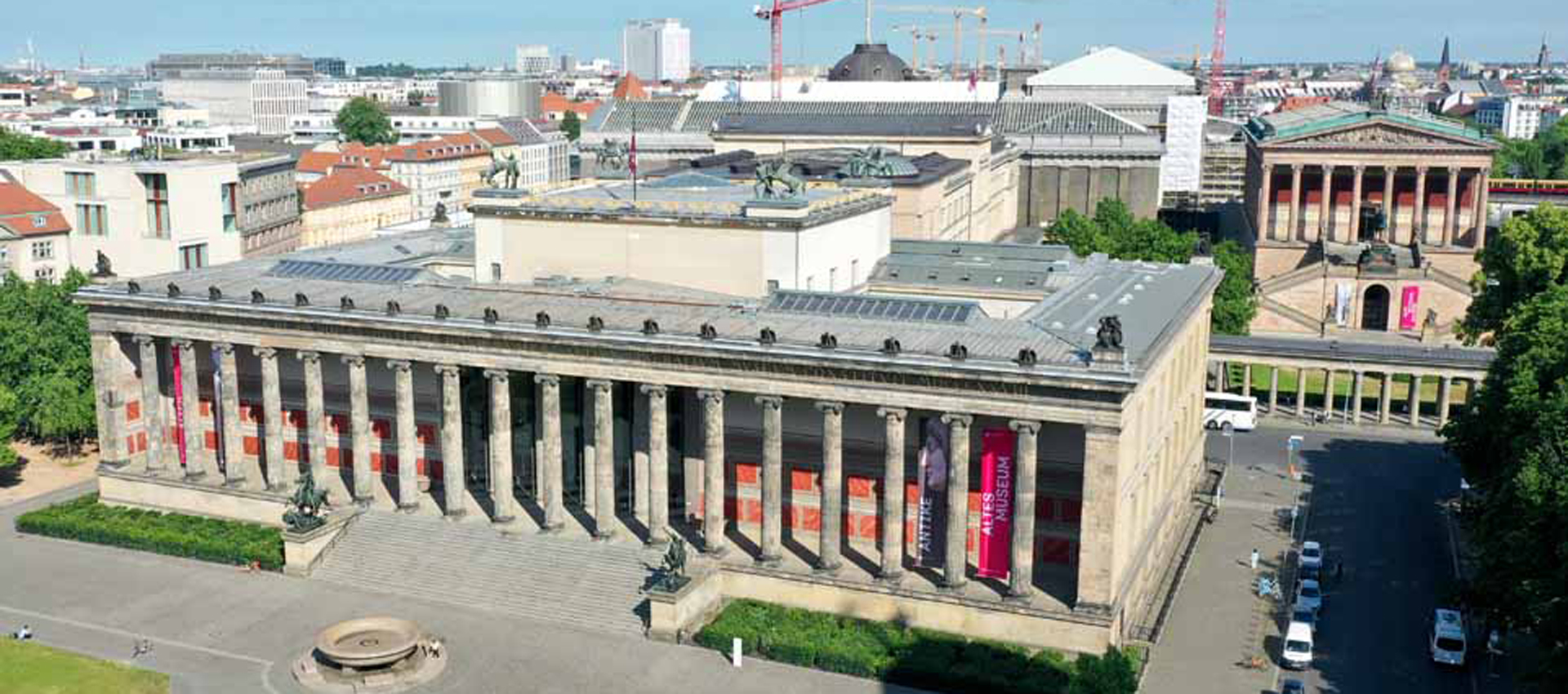
200 years of Museum Island: German-British artist Michael Müller is exhibiting his monumental painting “Dioscuri: The Gifted Day” at the Neues Museum, in which he combines abstract painting with Greek mythology, retelling the ancient discourse on mortality and love in his own unique way.
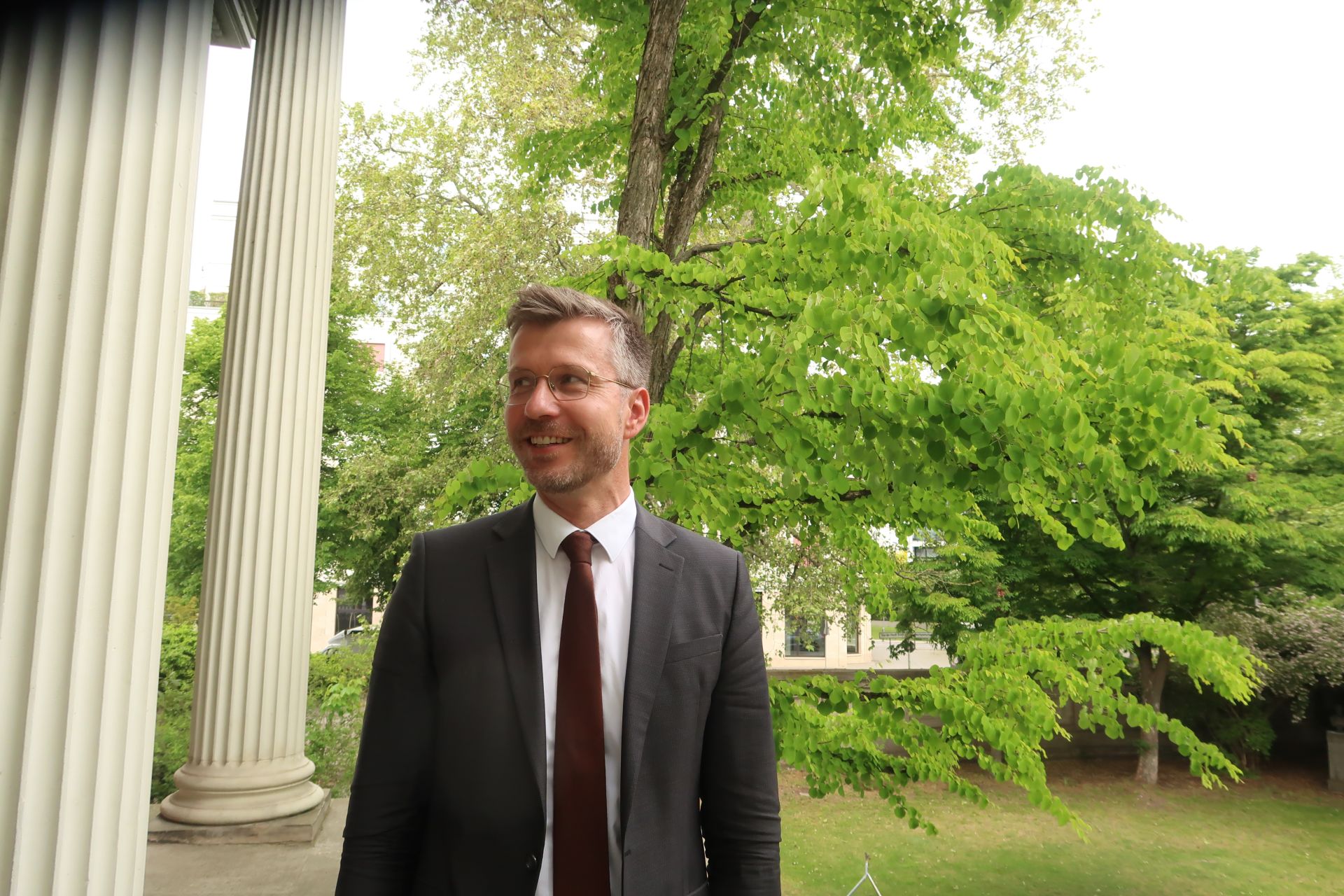
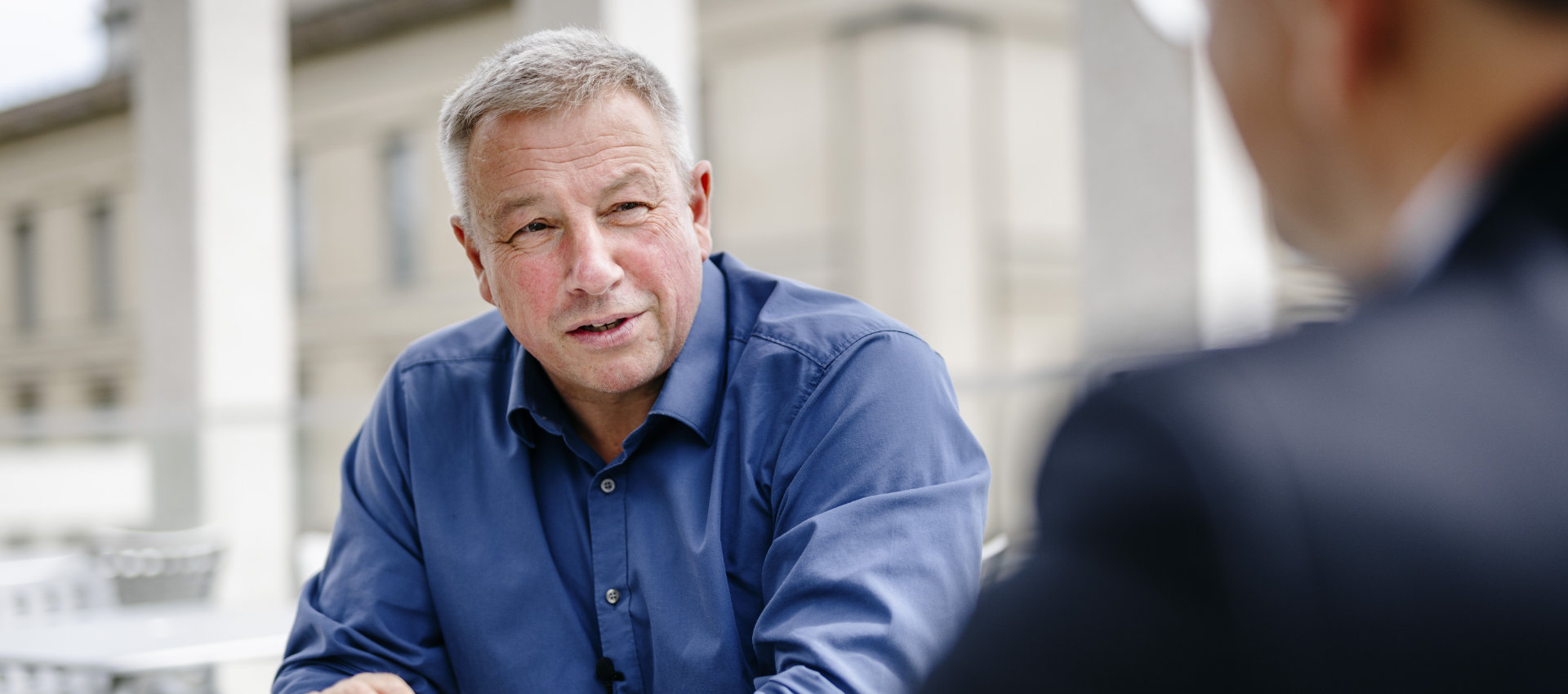
There was this boy, no more than 16 years old, in Ingelheim am Rhein in the mid-1980s. He was bright, rebellious and wanted to become a visual artist. Let others become racing drivers or astronauts; he dreamed of paintings, sculptures and performances. This vision of his future in the artistic world kept coming back to him.
For example, when he was sent to fetch potatoes from the cellar for lunch. “And then,” laughs Michael Müller, who still remembers this scene well, “it took me 45 minutes!” Because as he was climbing down, he found himself wondering how old he would have to be to paint all the pictures he already had in his head. A quick calculation put the figure at 120 years. He didn’t want to rely on that, despite his youthful, overconfident ‘planned economy’. So the list had to be shortened: “That’s why the way back was much harder. What should be crossed off? Which project isn’t quite so important, and for which picture had another artist already found a good solution?” Hungry, but strengthened in spirit, Michael Müller returned from the cellar. He still draws on that list today, of course, knowing the concepts and ideas inside out – and only now, at times, does he paint what he once conceived.
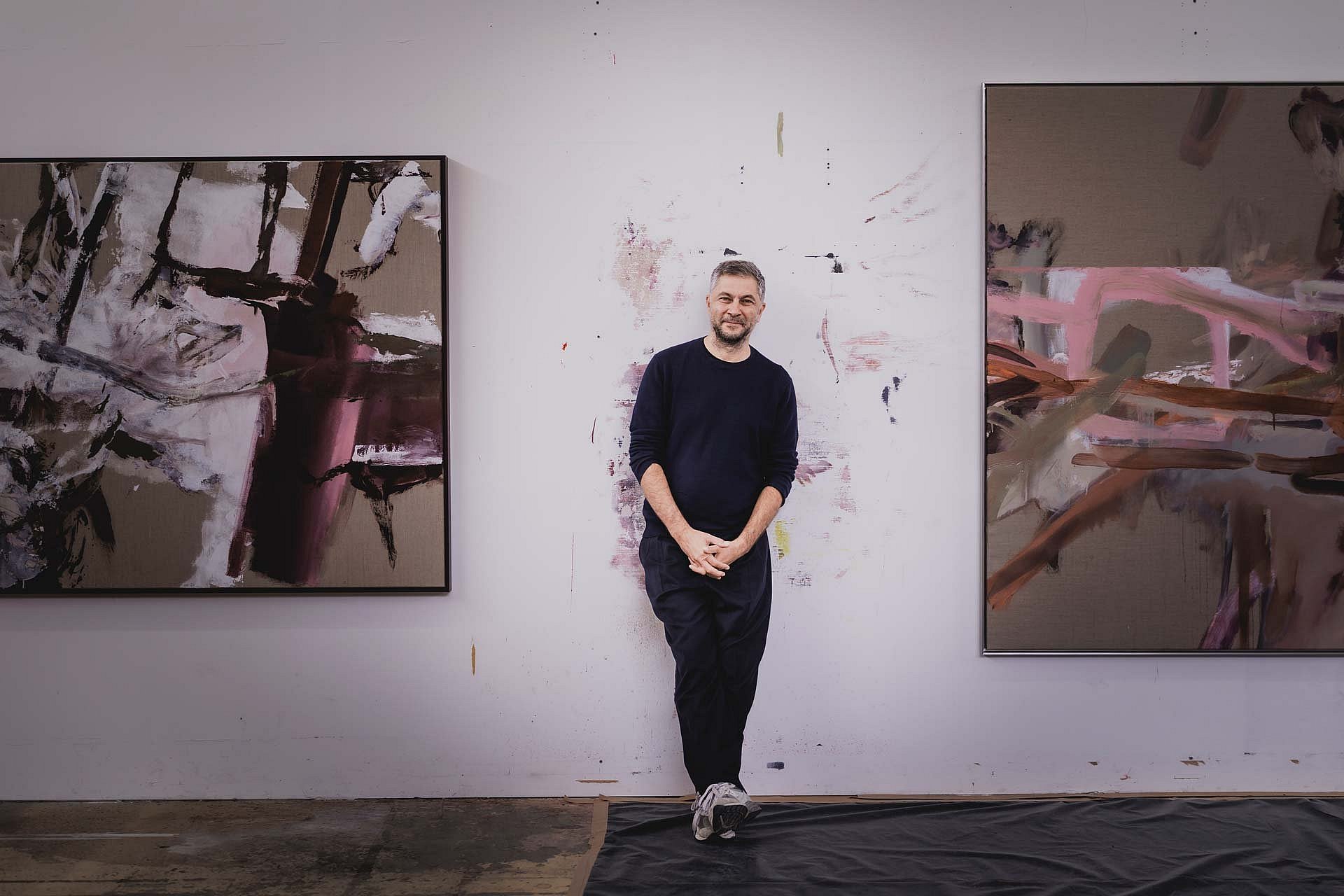
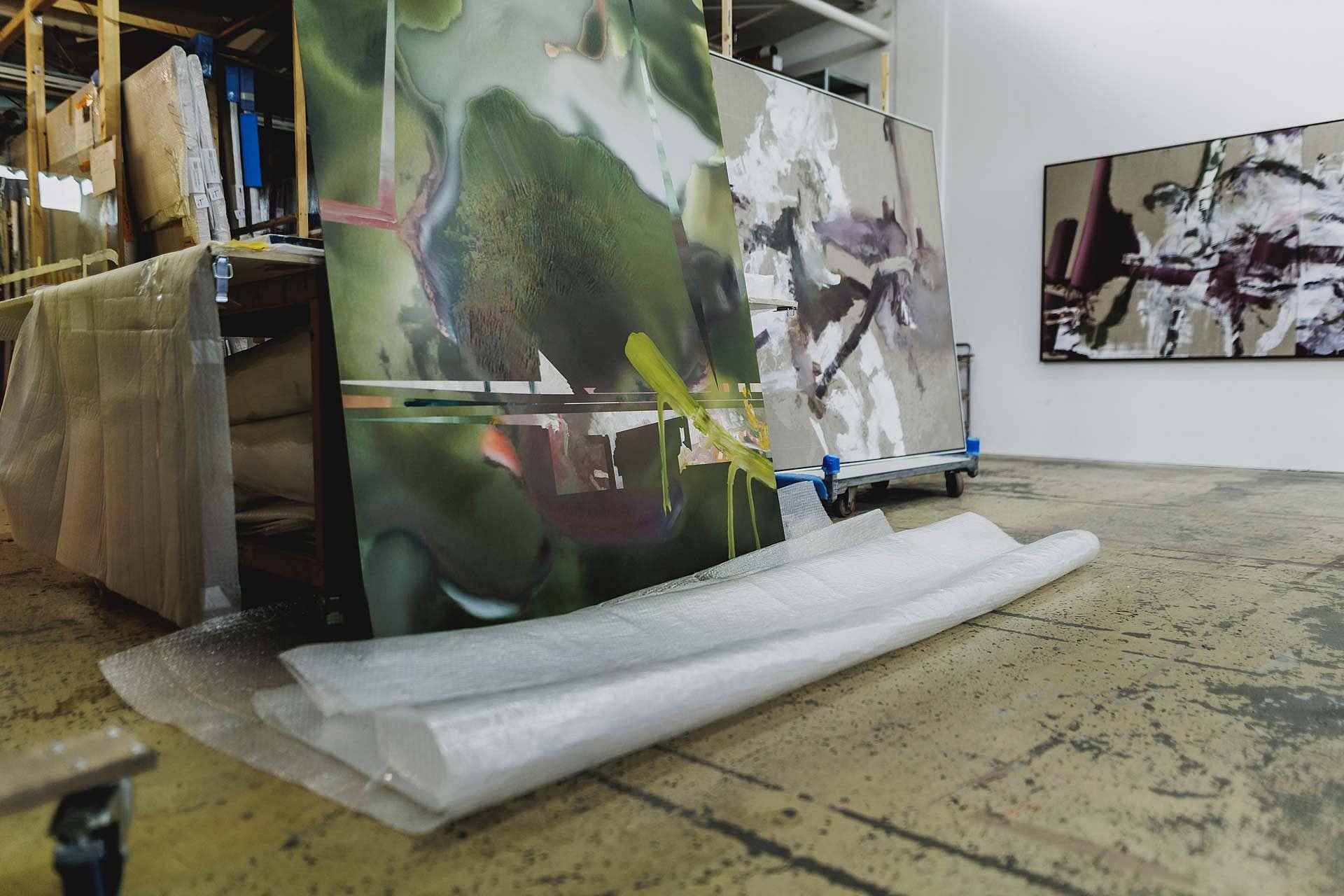
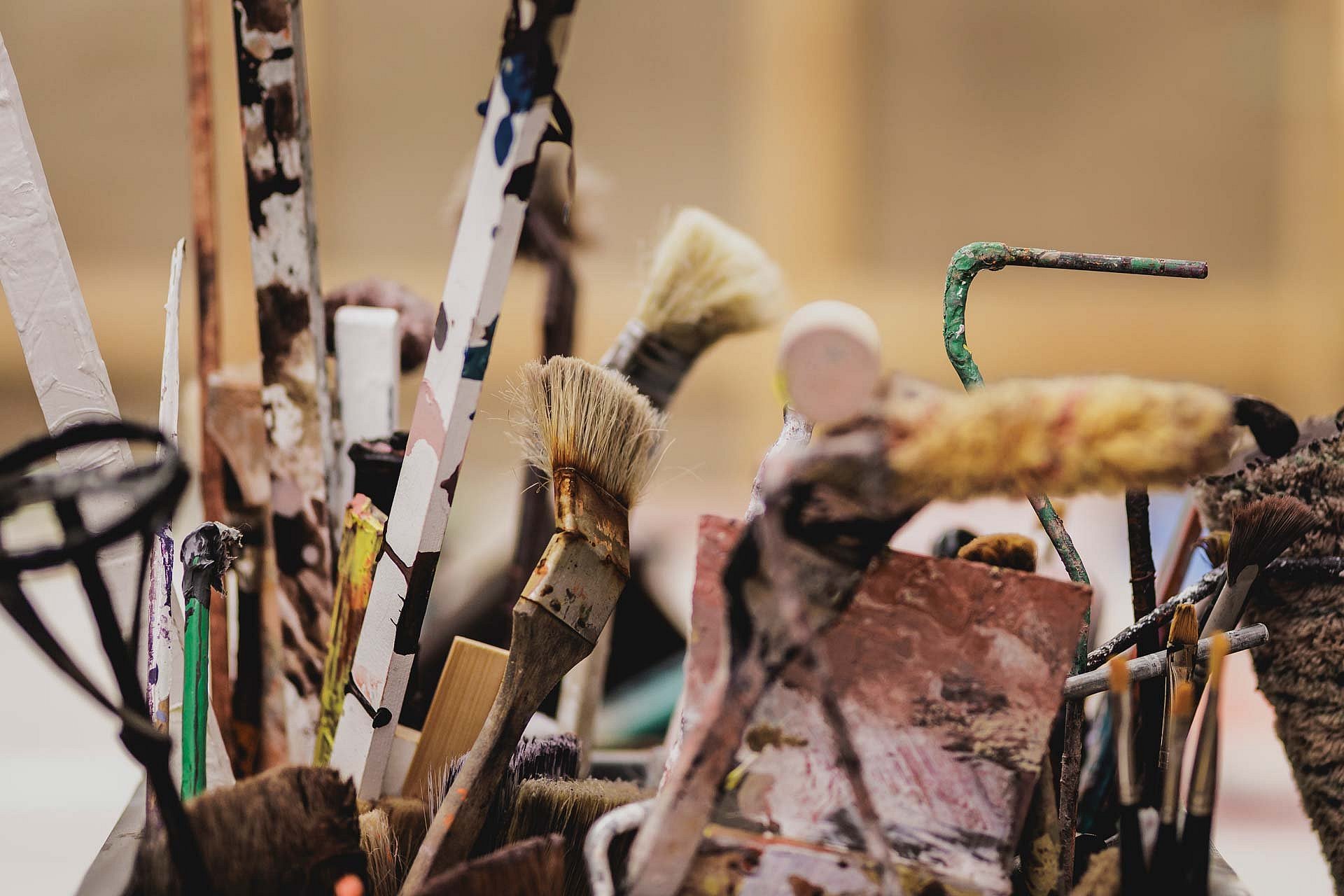
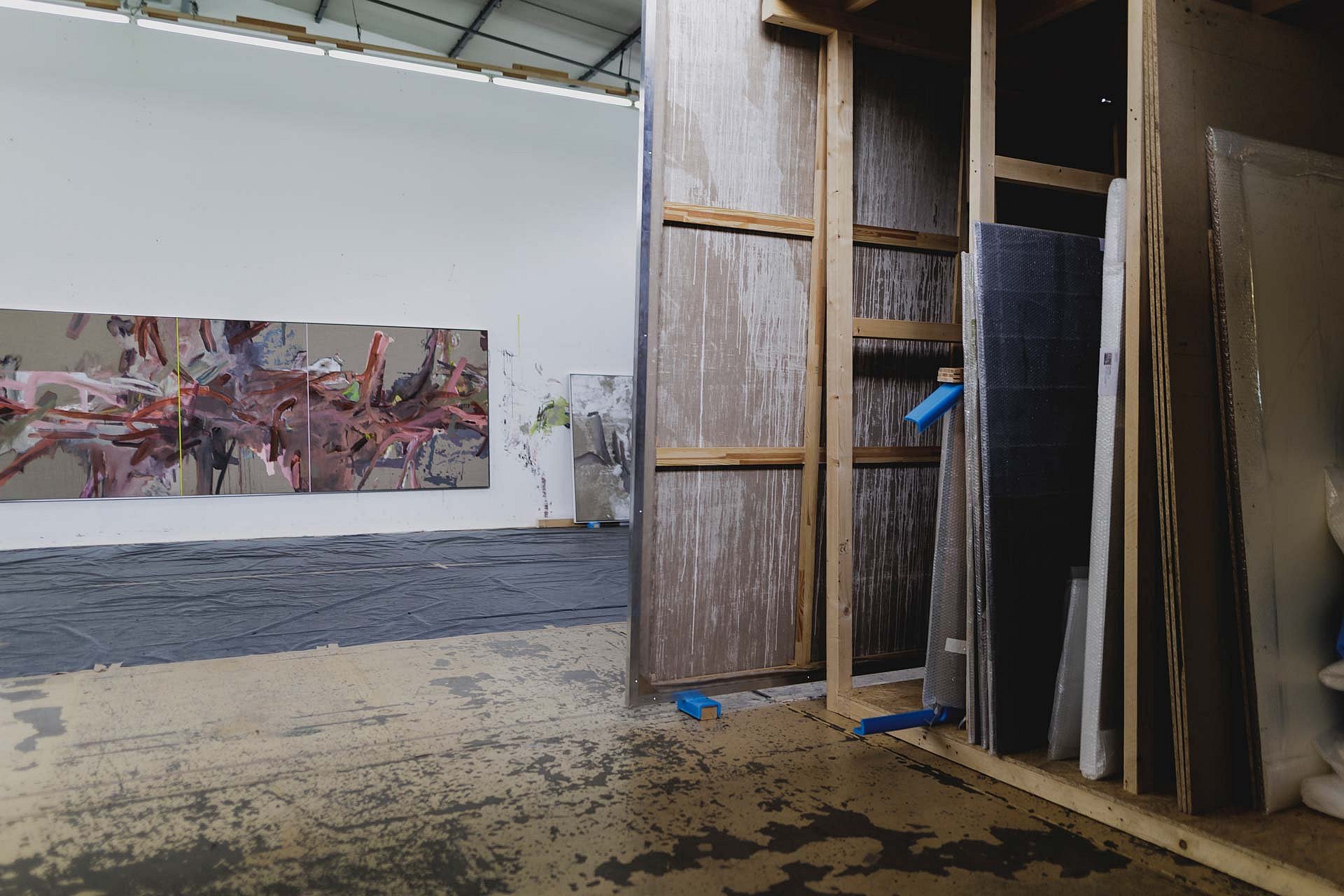
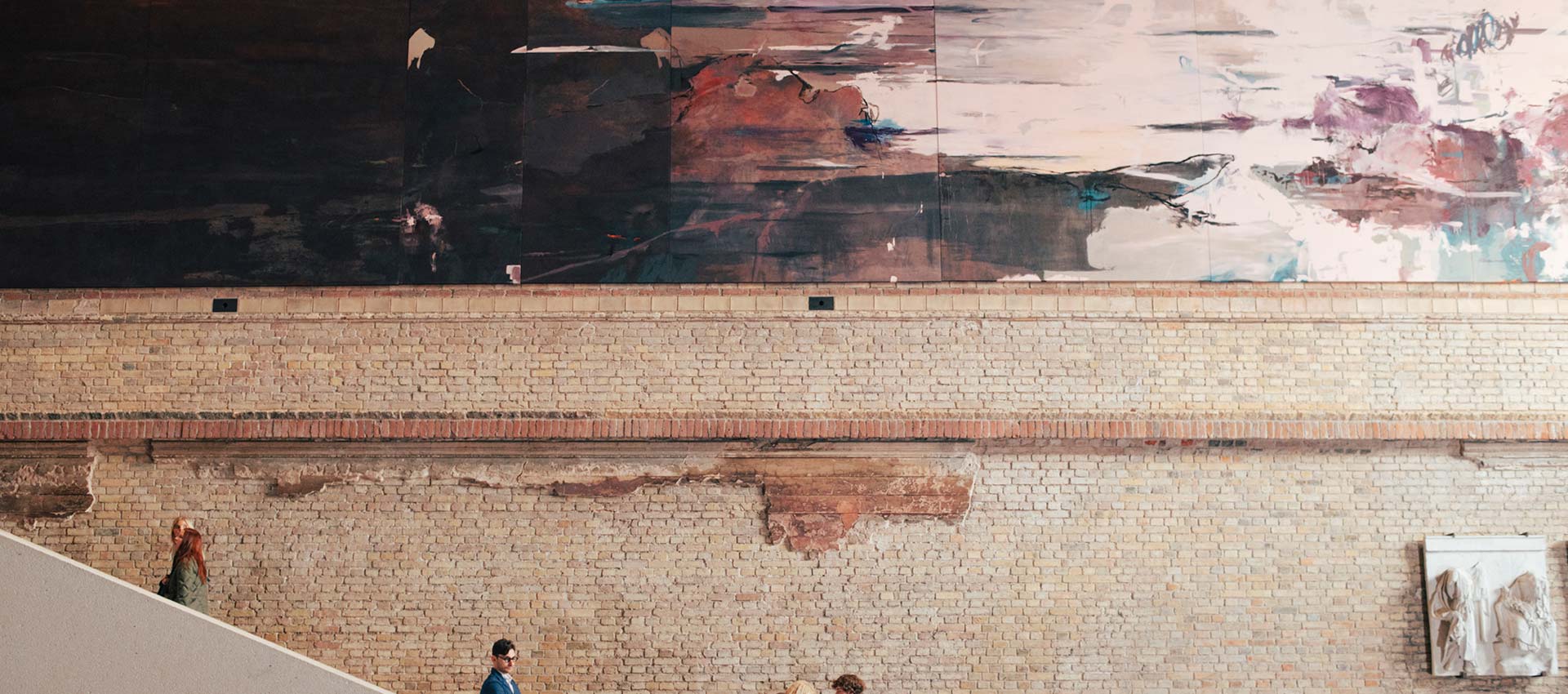
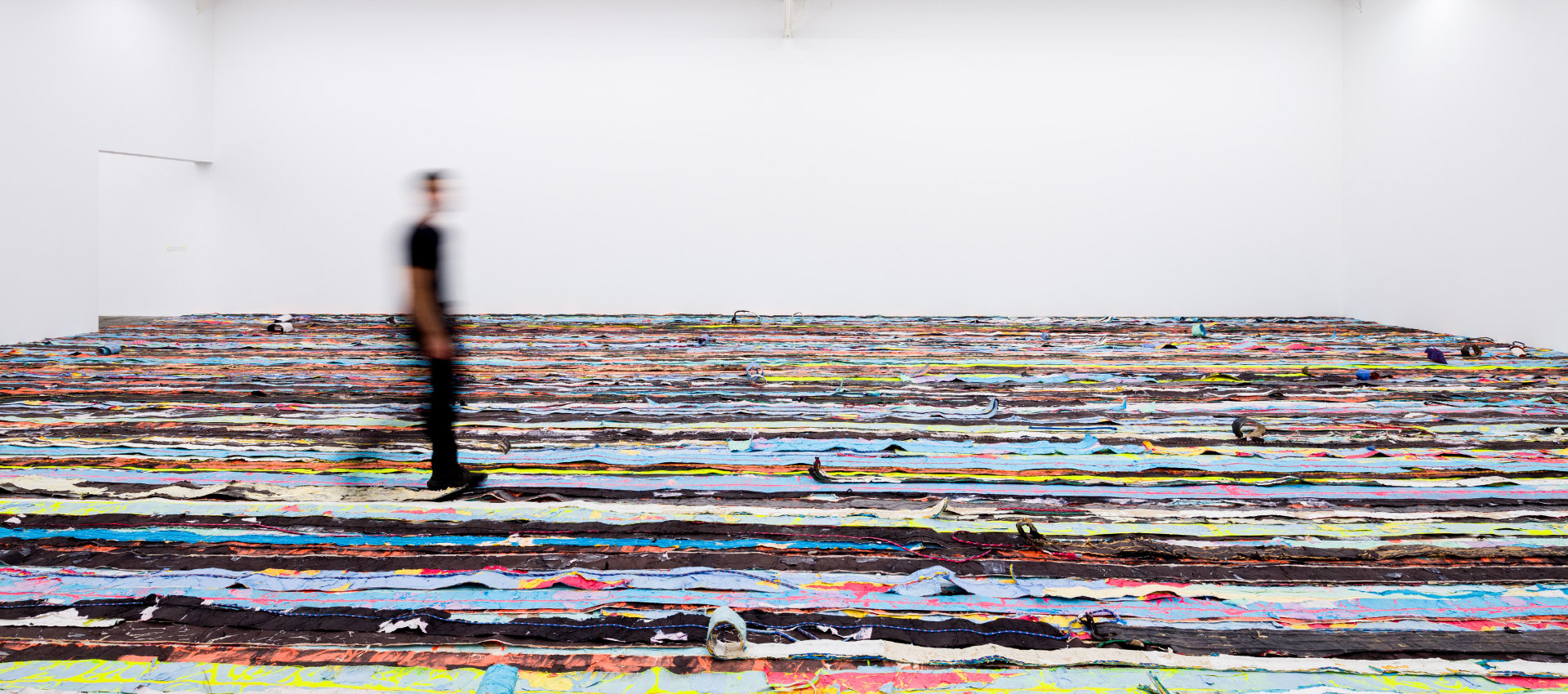
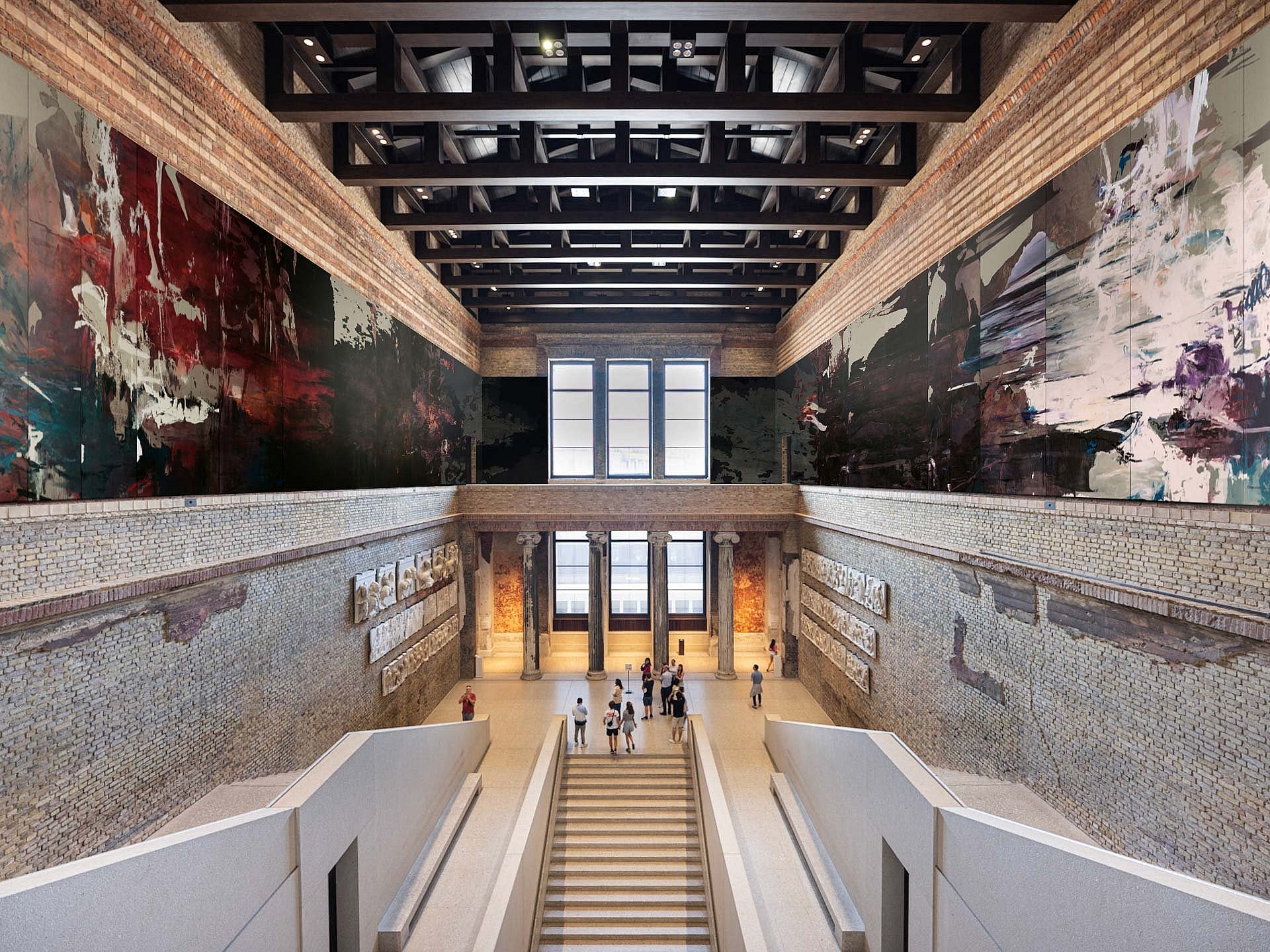
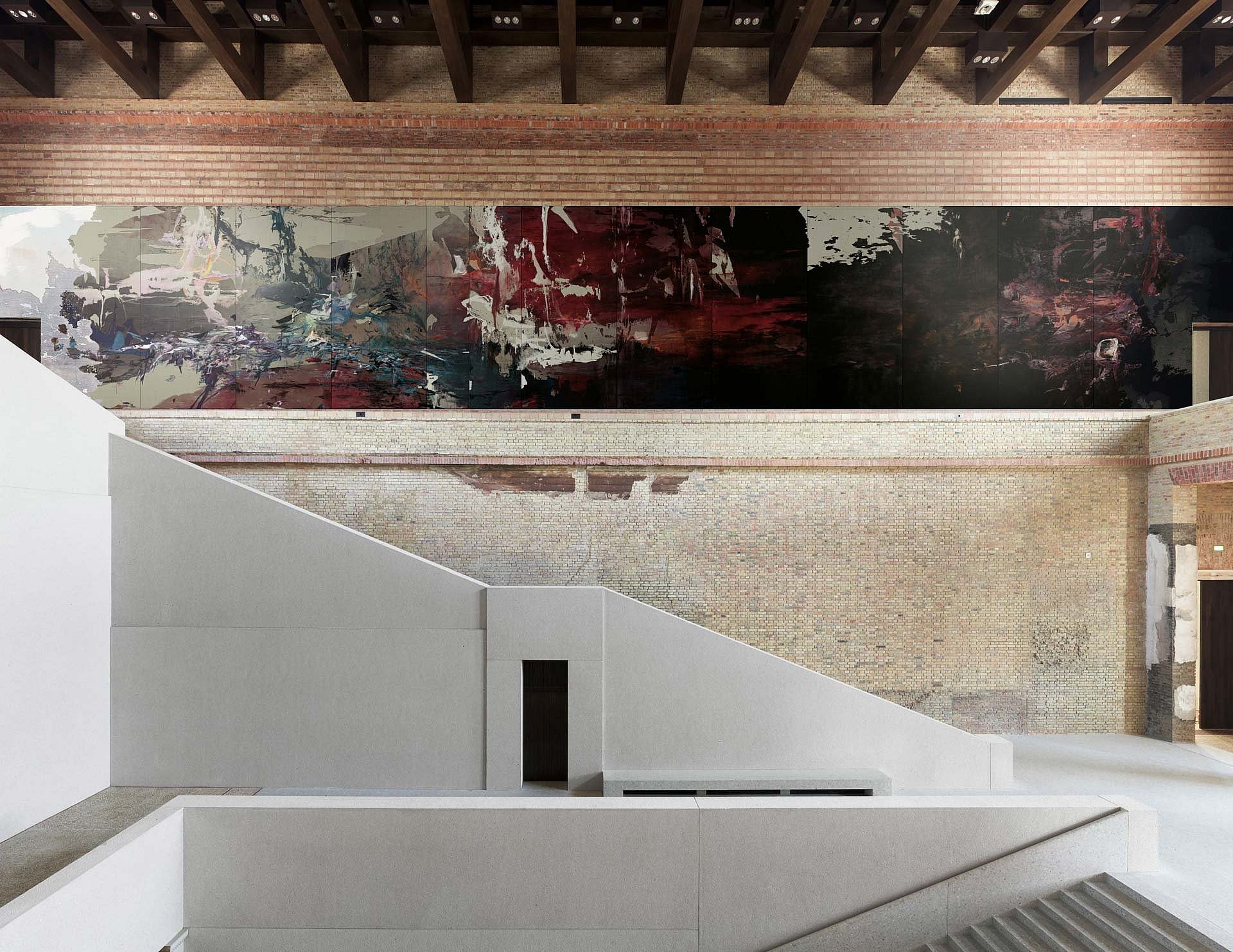
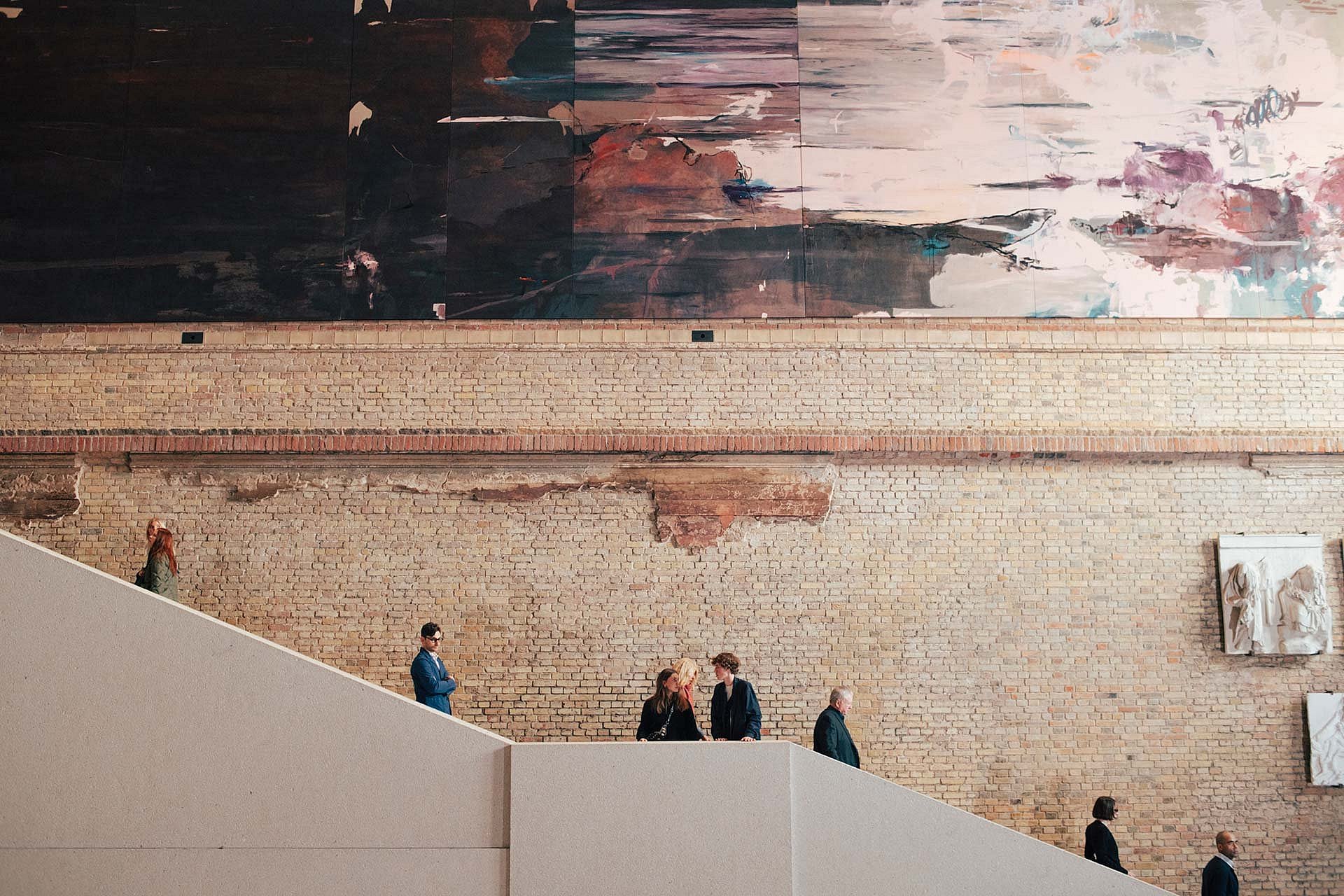
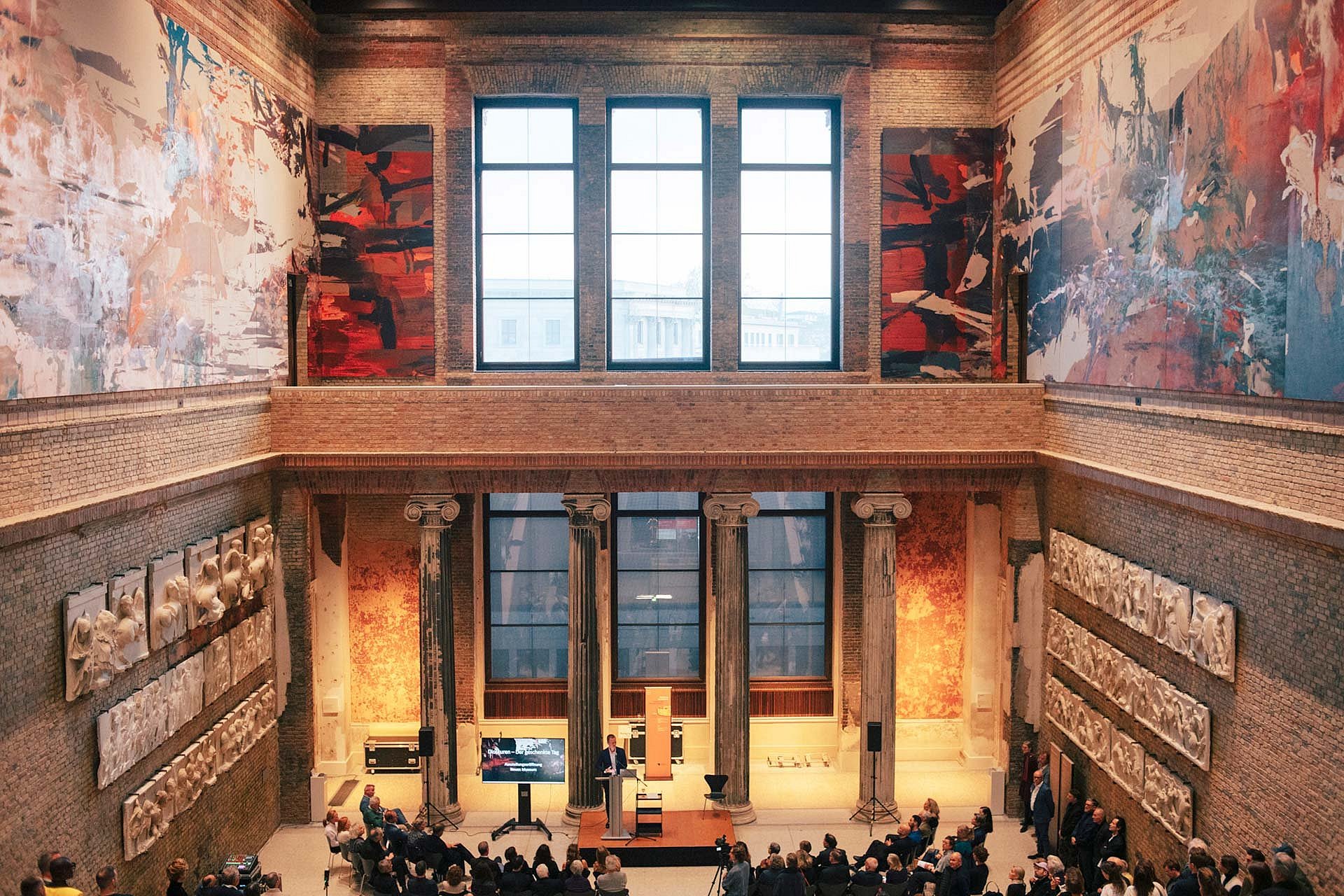
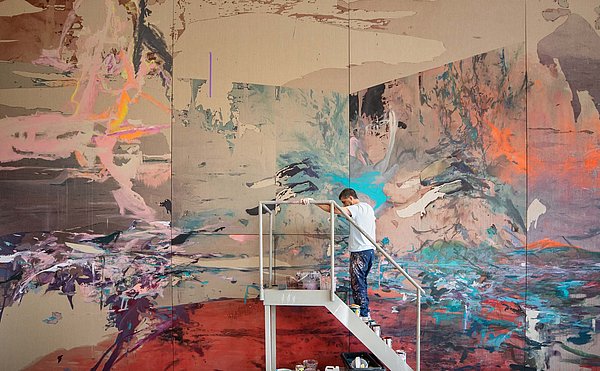
Does his new project, “Dioscuri: The Gifted Day”, count among them? Hardly; this monumental painting, measuring some 86 by 6 metres, is of an unusual scale even for the German-British artist, who frequently paints large-scale works. In 2022/2023, it was on display as a large-scale installation at the Städel Museum in Frankfurt. As part of the 200th anniversary of Berlin’s Museum Island, it is now integrated into the stairwell of the Neues Museum like a frieze.
Thematically, Michael Müller focuses on Greek mythology and the twin brothers Castor and Polydeuces. Their mother is Leda; Castor’s father is Tyndareus, King of Sparta and her husband, whereas Polydeuces’ father is Zeus, who had seduced Leda in the guise of a swan. The twins are inseparable and deeply in love with one another. When Castor is killed in a quarrel, Polydeuces begs Zeus to take away the immortality he possesses as his son, so that he may be reunited with Castor in death. Zeus refuses this, but allows the two to spend one day together on Olympus and the next in Hades. For each of the 24 hours of the day – whether spent with the gods or with the dead – Michael Müller created a panel painting, all of which fit together seamlessly. In the Neues Museum, these are complemented by the artistically designed portals leading from the stairwell into the exhibition galleries.
The most important thing is asking the right questions
If you stand on the entrance level of the Neues Museum now and look up, you get the impression that this frieze has always been there, so convincingly, indeed so overwhelmingly, does it blend into the architectural structure. As an abstract work of art, it lends the space a light-footed, musical quality, which is further enhanced by the daylight streaming in through the two narrow sides.
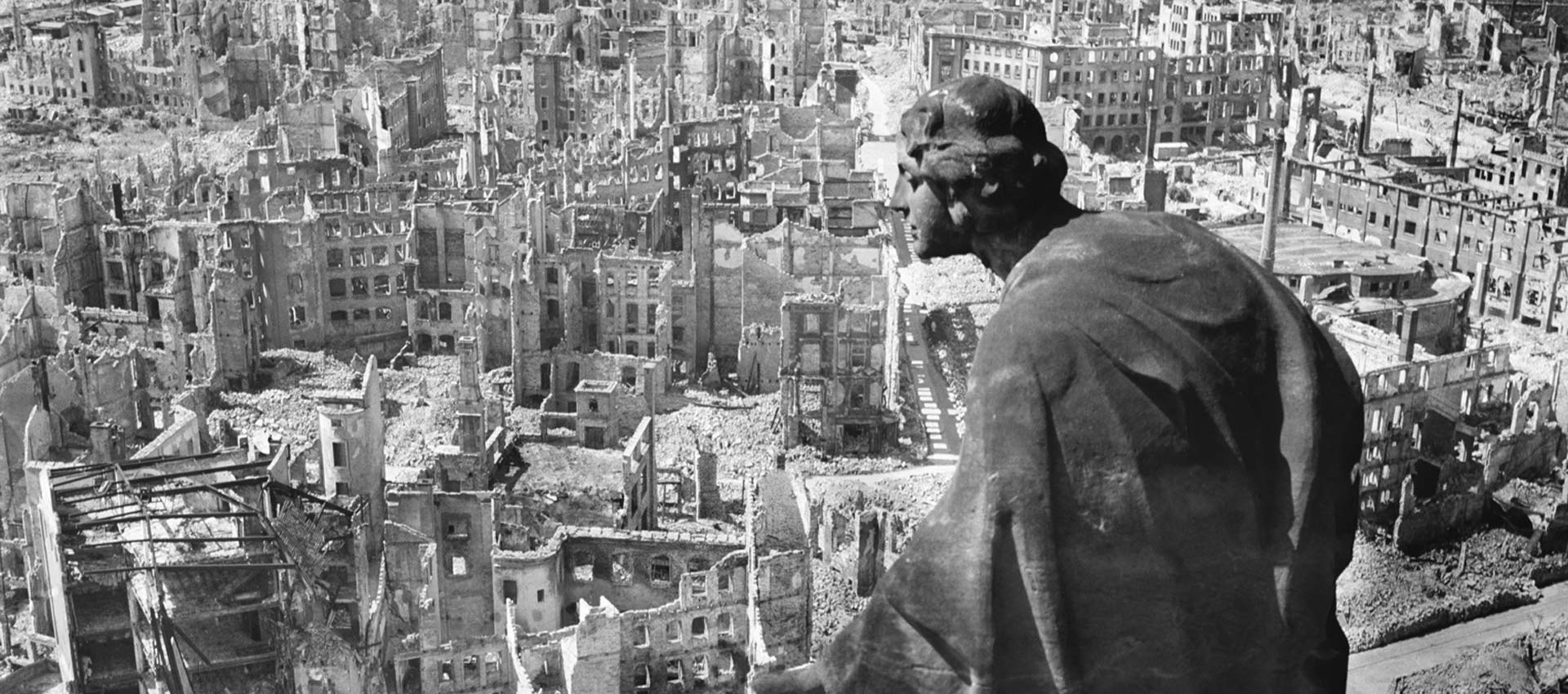
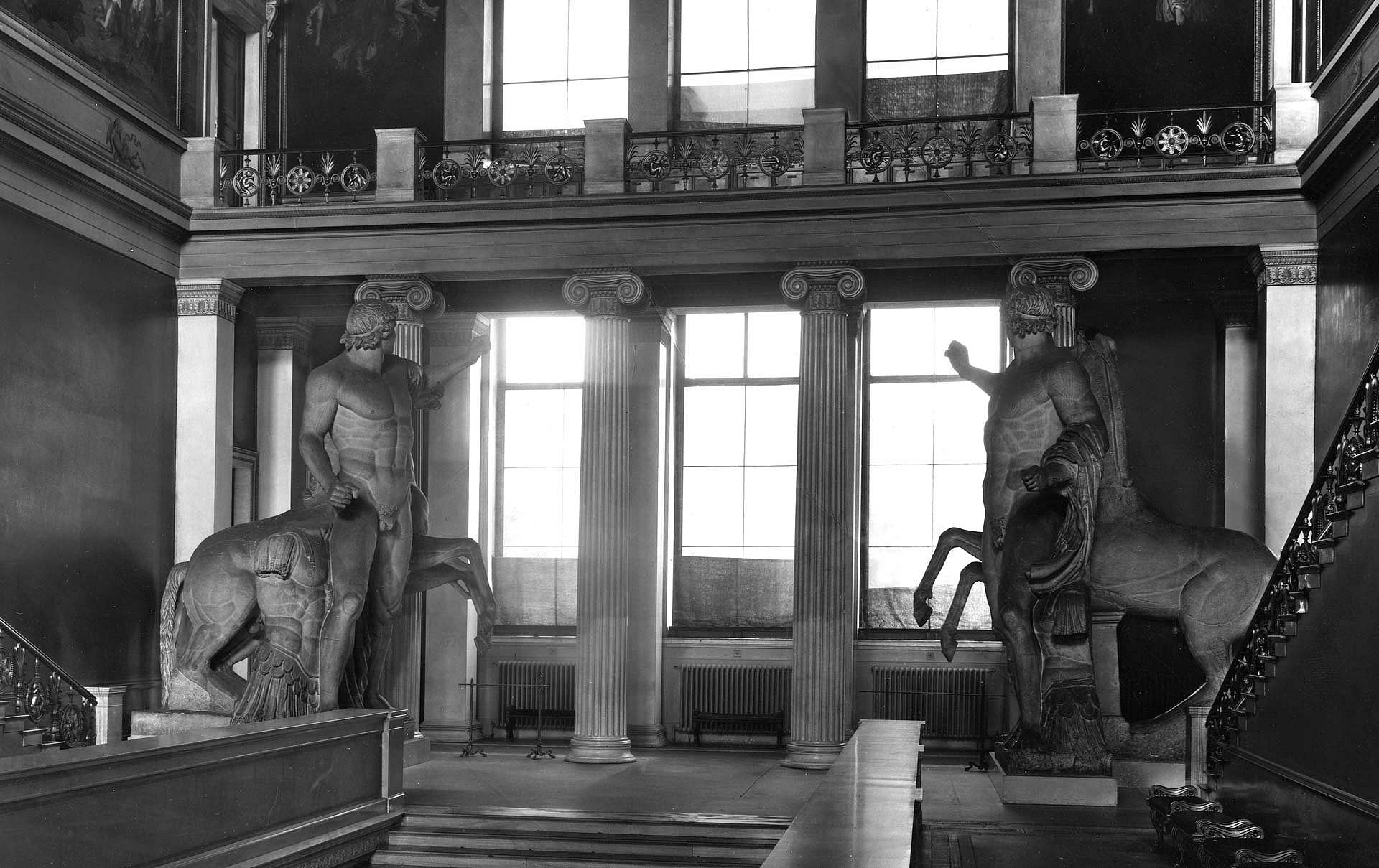
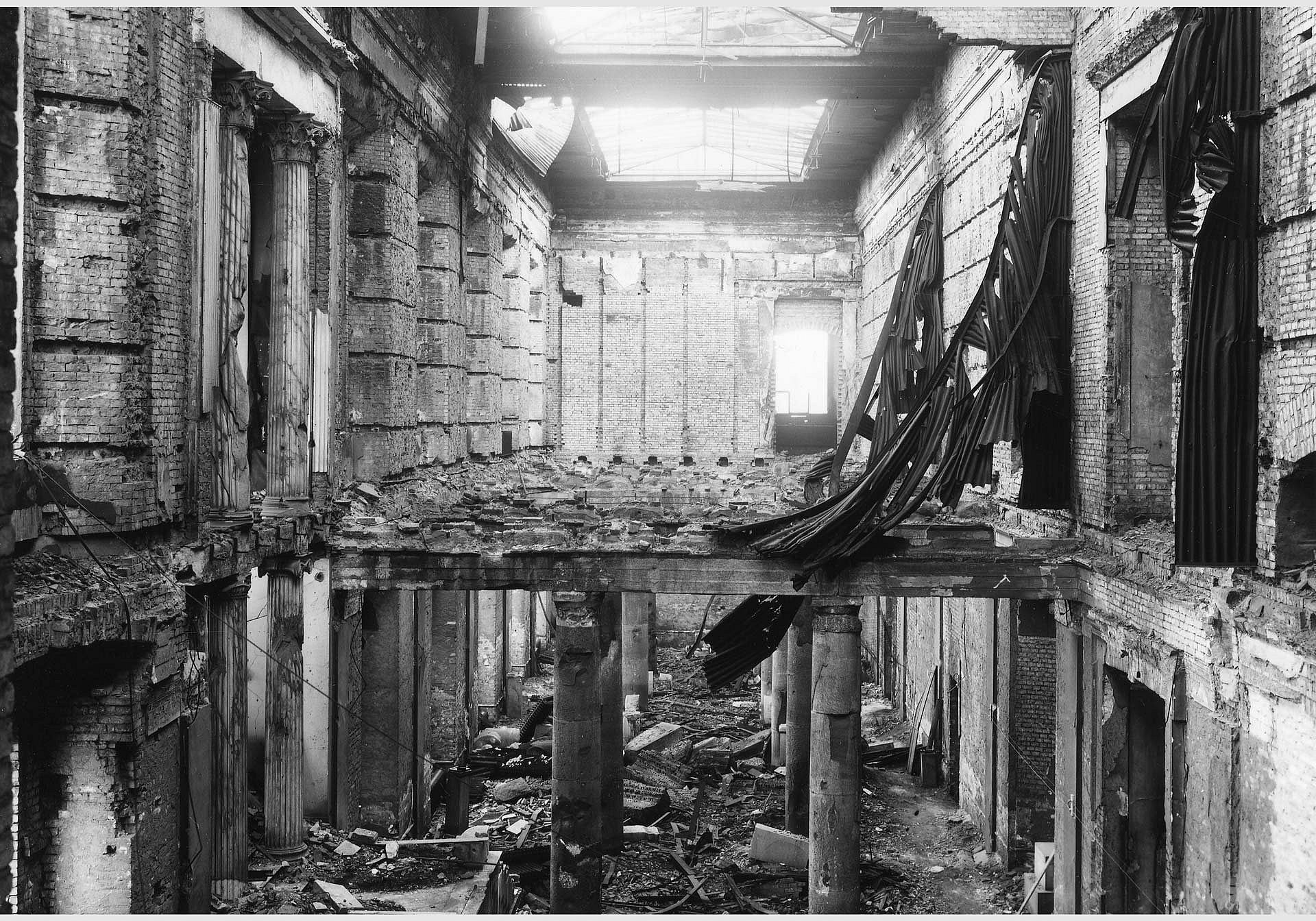
No wonder there was so much support for the integration of this expansive painting from Chipperfield Architects, who not only restored the Neues Museum but continue to work with it to this day. After all, until their destruction in the Second World War, Castor and Polydeuces dominated the central stairwell of the Neues Museum: on the landing stood two imposing, 5.50-metre-high casts of the legendary twins from the Piazza di Monte Cavallo in front of the Quirinal Palace in Rome.
Castor and Polydeuces, after all, are engaged in a kind of shift work between two worlds: light and darkness, the conscious and the unconscious.
Michael Müller
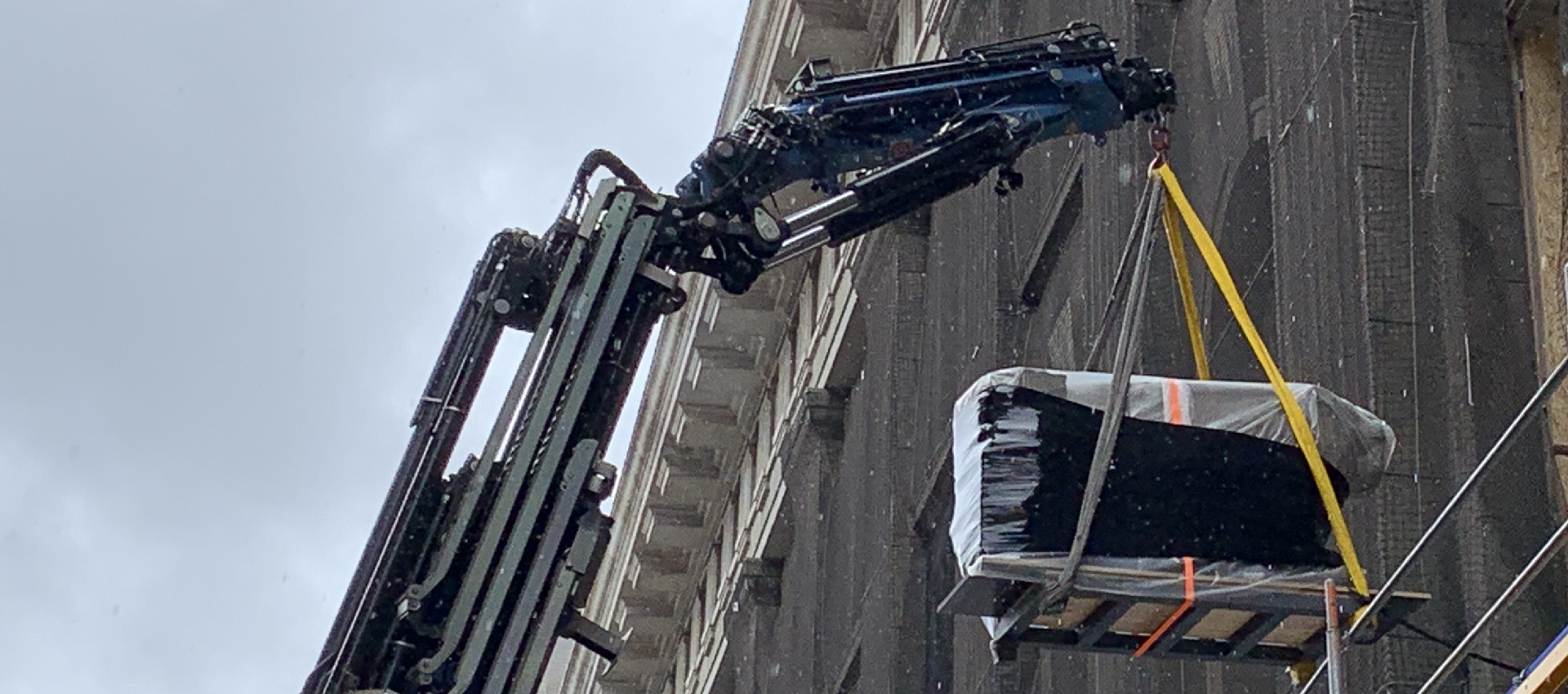
In just three days, “The Gifted Day” was installed with the help of alpine climbers. When Michael Müller found himself alone in the stairwell one day during this time and looked at his work in its new surroundings, he spoke to his painting, as he sometimes does, and said: “We’re home.”
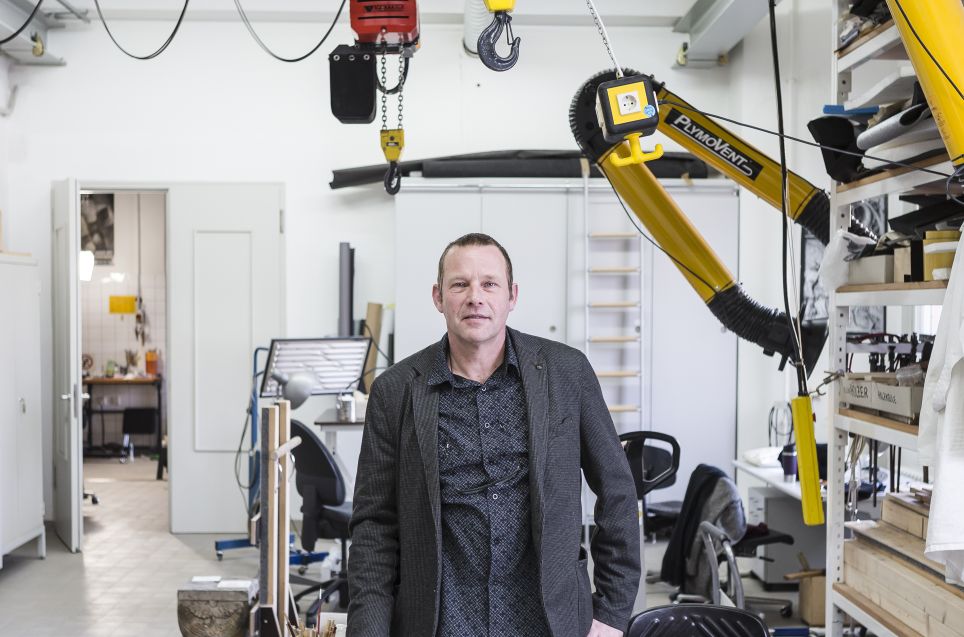
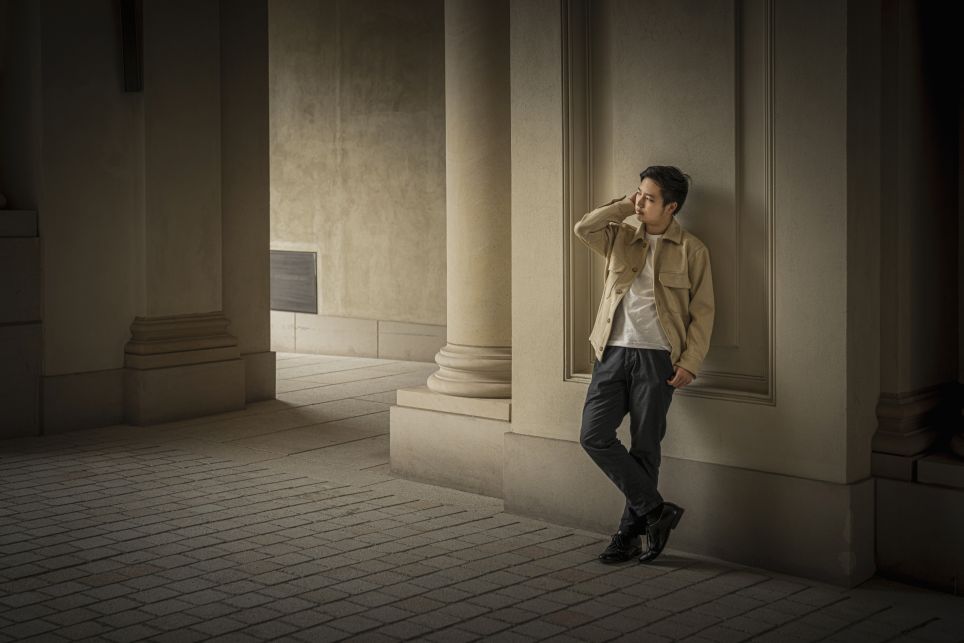
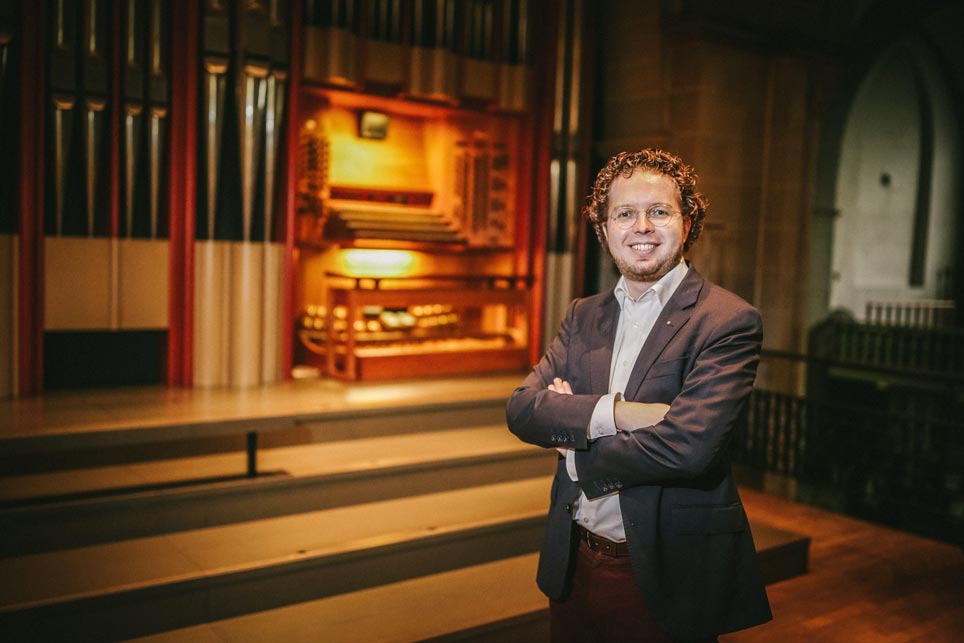
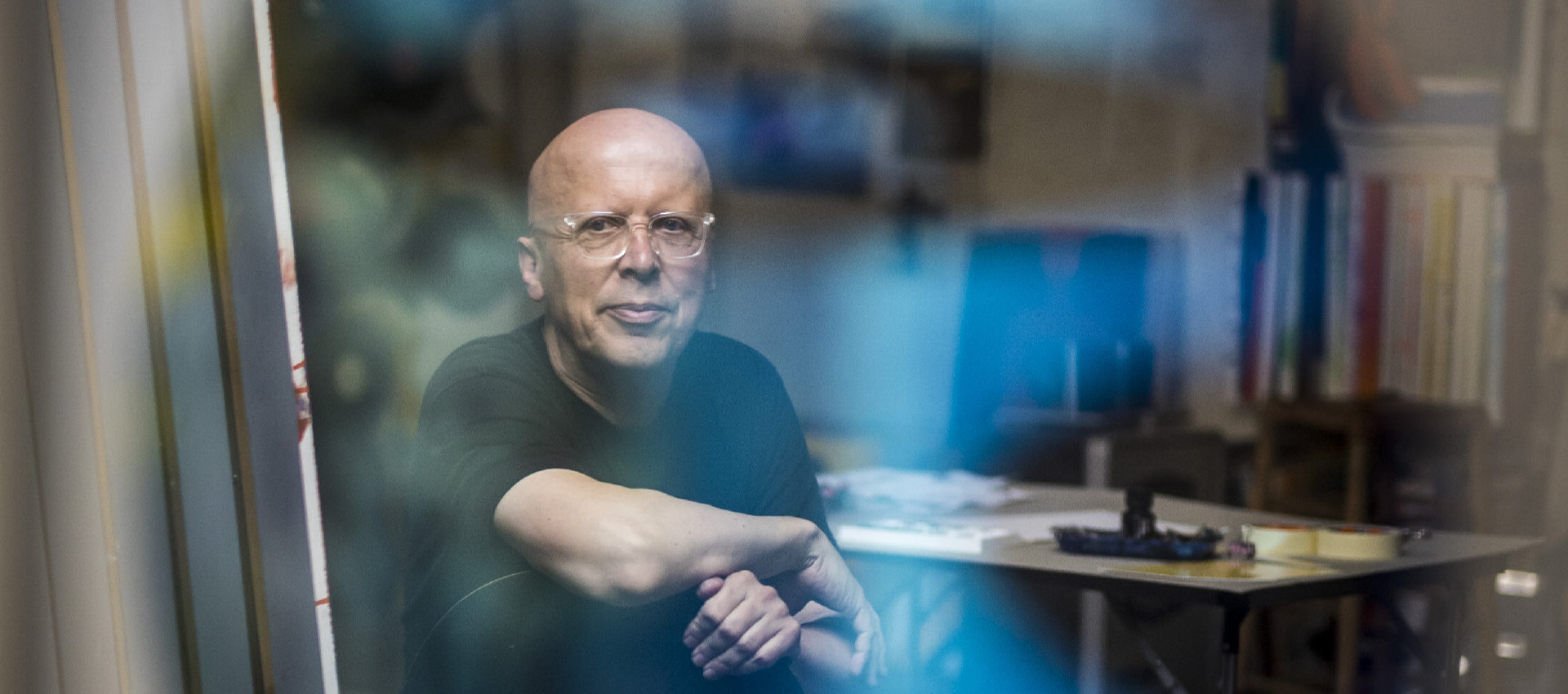
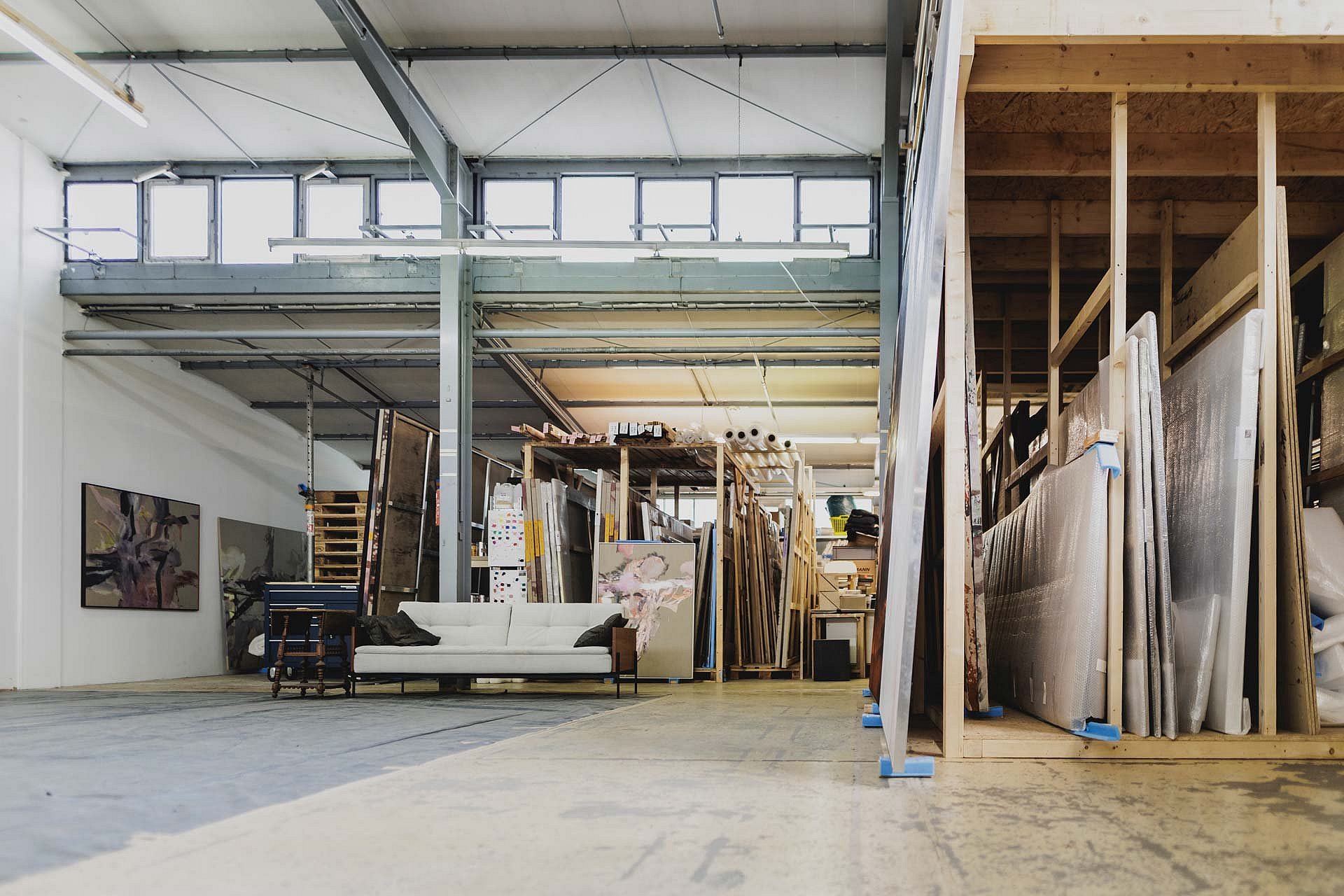
He could never have imagined it, even though he was familiar with the Neues Museum. He has been living in Berlin for years, has just moved into a new studio in Schöneberg with his team of eight, and has, as he resolved to do in his youth, become a visual artist. He painted and drew a great deal even back then, went on to become the youngest member of an art society for amateur painters in his hometown, and was already exhibiting his multimedia works at the age of 15.
As he was determined to move to a big city, he applied to the Berlin University of the Arts – and received a scathing rejection letter: “It said I had no sense of colour or space, and they advised me to pursue a different career path.” But Michael Müller didn’t let it get him down: “I then applied to the Academy in Düsseldorf with the same portfolio – and was admitted straight to the advanced course; I was allowed to skip the foundation year.”
He almost ended up in Gerhard Richter’s class, though Richter taught painting exclusively, and the young Müller did not want to commit to that, as he was aiming for a broader education to support his interdisciplinary projects. To this day, he does not know whether one of his ideas will become a text, a picture or a sculpture.
Sometimes years lie between the idea and its realisation; he has no ready-made templates for this – everything has its time and then takes shape. Because of this multifaceted approach, Nan Hoover (video and film) and Magdalena Jetelová (sculpture) accepted him into their classes in Düsseldorf. Magdalena Jetelová told him frankly that she did not understand at all what he was doing, but that she could help him ask the right questions. That was one of the most important things in his brief academic training, which he abandoned after three semesters.
The blank spaces invite participation
Michael Müller, who so readily defies external constraints and demands – a trait he calls the stubbornness he has carried over from his childhood – had listened to his inner voice and realised: university was not for him, nor was Europe, at least for the time being.
In the late 1980s, he began to travel and made his way as far as India, the homeland of his grandmother, who had moved to England in 1947, where his mother was born. She met the German man, who was also on holiday there, whilst on holiday in Spain, and he became her husband. They lived together in Germany, where Michael Müller was born in 1970.
He, in turn, wanted to get to know his grandmother’s homeland and eventually visited Ladakh in the Himalayas. There he rented a room with a family who looked after him as if he were their own child when he was suffering from altitude sickness. The landscape, the people, the hospitality, the spirituality – all of this made him so happy that he stayed in India for ten years.
He earned the money for these stays during the summer in Europe. When he realised that Buddhism and the European definition of being an artist were incompatible – on the one hand, the overcoming of the ego; on the other, its central importance for creativity – this triggered considerable turmoil in his thinking. Because he truly and resolutely wanted to pursue art, he returned to Germany with a heavy heart.
It was no easy fresh start, for nobody in the art world knew him anymore and he knew nobody: “The work itself is never the problem, but how do you turn it into a livelihood? That was very difficult indeed.” Müller remained true to his calling, working through all the doubts and qualms associated with it, and built up a network.
In 2000, he held his first solo exhibition in Berlin, followed by further exhibitions in places such as Düsseldorf, London and Mumbai. From 2015 to 2018, he taught as a professor at the Berlin University of the Arts.
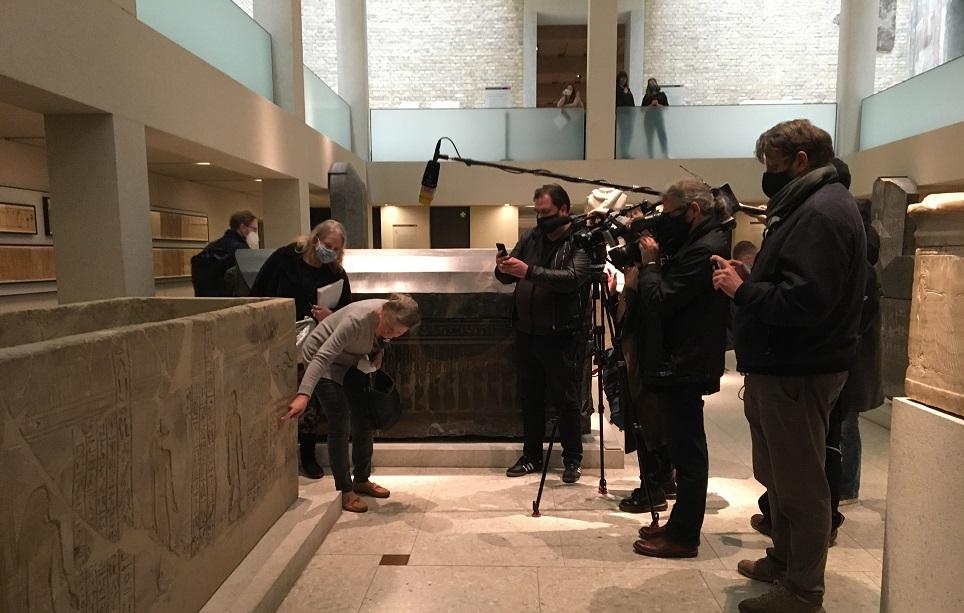
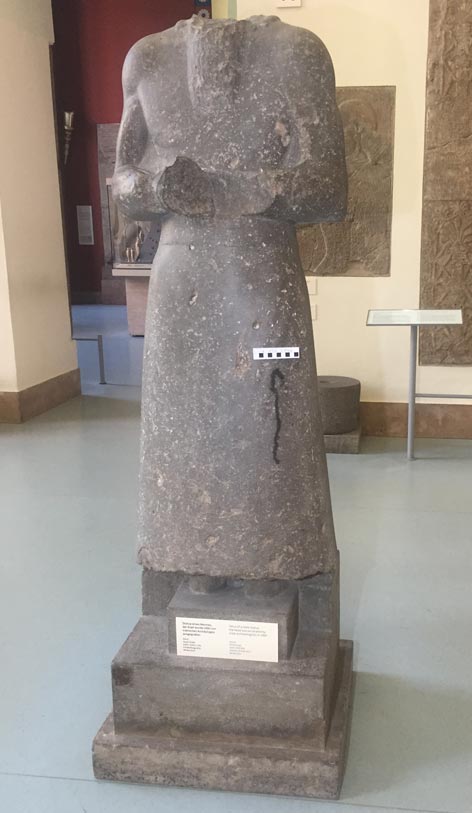
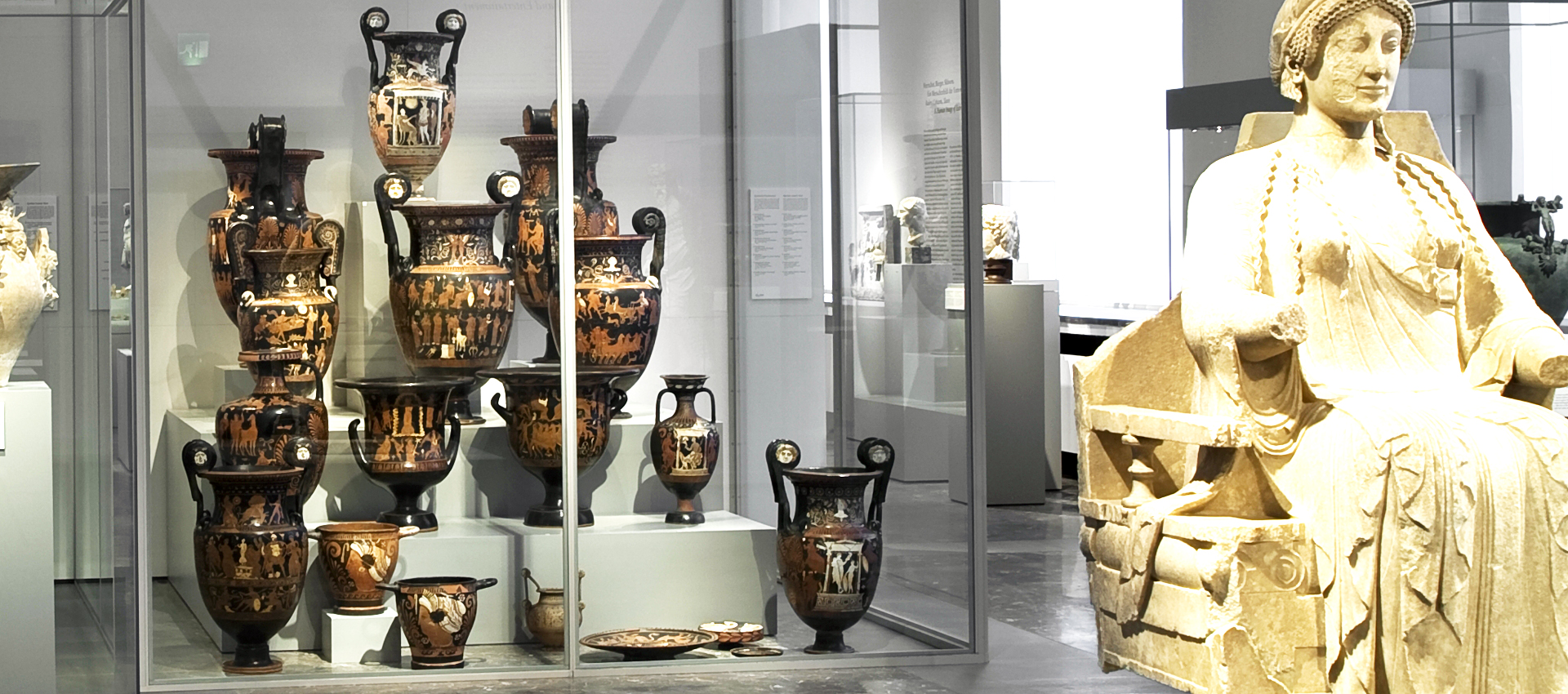
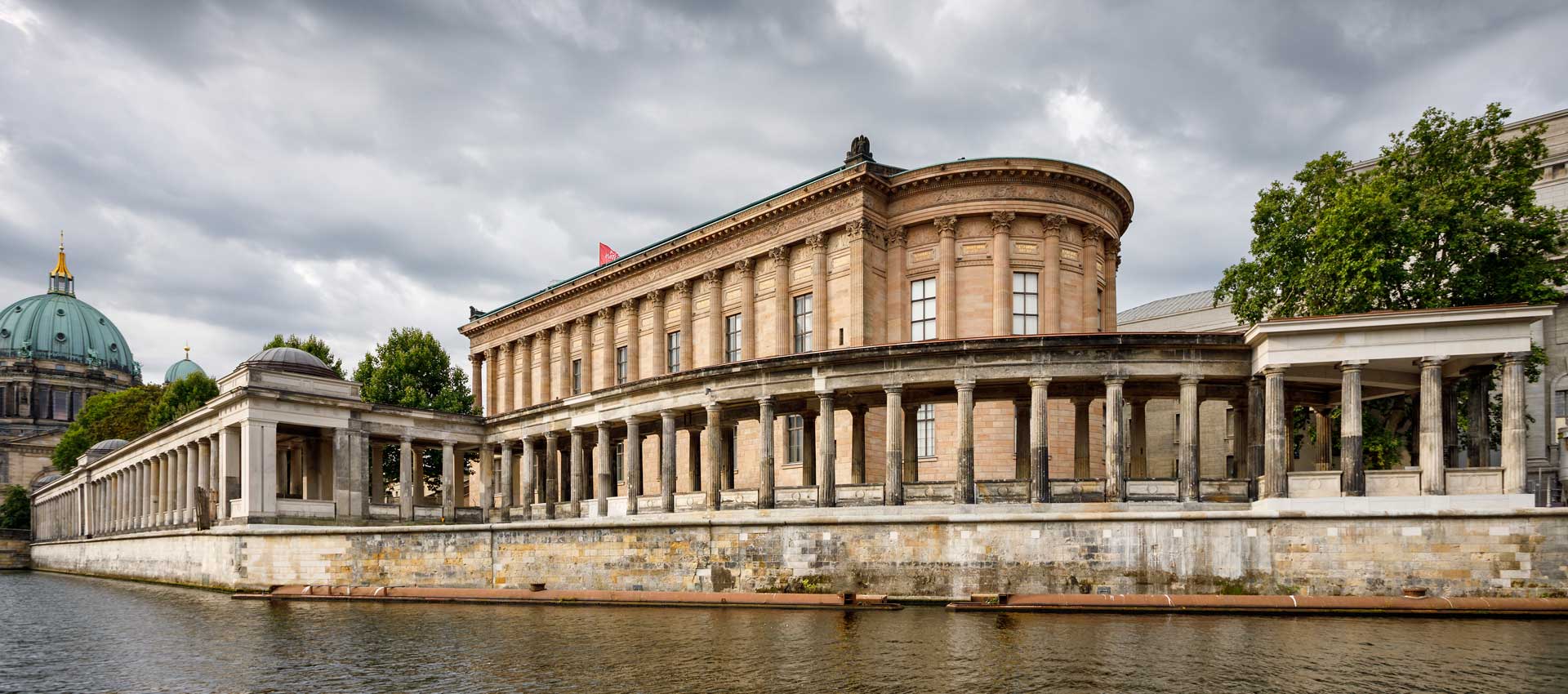
And now he has even conquered the Neues Museum, which does not actually house contemporary art but, on the contrary, historical artefacts from the Egyptian Collection, the Collection of Classical Antiquities and the Museum of Prehistory and Early History.
He is very taken with this tension between the present and the past; it is – alongside the narrative level relating to the Dioscuri – above all the phenomenon of time that interested him in this work: ‘Castor and Polydeuces, after all, perform a kind of shift work between two worlds: light and dark, conscious and unconscious. I can relate to that very well – a large part of my painting comes from the conscious mind, but an equally large part comes from the unconscious. And this duality, this blurring of boundaries, is what makes the myth of Castor and Polydeuces so exciting and so relevant today.”
Michael Müller’s art thrives not on answers, but on questions: “As Umberto Eco taught us – every good work of art has an openness. It consists not only of information, but also of gaps. These invite visitors to explore them as individual spaces for projection.”
You should by no means miss the opportunity to do this now at the Neues Museum – for a day, or two, or three: once you’ve started, you can’t get enough of this visual fulfilment.
Dioskuren: The Gifted Day
- Tue–Sun 10am–6pm, closed on Mon
- On display until 23 November
- Neues Museum, Museum Island, Berlin