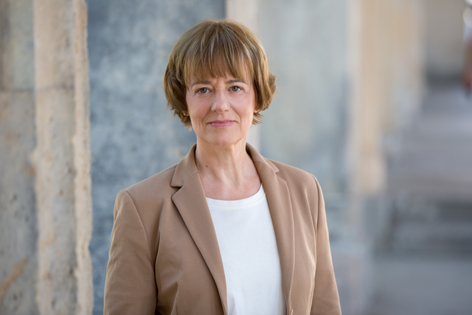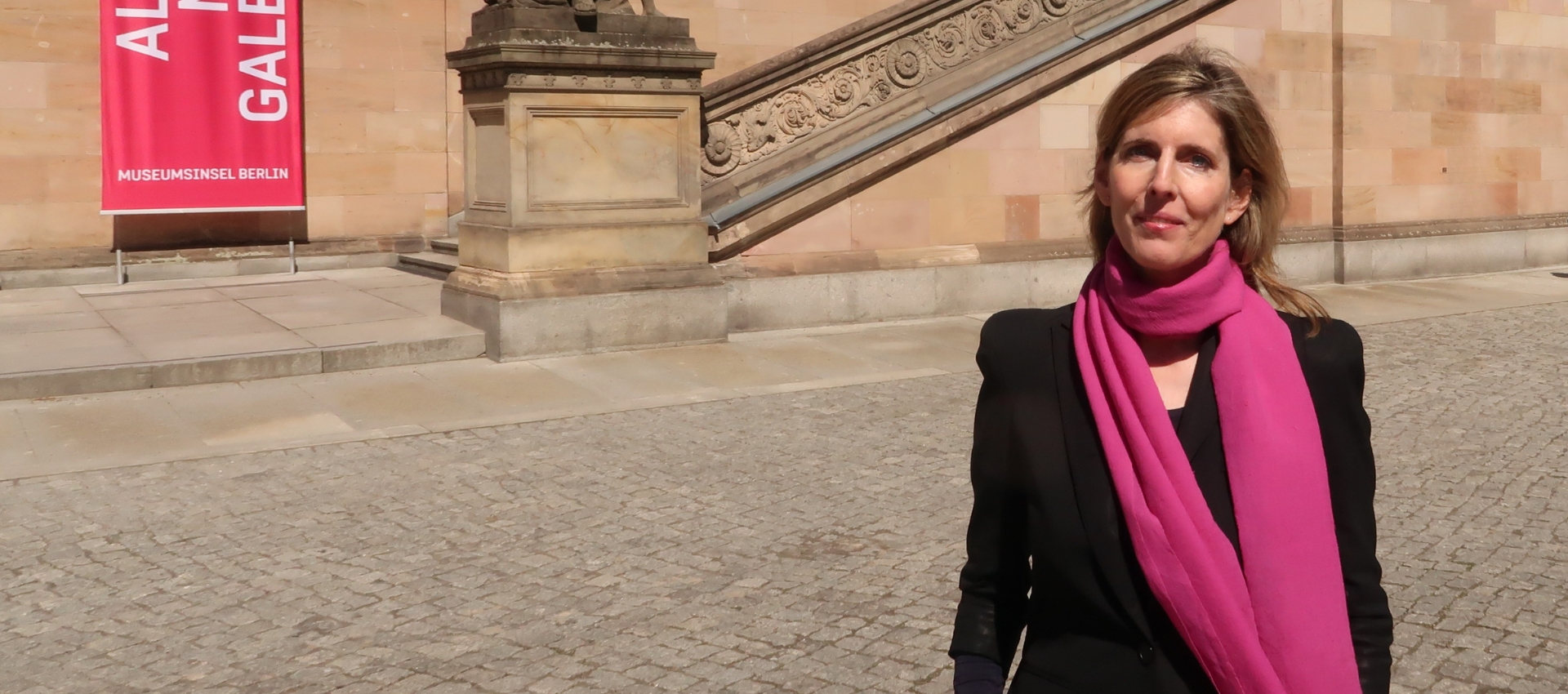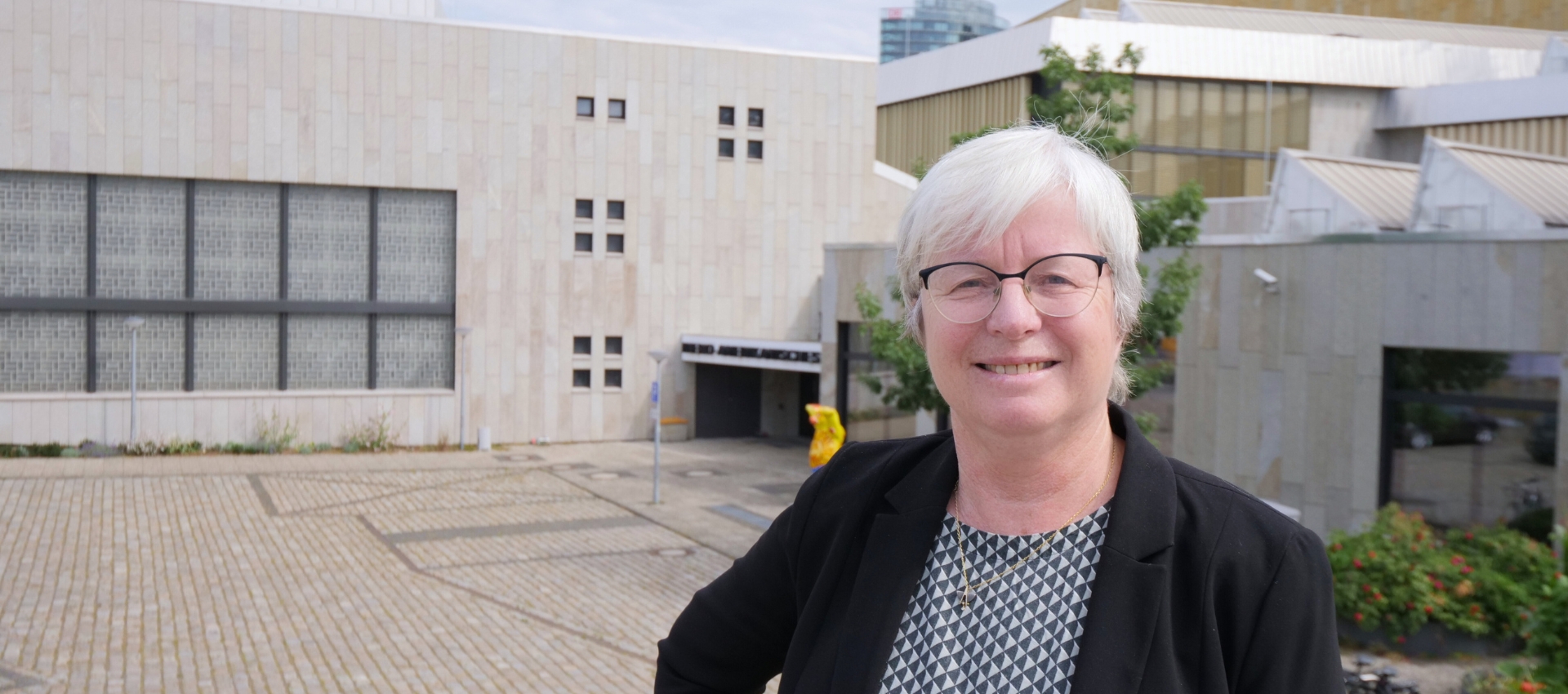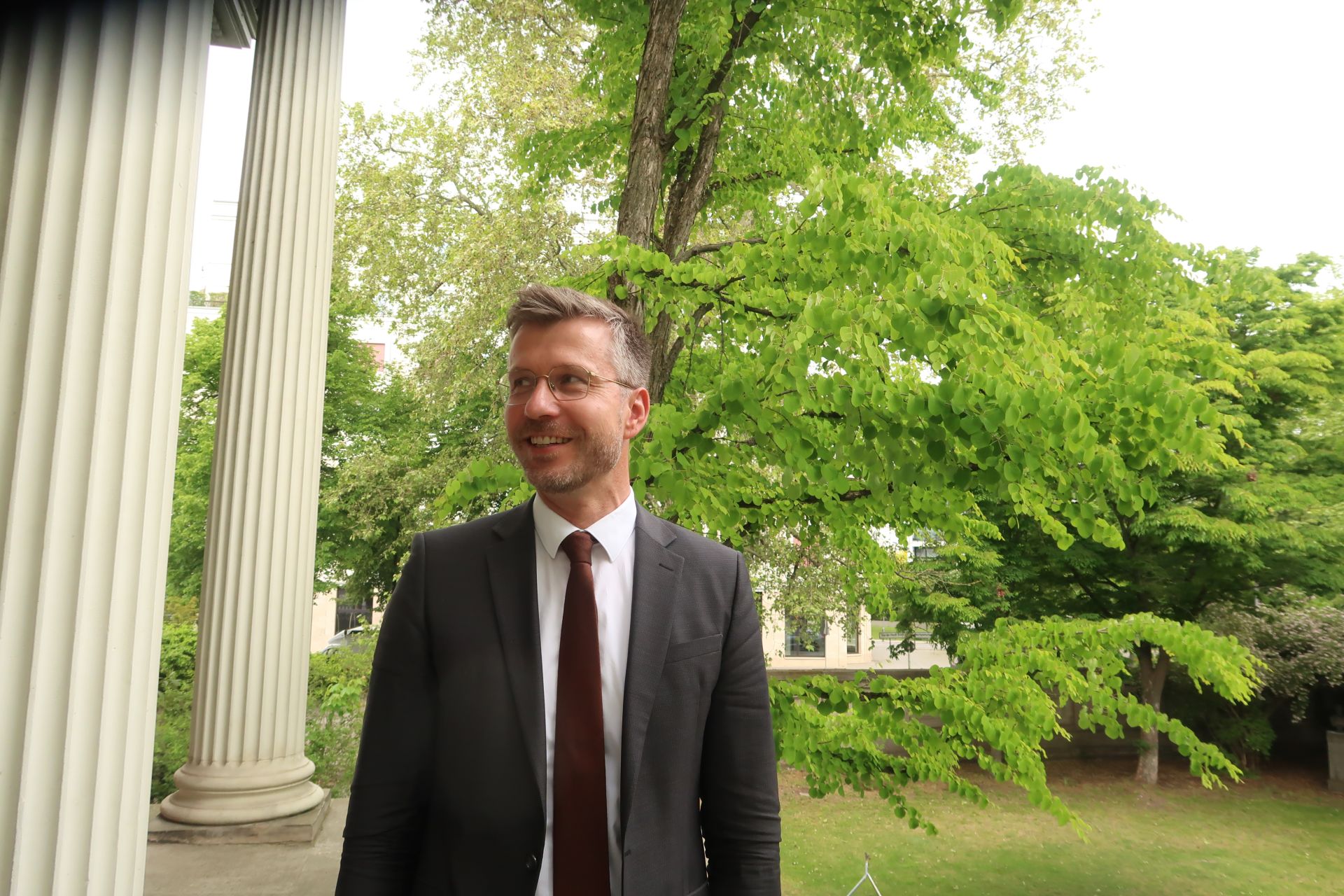
SPK President Marion Ackermann writes in her column about the SPK’s international outlook. It appears regularly in *Politik & Kultur*, the newspaper of the German Cultural Council.
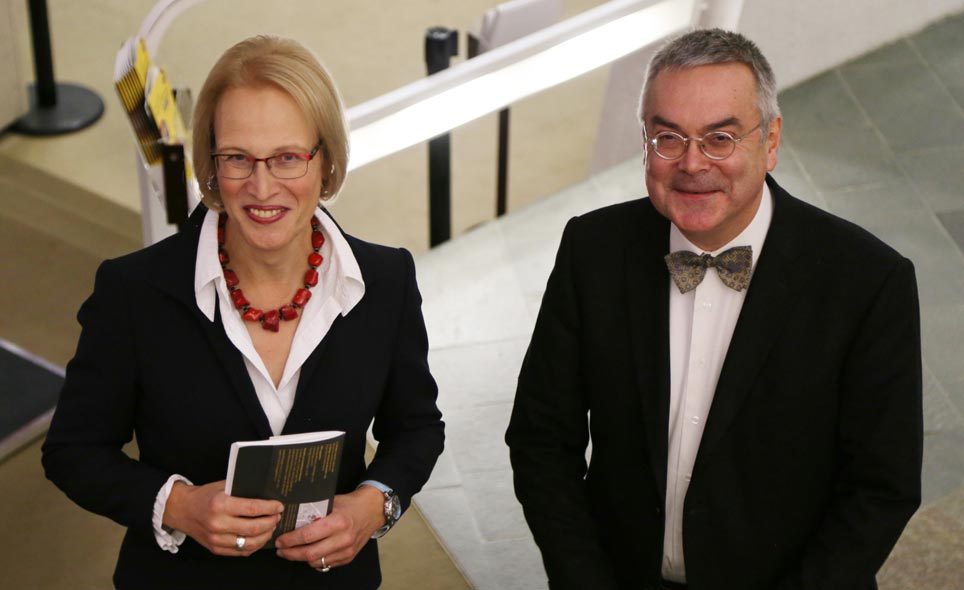
Photo: SPK / photothek / Thomas Köhler
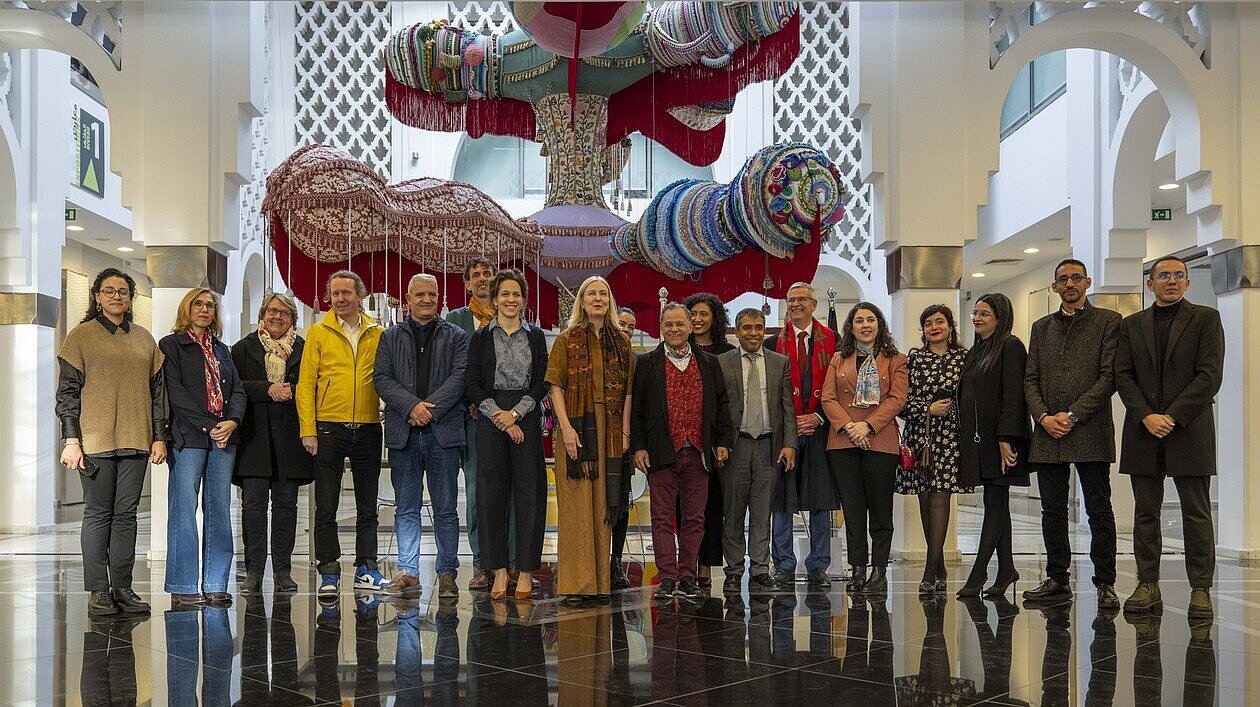
A few weeks ago, an archaeological exhibition opened in India unlike anything the world has ever seen before! We are naturally familiar with the (Western) narrative that the Mediterranean region served as the focal point of the ancient world. The ‘Chhatrapati Shivaji Maharaj Vastu Sangrahalaya’ museum, or CSMVS for short, in Mumbai presents India (and East Asia) as a hub of global historical exchange and highlights how the subcontinent contributed to antiquity – and was shaped by it. This broad perspective, this fascinating juxtaposition of cultures, is a unique exhibition concept worldwide. This metaphorical shift in perspective becomes museum reality here. Through 300 selected objects, the museum in Mumbai presents an ancient world spanning from Nalanda in India to Alexandria in Greco-Roman Egypt. Beginning with the Indus Valley Civilisation, which developed some 5,000 years ago, the exhibition traces a path through to the Gupta Empire in the sixth century. These are the thematic pillars of a narrative that places Indian history within a broader global context. Alongside the Prussian Cultural Heritage Foundation, the British Museum in London and the Getty Sharing Collections Programme, among others, are participating in the three-year project.
The SPK is the second-largest lender to the exhibition after the British Museum: the Department of Classical Antiquities has sent 28 objects to Mumbai, including four medium-sized stone objects, a decorated alabaster urn, a funerary stele, a marble group depicting a ploughman with his team of oxen, as well as painted vases, gold and gemstone jewellery, terracotta figurines and clay lamps. Twenty-four items have been sent from the Museum of the Ancient Near East, including clay tablets and figurines, ceramic vessels, jewellery, amulets and two cylinder seals. The loans represent a representative selection of ancient Near Eastern cultures from the 4th century BC to the 1st century AD and demonstrate the connections between Mesopotamia and the Indus Valley civilisation as early as the 3rd millennium BC. A key focus is the development of writing, ranging from counting stones and early clay tablets from the 4th millennium BC, through schoolchildren’s tablets, to an Aramaic magic bowl from the 1st millennium AD. Other lenders include the Rietberg Museum in Zurich, the private Al-Sabah Collection from Kuwait, the Benaki Museum and the Ephorate of Antiquities in Athens, as well as numerous Indian museums. The selection of objects is impressive!
The exhibition’s intercultural approach alone – highlighting the connections between ancient cultures from China to Mesopotamia, Egypt and Europe – is highly innovative. But the CSMVS Museum is just as innovative! This is due in particular to its director, Sabyasachi Mukherjee, who still comes across as a scholar in the classical sense – a man of timeless character in both thought and demeanour, shaped by a solid academic background. For, as I have learnt, very few Indian museum directors now come from the academic disciplines themselves; most today have a political background. Mr Mukherjee, as everyone respectfully calls him, has developed an outreach programme with passion and dedication that has deeply impressed me. He also brings the exhibition to people who would otherwise have no opportunity to visit museums. With three buses and a mobile exhibition complete with high-quality replicas, the museum team travels across the country, stopping in suburbs or at schools. His aim is not only to impart knowledge, but also to involve people in hands-on craft techniques. His vision seems to be coming to fruition, as the CSVMS’s main building is now visited by a strikingly young audience.
The museum has an eventful history: founded at the beginning of the 20th century as the Prince of Wales Museum of Western India, a building in the Indo-Saracenic style began to take shape in 1905. When construction was completed in 1914, the First World War broke out. From then on, the building served as a military hospital. It was not until 1922 that it could be handed over to its intended purpose and furnished with extensive collections of archaeology, art and natural history. Today, it is one of the most significant museums and cultural heritage sites in Mumbai and India.
As the exhibition “Networks of the Past. A Study Gallery of India & the Ancient World” is designed to run over a period of three years, it promises to have a far more lasting impact than any short-term project could ever achieve. What matters most to me personally, however, is that the entire programme demonstrates the power and effectiveness of international collaboration in a particularly compelling way. Sharing collections fosters meaningful dialogue on multiple levels — between the treasures in our collections, between the objects and our audience, and finally between colleagues who collaborate, think and create across continents. A multi-layered conversation emerges, thereby reflecting, in a sense, the global interconnections of the ancient world that the exhibition brings to life.