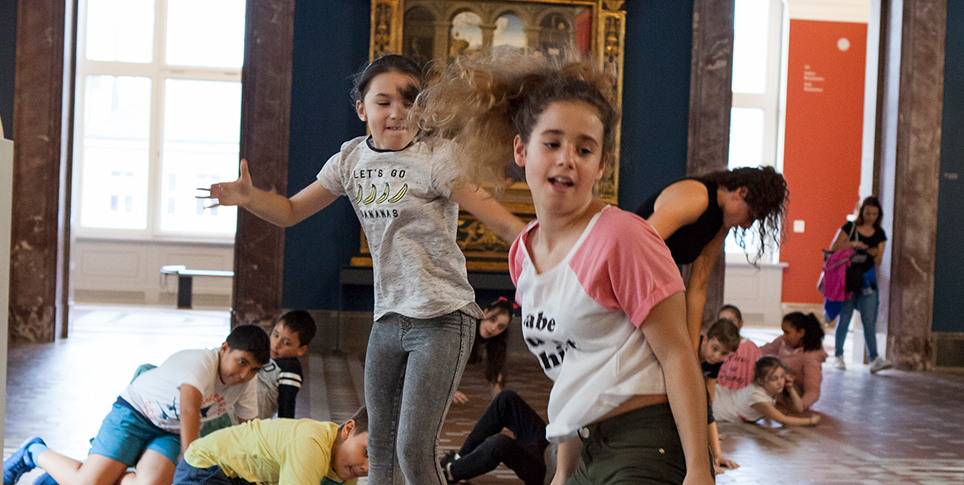
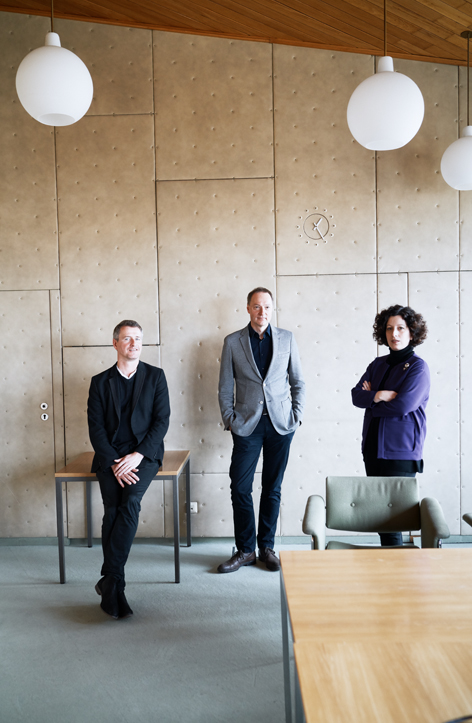
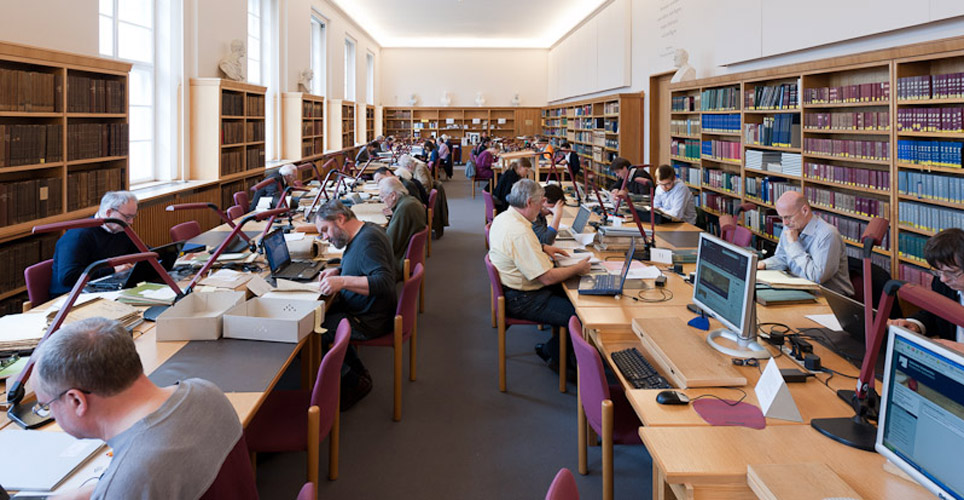
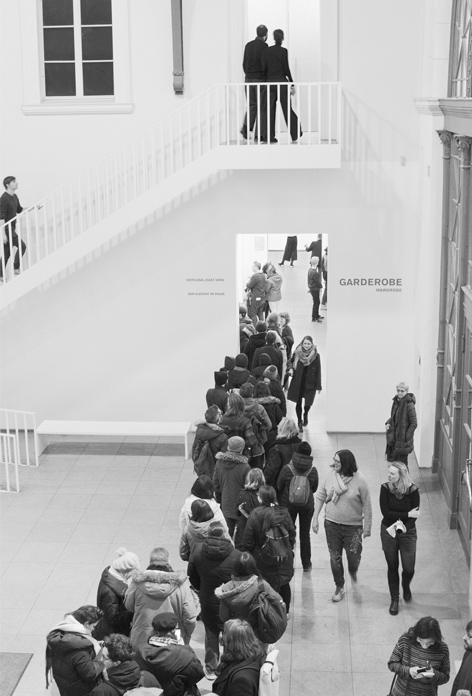
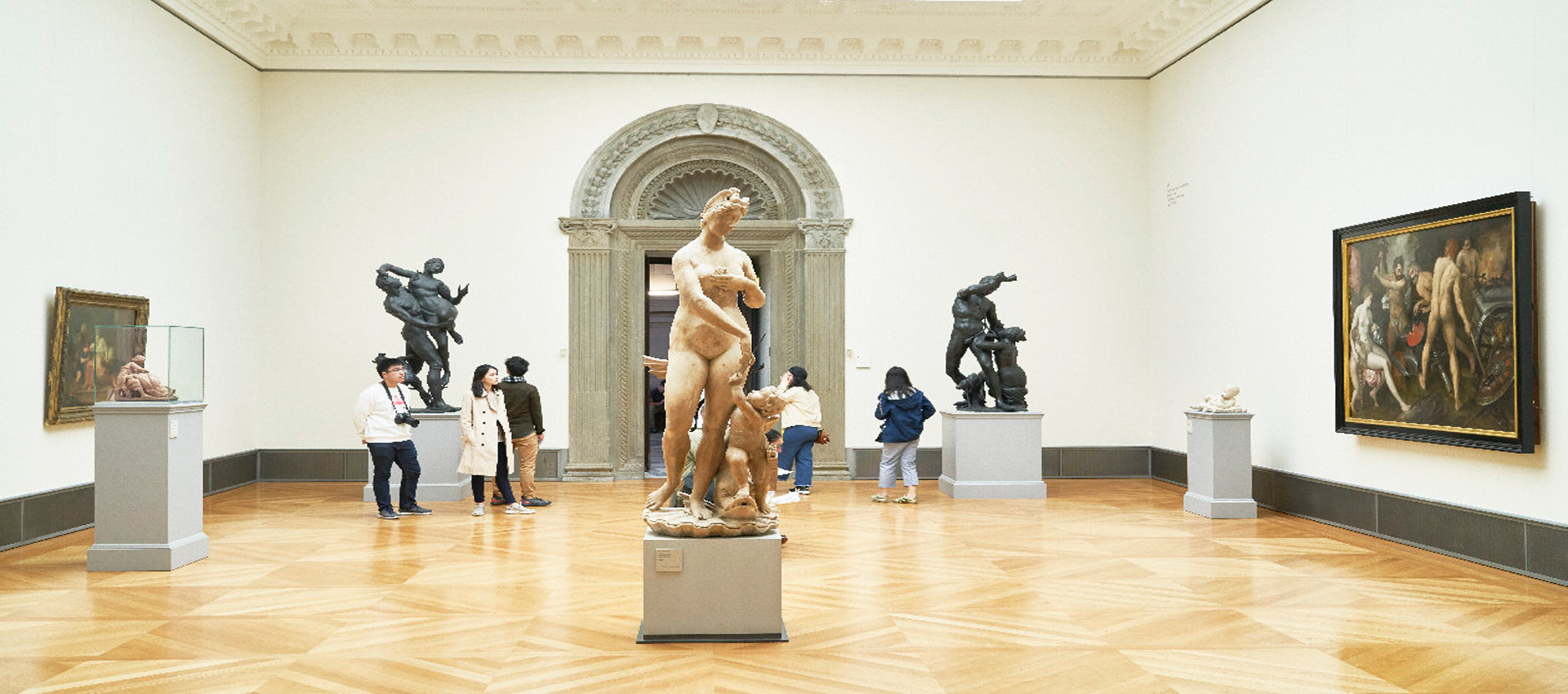
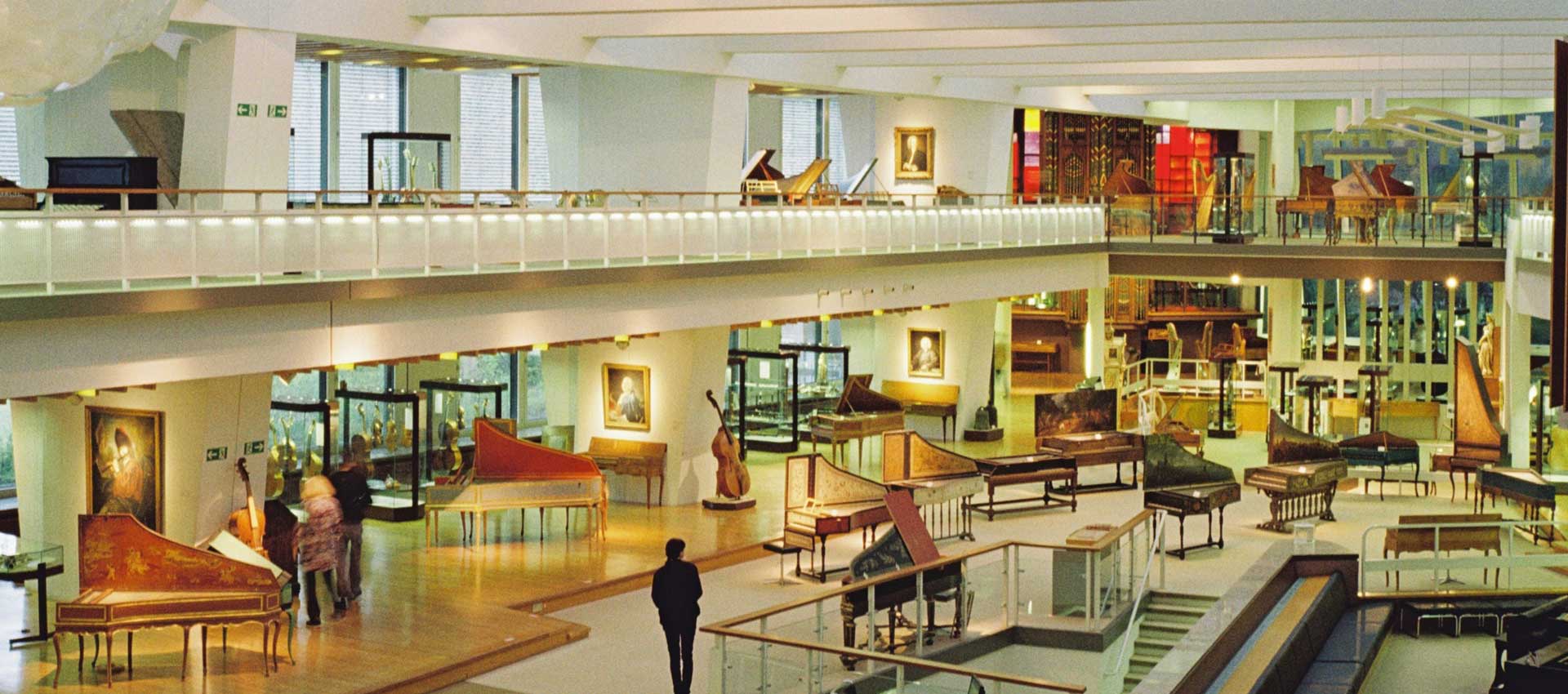
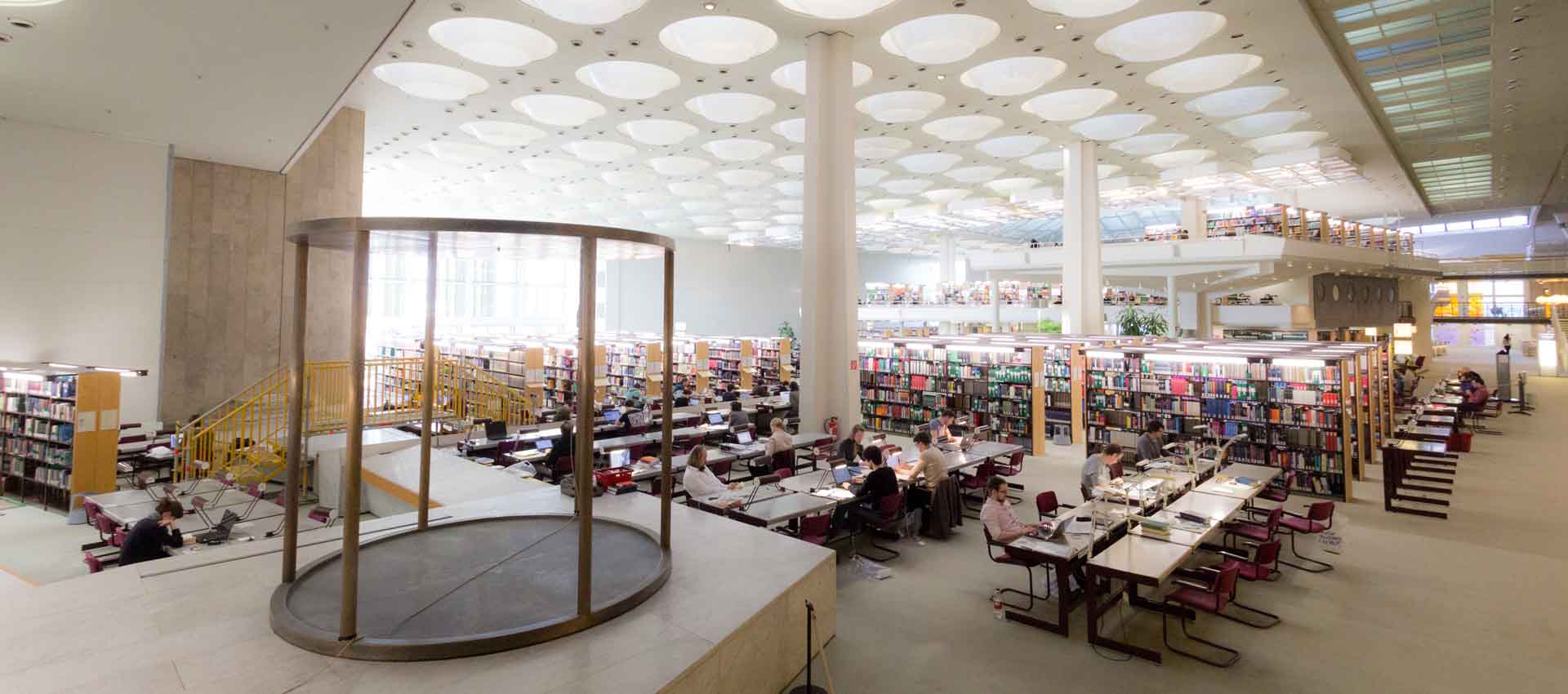
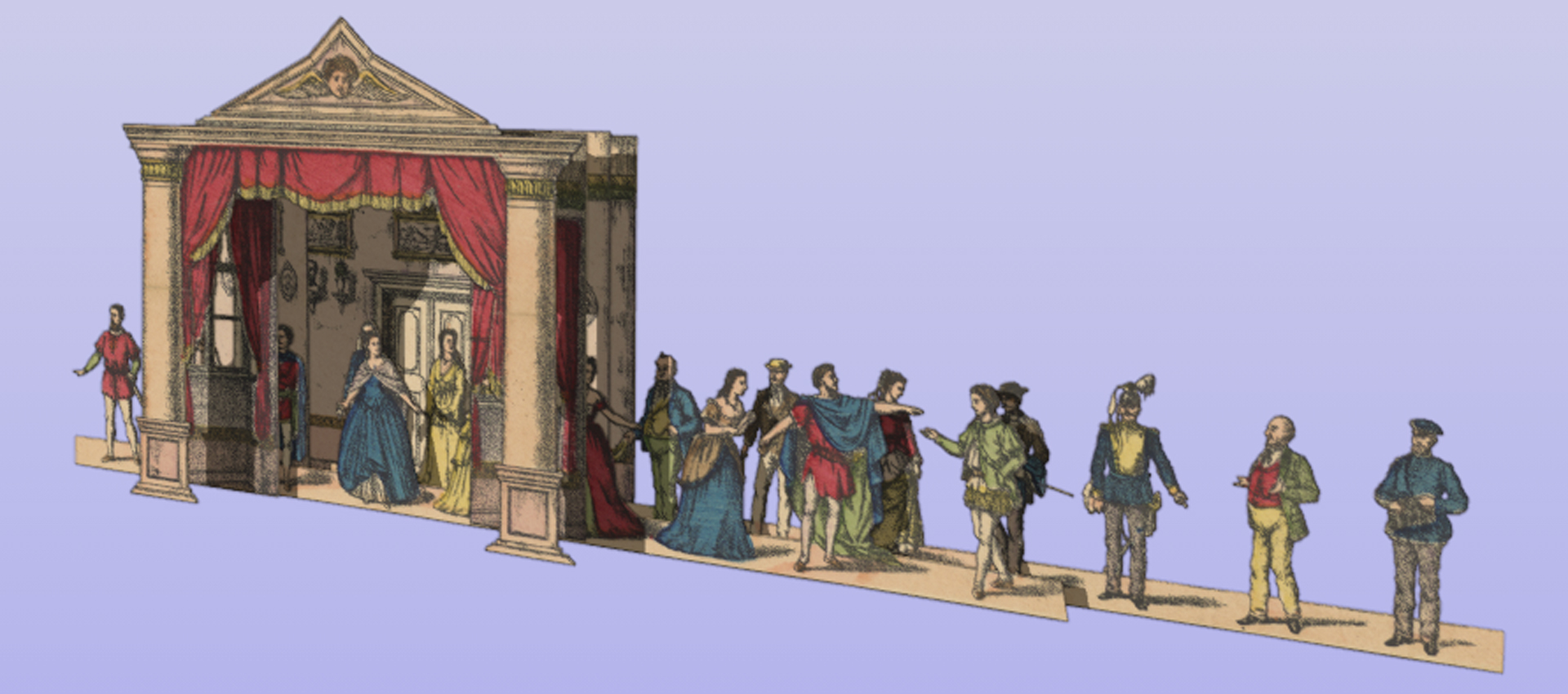
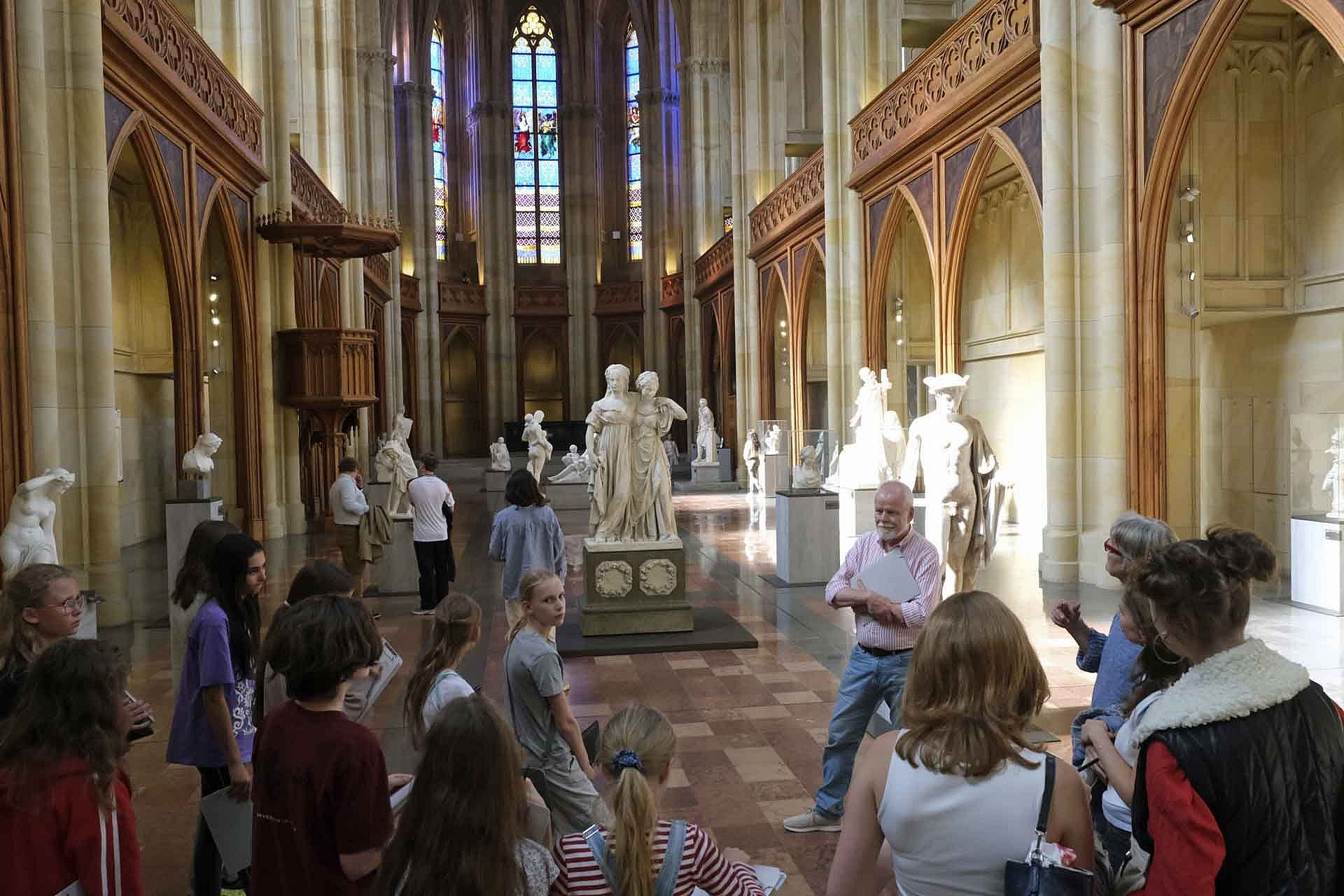
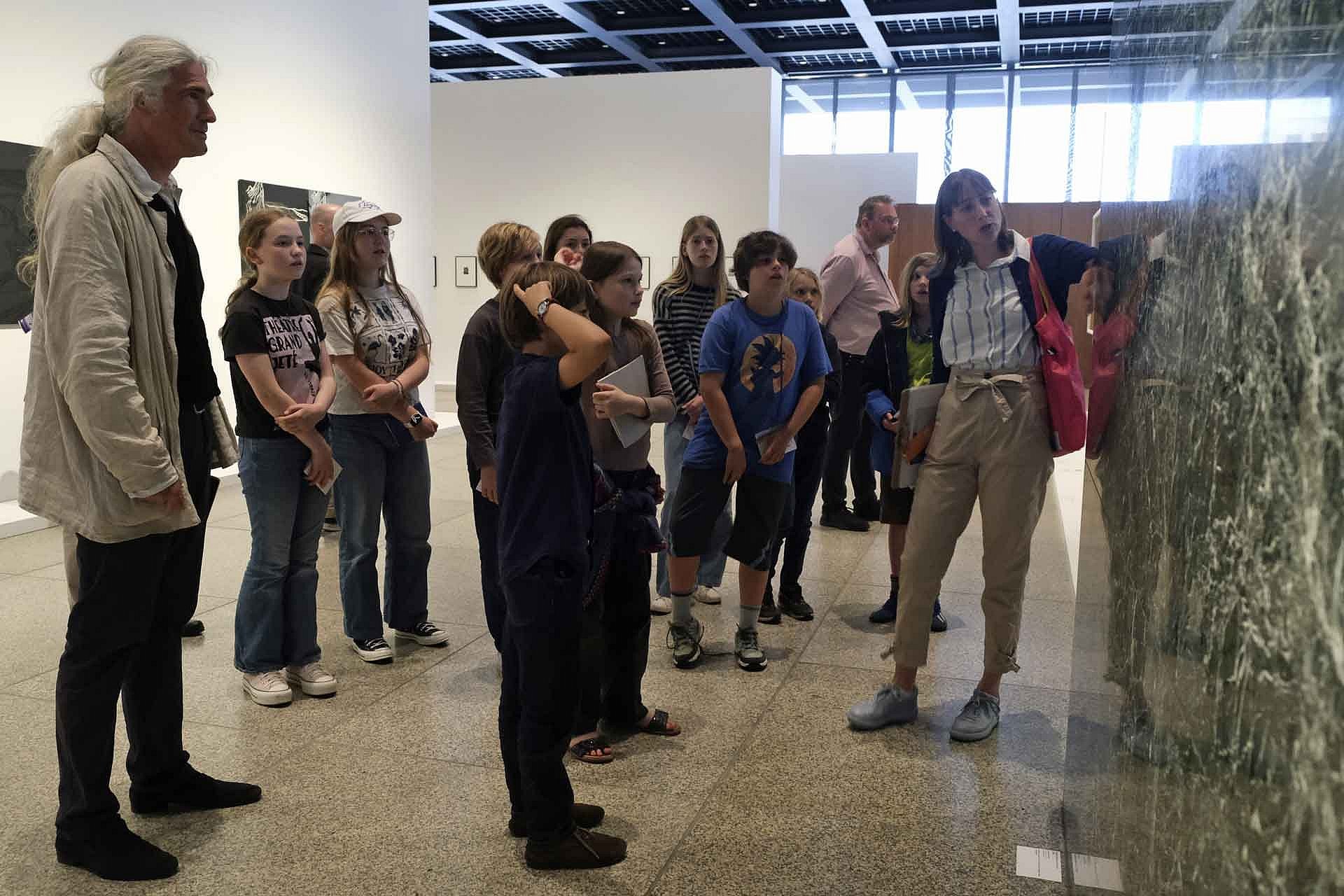
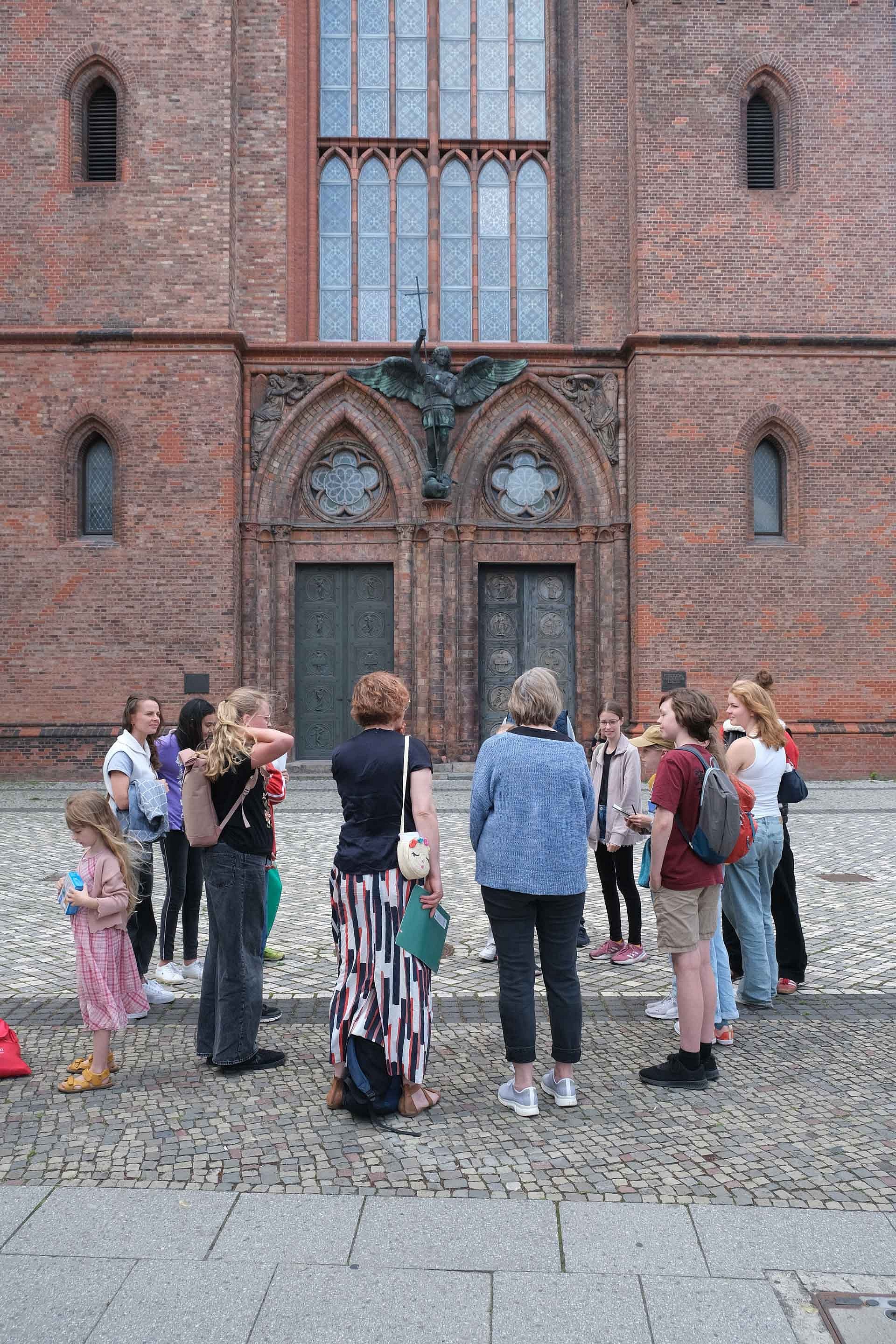
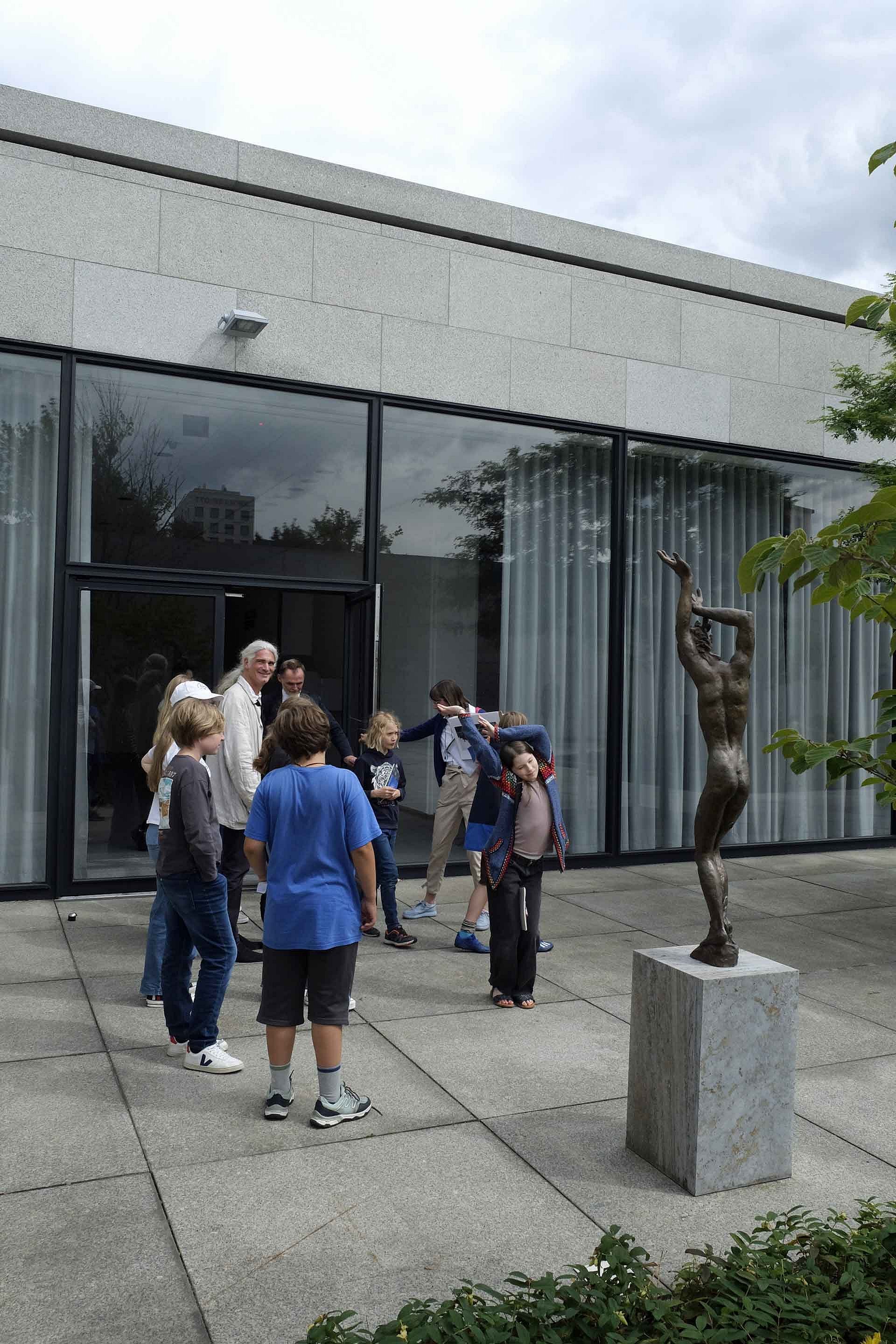
From 5 to 7 July 2024, the Mies van der Rohe House was transformed into an architectural practice for children and young people. They drew inspiration from four major institutions of the SPK: the Altes Museum and the Friedrichswerder Church, the Neue Nationalgalerie and the Kupferstichkabinett
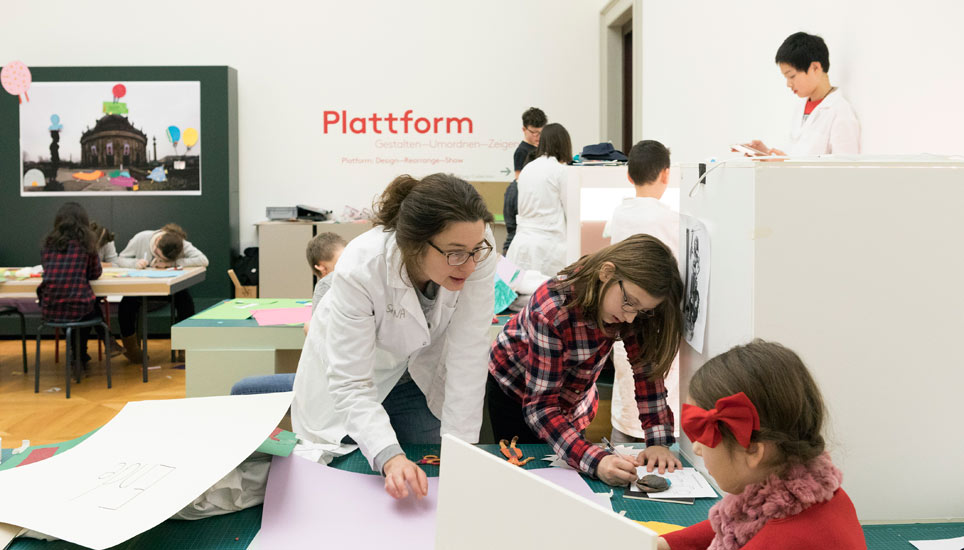
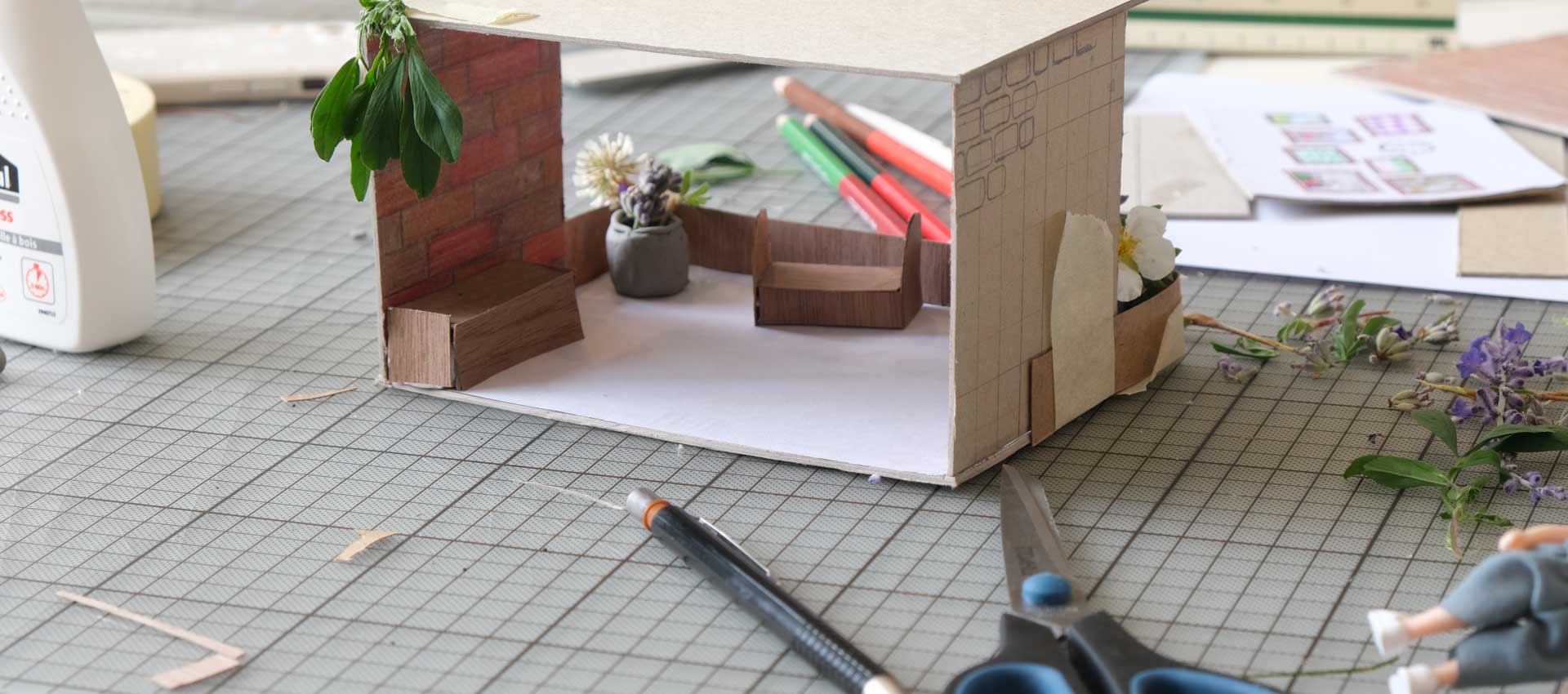
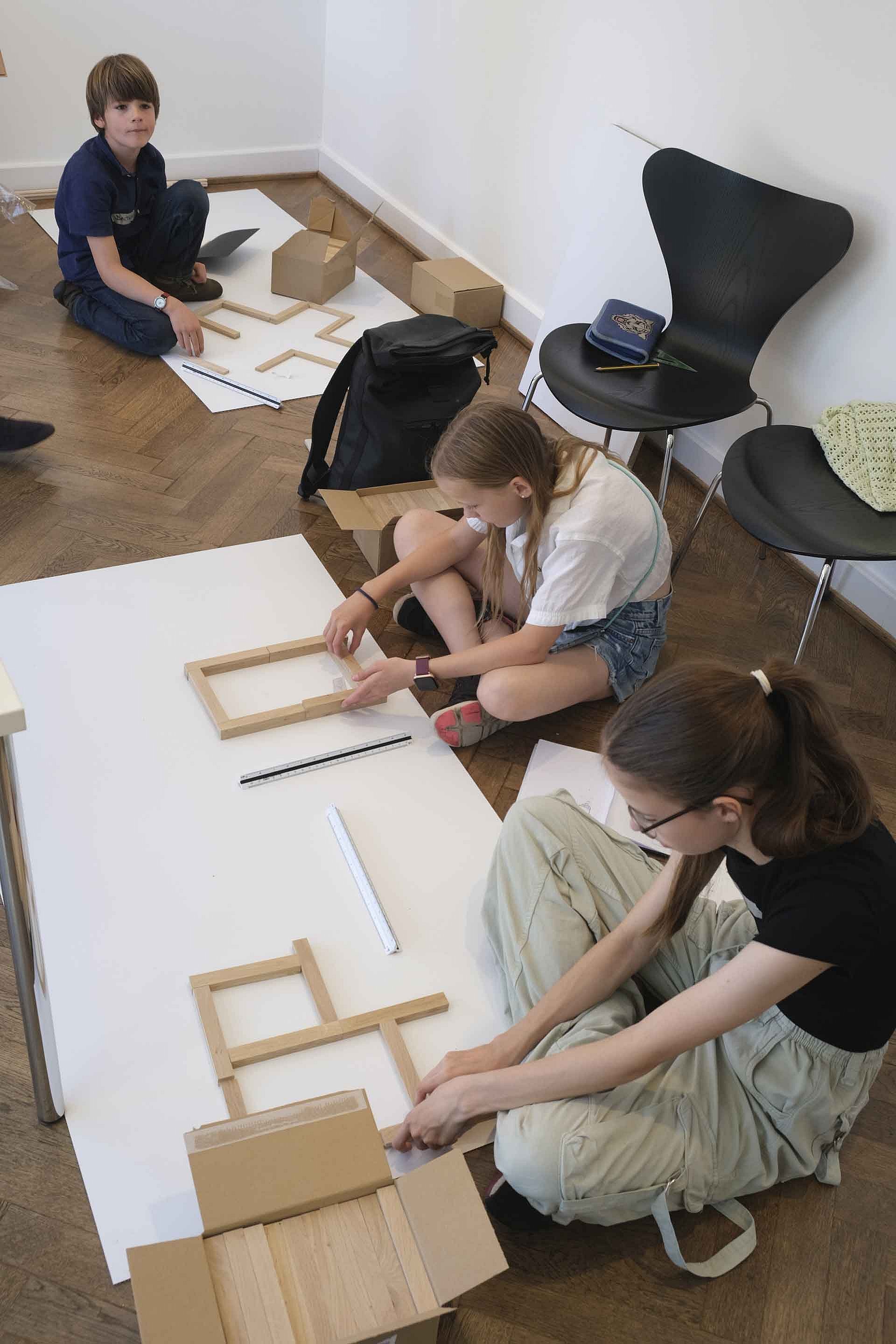
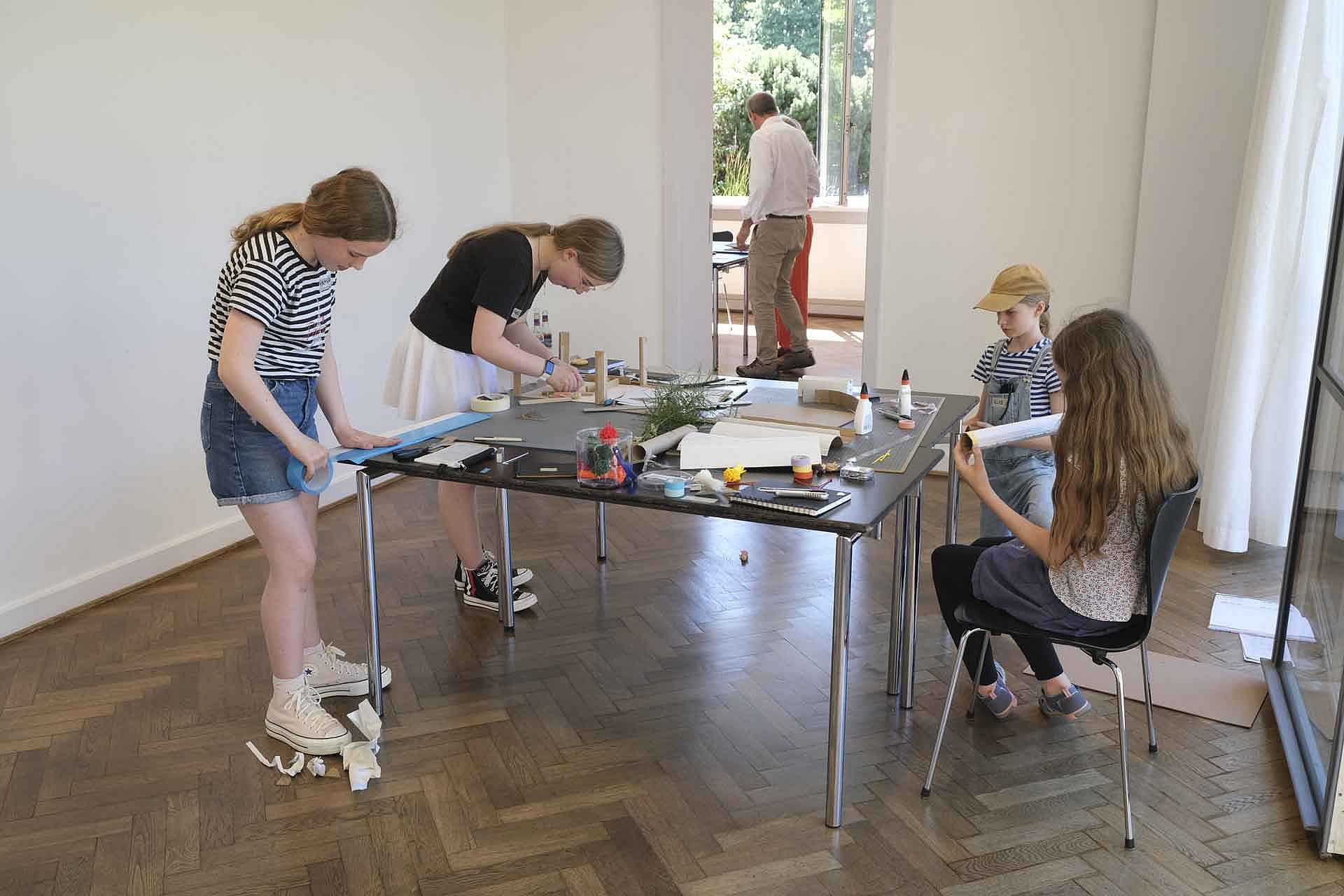
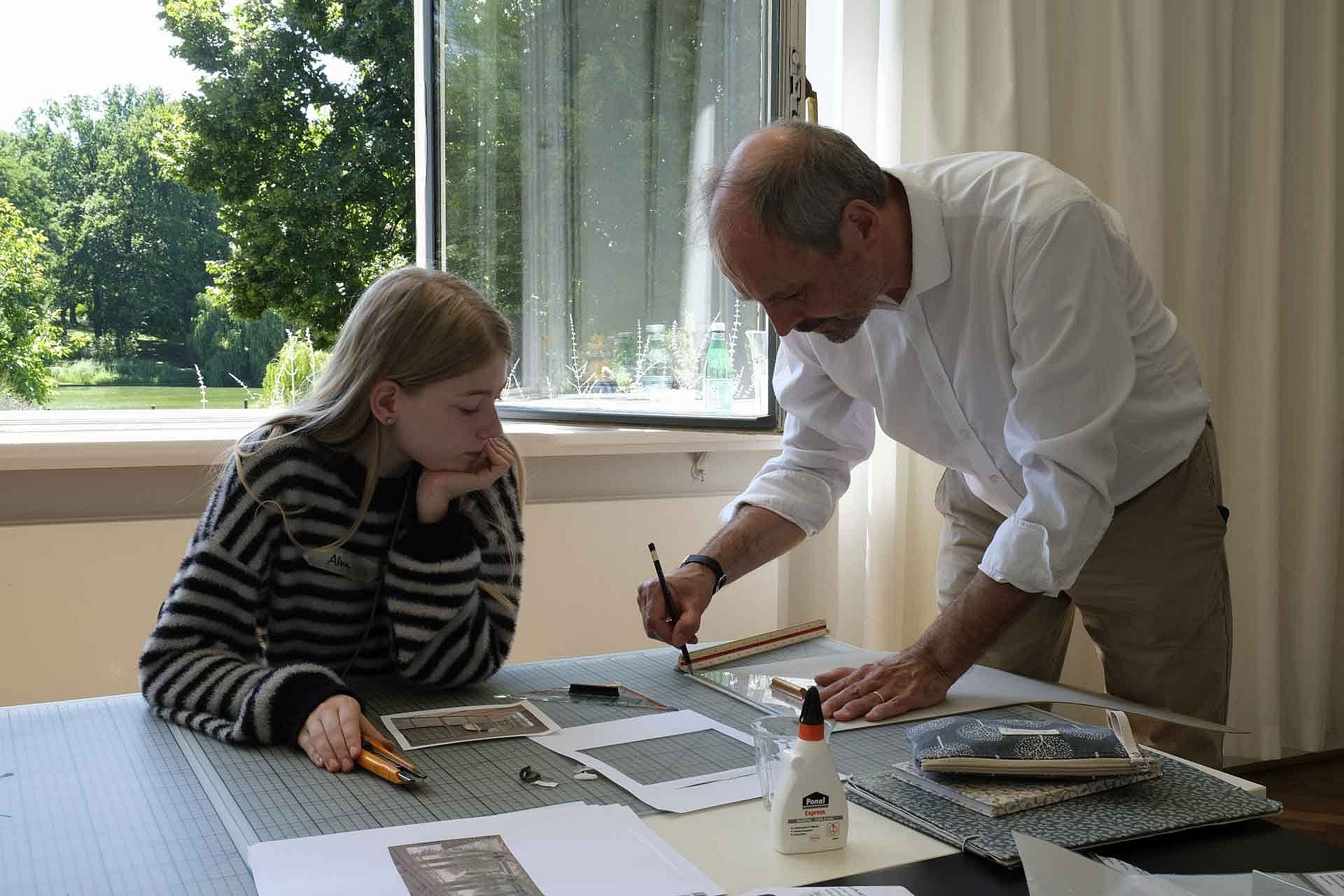
Solid wooden tables stand in the rooms of the house – in the living room, the bedroom and the dining room. Spread out on them are the basic tools of architecture: pencils and sketchbooks, folding rules and rulers, glue and modelling cardboard.
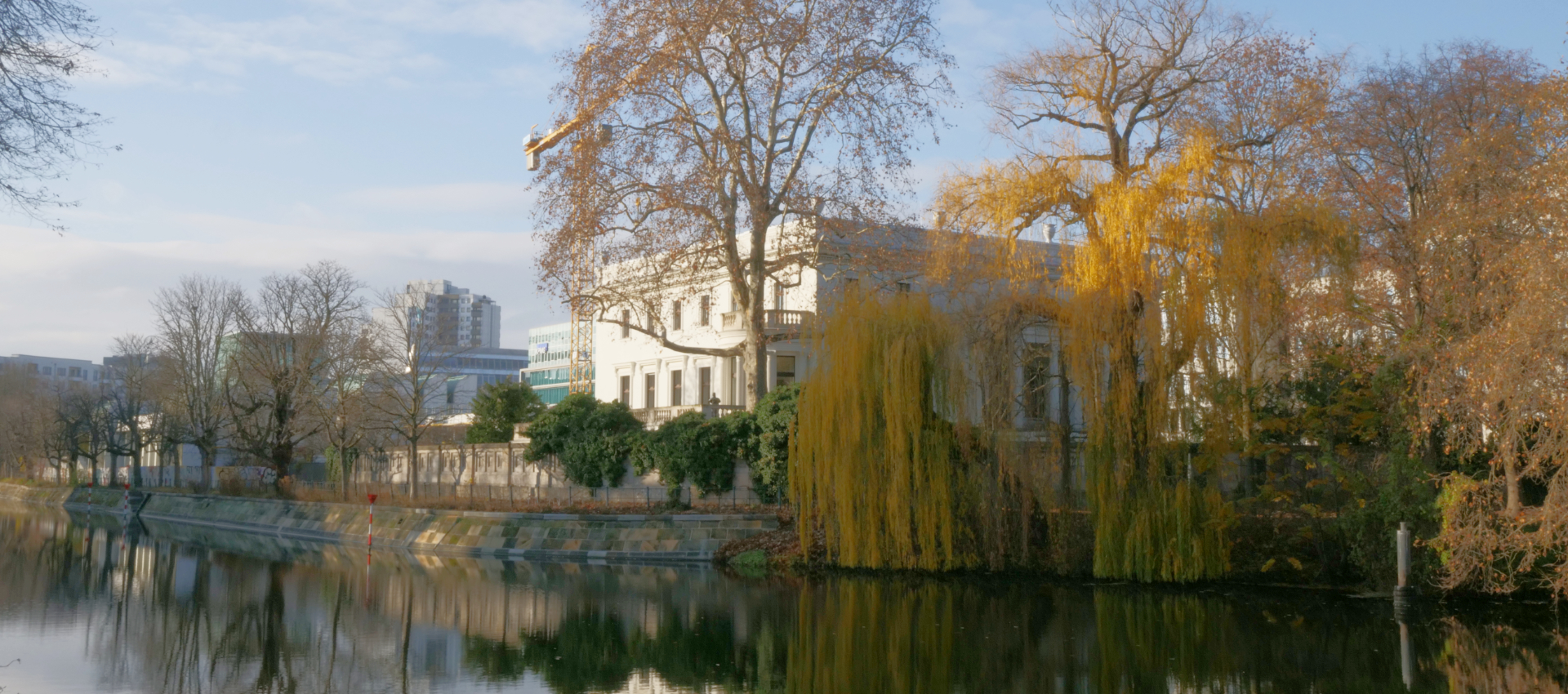
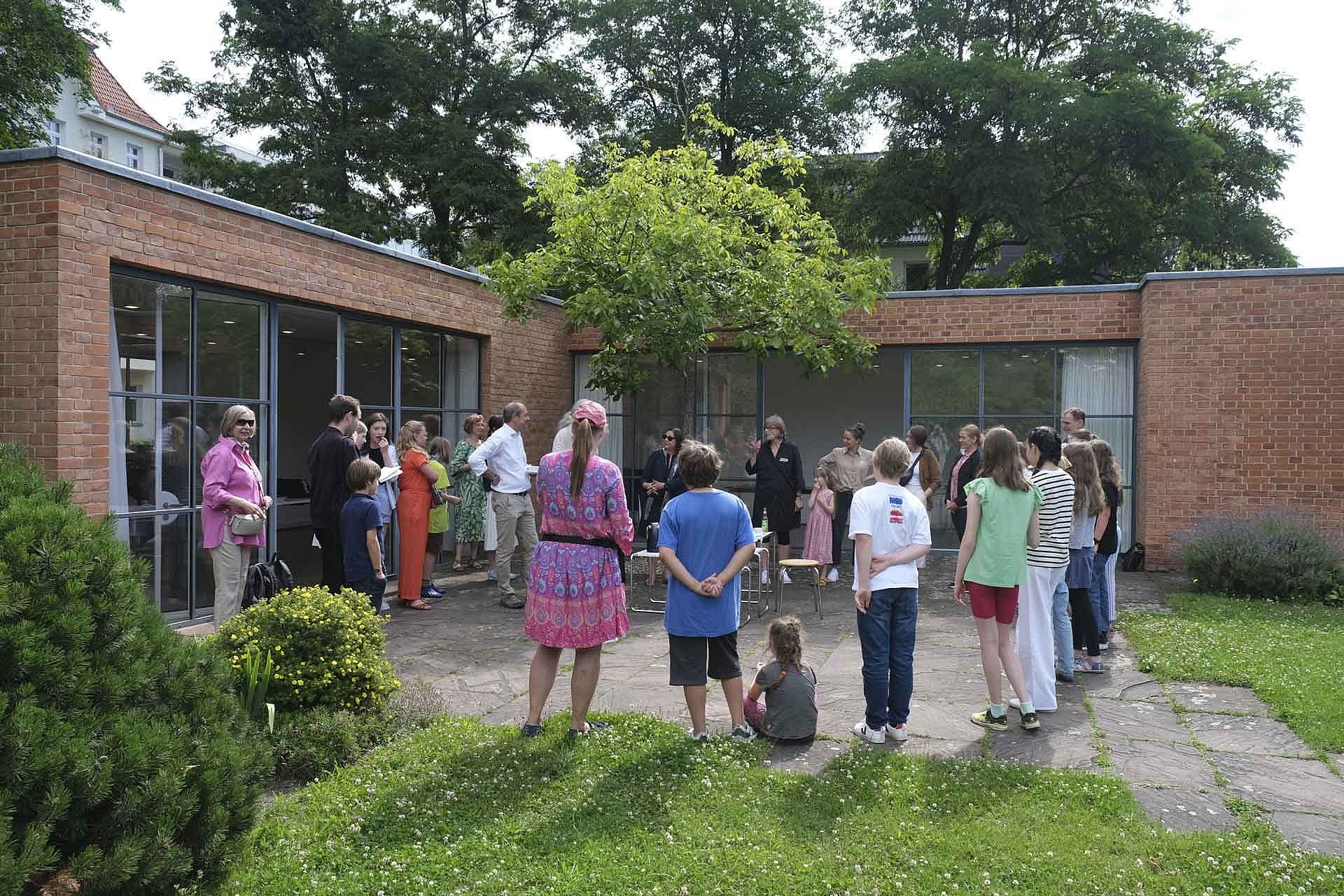
The famous Lemke House, idyllically situated on the Obersee in the east of Berlin, has been transformed into a very special architectural practice for this summer weekend – a design studio for children and young people. “Architect – that’s such a cool job. I’d definitely consider it, because I love drawing and have been interested in art for ages,” says Marlene, who is thirteen years old and is currently working on her own model.
Probably Berlin’s youngest architectural practice
Here, where Mies van der Rohe created one of his key works in 1933, fully in the spirit of the New Building movement, more than twenty children and young people are now drawing, crafting and discussing their very own architectural designs, which are intended to be both sustainable and aesthetically pleasing, innovative and feasible in reality.
‘MiSchi’ is the name of this young architectural practice in the heart of Berlin and also the title of the workshop designed to introduce children and young people to architecture and inspire them to pursue a career as an architect. MiSchi stands for Ludwig Mies van der Rohe and Karl Friedrich Schinkel – the two grand masters of German and international architecture, who both created buildings and spaces that have fundamentally shaped the cityscape of Berlin and many other cities around the world.
Learning from the masters
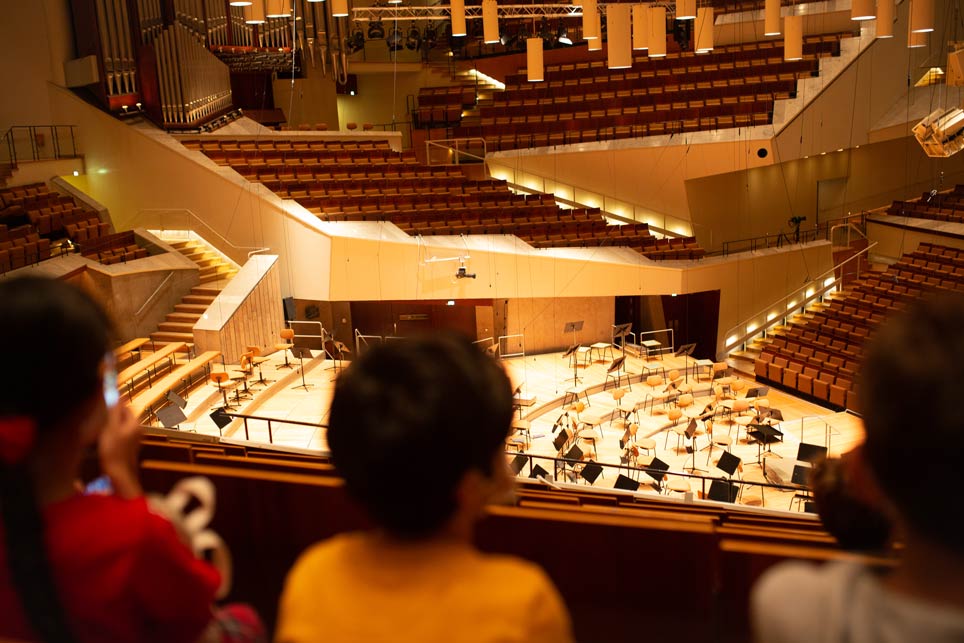
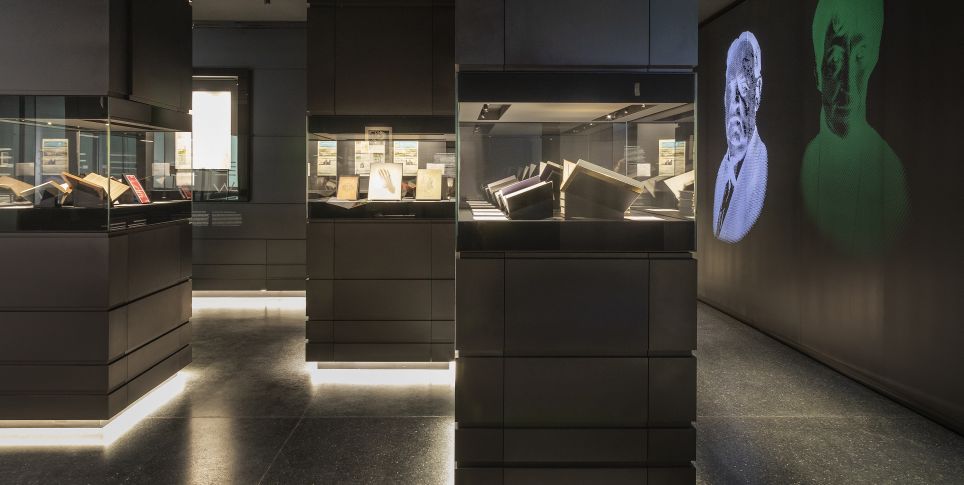
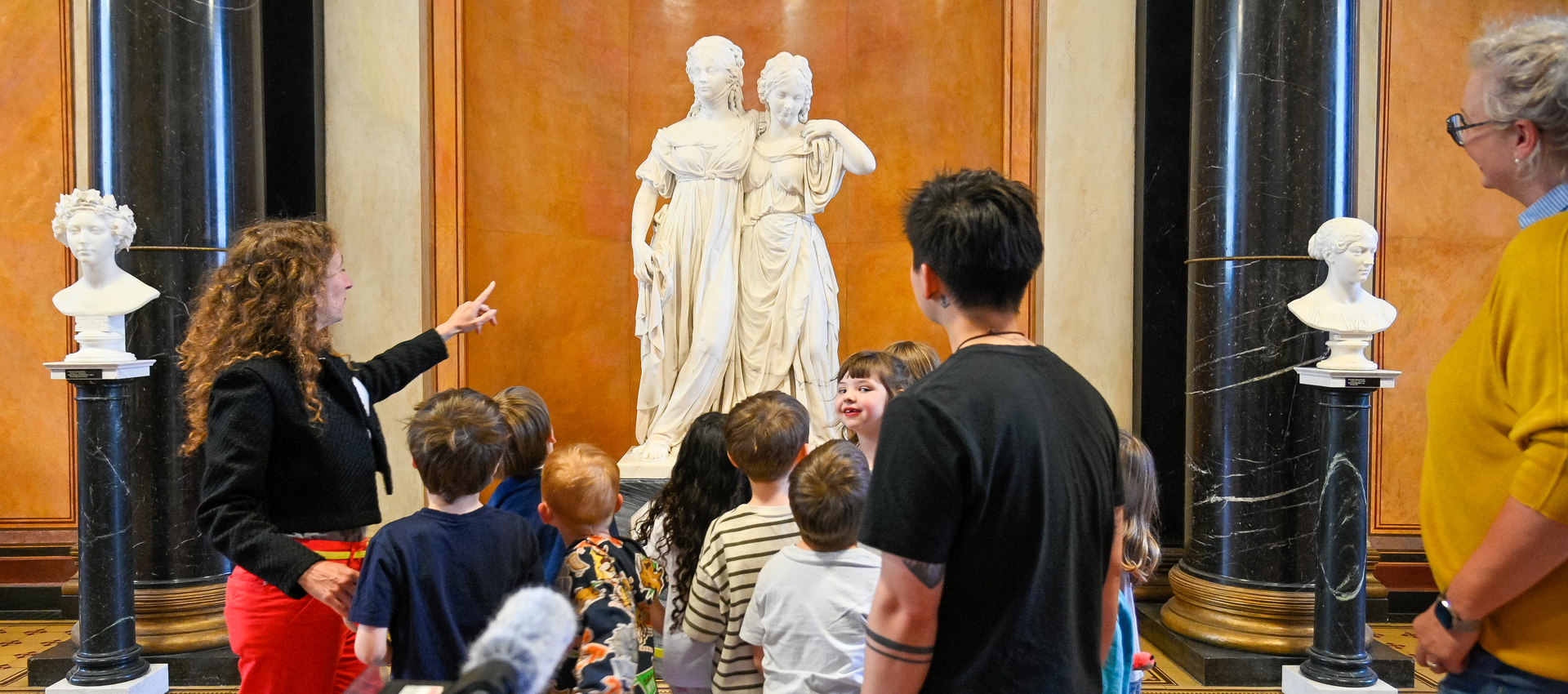
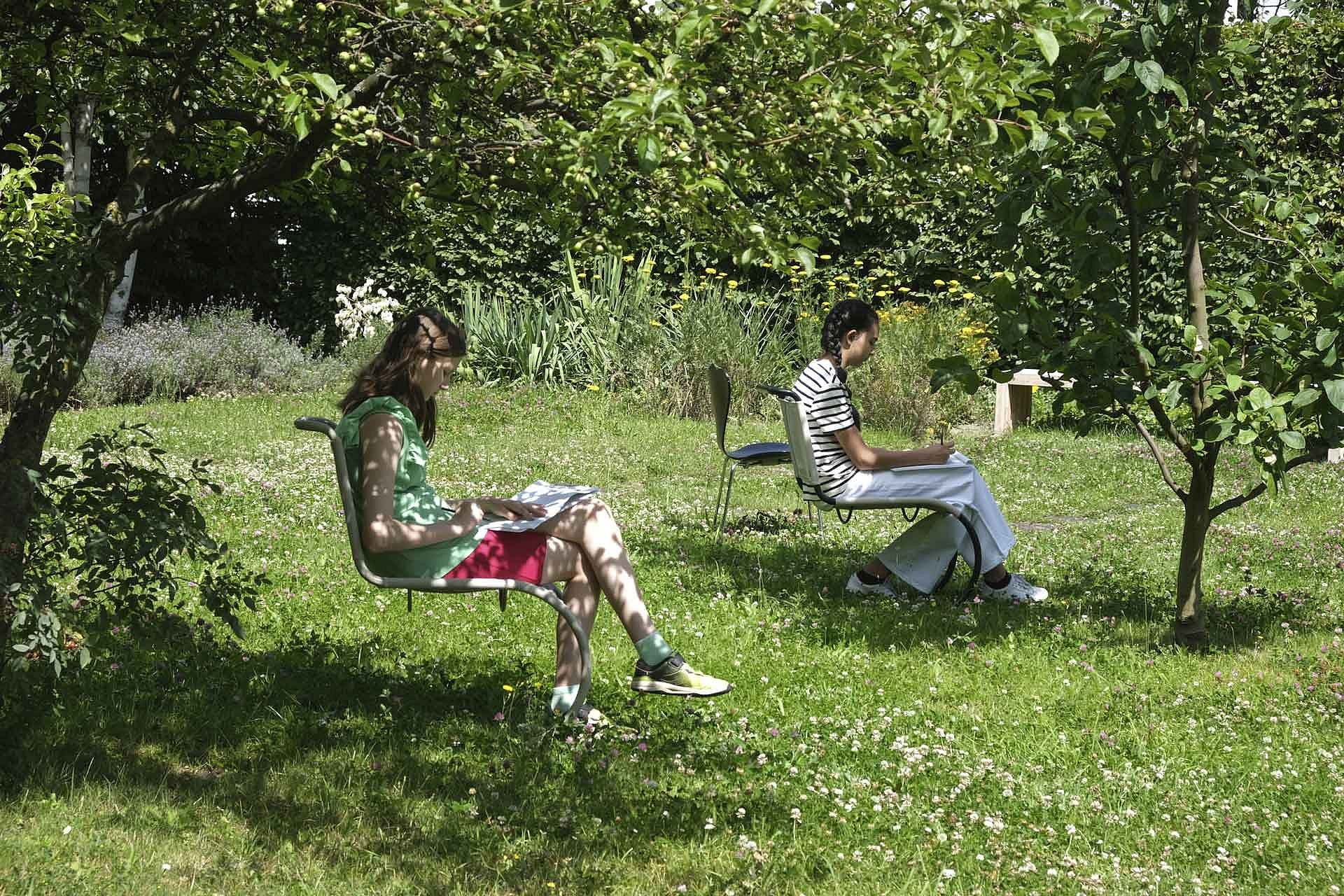
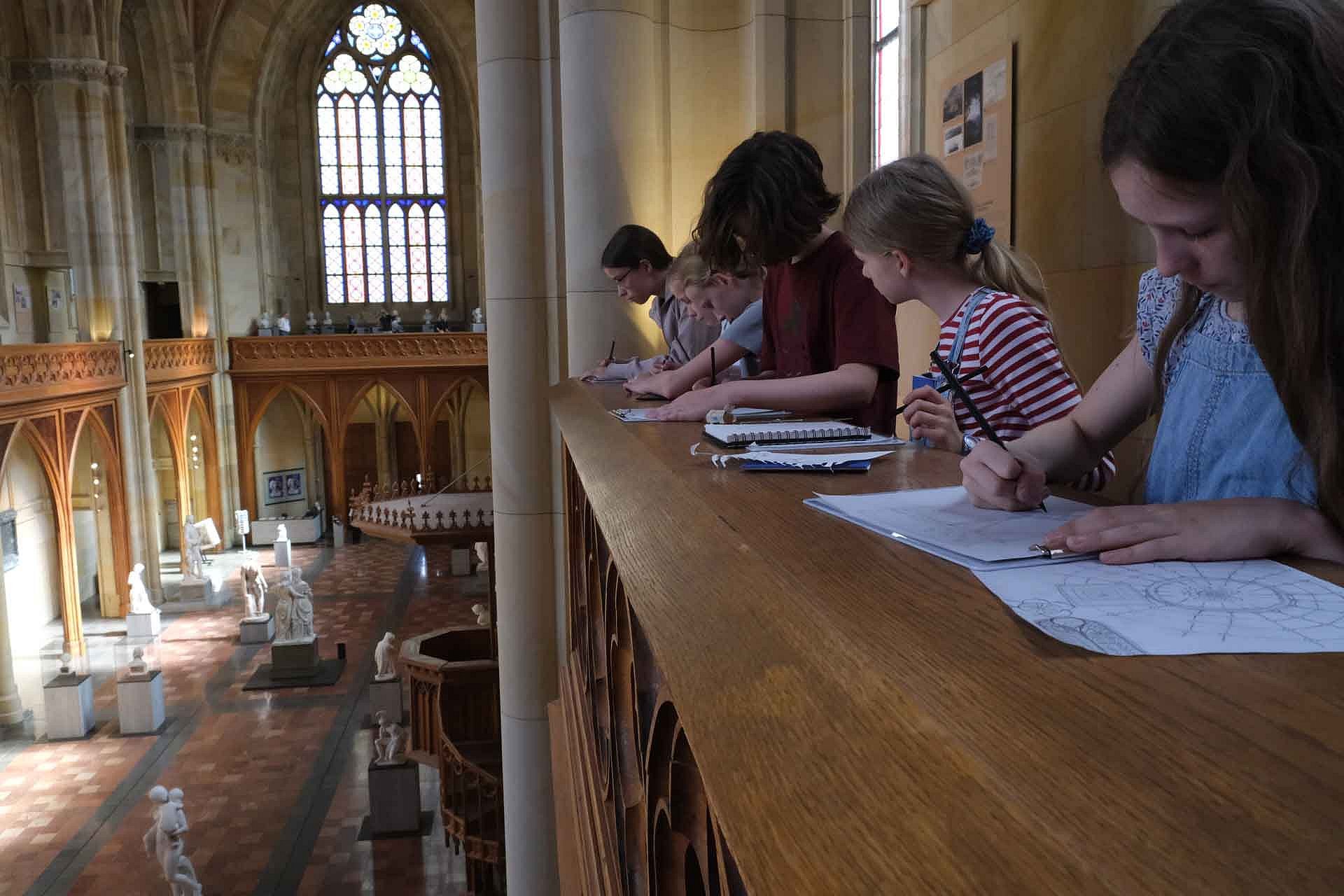
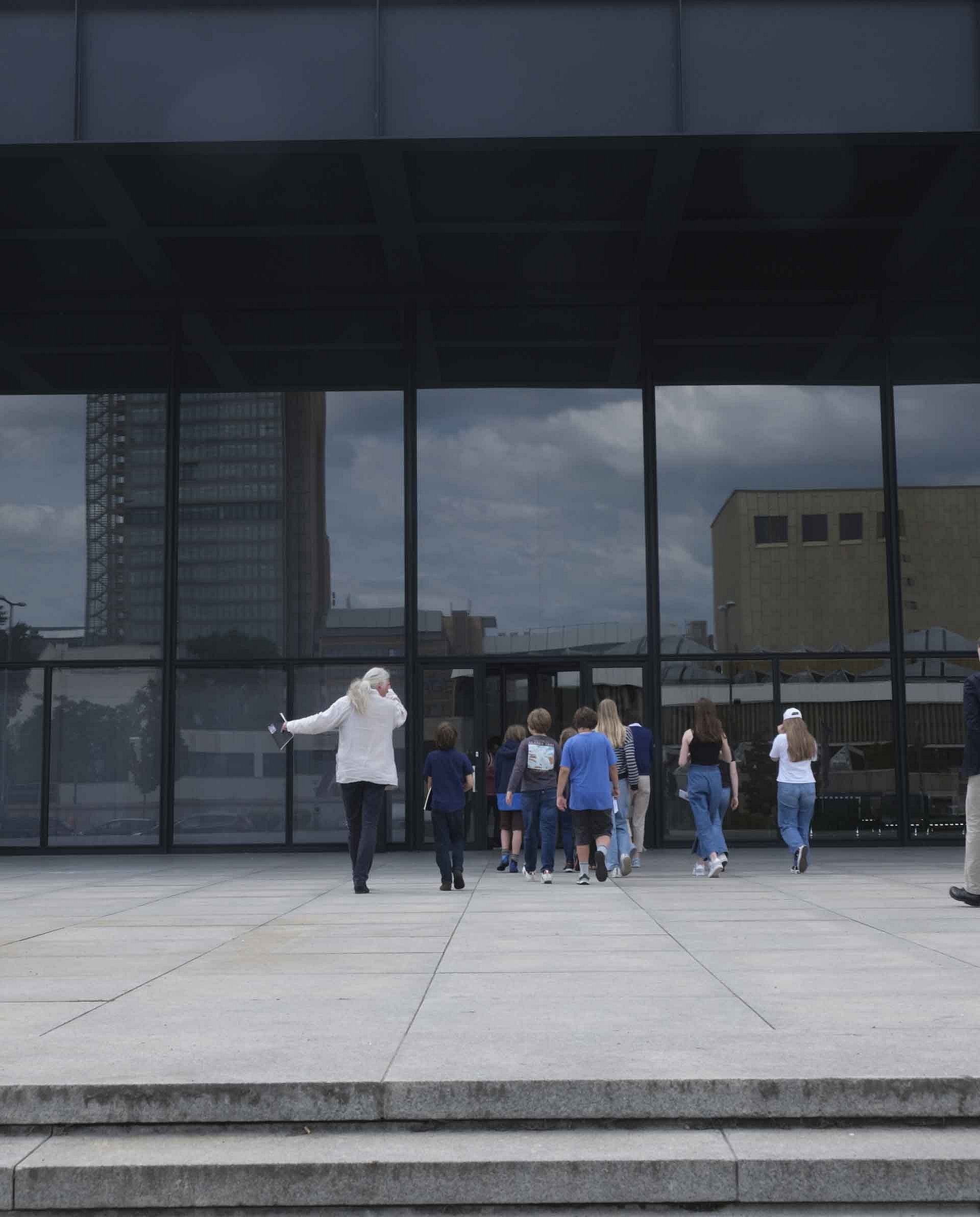
The workshop began as early as Friday at four significant institutions of the Prussian Cultural Heritage Foundation, each of which represents a piece of German and European architectural history: the Altes Museum and the Friedrichswerdersche Kirche, the Neue Nationalgalerie and the Kupferstichkabinett. All of these are places with which the two architects are still identified today: Schinkel with his classicism, characterised by aesthetics and a reduction to the essentials, and Mies van der Rohe with his minimalist façades and imposing spaces, with which he continues to dominate modern contemporary architecture to this day.
The Lemke House naturally also belongs in this line-up – it now serves as an exhibition pavilion for modern art and is a magnet for lovers of Mies van der Rohe’s architecture. For Wita Noack, who has been in charge of the house since 1992, imparting architectural knowledge to a young audience is particularly important, for “architecture shapes our environment and thus our own sensibilities,” she says.
Children and young people have a unique perspective on their surroundings and architecture
Wita Noack
Let’s get to work!
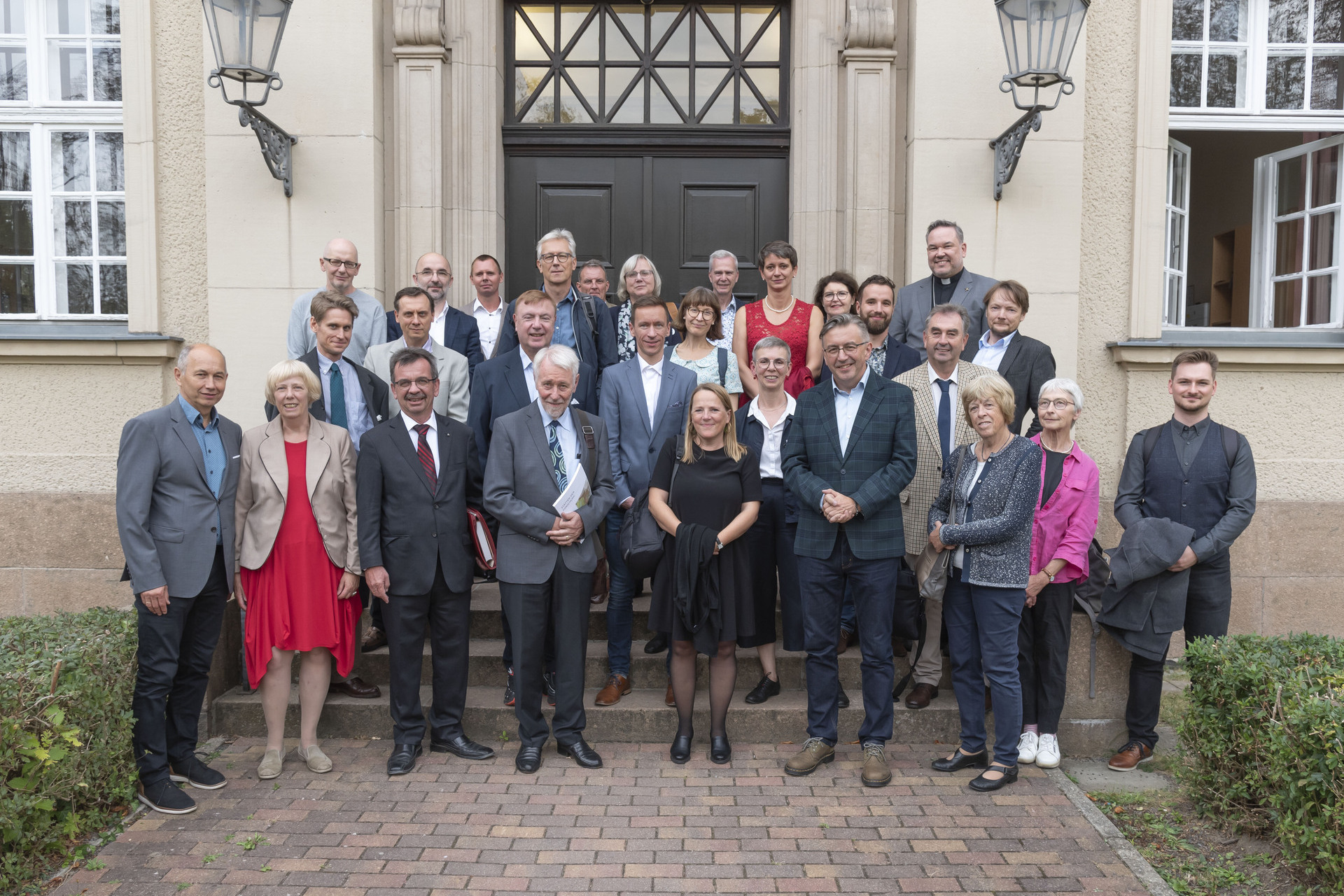
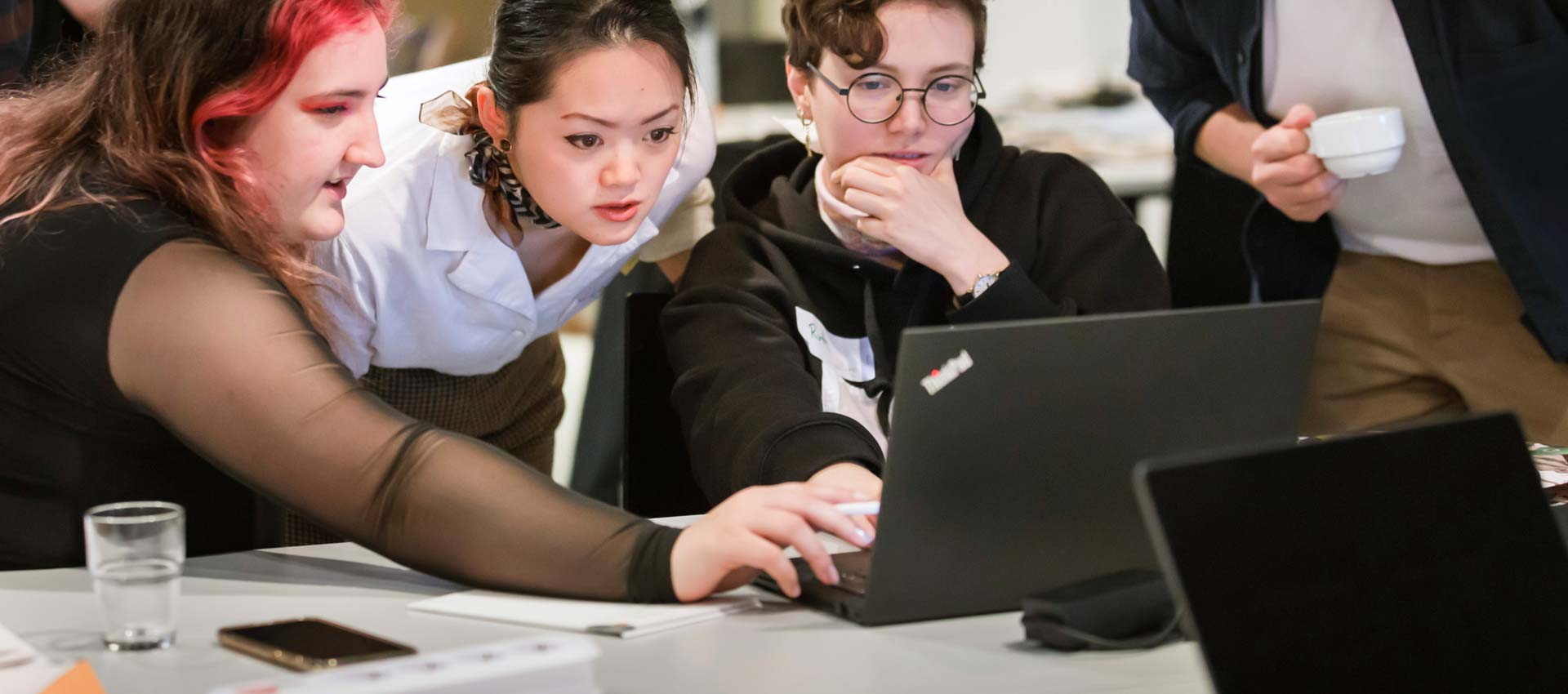
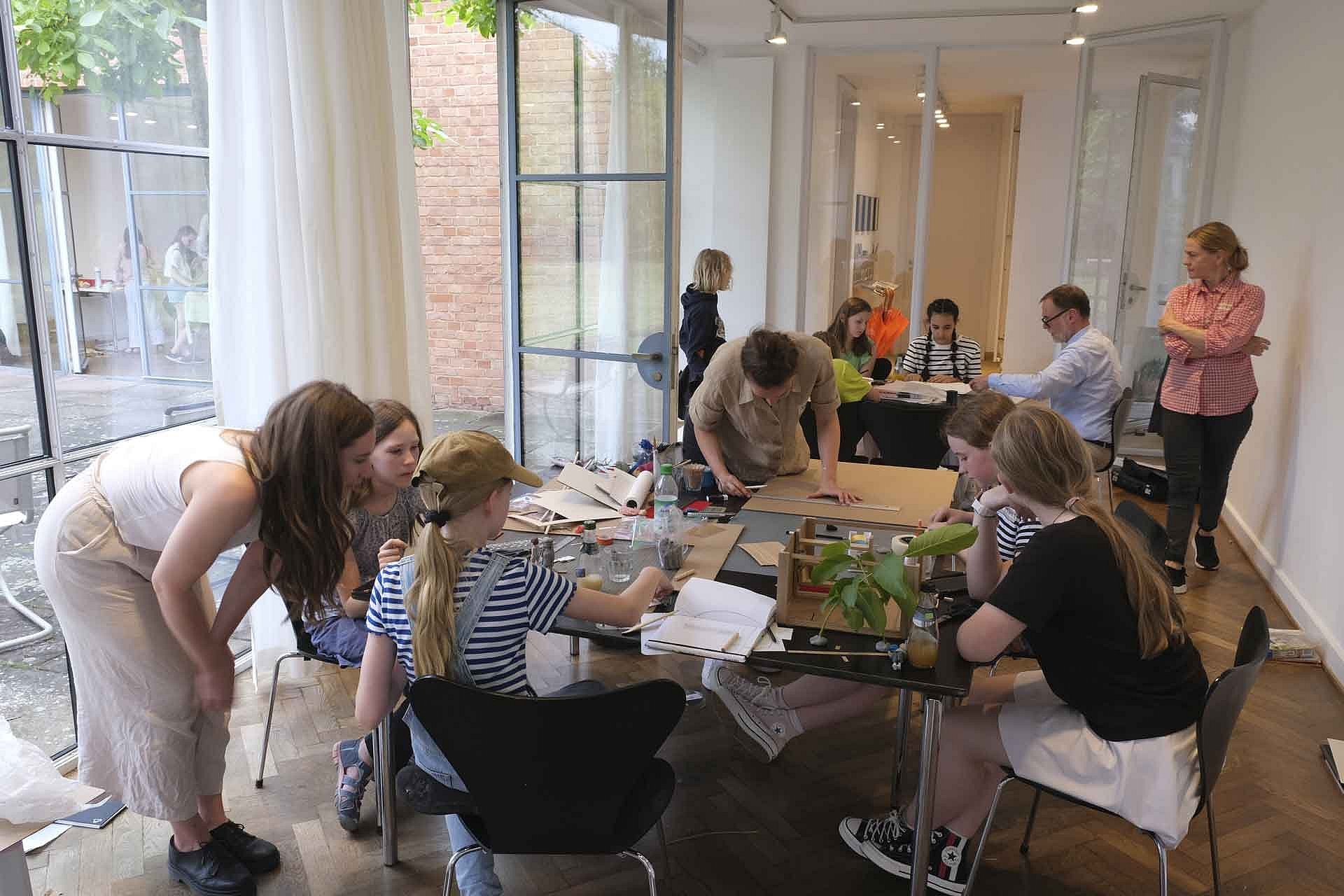
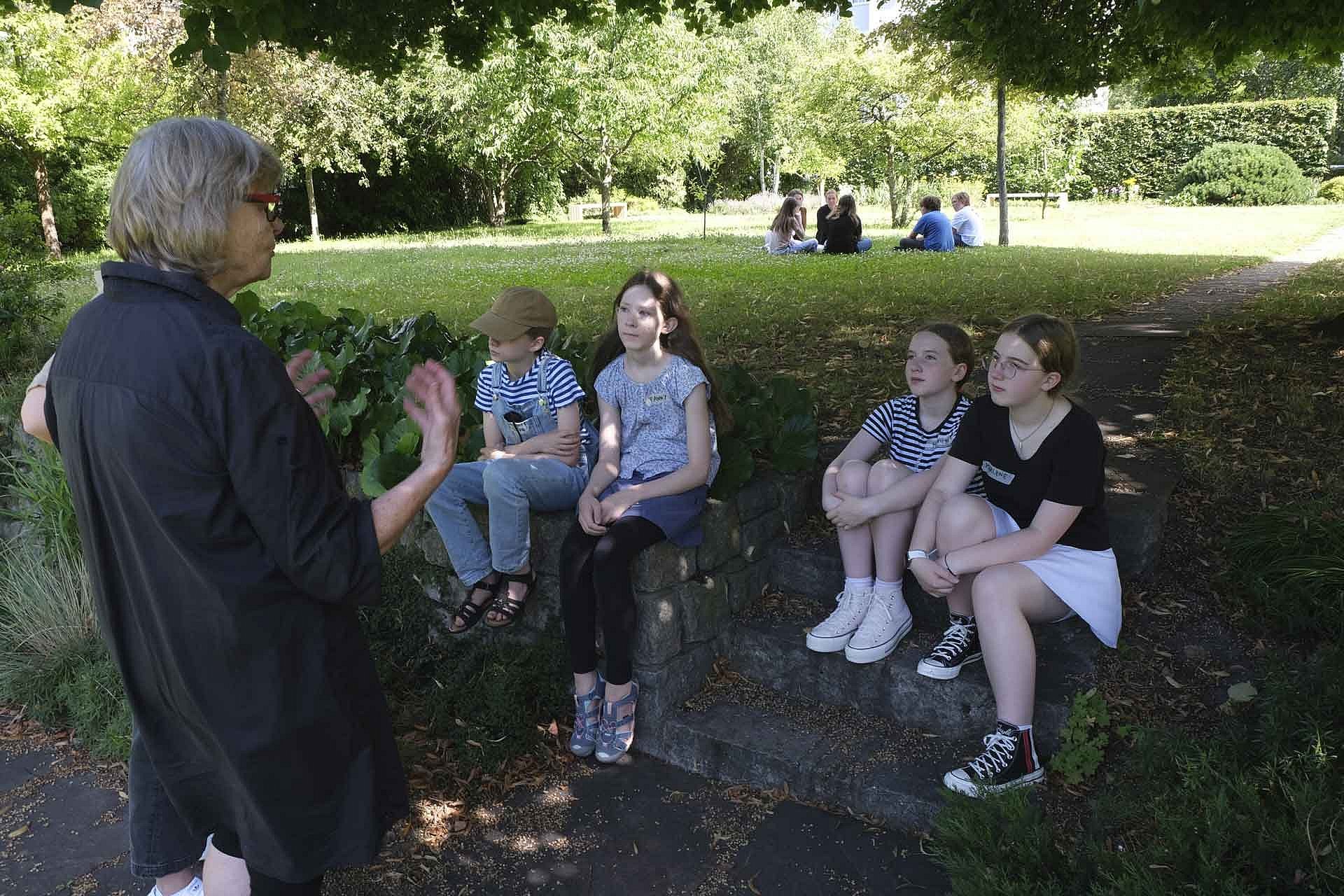
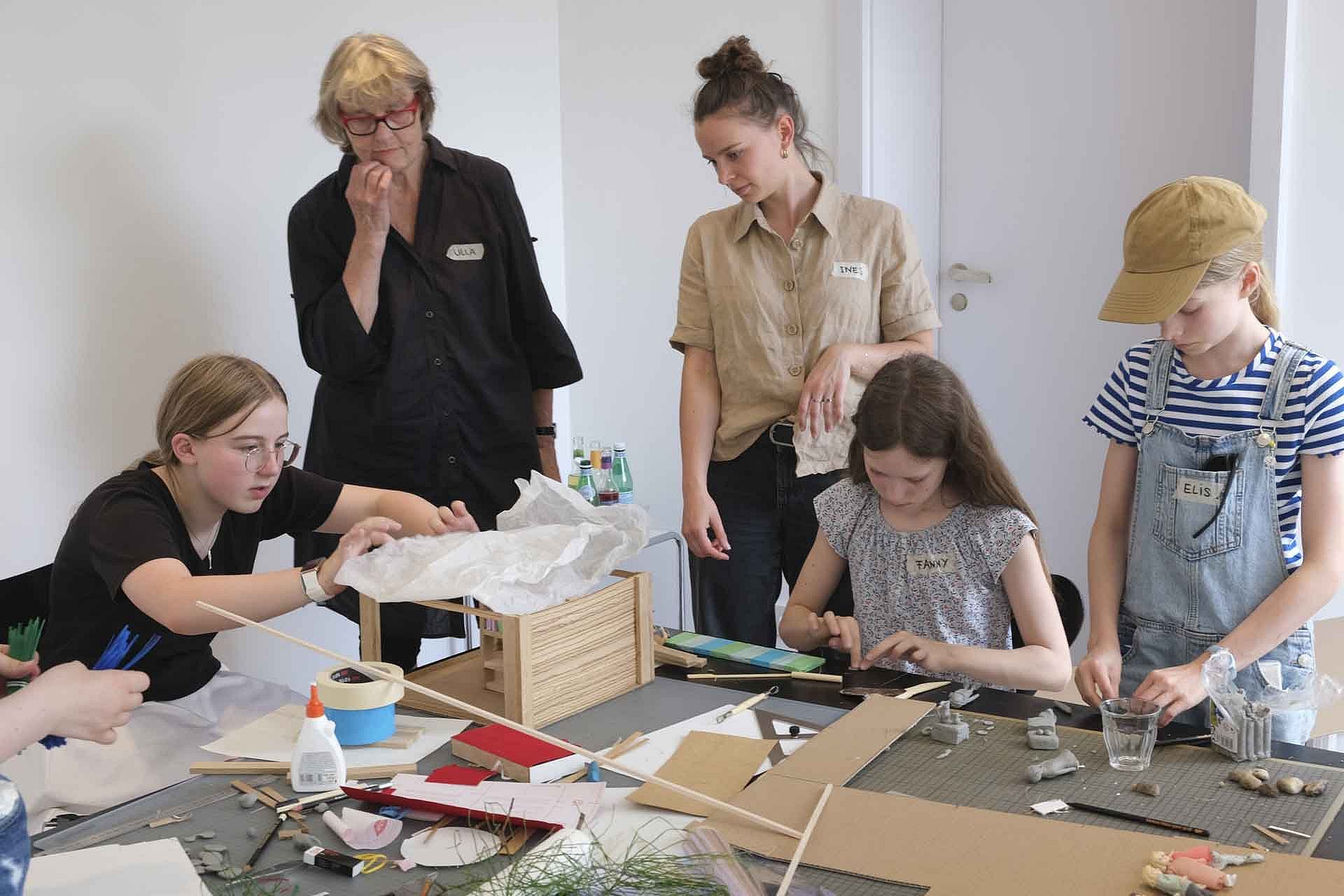
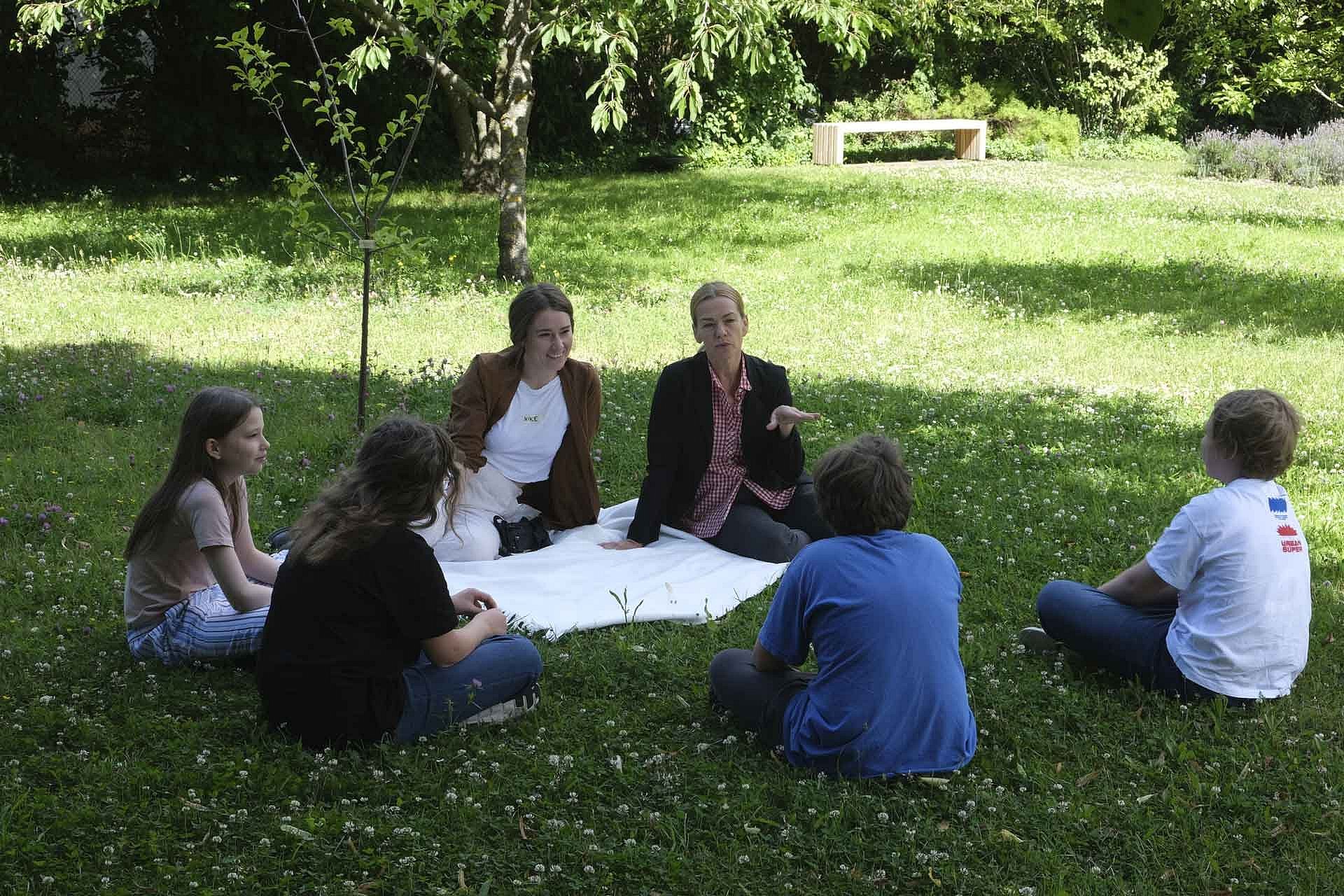
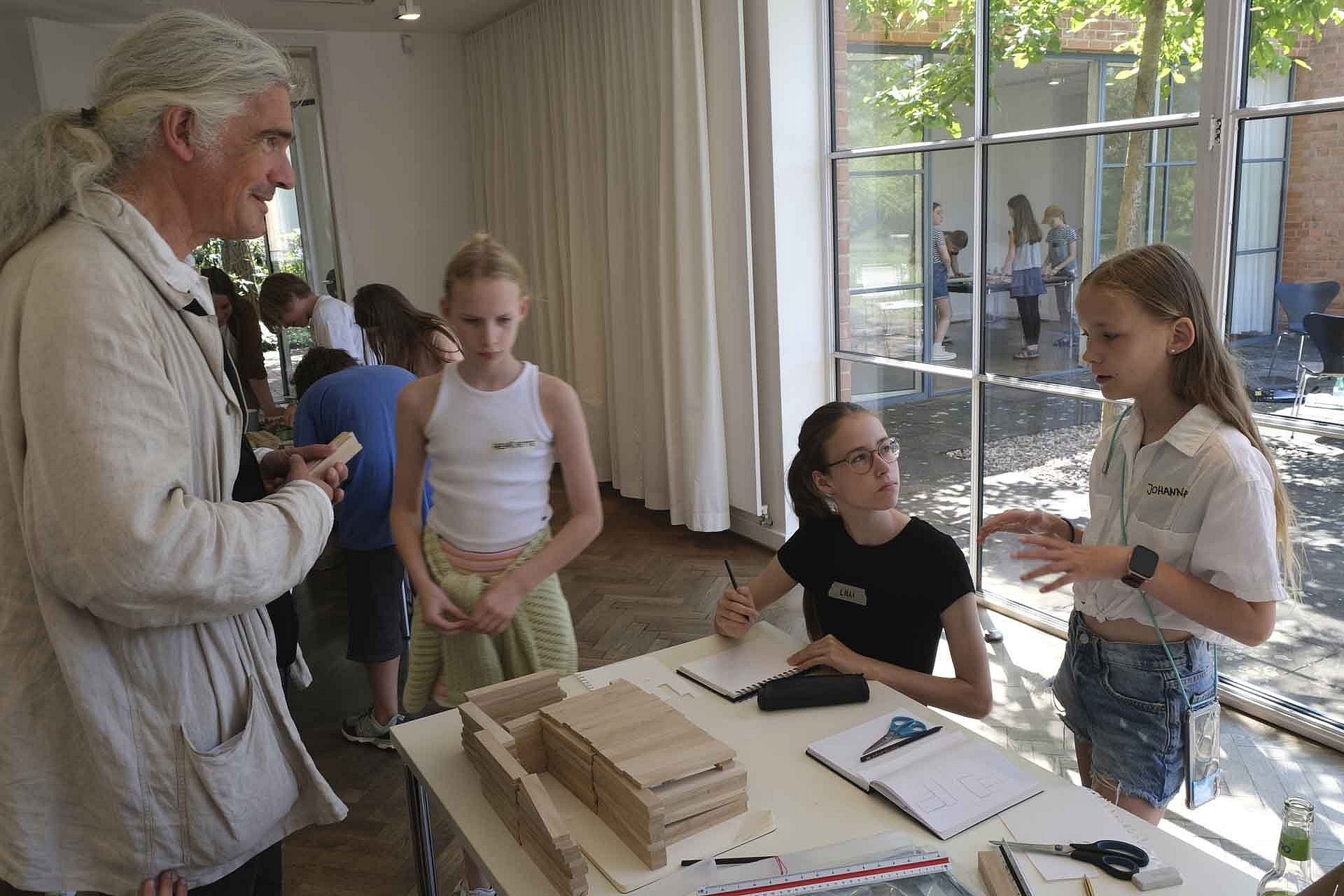
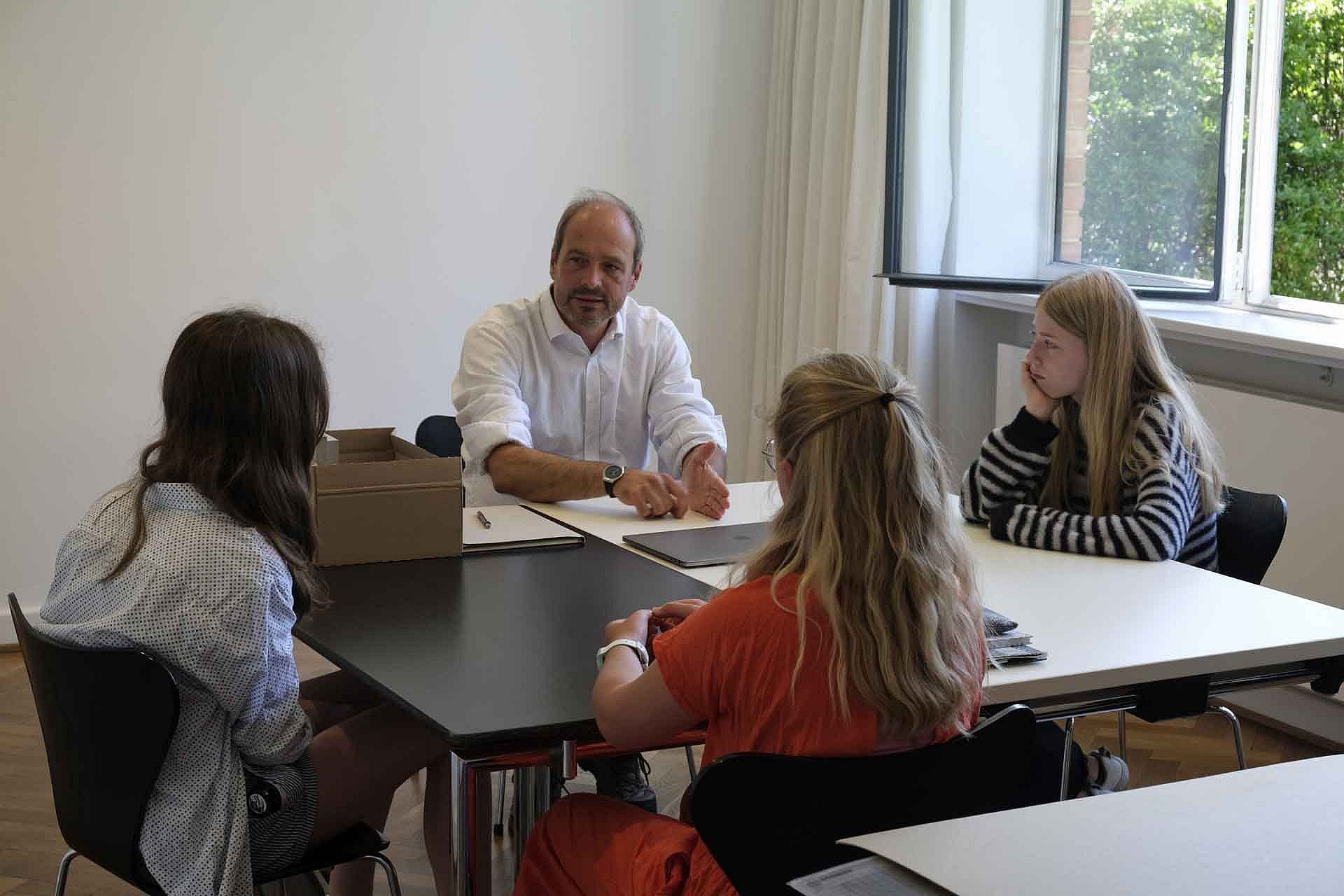
Following this eventful day, spent with sketchbooks and pencils in hand, the design phase began at the young MiSchi architecture practice in Haus Lemke. The children and young people are working alongside renowned architects, who are teaching them the basic craft of architecture and helping them to bring their ideas to life. In doing so, they aim to develop a sense of space, to translate the visible and the imagined onto paper through sketches and thus visualise them, but also to learn to talk about architecture and articulate their own ideas, needs and wishes for contemporary architecture. Among the renowned architects leading the individual groups are Miriam Plünnecke (Federal Office for Building and Regional Planning), Alexander Schwarz (David Chipperfield Architects), Ursula Steinhilber (SESA Architects), Paul Kahlfeldt (Kahlfeldt Architects) and Jörn Köppler (Köppler Türck Architects).
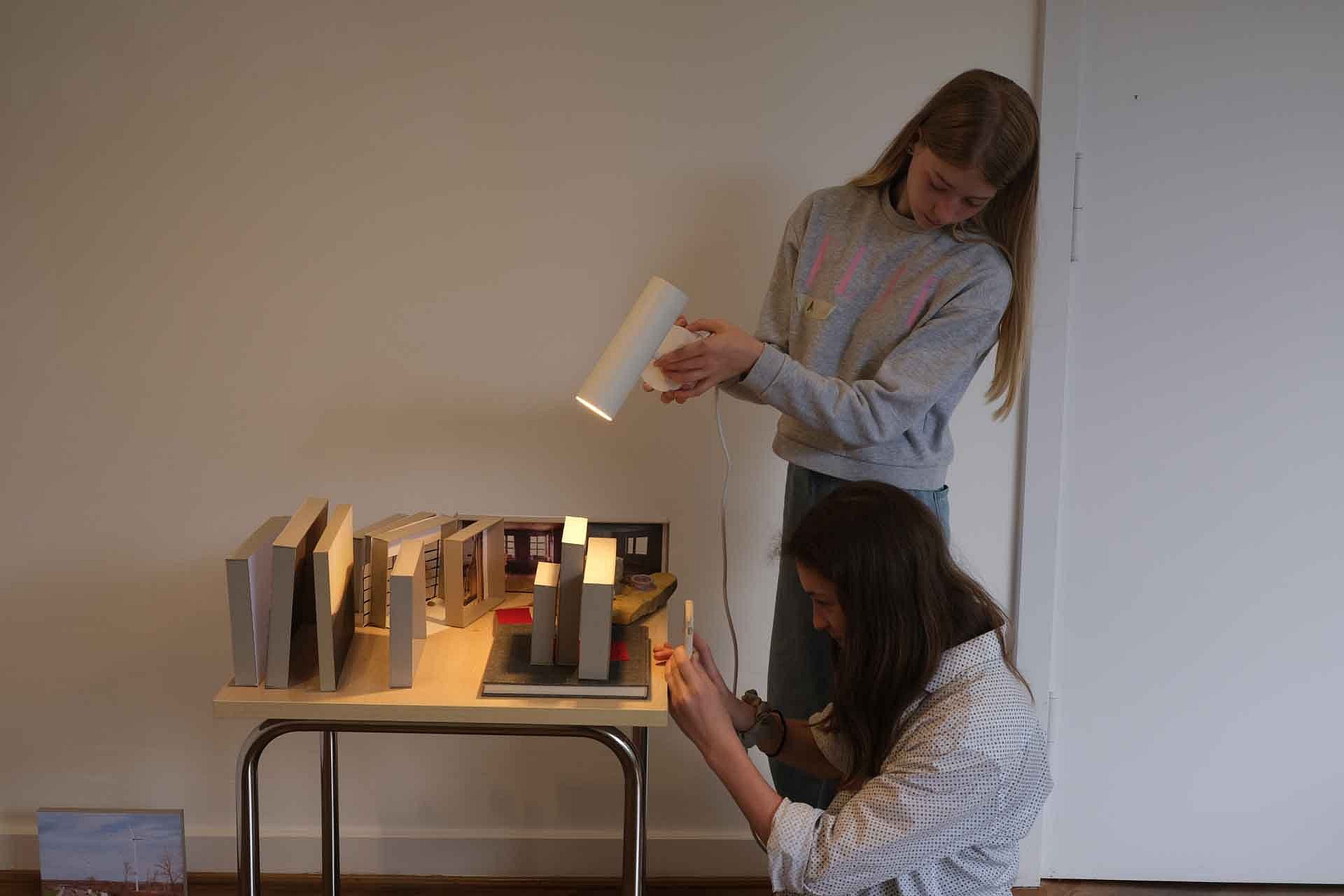
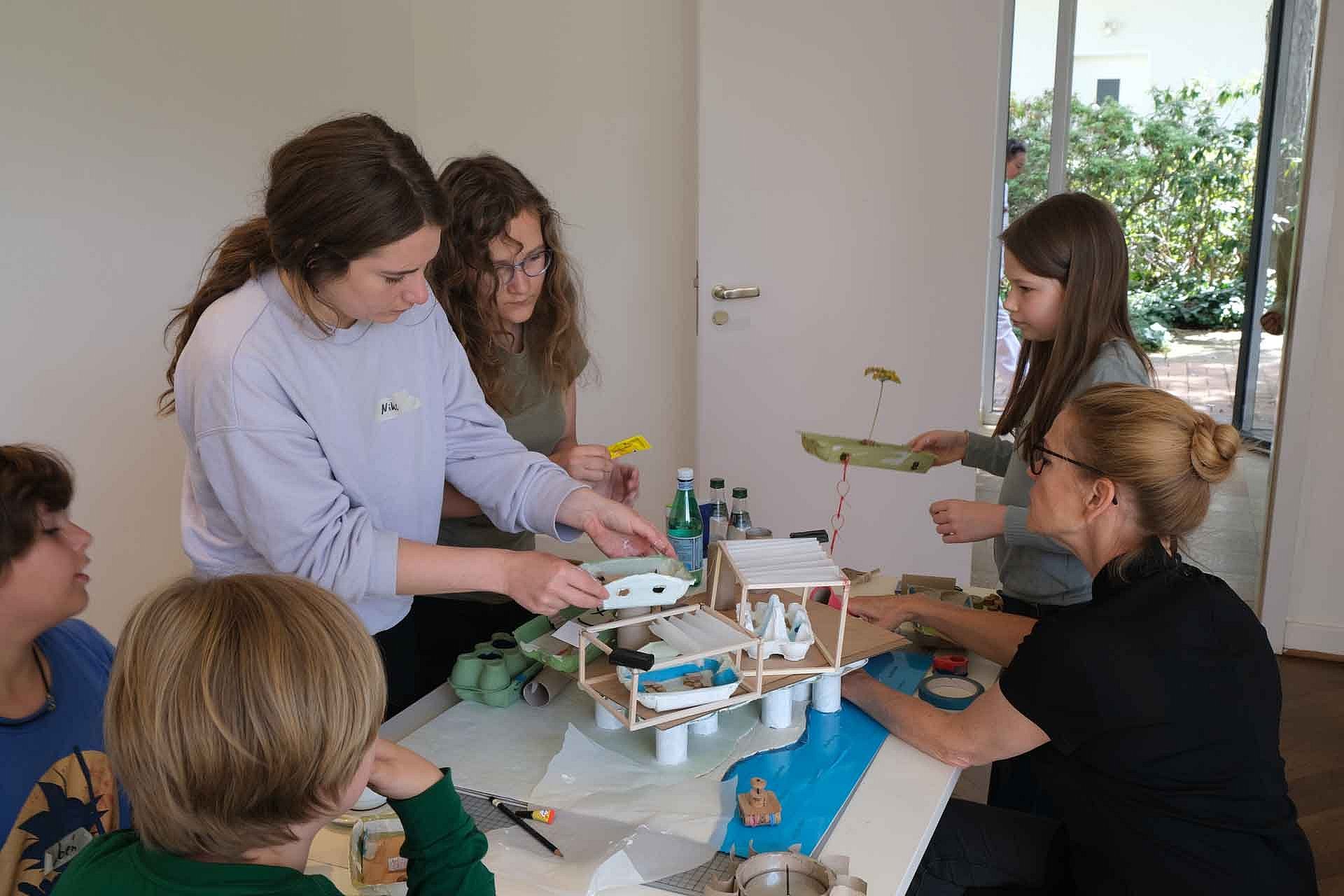
During the intensive working phase, a contemplative silence reigns in the workshop halls, interrupted time and again by small discussions within the groups. The first models quickly take shape and detailed drawings are produced. In between, there are frequent breaks – to reflect, think things through, discard ideas and start afresh. Just like in a real architectural practice.
From idea to model
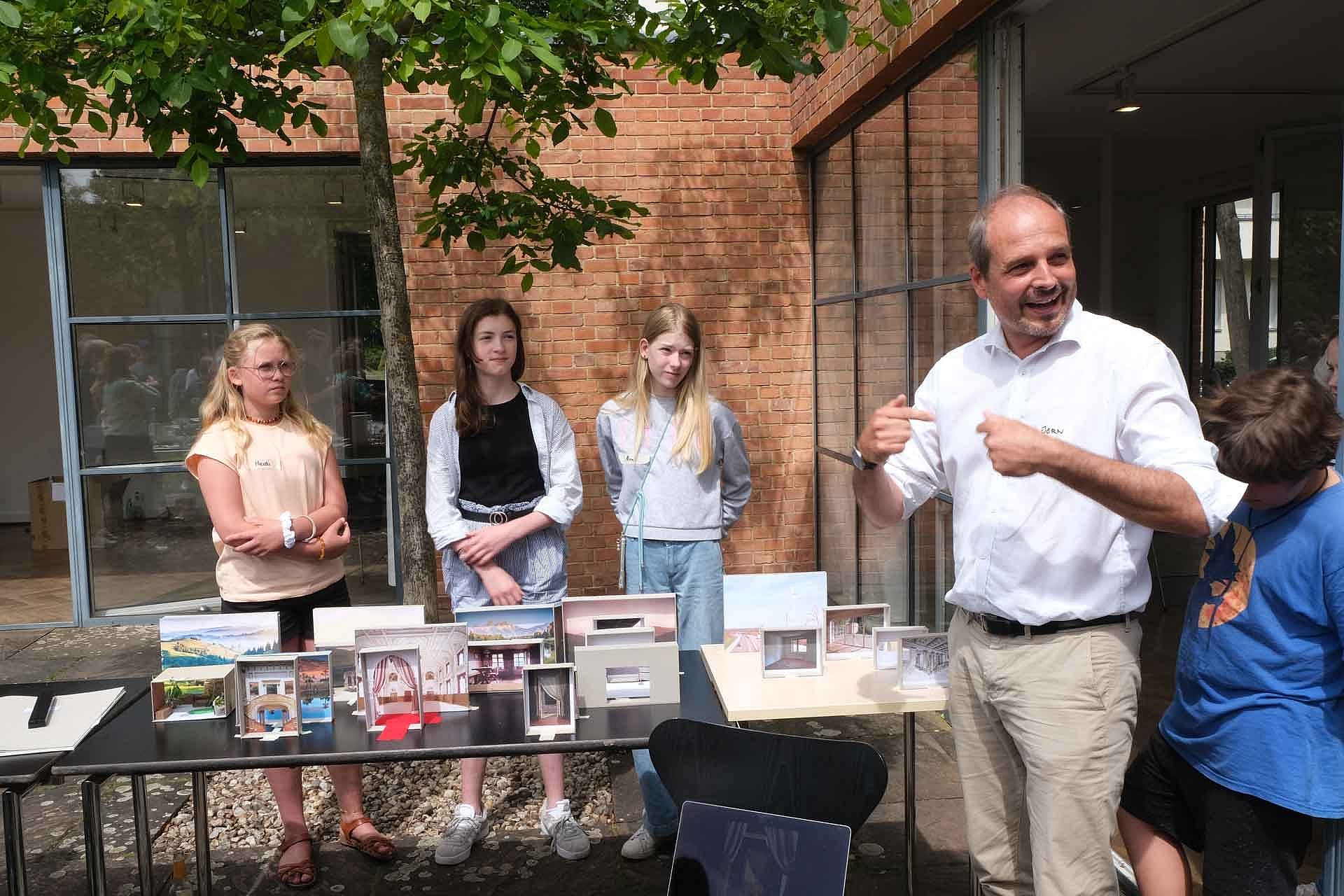
And what was the outcome of the workshop? – Bold designs, which were presented on the final day.
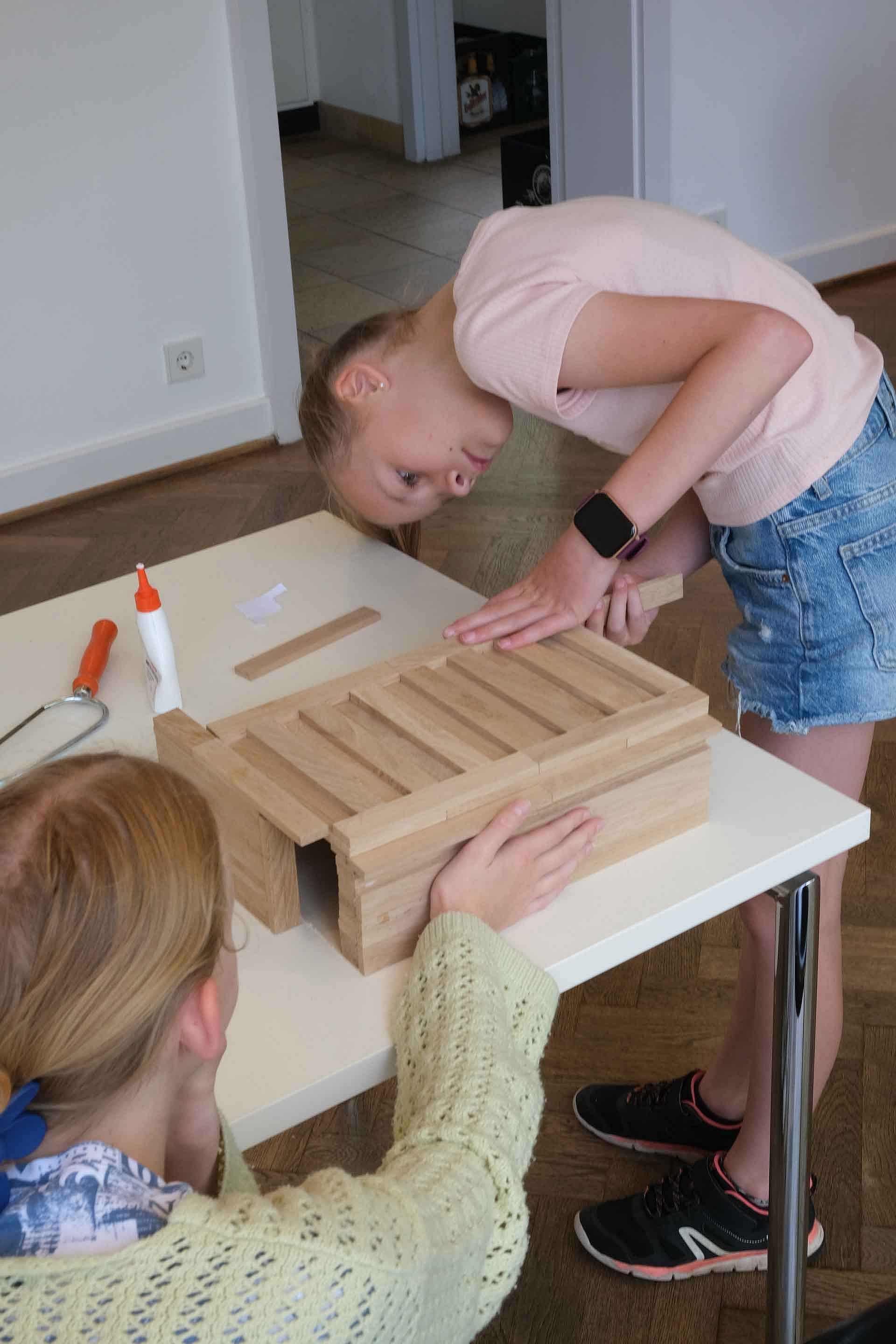
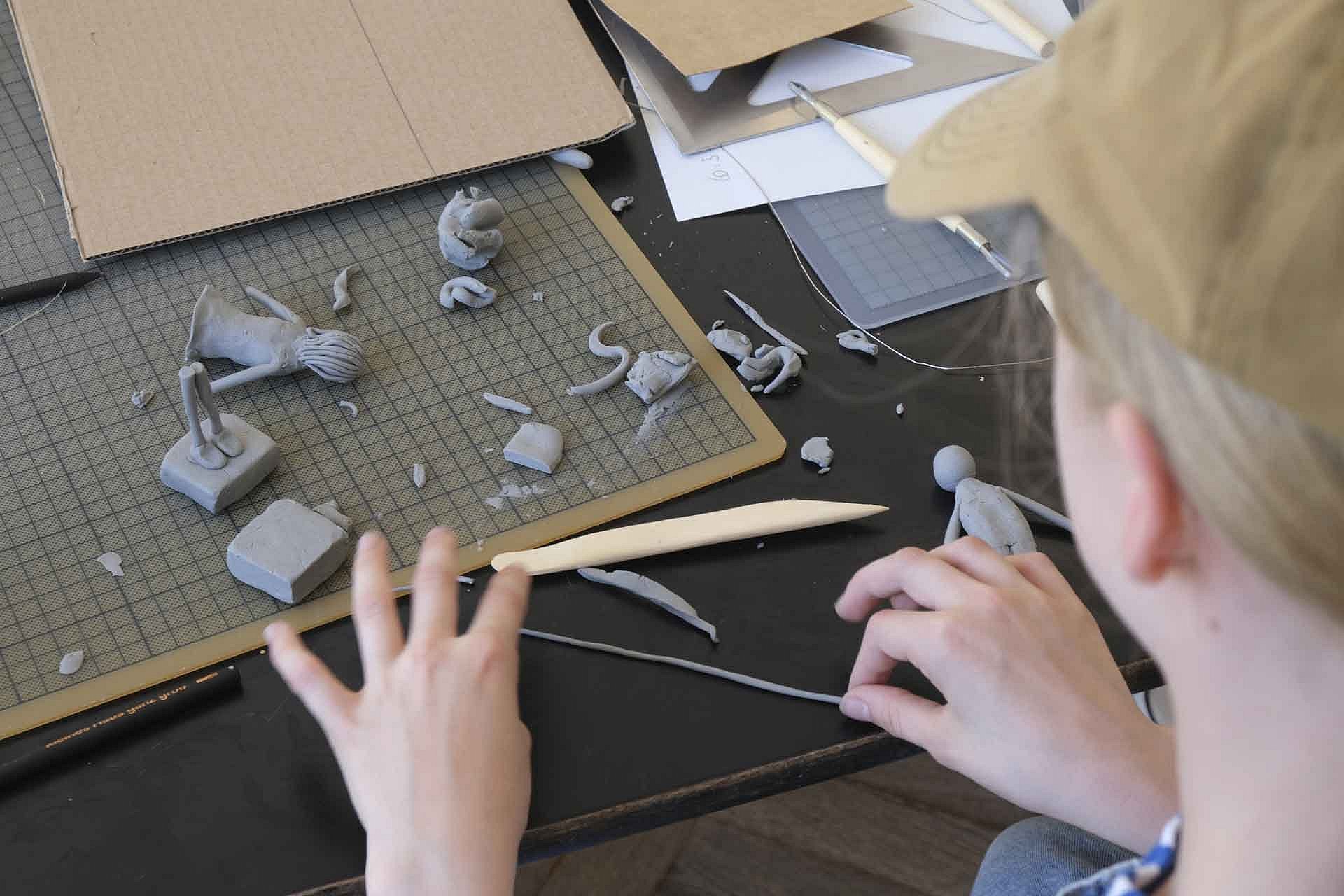
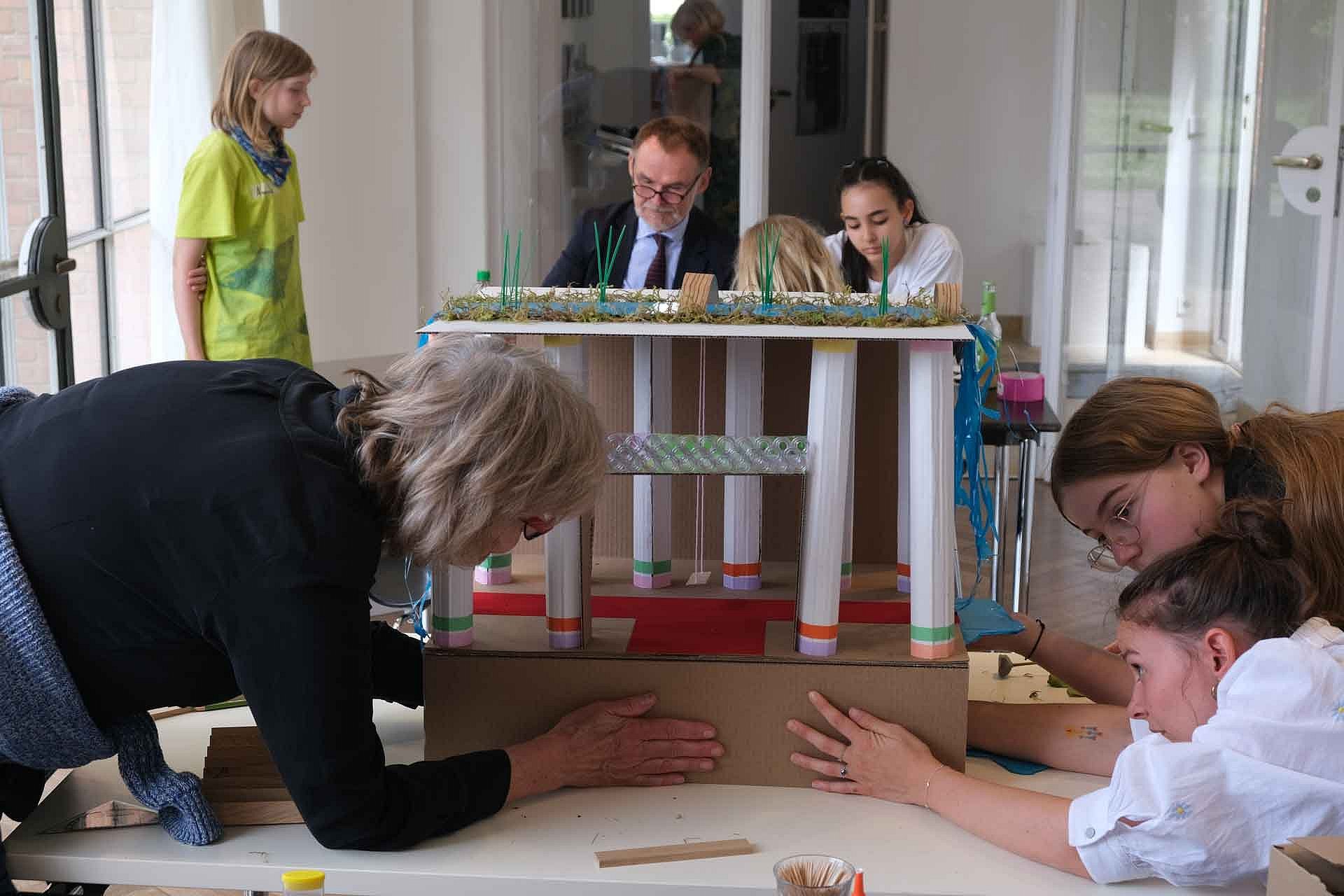
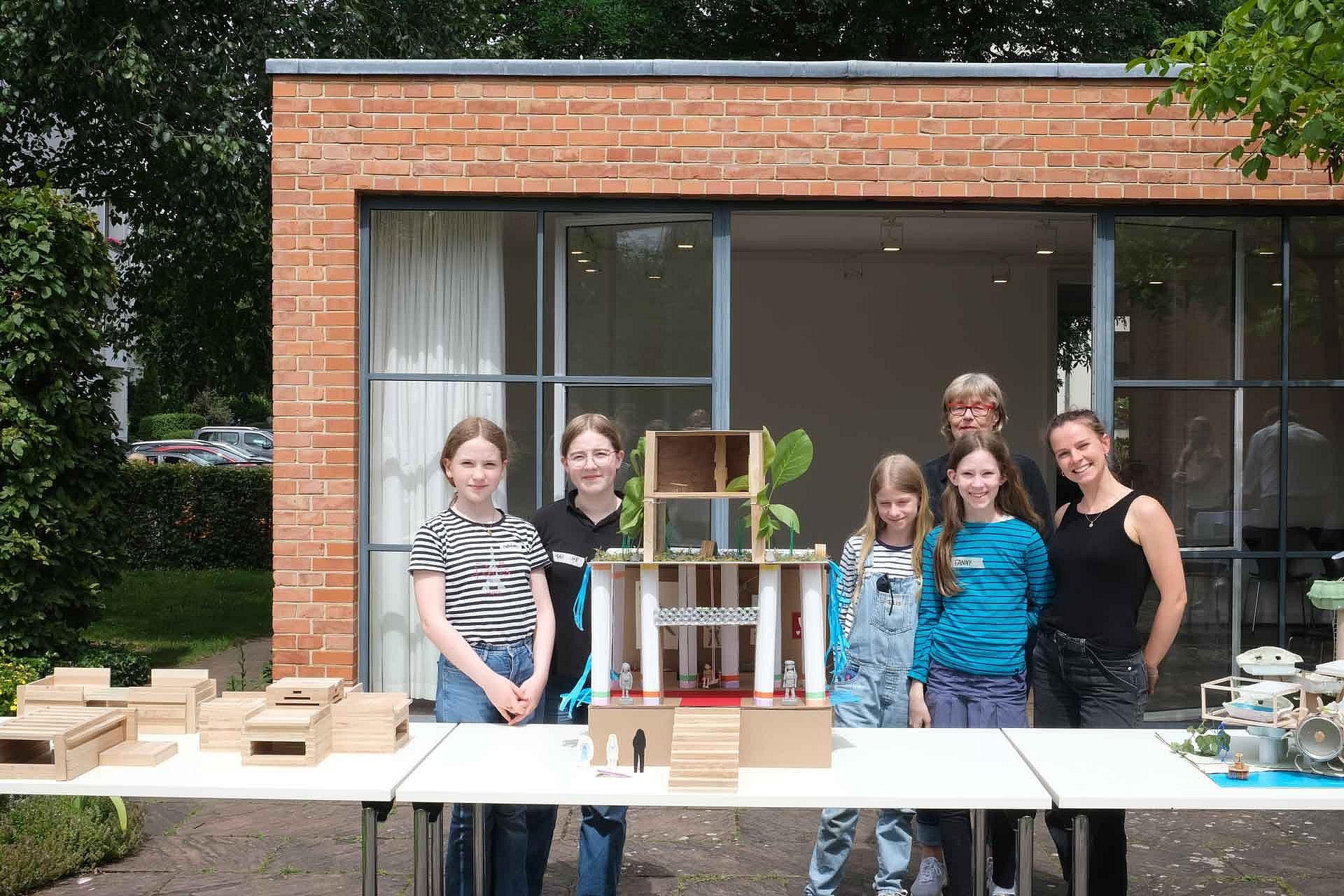
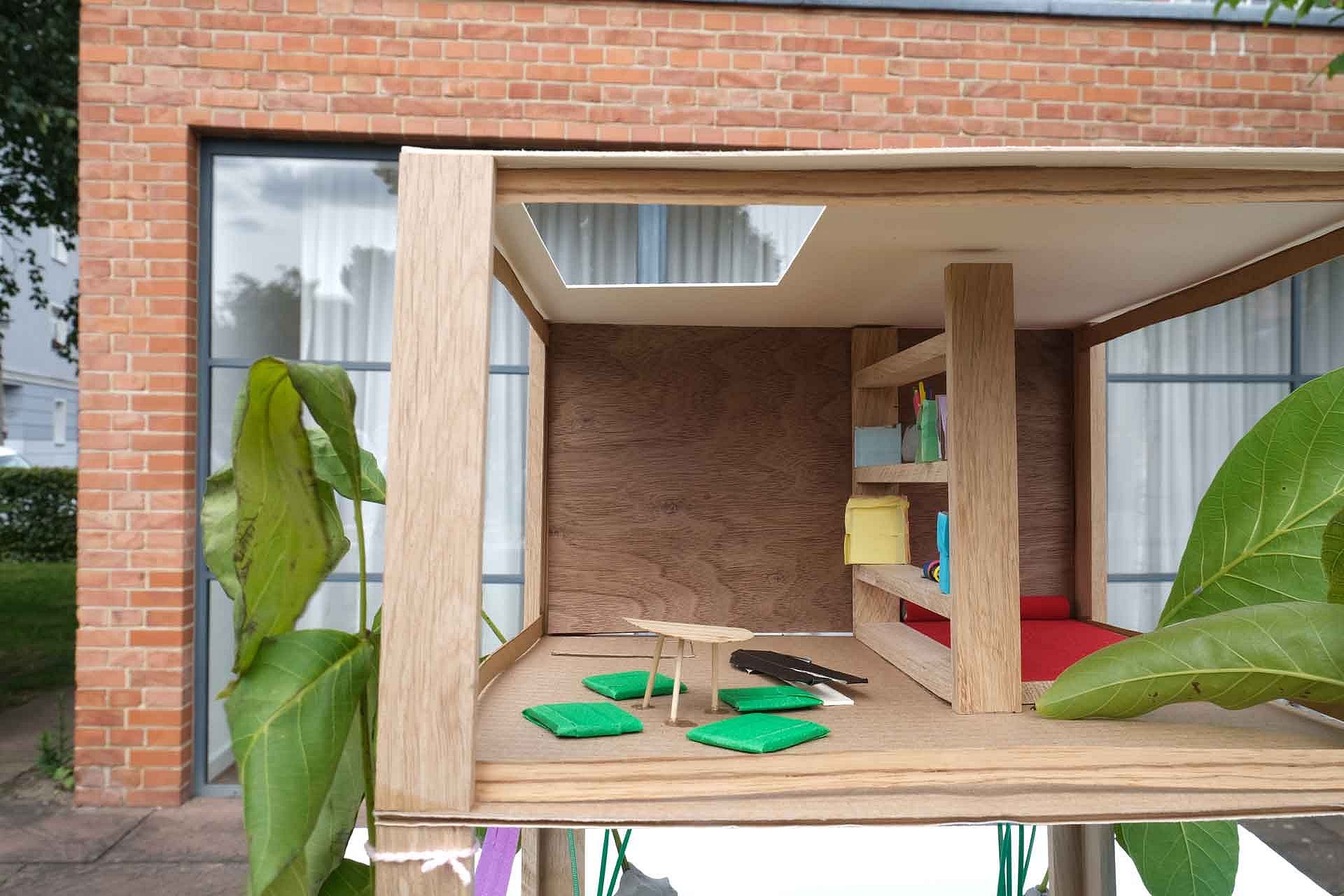
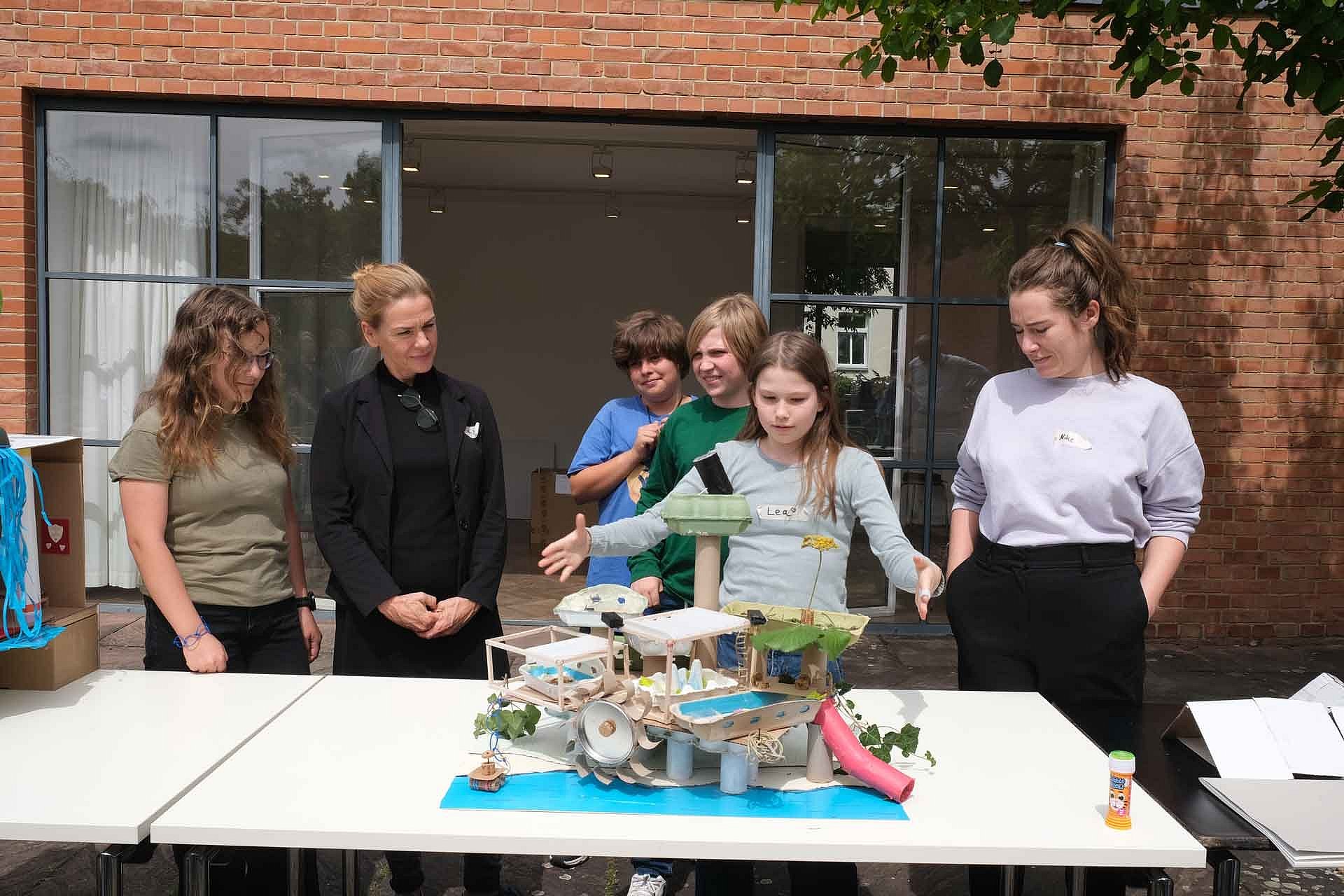
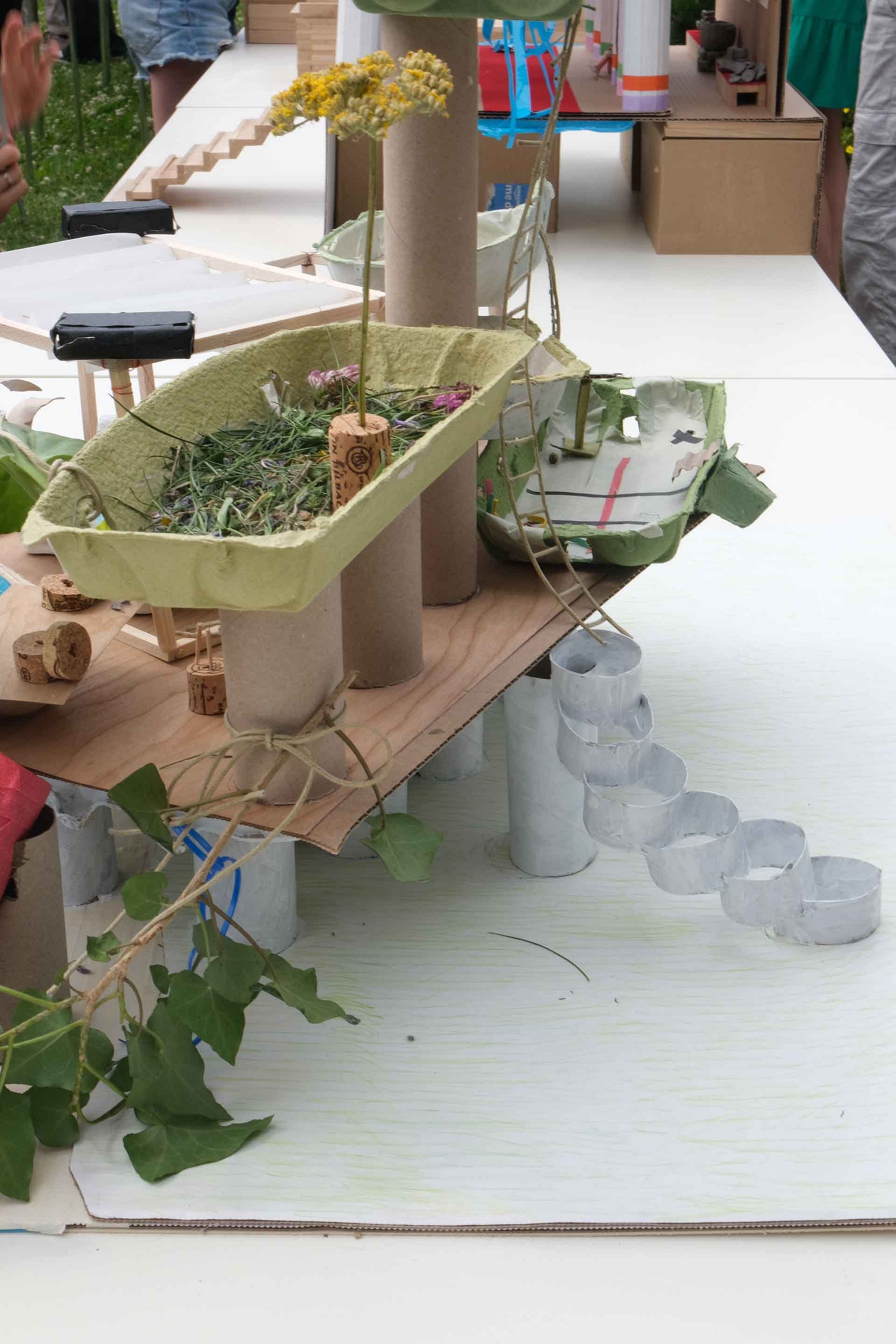
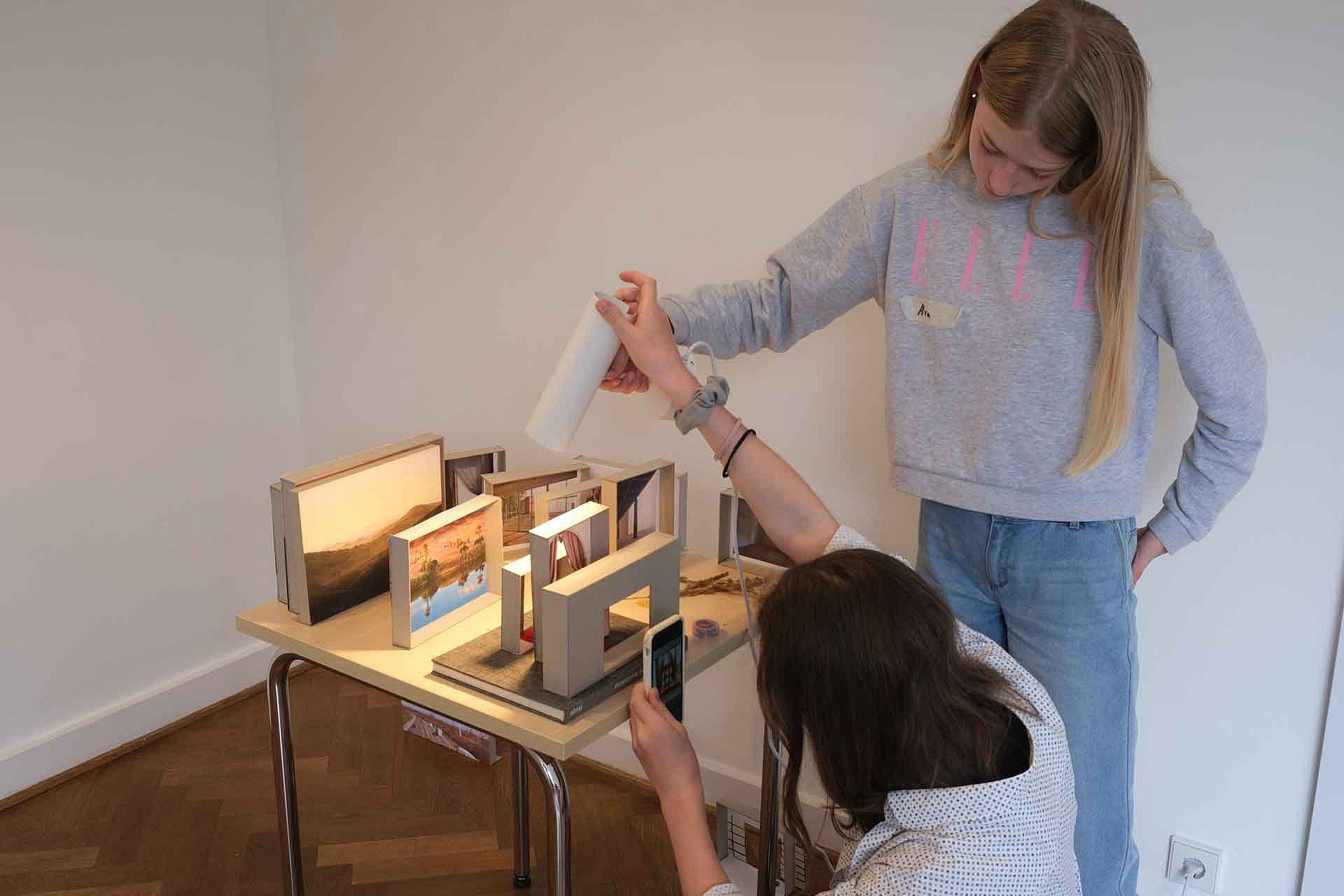
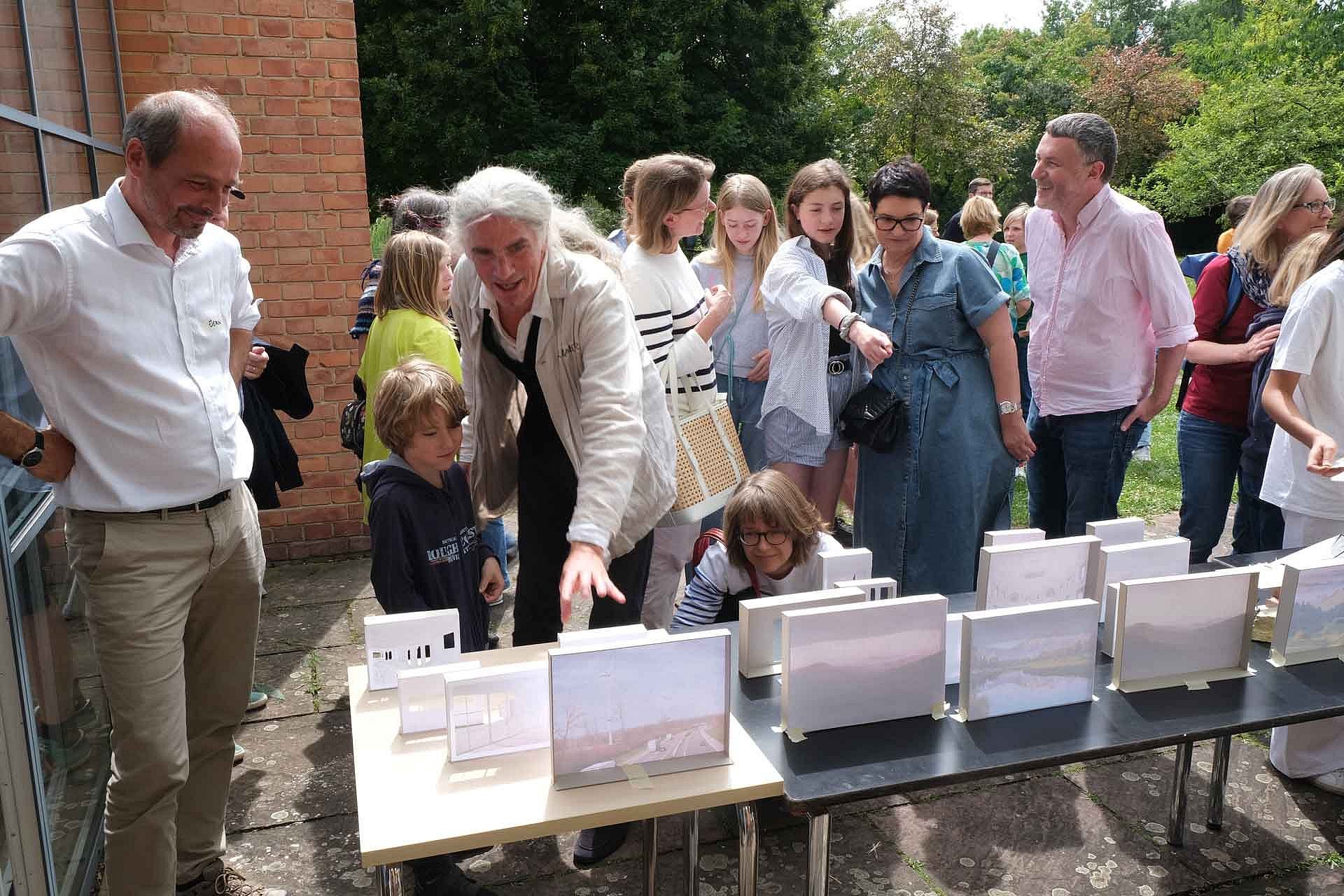
After all, presenting the results to the parents is also part of the educational process. On this unusual Sunday, the solid metal tables have been set out in the garden. On them stand the models and lie the many drawings that the children and young people have produced over the last two days. The variety of materials is particularly striking: cardboard and wooden blocks, modelling clay and paper, columns made of plastic straws and rooms made of egg cartons.
“The model-making here has been very sustainable – in some cases using recycled materials,” says Miriam Plünnecke from the Federal Office for Building and Regional Planning. This, too, is in keeping with the spirit of the two role models, Schinkel and Mies, who always reflected on the interplay between nature and the built environment. Every building designed on the tables is highly individual, bold and innovative, attests Ursula Steinhilber.
This is a museum of the future
Fanny
Your group begins a brief round of presentations on the building projects. Elis and Fanny talk about the idea of a house designed to bring together all the group members’ dreams and visions of an ideal building. They point to the grand portico, which forms the centrepiece of their design and is inspired by Karl-Friedrich Schinkel’s Altes Museum and its colonnaded façade. Commissioned by King Frederick William III, the museum was built by Schinkel between 1825 and 1830. To this day, it remains one of the major works of German Classicism. The group’s design also incorporates a museum. “Because we were so impressed by and enjoyed the guided tour on Friday,” explains Fanny. The austerity of the Classicist columned hall is broken up by a swing. “On which everyone can move however they like,” says the group. Trees have been planted on the roof and a water-fed stream runs through the building, in which one can also bathe. “This is a museum of the future,” says Fanny.
Everyone should feel at home at this school
Lea
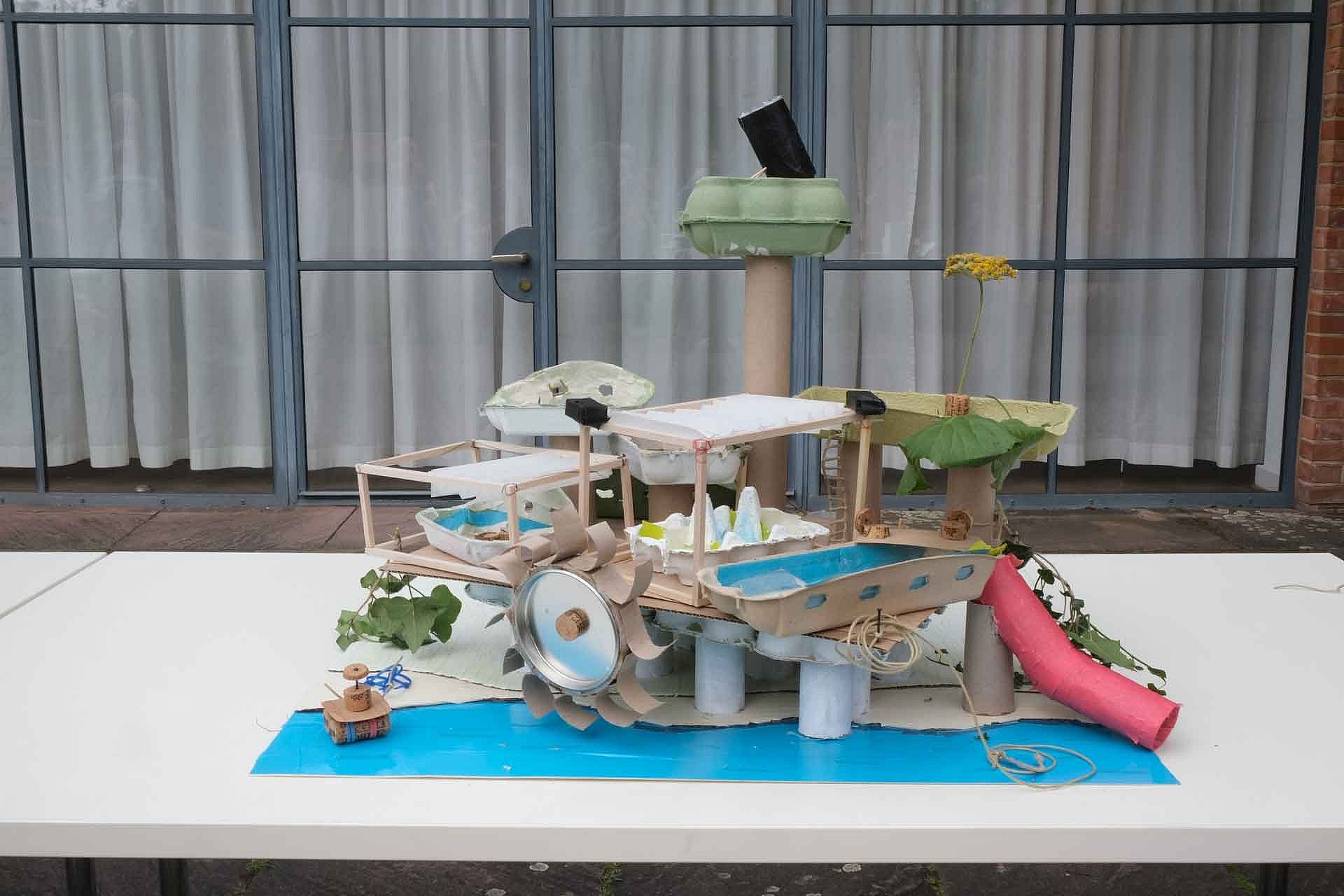
Miriam Plünnecke’s group is also committed to the future. On pontoons, the children and young people have designed a model of an innovative school that generates its own energy using hydroelectric power and wind turbines, features open, light-filled spaces for art and astronomy lessons, and from which pupils can go for a swim in the sea at the adjoining beach. “We were particularly inspired by Mies van der Rohe’s light and modern architecture,” says Lea. The entire model was made from recycled materials. “Everyone should feel at home in this school.”
This fosters a sense of community and social cohesion
Johanna
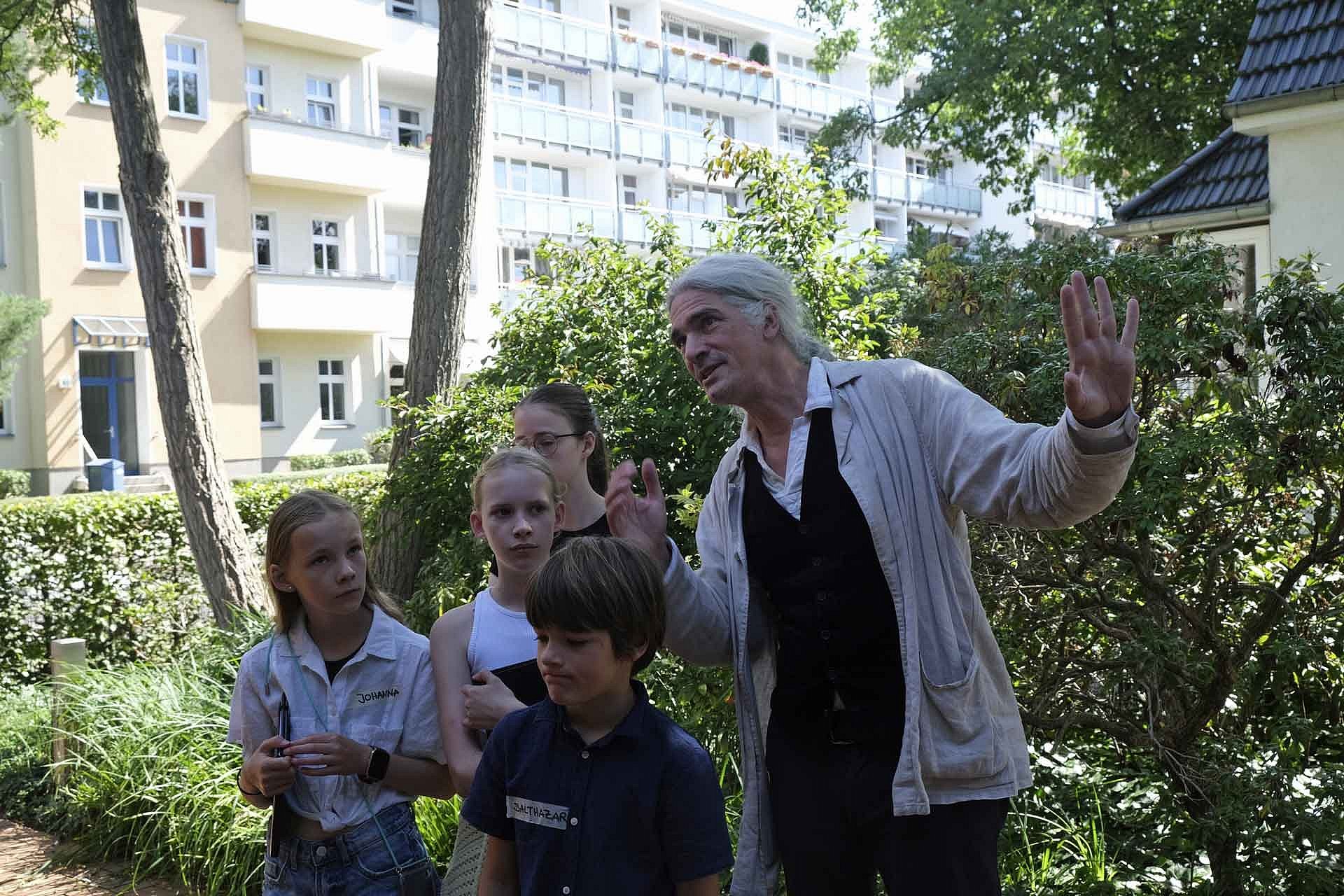
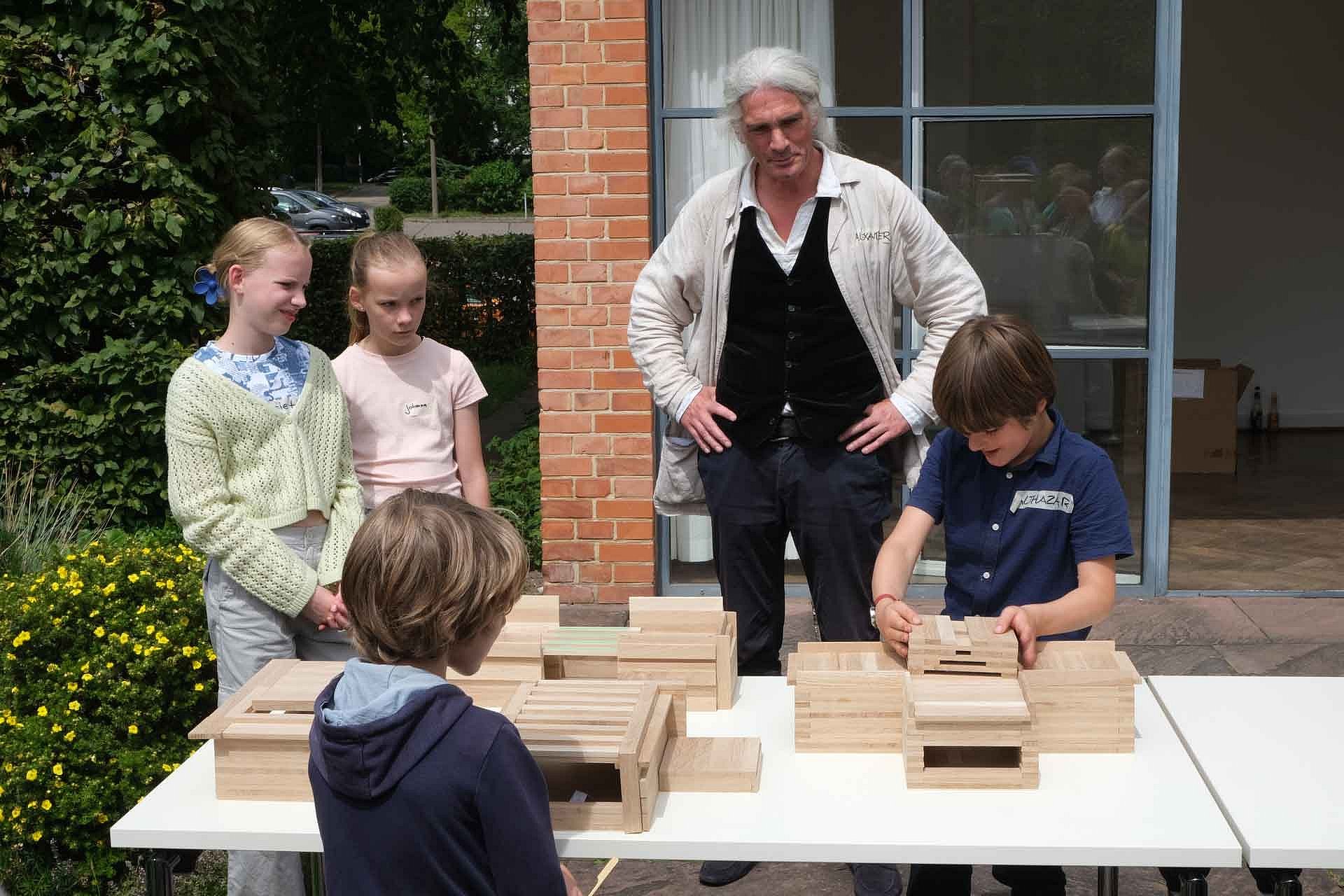
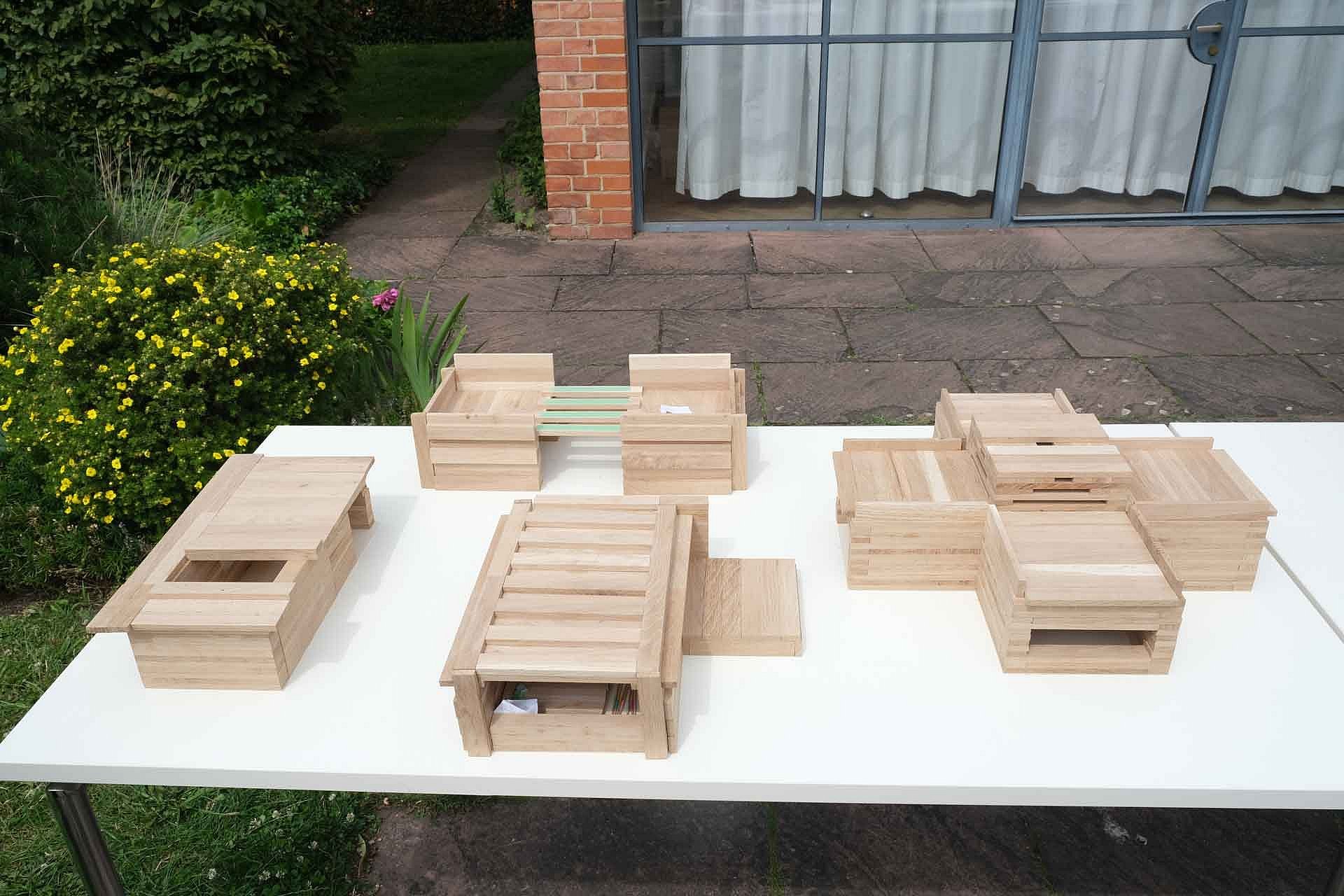
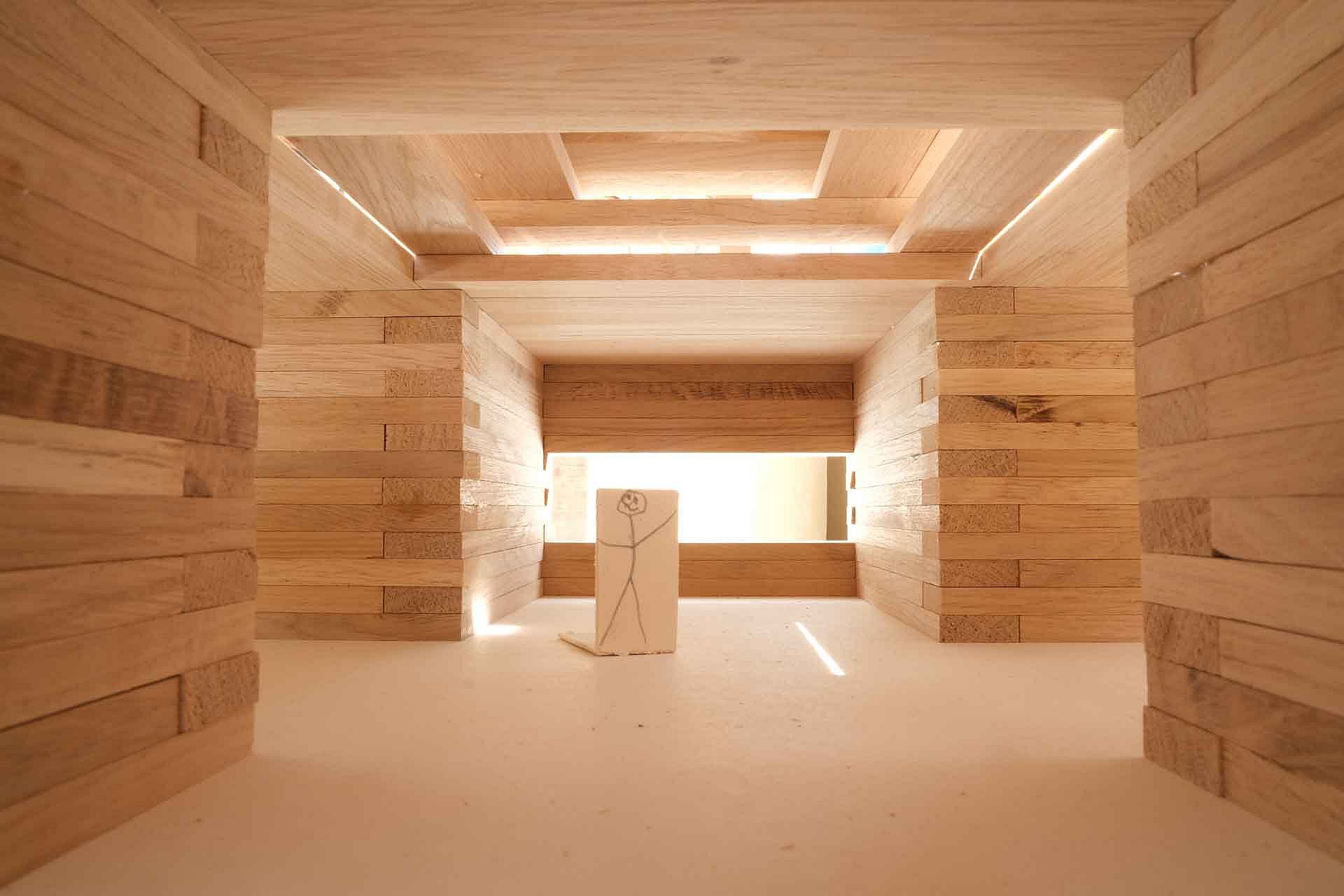
Alexander Schwarz’s group, too, has dedicated its designs to the shared experience of space, just as Mies and Schinkel always had in mind. This has resulted in four minimalist model houses, assembled using small oak parquet tiles. Each of the pavilion-like houses, reminiscent of the early works of Mies van der Rohe, is flooded with light and dominated by small verandas and entrance porches facing the communal forecourt. “Everyone looks at the other houses and at the shared space of the small settlement. This fosters a sense of social interaction and communal living,” says Johanna. “We were particularly inspired by the large windows in Schinkel and Mies’s buildings.” There is light everywhere in the buildings, whether in the Altes Museum or the Neue Nationalgalerie.
Everything here went exactly to plan
Paul Kahlfeldt
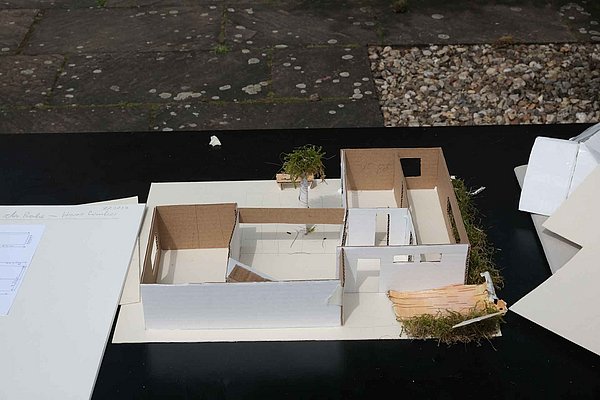
Paul Kahlfeldt’s small architectural collective, on the other hand, analysed the Lemke House down to its floor plans. Through detailed technical drawings, the artistic concept underlying the building was extracted from the observation and surveying of the house. “Everything here was done to exact measurements,” says Paul Kahlfeldt. Building on this, the group added new elements – transporting the Lemke House into a utopian future, with additional floors for activity spaces for children and young people, ramps, sculptures, trees and green spaces.
Both have created spaces that reflect the world whilst at the same time forming worlds of their own
Alma on Mies van der Rohe and Karl Friedrich Schinkel
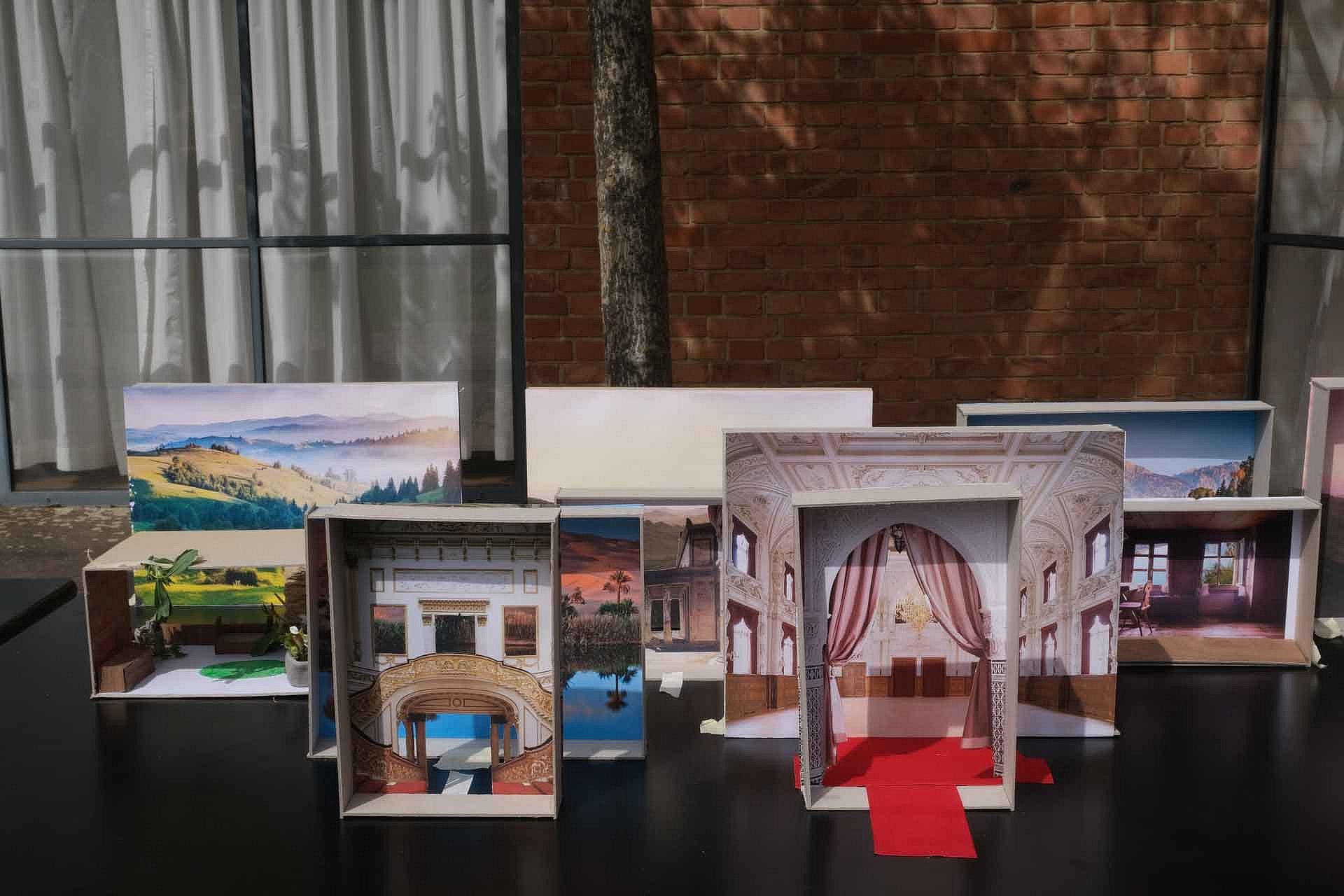
Jörn Köppler’s group, on the other hand, initially examined the question from an architectural-theoretical and philosophical perspective: what do the discursively charged concepts of beauty and truth mean in architecture, and what do they signify for the design process? “Mies van der Rohe and Karl Friedrich Schinkel each developed and shaped their own unique aesthetic and their own particular conception of beauty in architecture. We wanted to get to the bottom of that,” says Köppler. “Both created spaces that reflect the world whilst simultaneously forming worlds of their own,” adds Alma.
Berlin has many new fans of Schinkel and Mies
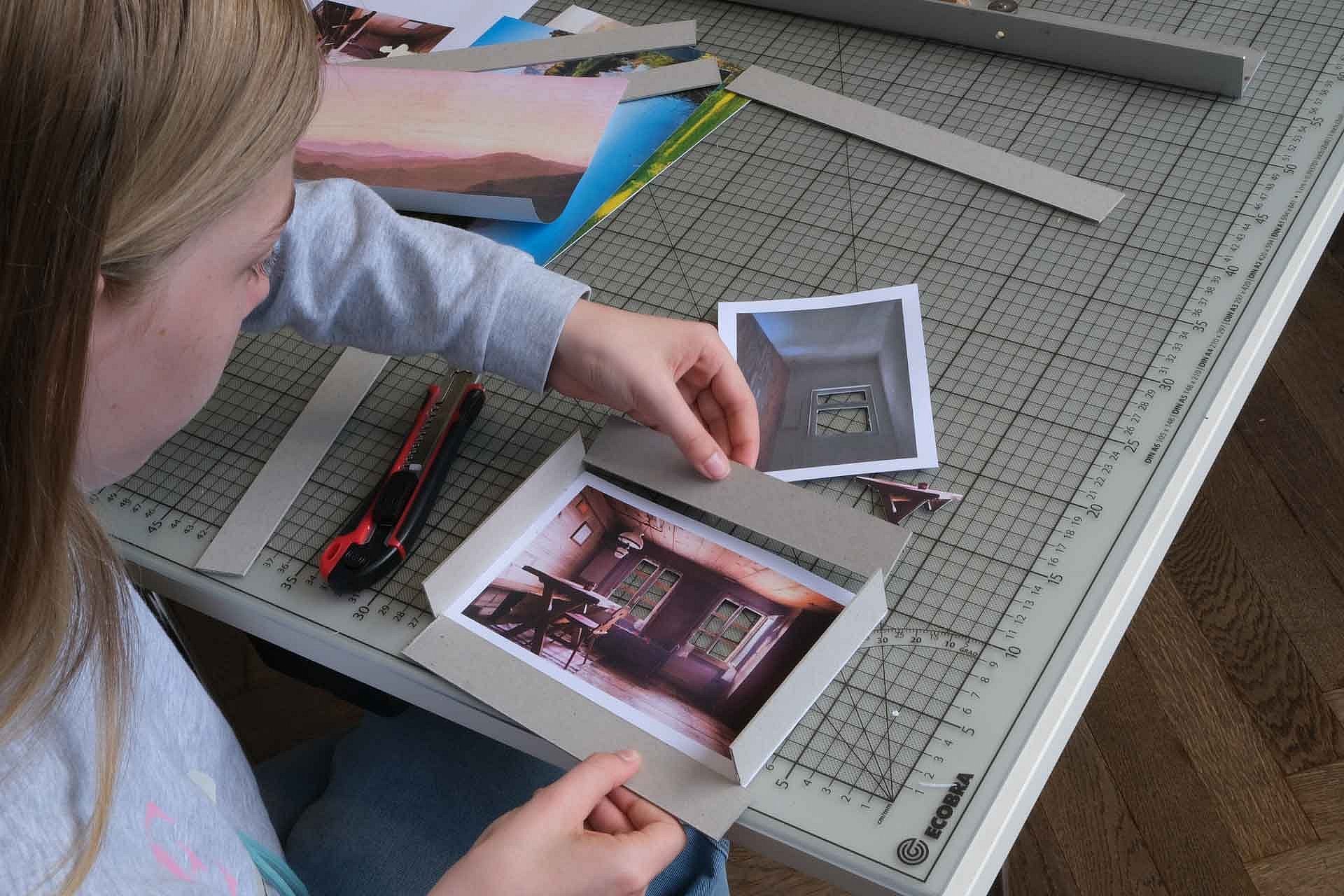
The exhibition has produced models that explore, in particular, the interplay between architecture and nature. “One of the most important foundations of van der Rohe’s work,” says Mathilde. Looking through the large windows of the small house models, one sees vast mountain landscapes, orange-red sunsets or picturesque beaches. “Mies and Schinkel loved nature,” says Alma. The spaciousness of the new National Gallery and its transparent glass façade inspired them; for Schinkel, it was the large windows in the Friedrichswerder Church and the massive columns in the Altes Museum. “Both bring the world into the space and, at the same time, radiate their own ideas and intellectual world outwards,” she says.
The Future of Architecture
On this summer weekend, the light-filled rooms of the Mies van der Rohe House have also been transformed into spaces brimming with ideas, global perspectives and utopias, very much in the spirit of the great role models Mies van der Rohe and Karl Friedrich Schinkel. A catalogue is also due to be published soon, featuring the models created by the city’s youngest architectural practice. “Children and young people have a unique perspective on their environment and architecture,” says Wita Noack. This perspective opens up new worlds for adults too, and a new universe of ideas and utopias that offers great hope for the future of architecture.