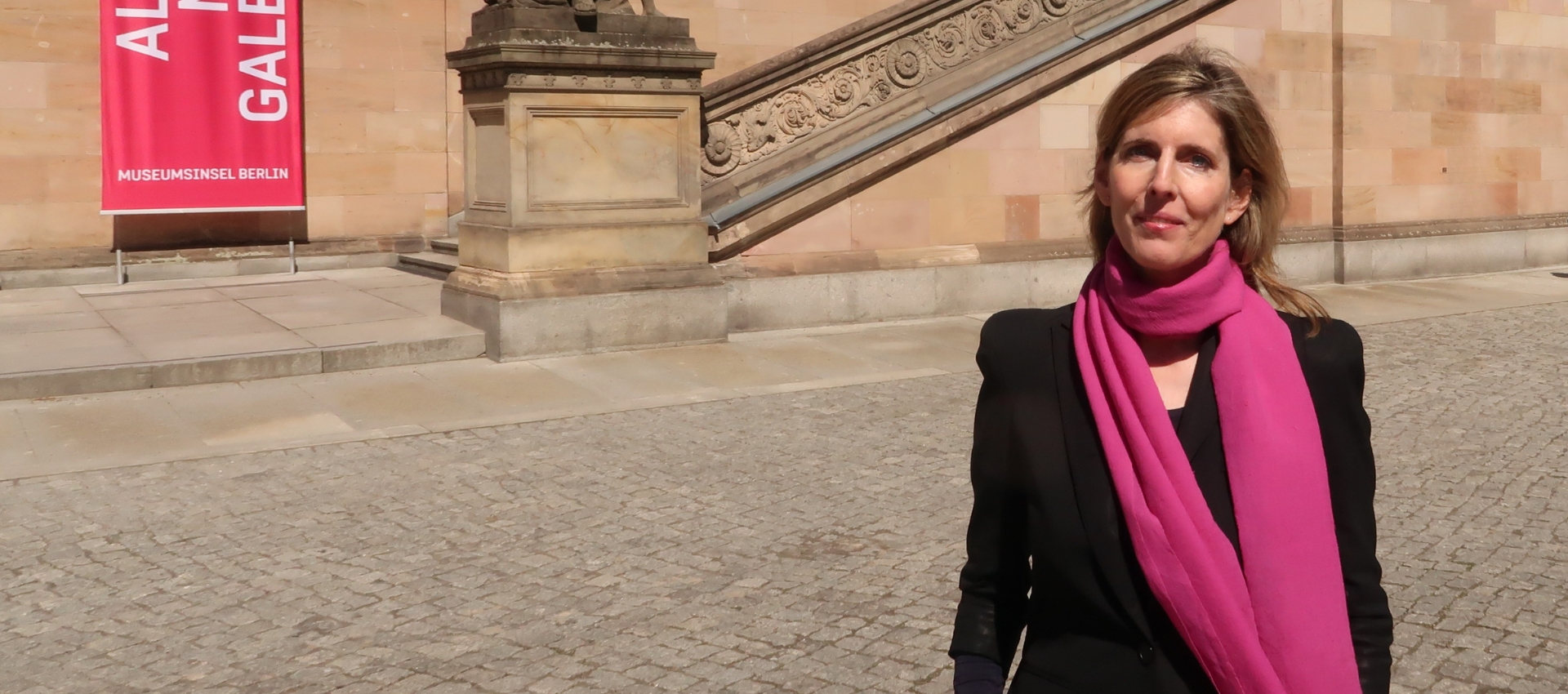
Numismatics stands to benefit greatly from digitalisation. This is demonstrated by ‘Imagines Nummorum Graecum’, the major new project launched by the Academy.
How the sail billows in the wind as Isis Pelagia holds it in both hands! With her robe blowing in the breeze, the goddess stands on the galley, one foot slightly forward: very young, very feminine, full of movement. This is how she is depicted on a bronze coin from Cyme, the ancient Greek port city in western Asia Minor, minted between 253 and 268 AD. In the Coin Cabinet of the Staatliche Museen zu Berlin, she bears the object number 18202004.
It is an iconography that arouses curiosity, an image that inspires and evokes associations of strength, beauty, dynamism – and also of the sea, which connects people. No wonder, then, that it has become the logo for the ‘Imagines Nummorum’ research project, the new major academic initiative that is opening up ancient visual knowledge in new ways. For the surfing goddess shows that numismatics in Germany is back. And it is on the rise.
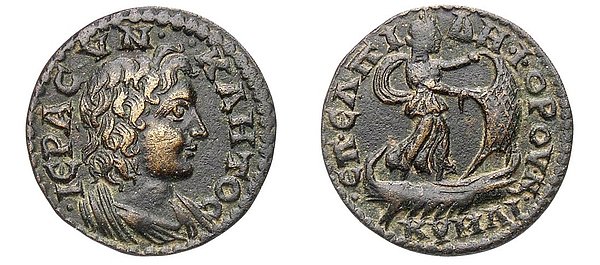
Reverse: Isis Pelagia sailing on a ship to the right, holding the sails with both hands;
Kyme, 200–268 AD [circa]
Fig.: Numismatic Collection, State Museums of Berlin/Reinhard Saczewski
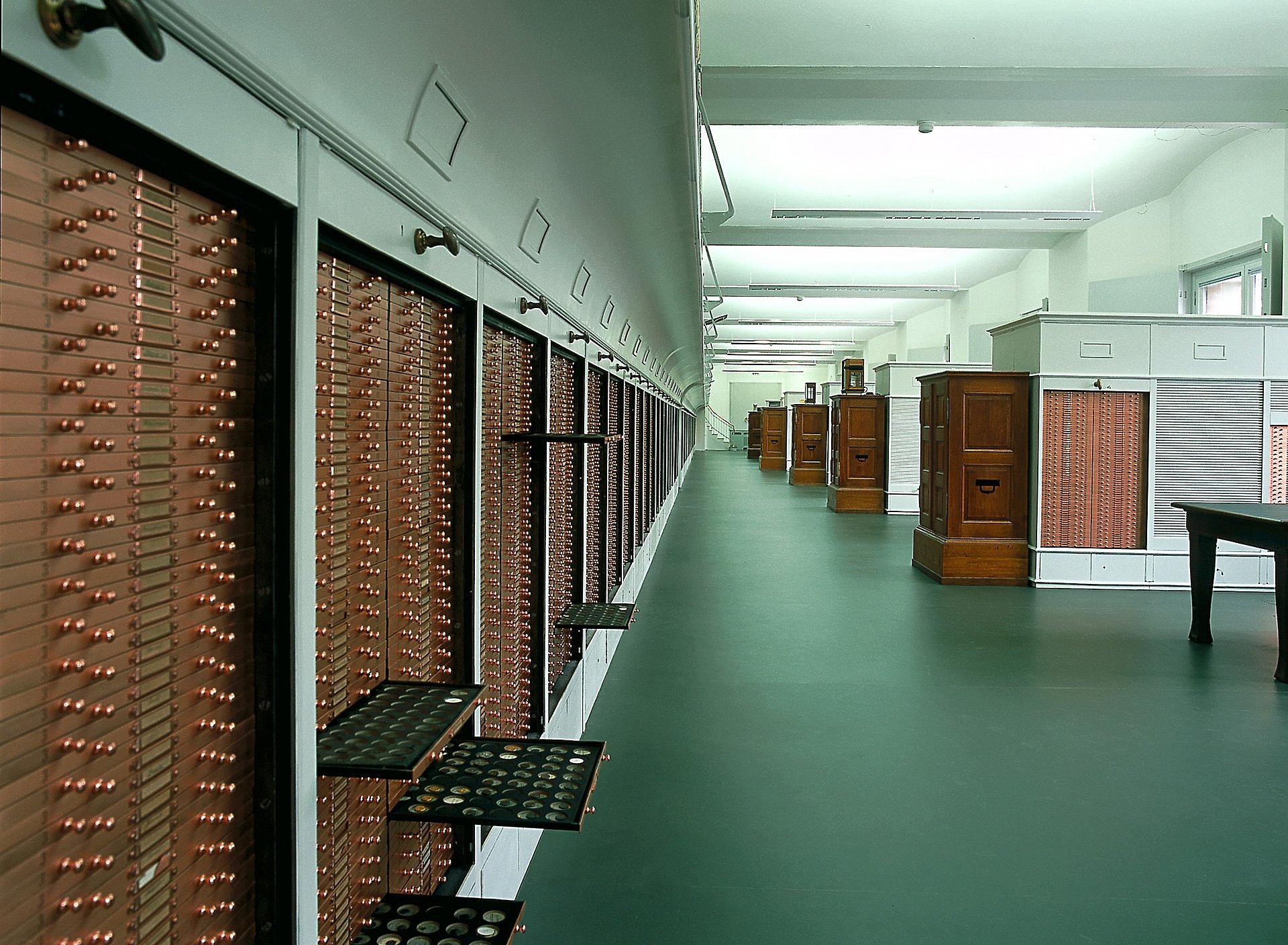
This is primarily down to digitalisation. For a long time, the Coin Cabinet’s collection of over half a million coins lay dormant in the vault, their quiet beauty accessible only to a handful of scholars, passed down from one generation of curators to the next. Now, more than 60,000 of them can be viewed online, at any time, by anyone, anywhere, beautifully photographed, explained in detail and, above all, linked and globally networked, so that further research is possible and entirely new research questions arise.
On which coins can Isis, the bringer of good fortune, still be found? How has her image changed over the course of history? What paths has it taken? And what can we learn from this? Online, it becomes clear: the coin image of the goddess Isis Pelagia spread from Alexandria throughout the eastern Mediterranean; it travelled through time and space, passed from hand to hand, with continuities from antiquity through the Renaissance to the present day – a vehicle of imagery, entirely in keeping with the ideas of Aby Warburg, the famous art historian.
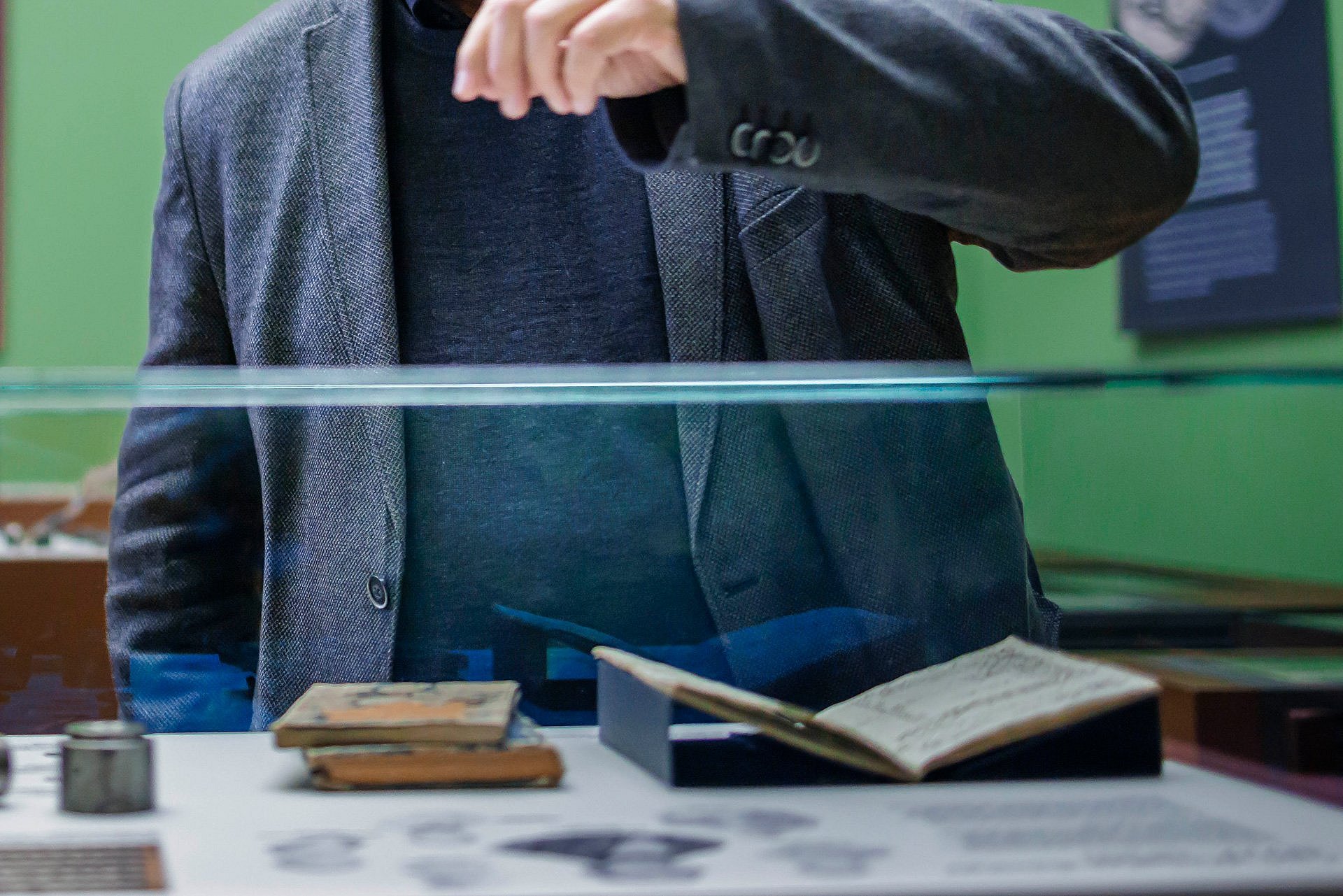
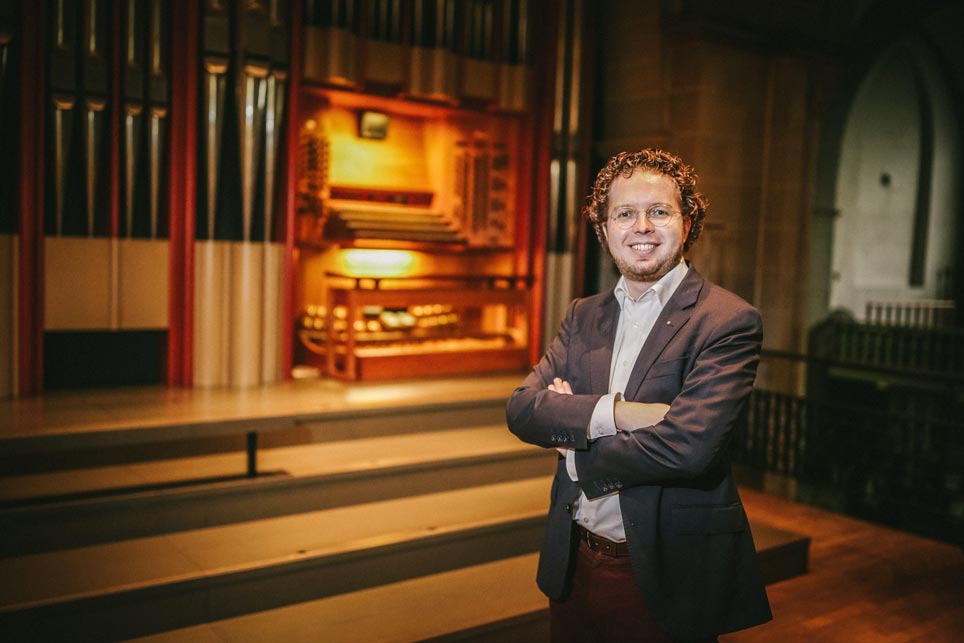
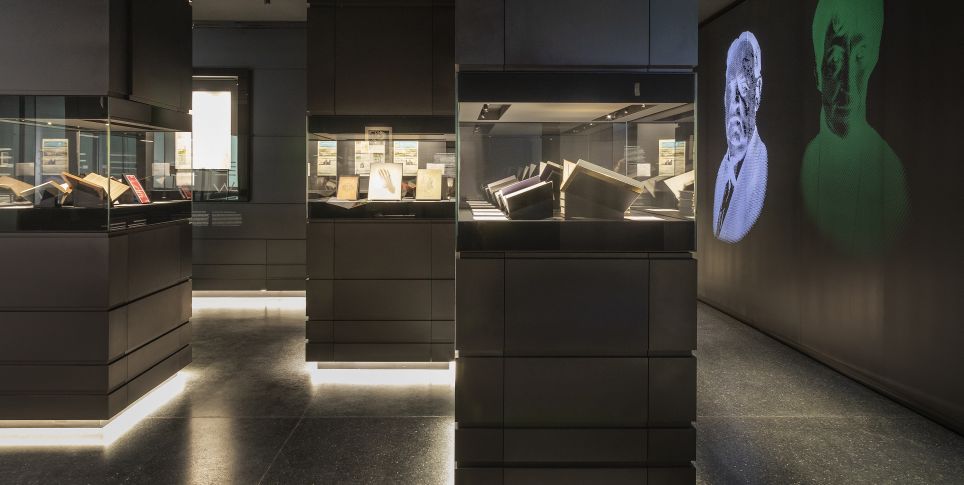
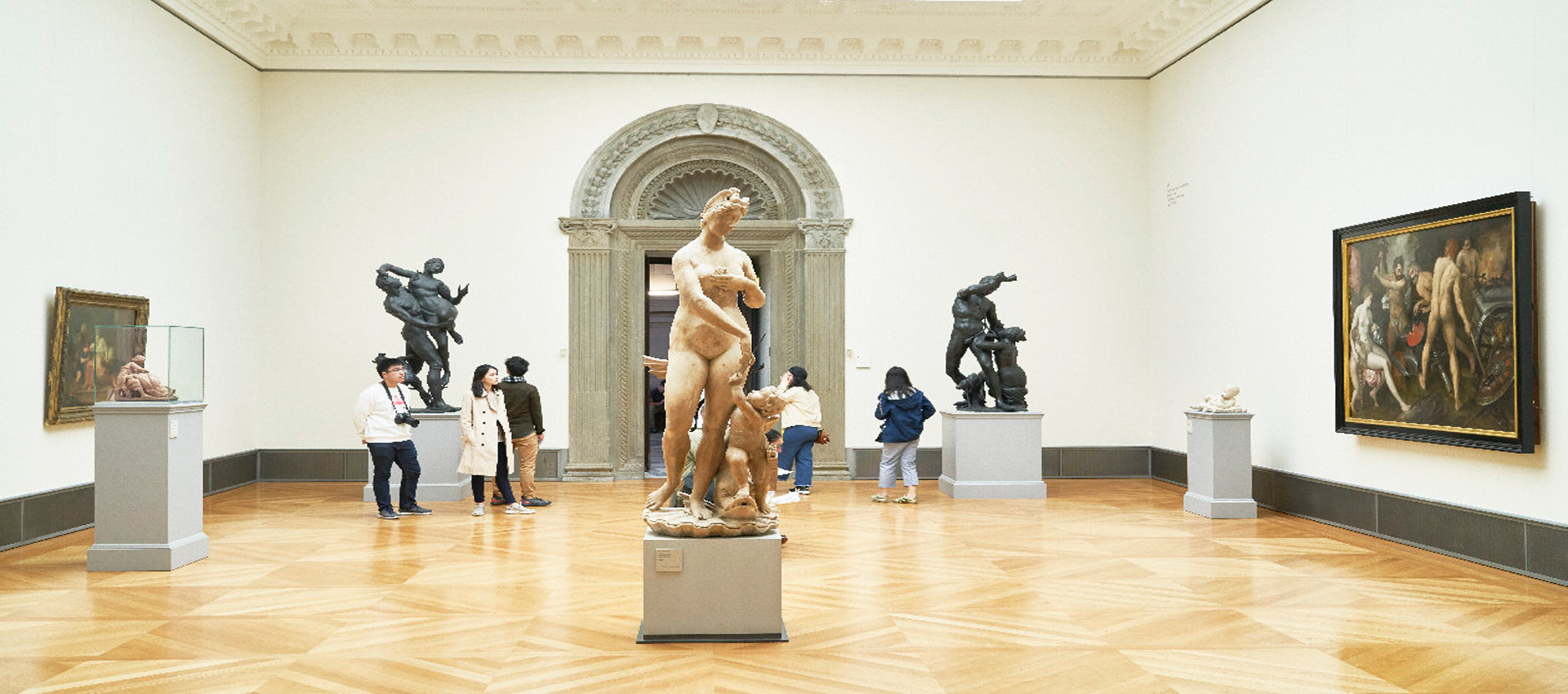
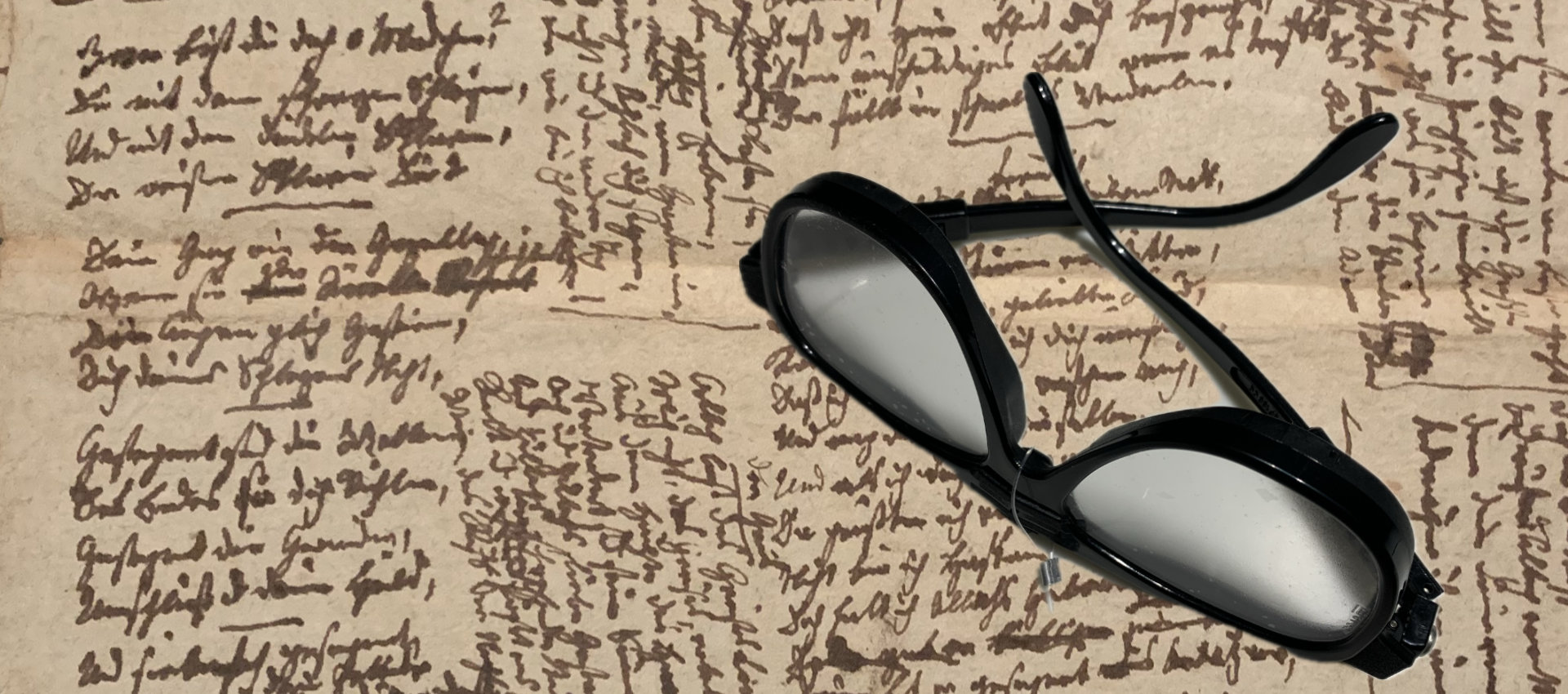
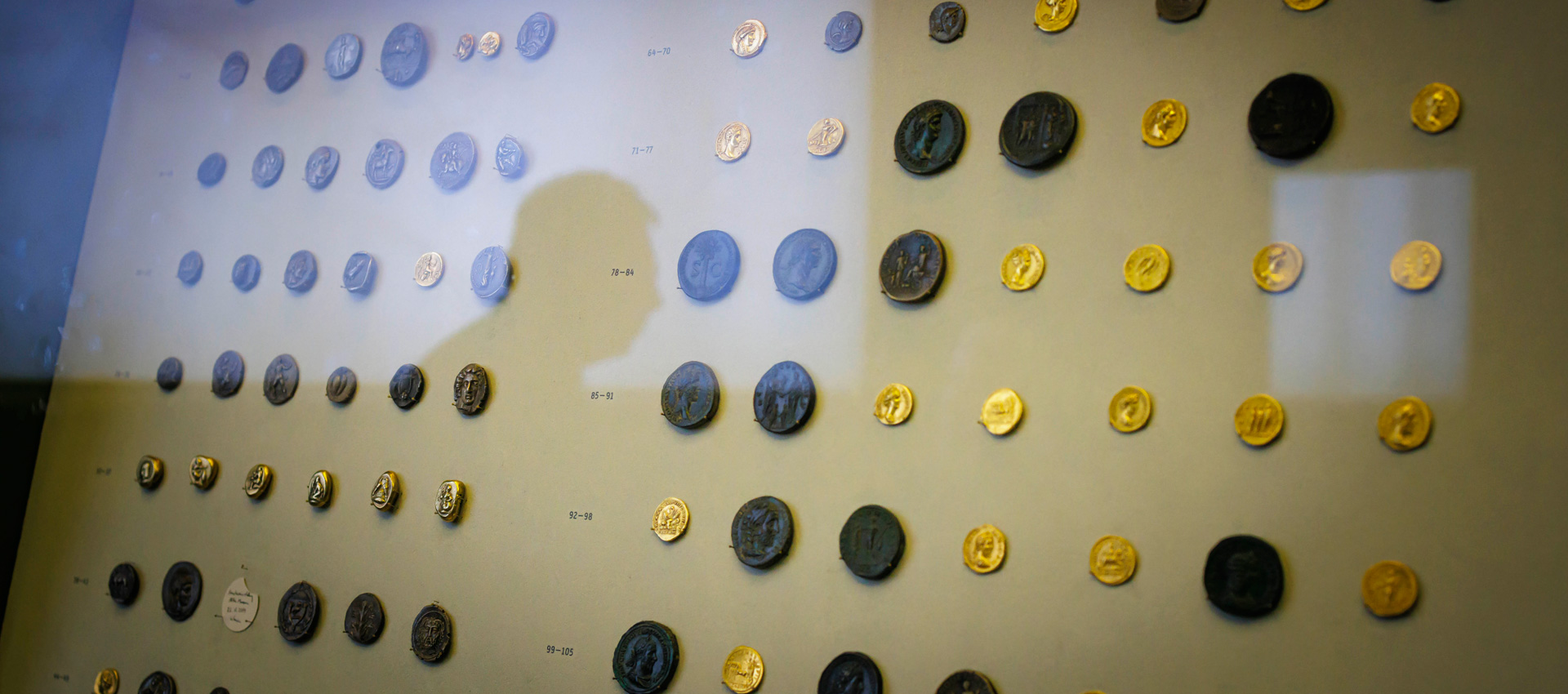
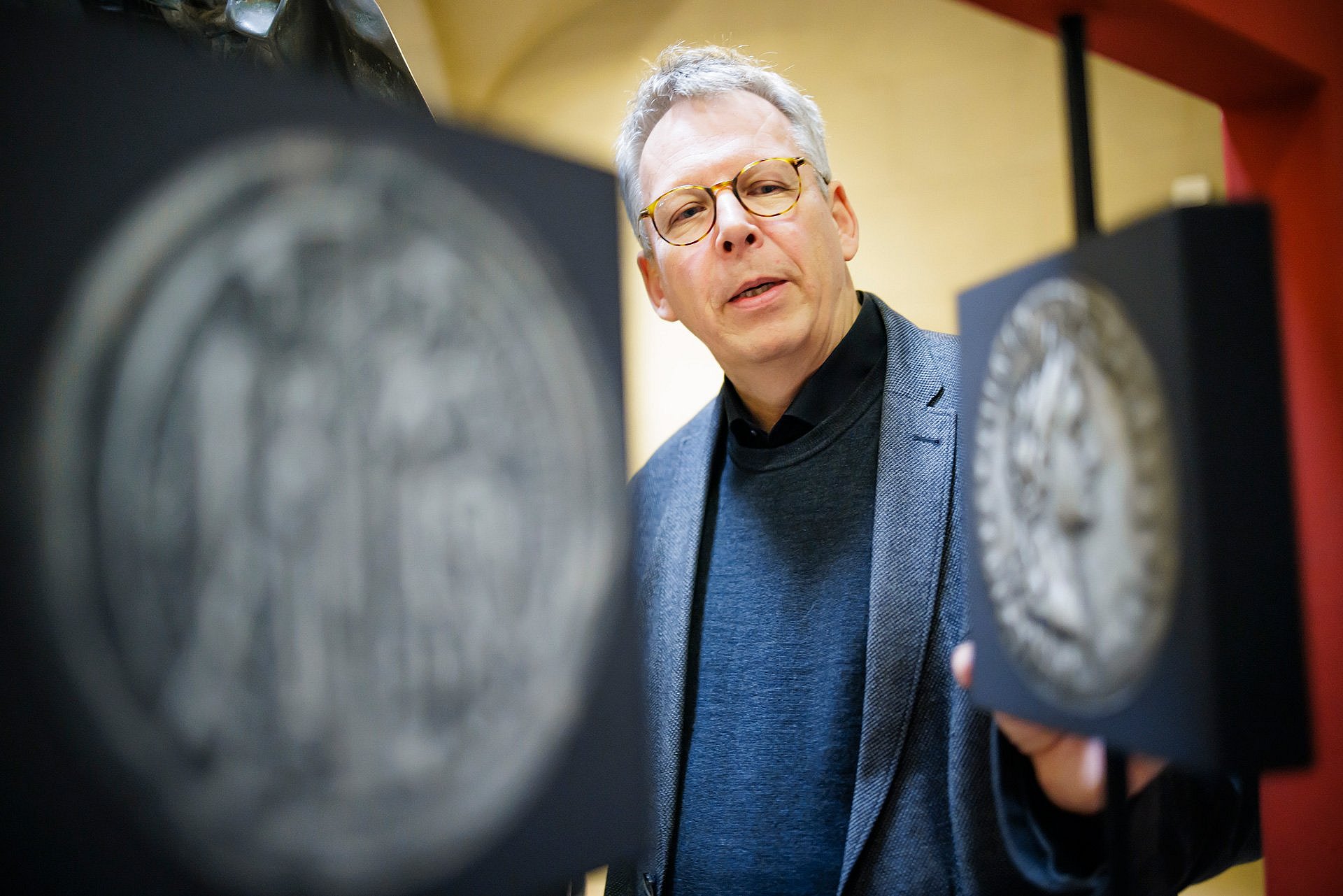
“The digital transformation is a godsend for numismatics,” says Bernhard Weisser, director of the Numismatic Collection. And it is certainly true that, up in the Bode Museum, in Galleries 242 to 246, at the back on the right, you have to press your nose right up against the glass display cases to get a proper look at the coins on display there. What these gold, silver and bronze artefacts from bygone eras tell us – this magnificent treasure trove from antiquity, the Middle Ages and modern times – is often only revealed to those with a trained eye, plenty of patience and, ideally, a pair of reading glasses. In the truest sense of the word, usually only one side of the coin is visible. And the inscriptions are brief – simply because there is little space beneath the small objects.
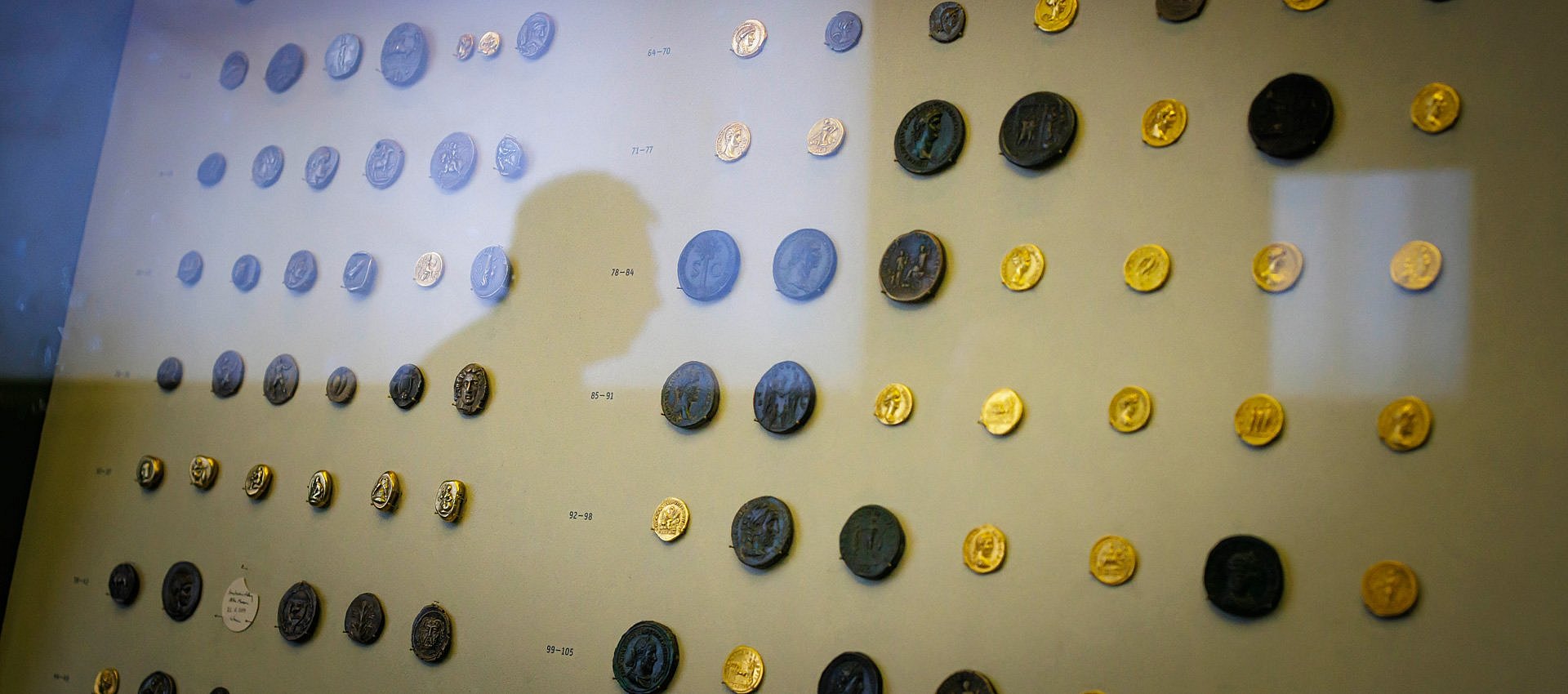
It’s a completely different story online, where the digital twins really shine. Bernhard Weisser speaks enthusiastically about the early days, when they boldly seized the new opportunities: in 2005, the Numismatic Cabinet found the funds for a first virtual exhibition catalogue. “That was our heroic feat,” says Weisser proudly today.
The first coin to be given a new lease of life on the internet was a tetradrachm from the ancient city of Abdera. Barely two years later, the major interactive online catalogue was launched; since then, it has been continuously developed with the help of private sponsorship and has long been linked to 50 numismatic collections in 31 institutions across several countries. A vast treasure trove, not just for specialists.
Isn’t it fascinating to own, touch and hold a coin that Cleopatra might well have had in her purse?
After all, coins and medals fascinate many people. They possess a special aura: unpretentious, authentic, often bearing signs of wear. Isn’t it appealing to own a coin, to touch it, to hold it – a coin that Cleopatra herself might once have carried in her purse? Weisser explains that, in this country, only books are collected more frequently than coins. And that many collectors contribute to research: that they report on individual finds and even give thought to research methods. “Citizen science has always existed in numismatics,” says Weisser.
Exchanging ideas with dedicated amateur collectors, with members of the public, is therefore particularly important to him. Many of them have taken on sponsorships for individual coins. They support the work of the Coin Cabinet and are delighted when their name is associated with well-preserved coins. “We don’t want to put people off. This also means describing the coins in the online catalogue in a way that is understandable to non-numismatists,” says Weisser. That is why he avoids using technical terms: a kerykeion, the ancient symbol of heralds, is simply referred to online as a herald’s staff, for example.
Coins are like time capsules, just waiting to be deciphered. The major Academy project “Imagines Nummorum” is now giving this a further, powerful boost. It has a budget of around 16 million euros, will run for 25 years, thus offering considerable planning security, and will once again significantly strengthen the Numismatic Cabinet as the largest centre for numismatic research in Germany, if only because four additional researchers can now be recruited to put the project into practice.
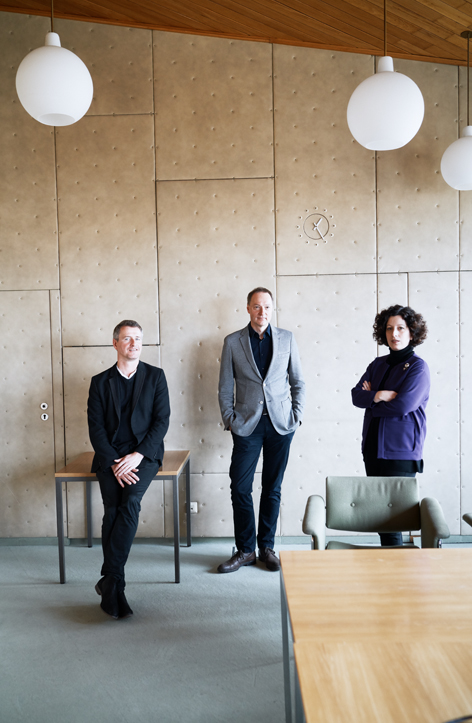
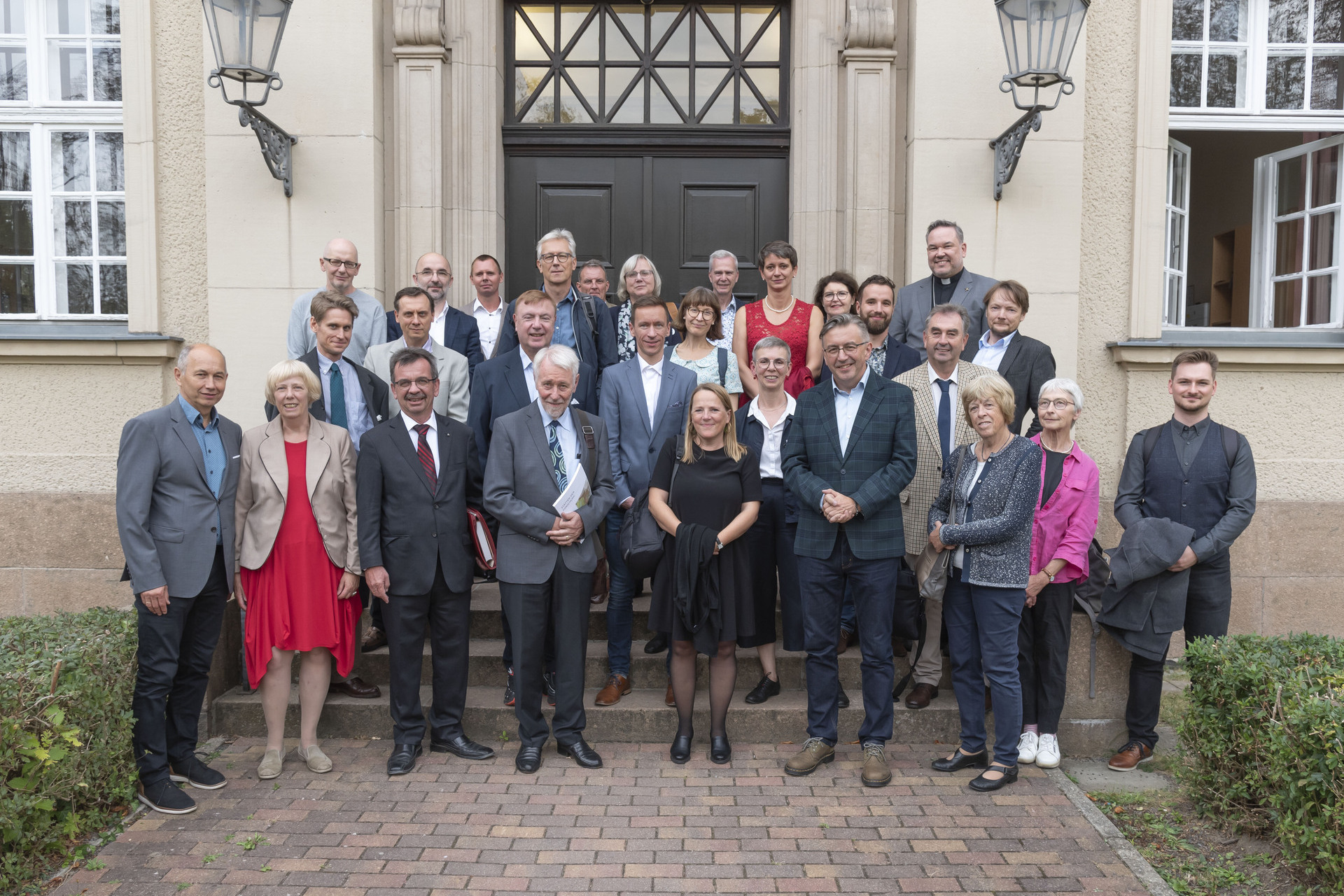
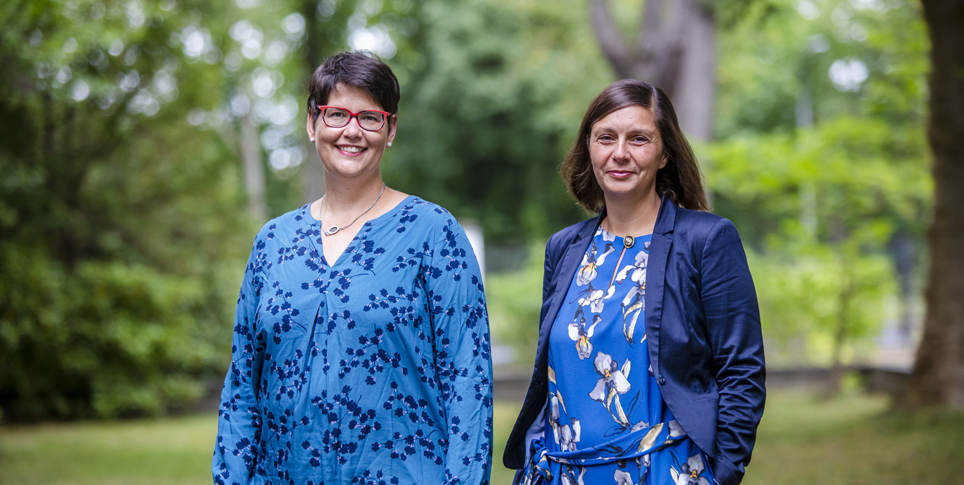
Bernhard Weisser is leading the project together with Annette Haug from the University of Kiel and Ulrike Peter from the Berlin-Brandenburg Academy of Sciences and Humanities. It is a friendly, passionate collaboration between the Academy and the Numismatic Cabinet, one that has stood the test of time for almost two hundred years now and dates back to Theodor Mommsen. The great historian was a staunch advocate of numismatics: he argued early on that coins should be catalogued across collections. And that is precisely what is now becoming a reality thanks to digital methods.
It is a friendly and passionate collaboration between the Academy and the Numismatic Cabinet.
One aim of the new project is to publish all the ancient Greek coins held by the Numismatic Collection – all 114,845 items. “To meet the deadline, we plan to put 3,700 coins online each year. We need about an hour for each coin. That’s how long it takes to fill in all the necessary fields, add links, and research the literature – in other words, to comprehensively contextualise the ancient coins as carriers of images and text,” says Weisser. “The great thing about it is that our work is visible from day one.”
This is how a vast image database – an iconographic thesaurus – is created, for which new standardised data has been specifically developed. Long gone are the days when each curator had to make their own notes on where a coin came from, what they knew about the medallist and die-cutter, and about collectors and previous owners.
This knowledge is now recorded in a standardised, systematic and compatible manner. Every coin is described in detail: what image can be seen on it? Why was it chosen? How has it been interpreted over time? And what is the relationship between image and text?
Artificial intelligence supports this work. It is constantly being trained to recognise the images even better: Weisser and his team expect major progress in this area over the next few years. This does not render the museum curator redundant; on the contrary. However, the possibilities are expanding and the job profile is changing.
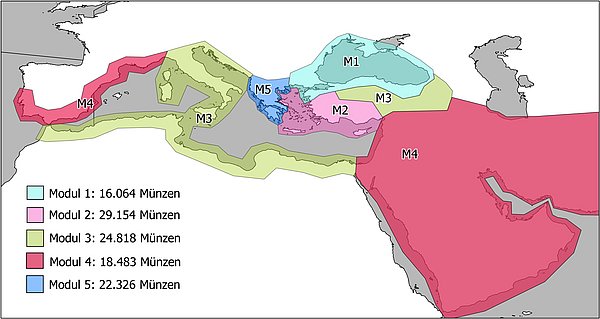
One thing is clear: this new project provides impetus for further research, extending beyond numismatics and Berlin itself, for archaeologists, art historians and philologists. They might ask: why has one image been more successful than another? For some images have survived to this day, whilst others have been lost to history.
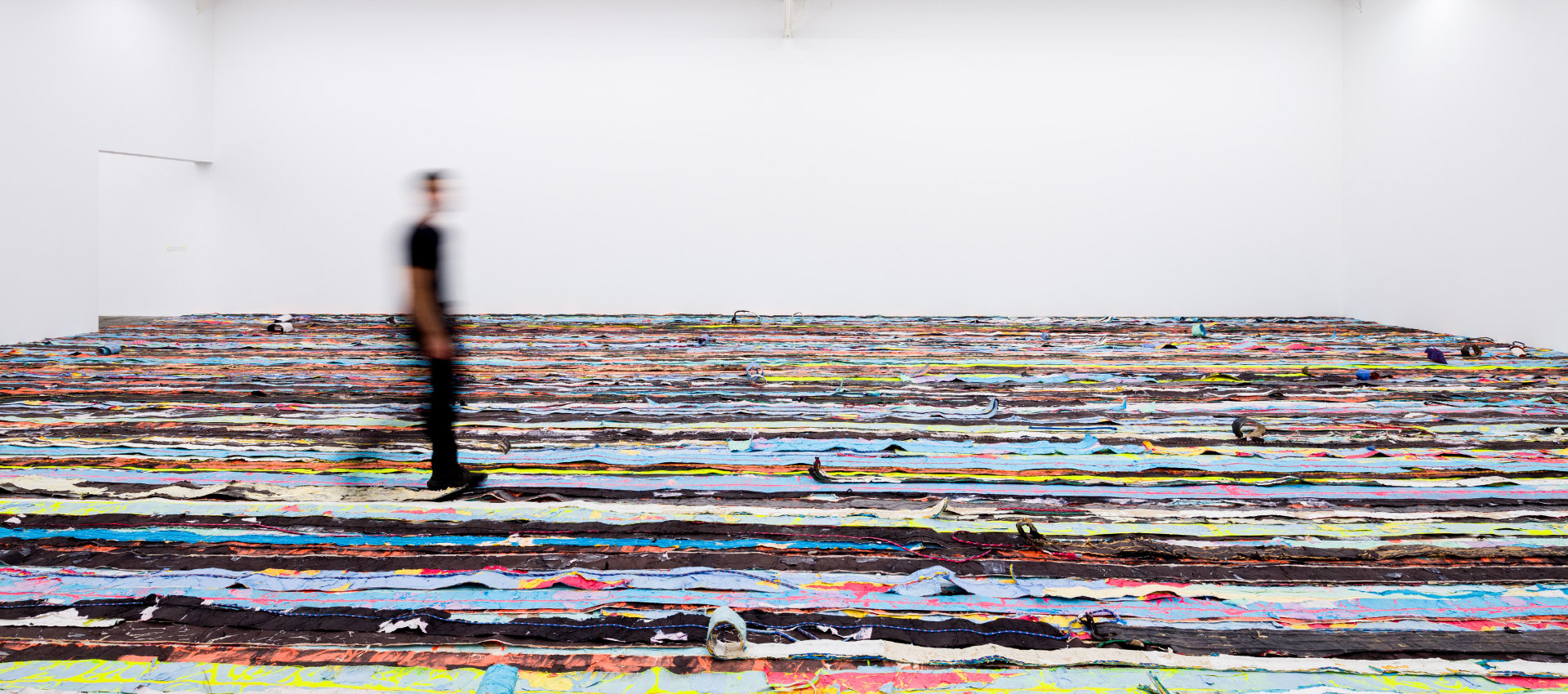
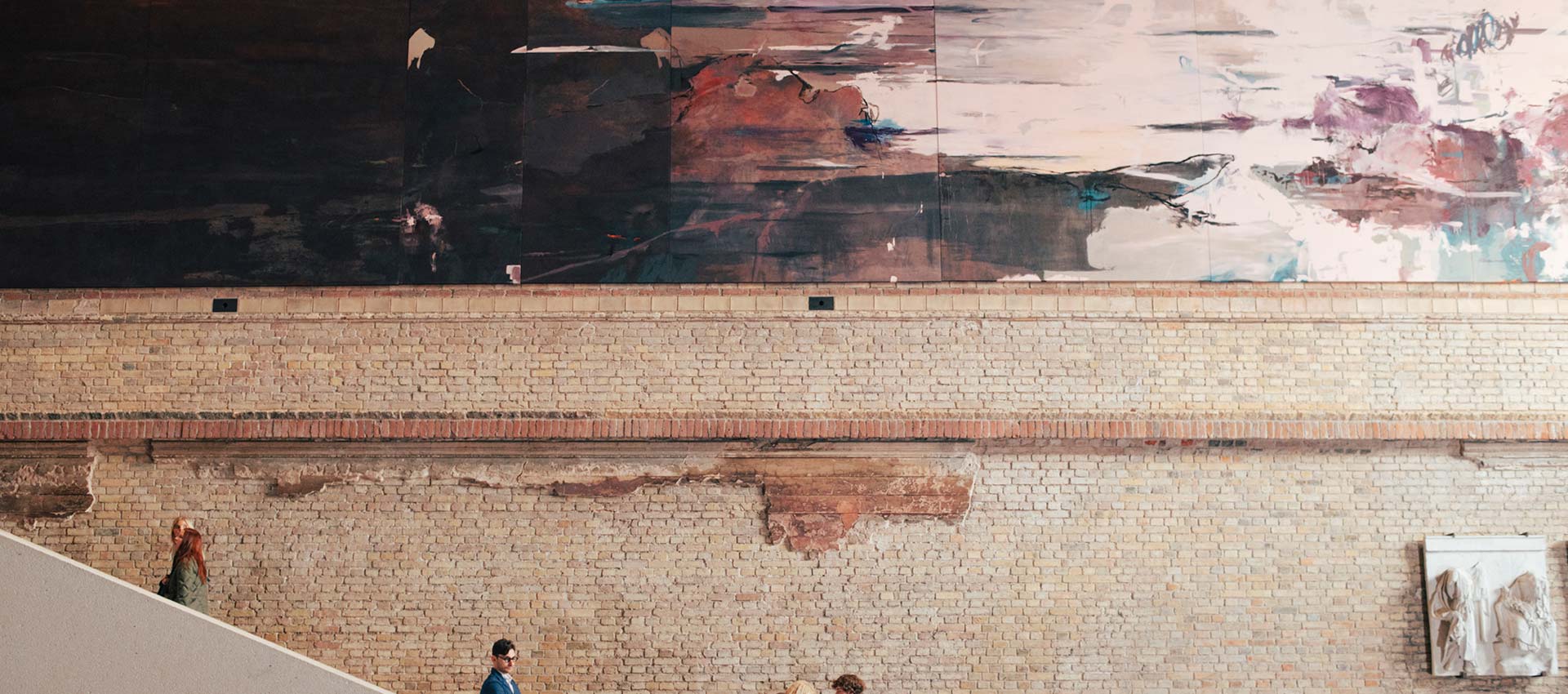
Weisser refers to Castor and Pollux, the divine twin brothers whose love transcends death and who remain very much present today: very close to the Coin Cabinet, in the Neues Museum, a spectacular, room-filling, modern work by the German-British artist Michael Müller is currently on display, which takes the ancient myth as its theme.
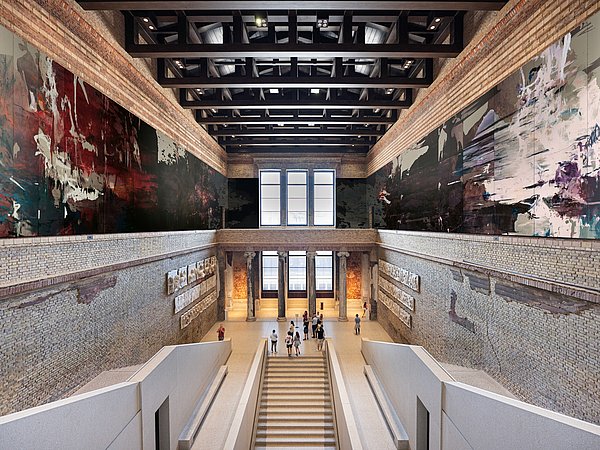
Isis Pelagia, on the other hand, the goddess who races across the sea, was soon forgotten. It is a good thing that Bernhard Weisser brought her back to life for the logo of “Imagines Nummorum: Thesaurus Iconographicus Nummorum Graecorum online”. He has now been Director of the Numismatic Cabinet for ten years. The Academy project is also the fruit of his labour. He is reinterpreting the cultural heritage and further developing the Numismatic Cabinet. And he is demonstrating just how diverse it is: not merely a museum, but also a significant centre of research.
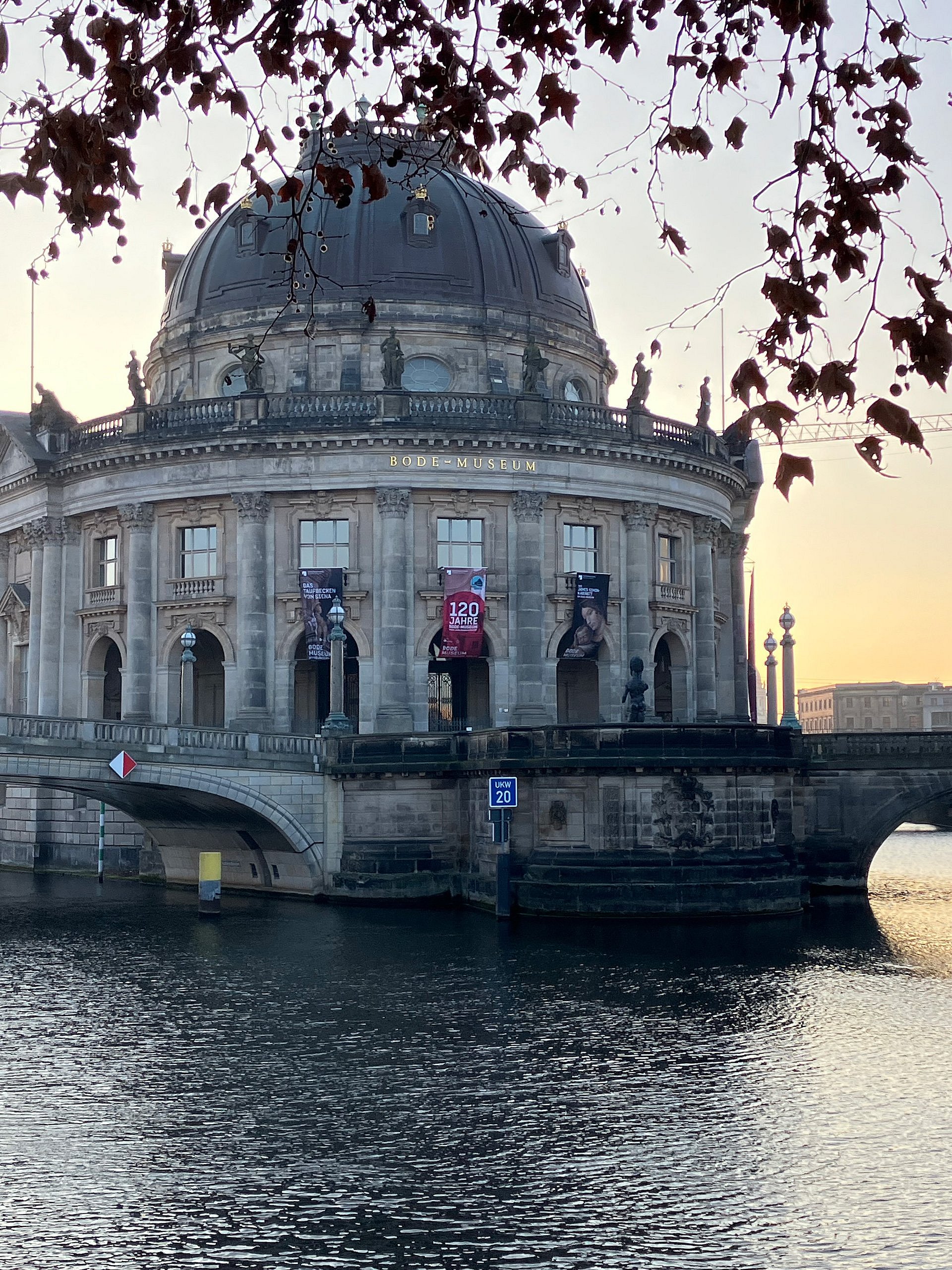
The Berlin Numismatic Collection
The Numismatic Collection of the Berlin State Museums is now the largest archive of ancient currency in Germany. More than 540,000 coins and medals are kept in the vault or on display in the various exhibitions on Museum Island.
Its history dates back to the 16th century, and it was established as an independent museum in 1868. It has changed considerably since then. Whereas visitors used to go to the museum to view a selection of coins and medals in display cases, more and more of these historical objects can now be viewed online in a virtual exhibition. Through standardised data, the collection is integrated into global research networks.
The Berlin Numismatic Cabinet has long been one of the world’s most important centres for numismatic research: comparable only to its counterparts in London, Paris, New York, Vienna and St Petersburg.
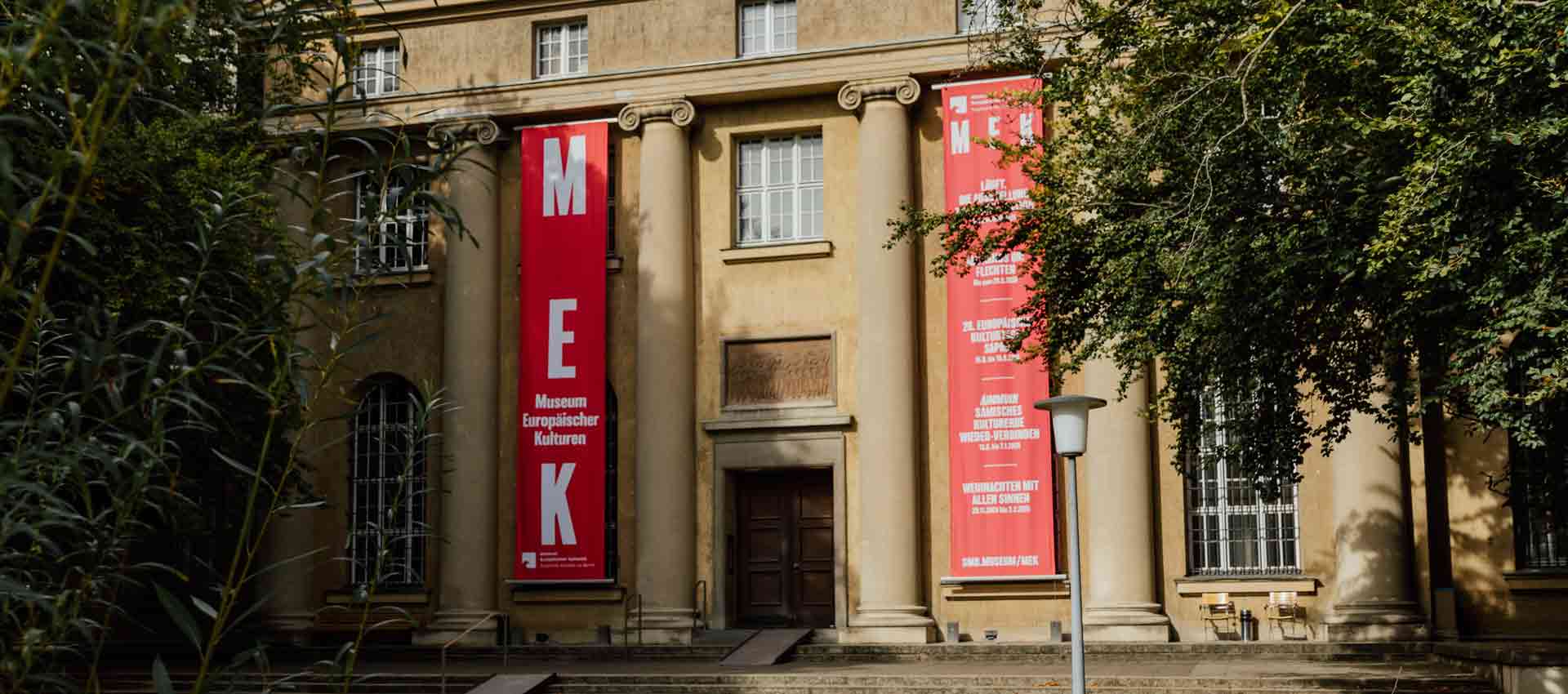
(right) Home to the Berlin Numismatic Cabinet on Museum Island: the Bode Museum. Photo: Staatliche Museen zu Berlin, Bernhard Weisser