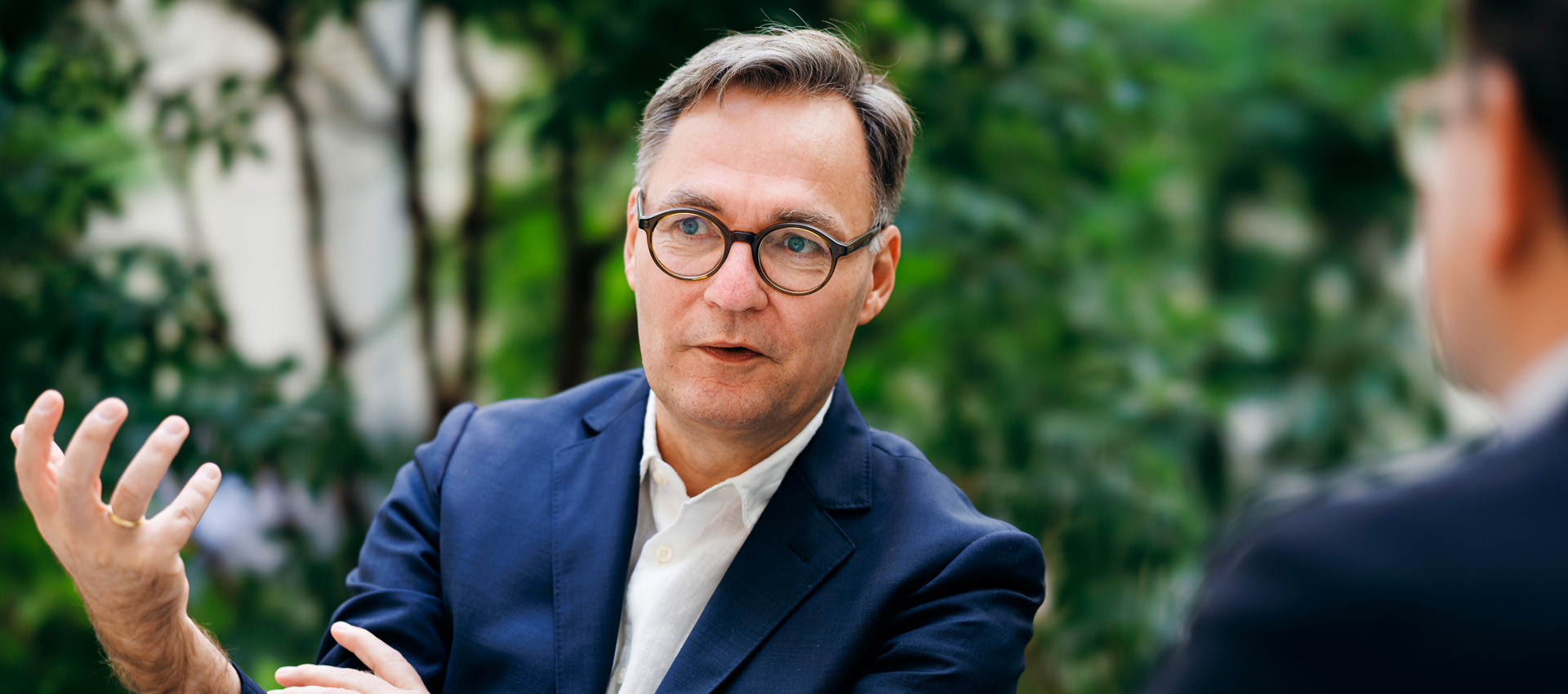
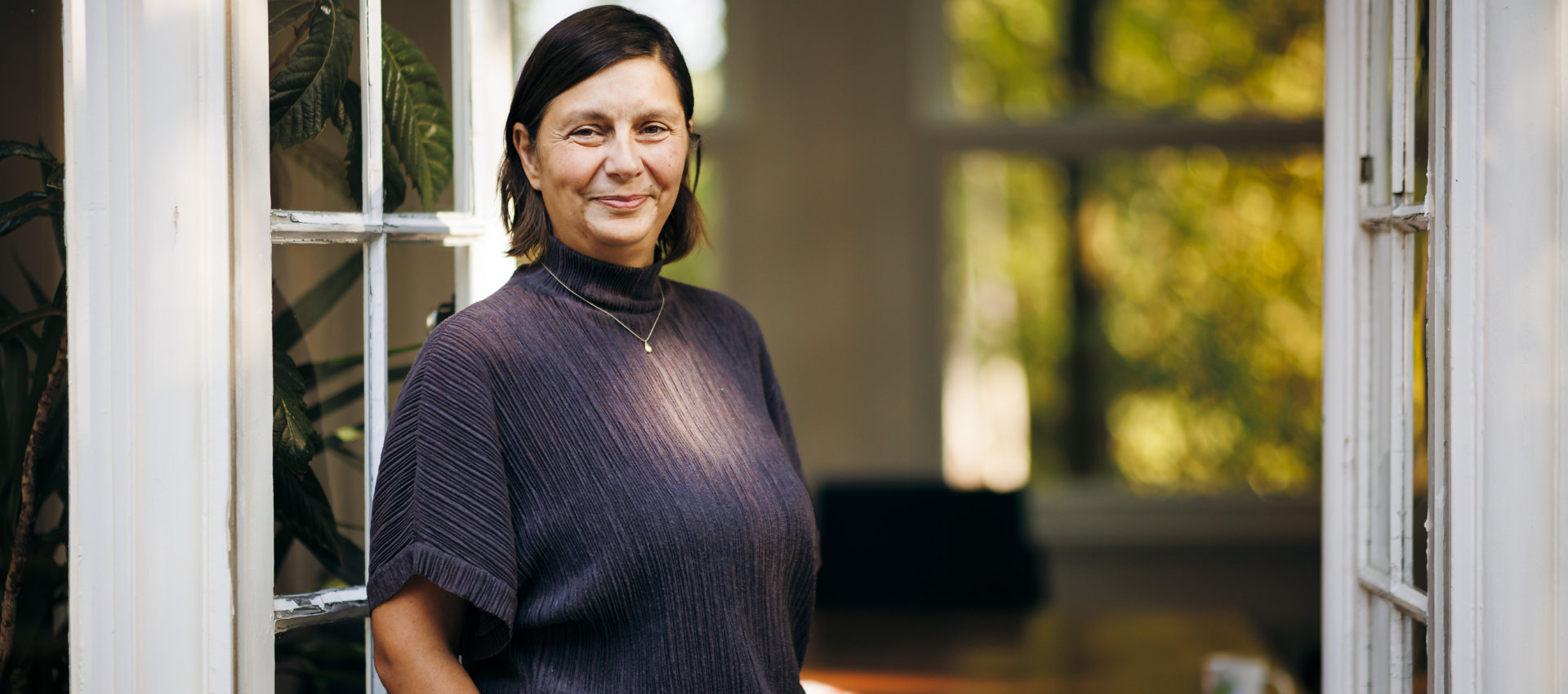
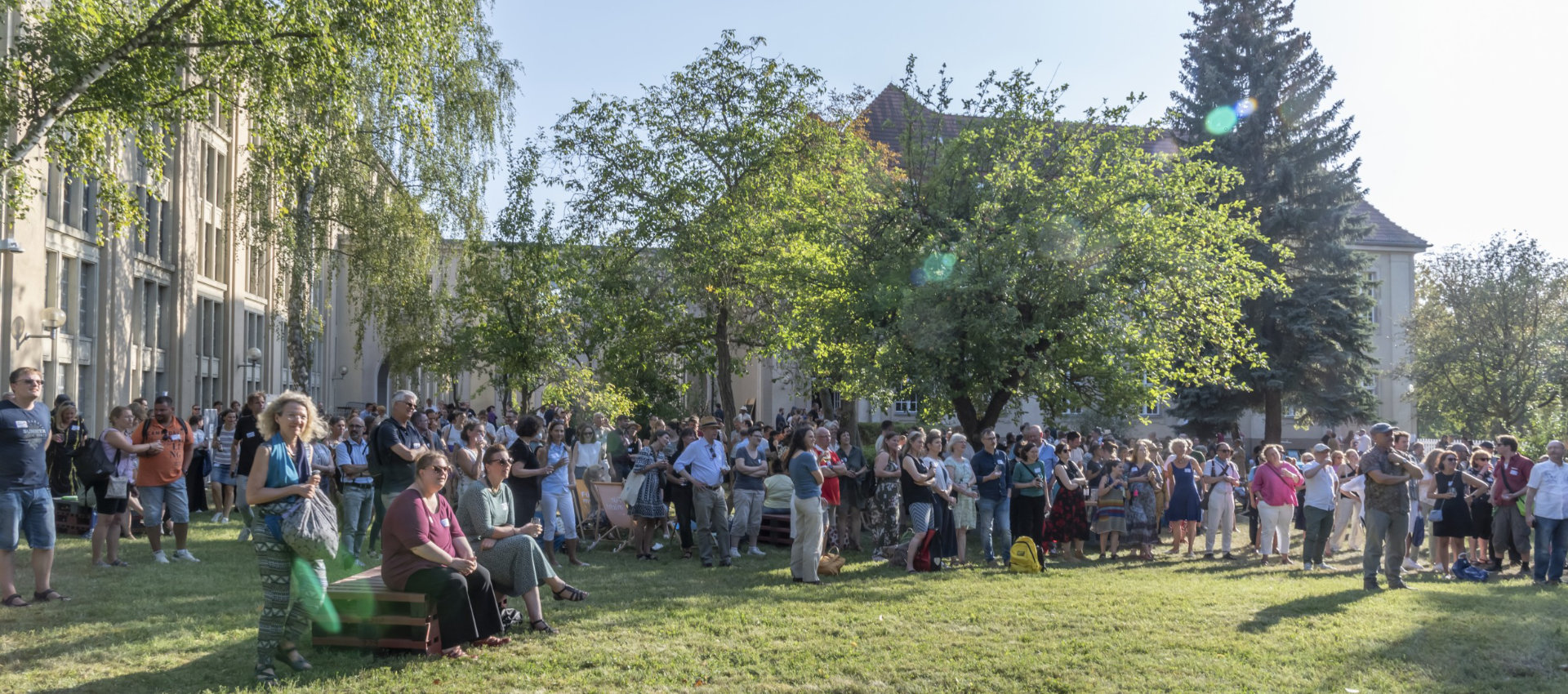
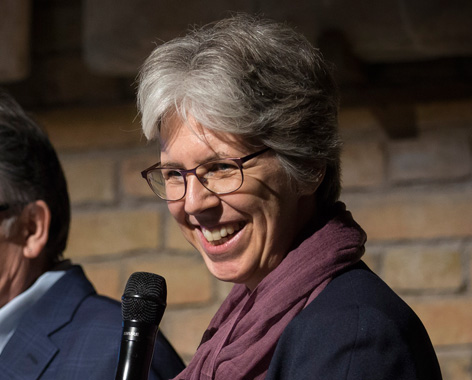
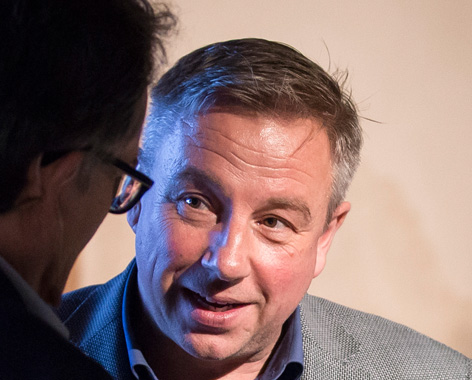
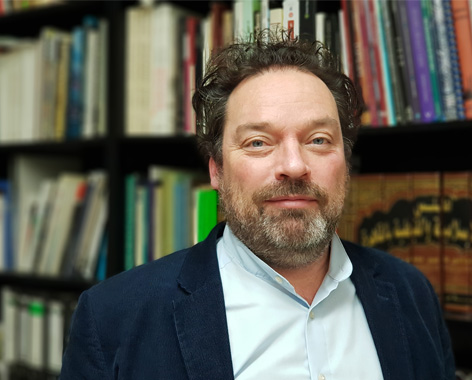
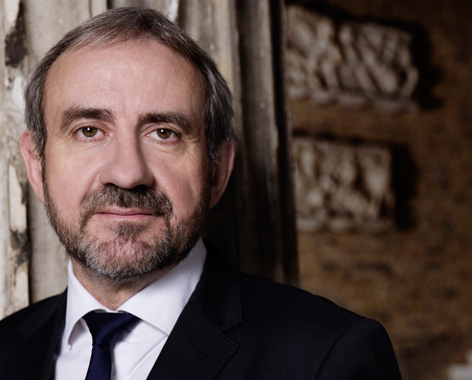
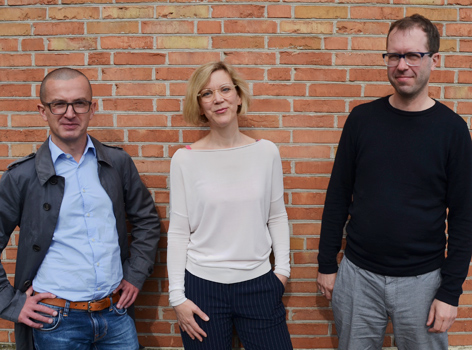
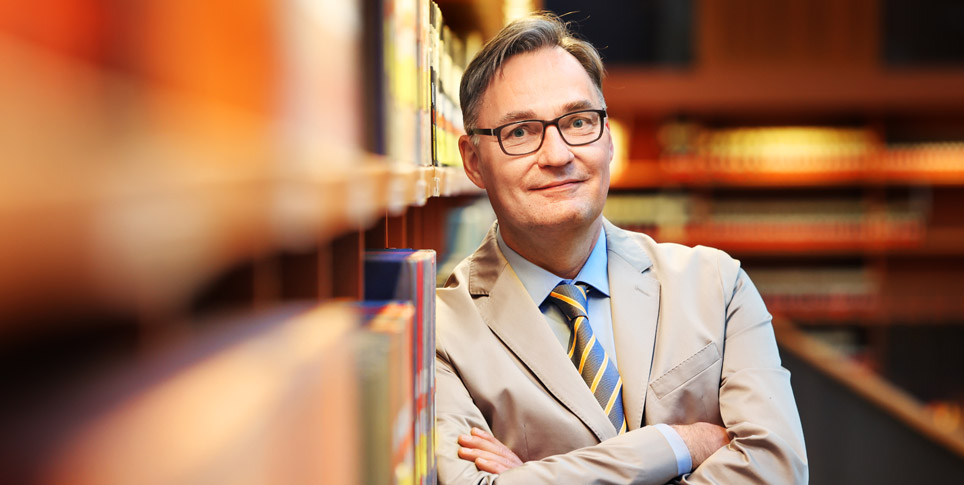
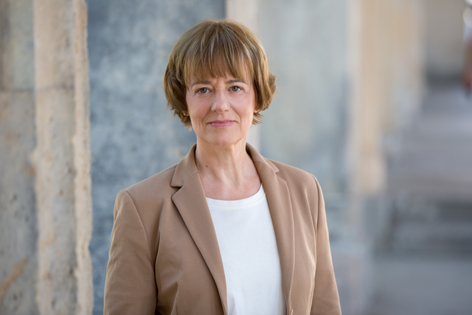
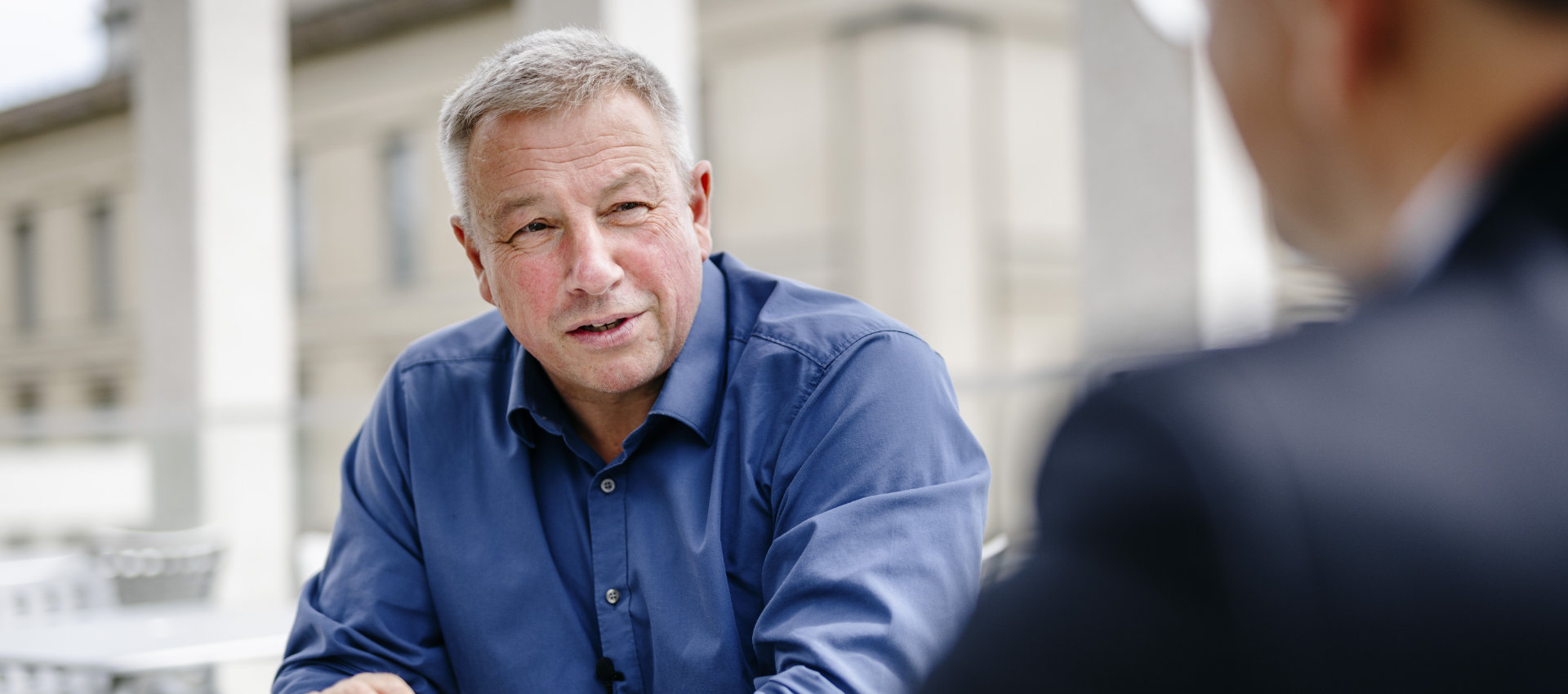
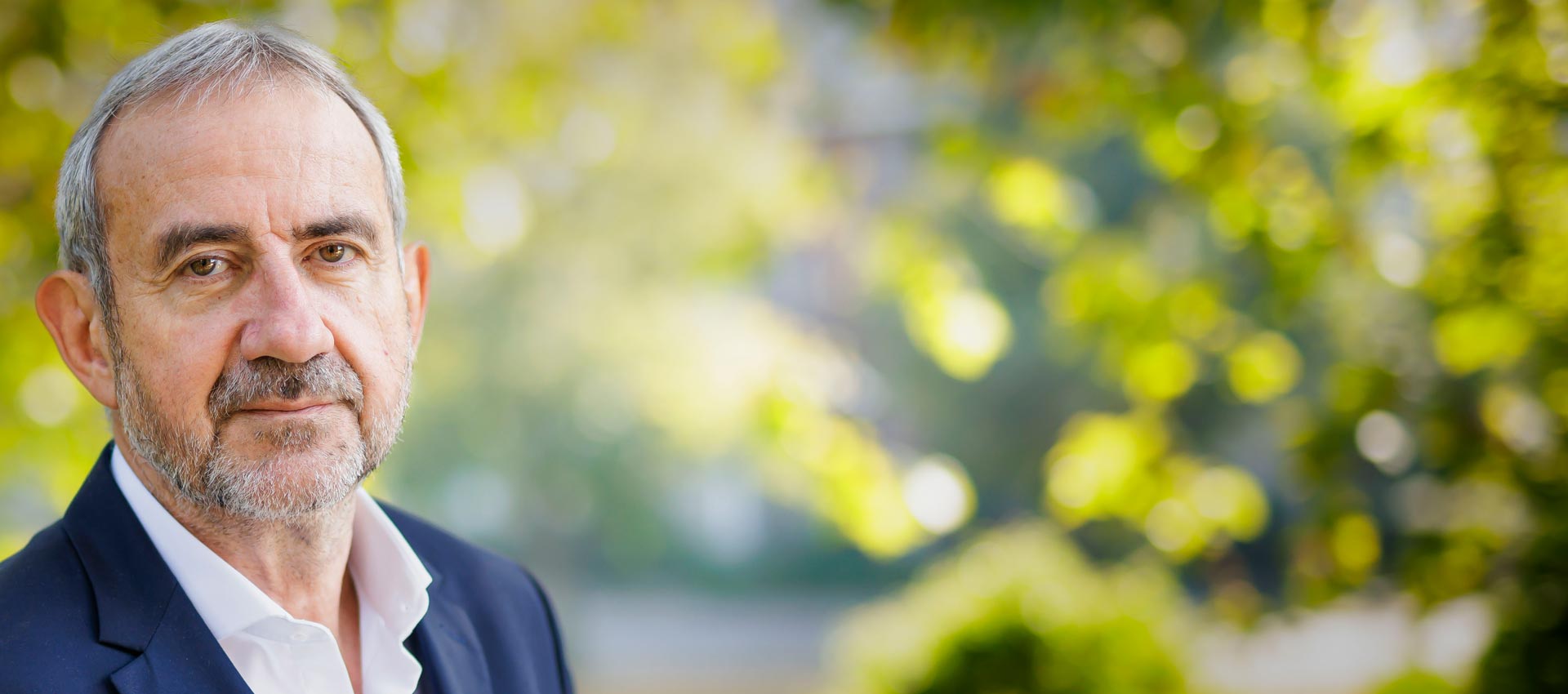
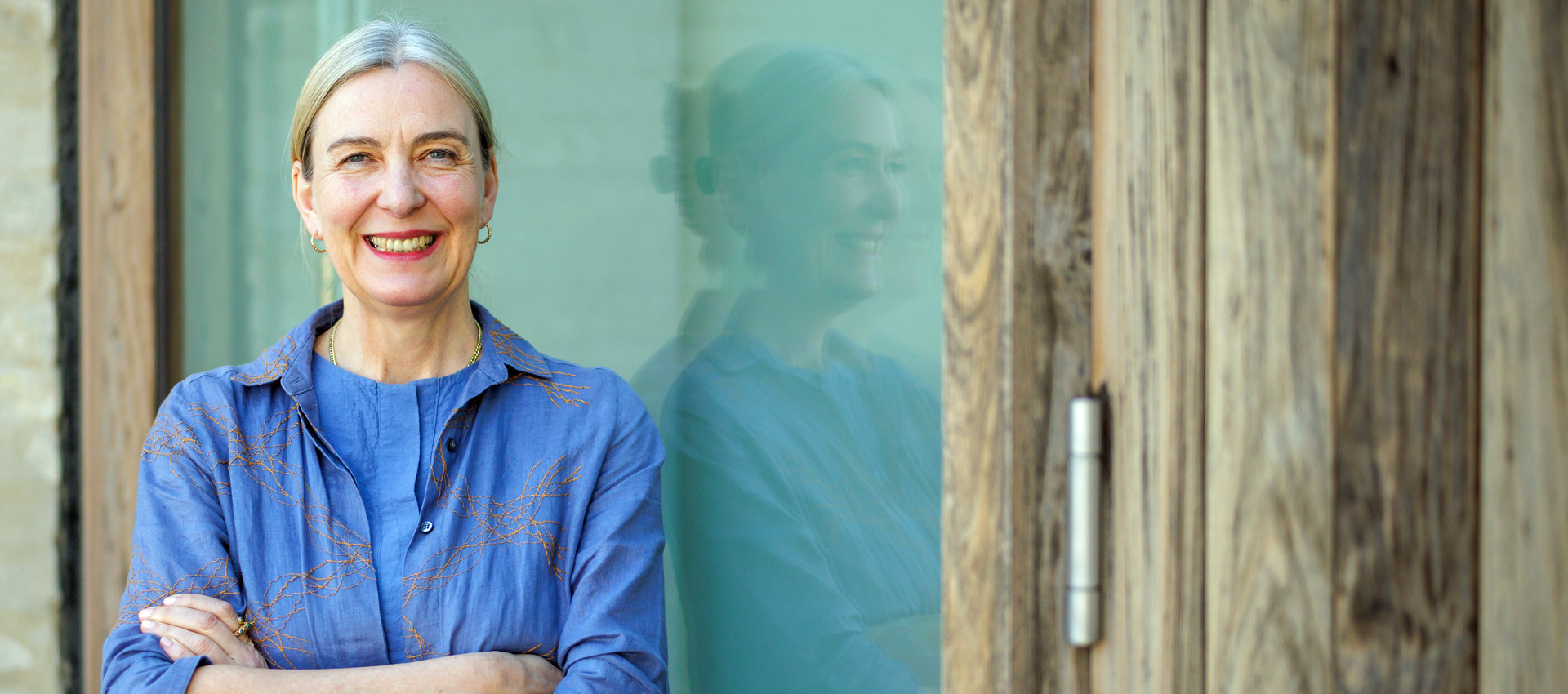
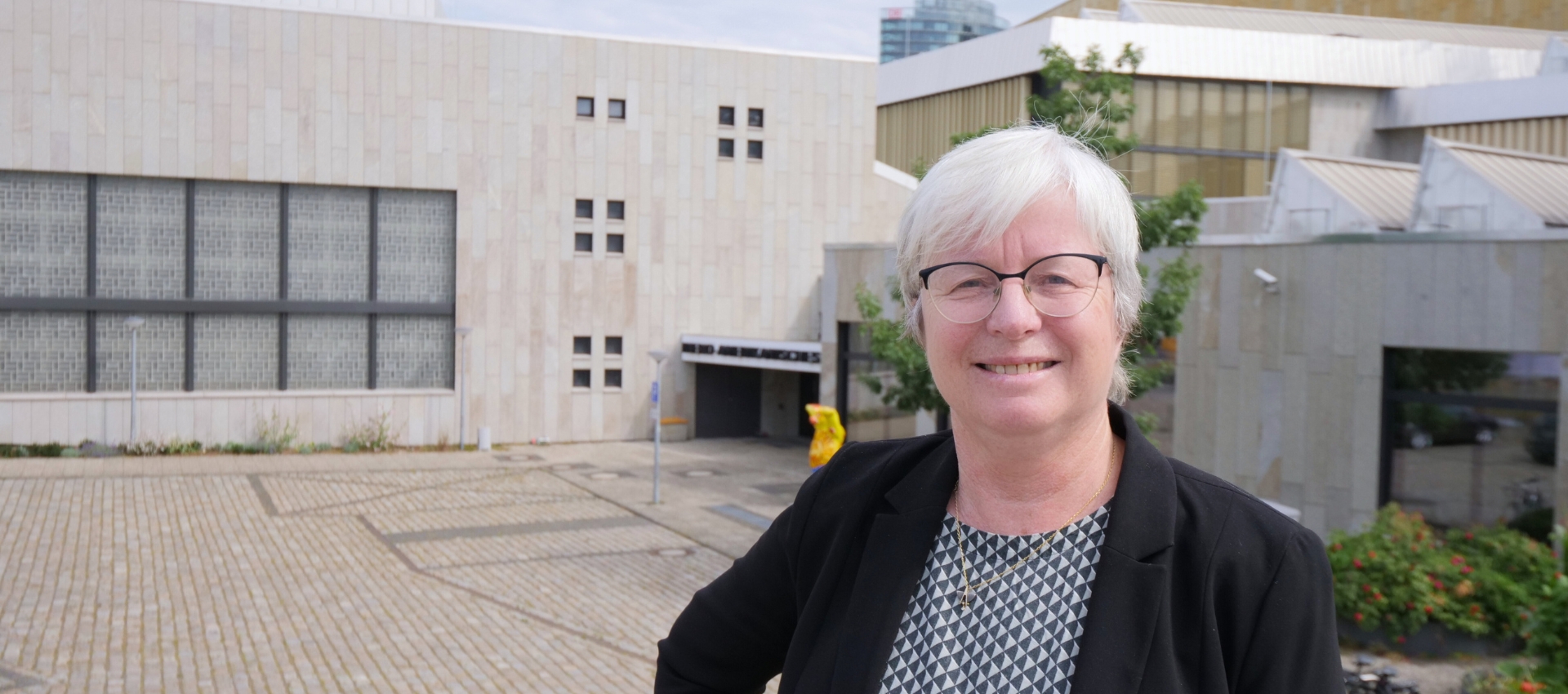
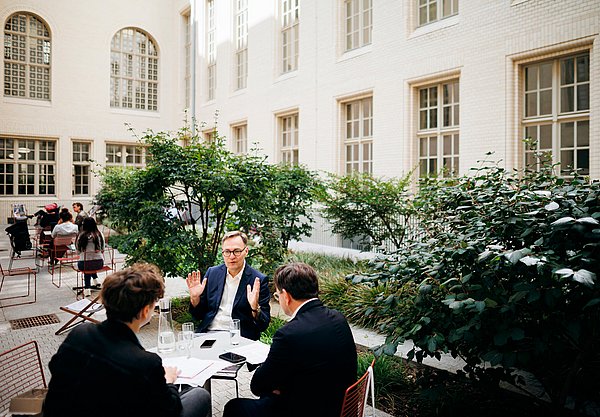
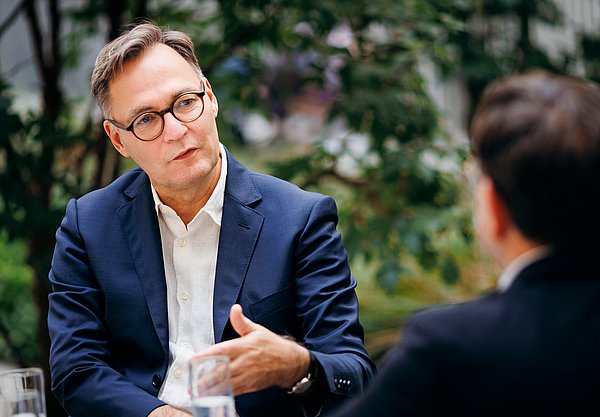
The SPK summer interview series continued in the courtyard of Café Felix in the Stabi unter den Linden: Achim Bonte, Director General of the Berlin State Library, discusses what defines libraries in the 21st century and why the foundation reform will not result in a museum network with a residual entity attached to it
The late former President of the Bundestag, Wolfgang Schäuble, said in his speech at the opening of the Haus Unter den Linden: “In the past, libraries were regarded as information monopolists. Today, their task is to prevent commercial information monopolies. Especially in a digitalised public sphere, we need neutral and reliable institutions that document knowledge, make it accessible – and yes, also filter it!” Is he right?
Bonte: Yes and no. He is absolutely right insofar as we, as a public-interest, trustworthy institution, aim to preserve verified knowledge. In this way, libraries fulfil a central social function, particularly at a time of fiercely contested interpretations of the world. On the other hand, Schäuble’s statement suggests that libraries could manage knowledge on their own. Given the enormous growth and increasing specialisation of culture and science, we now see ourselves more as a values-oriented knowledge agency with many other stakeholders than as an all-knowing filter of knowledge.
We are therefore seeking people who wish to participate in knowledge work. We want to create cycles of sending and receiving and open our doors accordingly. We are attempting to do this through collaboration with many other institutions and social groups that are committed to specific causes or possess in-depth knowledge, some of which is not even available in print yet.
Is there any resistance to this in such a traditional institution?
Bonte: Absolutely. The traditional view sometimes sees the library as the guardian of the Holy Grail, to which everyone makes a pilgrimage, and the librarians as, so to speak, guardians of the Grail who can make sweeping judgements about what constitutes a good or bad book. But we do not have a monopoly on wisdom and do not stand on a pedestal. Within the staff, we therefore discuss our current remit very openly and strive to understand the various perspectives. Ultimately, all our colleagues are at work with great expertise and enthusiasm for the Stabi and know that change does not mean criticising a successful past, but rather a necessary investment in the future.
When you took up your post in 2021, you spoke of your vision for a library in the 21st century: “At a time when access to information and knowledge is growing rapidly, the new concept of the library involves a determined expansion of its services beyond traditional distribution and storage functions. It embodies an approach that places people at the centre of our thinking and actions.” Have you been able to apply this perspective to your work at the Stabi over the past three years?
Bonte: Yes, in that respect I am pleased that we have been able to take many important steps, both externally and internally. Towards our users, we have opened our ears and spread our arms wide through the establishment of a users’ council, more tailored service offerings and a major volunteering initiative. I consider strength and creativity from society to be essential for the positive development of libraries.
Among staff, it seems to me that the view has grown that the value of libraries is measured not only by the size and uniqueness of their collections, but primarily by their diverse capabilities and the specific contribution each staff member makes to the organisation’s performance. With our ‘Stabi 2030’ strategy process, which places a strong emphasis on openness to participation, and many new formats for communication, participation and cross-departmental interaction, we have fostered a new spirit at Stabi.
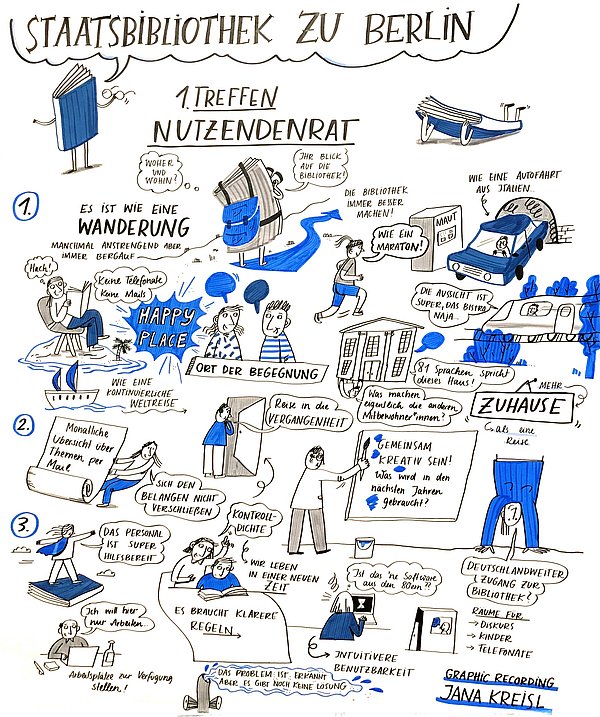
The ‘Stabi 2030’ strategy sets out the aim of strengthening the dialogue between research and society. What does successful science communication look like?
Bonte: It seems to me that the basic prerequisite is that we actually manage to orchestrate a genuine exchange, i.e. two-way communication. Not least due to digitalisation and the resulting increased visibility and reach of communication, I am seeing a growing imbalance between senders and receivers.
In other words: far more people and institutions are looking for audiences who will listen to them and engage with them than there are those who are willing or able to take the time to listen. For this reason, I consider it just as important not to focus on setting our own agenda, but rather to agree on broader campaigns in partnership with other organisations, or to provide a platform for scientific, cultural or social issues that are currently attracting significant attention or are the subject of intense debate.
So the Stabi as a stage for society?
Bonte: It’s about fairer access to education, knowledge and culture. At the opening of the Stabi Kulturwerk, we deliberately invited a few pupils from Neukölln to sit in the front row to tell them: ‘this is your treasure too’. Our aim is to encourage and empower those who want to achieve social mobility through education.
We can break down barriers particularly for so-called first-generation academics, but academics in the qualification phase are also grateful for support tailored to their specific needs. At the same time, we can provide a platform for ideas and initiatives that are still too little known to the public, because libraries like ours are precisely such well-frequented, highly respected institutions with fantastic opportunities.
Will the State Library thus become the much-vaunted ‘home for everyone’, or will it remain a research library?
Bonte: The State Library is a place for everyone who wants to conduct research and further their personal development. This is not without controversy, because a more diverse range of users also has more diverse needs. We try to meet these varied needs through differently equipped rooms and clearly defined room designations.
It would, of course, be much simpler if only 200 people came to our large buildings each day, who knew exactly how to behave, who were top researchers and could feel right at home here. But our ambition is greater: cutting-edge research, citizen science and our events programme should all find equal space at the State Library. This requires a delicate touch. We are constantly learning alongside our users.
You’ve also looked around internationally. What do libraries in Scandinavia, for example, do differently?
Bonte: The general public perception of libraries is remarkably positive, but often antiquated: books, tables, shelves. To illustrate, for example, why it is urgently necessary to convert one of our many uniform reading rooms into a lounge, we travelled to Finland with colleagues from the building department. The library in Helsinki is a very good example of how to open up whilst maintaining a balance between security and freedom of movement: by placing trust in people and empowering them to use the building more independently. Hence our motto: trust, open up, engage.
Let’s stay on the subject of international affairs. How important are international collaborations for the State Library?
Bonte: Given our numerous international contacts, we have defined key regions. One is East Asia, where, alongside Harvard, we are now arguably the leading research hub in the Western world, particularly in the field of digital documents, and where we can maintain open access to information for the academic community even in an uncertain global climate.
In addition, our history means we have a further focus on Eastern Central Europe. In my view, particularly with Poland, the aim should be to strengthen a foundation of trust through close contacts at the operational level, which in the long term can lead to a thaw in relations as a whole.
It should be remembered that around 80% of the book collections in Polish academic libraries were destroyed during the Second World War. We Germans did in Poland what the Russians are now attempting in Ukraine: the systematic destruction of a country’s culture and academia.
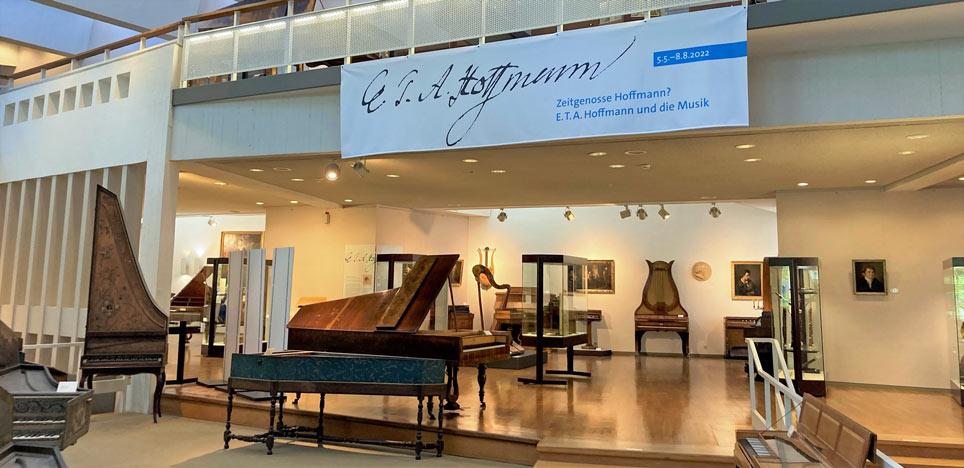
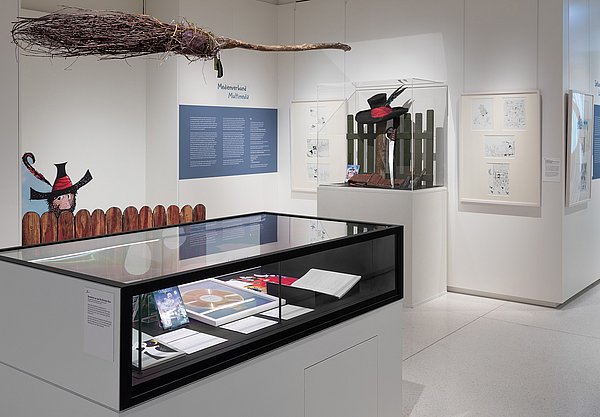
The Stabi Kulturwerk opened its doors in the summer of 2022. Why does a library actually need a museum?
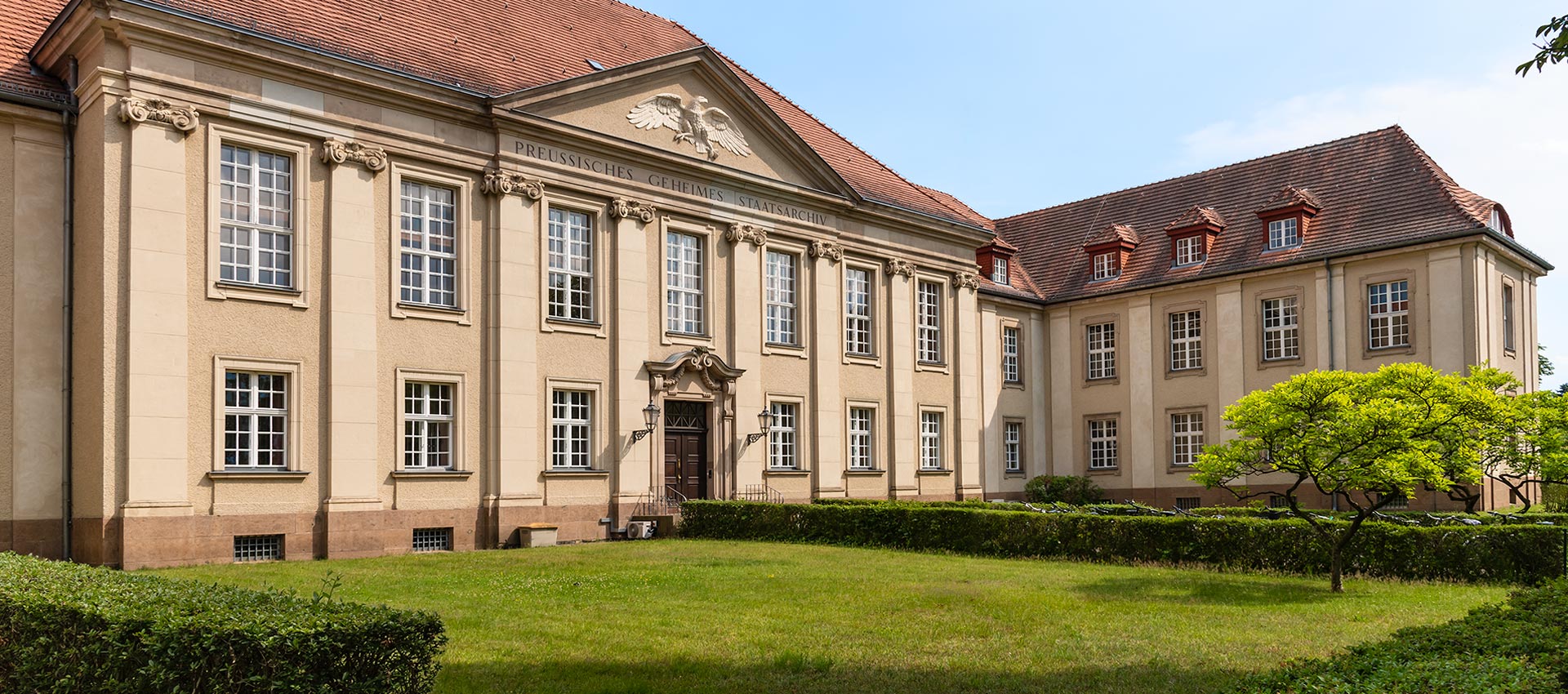
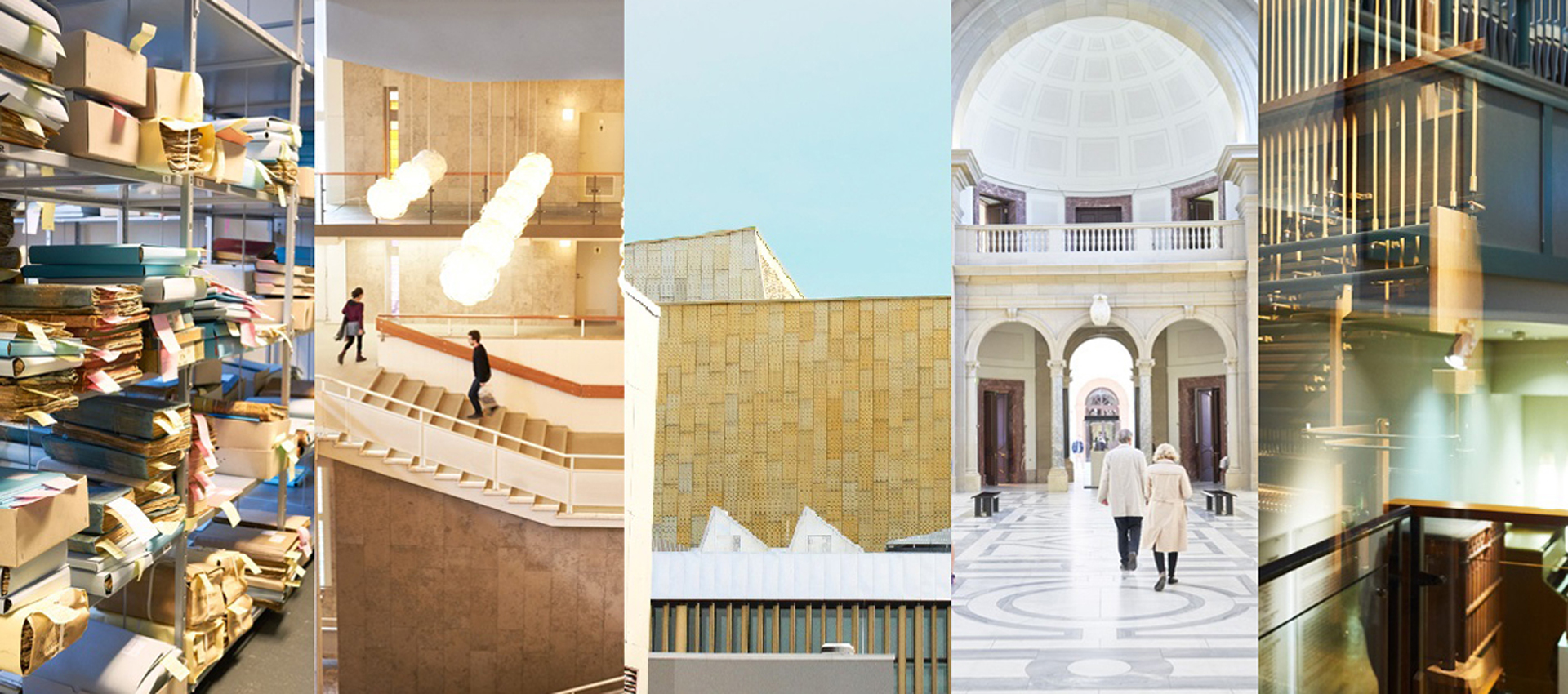
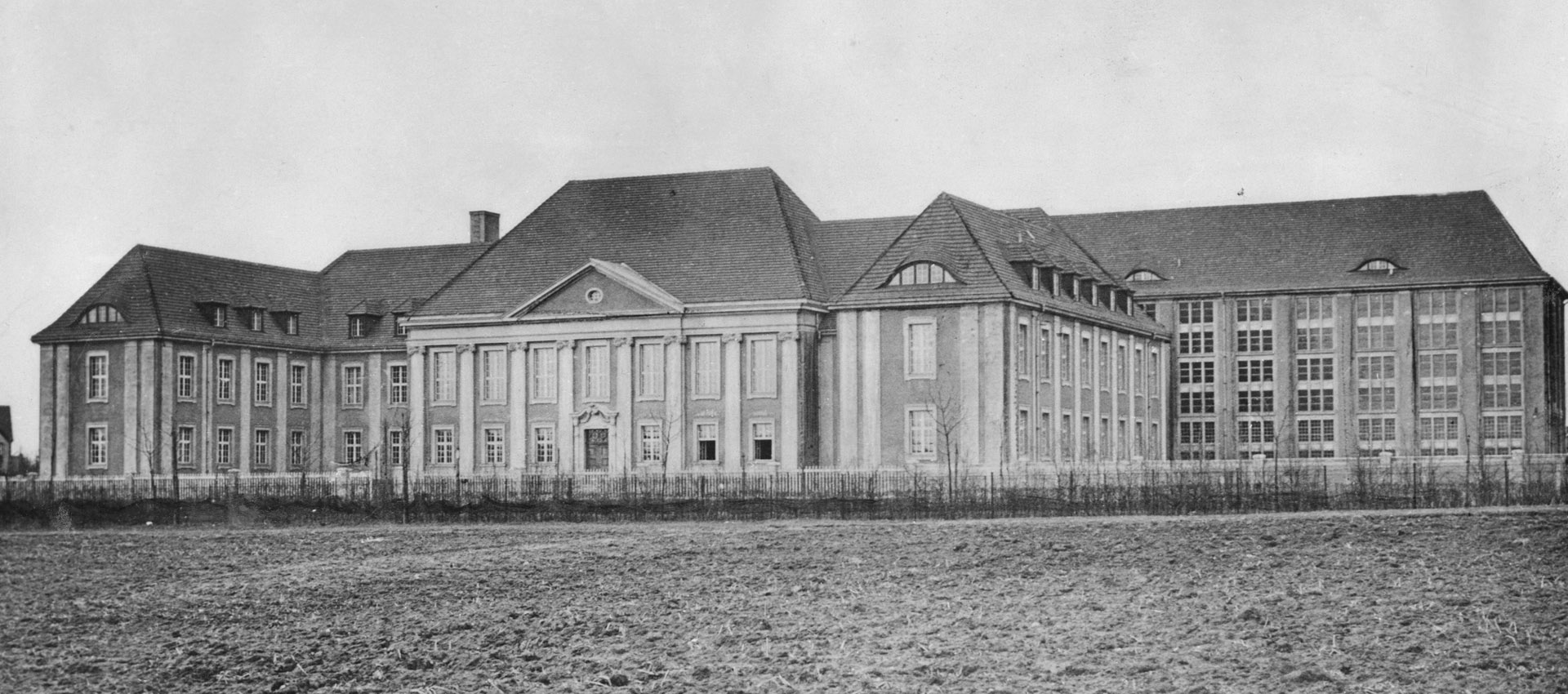
Bonte: When you visit the Stabi Unter den Linden treasury, the first thing you see is a huge grey building which, at 107 metres wide and 170 metres long, fills an entire city block. As a rule, you therefore have no idea that this building houses a significant part of the world’s cultural heritage, including the world’s largest Mozart collection, a Gutenberg Bible, over 2,000 valuable bequests and numerous other treasures from all over the world.
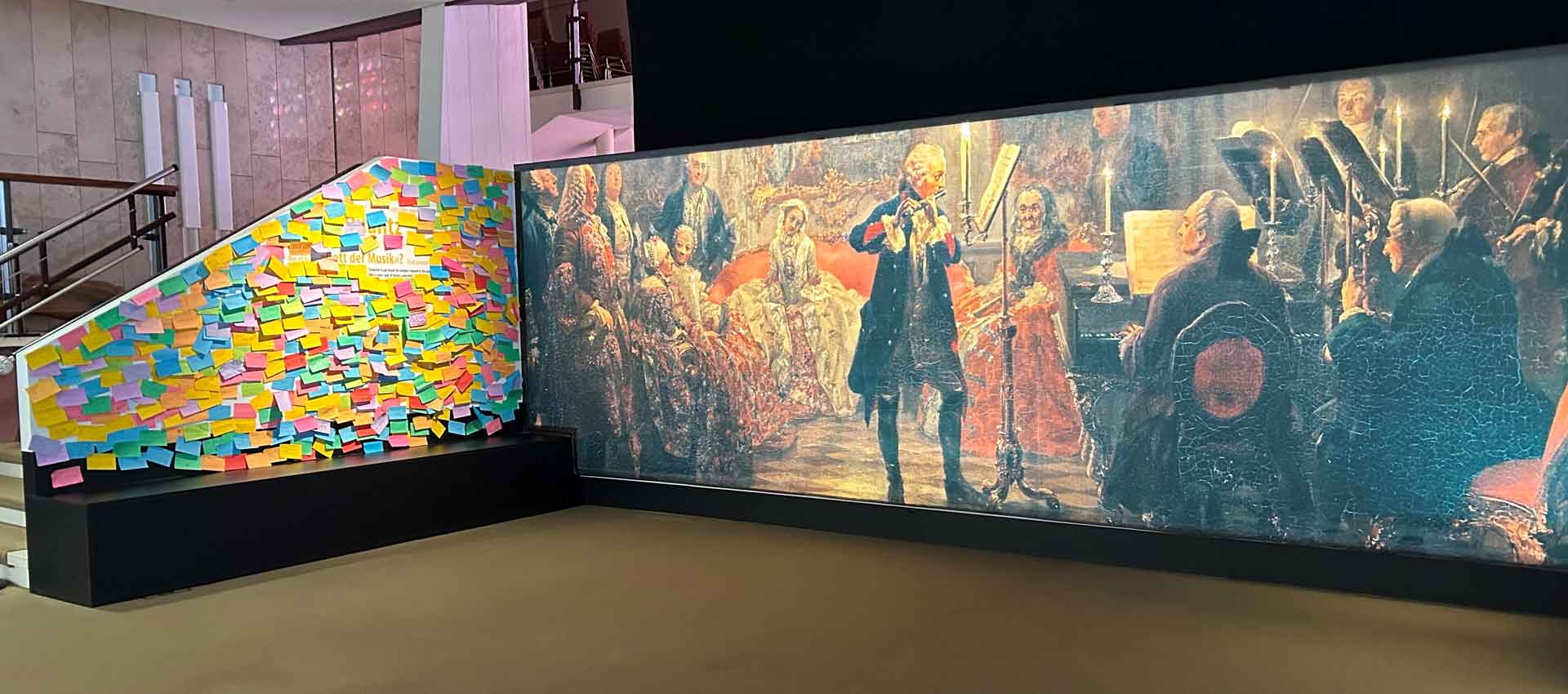
Much can be presented online, but the aura of the original Bach B minor Mass or Beethoven’s Ninth Symphony remains unrivalled. Incidentally, we deliberately do not call our exhibition space a ‘museum’ but a ‘Kulturwerk’, because here too the focus is less on mere admiration and more on lively exchange.
In 2021, you moved from the SLUB in Dresden to Berlin; next year, SKD President Marion Ackermann will succeed Parzinger. Do you know her from Dresden? What are your expectations of the new leadership?
Bonte: Ms Ackermann and I know and respect one another from several years of close collaboration and agree on many important points. I expect that, building on Mr Parzinger’s immense body of work, she will vigorously continue the reform process whilst, of course, also bringing her own individual touch to it.
Reform is the foundation’s main focus. The pressure is enormous, as are the expectations both internally and externally. Where does the SPK stand?
Bonte: Like many other institutions, the SPK is carrying a heavy burden of tradition. In principle, it is a long process to turn a tanker into a speedboat – and in the public eye, an even longer one. But in the meantime, progress has been made, and the accusation of inflexibility is becoming increasingly unfair.
In my view, we are perhaps still too focused on structural changes at the moment. As the reform progresses, it should above all be a reform of the organisational culture. A reform that addresses questions of values, transparency and successful collaboration: How do we view hierarchy, and what standards do we set for modern leadership? How do we enable genuine participation, and how do we deal with risks and mistakes? To what extent should the demands for security, correctness and thoroughness dominate a large cultural institution?
Culture and science always involve risk and are driven by a pioneering spirit; the SPK is not a tax office and therefore requires a different ethos. It possesses tremendous energy and creativity. We should harness this through improved organisational cultural frameworks.
The focus of the SPK reform is, after all, very much on the museums. Are the interests of the other institutions being sidelined in the process? How do you view the role of the Stabi within the foundation network? And more generally: are you satisfied with the reform’s objectives and measures?
Bonte: In my view, the reform is pursuing the right objectives; naturally, opinions will always differ somewhat regarding the pace and priorities. So far, I do not have the impression that we are developing into a museum network with the rest attached.
That would not be wise at all, as the Stabi, as one of the largest libraries in the world, has a great deal to contribute to the future development of the ‘new’ SPK: from digitisation and AI expertise, through a dense international cooperation network and high levels of third-party funding, to impetus for a contemporary, agile corporate culture.
The Stabi is, in effect, the data centre for the entire SPK; the Stabi 2030 strategy paper highlights the “comprehensive impact of digitisation”. What is this all about, and why is digitisation so significant in an institution that initially appears analogue, such as a library?
Bonte: Digitalisation has radically transformed our lives over the last 30 years. When I first came into contact with it in 1994, 0.4% of the world’s population used the internet; today, the figure stands at 67% worldwide and 94% in Germany; and the evolution of the opportunities and risks of digitalisation is far from over.
Against this backdrop, it is clear that institutions involved in the dissemination of information and knowledge, in particular, must continually review and further develop their business models and products. This brings us to the SPK’s archives, libraries and museums. With an integrated data centre for the entire SPK, we have a better chance of meeting the challenges of digitalisation. Having already achieved a great deal in the areas of hardware and office software, our next step will be to focus increasingly on cross-sector software development. Libraries have long since ceased to be analogue institutions.
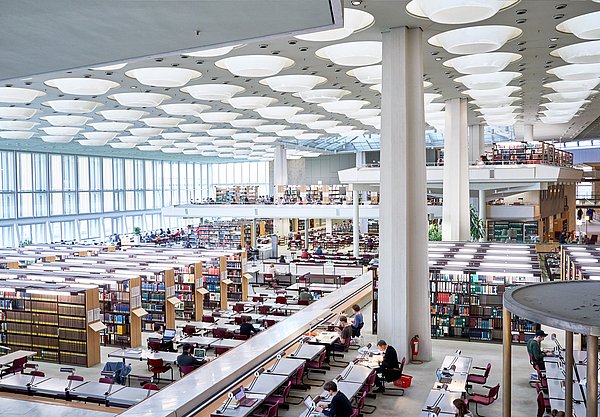
You are the Director-General of two buildings. Do you have a ‘favourite’? Or is the building on Potsdamer Straße, which is in desperate need of renovation, not actually quite a problem child?
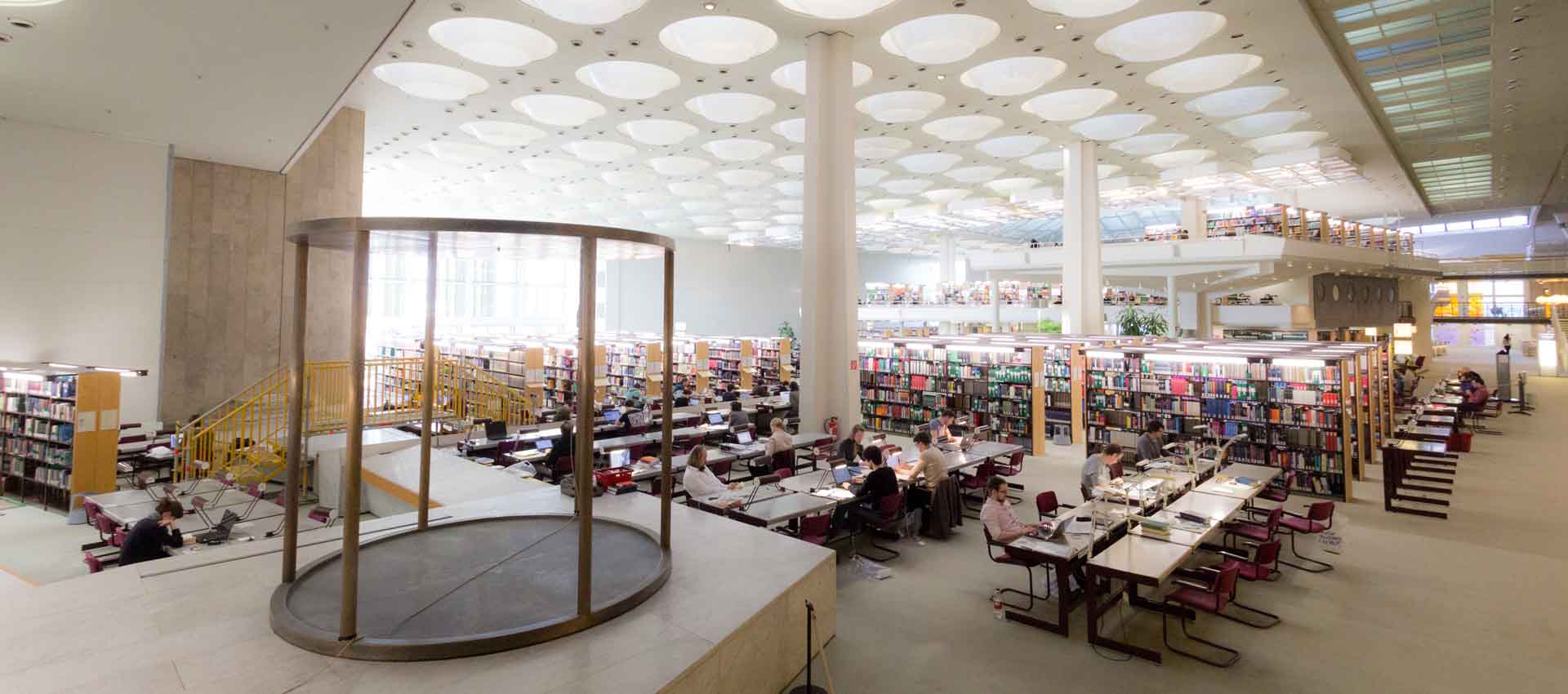
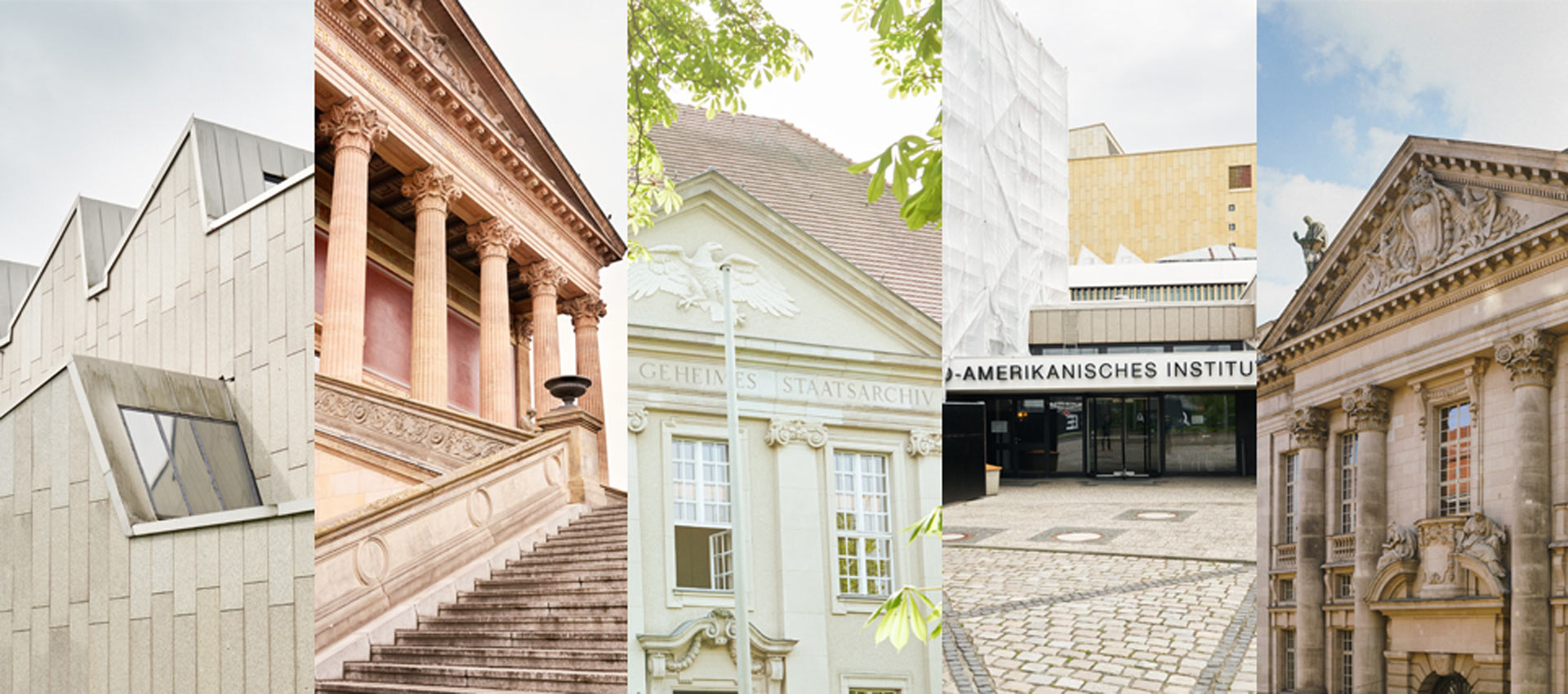
Bonte: I believe both buildings have their own unique qualities and together present a coherent image of Stabi Berlin. On the one hand, there is the majestic, tradition-conscious royal building on Unter den Linden, offering outstanding working conditions for top researchers from all over the world; on the other, there is the particularly inviting, democratic building by Hans Scharoun and Edgar Wisniewski, which emphasises open access to information and educational opportunities for all.
The architectural, urban planning and functional value of the Potsdamer Straße building is completely undisputed by all parties involved in the planned major refurbishment. I am now very concerned about its structural condition. I therefore expect – with the patience that this case clearly requires to a particular degree – that we will soon have fulfilled all the prerequisites for the start of the refurbishment on Potsdamer Straße.
What did you actually think of the idea of converting Galeries Lafayette into a library?
Bonte: As far as I am aware, the matter is not yet off the table. I found, and still find, the idea of establishing a modern metropolitan public library in the heart of Berlin absolutely captivating. If it were to happen, Berlin would not only have the much-needed magnet for Friedrichstraße, but, with the Berlin State and Central Library, our building on Unter den Linden and the Grimm Centre at Humboldt University, one of the densest library districts in the world. The Berlin State and Central Library would be 500 metres south of us, and the University Library 400 metres north. What more could one ask for?
Further links
- Berlin State Library
- “The Hybrid Library”: Interview with Julia Maas
- "Time Becomes Space Here": Report on the Stabi Kulturwerk
- "Making the invisible visible": Multispectral imaging at the Stabi
- Article on IN_CONTEXT, a research project on dealing with collections from colonial contexts in libraries
- "I want to be part of a book movement": The Indie-Stabi series