SPK President Hermann Parzinger embarks on a brief journey into the Little Ice Age for the spring 2024 issue of the Journal of the History of Ideas
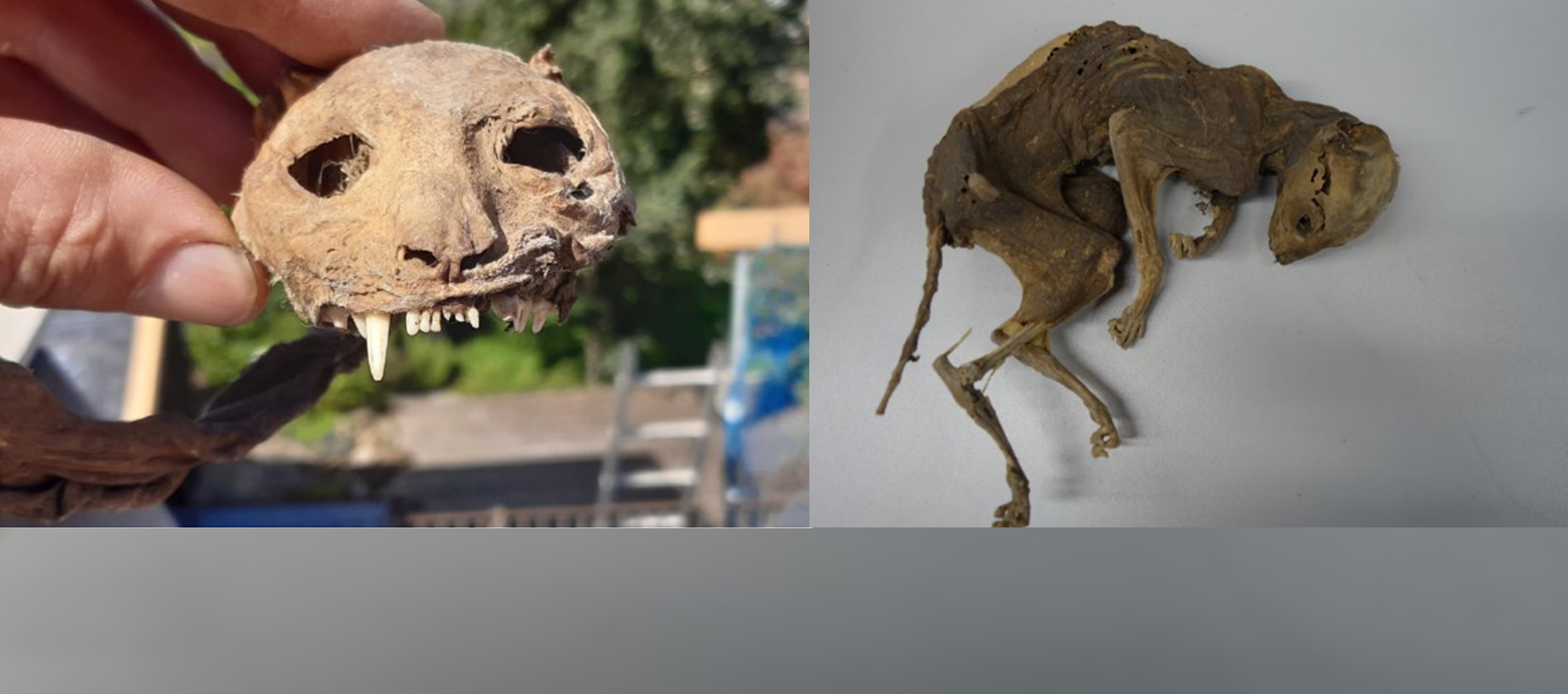
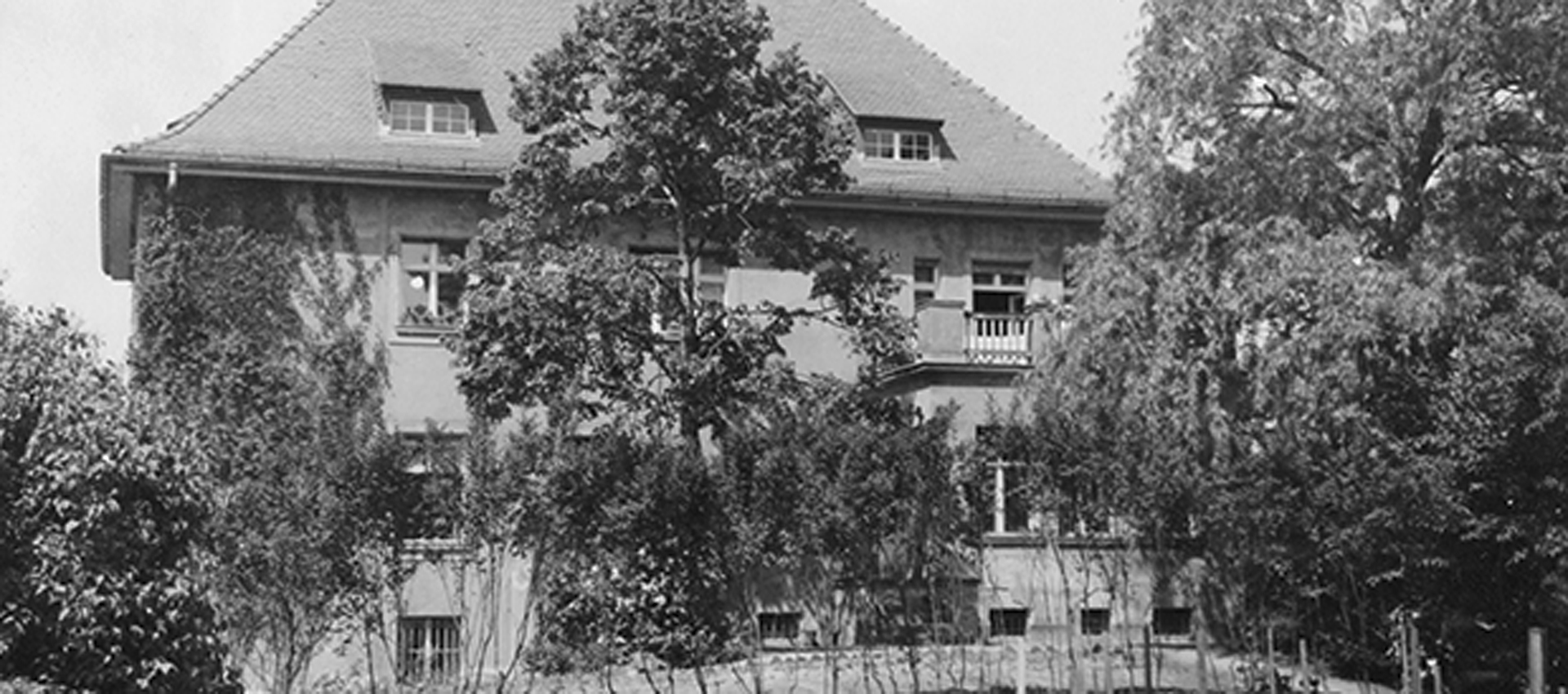
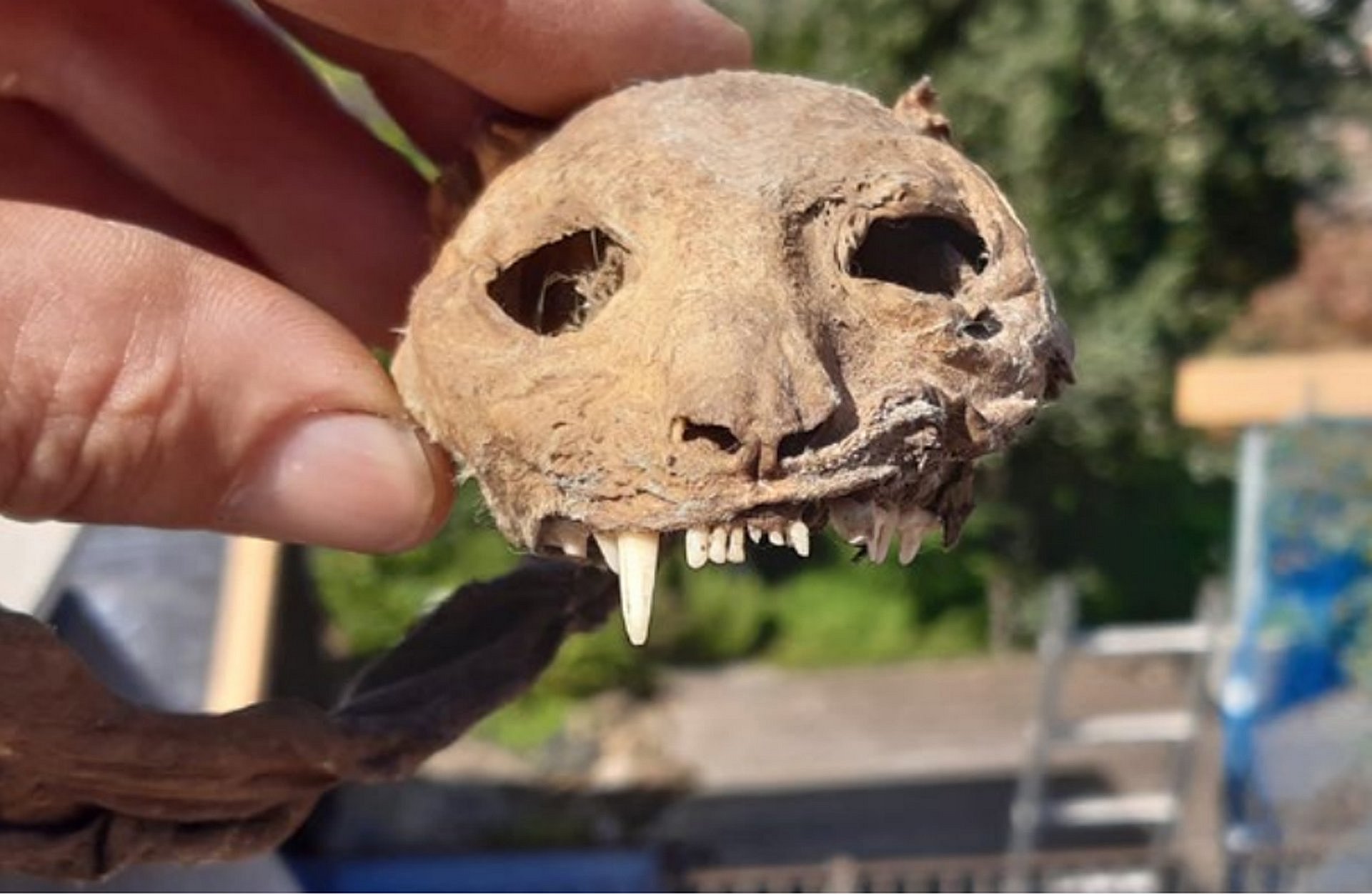
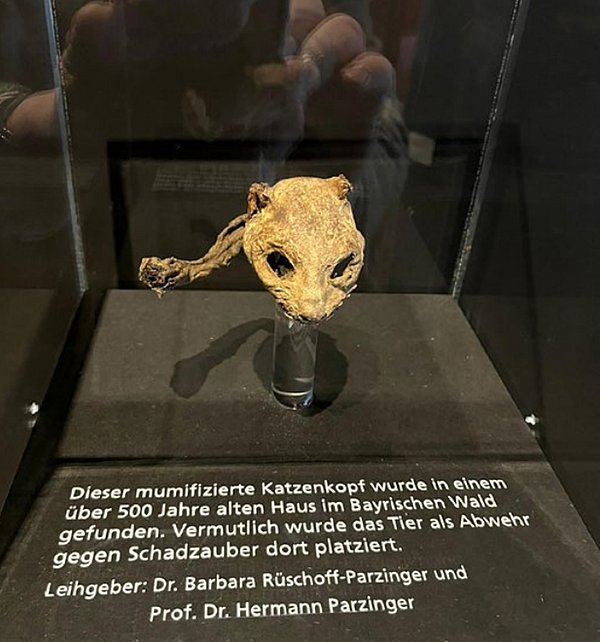
In the summer of 2021, whilst renovating the roof of our “headquarters” in the Bavarian Forest, we discovered the remains of a mummified cat (Fig. 1). The cat under the roof piqued my curiosity, and I set out to investigate. How long had it been lying there? The Waldlerhaus, traditionally built from spruce beams, is situated in the oldest part of the village of Hohenwarth (Cham district). The village was first mentioned in records in 1180.
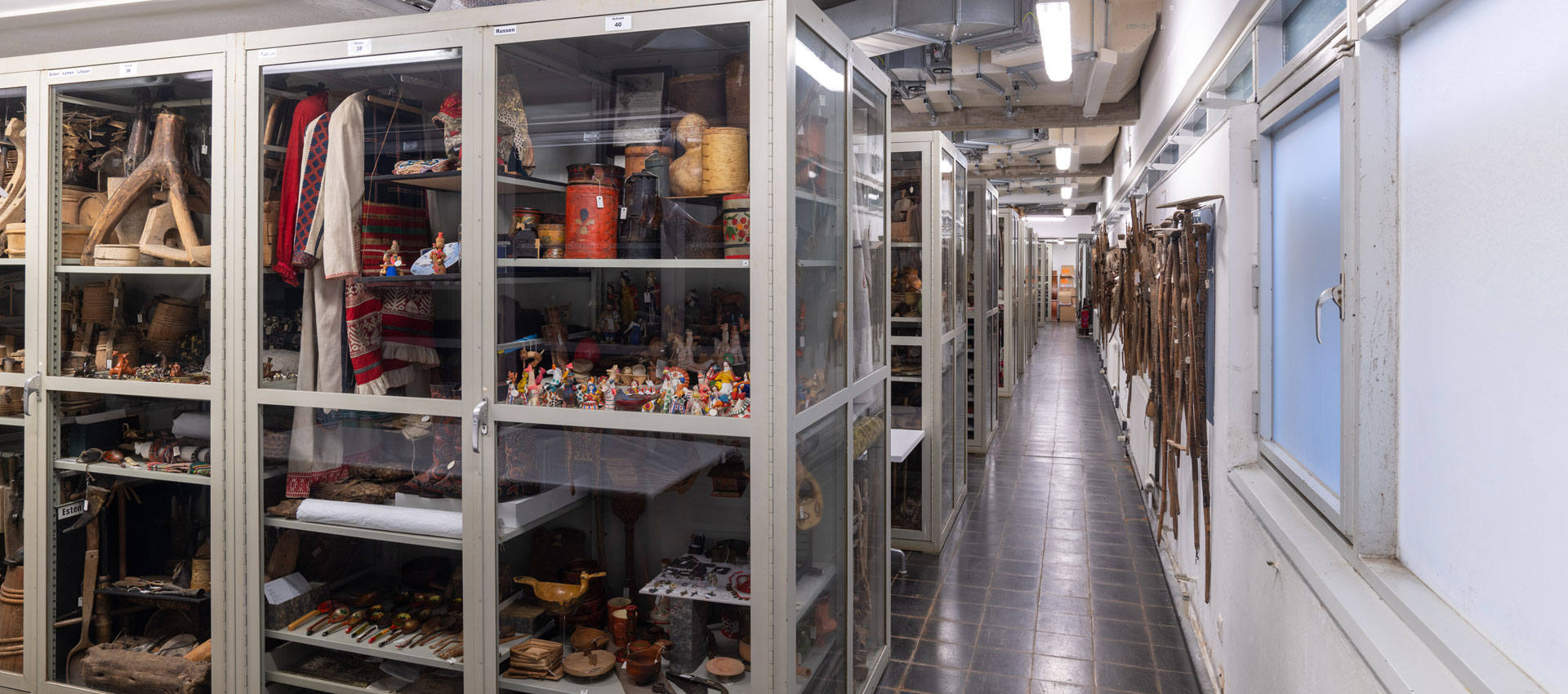
A colleague from the German Archaeological Institute helped to narrow down the period of the find. Dendrochronological analysis of a beam yielded a tree-ring sequence dated from 1459 to 1521, and based on the preserved edge of the log, the tree in question must have been felled in the winter of 1521/22. This confirms the early modern period of the house in question, which is thus likely one of the oldest log cabins in the Bavarian Forest.
A 14C dating of the mummified cat, carried out by the LWL Museum of Natural History, in turn places it around the year 1486. Thus, a contemporary on four paws of Martin Luther (*1483) and Thomas Müntzer (*1489), a late medieval specimen of a silky-pawed feline. No further genetic analysis or sex determination of the find was carried out. Whether the cat was a female, a male or even a black tomcat must remain a mystery.
But how is this peculiar discovery of a mummified cat under the roof of a residential house to be explained at all? What was the cat doing so high up? It is hard to imagine that an animal of this size could have reached this spot under the roof of its own accord and perished there. There was something else that was puzzling. The cat under our roof was not lying in just any spot on the ridge beam, but had evidently been deliberately placed right in the middle of the house, near the chimney.
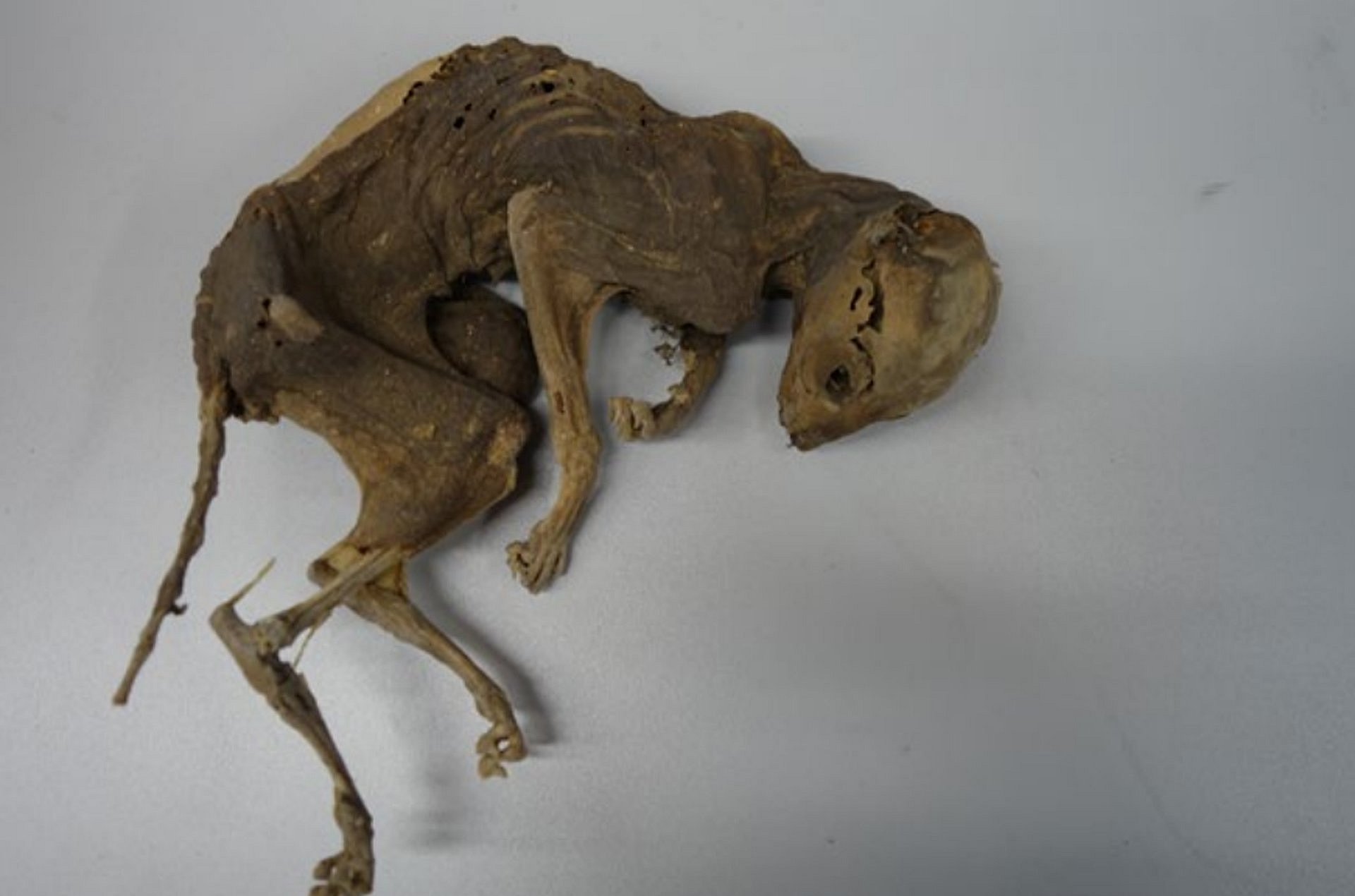
Once piqued by this strange interest in the chance discovery of a cat mummy, I soon learnt that the find was not an isolated case. In recent years, during the renovation of historic old buildings in various parts of Bavaria and Baden-Württemberg, as well as in Austria, Switzerland and Alsace, an increasing number of mummified cats have been discovered, which had also been deposited under the roofs of these buildings (Fig. 2) and showed striking similarities to our find in terms of their deliberate placement.
These cat mummies have come to light not only in private homes but also beneath the rafters of church towers. The most recent finds were made in 19th-century houses, but examples date back to the early modern period, with our cat from the log cabin in Hohenwarth being the oldest specimen on the list of finds to date.
Petra Schad, an archivist from Markgröningen who documents the discovery sites of the mummified cats and whofor this search for clues – has recorded 157 cases alone (starting with the first finds in the Ludwigsburg district, i.e. in the vicinity of the Swabian publication site of the Zeitschrift für Ideengeschichte) – but there are likely to be many more. It is reasonable to assume that, during the renovation of the roofs of old houses, many cat carcasses found were simply disposed of without any particular archaeological fuss.
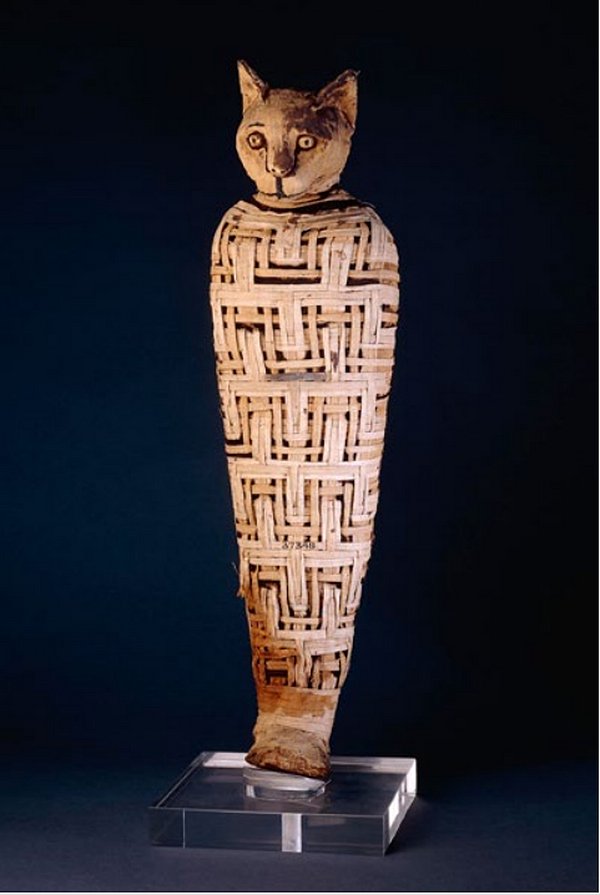
Cat mummies have a long cross-cultural history stretching back through ancient Rome to the Pharaonic era (Fig. 3). In Egypt, cats were regarded as sacred. Just a few years ago, archaeologists excavated stone sarcophagi from the Old Kingdom south of Cairo, in which they found embalmed and partly gilded wooden cats, as well as a bronze statue of a ‘cat queen’.
Compared to these almost 5,000-year-old cat mummies from the Pharaonic era, the mummy from the Bavarian Forest, which is a good 500 years old, is by comparison a relatively recent find. The desiccated finds from attics and animal remains from the late 15th century or even later seem to have little in common with the embalmed ‘sacred’ cult cats from the Egyptian tombs. We shall see below what ‘unholy’ fate awaited the cat on the threshold of the European modern era.
Favourable climatic conditions in the pre-cat-mummy era
How, then, can we explain the proliferation of mummified cat finds beneath roofs and gables since the 14th century? And what do the mummies have to do with the famines in Europe? To answer this, we must briefly outline the immediate period preceding the cat mummy finds – the so-called medieval ‘warm period’ (between 950 and 1300). During this time, agriculture flourished; the food supply for the population was not only secure but resulted in a considerable surplus.
This period of prosperity was comparable to the situation in the Neolithic era, when food supply could be planned for the first time. There was a population explosion, new cities were founded, and cathedrals – not just at Emperor Frederick II’s court of the Muses in Sicily – let sunlight stream in through their large windows. For a few centuries, nature was kind to mankind. The climate was reliable. The tree line in the Alps was in some places higher than it is today, and both grain and wine were cultivated further north than ever before. Evidence of grain farming extends as far as the mountainous regions of Norway and Scotland, and in the High Middle Ages, vines were even found on the British Isles.
The Little Ice Age, the Great Famine
This situation changed abruptly at the beginning of the 14th century and persisted for several centuries. Although temperatures fluctuated repeatedly here too – it was not consistently freezing – on average it was significantly colder than before. These were the centuries in which a cat was not only placed under the roof of a Waldler house in the Bavarian Forest. The summer of 1302, for instance, was still mild with sufficient rain, but by autumn the vines in Alsace had already frozen to death. In the spring of 1303, following a harsh winter, farmers across large parts of Germany stood before their seeds, destroyed by frost.
Yet these were merely the first harbingers of an approaching ice age. It began with a devastating period of drought. Alongside withered crops and devastating city fires, particularly in Italy and France, an extreme drought also struck the Middle East, and the Nile reached a low water level rarely seen before. The catastrophe took on continental proportions.
This unprecedented drought was immediately followed by the next disaster. Torrential rains and floods destroyed the harvests, compounded by very long and extremely harsh winters. In the winter of 1315/16, the Baltic Sea froze over. The summers were cold too: snow is said to have fallen in Cologne at the end of June 1318. The growing season had been reduced to a minimum.
The population, which had grown rapidly during the centuries of favourable climate, was caught unprepared by these developments and hit with full force. Animal epidemics compounded the lost harvests. The ‘Great Famine’ between 1315 and 1321 is regarded as the greatest pan-European famine of the past millennium. Millions of people fell victim to it. Entire villages died out and became ghost towns.
Contemporary sources read like horror stories. In desperation, the starving ate their dogs and horses; the dead lay in the streets, and there were probably even cases of cannibalism. The famine was accompanied by epidemics and outbreaks of the plague.
The drought was followed by several periods of extreme cold between the 14th and early 19th centuries. The historical accounts could scarcely be more vivid: the winters were so cold that birds fell dead from the sky or coachmen froze to death in their carriages before reaching their destination. The Alpine glaciers advanced into the valleys, threatening settlements there.
These effects were felt across the entire northern hemisphere. The pack ice advanced southwards from the North Pole, resulting for a very long time in exceptionally cold, prolonged winters and cool, wet summers. Crop failures became a common feature of these climatic conditions, and in wet, cold summers the wheat often rotted right on the stalks.
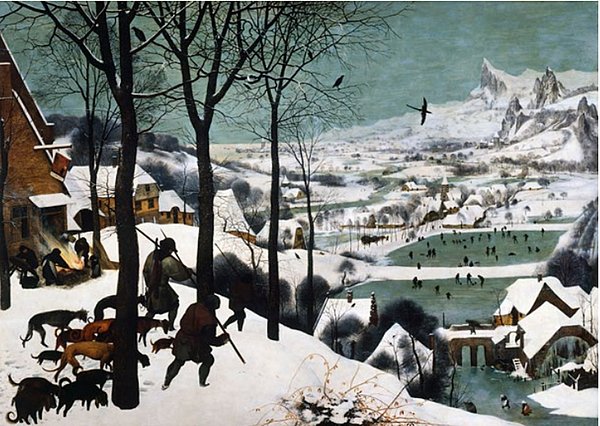
The rise in grain prices that followed hot on the heels of the crop failures led to severe social unrest among the population. The seasonal painting *The Return of the Hunters* by Pieter Bruegel the Elder, created in 1565, is one of the first major European paintings from the Little Ice Age: Painted in dark earth tones, the picture shows hunters trudging laboriously through deep snow with their dogs, returning to their village, which is almost crushed by masses of snow and whose waterways are frozen over. Their only catch is a emaciated fox (Fig. 4).
The causes of the massive cooling of the climate are complex. Increased volcanic activity with considerable emissions of ash, dust and gases, which in turn reduced solar radiation, is likely a factor here, as is significantly lower solar activity, widespread reforestation due to a progressive decline in population and increased abandonment of settlements, which resulted in a reduced greenhouse effect. However, a weaker Gulf Stream with a cooling effect, as well as changes in the Earth’s orbit around the Sun due to a shift in the Earth’s axial tilt, may also have been responsible for these changes.
But these were intertwined chains of cause and effect – too complex to pinpoint clear culprits for all the crop failures, the widespread famine, the epidemics, the misery and the death.
Witches’ Coven and Cat Sacrifices
First and foremost, the Jews were once again to be blamed for everything. In the drought year of 1305, for instance, they were accused of desecrating a host in Korneuburg, Austria, which immediately led to murder and manslaughter. Similar rumours also led to pogroms in Vienna and other parts of Austria.
From the mid-14th century onwards, persecution of Jews eventually intensified throughout the Holy Roman Empire and in other parts of Central Europe. In addition to usury, desecration of the Eucharist and poisoning of wells, Jews were also blamed for the outbreak of the plague.
Another group of victims held responsible for all manner of misfortune were the ‘witches’ – and this is where the mummified cats come into play once again. The height of the witch hunts coincides precisely with the decades in which there is evidence of a concentration of cat finds beneath gables.
In numerous witch trials, the accused were charged with weather sorcery and weather magic. They were found guilty as evil weather witches for causing freezing rain, frost and hail. From the Concise Dictionary of German Superstitions, we learn that the mummified cats were associated with a spell to ward off witches and other demons.
A witch, in the form of a dead cat, was placed under the roof to ward off misfortune from the house and its inhabitants in the future. As recent folklore research has shown, the intertwined demonisation of cats and witches has a long tradition. According to popular belief, cats are in cahoots with witches or the devil. Since the early 15th century, there have been repeated references to witches transforming themselves into cats.
The great cat exorcism during the Little Ice Age took many forms. In Alsace, live cats were hurled into the Easter bonfire to drive away witches. In Nassau, on Shrove Monday, live cats were hung up in a basket and set alight the following day with torches whilst reciting the ‘Lord’s Prayer’, so that the year might be fruitful. Each season had its own cat-related customs: at the first sowing, a live black tomcat was buried, and at the end of the harvest, a cat was killed.
Over the long duration of superstitions about ‘bewitched’ weather, the legend that cats are the bearers of all misfortune was woven over the centuries. Even today, one can read in popular guides to superstition that the ever-cunning cats walk through walls and enter homes via chimneys. In the late Middle Ages, they became the very personification of evil – and thus the “unholy” sacrificial animal – known as the “devil’s beast” or “witch’s beast”. At public carnivals, during the harvest – and indeed even above the mantelpiece in private homes.
In the period from the 16th to the 18th century alone, tens of thousands of women were burned alive as witches, and often many more cats along with them.
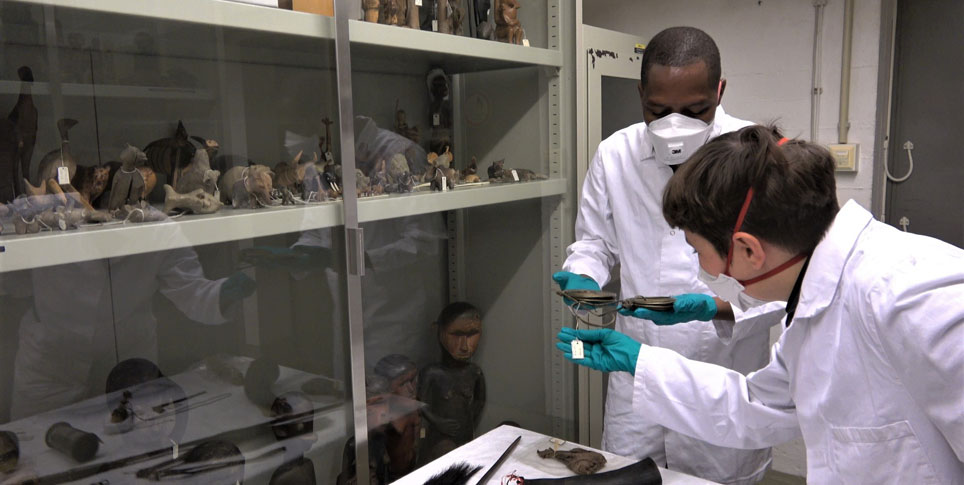
In the Holy Roman Empire, climate catastrophes and the associated famines were particularly closely linked to witch-hunts. It is there that most evidence of cat sacrifices can still be found today beneath the roofs of late medieval and early modern buildings. The cat mummy laid on the ridge beam in Hohenütwarth heads this list as the oldest find to date. At present, the old cat from the Bavarian Forest is passing through Westphalia. (Fig. 5).
It once served to ward off harm during the Little Ice Age. Today, in an era of climate awareness and an impending heatwave, it is a display piece in a glass case.

This article first appeared in the *Journal of the History of Ideas*: Issue XVIII/1, Spring 2024
*Journal of the History of Ideas*
Hunger
Issue XVIII/1, Spring 2024
Hoppe, Kaufmann, Weissberg, Thun-Hohenstein
How can one speak of the existential power of “Hunger”? In the history of literature, it is one of the paradoxical observations that it is a physical deprivation, preceding all language and ideas, which has driven forth a rich abundance of literature. This issue opens with a discussion of Knut Hamsun’s epoch-making novel *Hunger* (1890). With the loss of control over the old, orderly narrative world, modern literature witnesses the emergence of a new, feverish narrator who, following his own logic of madness, drives the action forward behind the author’s back. This issue also deals with this “madman”.