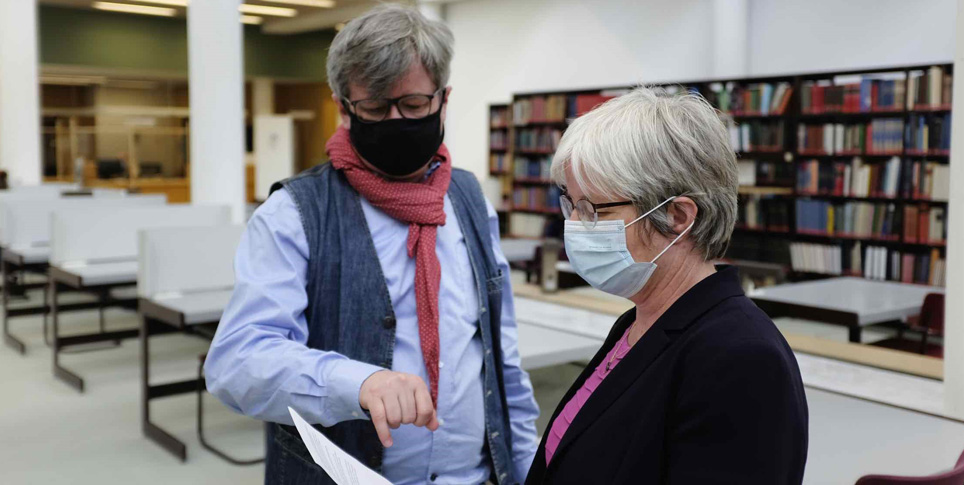
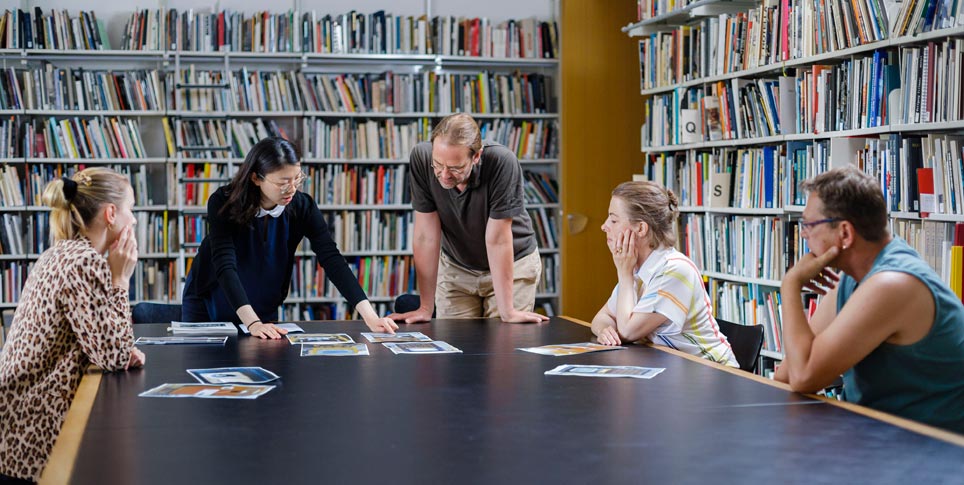
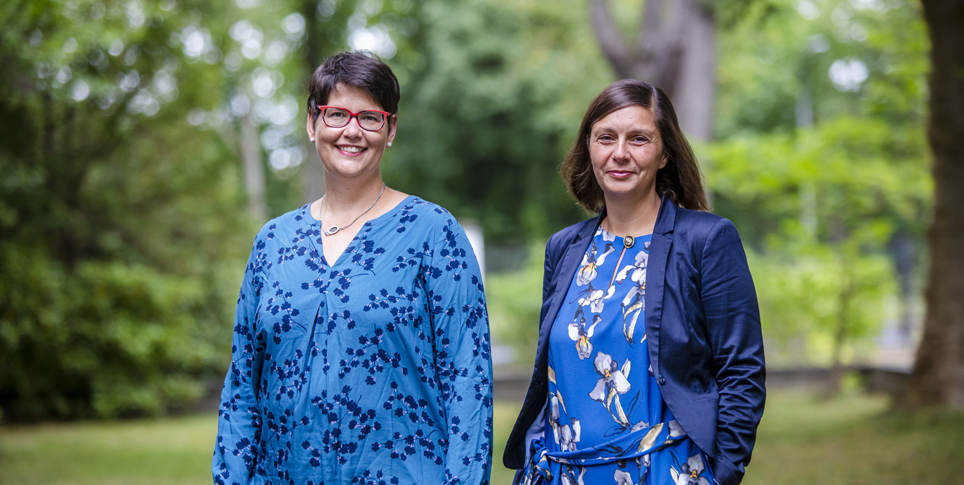
Anne Mollenhauer and Dima Dayoub from the Museum of Islamic Art at the Berlin State Museums have been involved with the Syrian Heritage Archive Project for many years. In this interview, they talk about living heritage, atmospheric architecture and the latest discoveries.
The Syrian Heritage Archive Project is a network of diverse projects addressing various themes relating to Syrian cultural heritage. Its aim is to document, preserve and present the richness of Syria’s heritage. A digital archive provides the information needed for the future reconstruction of destroyed monuments and for the preservation of Syria’s cultural heritage.
You have both been involved with Syrian cultural heritage for a long time, and with the city of Aleppo in particular. How did you come to be involved in the Syrian Heritage Archive Project?
Anne Mollenhauer: It stems from my personal research interests, as I had previously worked on other projects in the Middle East and on Aleppo. The Syrian Heritage Archive Project was launched in 2013 as a collaborative project between the Museum of Islamic Art and the German Archaeological Institute (DAI) and was funded by the Cultural Heritage Programme of the Federal Foreign Office. I worked there for six months in 2014. In 2019, I was given the opportunity to rejoin the project and contribute to the research on Aleppo. I have now been part of the team again for two years, but even before that I was always in touch with my colleagues from afar and followed the project with interest.
Dima Dayoub: I moved to Berlin in 2017 and began my PhD at the Technical University of Berlin. As I come from the field of architecture and urban planning, I have always been interested in various topics relating to Aleppo and have tried to keep track of what is happening to the city and Syria’s cultural heritage. In 2018, a position was advertised for the archive, for which I successfully applied. Since then, my research has focused on Aleppo.
The collaborative project “Zero Hour: Post-Conflict Recovery of Urban Cultural Heritage in the Middle East” has been running since 2017. What is your contribution to this project, which you both lead on behalf of the Museum of Islamic Art?
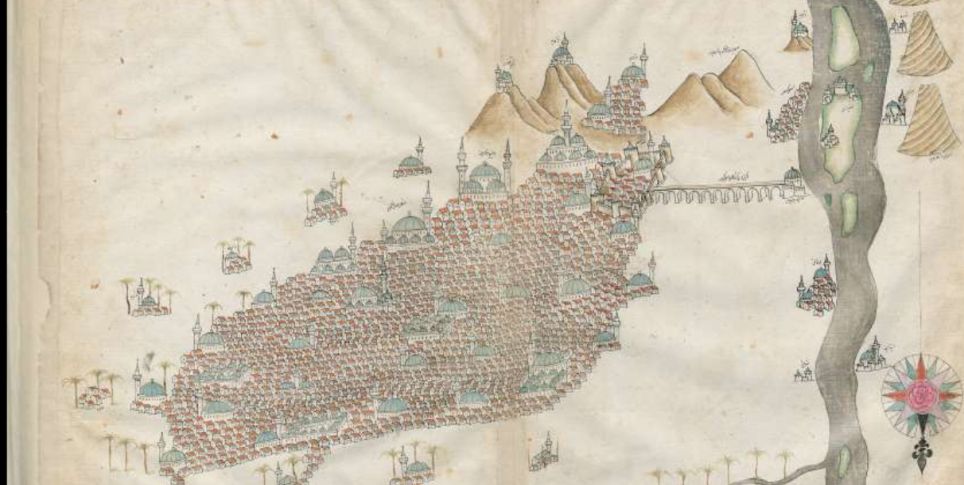
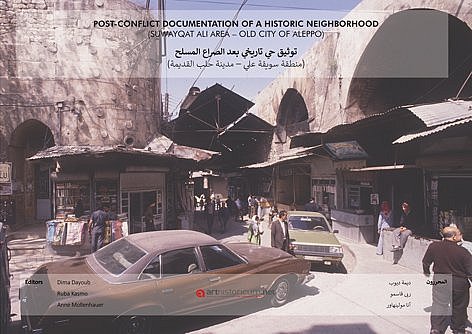
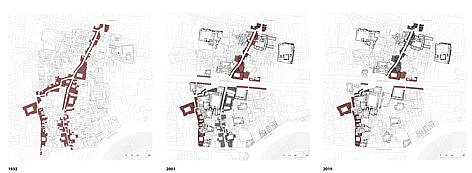
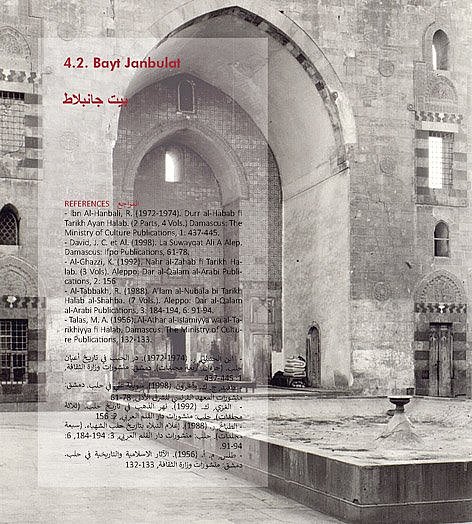
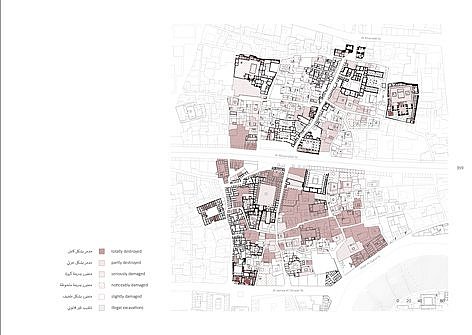
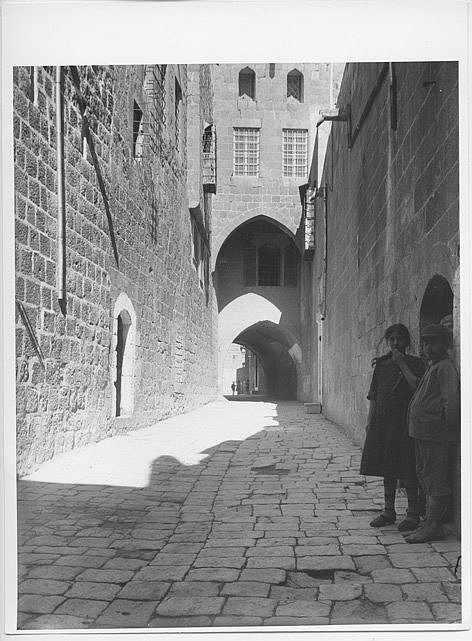
Mollenhauer: “Zero Hour” was a project of the Archaeological Heritage Network, representing a collaboration between the DAI, the Museum of Islamic Art, the Technical University of Brandenburg, the Technical University of Berlin and other institutions. We at the Museum of Islamic Art collect detailed historical data and information on monuments and buildings in Aleppo from the decades prior to 2011 and compare this with current data on their present condition. Our documentation was a sub-project of this initiative, which was completed in 2020. In 2019, we focused on the Suwayqat Ali district in Aleppo. The district was severely damaged during the armed conflict. There, we carried out a study on various levels, including an urban planning analysis and a documentation of the most important monuments and their current condition. By comparing the past with the present, we were able to trace how the neighbourhood has changed and what condition the buildings are in today. Our findings are now being presented in an e-publication.
Are there any specific findings that surprised you or that you would particularly like to highlight?
Dayoub: We made comparisons between three different time periods: 1932, before the war began (June 2012) and then after the war (December 2016). We tried to track the morphological urban changes and found that urban transformation had been taking place from the very beginning. It is not the case that the war caused a rupture that changed everything. It is more a matter of a gradual change in the urban structure. Another insight we gained is that the interventions currently taking place in the neighbourhood are very individual. There is no holistic plan for how to restore this area or even the old town in general. One can observe that the people rebuilding their homes do not necessarily follow a methodology or a framework for reconstruction. There is no oversight by the authorities, so residents proceed as they see fit. This led us to conclude that it is necessary to draw up guidelines for reconstruction and conservation, or at least to address this issue. Although there are guidelines from the pre-war period, there are no specifications dealing with war damage. Previously, in peacetime, there was time and resources, whereas now people have to live in a destroyed city. We see the need to adapt these guidelines to the new situation.
Mollenhauer: Personally, I was surprised by the historical perspective. As early as 1998, there was a study on Suwayqat Ali by the French scholar Jean-Claude David, who has studied Aleppo extensively and is one of the most knowledgeable experts on the city. When I now look at our documentary alongside it, it is a continuation of David’s research into the 21st century. We didn’t plan it; it was simply a logical development.
What other projects are you currently working on?
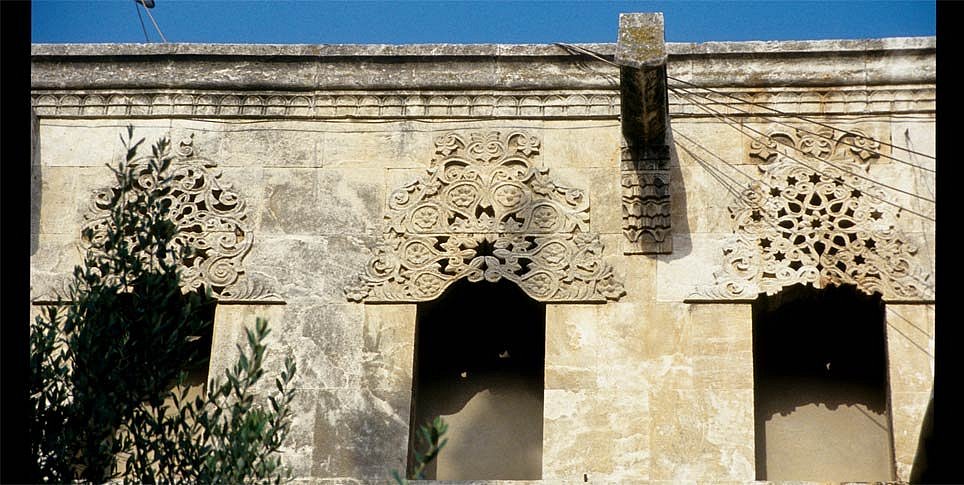
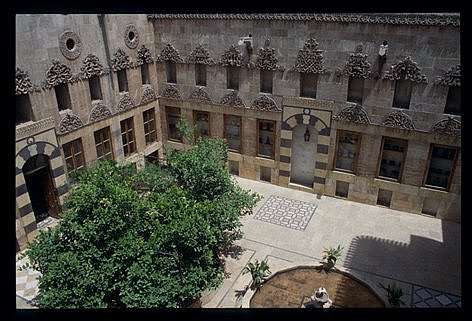
Mollenhauer: Alongside our general work for the Syrian Heritage Archive Project, our current focus is on documenting Aleppo’s cultural heritage from various perspectives. Specifically, we are currently concentrating on traditional houses: we are cataloguing the buildings in the al-Sadisa district, part of which is the better-known al-Judayda, which was settled in the 15th century. The neighbourhood lies north of the Old City; there are many large Christian houses there that were converted into restaurants in the late 20th century. We have over 5,000 photos of buildings from the neighbourhood in our archive, so we are currently trying to analyse the typology of the houses, the construction methods and typical damage, and to compare the historical situation with the current state.
Dayoub: The extensive material from the Syrian Heritage Project Archive forms the basis for the documentation work we aim to carry out here. Another reason why we are focusing on the traditional courtyard houses in Aleppo and their condition is that this particular area was severely damaged during the fighting. Nevertheless, this part of the city is not at the centre of the discourse on reconstruction following the armed conflict; the focus is more on the historical monuments.
Mollenhauer: We believe that, with all this material and our knowledge, we may one day be able to help people who lost their homes in the war and now wish to restore them to do so in an appropriate manner, whilst preserving and restoring the traditional architecture.
Team
- Dr Anne Mollenhauer, Museum of Islamic Art, Berlin
- Dima Dayoub, Museum of Islamic Art, Berlin
- Assoc. Prof. Dr.-Ing. Ruba Kasmo, Sultan Fatih Mehmet Vakif University, Istanbul
- Prof. Dr.-Ing. Guilia Annalinda Neglia, Politecnico di Bari
- Architect Thierry Grandin, Aleppo
Have you had the opportunity to visit the site recently, or do you mainly work with digital material from the archive?
Dayoub: I try to travel to Aleppo every year to gather impressions, record observations and also conduct my own independent research. Last year, of course, the coronavirus pandemic thwarted those plans. However, I intend to go back there soon to speak to the residents and form my own impressions. I come from Aleppo, so I also go there for personal reasons and try to combine that with my professional work.
Mollenhauer: Unfortunately, I haven’t been there for many years. Before the war, I visited Syria many times; Aleppo was a place I visited on various occasions. At the moment, I’m working solely with the digital material in our archive, as well as with information and observations from our personal networks, from people who are or were there.
Do you nevertheless have an impression of what the situation there is like at the moment? How might one picture the city of Aleppo and its residential districts?
Dayoub: When we talk about the Old City in general, it has to be said that a great deal was destroyed there during the armed conflict. Today, there are a large number of abandoned houses and structures, some of which have been completely lost. The extent of the destruction, however, depends on the specific areas one is looking at: there were two front lines running right through the heart of the Old City. These are now completely destroyed areas. The outskirts were not as badly affected, but it always depends on the area; there are sections there too that have suffered severe damage. However, it is not just the houses that have been damaged, but also the infrastructure. If the infrastructure were repaired, people could return to their homes; this is currently underway.
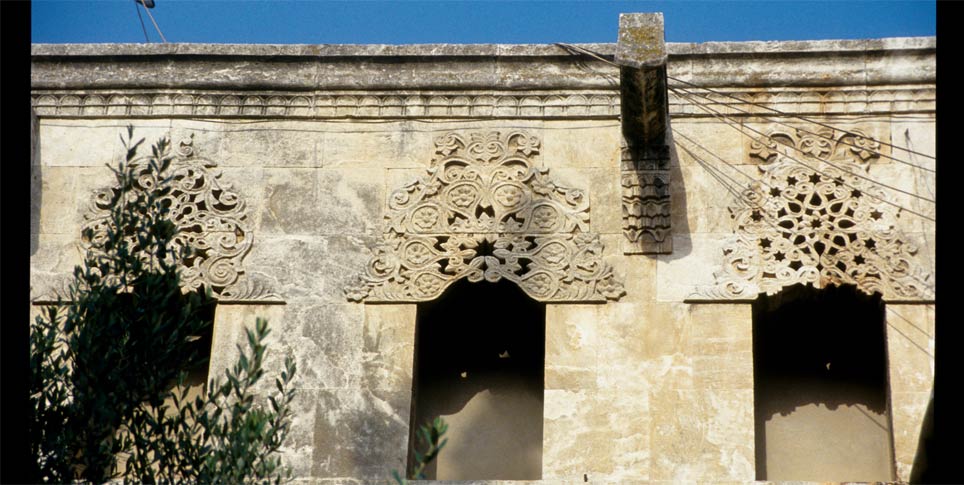
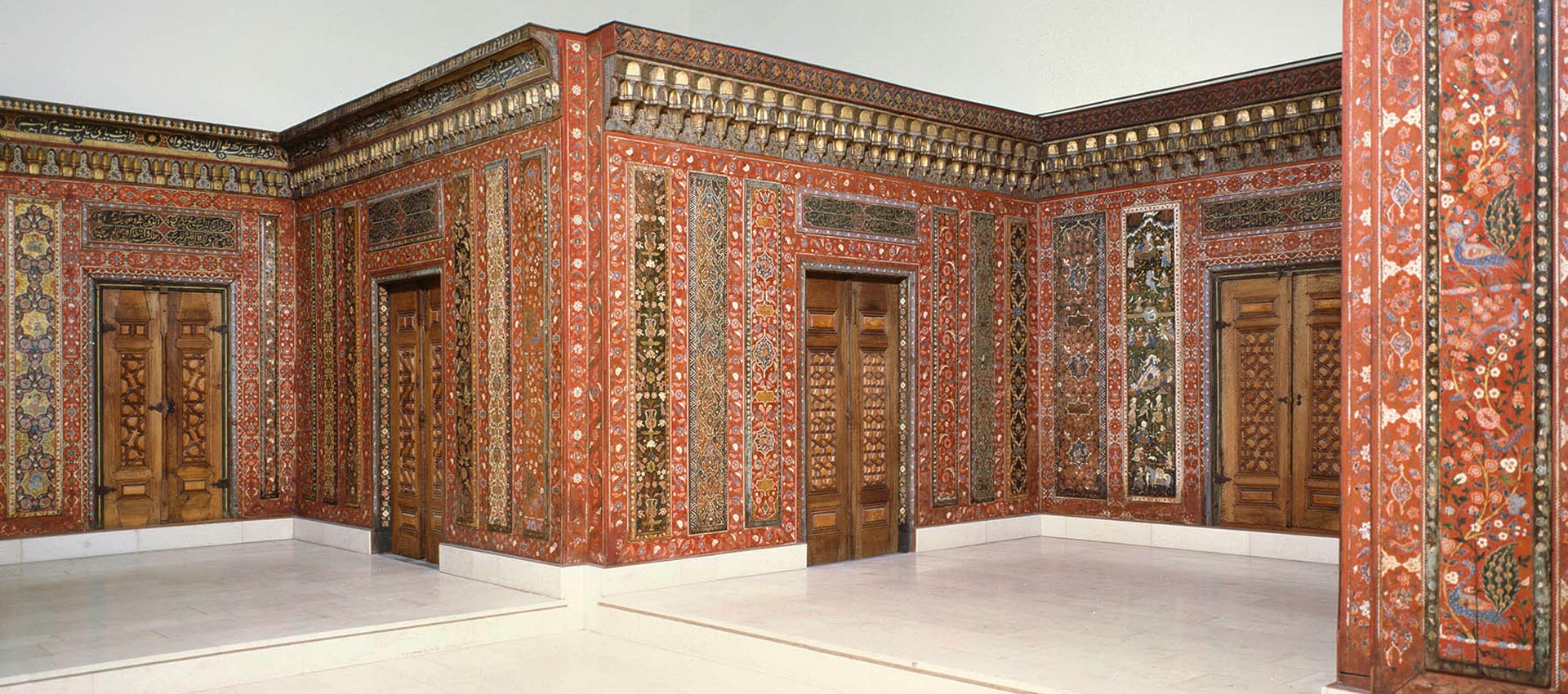
Mollenhauer: Aleppo’s residential architecture was and remains very famous. The houses date mainly from the Ottoman period, with a few from the Mamluk era. Aleppo has a very atmospheric residential architecture that holds great cultural value for the city and its people. As I have heard, some of the partially damaged houses are still inhabited. So, for example, if one side of a building has been destroyed, the residents use the side that is still intact.
Dayoub: You find places scattered all over the city where people are living amidst the destruction, some without doors or windows, but it is the only place they have. It is a living heritage; people live there, work there, and carry on with their daily lives.
Is that also a reason why you are currently focusing your work on Aleppo? What distinguishes it from other cities that were also destroyed in the war, such as Palmyra?
Mollenhauer: Palmyra is, of course, a very important archaeological site that needs to be secured and the form of its reconstruction discussed, but the work there is not of such great urgency, as it can be carried out at any time – this year, next year or in two years’ time. Aleppo, on the other hand, is a living city. The people there are suffering at the moment, and they need to restore their surroundings and their living environment so that they can return and use the city as their own again. That is why we believe that focusing on Aleppo is the top priority at the moment.
Dayoub: We believe that Aleppo should now be the focus for these reasons.
Mollenhauer: People should always come first.
How exactly can you support people in rebuilding the city through your research work?
Dayoub: The archive’s data focuses mainly on the pre-war situation. It is a record of how things used to be, before we lost them. Documentation is therefore a central aspect of our work.
What we lack in Syria, or specifically in Aleppo, are archives; we lack documentation as a starting point. I believe this project forms the foundation for all future initiatives, which should be based on scientific studies, research and documentation. This is the first step towards any form of reconstruction. This is our asset, and this is what we can do from afar. This is how we can help. We are collecting all the data and trying to make the ‘before’ and ‘after’ visible and draw comparisons to visualise what has been lost.
Mollenhauer: In the case of Aleppo in particular, it is tragic that there used to be documentation, studies and research on the old town, but these were lost or burnt during the conflict. So there is a real need here to gather the information on the old town again, analyse it and categorise it so that it can be used in the future.
Dayoub: We are also in the process of carrying out rough damage assessments.
Ms Dayoub, you mentioned that there is currently no comprehensive plan for the restoration of the city of Aleppo. Do you have local partners who are interested in your work and who are trying to use your findings and knowledge for the city’s reconstruction?
Dayoub: That is one of the challenges of our project in general. Working with locals is proving difficult due to international sanctions, but we are trying to inform interested parties about our work through our personal networks.
Cooperation partners
- Archaeological Heritage Network (ArcHerNet)
- Brandenburg University of Technology Cottbus-Senftenberg
- German Archaeological Institute
We are also working on reaching people online; everything we do and produce, even the archive itself, is publicly accessible. We have already been in contact with some private individuals who are trying to restore a particular site and have sent them pictures of what the site looked like before. As we are a Syrian-German team, we do have an established personal network, but no official partners.
Do you already have plans for how you can achieve this in the future?
Dayoub: Of course we aim for active exchange, but due to the political deadlock, this is difficult at present. We’re waiting proactively, I’d say, by preparing, gathering and documenting, until a way or an opportunity presents itself. Then we’ll be ready to actively help. We have the capacity, we have the resources, we’re doing everything we can. I think that’s the only thing missing. It would make a huge difference if things were more open.
What are the next steps and plans for the future?
Dayoub: To achieve our goal of closer communication with local communities, we are currently actively working on our outreach activities. We are also considering changing our format to engage with the public – who aren’t necessarily experts – Syrians abroad and locals. We want to start a dialogue with people, produce more videos, images and other engaging formats, and share them via our Facebook page and website. Another goal is to cover the entire city with our research. We started with Suwayqat Ali and then moved on to Judayda. We hope to continue with the remaining areas of the city to gain a truly comprehensive view of the entire Old City.
Mollenhauer: Another key priority is to compile our findings in writing. It is important to have proper written documentation that is accessible to those who wish to delve deeper. We also want to share our experiences, both positive and negative. We want to reach out to the community of people interested in preserving cultural heritage, not only in Aleppo, but wherever cultural heritage is under threat. We want to expand our network to include people active in Beirut, Mosul and other places in the region. By getting in touch with them and staying in contact, we hope to keep a lively discussion going and learn from their different experiences.