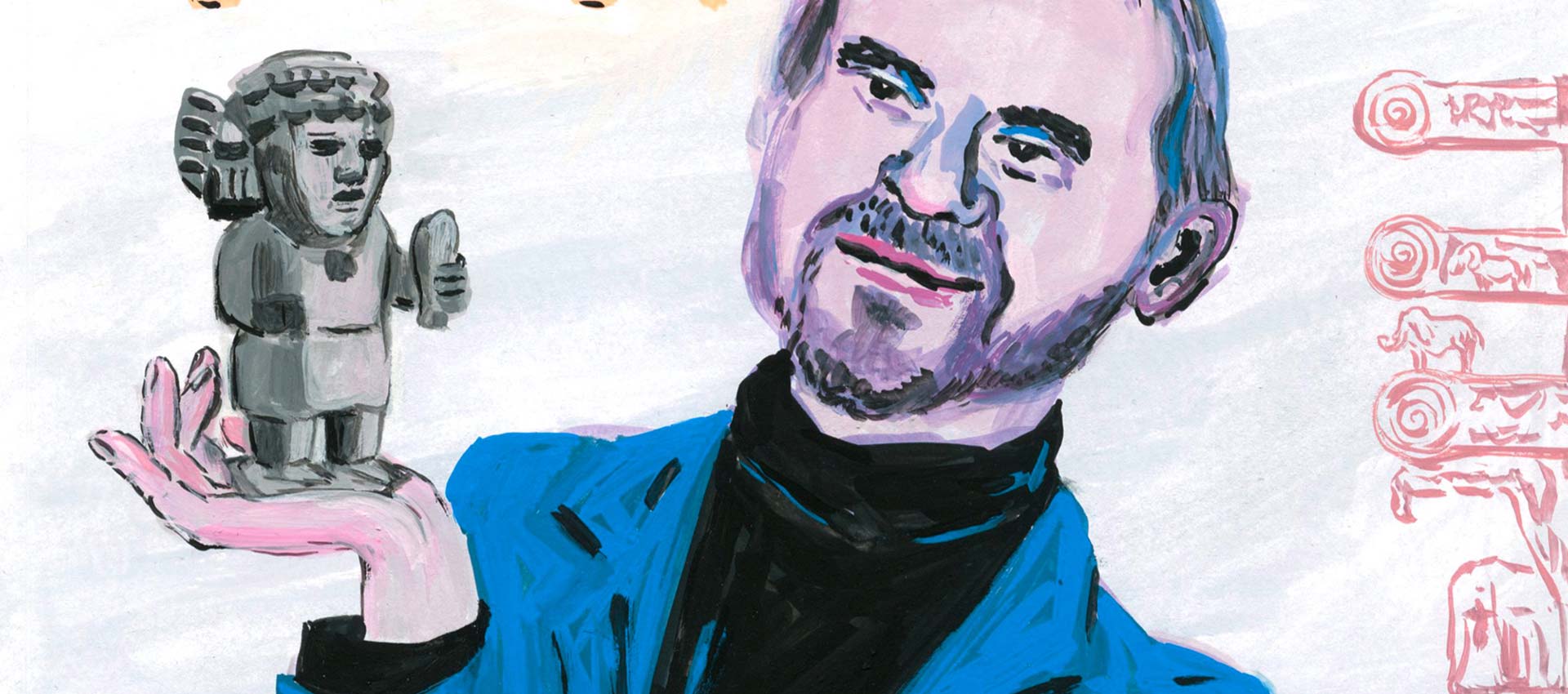
Music specialist Thomas MacMillan is a trainee at the Musical Instrument Museum. Here, he answers your questions about acrylic instruments, explains why he needs a Radiohead detox, and discusses which is more fun: making music or researching it?
Mr MacMillan, what is the hidden history of the Grafton saxophone?
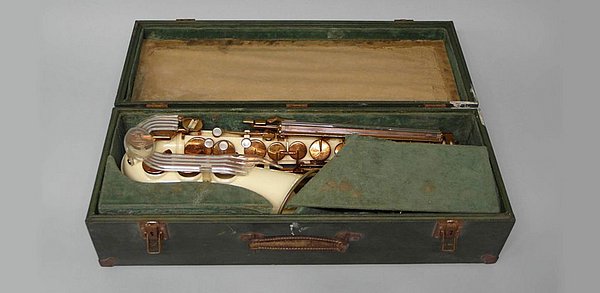
Thomas MacMillan: Manufactured in the 1950s, the Grafton saxophone is an extremely unusual instrument whose significance for music history might be overlooked at first glance. Compared to brass saxophones, its acrylic body had many drawbacks: it was easy to break and practically impossible to repair; its distinctive tone often made it unsuitable for playing in conventional brass and wind sections, and the keys were far less responsive.
Nevertheless, it was about half the price of a regular saxophone, which made it attractive to many aspiring musicians – not least Ornette Coleman. Coleman actually appreciated its unusual tonal characteristics, which can be heard on his famous 1959 album, ‘The Shape of Jazz to Come’. Although Grafton ceased production of this model in 1967, its legacy lives on as a symbol of technological innovation, which Coleman aptly embodied in his radical musical ideas.
Research Questions
How exactly does one restore paper? How can you tell if a painting is genuine? And what is the correct way to play Beethoven? With Research Questions, we give you the opportunity to ask us your questions. In each issue of the research newsletter, a researcher from the SPK answers selected questions from the community on a specific topic.
What method can be used to explore the characteristic harmony of Radiohead’s music? How did you come up with this dissertation topic?
I had to develop my own method for this! I examined a wide range of methods used by scholars to analyse popular music, but found many of them inadequate. Even when analysing pop and rock music, traditional music theory is often still relied upon, using concepts that have hardly changed since the 18th century.
Clearly, analytical methods developed for composers such as Bach and Beethoven are of limited use for contemporary popular music. Therefore, in my thesis, I sought to move away from Euro-classical theory and methodology in order to analyse Radiohead’s music on its own terms.
For example, they are known for using unusual chord progressions that can be perceived as shifts between different musical modes or scales within the course of a song. My method focused on these modal shifts (which I refer to as ‘fluctuations’) as a salient feature and measures the extent to which their songs shift between modes.
A traditional approach to analysis would instead likely treat such harmonic movement as anomalous according to its standard models, implying that their harmony is somehow deficient or ‘incomplete’.
Well, I had to come up with a topic I could devote myself to passionately for more than three years, so analysing my favourite band seemed like a good choice! I’m not sure, though, if they’re still my favourite band... I need a Radiohead detox!
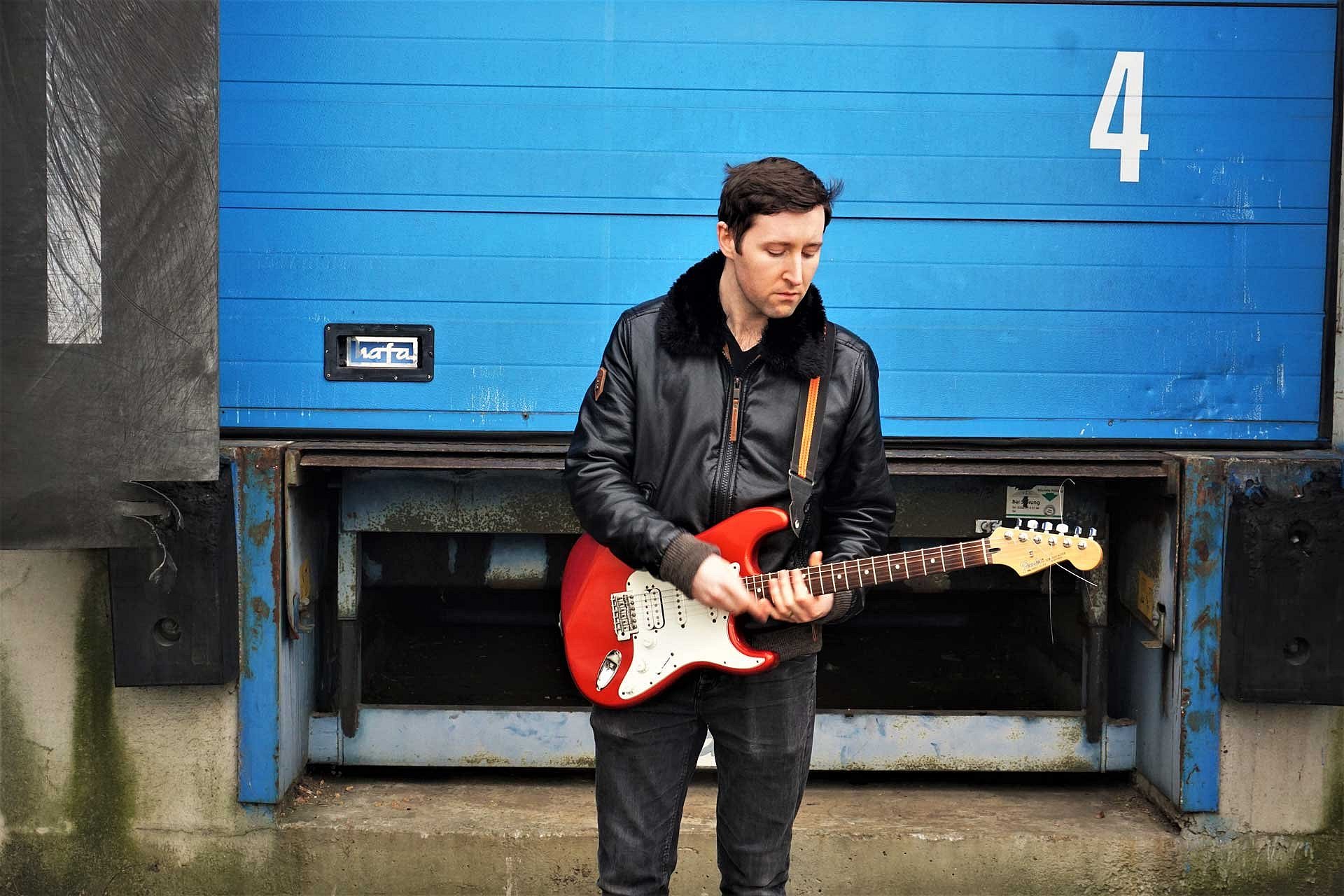
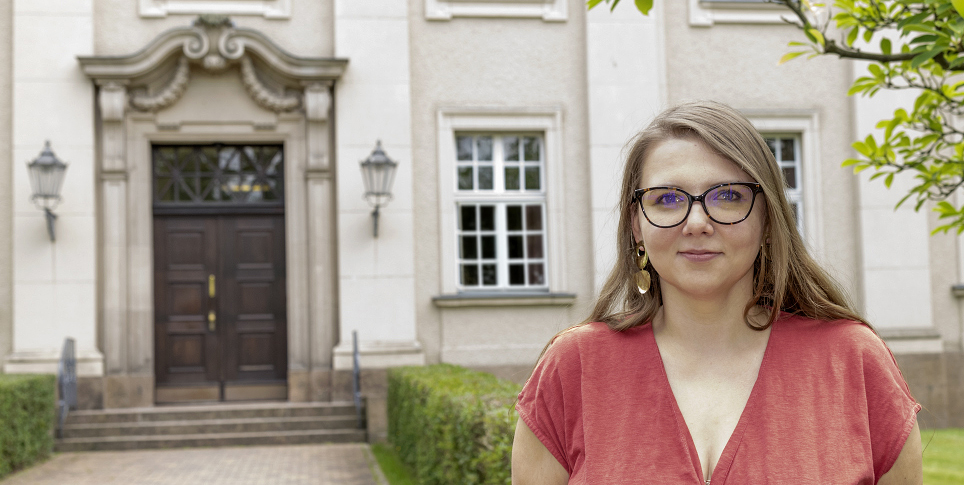
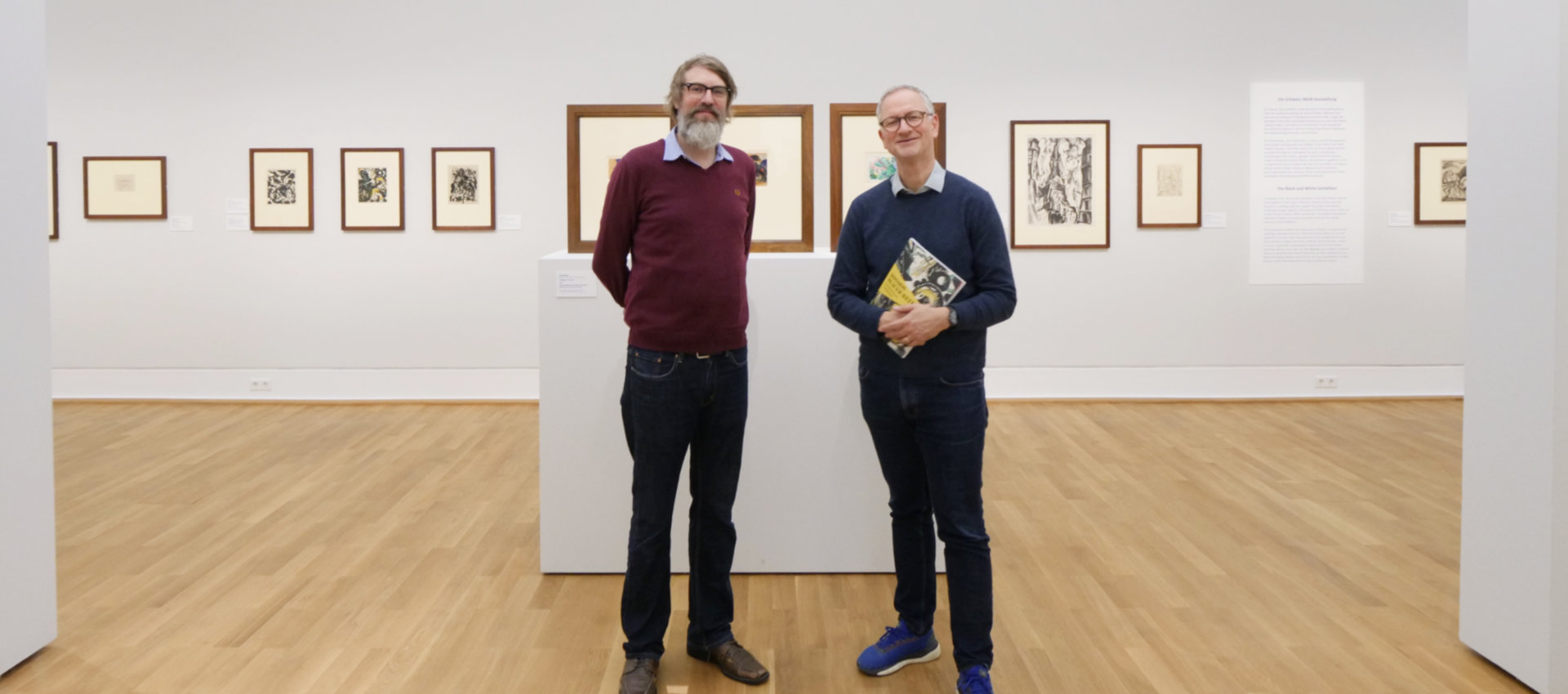
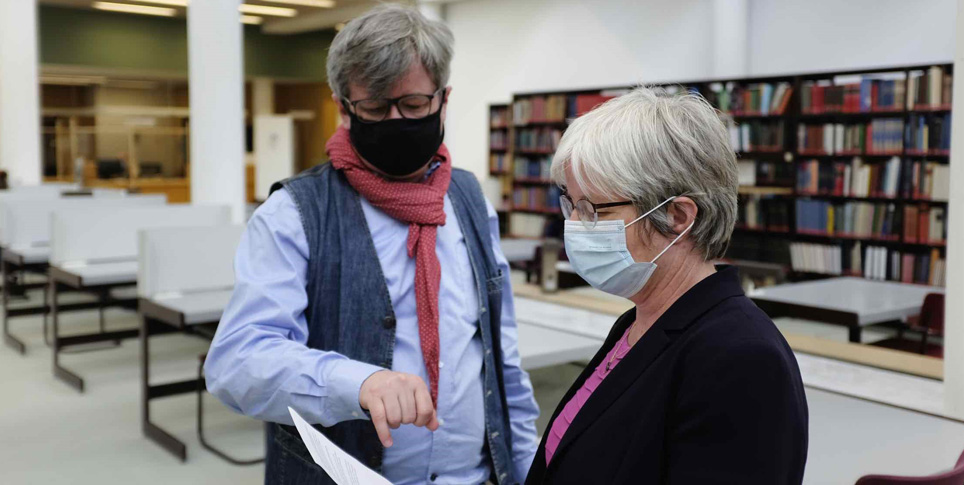
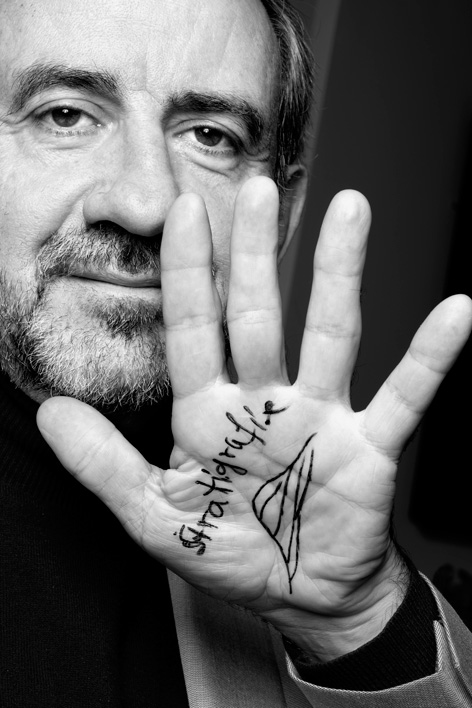
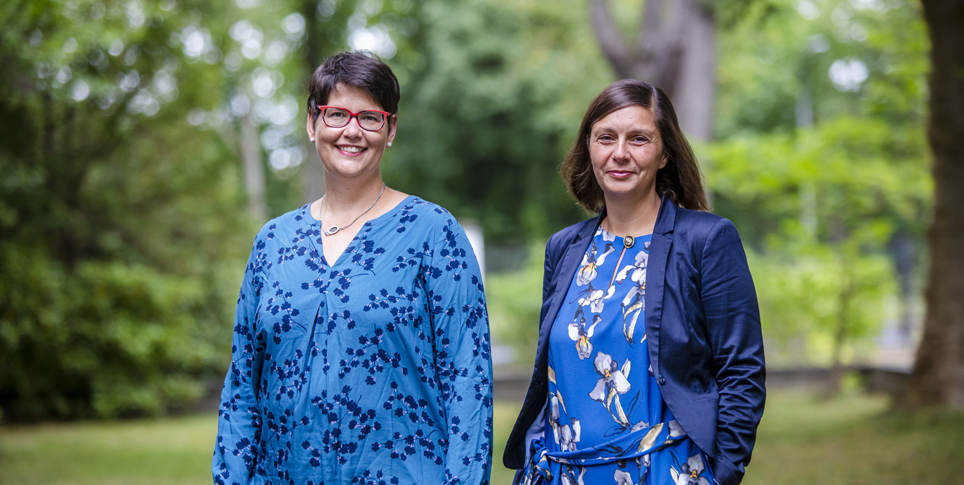
Thomas MacMillan is a volunteer at the Musical Instrument Museum. From 2019 to 2022, MacMillan completed his PhD at the UdK on the music of Radiohead and is developing a novel method for analysing their characteristic harmonies. He is also a passionate guitarist who performs regularly with the Berlin bands Carnivalesque and Kat Koan.
Photo: Belén Paz Y Miño
What is your daily professional and musical routine like? And which do you enjoy more: researching music or making music?
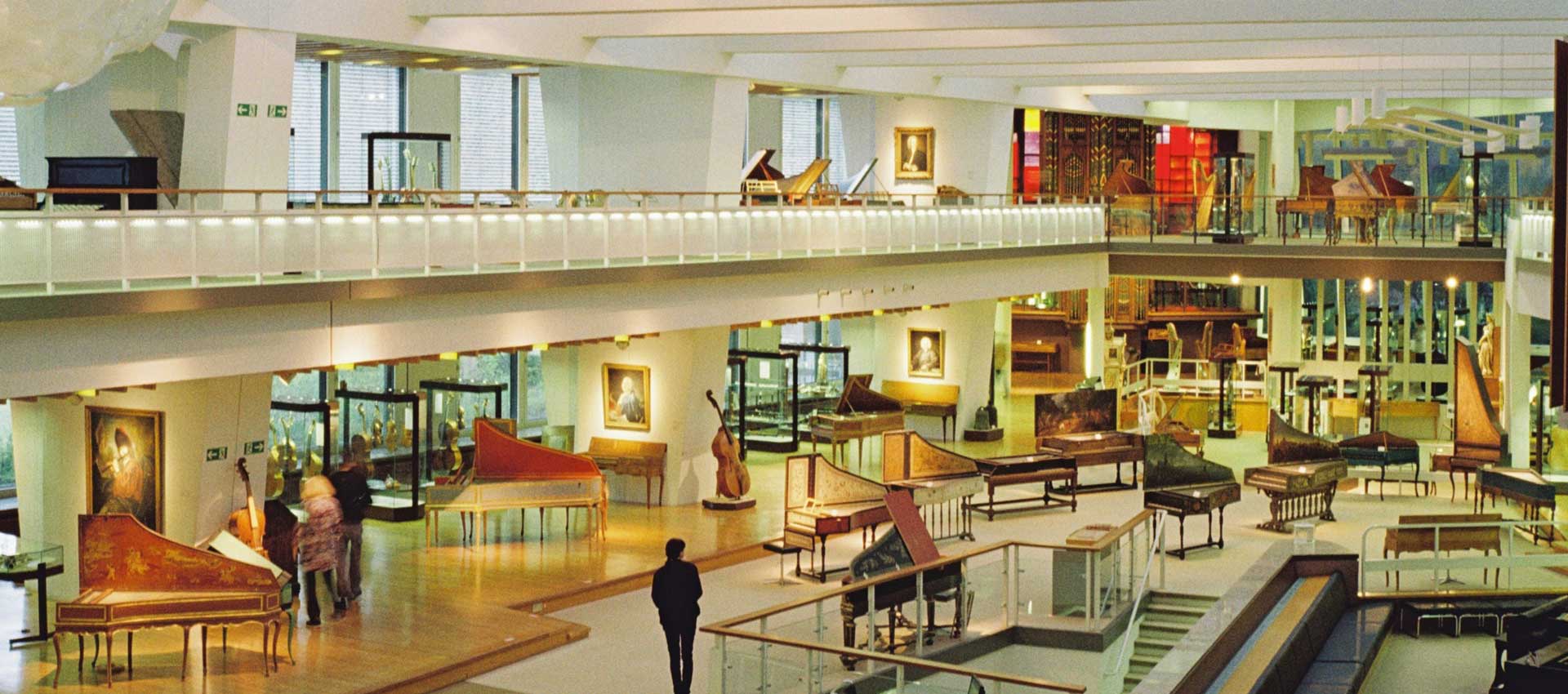
My duties at the State Institute for Music Research are quite varied. Every two weeks, I organise concerts in our Curt Sachs Hall, where we host performances by Berlin music students (Wednesdays at 3.30 pm, free entry – for anyone interested!).
I also actively work to improve our social media presence and curate content for our various channels (Instagram, Facebook and now TikTok too).
As I’m a native English speaker, I spend a lot of time translating texts and proofreading English documents.
I am also currently working on my own research project, which explores the history of non-classical music performances in ‘classical’ venues (such as the Philharmonie).
The answer to the second question is clear: making music is definitely more fun! Although I don’t think the two are mutually exclusive. Even during moments of free improvisation – something I love – one explores and analyses in a certain way, even ‘composes’, albeit in real time.