Reform policy “in the making”: The recently published book *The Heroes of Defeat: On the Formation of the ‘Prussian Statesman’. Continuities and Discontinuities of the Reform Era between 1806 and 1820* examines the numerous political and social modernisation measures that were set in motion in Prussia following the defeat by Napoleon in 1806. In an interview, co-editor Georg Eckert talks about heroic civil servants and Prussia as a centre of enlightened-liberal bureaucracy.
The second volume on the formation of the ‘Prussian statesman’ has recently been published, which you edited together with Prof. Dr Groppe from Helmut Schmidt University (University of the Federal Armed Forces, Hamburg) and Prof. Dr Höroldt, Director of the Secret State Archives of the Prussian Cultural Heritage Foundation (GStA PK). How did this book come about?
Eckert: In recent years, research has increasingly focused on individual actors: not just kings and prominent figures, but particularly those who carried out the ‘day-to-day business’. Prussia during the reform and pre-reform periods seemed to us to be a particularly rewarding field of research for this. Figures such as Baron vom Stein or Hardenberg are certainly well-known, but a closer look at both these prominent figures and lesser-known actors reveals the administration’s own dynamic. One sees reform policy ‘in the making’ and gains a sense of the internal dynamics of the bureaucracy, how it actually functioned, who provided the impetus – and above all: what ideas and mentalities underlay them.
A favourable opportunity arose through a conference at the House of Brandenburg-Prussian History in Potsdam. A fruitful collaboration developed between Ms Groppe, who heads a major project on the biographies of reform-minded civil servants, Ms Höroldt, who contributed the expertise of the Secret State Archives of the Prussian Cultural Heritage Foundation, and myself, as I was standing in for the Professor of Brandenburg-Prussian History in Potsdam at the time. The collaboration proved so successful that, following the first conference and the first volume, a second conference was held at the same venue, followed by this second volume, which features a similar structure and many of the same contributors.
The historian Thomas Nipperdey began his overview of 19th-century German history with the provocative statement: “In the beginning was Napoleon.” Your book focuses on statesmen who, following Prussia’s defeat by Napoleon in 1806, implemented numerous political and social modernisation measures. What did the defeat of 1806 signify, and what consequences did it have? How can the relationship between continuity and disruption in the so-called Age of Reform be described?
Eckert: For many actors, the defeat was a welcome opportunity to actually implement reform ideas that had long been discussed. Many officials, for example, had read Adam Smith thoroughly, but to be able to apply his ideas, they needed the right moment. That was a key finding from our first volume – which, after all, did not focus on specific policy areas, i.e. individual measures in the key reform sectors such as the emancipation of the peasantry, municipal regulation, the liberalisation of trade, etc., but rather on the foundations of reformist action. In the second volume, we asked ourselves: How did the balance of power now shift? What expectations did those who now took the reins of action arouse and fulfil? What profiles did the reformers exhibit, and what were their backgrounds – including with regard to specific generational influences, education and social milieus? What kind of political style did the reformers cultivate? What opportunities for advancement arose, but also: what limitations? Not all careers led upwards; some ultimately chose to step down – such as Friedrich von Raumer (1781–1873), who published ‘Six Dialogues on War and Trade’ in the fateful year of 1806 and, later, as a frustrated reformer, preferred to accept professorships in Breslau and eventually in Berlin.
It also proved significant how the so-called reformers knew how to present themselves, thereby embodying the hope for new ‘statesmen’. Napoleon was the unexpected antagonist who inscribed the necessity of reform into the public narrative. As the old Prussian state collapsed, the proponents of traditional doctrines lost their intellectual authority – and it was precisely at this moment that the reformers recognised their opportunity to finally implement modernisation measures that had been planned for years. They claimed to be bringing about the now-necessary fundamental reorganisation of the Prussian state: rational and scientifically grounded. This claim served as a backdrop, for much of it was not actually new. On closer inspection, a complex interplay between disruption and continuity becomes apparent. Disruptive measures were sometimes implemented under the guise of continuity – and vice versa. On the one hand, the reforms had to be made palatable to the rather cautious king; on the other, however, a broad, reform-minded public served as the target audience.
At the heart of this anthology are civil servants – a group of people one does not immediately associate with heroism. What sort of people were they? How did they come to be regarded as heroes in the first place? Is there anything about them that particularly surprised you?
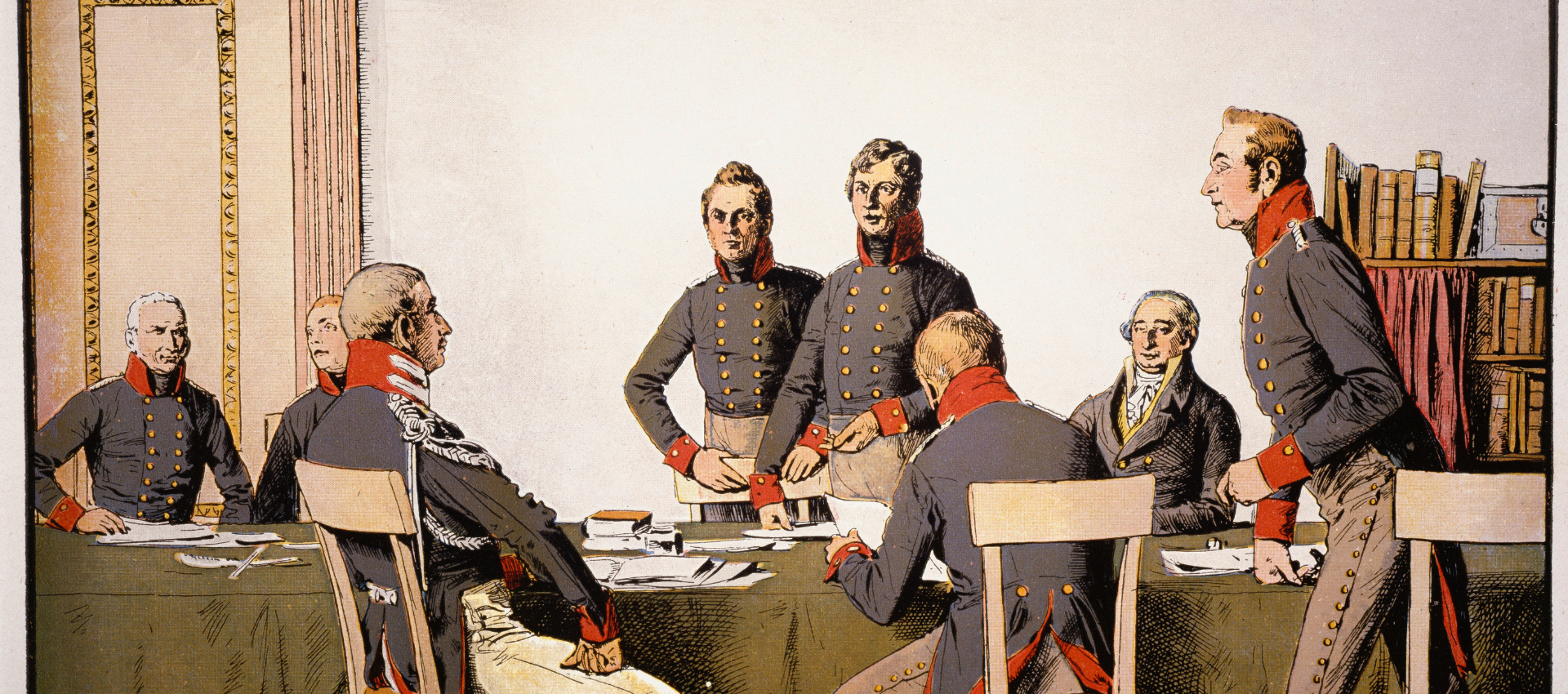
Eckert: The vacuum created by defeat provided the space for heroism. The old elites had evidently failed to lead the Prussian state into the modern era; the calls for new actors, which had already been audible in the 1790s, now found an echo. A new ethos of achievement, evident for instance in contemporary applications even for subordinate posts in the civil service, came to the fore: it was no longer allegiance to the monarch that was central, but allegiance to an Enlightenment-inspired conception of the state. In relation to the monarch, an important characteristic of the ‘heroes of defeat’ emerged at the same time: Frederick William III’s hesitant policy might be described as carefully deliberative – but precisely in contrast to this, the vigorous determination with which figures such as Stein and Hardenberg presented themselves appeared courageous and downright heroic. This is why quite a few administrative officials of the early 19th century were honoured with monuments, on a par with the generals of the ‘Wars of Liberation’.
What is surprising is the extent to which well-known and lesser-known protagonists of the Reform Era saw themselves as intellectuals. The somewhat modern term is slightly misleading, but only slightly, for the officials met not only in government offices but also in Berlin salons. Enlightened rationality held particular significance both in their own perception and in the public eye; a confidence in their own scientific way of thinking became the hallmark of these state reformers. Baron vom Stein, for instance, had tested rational, scientifically grounded approaches in mining – because the latest findings in the natural sciences were needed there; Altenstein, for his part, felt obliged to endow his extensive memorandum with the scientific authority of philosophy; conversely, it was second-tier officials such as Christian Friedrich Scharnweber (1770–1822, author, among other things, of the important ‘Regulatory Edict’) or Christian Rother (1778–1849, Hardenberg’s specialist in finance and economics), who, with their sober expertise, drafted the documents with which front-row figures such as Hardenberg in this instance rode the wave of the great renewal’s fervour.
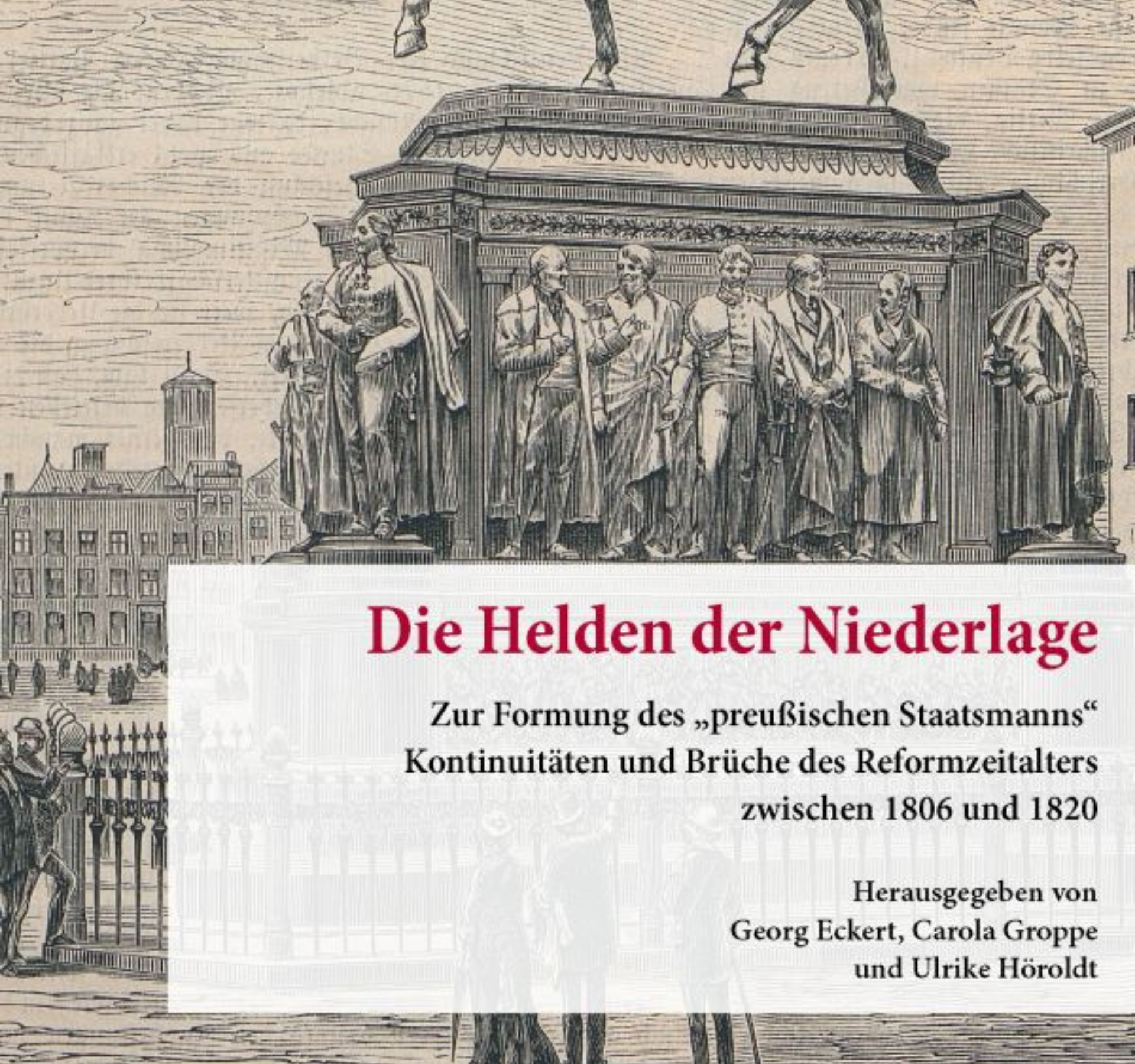
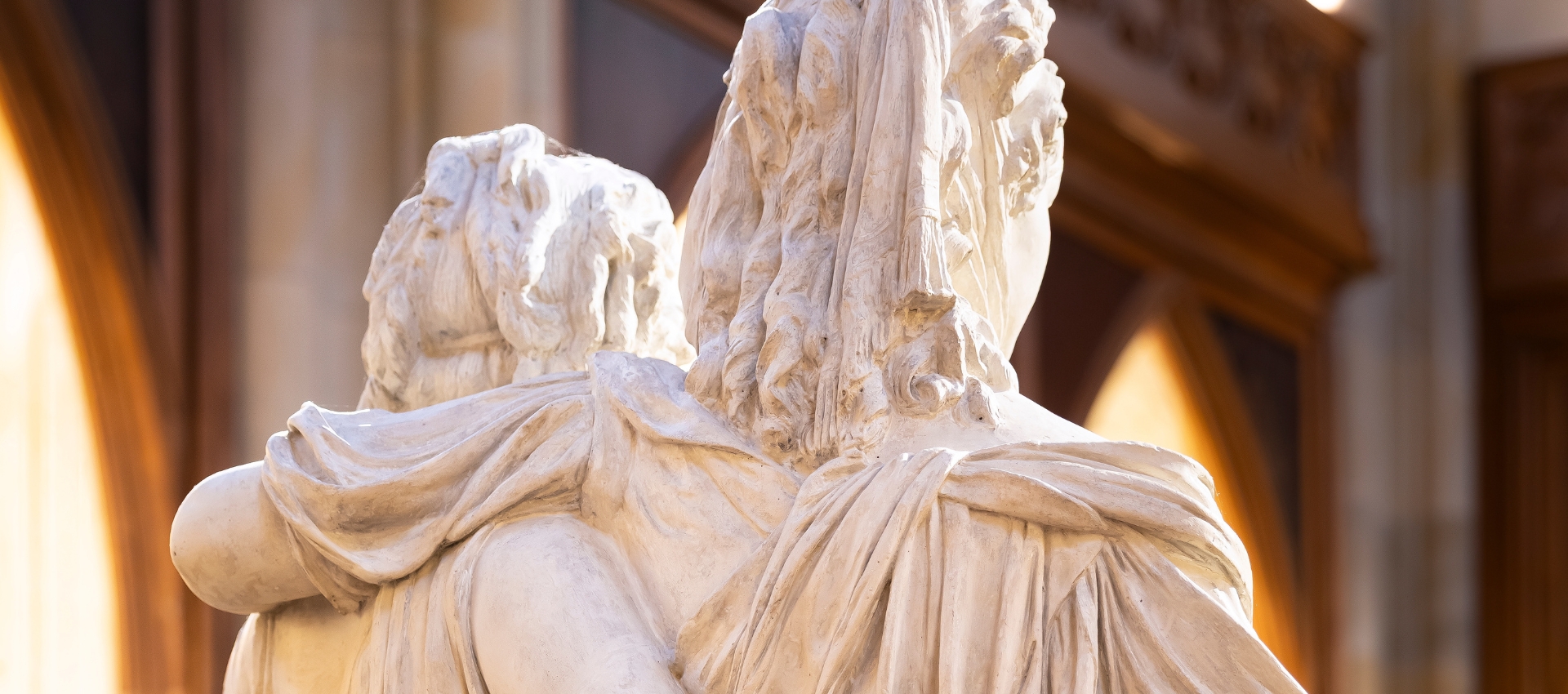
Cover image of the anthology: The monument to Frederick William III in Cologne. (Illustrated Calendar for 1880. Yearbook of Events, Endeavours and Progress in International Life, and in the Fields of Science, the Arts and Industry, Leipzig 1879, Plate 10. Cologne University and City Library)
Your book examines the Prussian Reform Era, a period characterised by both continuity and numerous breaks with the past. The stylised heroes of this era drew upon Enlightenment ideas as well as scientific findings and methods to implement political and social modernisation measures. According to political scientist Heribert Münkler, we now live in a post-heroic society. Against the backdrop of current crises – the war in Ukraine, the economic crisis, the climate crisis, but also in view of rampant bureaucracy – one might ask, somewhat hyperbolically: Should we dare to embrace more of Prussia again?
The Prussia of the Reform Era is an idealised one: not a militaristic authoritarian state, but a centre of enlightened-liberal bureaucracy. Yet precisely as an ideal, it has something going for it – who does not dream of a reform-minded administration that bases its work on the latest scientific findings?
Yet the principle of success from that era – the scientification of administration – is, in a sense, self-defeating. During the Reform Era, science reduced complexity by advocating a rational restructuring of the state based on a handful of principles. Today, science tends to generate complexity, because our excessive caution regarding possible consequences makes us hesitate to take certain steps. What was once such a successful principle may have lost its innovative character under changed conditions.
However, ‘dare to be more Prussian’ can also be understood differently: if one considers that the ‘Prussian Reforms’ – regardless of how effective they were in detail – simply make for a good narrative to this day, and are therefore so readily passed on. Societies perhaps cope better with upheavals when these occur under the guise of reformist continuity rather than revolutionary zeal. Disruption is not an end in itself.