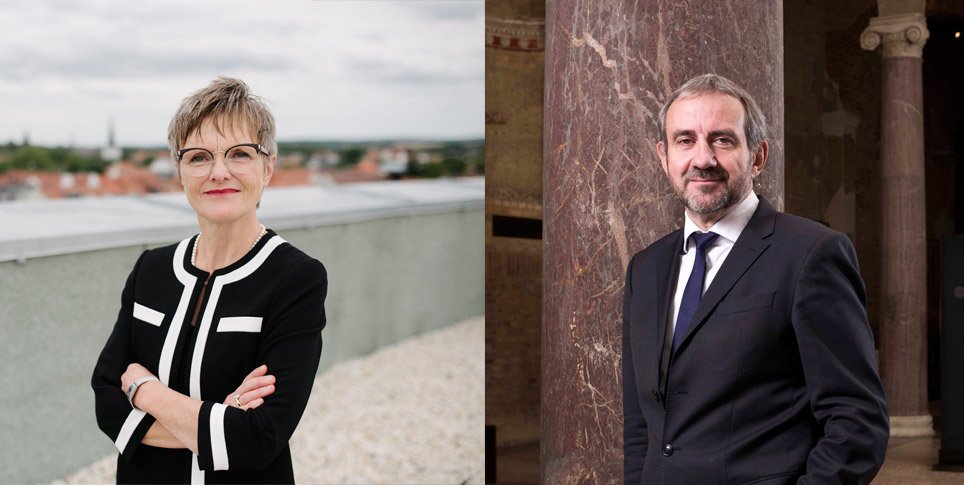
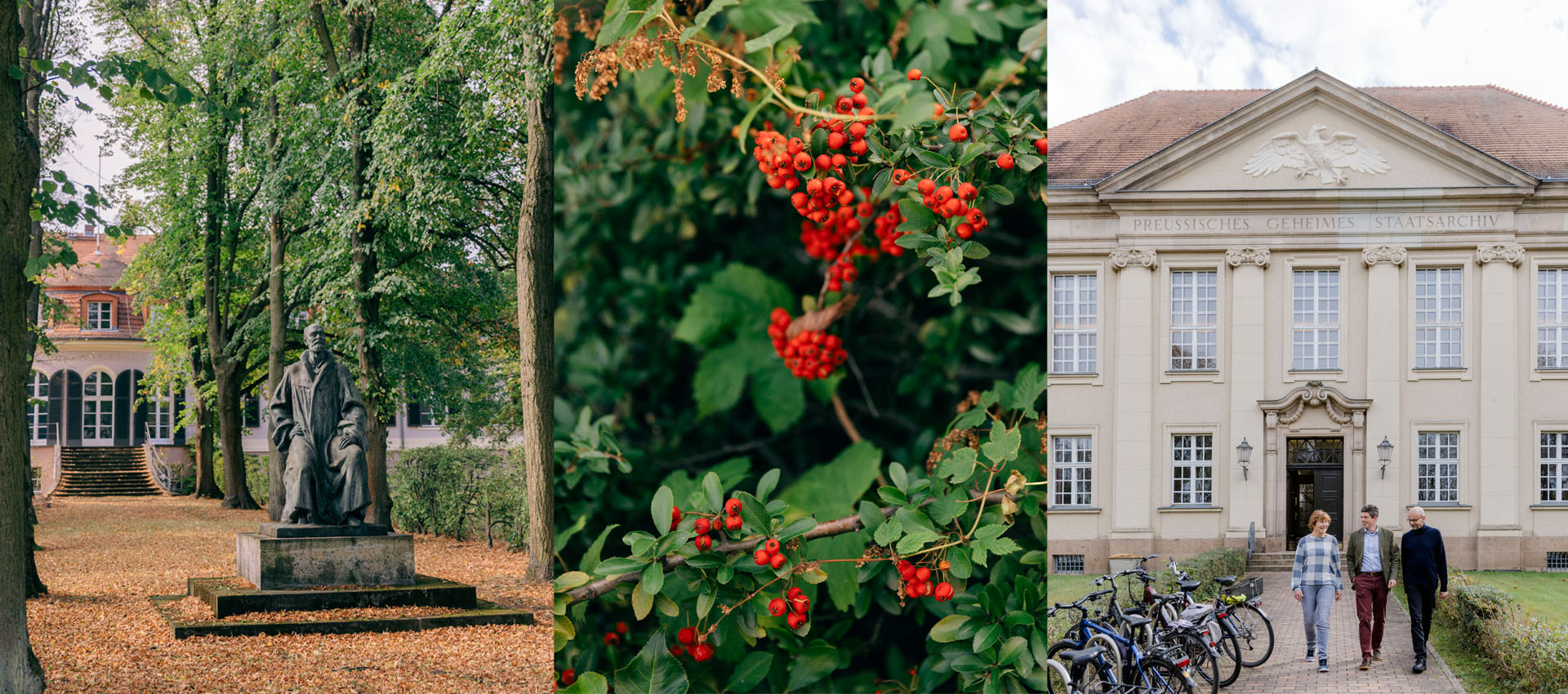
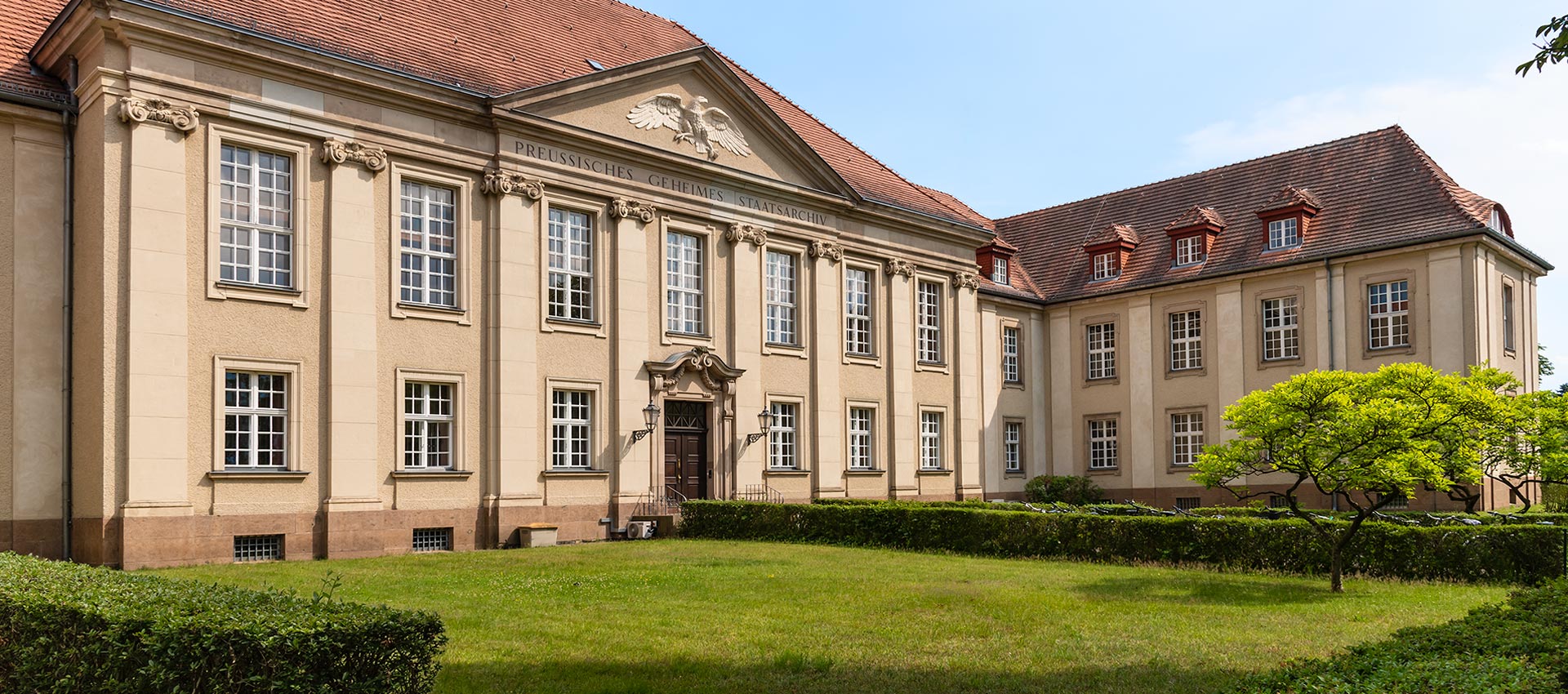
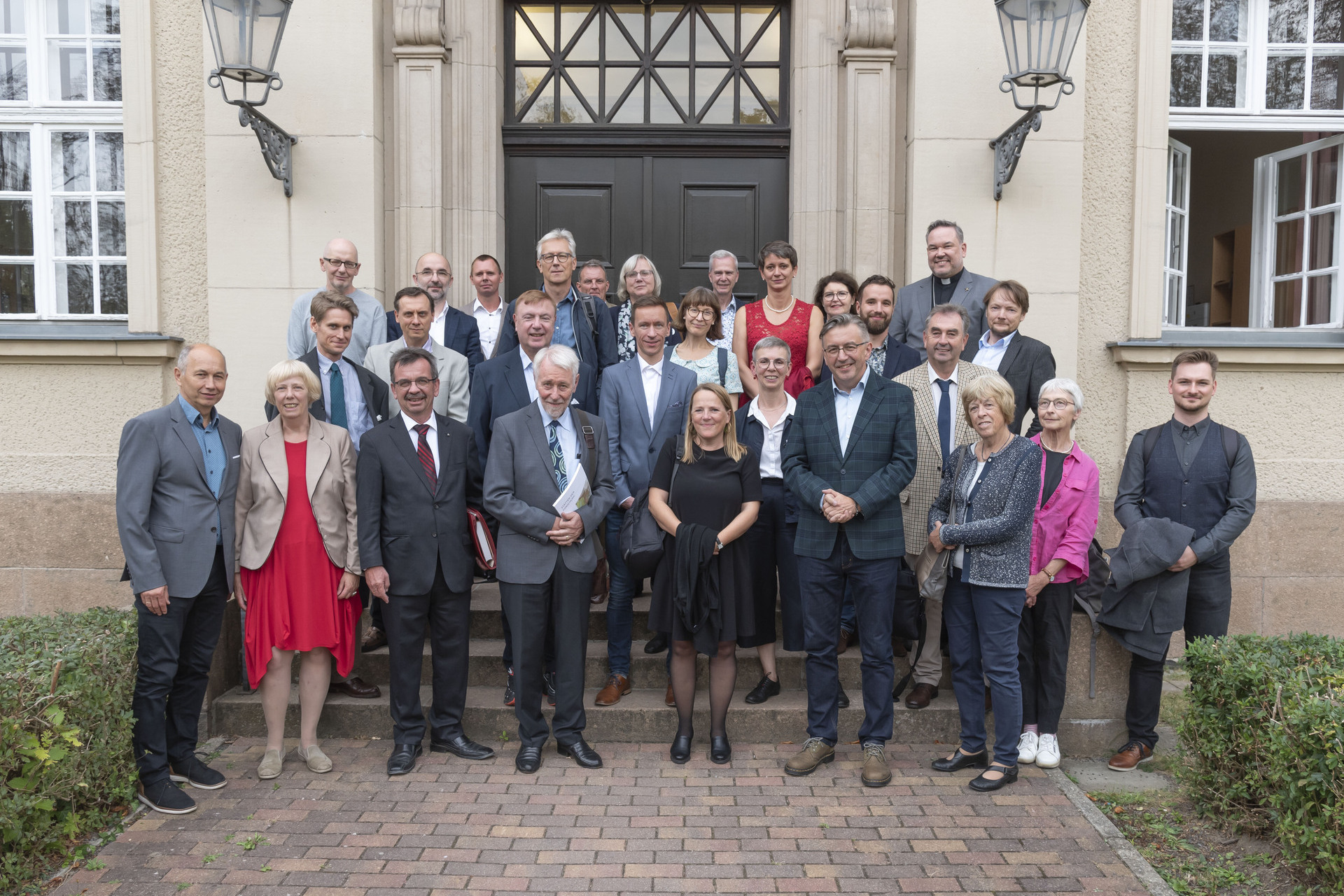
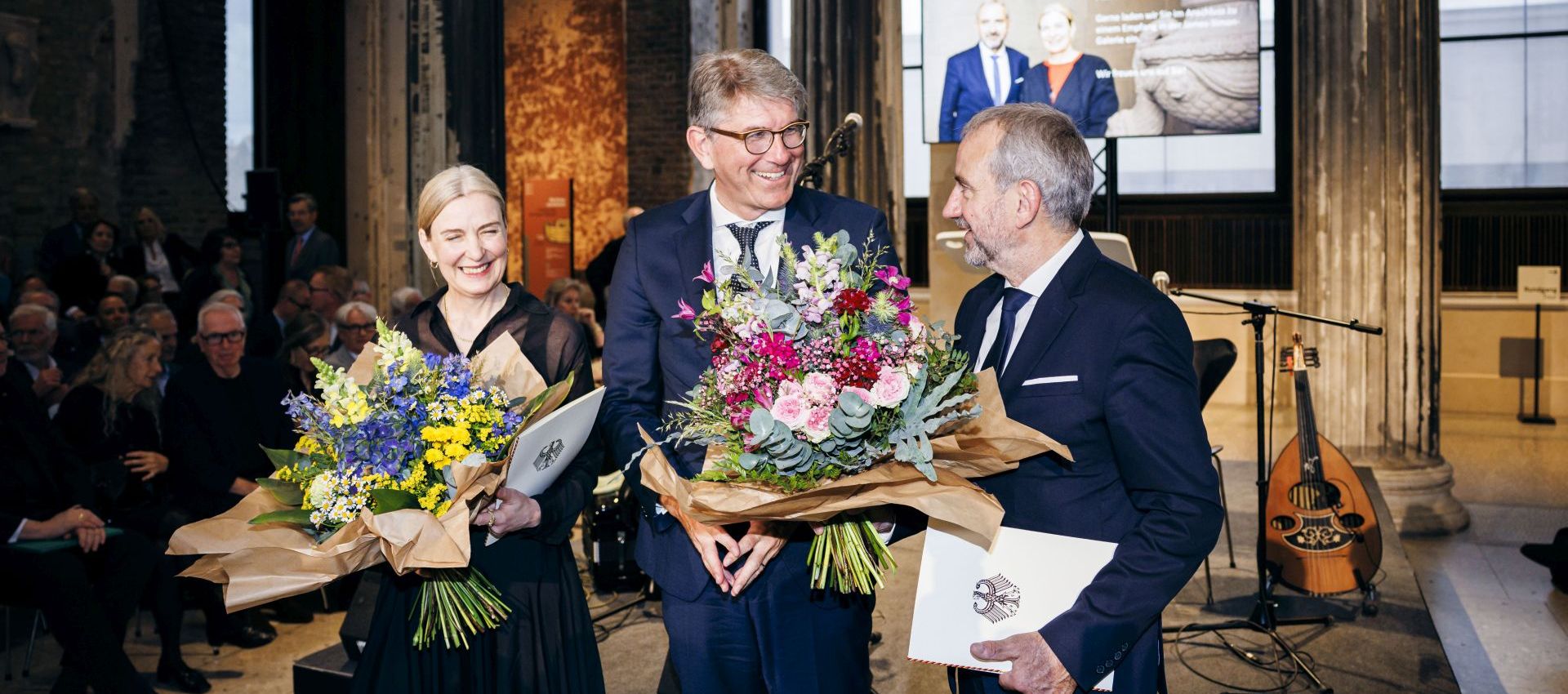
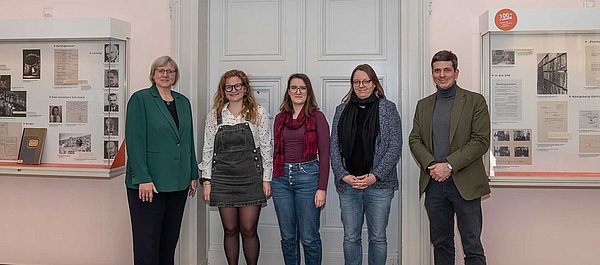
To mark its centenary, “100 Years of the GStA in Dahlem”, the Secret State Archives of the Prussian Cultural Heritage Foundation (GStA PK) is awarding research grants to academics at German universities. In this interview, the three grant recipients, Corinna Dziudzia, Johanna Evers and Laura Seithümmer, talk about their research and experiences
What are you currently researching at the Secret State Archives of the Prussian Cultural Heritage Foundation?
Seithümmer: I am researching my doctoral thesis. It concerns Esther Liebmann, the court Jewess of Frederick III or I, who worked for the court from the 1670s onwards. In 1701, as a widow, she took over her late husband’s business and continued to run it until her death.
She played a key role in delaying the construction of a synagogue in Berlin, as she had a private synagogue in her own home and wanted to force the Jewish community to attend her synagogue rather than a public one. In her time, Esther Liebmann thus held an exceptional position as both a woman and a Jew.
Evers: I am also conducting research for my doctoral thesis, specifically on the scope of action of the Prussian queens Luise and Elisabeth. There is already a great deal of research on the scope of action of queens in the early modern period. We know quite a bit about their diplomatic activities, their networks of correspondence, and their marriage policies.
But we don’t yet know much about the transition from the 18th to the 19th century. What’s more, there is already a great deal of research on Luise, but we know hardly anything about Elisabeth.
Dziudzia: At the moment, I am mainly working on a poet and scholar of the early Enlightenment who was relatively well-known at the time, Sidonia Hedwig Zäunemann, but who has since been forgotten. My aim is to identify and analyse previously unknown sources in order to learn more about her living and working conditions.
I am therefore also interested in the literary and scholarly discourse of her time, with whom she corresponded, what prompted her to write her thematically diverse texts, and who her readers were.
Where are you currently at in your academic career, and how does the Preußen Scholarship support your plans?
Seithümmer: I work at Heinrich Heine University in Düsseldorf, where I started my PhD in 2022 after having already written my Master’s thesis there. At the moment, I have a typical university position with 50 per cent teaching and 50 per cent research. But if you look at it realistically, you obviously don’t always manage to do 50 per cent research.
And that’s why this Prussian scholarship is brilliant for me, because for four weeks I can actually focus solely on my doctoral thesis without all the university commitments piling on top. For me, the scholarship is the perfect opportunity to properly gather sources. Otherwise, I don’t know how I would have managed it. It gives me the freedom to conduct research.
Evers: It’s similar for me. My PhD is based at the University of Marburg. I originally studied in Heidelberg, but then looked for a supervisor who was a very good fit for my topic and the period of historical transition. Normally, these are different departments. However, I don’t have a permanent position at the university; instead, I’ve been funding myself through a part-time job.
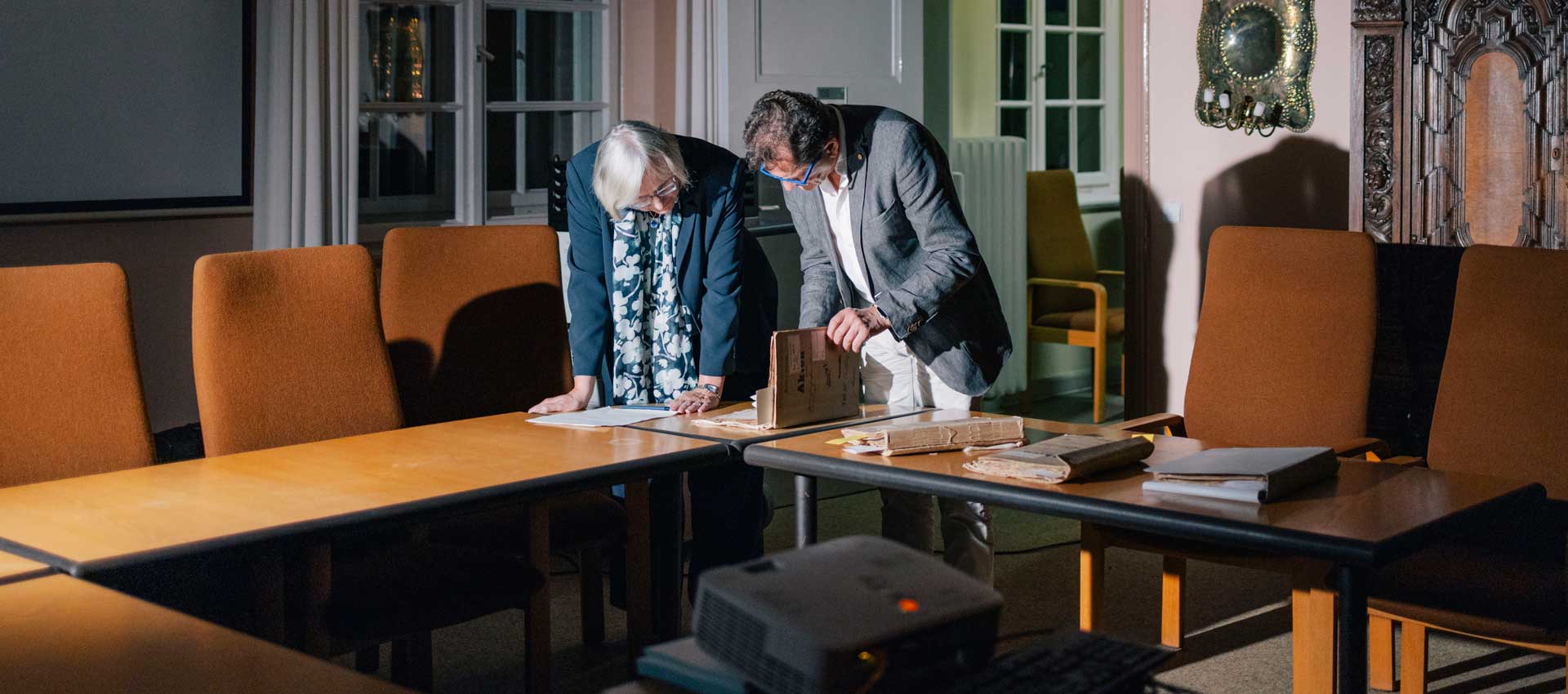
The Prussia Scholarship gives me the opportunity to spend a longer period in Berlin in peace and quiet and to go through all the holdings in the State Secret Archives.
Dziudzia: The scholarship came at just the right time; my postdoctoral thesis has been submitted, so it’s time for new projects!
What was the strangest discovery you made during your research in the archives?
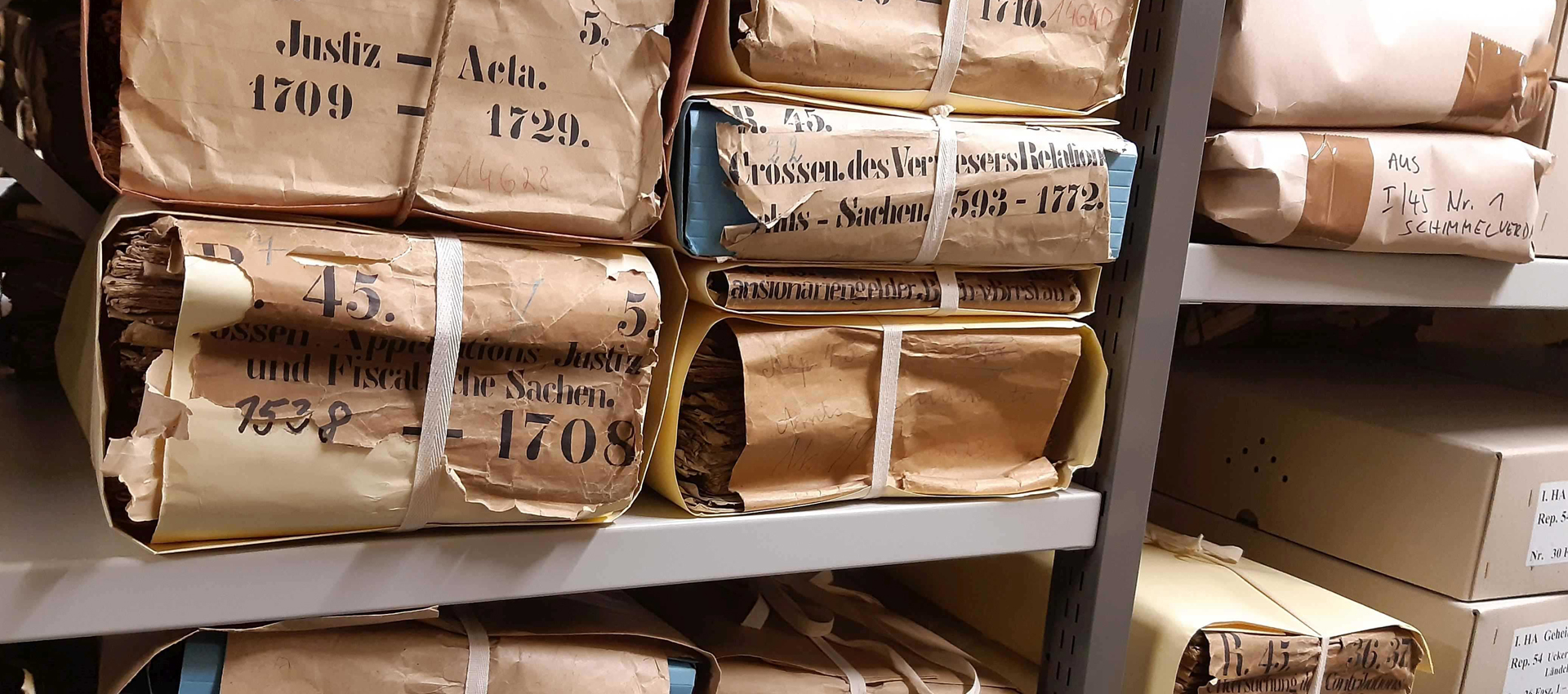
Evers: For me, it’s files that suddenly turn out to be about something completely different from what you’d expect. One, for example, is about job applications, and then there’s a note in there with children’s words. It says, among other things, that ‘Wawa’ means ‘Mum’. Things like that.
Dziudzia: I found it curious that around 1700, people really went to great lengths with the calligraphy in their letters, yet this aspect is usually lost in editions.
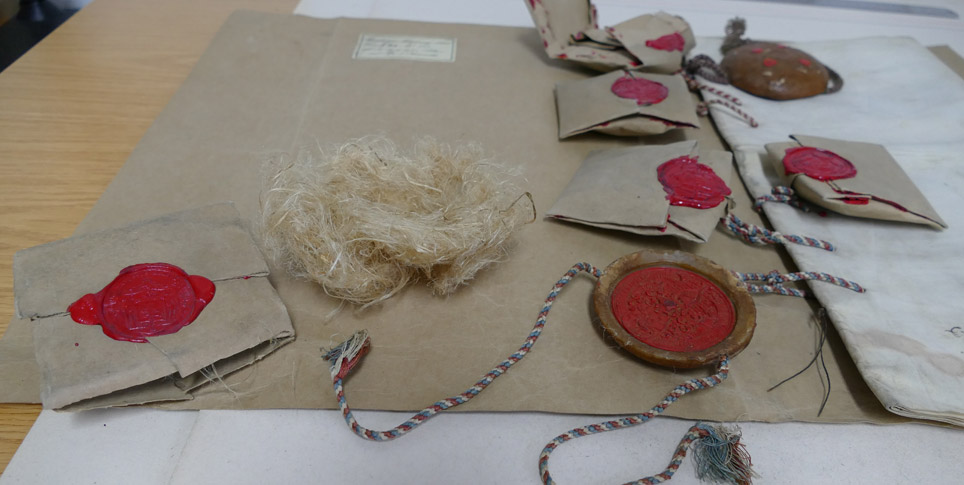
Almost more than a mere curiosity is the finding that the copperplate portrait of Johann Christoph Gottsched has been given a modern, hinged passe-partout – in contrast to his wife’s engraving, which lies in the portfolio without a passe-partout. Yet the two correspond visually: placed side by side, they face one another; they have the same books in the background.
At the time, both were regarded as equals; indeed, she was even posthumously considered the true poetic talent of the two. Later generations, however, provided only his portrait with a specially made frame, which tells us a great deal about the specific esteem in which some holdings were held, in contrast to others.
Seithümmer: Well, for me the overall result is actually very fascinating. I’m looking at a period when the Jewish community in Berlin was still very young, having only been founded in 1671. It consisted mainly of Jews expelled from Vienna.
We know that Jewish history is always a history of expulsions. What I find fascinating is that for some aspects of social interaction, you find a great many documents. For others, however, absolutely nothing.
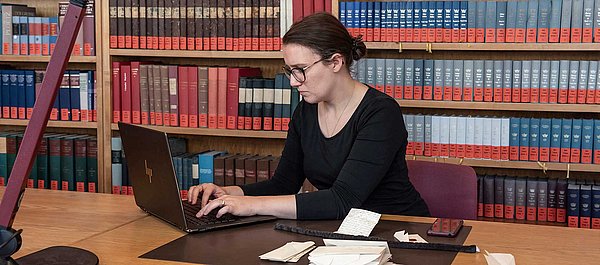
The Prussia Scholarship is designed to give researchers from all over Germany the opportunity to work here in the archives, as well as to visit the other institutions of the SPK. What made you smile the most during your stay in Berlin?
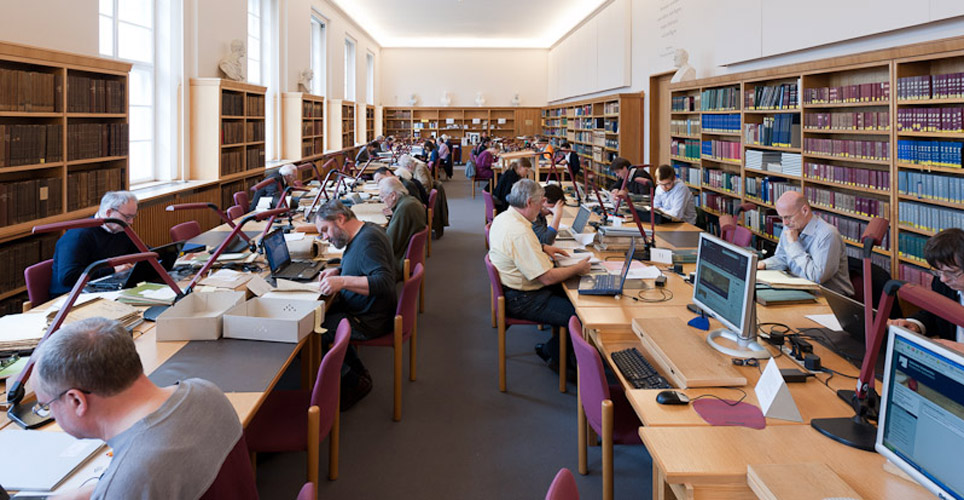
Seithümmer: As I’m only here for four weeks, I had to manage my time carefully. However, Ms Evers and I did visit the Berlin State Library. Having the chance to conduct on-site research at the Stabi was actually very, very helpful. It confirmed my suspicion that there is virtually no research literature on Frederick III (or I) and his father.
It’s a completely different story with Frederick the Great. I stood in front of the shelves and found only the volumes I already knew. You always think you’ve overlooked something. It can’t be that there’s so little. But when you find nothing in a library as large as the State Library, then that must be the case. That made me smile.
Dziudzia: I’m thinking of places called Eierschale, which you go to in Dahlem when you can’t be bothered with the Luise or the Alten Krug.
Evers: I often find myself smiling when reading Luise’s candid and sometimes rather crude letters. I can well imagine that things were a bit more relaxed in the palaces.
Otherwise, I found it curious that so many tourists take photos in the entrance hall of the Stabi. I know lots of lovely libraries, but I’ve never seen anything like that before.
What advice would you give to future scholarship recipients?
Dziudzia: Don’t forget to keep some change handy for the coffee machine!
Seithümmer: Start looking for a flat in good time. It’s not at all easy to find somewhere in Berlin where you can stay for a few weeks.
And then prepare as well as possible so you can make the most of your time.
Evers: I’d agree with both of them. But I actually found it very valuable to look through the finding aids on site. It helps me to see everything in context. I then understand the administrative structure much better.
And finally, make the most of the weekends to visit all the museums.
Prussian Scholarship
To mark its centenary, “100 Years in Dahlem”, the Secret State Archives of the Prussian Cultural Heritage Foundation (GStA PK) is awarding up to seven grants for research stays of one to three months at the GStA PK.