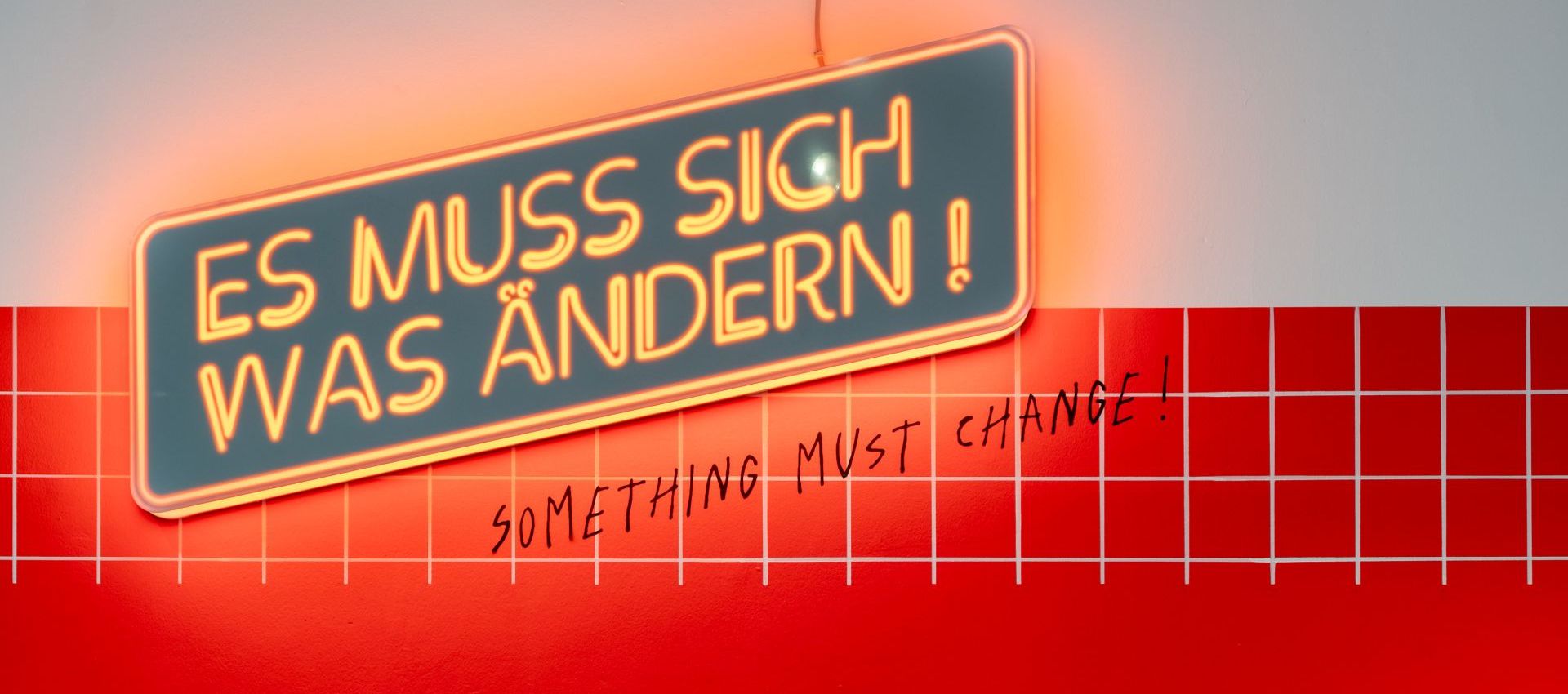
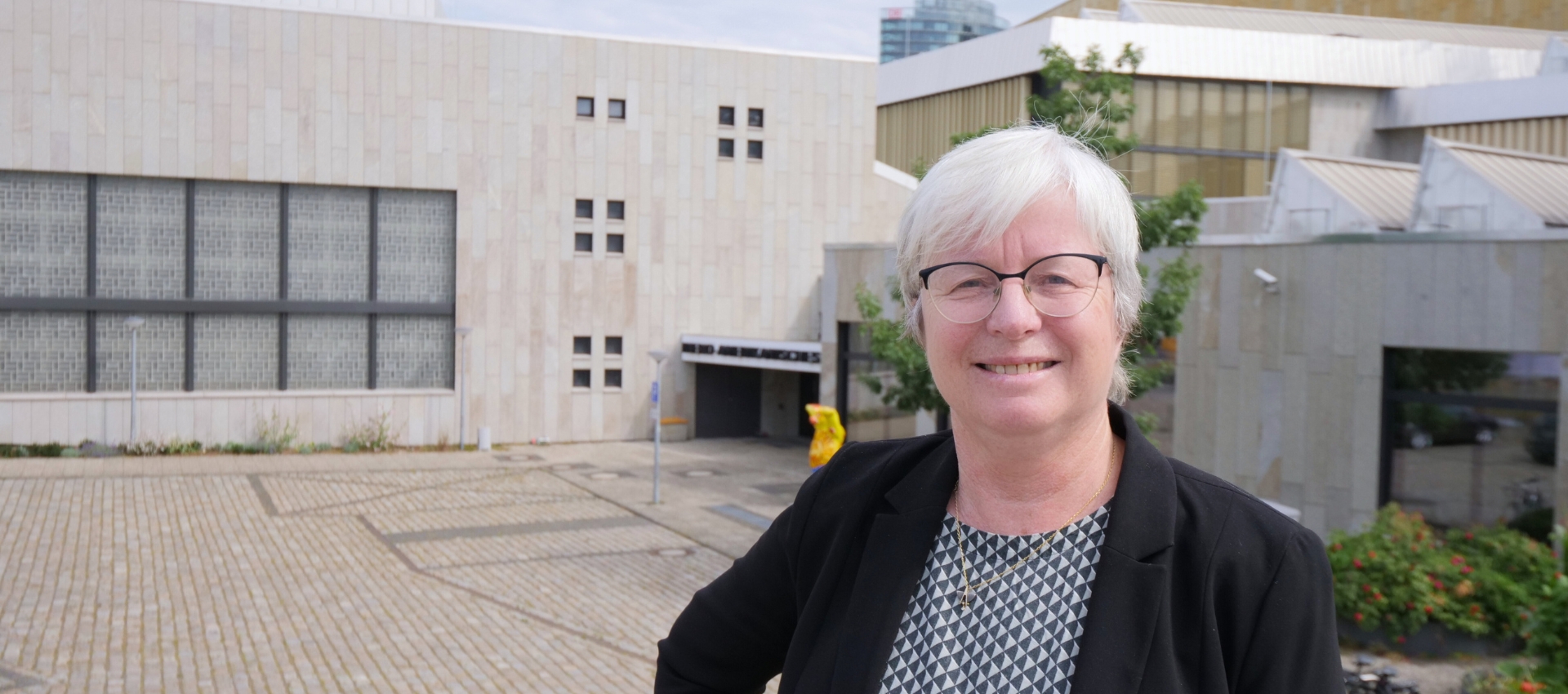
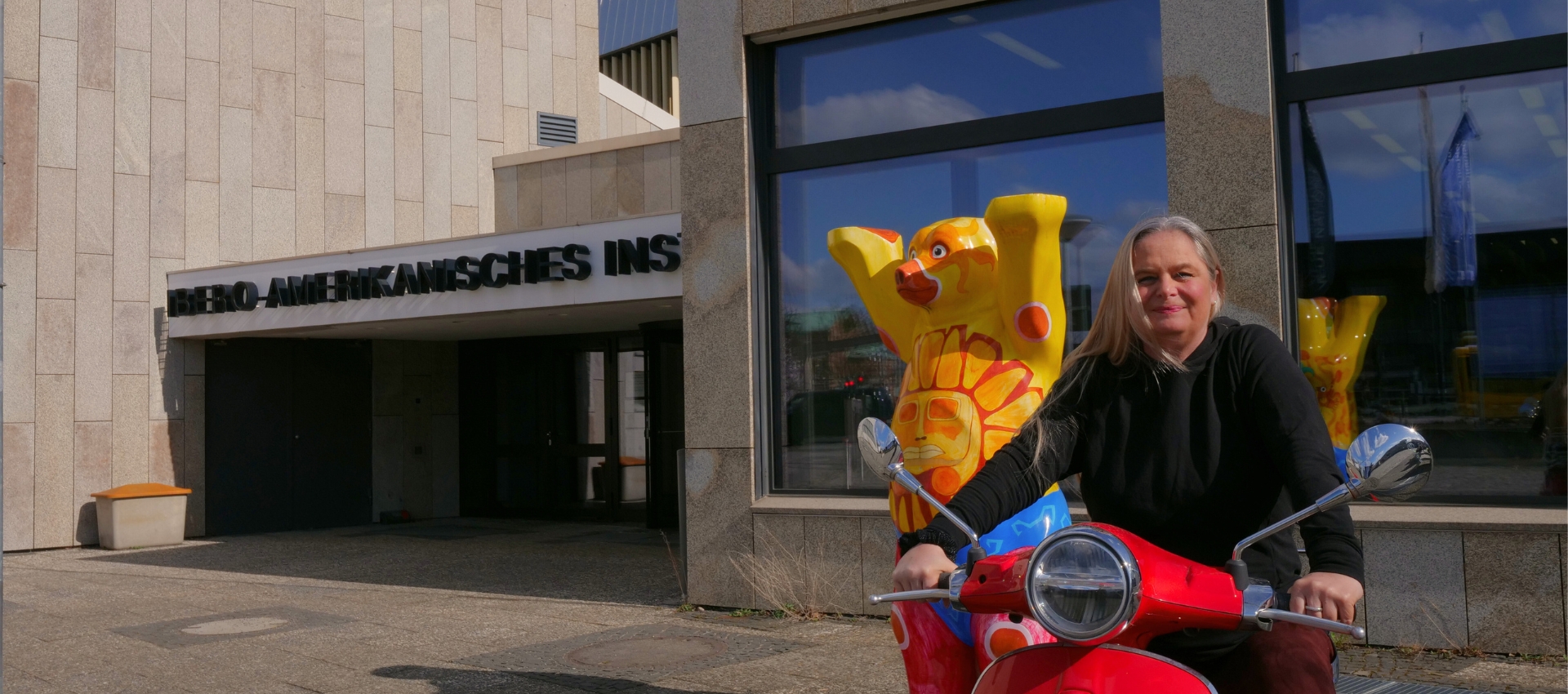
The exhibition “Yo siempre estoy lejos. Fanzines y cómics latinoamericanos atravesando fronteras” (translated as “I am always far away. Fanzines and comics from Latin America crossing borders) is on display until 13 April 2024. This exhibition came about in a rather special way. Dorothea Köhler (librarian at the IAI) explains how.
Life’s Coincidences – an exhibition opening at the Art Library
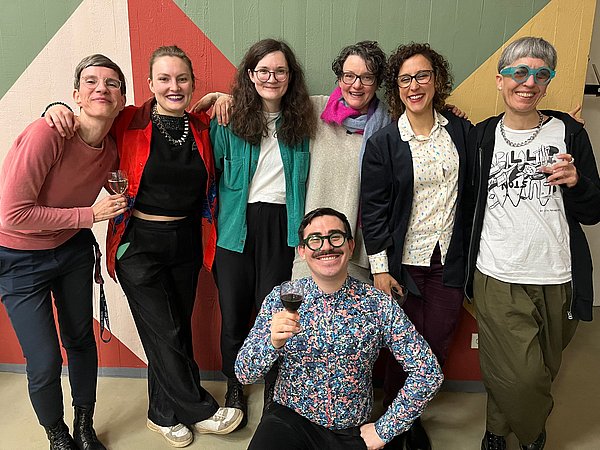
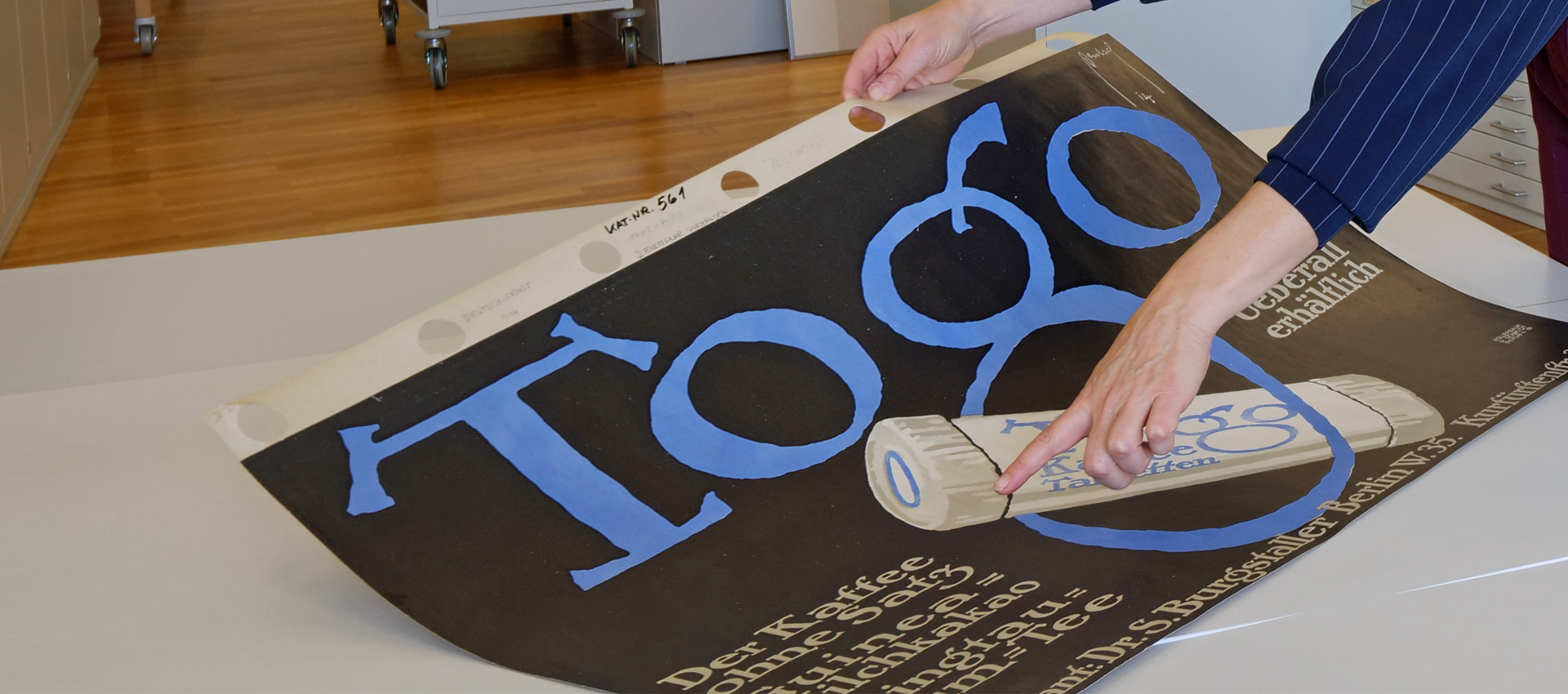
One evening in November 2023, two librarians from the IAI met the comic artist Powerpaola at the opening of the exhibition “Great Cinema. Film Posters Through the Ages” at the Kulturforum. She is one of Latin America’s most renowned comic artists, and the IAI Library holds her entire body of work in its collection. Reason enough to invite the artist to the IAI. Initially, the plan was simply for her to sign her works, but the staff quickly decided: we would like to invite Powerpaola to an event.
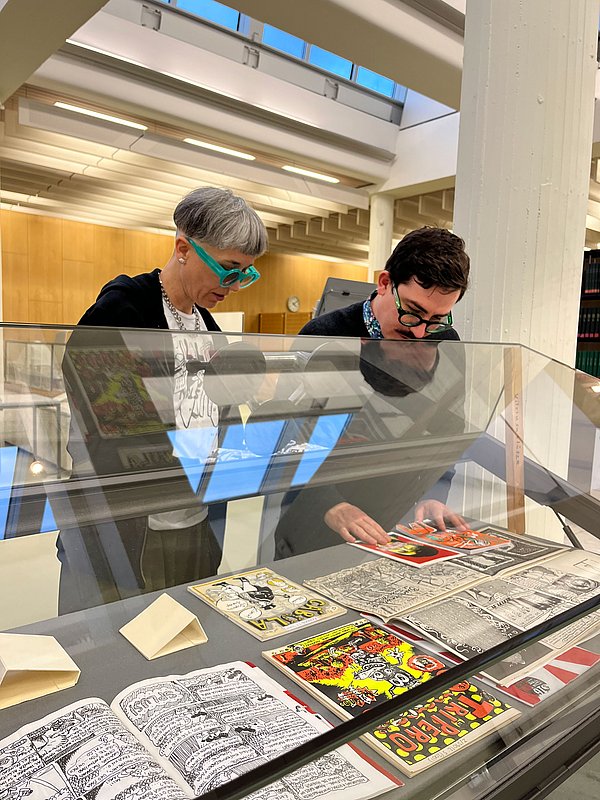
A collaborative process – artists, researchers and librarians working with the collections
For some time, the librarians had been keen to organise an event for the IAI that would appeal to and engage Berlin’s young Spanish-speaking community, whilst also offering insights into the library’s diverse collections. Powerpaola’s visit as a visiting professor during the 2023/24 winter semester at the Peter Szondi Institute of Freie Universität Berlin provided the perfect opportunity for this.
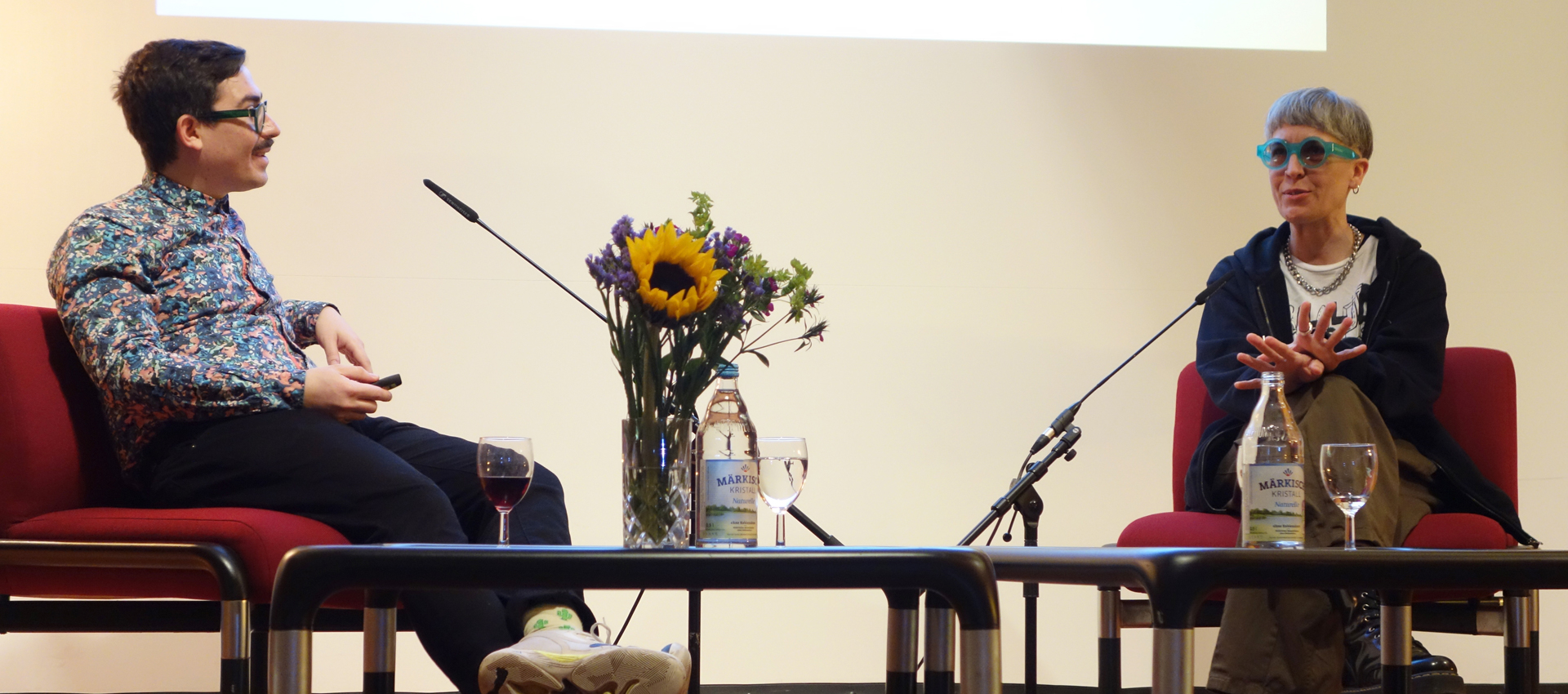
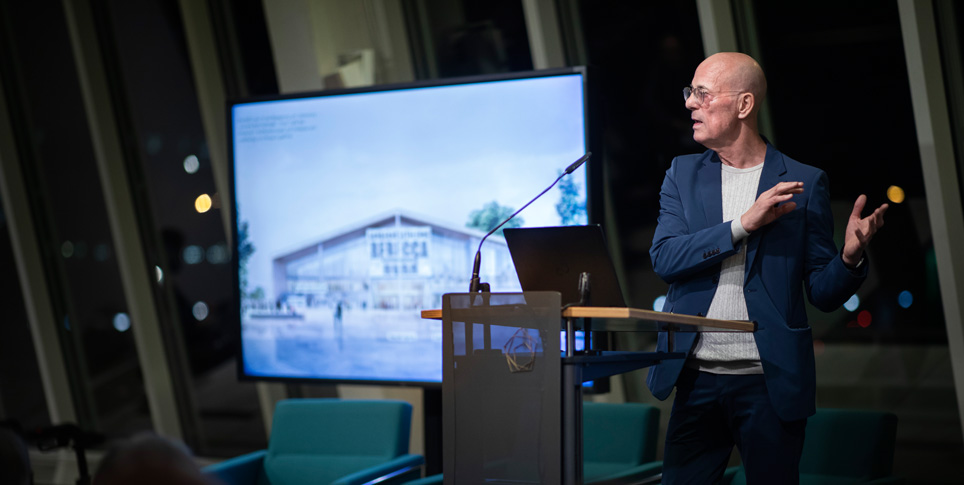
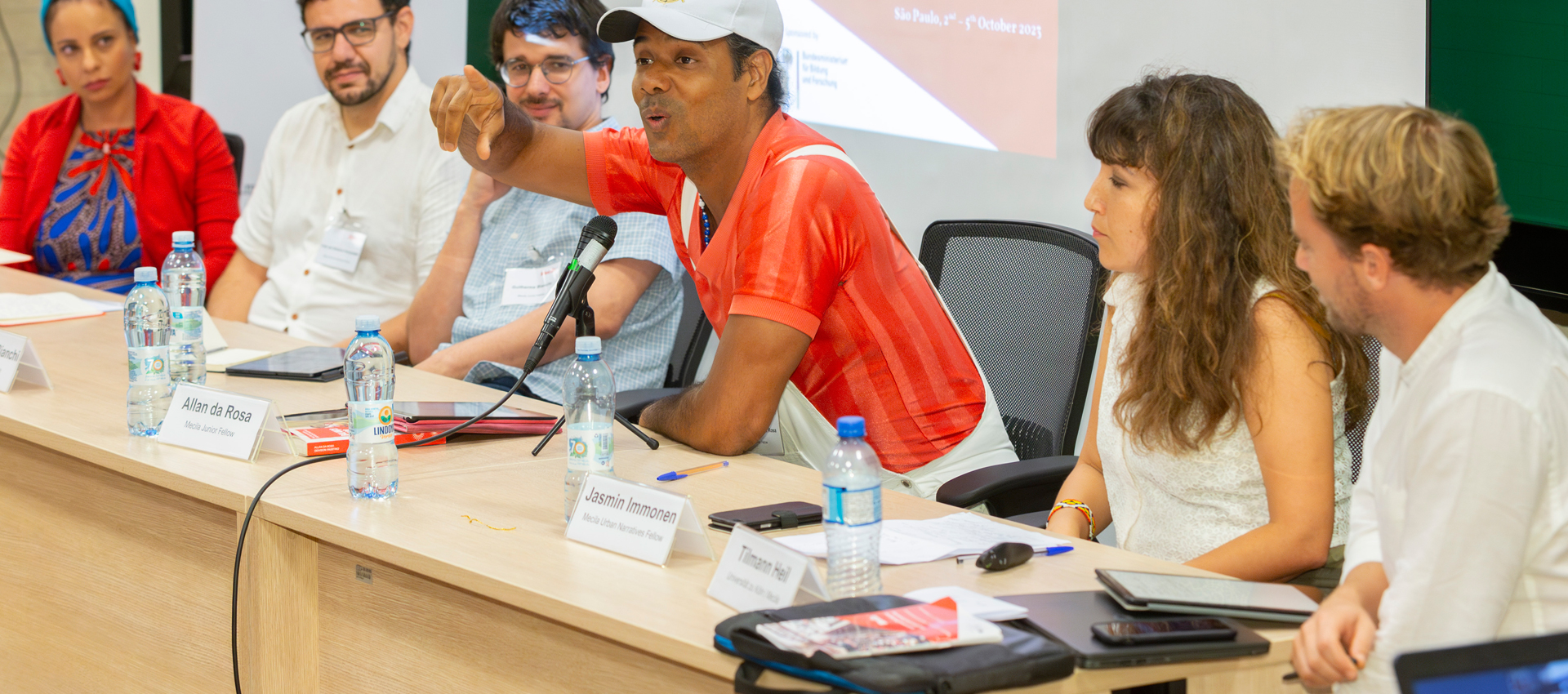
In addition to numerous events and workshops in German and English, there was also to be an event with the artist in Spanish, held at the IAI: as part of an evening discussion, a researcher was to present findings developed in collaboration with the artist based on work with the IAI’s collections. Amadeo Gandolfo, a comic book researcher living in Berlin and former IAI fellow, was the ideal discussion partner for this.
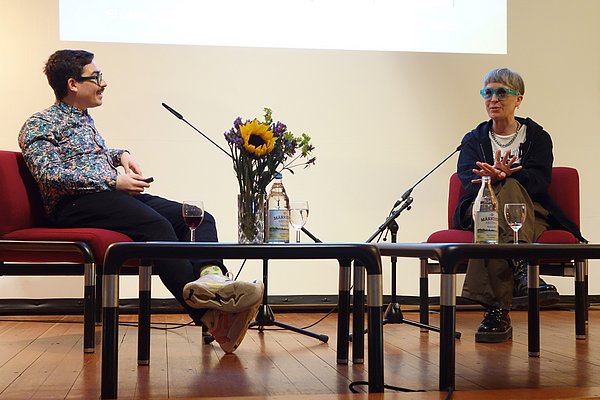
The journey is the destination
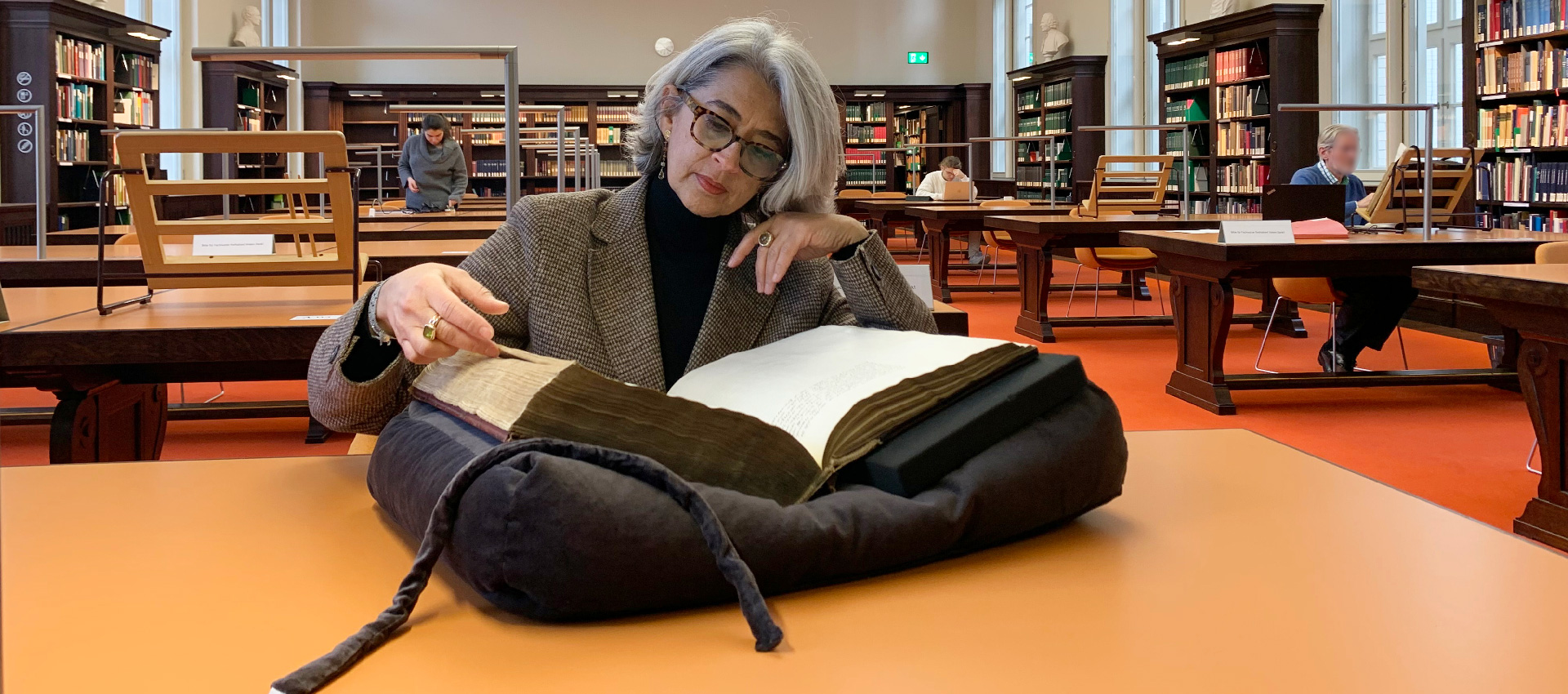
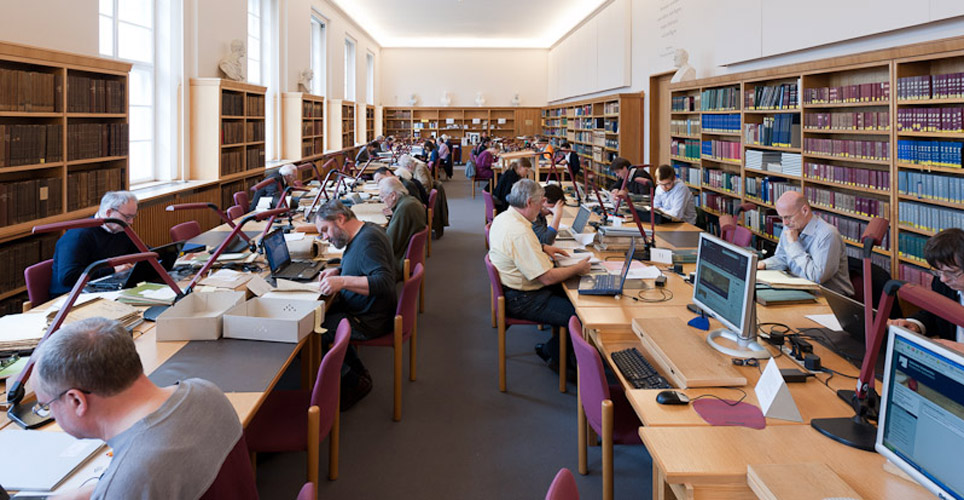
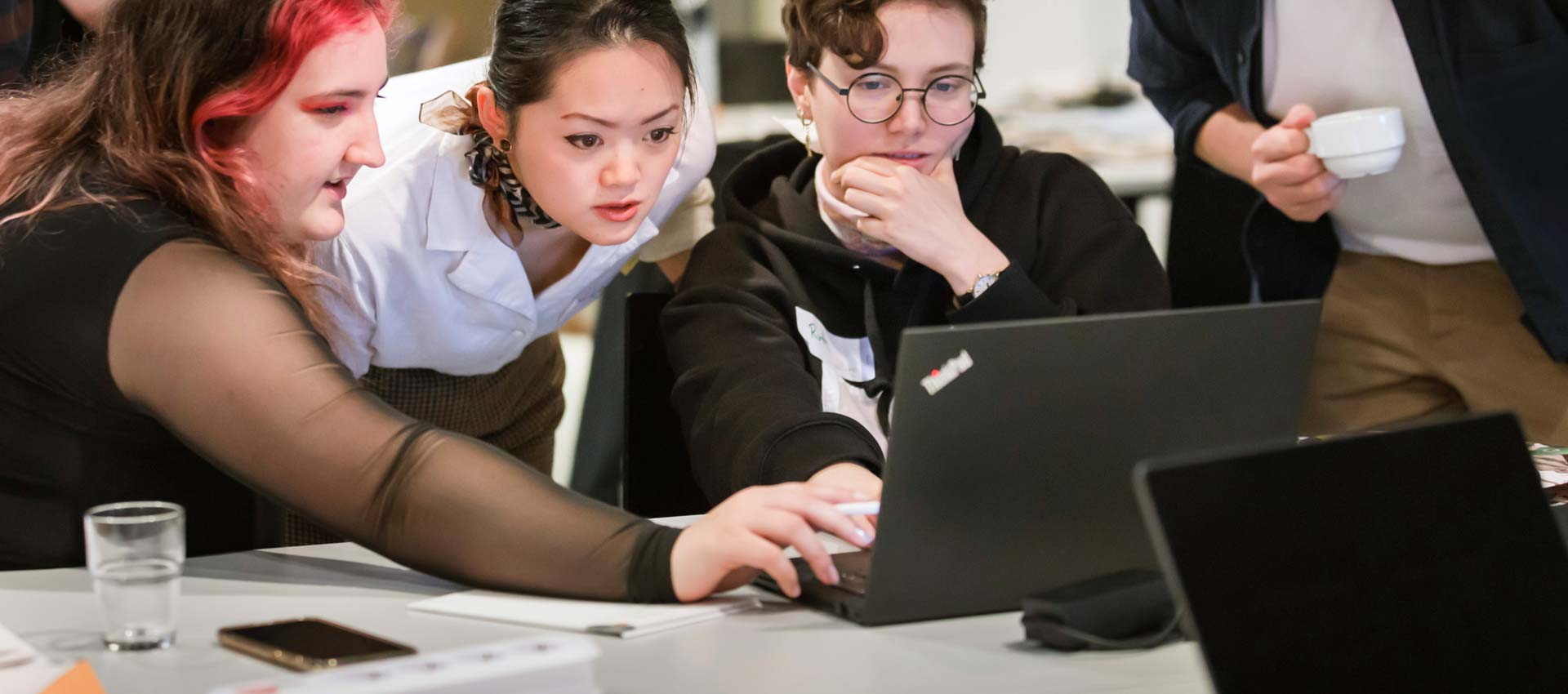
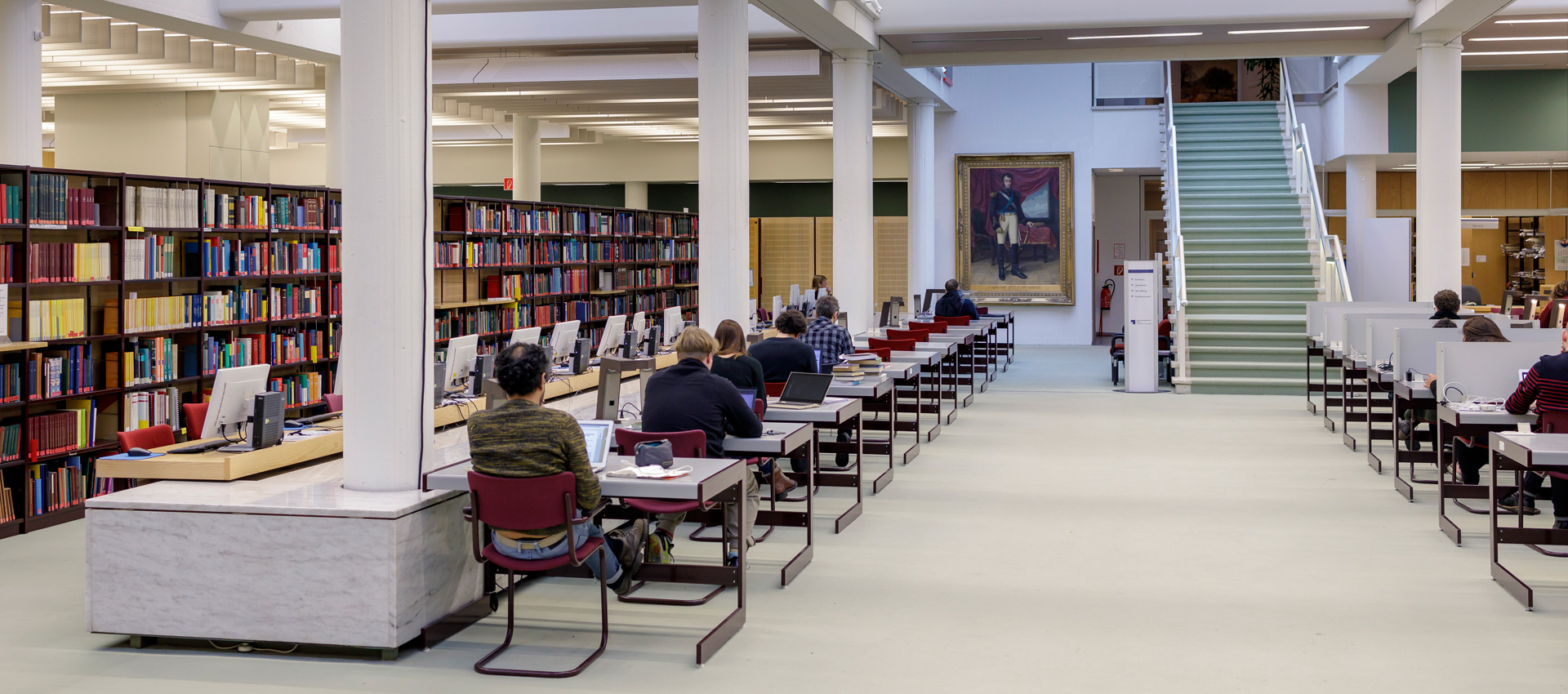
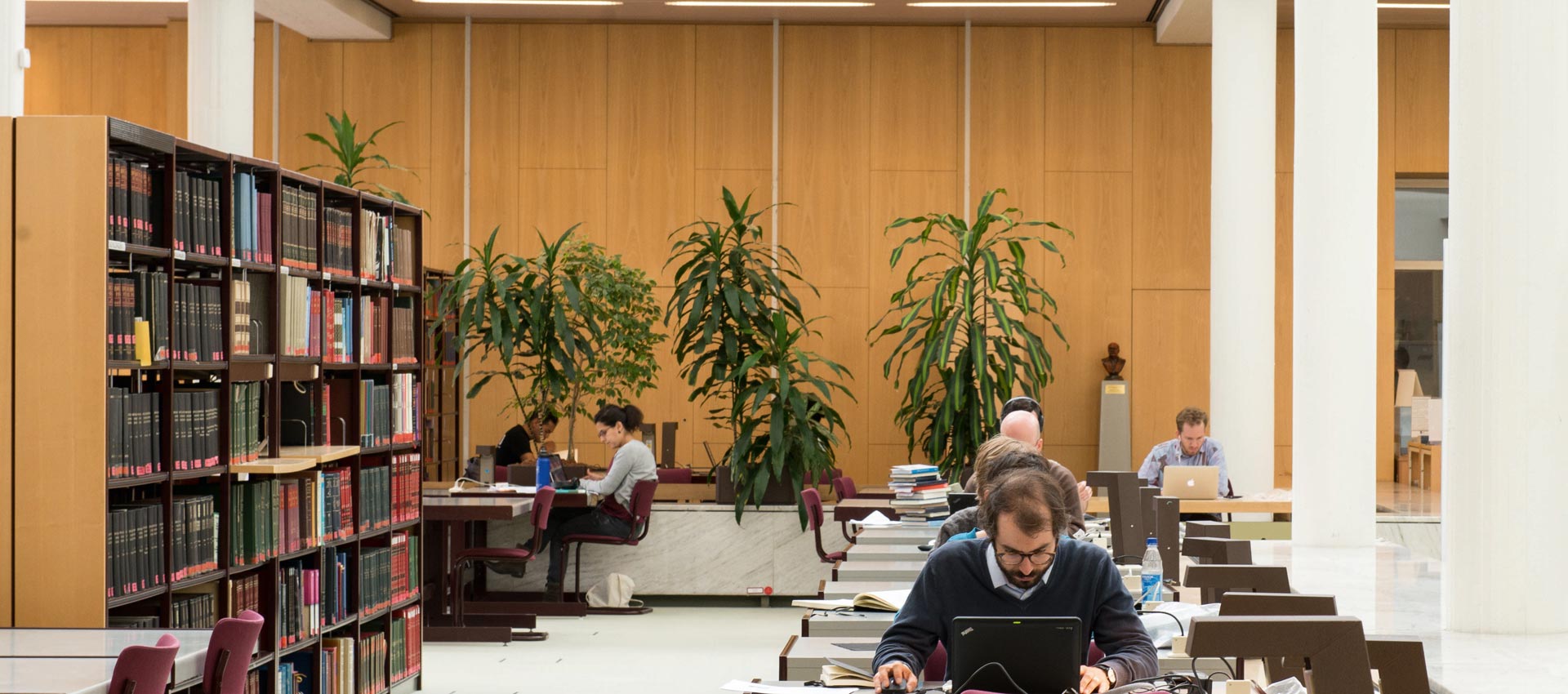
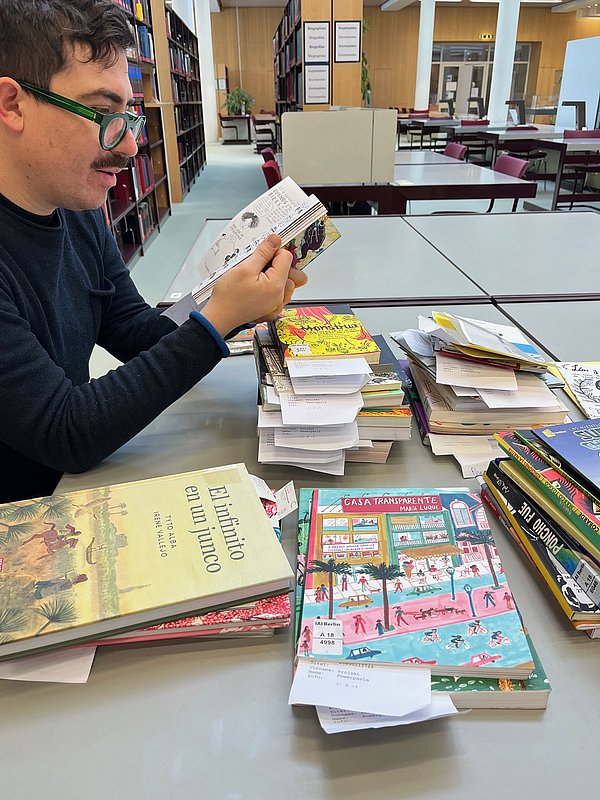
Powerpaola and Amadeo Gandolfo were enthusiastic about the idea and, in preparation for the discussion, embarked on a veritable research journey through the IAI’s collections. From January 2024, they met regularly in the reading room to examine the materials. This led to a fruitful exchange between the artist, the researcher and the librarians. The research and examination of the collections opened up new perspectives for everyone involved.
Powerpaola describes the working process as follows: “It was a wonderful experience. Amadeo and I sat down together to review the library’s materials. The colleagues at the IAI had put together quite a lot for us. Amadeo had ordered material I wasn’t familiar with, and I also ordered things he didn’t know about. I felt that passion for self-published works again, the importance of the collective and of the handmade.”
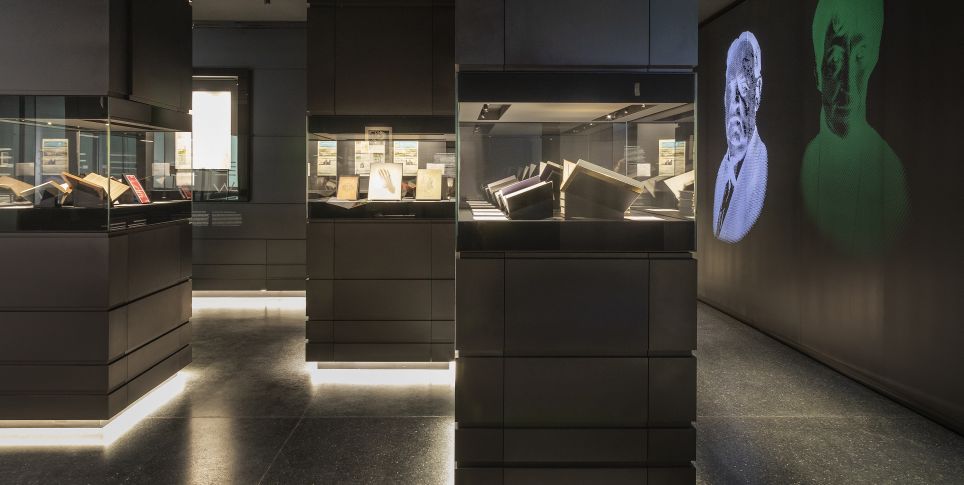
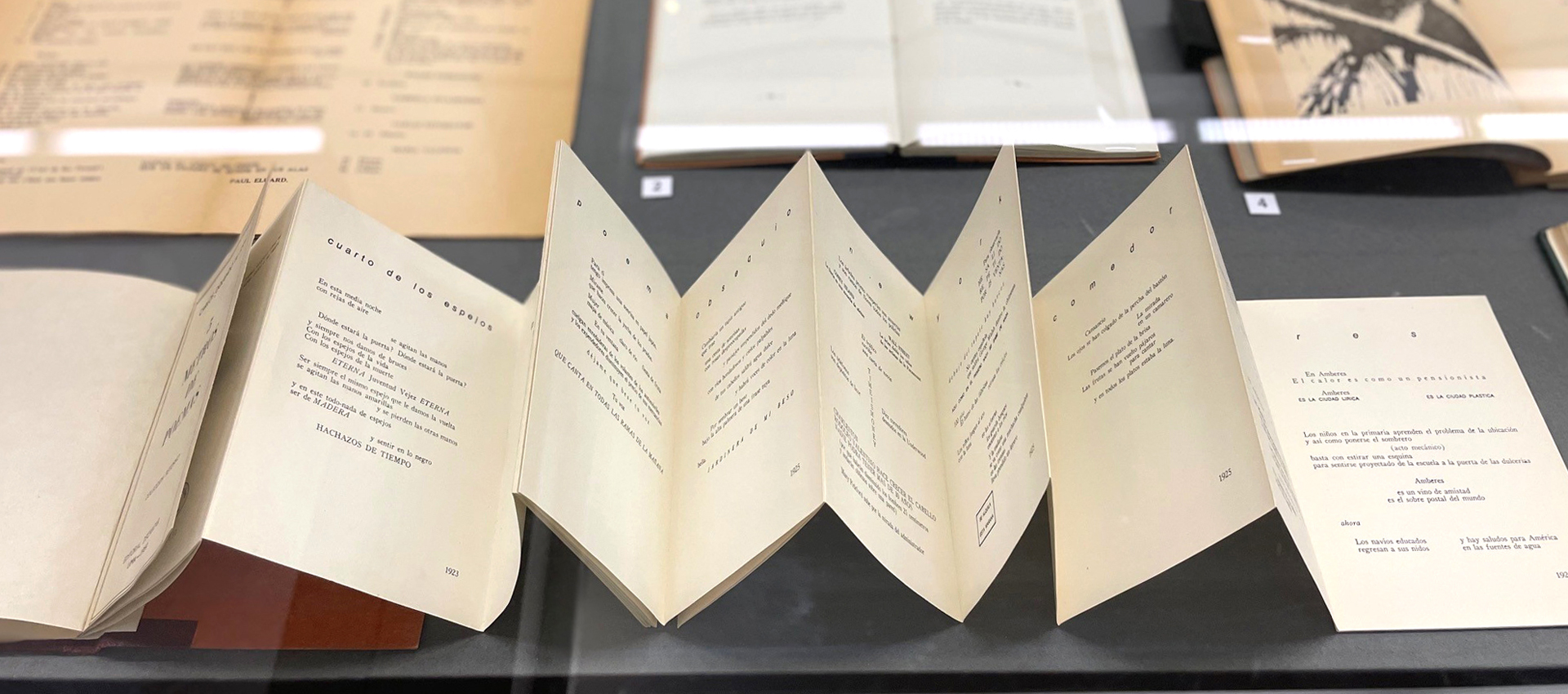
In a short space of time, they gathered extensive materials and it quickly became clear that these needed to be presented in an exhibition in the reading room following the event. The exhibition consists of seven display cases, covering topics such as collective work and feminism, as well as a regional focus on Brazil and the Andean region.
The display case on the Andean region is of particular significance: even a well-travelled, well-connected artist like Paola can still be surprised by our holdings. She told us, for instance, that the Ecuadorian scene in particular had not previously been on her radar.
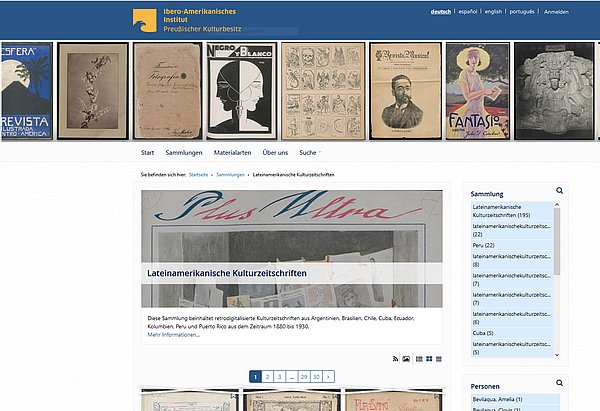
Popular literature in the collection of the Ibero-American Institute Library
Indeed, the collection of fanzines and comics at the IAI is something special. It stems from one of the library’s key collection priorities: to systematically acquire popular literature from Latin America, the Caribbean, Spain and Portugal. Christoph Müller, Deputy Director of the Library, explains: “In addition to academic literature across all disciplines from and about the countries in these regions, we also acquire cultural magazines, so-called ‘newsstand literature’ and popular pamphlets, and, since the early 2000s, have also been systematically acquiring comics and (fan)zines from these regions.”
Powerpaola was also interested in how these materials are acquired. During the discussion event, she had already expressed her admiration for the fact that such extraordinary materials had been found and acquired by a German library in Latin America in the first place.
This is what she says about the IAI’s zine and comic collection: “I am impressed by the diverse and hard-to-find material available in the library. I still don’t quite understand how short-lived fanzines, sold at specialist fairs in small towns in Latin America, have made their way here. It seems incredible to me.”
As Christoph Müller explains, the international work of the library’s academic librarians plays a crucial role in acquiring these unique materials. They travel directly to the countries in question, purchasing items for the library at book fairs and bookshops, and also meeting producers of popular culture literature.
Over the years, alongside the growing collection, a wealth of knowledge about acquisitions and a wide-reaching network have developed. These acquisition activities are complemented by collaborations with booksellers in the regions, who, in accordance with the library’s guidelines, also acquire zines and comics. Christoph Müller proudly states that “in this way, over the decades, the IAI library has built up one of the most extensive collections of these materials from Latin America, the Caribbean, Spain and Portugal.”
Fanzines in an academic library – accessible to all
Anyone keen to discover this unique collection for themselves is very welcome. Fanzines and comics are available to all registered users without restriction and can be searched for and ordered via the IAI catalogue.
Librarian Charlotta Andersson explains how the fanzines are added to the catalogue. She emphasises that cataloguing fanzines requires real detective work. Unlike ‘normal’ books, they often lack publication details such as publisher, place of publication and year, which are otherwise standard for most books. “Sometimes it’s even difficult to interpret exactly what the title is and who is behind the publication. You definitely have to look for hidden clues. Is there a publication year hidden somewhere? Is there a reference to a social media channel where further information might be found?” For Charlotta Andersson, it is precisely this additional research work that makes cataloguing fanzines and comics so appealing and exciting.
Powerpaola illustrates just how meaningful and important this “extra work” on the library’s part is. She emphasises that it was visits to the library that first sparked her interest in this art form: “To discover special things, there has to be someone who acquires these materials, catalogues them and makes them available in a library.”
The IAI was able to learn a great deal from the project for its future work. Initiated by the staff themselves as a grassroots project, it has opened up new avenues for the institute to present its own collection. The project has shown how important it is to create digital and analogue presentation spaces for the breadth of the collection and, in this particular case, to involve and engage the artist community.
All of this was only possible through direct and close collaboration with the library’s users. Through dialogue and exchange, current themes and developments can be identified and collaboratively translated into event or exhibition formats.